











Quick Take
- The Apple Head is the official breed standard, but the non-standard Deer Head variety holds a surprising health advantage that kennel clubs won't tell you about. Compare the two varieties →
- Long before they were celebrity purse pets, Chihuahuas served a role in ancient civilization that had nothing to do with companionship. Explore the ancient history →
- There's a grooming rule for Apple Head Chihuahuas that seems backwards, and ignoring it during warm weather can seriously hurt your dog. See the grooming rules →
- Untrained Apple Head Chihuahuas have a specific nickname that captures exactly how much chaos a 6-pound dog can unleash on a household. Understand the chaos without training →
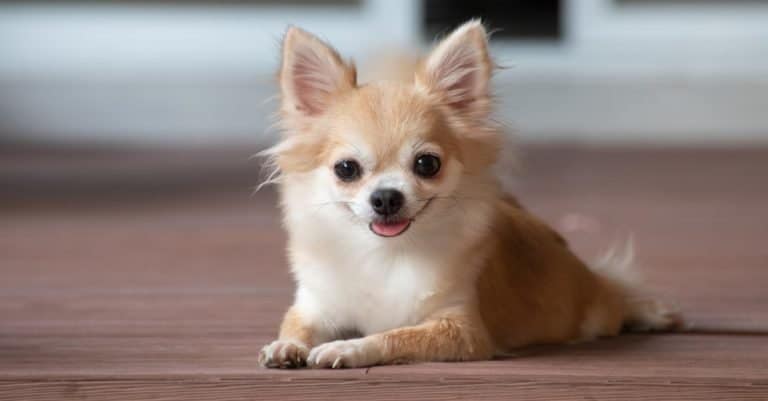
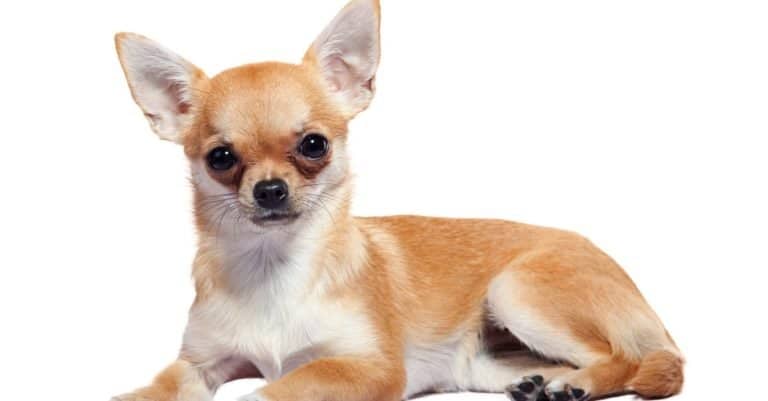
Weighing up to 6 pounds and only up to 8 inches in height, the standard Apple Head Chihuahua gets its name from its apple-like skull dome. These short- and long-haired dogs are much loved for their saucy attitudes and charming temperament. But Chihuahuas never hesitate to bark and act like a much bigger dog when they sense a threat or a stranger is near. The breed is ancient, pre-Columbian from Mexico, and named for the Mexican State of Chihuahua. They are considered terrier-like in the toy variety.
Chihuahuas are often called “purse pets” because they are so compact, loyal, and eager to stay by their owner’s side. Called “little Napoleons” when left untrained, you can expect them to rule your household. But with proper training, you will never find a more loyal and loving companion.

Apple Head Chihuahua vs Deer Head
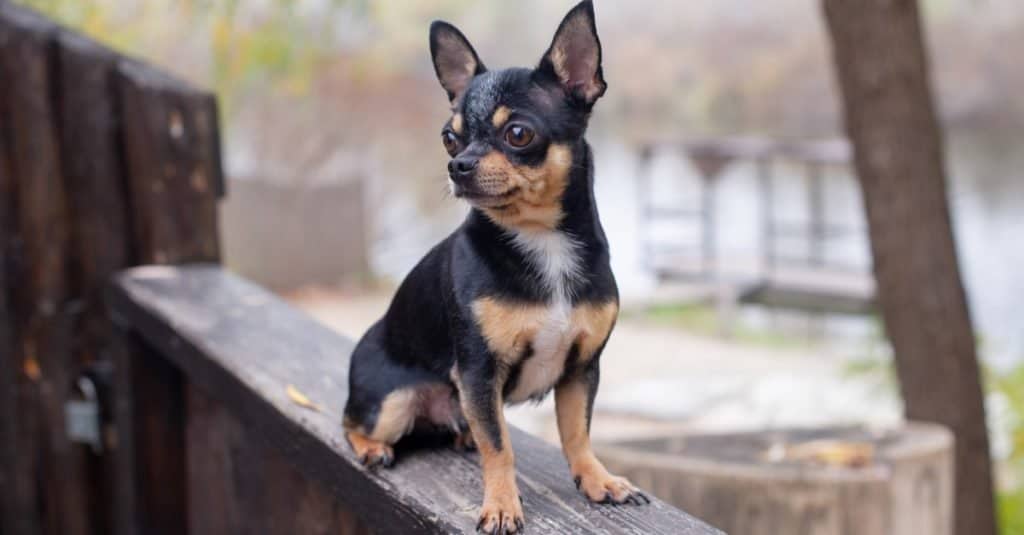
Apple head chihuahuas are notably smaller than deer head chihuahuas.
©Lesia Kapinosova/Shutterstock.com
The Apple Head Chihuahua is the breed standard, typically just called a Chihuahua. But another variation of this cute little dog is the Deer Head Chihuahua. Although the Deer Head variety is not the breed standard, they are very similar to the Apple Head. Their primary differences are in their head shape, just as their names reflect.
The Apple Head Chihuahua has a round head with a 90-degree angle from the muzzle to the forehead. This “stop” is clear from the Chihuahua’s profile view. The Deer Head, on the other hand, features a longer head with bigger ears like a deer. Instead of the 90-degree stop on the profile, the Deer Head has a 45-degree angle between the muzzle and the forehead. The Deer Head Chihuahua’s head looks much like a deer’s from all angles.
Besides the tell-tale head shape, there are other facts differing between these two tiny characters of the dog world. Deer Heads tend to have longer legs and are taller. They also usually weigh several pounds more than Apple Heads.
As far as their health goes, the Deer Heads tend to have fewer health problems because of their head shape. Birth is easier, to start. Apple Heads often get stuck in the birth canal and require delivery by C-section. Because of their elongated heads, Deer Heads also have fewer dental and breathing problems than their apple-domed cousins.
Despite the American Kennel Club, other kennel clubs, and the Chihuahua Club of America standards listing the ideal Chihuahua as apple-headed, many people still prefer deer-like dogs. Both are equally lovable, loyal, valuable, and good at being their owners’ lifelong companions.
Origin

The Chihuahua region of Mexico is where this breed gets its name.
©Pi-Lens/Shutterstock.com
Most scientists tend to agree that the modern-day chihuahua descended from an ancient breed known as the Techichi, which was venerated in the art of the Toltec, Maya, and Aztec peoples of Central America. Though initially bred as a companion dog for the Toltecs, it soon took on supernatural characteristics such as clairvoyance and found a place in local mythologies as a guardian for spirits who enter the afterlife. The Techichi was popular amongst Aztec royalty, and as many as 100 would roam the palaces at a time.
Chihuahuas, as we know them today, were first documented in the 1800s, though they did not yet have an official name, being called “Texas Dogs,” “Mexico Dogs,” or more specifically “Chihuahua Dogs” after the region where the breed was located. In 1888, dog judge James Watson wrote extensively about the breed and began to campaign for its recognition, and in 1904, his efforts finally paid off, and the Chihuahua was registered with the American Kennel Club by Texan native H. Raynor.
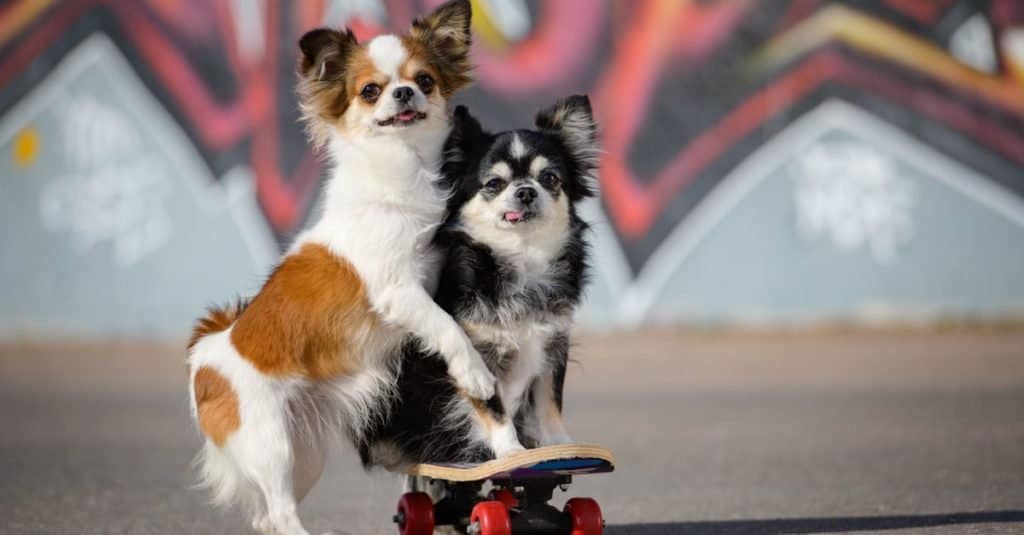
Two funny little Apple Head Chihuahua pet dogs are sitting on a skateboard.
©Ruslan Shugushev/Shutterstock.com
3 Pros and Cons of Owning Apple Head Chihuahuas
| Pros | Cons |
|---|---|
| Tiny toy-sized dogs that take up little space. Chihuahuas rarely grow larger than 6 pounds. They are compact and easy to carry or support on your lap for hours of cuddles. | Expressive. Chihuahuas are tiny but not easily intimidated. They often seem to think they are much bigger dogs and are said to have a distinct “Napoleon complex,” using their bark frequently throughout each day. |
| Travel-friendly city dwellers. Chihuahuas are excellent indoor pets and make great city-dwelling companions. They travel well because they weigh so little, rarely stray too far from their owners when off-leash, and enjoy being carried in a purse, pouch, or carrier. | Strong-Willed. Chihuahuas can be stubborn little dogs. However, they are smart and train well with some persistence. |
| Easy to Care For. Aside from typical pet grooming needs, Chihuahuas are especially low-maintenance, particularly when they are the short-haired variety. Their compact body size makes grooming quick and easy. | Delicate. Chihuahuas are delicate because of their small size and cannot roughhouse with children without risking injury. They are the world’s tiniest dogs. |
Size and Weight
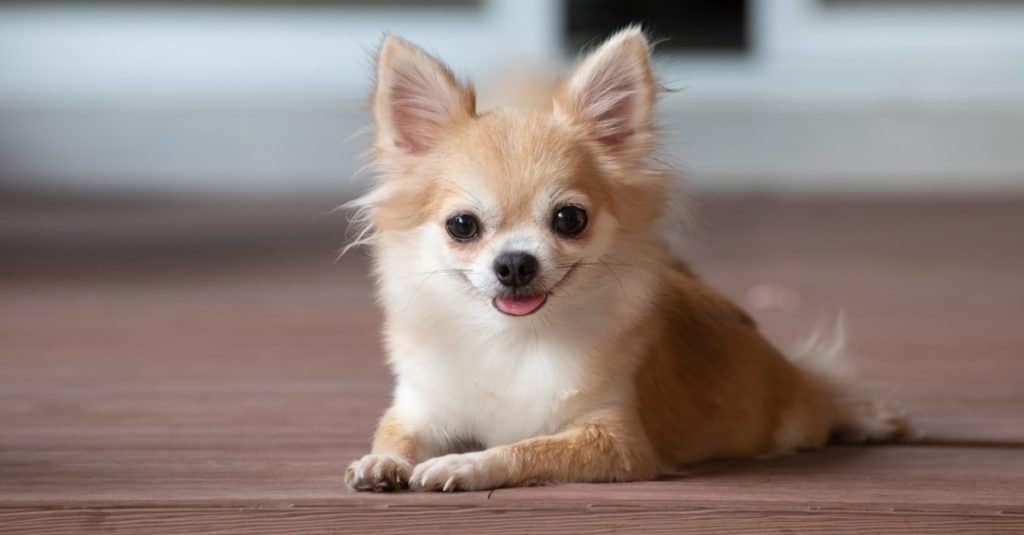
Fully grown Apple Heads weigh just about 6 lbs.
©Ratchat/Shutterstock.com
The Apple Head Chihuahua is the world’s tiniest dog breed that only weighs up to 6 pounds when fully grown, as a standard. But some are known to grow as large as 8 pounds. Although breed standards do not specify a height, they typically grow to between 6 and 9 inches tall. However, some have been recorded as tall as 15 inches.
Common Health Issues
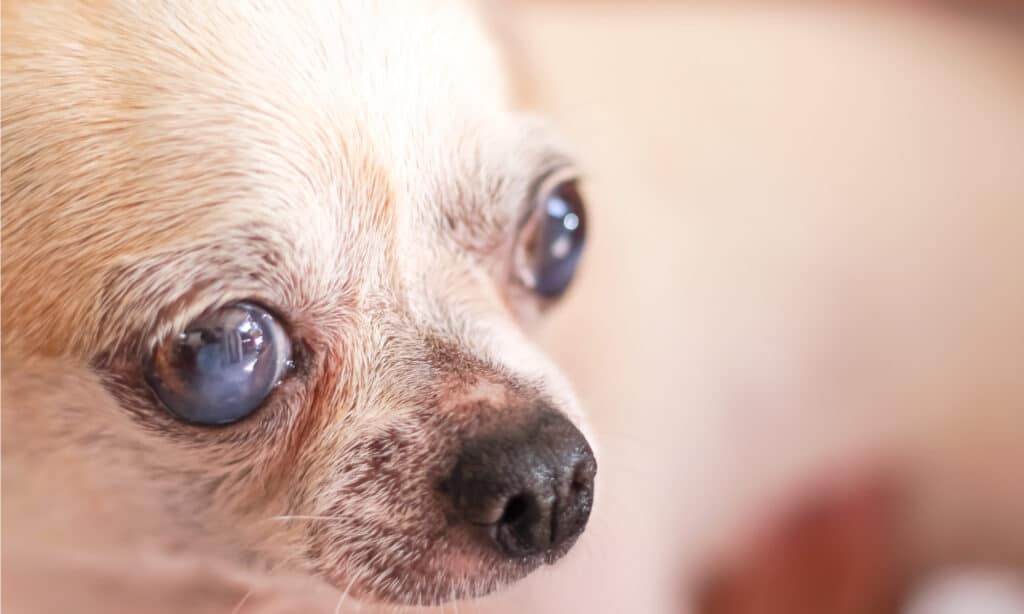
Cataracts are a common eye issue for older Apple Head Chihuahuas.
©Amam ka/Shutterstock.com
Apple Head Chihuahuas have a lifespan of between 14 and 16 years. But they do face some common health problems. These include heart problems like mitral valve disease and patent ductus arteriosus. They are also prone to eye injuries because of their bulging eyes, along with eye infections. Other conditions for which they are known to experience include patellar luxation and idiopathic epilepsy.
Their apple-shaped dome often leads to breathing problems like brachycephalic airway syndrome, characterized by snoring, sleep apnea, and general discomfort. Also, thanks to their tiny, rounded skulls, the Apple Heads often experience dental problems. Sometimes a Chihuahua’s characteristic trembling relates to low blood sugar as part of hypoglycemia, although the shaking can also come from other causes.
Temperament
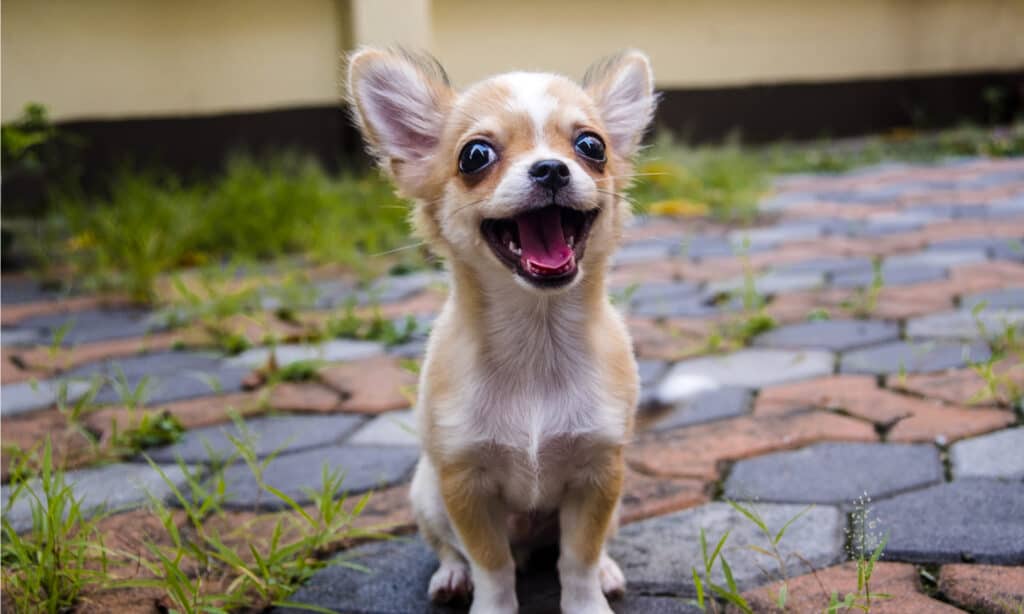
Chihuahuas are extremely playful and energetic dogs.
©PITAKSUNTI/Shutterstock.com
The Apple Head Chihuahua has personality traits often described as saucy, cheeky, and charismatic, with big dog energy. They are mischievous in behavior but braver than one might expect for their tiny size. Their behavior is playful and energetic in short bursts, followed by plenty of lap time and cuddling or napping. The typical Chihuahua personality is feisty. But in crowds, they must be carried and tend to appear trembly or shaky in new situations. Because of their fiercely loyal and protective traits, these tiny dogs are best suited for households with no children or other dominant pets.
How To Take Care of an Apple Head Chihuahua
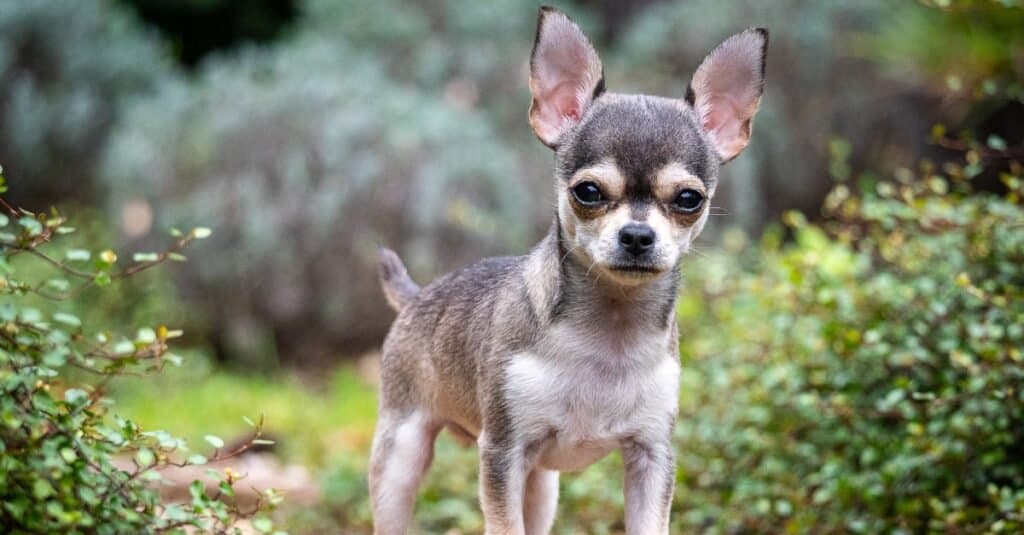
Apple heads require special attention when they’re puppies so they don’t misbehave as adults.
©iStock.com/Aime Martin
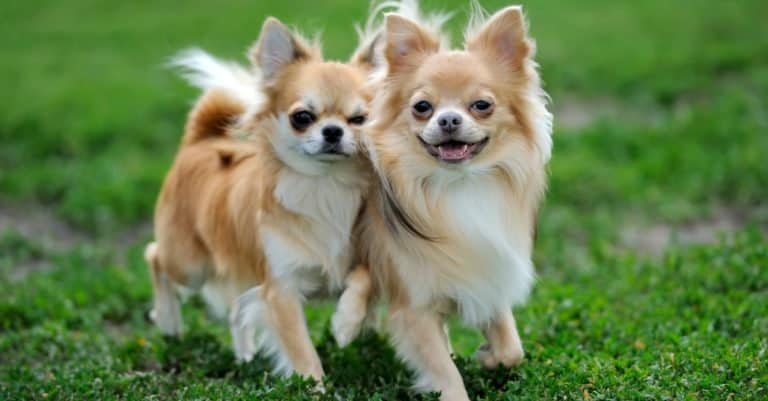
New pet owners seeking facts about caring for an Apple Head Chihuahua must pay particular attention to the dog’s training needs and typical health concerns. Chihuahuas are highly intelligent pets and learn easily. But left untrained, they will rule the household and generally bark often. They require little grooming time because of their tiny size. However, as with any pet, weekly grooming is important, particularly for the long-haired variety, which can experience tangles and mats in the hair.
The Best Dog Food
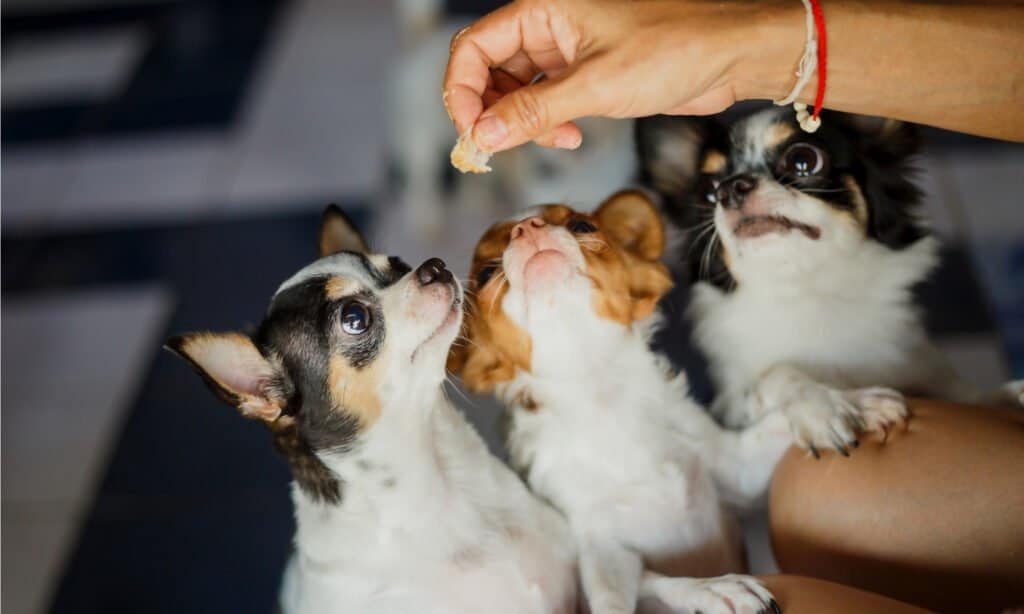
Apple heads do not require a lot of food compared to other breeds.
©boyphare/Shutterstock.com
It’s essential to feed this toy breed food in small enough pieces that are safe for them. Raw food diets can also work well for Apple Head Chihuahuas to prevent their common dental problems.
Feeding 6-pound adult Apple Head Chihuahuas between 120 and 180 calories of food per day, depending on activity level and age, requires small-breed specialty kibble because of their tiny mouths. It is important not to overfeed these pets, especially because of their small size.
Chihuahua puppies up to four months old and weighing 1 pound need about 115 calories per day. Add about 50 to 75 calories of food to this amount for every additional pound of body weight until they are four months old. After four months, they need fewer calories to avoid excessive weight gain.
Maintenance And Grooming
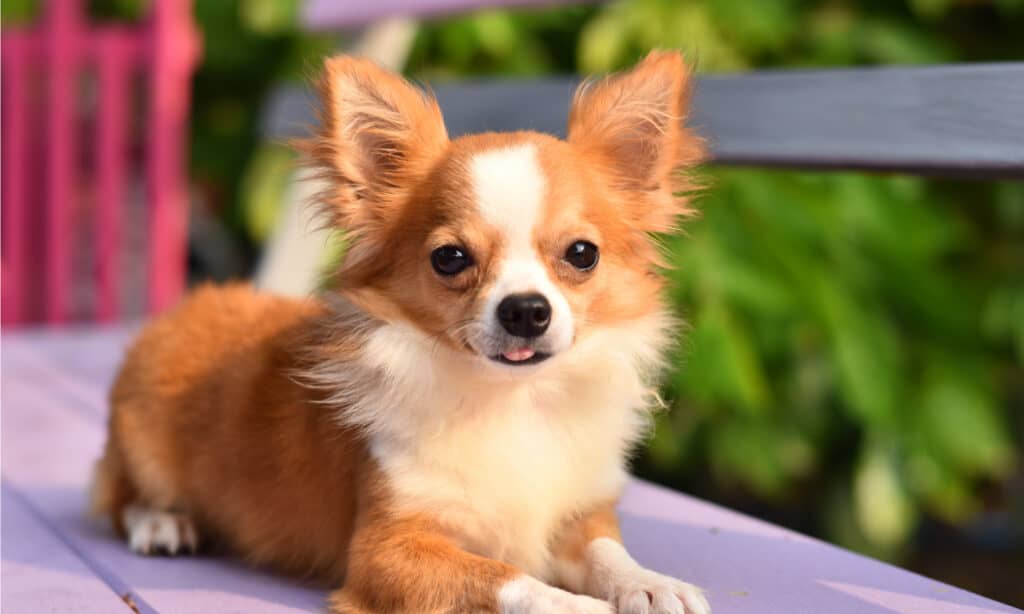
Long-haired chihuahuas need to be brushed regularly.
©Athiporn Phumnicom/Shutterstock.com
Apple Head Chihuahua grooming is fairly low maintenance because of its small body size. Of course, long-haired Chihuahuas require more care than short-haired ones. Regardless of the coat type, these pets require regular bathing. One bath per month works well unless the puppy or adult dog is very dirty and needs more frequent baths. Brushing should take place at least once weekly for short-haired and three times per week for long-haired Chihuahuas to prevent matting. You should absolutely never shave your Chihuahua, regardless of how warm it is indoors or outside. They need their fur to prevent heatstroke and sunburn.
Chihuahuas frequently experience dental diseases. For this reason, you need to brush your dog’s teeth each day and visit the vet regularly for routine cleanings. Get them used to this routine as young puppies to make it easier on everyone throughout the rest of their lives.
Always watch out for your Chihuahua’s eyes when engaging with them. They easily suffer eye injuries and infections, especially late in life. If you notice irritation or signs of changes in their eyes, take the dog to your vet.
Training
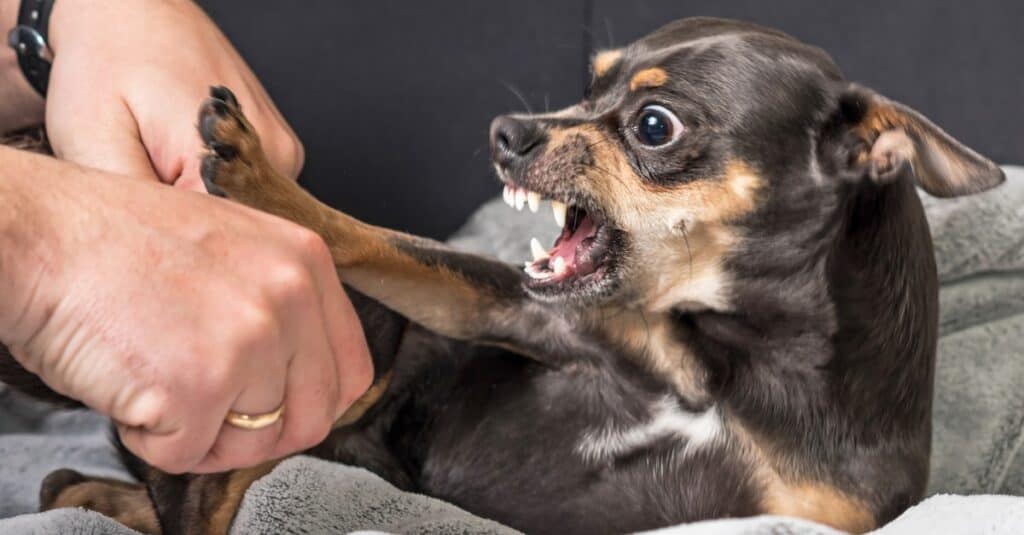
Behavioral problems are common with apple heads. If you don’t like barking, this may not be the pooch for you.
©Piotr Wawrzyniuk/Shutterstock.com
Chihuahuas are intelligent little dogs that learn easily. Start training your puppy early to prevent nipping, biting, growling, and guarding behaviors. As they grow, they will challenge your boundaries from time to time. But if you use positive reinforcement and encourage good behaviors, your Chihuahua will learn how to follow your basic commands. It is also important to socialize them early in life around new places, people, and objects to prevent the trademark nervousness for which some Chihuahuas are known.
These little dogs love to hear their own barking. They alert you to just about everything they hear or see. If the barking becomes a problem, a certified trainer or behaviorist can help you change this behavior. But they will always use their voice and should be accepted for their vocal spirit.
Exercise
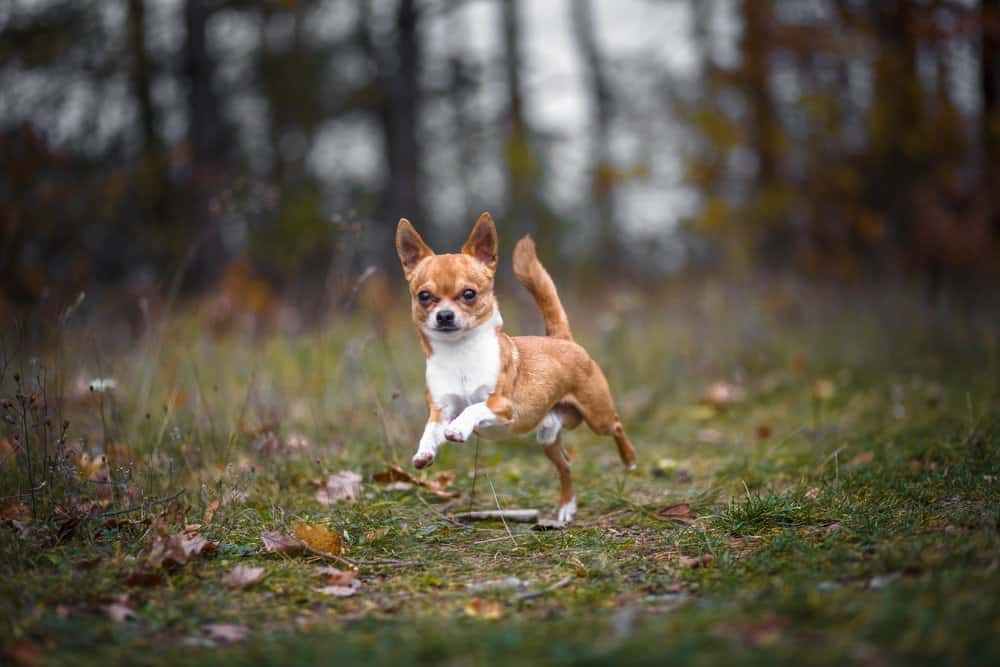
Chihuahuas benefit greatly from regular play and walks.
©Martyna Nysk/Shutterstock.com
Despite their small size, Apple Head Chihuahuas need regular exercise to stay healthy. They must go for short walks each day. You can simply take them around the block or your yard. But these dogs do not need strenuous exercise. In fact, they get too easily tired and experience knee problems, so they should not overwork.
Despite needing so little routine exercise, many of these dogs still do not get enough. Their owners tend to carry them more often than letting them walk on their own. This makes it important to let them use their own legs to stay in shape. They are a smart breed, so they also need mental stimulation. For this, provide a variety of interactive dog toys suited to their small size.
Chihuahuas enjoy being outdoors. However, in cooler temperatures and winter months, it is important to ensure they stay warm. If you take your dog outside during winter, ensure they have appropriate covering, like a sweater or boots.
Because Chihuahuas are so tiny, they live very happily in any type of indoor dwelling. They are well-suited for apartments, single-family homes, and outdoors during warm weather. They can certainly get enough daily exercise indoors when necessary if kept busy and active according to their energy level. But a daily walk provides the fresh air, sunshine, and change of scenery they need in addition to exercise. A Chihuahua is not a breed suited to spending much time in an outdoor yard, particularly beyond warm, sunny weather or out of the owner’s view. They are easy targets for birds of prey and other predators.
Chihuahuas are not a good pet option for families with young children because dropping them or rough play can break their delicate bones. But they are particularly well-suited to families with older children, childless households, or single owners.
Puppies
Apple Head Chihuahua puppies are popular because of their tiny size, lifespan, personality, and loyalty. But they can have a range of health issues and easily experience injury if dropped or as part of rough play. This is why these puppies are best suited for single adults, couples, and families without young children. They need to live indoors for safety, good health, and human companionship.
Because of the Chihuahua’s natural sassiness and big dog attitude, he or she needs early training and socialization. With training and exposure to other people, dogs, and places, your puppy can grow into a secure and confident adult.

Three little Apple Head Chihuahua puppies walking outdoors on the grass in summer.
©Natalia Fedosova/Shutterstock.com
Apple Head Chihuahuas And Children
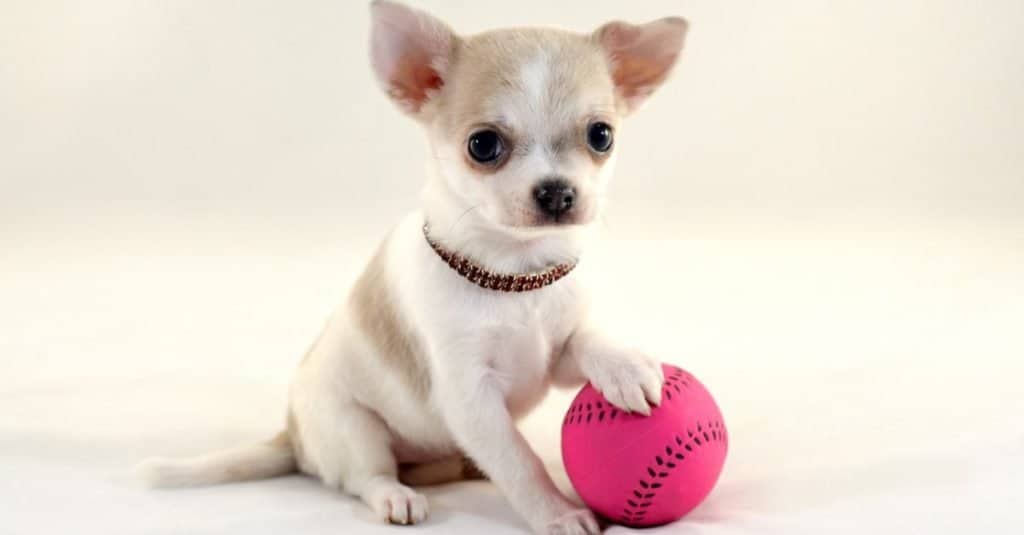
Apple heads are incredibly fragile, especially when they are puppies.
©iStock.com/Arthur Lookyanov
Apple Head Chihuahuas, teacup Chihuahuas, and some other small Chihuahua mix-breeds do not make good pets for small children. They are delicate animals, and their tiny bones can easily break if dropped, stepped on, or played with too roughly. But they make great pets for families with older children who understand their delicate nature.
Similar Breeds
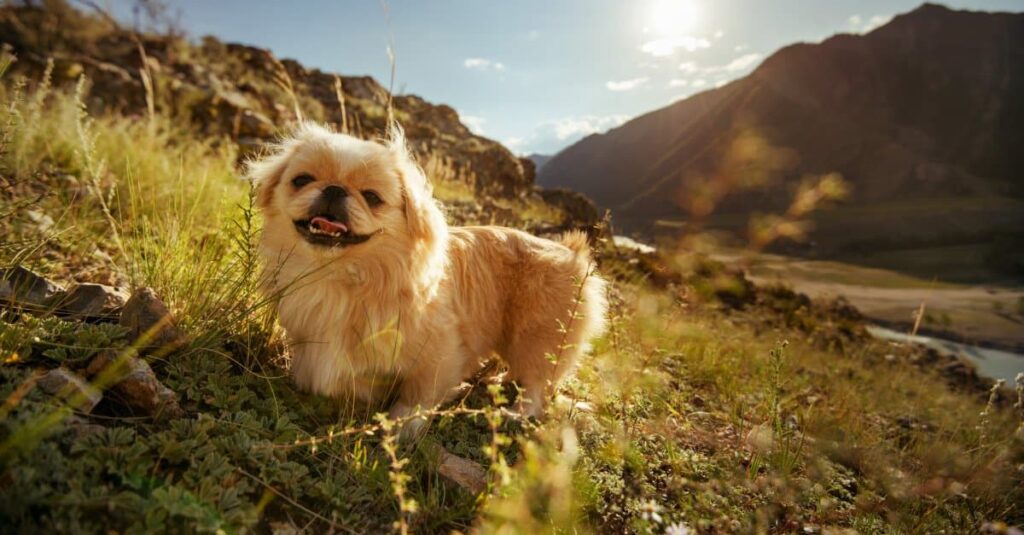
The Pekingese is a similar size to an apple head but has a calmer demeanor.
©iStock.com/molchanovdmitry
Dog breeds similar to Apple Head Chihuahuas include the Japanese Chin, Poodle, and Pekingese.
- Japanese Chin: Japanese Chin dogs look very much like long-haired Apple Head Chihuahuas and have similar temperaments. Like the Apple Head Chihuahua, the Japanese Chin requires little time to groom.
- Poodle: The Poodle is highly intelligent, like the Apple Head Chihuahua. Both are easily trained and make loyal companions. Teacup and Toy Poodles compare to adult Apple Head Chihuahuas in size.
- Pekingese: Like the Apple Head Chihuahua, the Pekingese is a small breed with ancient roots. Both breeds require little exercise and have similar physical vulnerabilities, such as their bulging eyes. Both also develop a close connection to their owners and can provide watchdog “alarm” services using their tendency to bark at strangers or outdoor noises.
Famous Apple Heads
The Chihuahua’s ancient roots in Mexico gave American fast-food giant Taco Bell plenty of reason to use this dog breed to promote their Mexican food line. Known from television commercials as simply the Taco Bell Chihuahua, a female Chihuahua named Gidget filled this role.
The film trilogy Beverly Hills Chihuahua originally starred an Apple Head Chihuahua named Papi alongside a variety of his fictional Chihuahua family members and friends.
Famous owners of Chihuahuas have included:
- Paris Hilton has owned multiple Apple Head Chihuahuas, starting with her most famous sidekick, Tinkerbell. She later bought a Teacup Apple Head in 2016.
- Britney Spears has owned two Apple Head Chihuahuas named Bit Bit and Lucky.
- Demi Moore owned a short-haired cream Chihuahua named Vida.
- Madonna has owned three Chihuahuas named Chiquita, Evita, and Rosita.
- Reese Witherspoon famously acted alongside Bruiser in Legally Blonde. But she also owned her own Apple Head Chihuahua.
- Marilyn Monroe owned a Chihuahua named Choo Choo.
- Rosie O’Donnell owned an Apple Head Chihuahua, which she often brought on set as a comedian, actress, and talk show host.
- George Lopez owned three Chihuahuas in addition to acting alongside a troupe of them in the film trilogy Beverly Hills Chihuahua.
Apple Head Chihuahua Pictures
View all of our Apple Head Chihuahua pictures in the gallery.

Ratchat/Shutterstock.com
Sources
- American Kennel Club / Accessed June 19, 2021
- beChewy / Accessed June 19, 2021
- Chihuahua Club of America / Accessed June 19, 2021
- Pet ID Register / Accessed June 19, 2021
- The Smart Canine / Accessed June 19, 2021
- K9 Of Mine / Accessed June 19, 2021
- Pet Helpful / Accessed June 19, 2021
- All About Chihuahuas / Accessed June 19, 2021
- Trending Breeds / Accessed June 19, 2021
- The Happy Puppy Site / Accessed June 19, 2021
- I Love My Chi / Accessed June 19, 2021