

Quick Take
- When your dog poops right after eating, it's not doing what you think. The real explanation reveals a lot about how healthy its digestion actually is. See the real explanation →
- Total digestion time varies by a shockingly wide margin between dogs, and several of the biggest drivers are things you're already doing (or not doing) every day. Explore the digestion timeline →
- Free feeding seems like the kind thing to do, but it can quietly trigger a chain of problems that includes one potentially fatal condition for certain breeds. Understand the bloat risk →
- The serving size printed on your dog food bag may actually be working against your dog's health, something vets are well aware of. Get proper portion guidance →
Whether your dog doesn’t seem to be digesting food properly, or you’ve adopted a new pup and don’t know how often to feed them, it’s important to understand your dog’s digestive system. Many factors can affect your dog’s digestion time, including what they’ve eaten, if they’re hydrated, their age, health, activity levels, and genetics. In this article, we’ll discuss how long it takes a dog to digest food, symptoms of digestive issues, how many meals a dog should eat daily, and more.
How Long Does it Take for a Dog to Have an Empty Stomach?
Your dog’s stomach contents typically empty into the small intestine in 4 to 6 hours. It generally takes a dog around 8-12 hours to completely digest its food. However, the total gastrointestinal transit time, which is how long it takes to pass through the entire digestive tract from consumption to defecation, can take just over 21 hours to just over 57 hours.
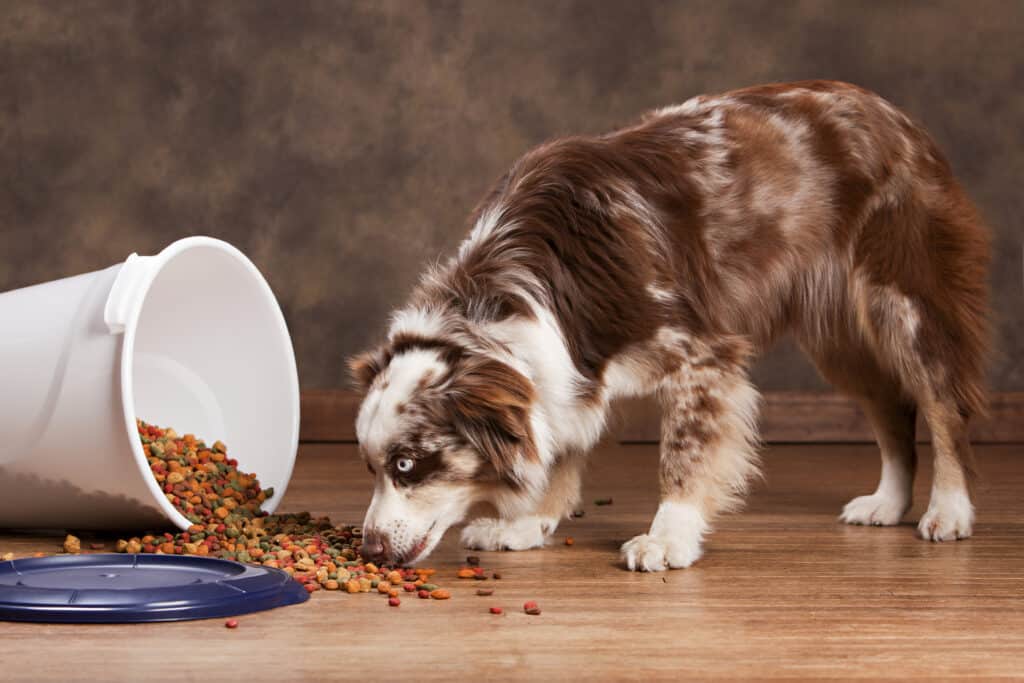
Most dogs digest their food in 8 to 12 hours.
©Michelle D. Milliman/Shutterstock.com
Some factors that will help determine how long it takes your dog to digest their food include:
- Age: Puppies take less time to digest their food than adults, while seniors’ digestive systems slow down over time.
- Size: While studies have not shown a correlation between size and upper gastrointestinal transit time, researchers have found a relationship between body size and colonic transit time.
- Breed and genetics: Just like humans, some dogs have faster metabolisms than others. This comes down to their breed and other genetic factors.
- Daily exercise: Dogs who are highly active will process food faster and thus need to eat more food to stay healthy. Sedentary dogs need less food and have slower digestive systems.
- Diet: The more fillers in a food, the more time it’ll take your dog’s body to digest. The more water in the food, the faster your dog can digest it. Dogs typically digest canned food much more quickly than kibble.
- Hydration: If your dog is dehydrated, it will take them longer to digest food. Hydrated dogs digest food more quickly.
- Health: Dogs with poor gut health may process food either faster or slower than a healthy dog.
How to Know If Your Dog Has a Digestive Issue
If you think your dog is sick, please see a veterinarian. They can advise you on treatments and dietary changes to help your dog’s digestive system function properly.
The following symptoms indicate that your dog has a digestive problem:
- Vomiting
- Diarrhea
- Hard stools
- Constipation
- Stomach pain
- Gas
- Poop has a stronger odor than usual
- Dehydration
- Changes in appetite
- Sudden changes in weight
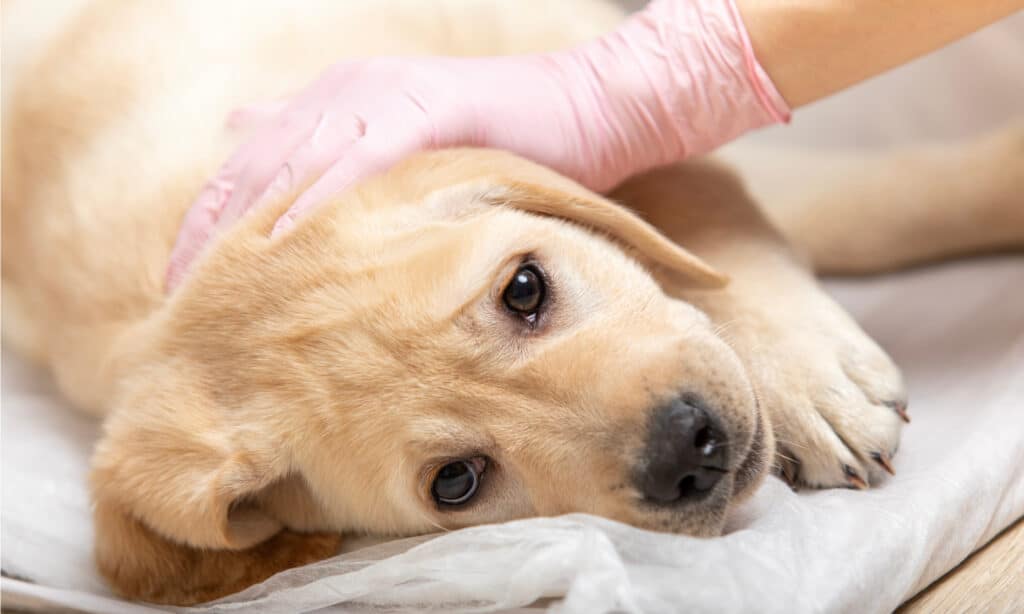
A veterinarian can advise you on treatments and dietary changes to help your dog’s digestive system function properly.
©Olya Maximenko/Shutterstock.com
What to Do When They Eat Foreign Objects
Certain foods and other materials, such as household things your dog has chewed and swallowed, can’t be digested. These things will either come out whole in their poop or stay in their system, which can lead to a blockage. If your dog eats something and you don’t see the object in its stool afterwards, call your veterinarian for help.
Dogs are known for eating things they shouldn’t, and sometimes x-rays reveal a alarming amount of foreign material in the stomach. Never try to induce vomiting on your own, and do not pull on any type of strong, floss, hair or other long objects, as this can cause damage to the intestines. Instead, call your vet immediately for advice.
Why Does My Dog Poop Right After Eating?
Many dogs will poop right after eating a meal. However, they aren’t pooping what they just ate, as their digestive system cannot move that quickly. Instead, their poop consists of food they ate roughly 8-12 hours before, depending on the factors listed above. This is your dog’s body’s way of making room to process the new food in its system. As more goes in, more needs to come out.
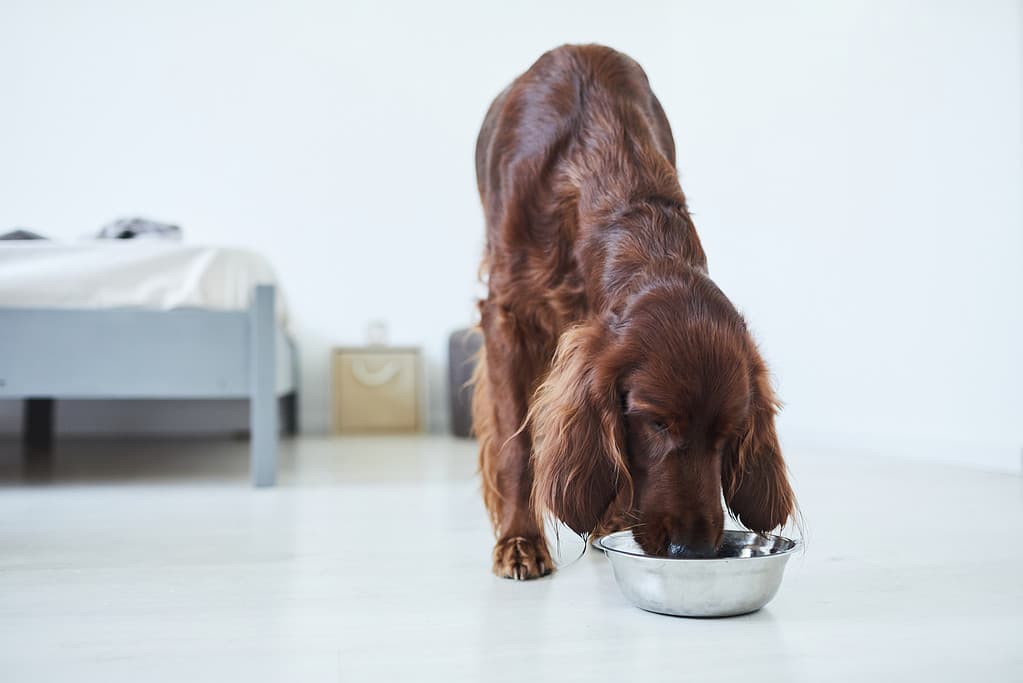
Dogs should eat at least two meals per day.
©SeventyFour/iStock via Getty Images
How Many Meals Should Dogs Eat a Day?
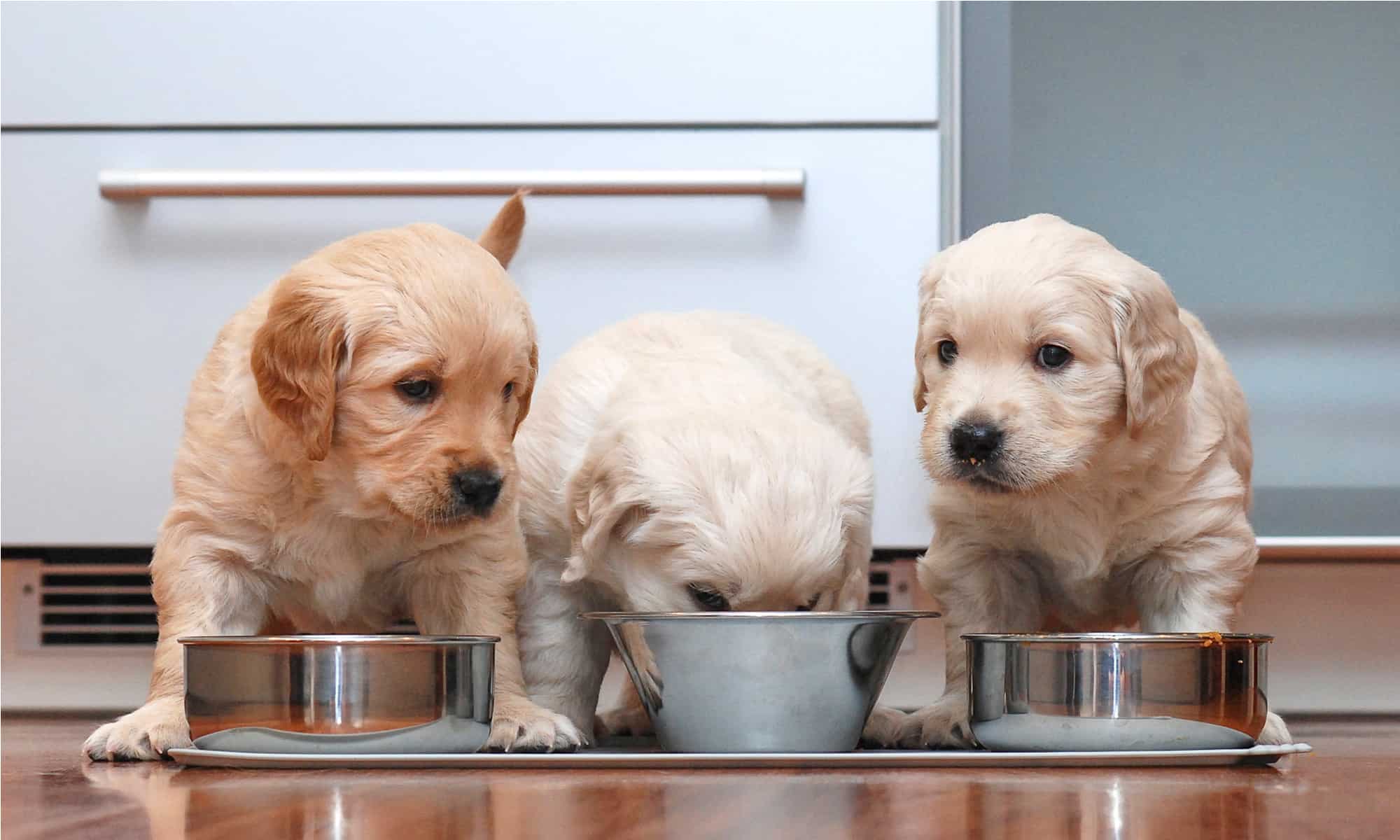
Dogs should eat at least two meals daily, which is the standard recommendation for adult dogs, while puppies or dogs with specific needs may benefit from three or more meals per day. The important thing is that you feed the same amount of food, no matter how many meals your dog gets. It is also important that you stay consistent.
For instance, don’t feed three larger meals one day and two smaller meals the next. Talk with your veterinarian to figure out how much food your dog should eat daily, and divide that amount into several meals, rather than feeding multiple meals of the same size each.
Scheduled Mealtimes
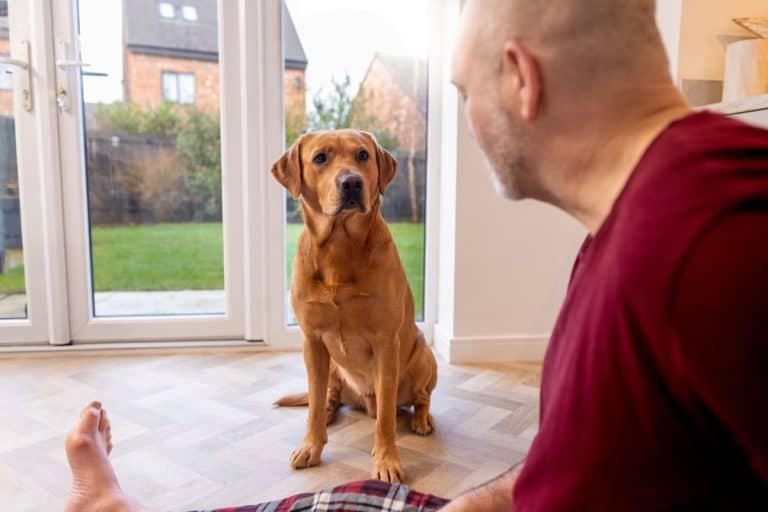
Most dogs benefit from scheduled mealtimes. Dogs thrive on routine throughout the day, and mealtime is an easy way to make this happen. They like knowing what to expect.
Free feeding can lead to your dog overeating and becoming overweight. Or, if their food is measured out, they might eat all of it in the morning and feel uncomfortable with such a full stomach. Their discomfort will only continue in the evening when they have no food left and are hungry. The exception might be if you’re trying to get your dog to put on weight or keep their weight level consistent due to a health condition. For instance, veterinarians will sometimes suggest feeding a senior dog whenever they feel like eating, especially if they have lost weight due to chronic health conditions.
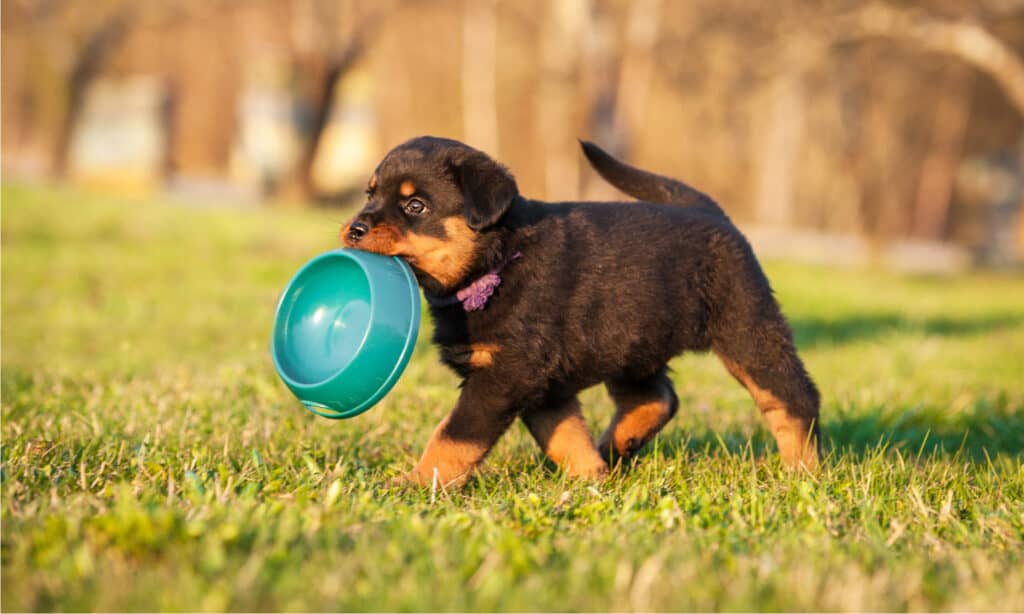
Feed your dog the same amount of food each day, no matter how many meals your dog eats.
©Rita_Kochmarjova/Shutterstock.com
In addition, scheduled meals can help prevent exercising too close to meal time, which can cause bloat. Bloat, or GDV, is a deadly condition in which a dog’s stomach turns inside its body. This cuts off the blood supply to other organs. Some breeds with deep chests are more prone to bloat. Males are also more likely to develop bloat than females.
Lastly, by scheduling your dog’s meals and feeding them the same amount each day, you’ll easily see if there are changes in their eating habits. This can be the difference between catching an illness early and catching it too late.