

Quick Take
- The same face rub that signals pure affection can also be your dog's only way of telling you something is wrong. See the full picture →
- If you've ever assumed your dog rubs their face on you to show who's boss, veterinary behavior science has a very different take. See what science says →
- Your dog mixing their scent with yours isn't the territorial move it sounds like. The real reason is far more social. Discover the social reason →
- One specific pattern of face rubbing warrants a vet call far more urgently than any other, and most dog owners don't know what it looks like. Spot the warning signs →
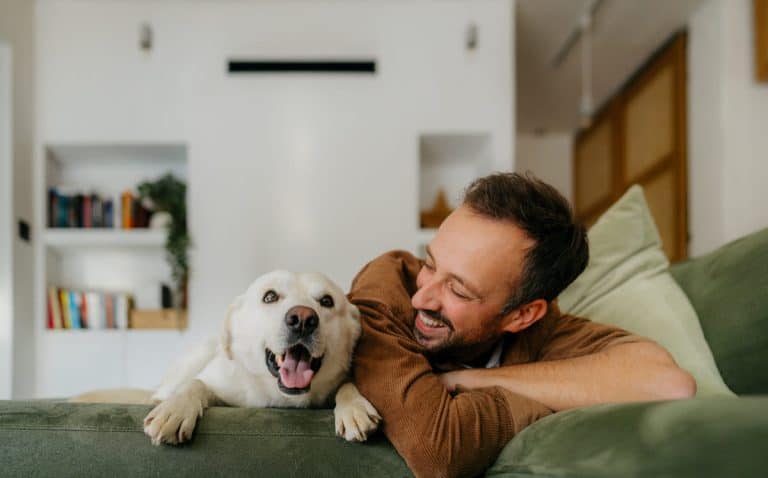
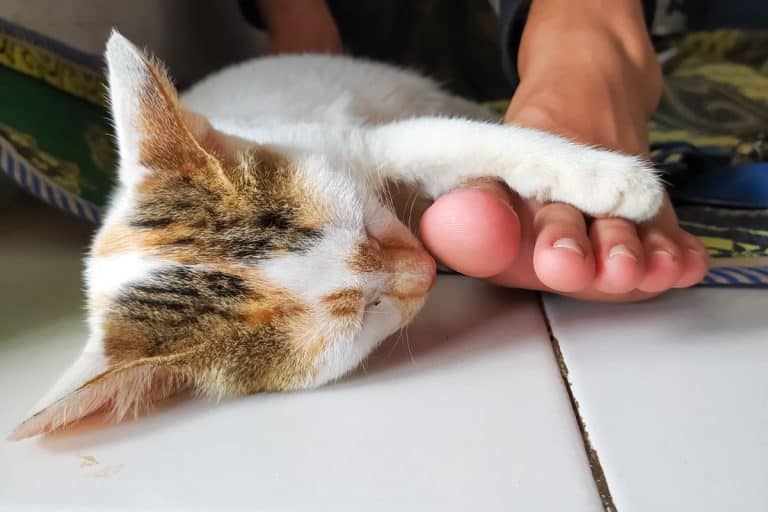
You’re on the couch, finally settled into your show, when your dog walks over and presses that cold, wet nose right into your arm. Maybe they drag their cheek across your sleeve. Maybe they bury their face into your lap like you’re the world’s softest pillow. It’s sweet, funny, and slightly damp, but it also raises a fair question: Why does my dog rub their face on me?
Most of the time, face rubbing is completely normal. Dogs use their bodies to communicate in ways humans often overlook. A nuzzle can mean affection, comfort, scent-sharing, or a simple request for attention. But that same behavior can also point to an itch, allergies, ear trouble, dental pain, or another source of discomfort.
The key is learning to read the whole dog, not just the nose.
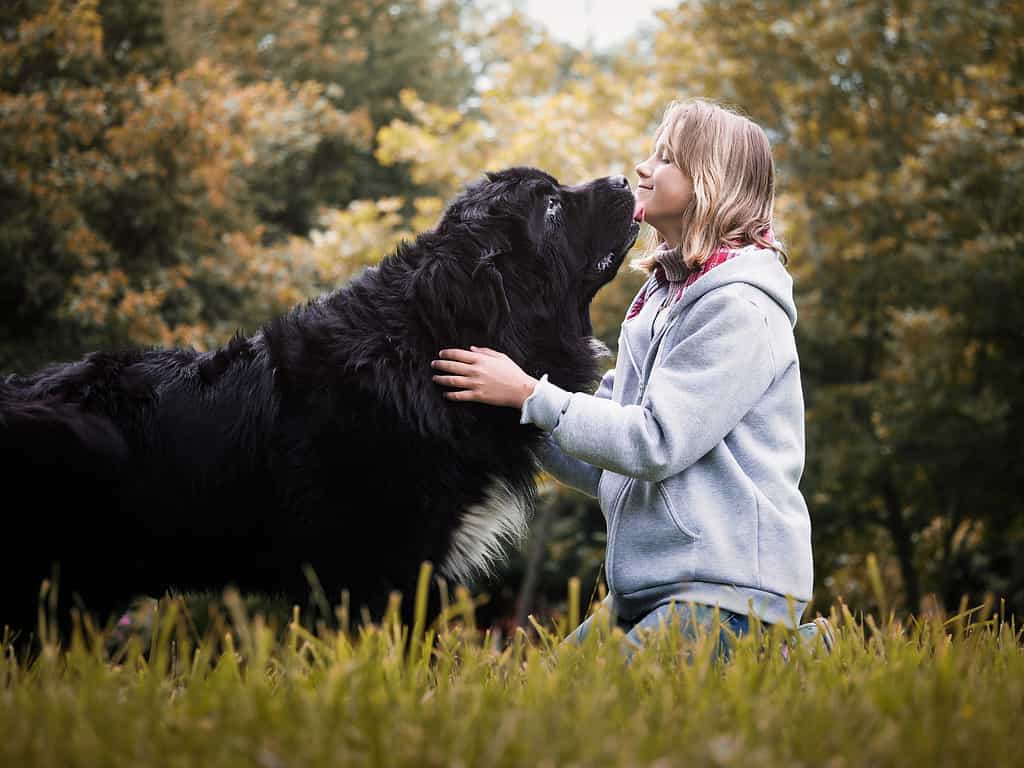
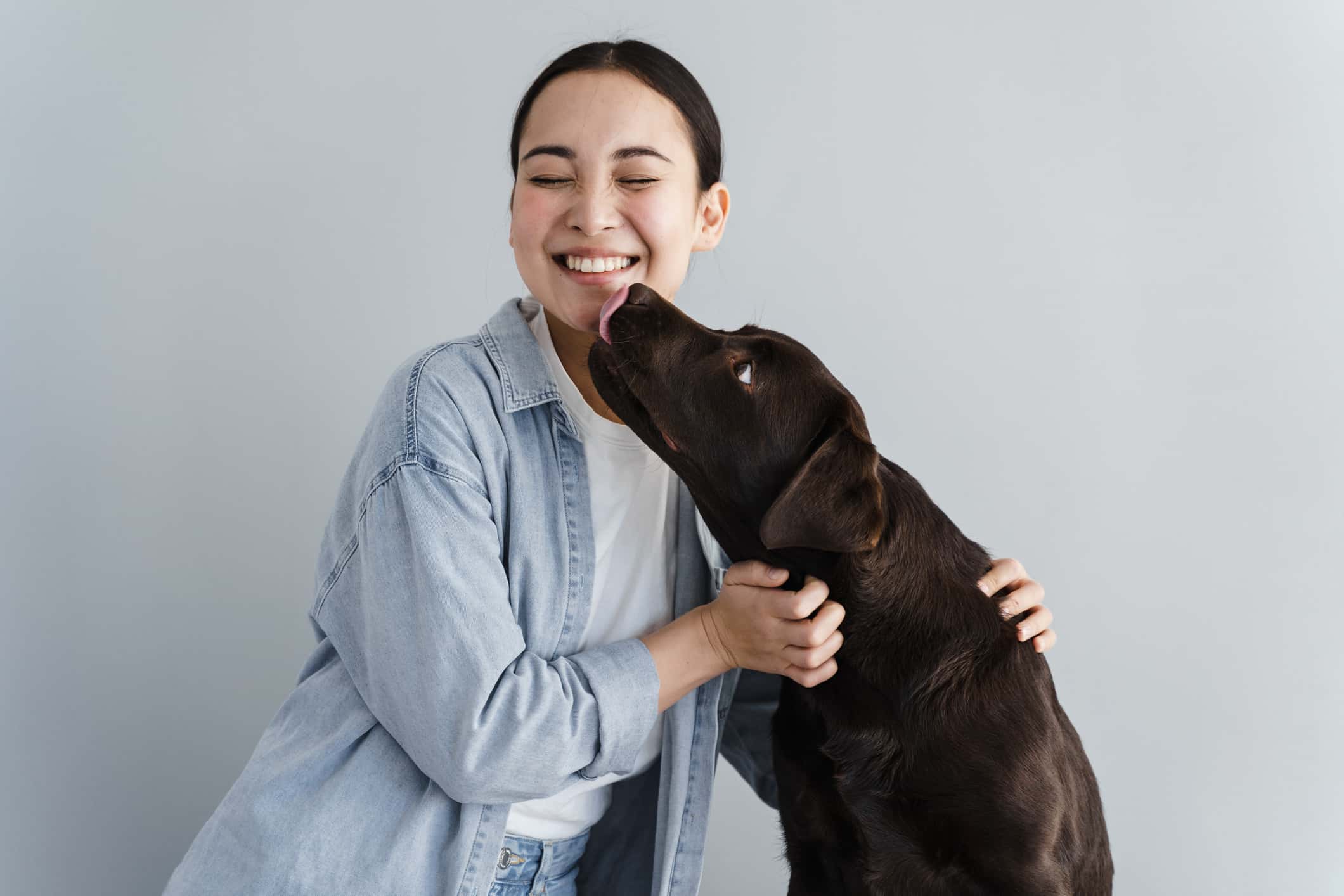
Your dog’s nuzzle may indicate pleasure or pain. The key is understanding how to read the body language.
©kozorog/iStock via Getty Images
Dogs Don’t “Talk” the Way We Do
One reason dog behavior gets misunderstood is that people naturally look for one clear meaning: My dog did this, so it must mean that. But dogs rarely communicate in one-to-one translations. A face rub is not the dog version of a single English sentence. It is more like a body-language signal.
Veterinary behavior experts note that dogs communicate through smell, sound, posture, facial expression, tail position, ear position, eye contact, and movement. Scent cues are especially important in canine communication, while human-style verbal language is not how dogs naturally share information.
So when your dog rubs their face on you, the better question is: What was happening right before, during, and after the rub?
A sleepy dog pressing their face into your lap after dinner is saying something very different from a dog frantically rubbing one side of their muzzle after chewing a toy.
The Most Likely Reason? Your Dog Just Likes Being Close to You
For many dogs, rubbing their face on a favorite person is simply a social, affectionate behavior. Dogs often repeat behaviors that work. If your dog rubs their face against your hand and you laugh, pet them, scratch their cheeks, or say their name, they may learn that face rubbing is a reliable way to get warmth and attention. This is especially common in dogs who enjoy cheek scratches, chest rubs, or simply leaning against people.
Your Dog May Be Sharing Scent
Dogs experience the world through scent. Their bodies produce scent signals, and they gather information from the smells around them. That is one reason dogs sniff each other, roll in interesting odors, and sometimes rub against people or objects.
So yes, scent can be part of the reason your dog rubs their face on you, but they’re not marking you.
Your dog may be mixing their scent with yours because you are familiar, safe, and socially important to them. In a dog’s world, shared scent can be part of belonging.
That is also why your dog may curl up on your laundry when you are gone. Your scent is comforting. It tells them, in a language they understand, that their person is nearby even when you are not physically in the room.
Sometimes, You’re Just a Convenient Napkin
Not every dog behavior has an emotional backstory. Sometimes your dog rubs their face on you because their face is wet, sticky, itchy, or covered in something they want gone.
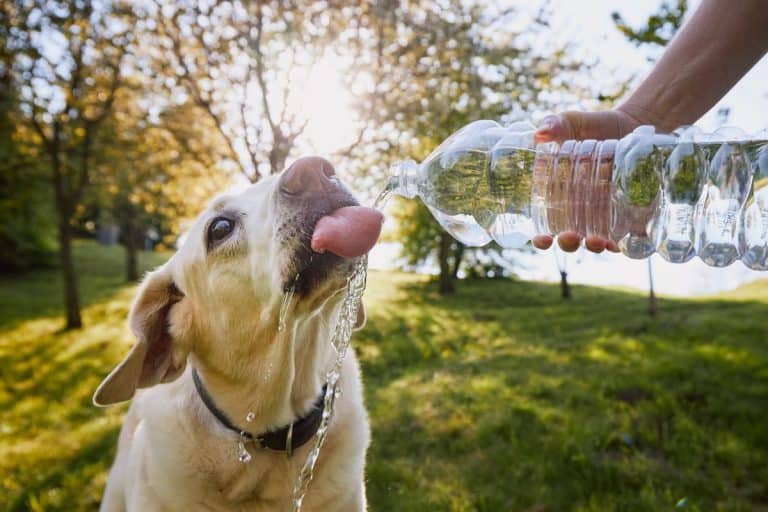
A dog may wipe their muzzle on your pants after drinking water or eating. This is the canine version of a toddler using your shirt as a napkin.
You can often spot this version of rubbing because it happens right after a specific trigger like a meal or a chew session.
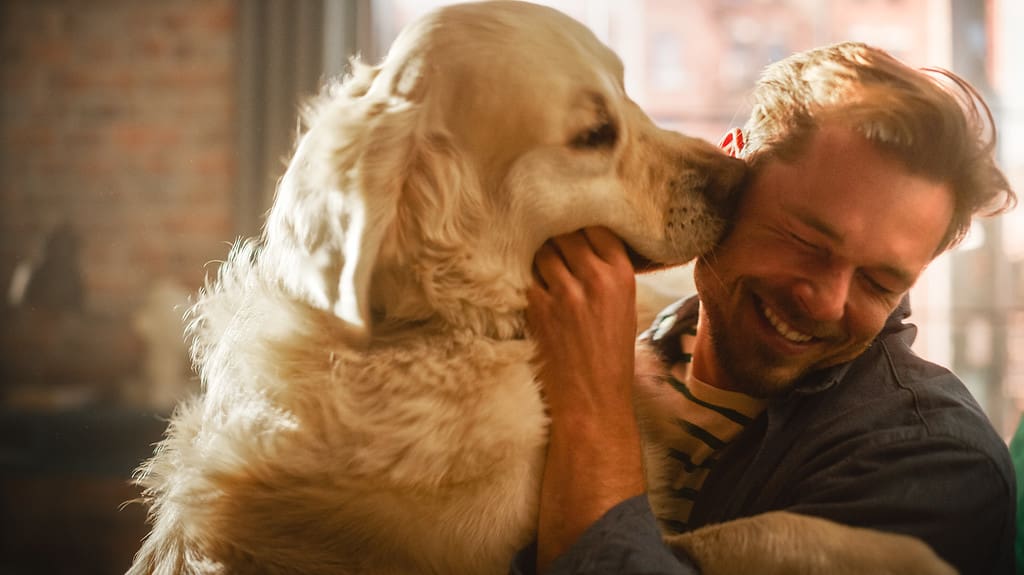
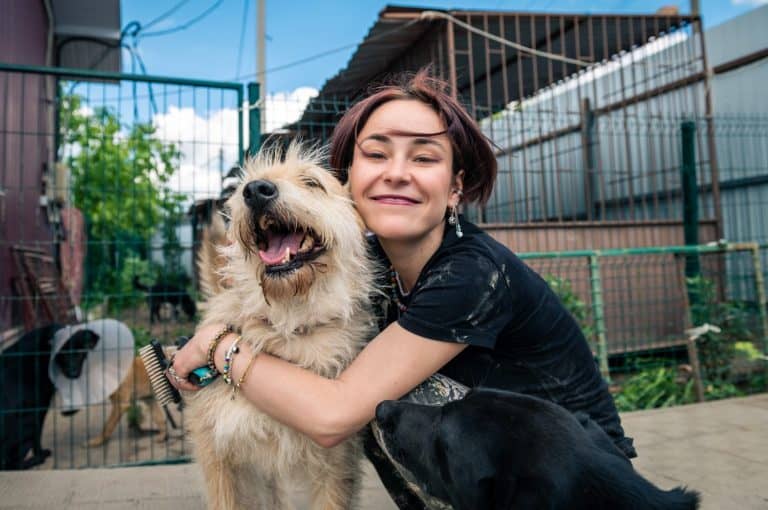
If the rubbing or nuzzling seems more aggressive or problematic, it may be time to line up a vet visit.
©gorodenkoff/iStock via Getty Images
Face Rubbing Can Also Mean “I’m Itchy”
Occasional rubbing is normal, but persistent or intense rubbing may signal that something is physically bothering your dog. VCA Animal Hospitals notes that dogs with atopic dermatitis, which means environmental allergies, may rub their faces, lick their feet, and scratch areas such as the armpits and groin.
Common medical reasons for face rubbing include:
- Environmental allergies, such as pollen, mold, dust mites, or grasses
- Fleas or mites
- Food allergies or sensitivities
- Ear infections
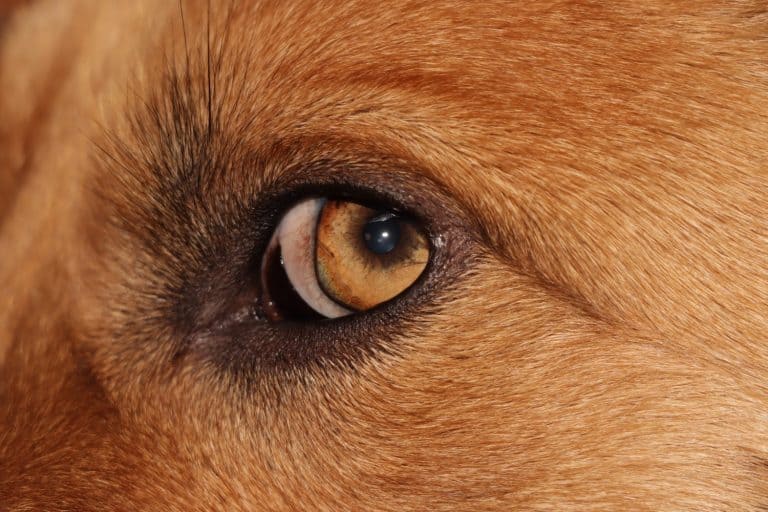
- Eye irritation
- Dental pain
- Skin irritation from a collar, harness, shampoo, or topical product
- Something stuck in the fur, mouth, or around the eye
Here’s a useful distinction to help determine the cause of rubbing: affectionate rubbing tends to look relaxed; uncomfortable rubbing tends to look urgent.
Veterinary-reviewed guidance from Great Pet Care also warns that if a dog is fixated on rubbing their face and cannot easily be distracted, pain or discomfort may be involved.
Watch for These Red Flags
A call to your veterinarian may be in order if you notice any of these signs:
- Rubbing that suddenly starts and does not stop
- Rubbing one side of the face only
- Red, watery, swollen, or squinting eyes
- Head shaking or ear odor
- Pawing at the mouth
- Bad breath, swollen gums, or trouble eating
- Hair loss, sores, scabs, or raw skin
- Frequent foot licking along with face rubbing
- Rubbing after a possible exposure to a chemical, plant, insect sting, or foxtail-type grass awn
- Behavior changes, appetite changes, or signs of pain
One-sided rubbing is especially worth taking seriously because it can suggest a localized problem, such as an ear, tooth, eye, or skin issue on that side.
What About Comfort After You’ve Been Away?
It’s not uncommon for dogs to rub or nuzzle against their people after a separation. If you have been on vacation, out for a long workday, or even just behind a closed door, your dog may greet you with a full-body celebration followed by intense closeness.
That face rub may be part affection, part relief, and part reconnection.
For dogs who struggle with separation anxiety, the behavior may be more intense. They may follow you from room to room, cling to your legs, whine, pace, or settle only when they are touching you. In that case, the face rubbing is probably not the problem itself. It is one small piece of a bigger emotional pattern.
The goal is not to punish the closeness. It is to help the dog feel safer when alone through gradual training, predictable routines, enrichment, and, when needed, help from a veterinarian or credentialed behavior professional.
Is Face Rubbing a Sign of Dominance?
Face rubbing is not a sign of dominance.
It used to be common to explain unwanted dog behavior as “dominance” or an attempt to become the “alpha.” Modern veterinary behavior guidance is much more cautious about that interpretation. The American Veterinary Society of Animal Behavior states that its current humane dog training position recommends reward-based methods for all aspects of training and behavior modification. Purdue’s Canine Welfare Science resource also notes that scientific understanding of dominance theory and domestic animal behavior has changed substantially over recent decades.
That does not mean dogs never push boundaries. They absolutely do. A dog may nudge your hand because they want petting, block your path because they are excited, or shove their face under your arm because it has worked before.
But labeling that behavior “dominance” can lead people to respond too harshly or miss the real cause.
Instead of asking, “Is my dog trying to dominate me?”, ask yourself what they are trying to communicate.
If a dog nose-nudges you constantly for food, attention, or access to the couch, that is usually a manners and reinforcement issue. Teach an alternate behavior, such as sitting quietly, lying on a mat, or waiting for an invitation. Reward that behavior consistently.
If the nudge is paired with growling, guarding, snapping, stiff posture, or blocking behavior that feels unsafe, get help from a veterinarian, veterinary behaviorist, or qualified positive-reinforcement trainer.
Other Ways Dogs Show Affection and Connection
Face rubbing is just one piece of your dog’s social language. Dogs may also show comfort and attachment by:
Leaning on you. A relaxed lean often means your dog feels safe and wants contact.
Resting their head on your lap. This can be affection, comfort-seeking, or a quiet request for attention.
Soft eye contact. A relaxed face, loose body, and gentle gaze can signal trust. A hard stare with stiffness is different and should not be read the same way.
Following you around. Some dogs follow because they are bonded to you. Others follow because they are anxious, bored, curious, or hoping something good will happen in the kitchen.
Sleeping near your belongings. Your scent can be deeply reassuring, especially when you are away.
Again, context is everything. A dog who follows you with a loose body and then naps nearby is probably content. A dog who cannot settle when you leave the room may need support building independence.
How to Respond When Your Dog Rubs Their Face on You
If your dog seems relaxed and happy, it is fine to enjoy the moment. Scratch their cheeks. Talk to them. Let them settle beside you.
But if you want less face rubbing, maybe because your clothes are constantly damp or your dog is too pushy, redirect gently. Ask for a sit, a down, or a chin rest on a blanket. Reward the calmer version of closeness.
If you suspect itchiness or discomfort, it’s important to look for the cause. Check their ears, eyes, mouth, skin, collar fit, and recent exposures. If the rubbing is frequent, intense, sudden, or paired with other symptoms, schedule a visit to your veterinarian.
The Bottom Line
When your dog rubs their face on you, they may be showing affection, seeking comfort, sharing scent, asking for attention, wiping their muzzle, or scratching an itch. Most of the time, it is normal and endearing, but if you notice any of the warning signs listed above, it may be time to schedule a vet visit.