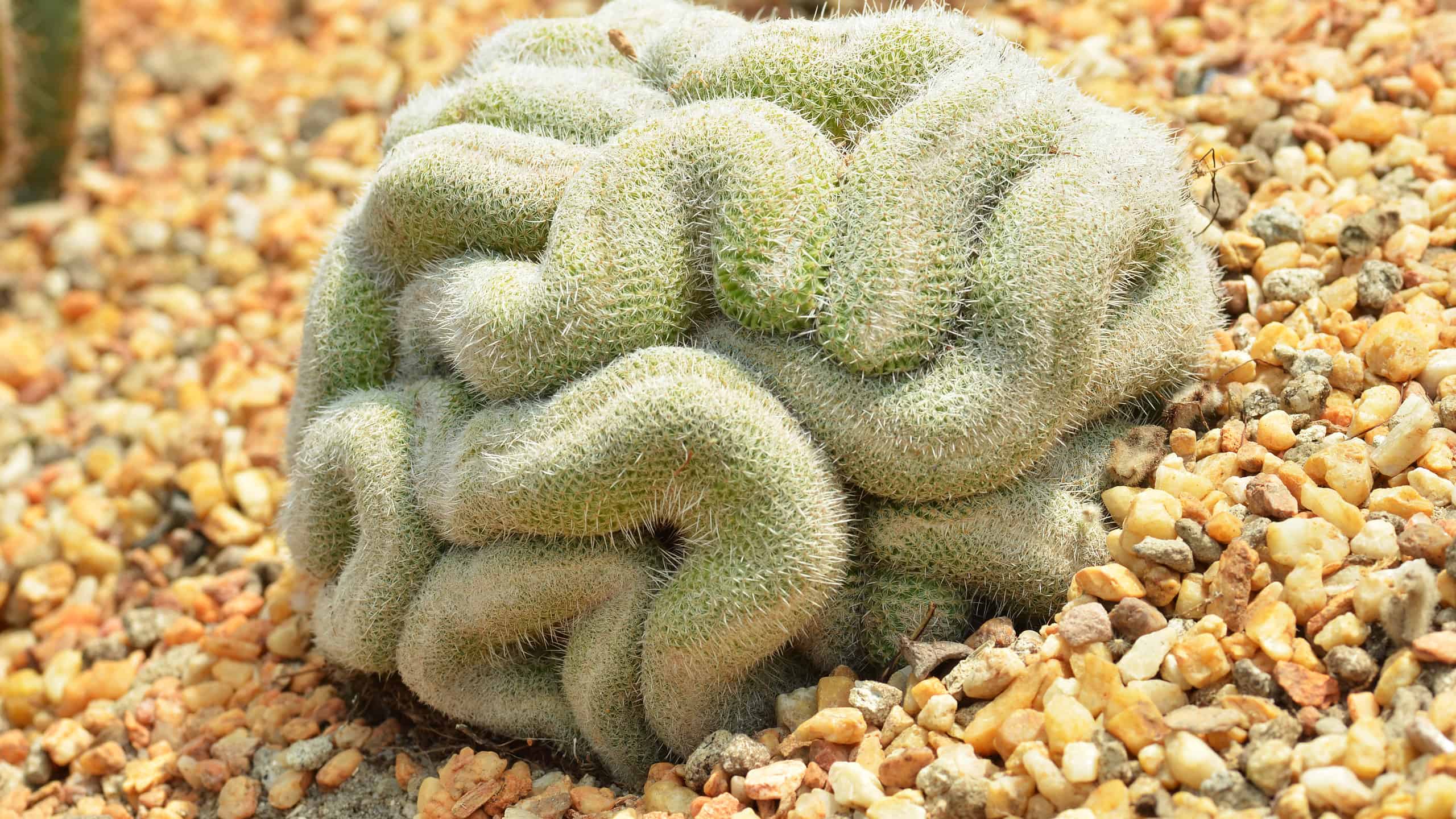

The brain cactus is a fascinating plant with a very descriptive name. The Cristata variant of Mammillaria elongata, sometimes known as brain cactus, is one of the several subspecies of this plant. It is an easy-to-grow cactus that often bears pretty, tiny blossoms and looks excellent both indoors and outdoors in warmer areas.
We will explain all you need to know about this cactus in this guide, including how to maintain a live specimen of the brain cactus at home.
What is a Brain Cactus?
The brain cactus is a very unusual cultivar of a certain species, rather than a specific species. It is classified as Mammillaria elongata “Cristata.” It is a distinctive, crested variety of the Mammillaria elongata cactus, which is quite unusual compared to other varieties of this species. Its growth pattern is reminiscent of worms or brains, thus the name brain cactus.
The brain cactus is another name for a species of cactus named Stenocactus multicostatus. Although being entirely distinct species, they are both native to Mexico and require almost the same level of care.
Anatomy of the Brain Cactus
Genetic changes are what give the brain cactus its distinctive look. An injury to the plant when it was young is what leads to its rare shape. The cells at the damaged location grow rapidly and much more chaotically than usual. The pads’ twisted shape is a result of this growth.
A great indoor plant, this cactus requires manual manipulation of this specific injury to produce the fan-like growth that resembles a brain. The brain cactus typically grows to a maximum height of six inches. These are little, pudgy cacti that are typically around 12 inches wide or less. They are even used for bonsai because of their small stature.
The spines of this cactus come in a variety of sizes and are clustered into areoles. The smallest spines resemble hair in appearance. The plants are green, but because of their hairy spines, they seem grey to the naked eye.
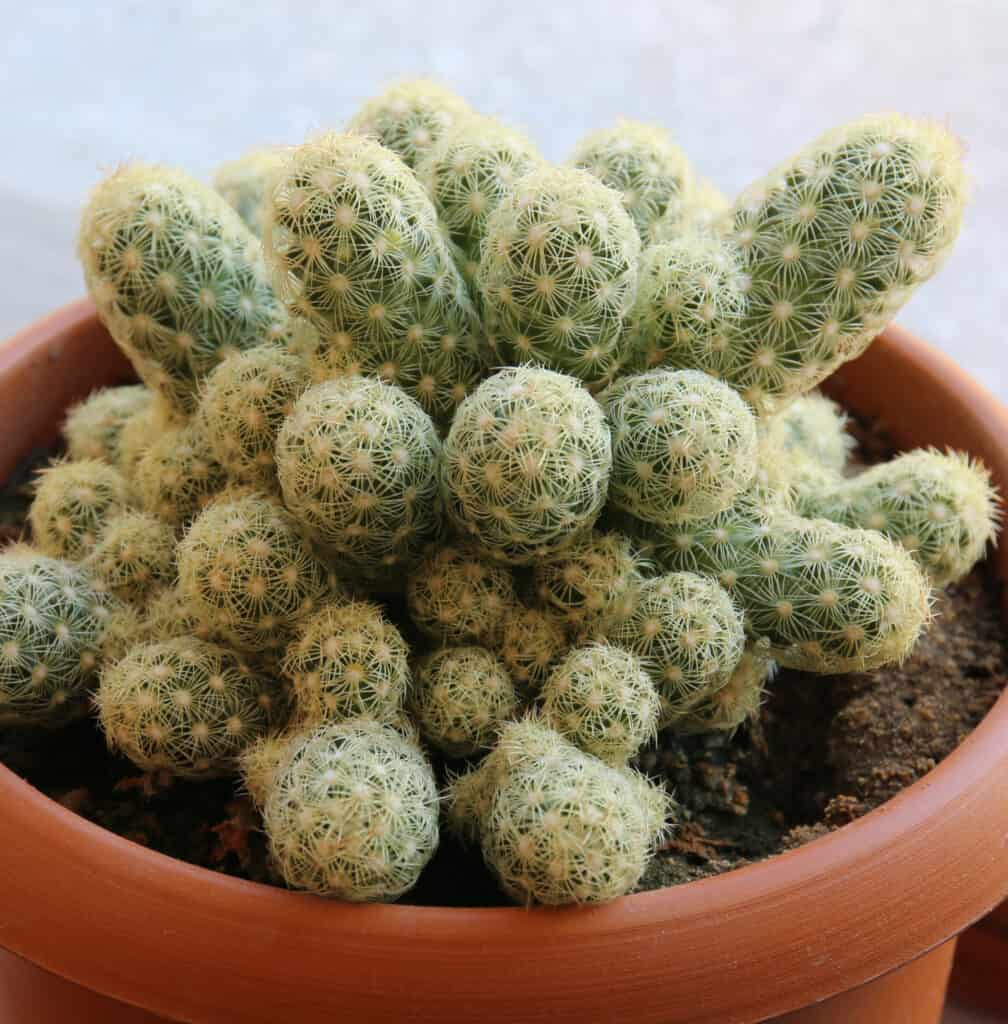
The base form of Mammillaria elongate (pictured) tends to look very different from the brain cactus variety.
©iStock.com/Yetkin BILGIN
Brain Cactus Native Environment
Mexico is the original home of both the brain cactus and Mammillaria elongata in general. It thrives on rocky soil and arid meadows. They can be found in the wild in rocky outcroppings and in crevasses in Central Mexico. They eventually grow into a column of stems and tiny offsets.
Brain Cacti Varieties and Subspecies
Mammillaria elongata cacti come in a variety of distinct forms. However, Mammillaria elongata ‘Cristata’ is the sole variation of the brain cactus specifically.
Colors of the Brain Cactus
The brain cactus is usually a grayish-green to deep green color, like many cacti species that are similar. The hue of its small spikes is off-white. The spines can sometimes be yellow or brown, especially on older plants. This cactus has flowers that might be pink, dark purple, or even bright white.
What Will Make My Brain Cactus Bloom?
This species makes tiny, pink, bell-shaped blooms. Because it is a heliophilic plant, the brain cactus needs enough sunshine to develop properly and eventually blossom. It can be positioned on a balcony or in an open area of a garden. These succulents bloom in the spring, although more blooms could develop later.
The majority of cactus species require dormancy in order to bloom. As the temperature falls below 59 degrees F, the dormant period typically lasts between two and four months. Withhold water and fertilizer during this period and relocate the pot to a cool location with lots of light. Put the cactus in a well-lit area where it will receive lots of sunlight outside of its dormant period to encourage flowers to grow.
How to Grow a Brain Cactus
If you have successfully grown other cacti and succulents, you should have no issue taking care of a brain cactus. The plant’s requirements for water, light, and food are quite standard for many cactus species.
Avoiding overwatering is one of the most crucial aspects of plant maintenance. The fragile roots of this cactus will quickly rot if it is left in wet soil for an extended length of time, which can eventually destroy the entire plant.
Other than that, this plant is quite hardy and doesn’t have any significant insect or disease problems. Plan to water and feed your cactus more often from spring through early fall. And after they have outgrown their pots, repot these plants as necessary. Place your cactus outside or in an outdoor container garden in a location that offers some protection from high winds, which might harm the plant.
Propagating a Brain Cactus
Growing brain cacti is very different from reproducing other cacti and succulents. Because it has a crested shape, you’ll need to be a bit inventive with your propagation methods to protect its distinctive form.
This plant can generate offsets that can be divided and planted again, although these offsets often develop in a manner more akin to that of a base-variety Mammillaria elongata. Although you might be lucky, don’t remove and discard any offsets that appear normal because they might surprise you and develop crests as they mature. Try replanting them and watch to see whether they develop brain-shaped crests as they grow.
The brain cactus can also be propagated from cuttings. However, for optimal results, the cuttings should be grafted onto another cactus. To create a brand-new cactus, you must chop off the head of one, take a cutting from another, and mash them together. That may seem odd, but it does work! The new cactus will have the same traits and crested shape as the parent plant if you place a cutting from your cactus on top, which cannot be said for other means of propagation.
The two plants you utilize for grafting should be genetically linked to one another. Thus, you ought to graft your brain cactus onto another Mammillaria elongata specimen if you can. Try to use a cactus that is in the same genus if you can’t find one that is the same species as your brain cactus.

Brain cacti (pictured) can be propagated, but it takes some special precautions to ensure you get that brain-like shape.
©iStock.com/Farknot_Architect
Repotting and Transplanting a Brain Cactus
The brain cactus needs a pot with lots of drainage holes. Unglazed pots are advantageous because they permit more soil moisture to evaporate through their walls. This cactus also doesn’t require a deep container because its roots are shallow. Also, it doesn’t mind being a bit rootbound in its container.
Repotting is necessary, though, if you notice roots poking out of the pot and the cactus has grown top-heavy. This cactus only need repotting every two to three years or so since it grows slowly. Carefully take it out of its old pot and set it in the new container with fresh potting soil. Before watering, give the roots a week or so to acclimate.
Pruning a Brain Cactus
Pruning this species and cultivar of cactus is very unnecessary due to its small size and distinct, brain-like crests that don’t grow very tall.
Water Needs for Brain Cacti
We recommend letting the soil almost entirely dry out between waterings of your brain cactus in order to prevent root rot. This plant can withstand drought well. Watering should be sufficient in the spring and summer at around once every two weeks.
Reduce watering to once every three weeks to once per month as the weather begins to become chilly in the fall, and continue in this manner through the winter. As this cactus is not actively growing throughout the winter, it requires less water than it does during the summer.
Instead of watering more often in smaller amounts, it is preferable to water extensively and then wait for the soil to dry up. Overwatering is more likely to occur with the former strategy. When watering any container plant, always empty the drip tray after a few minutes.
Sunlight Needs for Brain Cacti
Full sunlight, or at least six hours of direct sunshine most days, is necessary for the brain cactus to grow. Although they can tolerate some shade, lower light levels prevent them from reaching their full potential and producing flowers. Put your cactus beside your room’s brightest window if you’re keeping it indoors. Usually, the best window is one that faces west.
Soil Needs for Brain Cacti
Like many species of cactus, these cacti demand rocky, sandy soil with excellent drainage. The pH of the soil doesn’t need to be too acidic or too alkaline. The best potting mix for container plants is one that quickly drains and is mixed especially for cacti and succulents.
Fertilizer Needs for Brain Cacti
The brain cactus is not a heavy feeder, but while it is actively developing, it does benefit from some fertilizer. Use a liquid fertilizer developed specifically for cacti and succulents on your plant in the spring and summer. In the fall and winter, when the cactus becomes dormant, there is no need to fertilize. Doing so can cause more harm than good.
Temperature and Humidity Needs for Brain Cacti
USDA hardiness zones nine through 11 are suitable for the brain cactus to thrive outdoors. This cactus flourishes in hot, dry environments. While it may survive in temperatures as low as 20 degrees F, persistent exposure to frost and subfreezing conditions will eventually kill it.
This species prefers to be in environments that are at least 50 degrees F. In environments with low to moderate humidity, cacti tend to do well. However, excessive soil moisture retention brought on by high humidity might result in root rot. Hence, in humid environments, careful irrigation and efficient soil drainage are crucial.
Pests and Diseases to Watch Out For
The brain cactus is occasionally prone to pests and illnesses. With brain cactus, problems like root rot, fungal diseases, and insect infestations are all common.
Cacti can suffer some serious damage from root rot, which is a prevalent issue among cacti growers. It is brought on by overwatering and might lead to plant death. Insects like mealybugs can also become an issue. By routinely inspecting your plant for pests and applying an organic insecticide, you can prevent insect infestations.
Is It Hard to Grow a Brain Cactus?
The brain cactus is a super easy cactus to grow. With the right care, it often bears beautiful, tiny blossoms. In warmer areas, it grows well as a houseplant or outdoor specimen. This is a species that will most likely work out well for you if you don’t have a green thumb, as it doesn’t need a lot of attention.
How cool is this oddly-shaped cactus? If you can find one at your local nursery or via a specialty store online, you should have no problem keeping this little guy alive with just a bit of regular maintenance and patience.