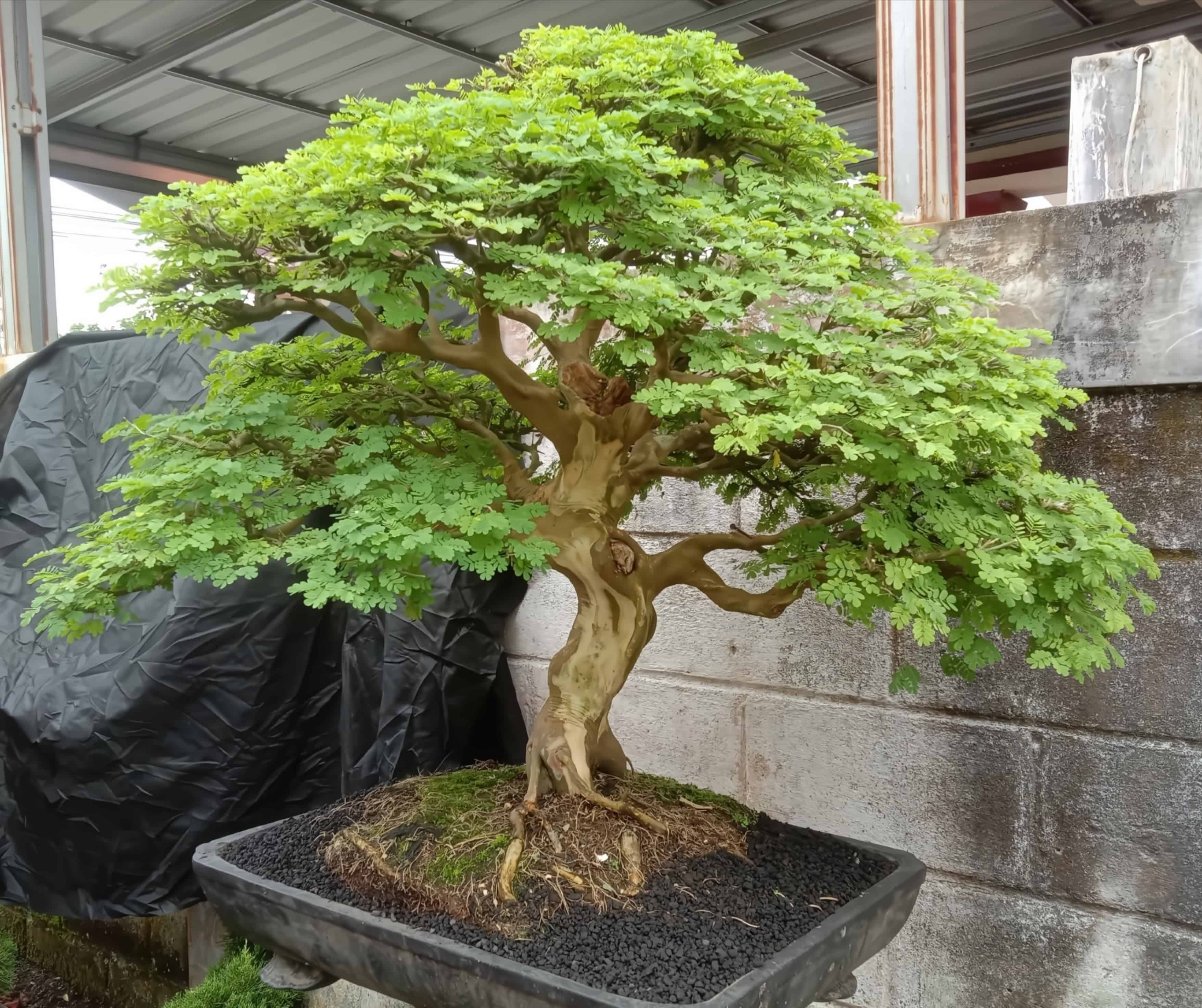

The rainforests of Brazil are home to many beautiful and exceptional plants. One of these is the Brazilian rain tree. These hardwood trees grow tall, with dense branch systems that provide shade. And since they are legumes, they bear edible fruit and seeds! But did you know the Brazilian rain tree is an excellent choice for Bonsai tree art? Indeed, the tree is actually an incredibly popular choice for Bonsai tree art!
Whether you are a beginner just starting out with Bonsai or an expert looking for a beautiful but easy-going tree, here is everything you need to know about the Brazilian rain tree Bonsai tree!
| Botanical Name | Pithecellobium tortum |
| Common Types | Brazilian rain tree; there are technically no varieties or cultivars available. |
| Sunlight | Full, direct sunlight for several hours a day. Since they are used to a lot of sunshine in their natural environments, it is important to recreate this when growing one of these trees as a Bonsai tree. However, some shade during the summer is appreciated! |
| Soil | Well-draining. Any specialty Bonsai soil mixture should be fine. Brazilian rain trees are not too picky about soil! |
| Water | Even, regular watering, especially during the growing season. Soil should not dry out. |
| For Beginners? | Yes! Brazilian rain tree Bonsai trees are generally easy to care for. They can be styled into many simple shapes. |
| Indoors or Outdoors? | Outdoors if conditions are warm and humid. Otherwise, this tree should be grown indoors. |
| Pairs Well With… | Moss and rocks. Moss can even be used to reduce the possibility of soil erosion from watering! |
Common Types of Brazilian Rain Tree Bonsai Trees
As the name suggests, the Brazilian rain tree is native to the country of Brazil. It calls the rainforests of this area its home. Technically, these trees are legumes. This means that they bear fruits when planted naturally. They also have flowers, even when planted as Bonsai trees! These flowers are fragrant and can attract butterflies. They look like little white puffs on the branches!
There are no known varieties or cultivars of the Brazilian rain tree. Below, we’ve outlined everything you need to know about this unique little tree!
Brazilian Rain Tree
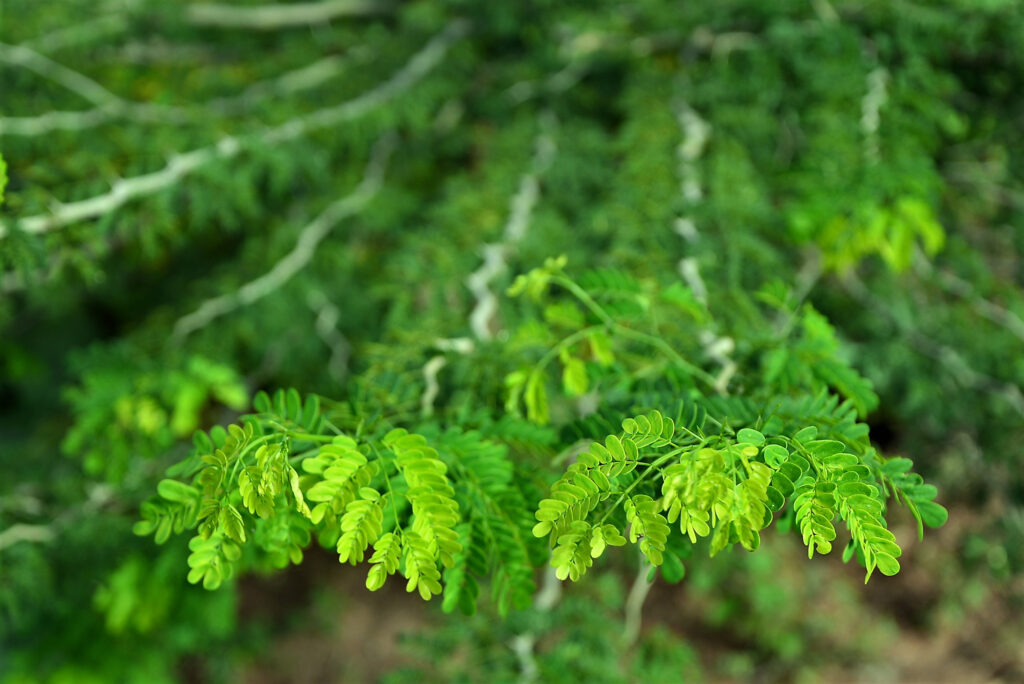
The branches of the Brazilian rain tree are particularly delicate.
©NANCY AYUMI KUNIHIRO/Shutterstock.com
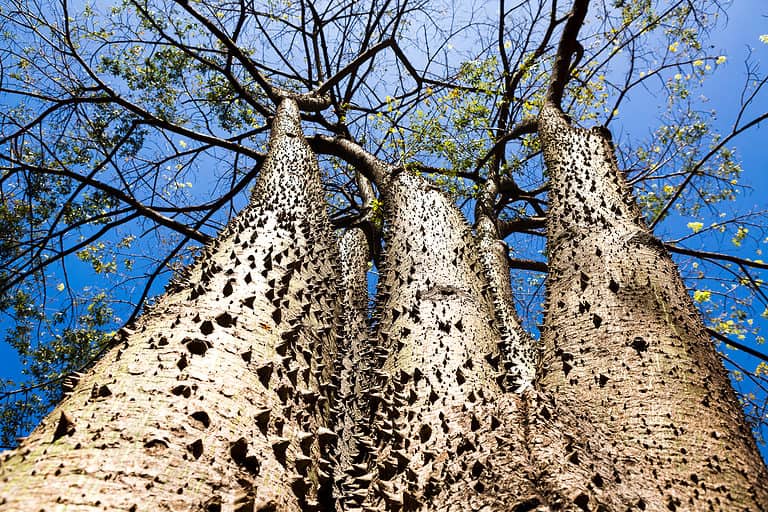
The Brazilian rain tree grows upright, with delicate branches. These branches form their often crooked shape naturally. The bark on these branches, as well as the trunk, is colored dark gray. It peels as the tree matures and is quite spiny to the touch.
On these stems and branches rest bundles of leaves that are a vivid dark green color. These leaves are known as compound leaves, which means that they are technically made up of leaflets. Leaflets are considered to be single leaves all on their own. They are connected to the same center stem. These leaves often fold up at night — or when there is a lack of light — and then they unfold in the morning or beneath brighter light.
Between these leaves bloom the white fragrant flowers that Brazilian rain trees are known for. Yes, they do still bloom, even on a Brazilian rain tree Bonsai tree! If one of these Bonsai trees is kept outside, they can definitely attract butterflies with their puffy, sweet-smelling flowers!
Caring for Your Brazilian Rain Tree Bonsai Tree
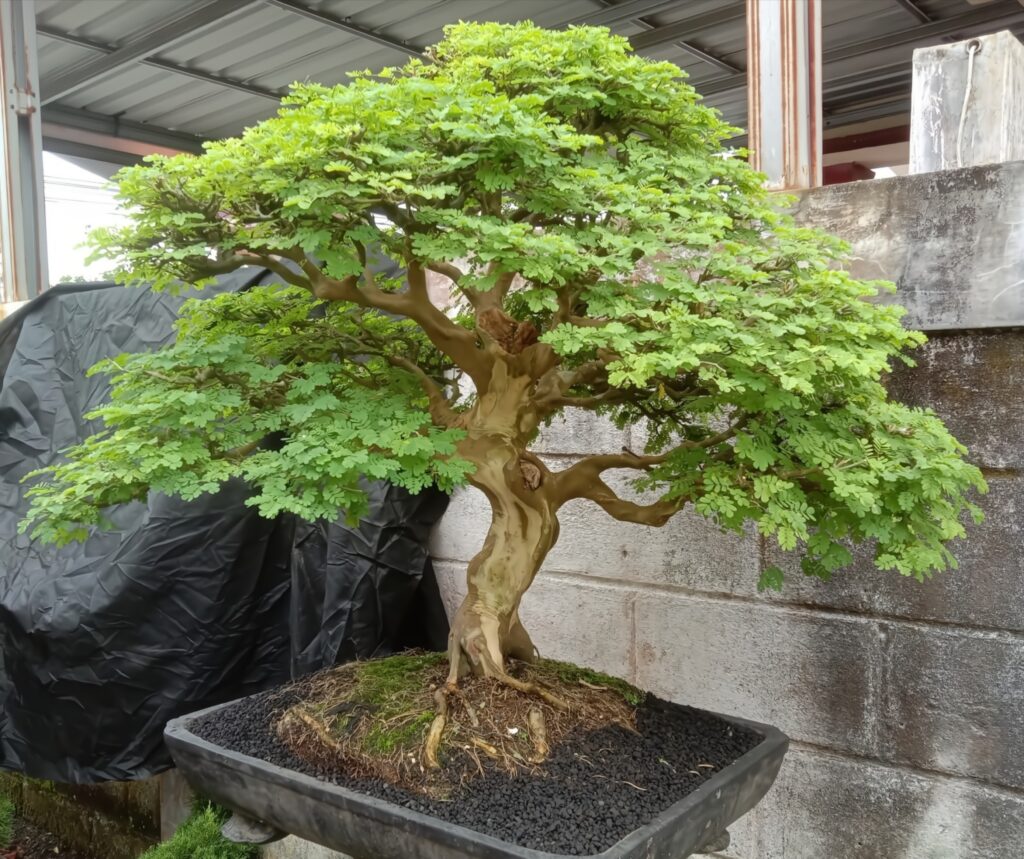
There are many factors to consider caring for any Bonsai tree, including the Brazilian rain tree.
©Yei Kuye/Shutterstock.com
Properly caring for a Bonsai tree is just as important as pruning and styling it. In fact, it might even be the most important part! Some species are more difficult to care for than others. Thankfully, caring for a Brazilian rain tree Bonsai tree is relatively straightforward. Whether it’s sunlight or placement of the tree, or how to water it or what kind of soil it needs, here is all you need to know about caring for your Brazilian rain tree Bonsai tree!
Sunlight
In their natural habitat, Brazilian rain trees are used to a ton of sunlight. This can be replicated at home — outdoors or indoors — when growing one of these trees as a Bonsai tree.
Brazilian rain tree Bonsai trees will benefit from summer sunshine if conditions are tropical. That means warm temperatures with high humidity. Though, when the days are at their hottest, these trees need a bit of shade. This helps protect them from the harshest of the sun’s rays.
If temperatures reach extreme heights or the air turns dry, the tree should be brought indoors! Grow lights can help replace the sunshine the tree will need. Placing it next to a window that faces south will also help! Also, if the tree is being grown indoors no matter the season, grow lights and/or a south-facing window are your best bet for sunlight.
Soil Type
One of the more challenging aspects of caring for a Bonsai tree is knowing what kind of soil to use.
Most of the time, a Bonsai tree, no matter the species, will benefit from a specialty Bonsai soil mixture. These mixtures are made with different organic components. Generally, the most important of these components are rocks or gravel, which helps the water drain well. Bonsai trees need a lot of watering, but flooded conditions can be very bad! That is why these specialty mixes are important.
Brazilian rain tree Bonsai trees would benefit from just about any specialty Bonsai soil mixture. They are not overly picky trees and will thrive in most soil conditions.
Water
Another tricky part of owning and caring for a Bonsai tree is knowing how to water it. Since Bonsai trees often need a large amount of water, overwatering is always a potential danger. It can even cause root rot, which threatens the plant.
Brazilian rain tree Bonsai trees need a lot of watering to ensure they stay moist. This is especially true during the growing period! Since they are used to a lot of humidity in their natural environments, it is important to provide them with regular watering. To avoid overwatering, a moisture meter can be used until you get accustomed to how much water your tree needs.
If the tree is indoors, spraying its leaves to provide extra moisture and humidity is a good idea!
Placement
Another important aspect of Bonsai tree care is knowing where to place your tree. Since all species have different requirements, it is important to be aware of what your tree needs.
In tropical or subtropical conditions, a Brazilian rain tree Bonsai tree can be grown outdoors throughout the year. During the hottest days of the summer season, they’ll need partial shade to protect them from the sun.
In colder or drier conditions, Brazilian rain tree Bonsai trees should be grown indoors. When temperatures fall below 45 degrees Fahrenheit, the tree should be brought inside. When brought or kept inside, it is best to place the tree under grow lights or beside a south-facing window.
Overall, Brazilian rain tree Bonsai trees thrive best in humid conditions. These conditions can be replicated by keeping the tree in a moist, humid area, whether indoors or out. You can also spray the leaves to keep them moist!
Pruning Your Brazilian Rain Tree Bonsai Tree
Whenever you prune your Brazilian rain tree Bonsai tree, make sure to leave a small stub behind. This can reduce the chance of die-back or prevent it as a whole. These stubs can be refined at a later date.
Once the tree is established and growing in the style you want, the best way to prune is to do so as the tree grows. To maintain the proper size and shape, shoots should be pruned at regular intervals.
Ideal Brazilian Rain Tree Bonsai Tree Styles
There are plenty of styles in which a Brazilian rain tree Bonsai tree can be shaped. Since the tree naturally grows strong and upright in the wild, most of these styles involve growing the Bonsai tree in the same way. Here are the most ideal Bonsai tree styles for a Brazilian rain tree Bonsai tree!
One of the most popular, and probably the easiest, is the style of Chokan. Also called the formal upright style, it involves letting the tree grow upright. Branches and stems are usually pruned from the bottom of the tree. The rest of the stems and branches “collect” near the top of the tree, often forming a dense crown of foliage.
Another ideal style for this tree is the style of Sokkan. It is very similar to the Chokan style. In fact, the only real difference between these two is that the trunk splits at one point to form two distinct trunks.
For those looking for more of a challenge, it is possible to achieve the style of Han-Kengai with this tree. This specific style involves letting the trunk of the tree grow normally for a few inches. It is then shaped into a downward cascade. The strong trunks of Brazilian rain trees make them suited for this style!
Propagating Your Brazilian Rain Tree Bonsai Tree

The Brazilian rain tree is not too difficult to propagate as Bonsai.
©M. Joven/Shutterstock.com
It is generally easy to propagate a Brazilian rain tree Bonsai tree. Seeds and cuttings take well to being propagated. Another way to propagate is through air layering. Air layering is generally simple to do and for a Brazilian rain tree Bonsai, it is generally your best bet for propagation!
Air layering involves wrapping moist sphagnum moss around a part of the stem or branch of the plant you want to propagate. This portion of the stem must be wounded, either naturally or purposefully. The moss can be fastened to the stem or branch with plant twine. The next step is to cover the entire wrapped area with plastic wrap. Doing so preserves the moisture from the moss, which helps the roots grow! After the roots have started to come in, simply remove your new plant and replant it.
Common Problems with Brazilian Rain Tree Bonsai Trees
As a whole, Brazilian rain tree Bonsai trees are fairly resistant to diseases and pests. This is especially true of established trees. However, they can still fall prey to certain pests and diseases.
If a Brazilian rain tree Bonsai tree is kept indoors, it is possible that it will be attacked by pests such as spider mites and aphids. These pests can be taken care of with pesticides designed to get rid of them.
Nematodes can also pose a problem. Since the Brazilian rain tree is technically a legume, there are some drawbacks if they colonize your plant. As a legume, the Brazilian rain tree can develop bumps on its roots. These bumps are called root nodules. They help the tree get nitrogen from the air if there isn’t enough of it in the soil. Nematodes can bother these nodules and disrupt them, which can harm the tree. If you notice the presence of nematodes in the soil of your Brazilian rain tree Bonsai tree, make sure to use a nematicide to protect your plant!