The Chihuahuan fishhook cactus is a beautiful flowering succulent with a small range. However, you don’t need to live in the southeastern United States to grow this lovely cactus. In this article, we are going to be learning about the Chihuahuan fishhook cactus, including how to grow it.
What is a Chihuahuan Fishhook Cactus?
The Chihuahuan fishhook cactus is a short succulent with large showy flowers. The scientific name for this plant is Glandulicactus Uncinatus. However, sometimes it’s called Sclerocactus uncinatus. This plant has long central spines that curl up and resemble a fishhook. Although the cactus can reach one foot tall, it’s a short and stocky plant that stays low to the ground. The stem is greyish-green. The spines vary in color. The radial spines, for instance, are reddish.
So, where does this cactus come from? It’s a native species to the Chihuahuan desert. You can find this plant in New Mexico and Texas in the wild, but sometimes it’s grown indoors or in greenhouses as an ornamental.
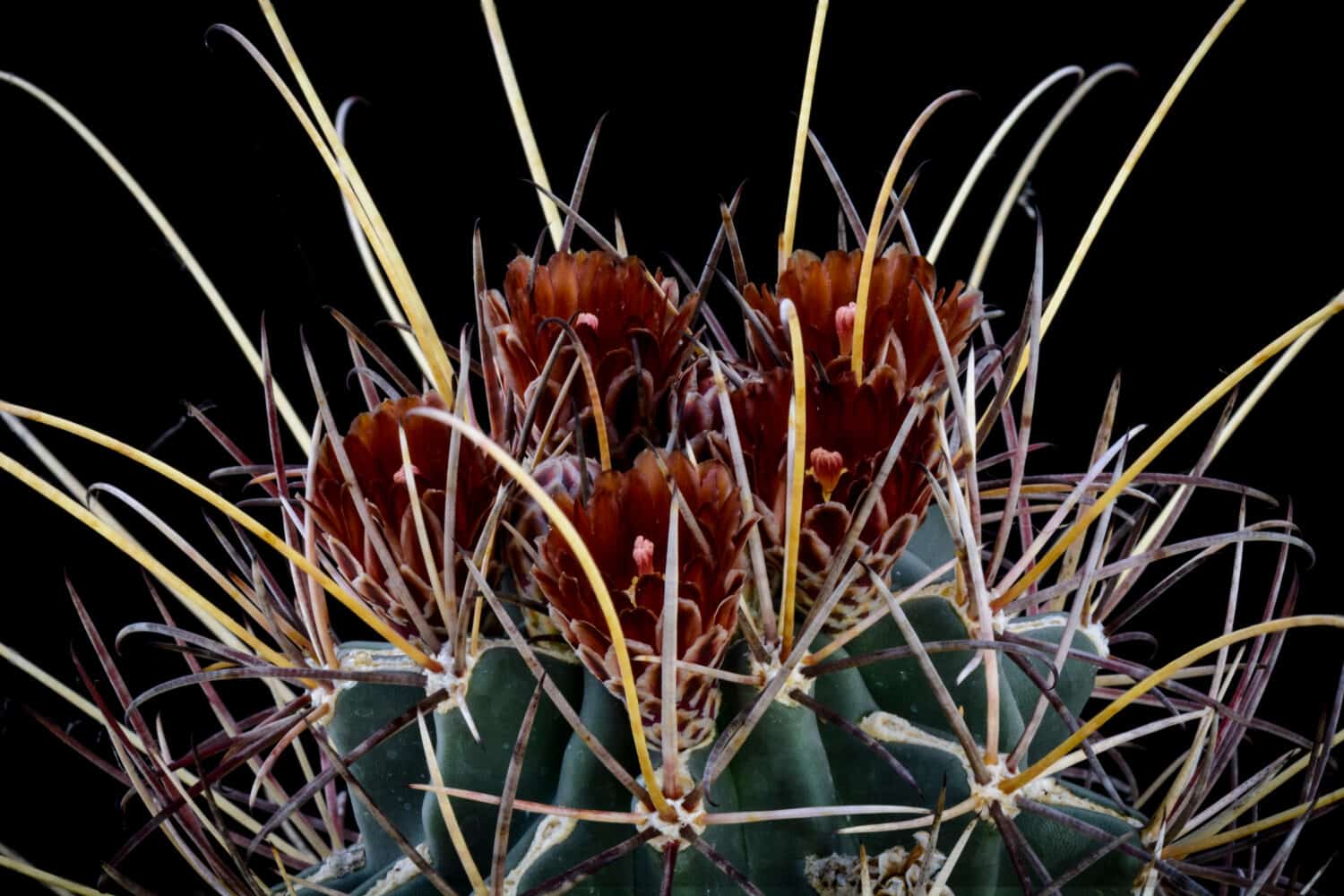
Chihuahuan fishhook cacti reach up to 1 foot tall.
©Cpifbg13/Shutterstock.com
The Colors of Chihuahuan Fishhook Cacti
This fishhook succulent is vibrant and colorful. Its stem is greenish-grey, but the flowers are bright red. Sometimes, the flowers are purple, brown, or orange. Fishhook cacti also produce small green fruits that ripen a vivid red.
When will my Chihuahuan Fishhook Cactus Bloom?
One of the best features of the Chihuahuan fishhook plant is the flowers. They bloom from March through May. The flowers are bright, vivid, and large. They grow in clusters.
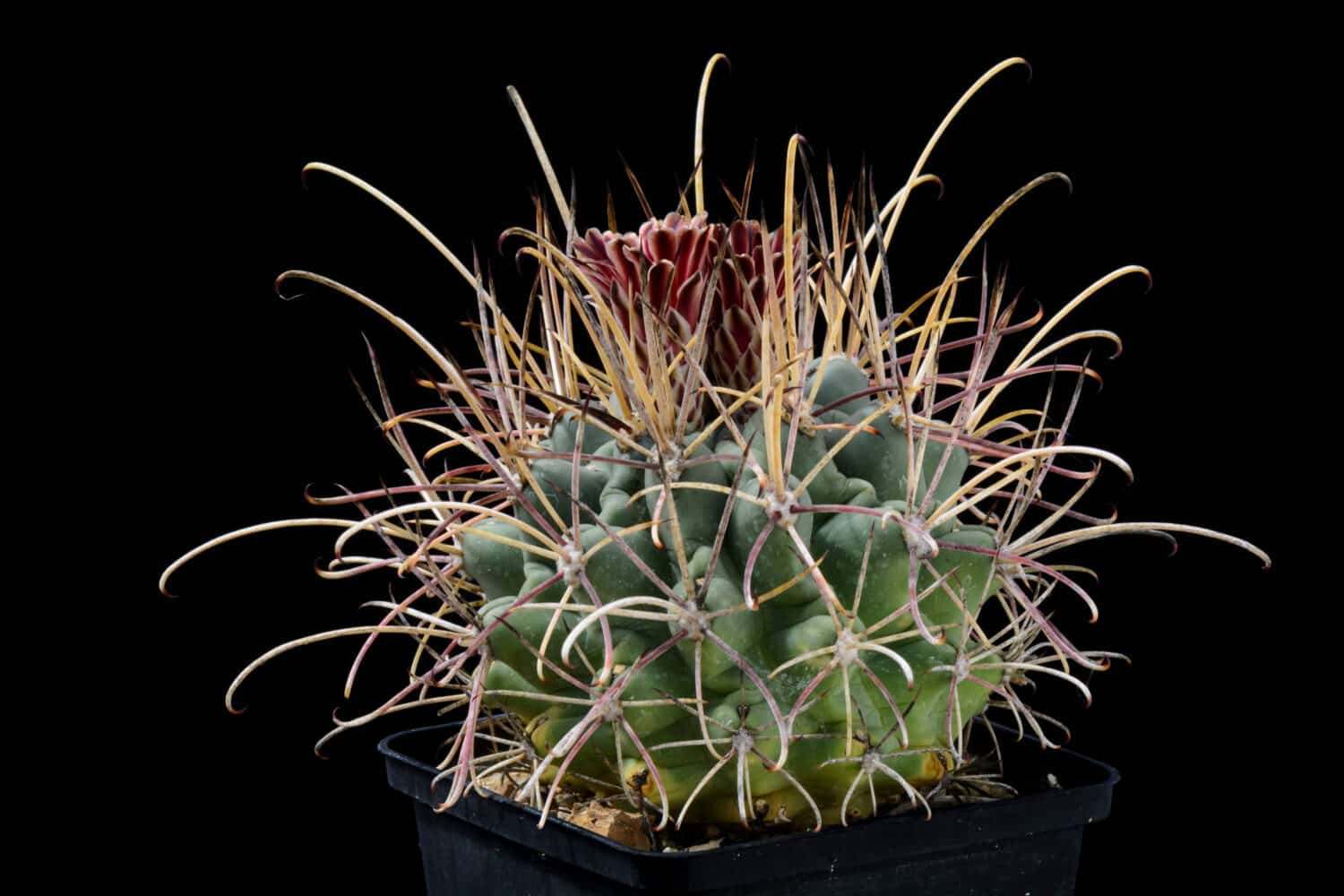
Chihuahuan fishhook plants produce multiple flowers in clusters that bloom in spring from March to May.
©Cpifbg13/Shutterstock.com
Caring for a Chihuahuan Fishhook Cactus
Have we convinced you to try and grow a Chihuahuan fishhook cactus? You don’t have to live in the plant’s native range to grow this lovely cactus. Follow along to learn how to grow and care for this unique plant.
Lighting
The Chihuahuan fishhook cactus need a lot of bright light, either partial or full light. You can plant it outside if outside temperatures are warm all year round. It’s best to mimic the plant’s native range’s condition as much as possible. However, while you grow this cactus outdoors, during summers when the sun is intense, you’ll need to provide shade. Too much sunlight can quickly dehydrate or burn Chihuahuan fishhook plants.
If you don’t live in a state with the right conditions, you can still grow this plant on a balcony or a greenhouse. Although it’s usually grown outside or on patios, you can also grow this cactus indoors, as long as you provide enough light. You can place it on a windowsill with a bright window, or use grow lights.
Water
Like other cacti, this species doesn’t need a lot of water. Instead, it’s drought-tolerant. You can get away with watering the plant once every two to three weeks, more in the summer as the sun grows intense. The best rule of thumb is to only water your Chihuahuan fishhook cactus when the soil is dry. It’s also important to carefully water your Chihuahuan fishhook plant if it’s in a container. Choose a container with great drainage and wait for the water to seep through before adding any more. It’s also not recommended to use a watering tray, as this can drown your plant’s roots. Chihuahuan fishhook cacti don’t like to feel wet.

You should only water your Chihuahuan fishhook cactus once every two to three weeks.
©iStock.com/Wirestock
Soil-Type
So, what kind of soil does your cactus need? A Chihuahuan fishhook succulent needs water-permeable and highly fertile soil. Although this plant is resilient, you mustn’t use heavy soil like sand or clay. That type of soil retains a lot of water. You also don’t have to make your soil potting soil. Many gardening stores sell cactus potting soil with ingredients like coco coir and peat moss. When adding soil to a pot or in the ground, try not to pack the soil tightly. The plant needs oxygen. If it doesn’t get enough, the roots suffer from root rot.
Nutrients
Not all Chihuahuan fishhook succulents need fertilizer or added nutrients. However, if you want to promote flowers, you can add a cactus-friendly water-soluble fertilizer from the store or sprinkle eggshell powder. Don’t fertilize during winter as this is the plant’s dormant period. The fertilizer concentration needs to be low. Too much fertilizer can stress the plant.
Pests and Diseases
Thankfully, you won’t have to worry too much about this hardy plant. It rarely suffers from diseases or pests, except for root rot, which is avoidable. However, if the plant gains too much moisture, it can attract small pests like aphids, which are frustrating to get rid of as they increase in numbers quickly. If you spot tiny aphids on your cactus, use a small amount of rubbing alcohol to wipe them off. If there are too many, blast the plant with water, but don’t forget to drain the container as this cactus species doesn’t need a lot of water.
How to Propagate a Chihuahuan Fishhook Cactus
Propagating Chihuahuan fishhook cacti is a bit tricky since it’s a solitary cactus and rarely, if ever, grows new stems or ‘leaves’. However, you can cut off the tip of your Chihuahuan fishhook cactus and allow it to dry and root in soil or above water. It can take months for this plant to form roots. You can check by slightly tugging at the cactus and seeing if it resists.