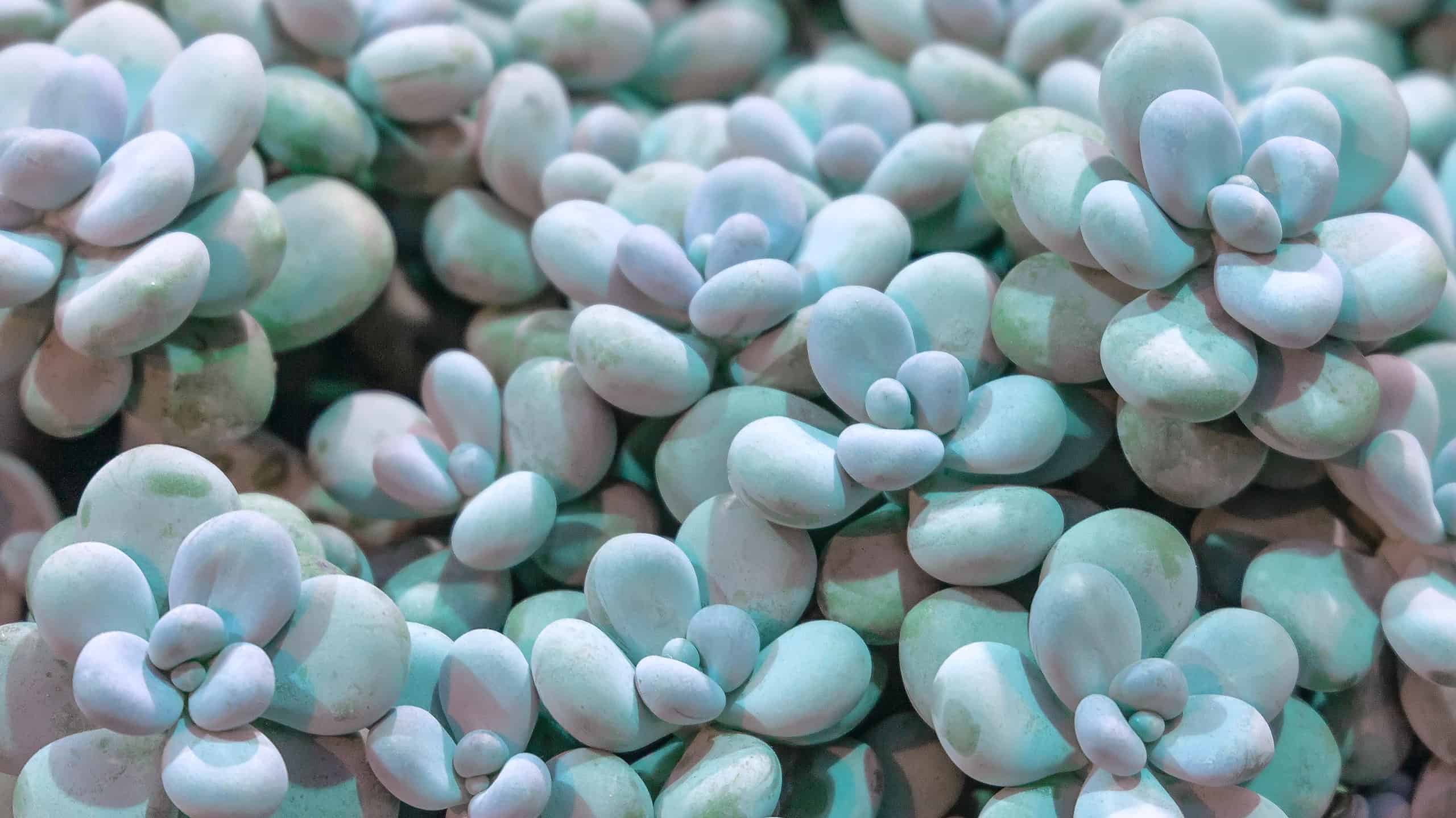

Ready for a succulent that will leave you moonstruck?
This one might just send you into orbit!
Seriously, you’ll be over the moon for it!
Okay, your attention seems to be “waning,” so it’s time to “phase” out the cheesy moon puns before they “eclipse” the subject of this article, the moonstone succulent.
In all seriousness, there is a whole lot to love about this eye-catching herbaceous succulent.
The common name comes from the appearance of the chubby oval-shaped leaves which often have a bluish-green color similar to the moonstone gemstone.
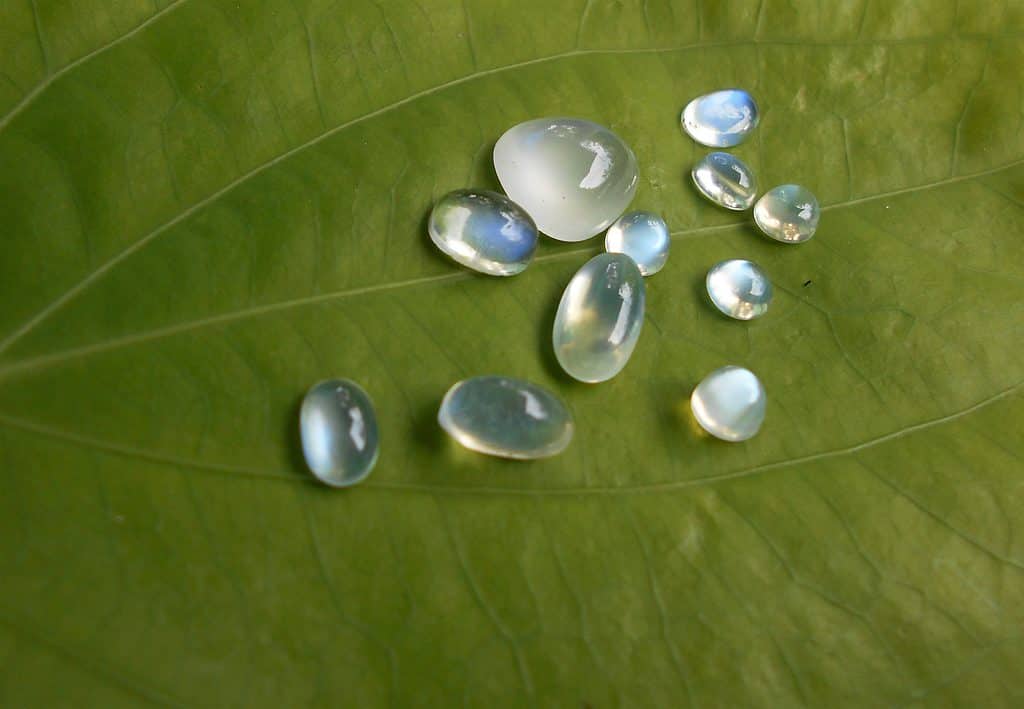
Moonstone gemstones are often oval-shaped with bluish hues.
©iStock.com/Antony Velikagathu
There are other varieties that yield different colored leaves, such as the pink moonstone and the red beauty.
Native to the rocky cliffs of northern Mexico, the moonstone is a low-maintenance, sun-loving succulent that can thrive in both gardens and containers.
Here’s what you need to know to successfully raise this lovely and unique little plant.
| Moonstone Succulent Facts | |
|---|---|
| Botanical Name | Pachyphytum oviferum |
| Common Names | Moonstone, pearly moonstones, sugar almond plant |
| Sunlight | Partial to full sun |
| Soil | Sandy, well-drained |
| Water | Weekly |
| Indoors or Outdoors | Indoors with east or west-facing window access. Outdoors in Zones 10a-11b. |
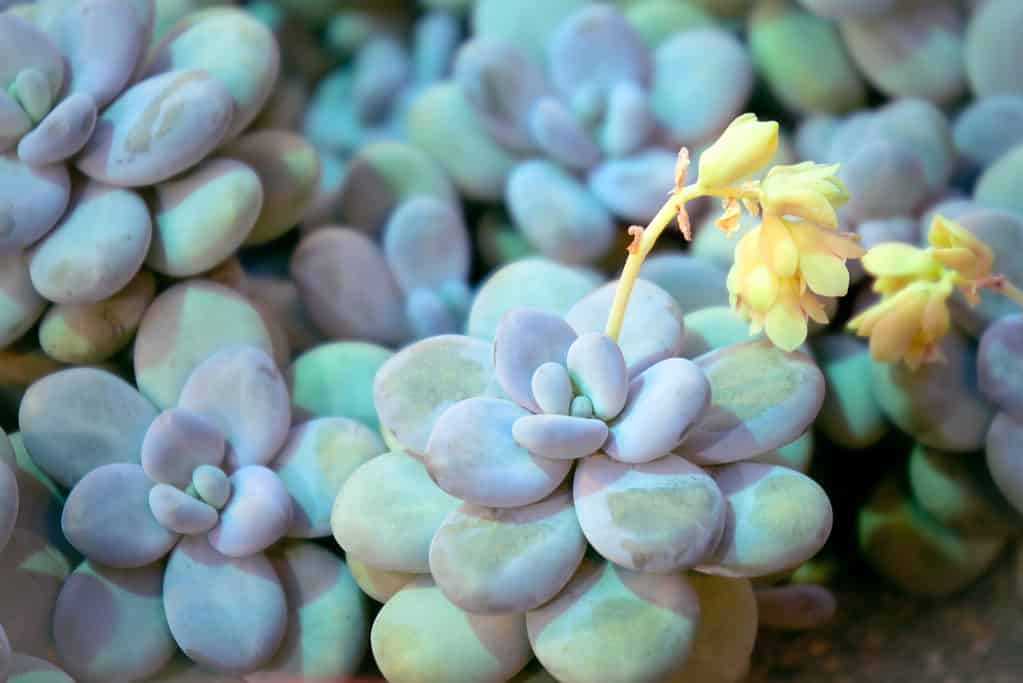
The bluish-green leaves of the moonstone succulent make it a highly-desirable addition to gardens and homes.
©iStock.com/TatianaMironenko
Sunlight
Moonstone succulents need 4-6 hours of direct sunlight each day. The softer sun of the morning or evening is best, especially in areas with exceptionally hot afternoons.
If adequate daily sunlight isn’t available, grow lights or fluorescent lights can be used as a supplement.
Soil Type
Moonstones thrive in nutrient-poor soil, as long as there is adequate drainage.
A prepackaged cactus mix is a good choice. If you want to create your own, a blend of 50% regular potting soil and 50% horticultural sand will provide the necessary drainage.
Water
Like most succulents, moonstones require minimal watering since they store water in their leaves and stems.
Check the soil before watering. If the top inch is not completely dry, it’s not time to water yet.
When the soil is dry enough, soak the base of the plant with lukewarm water. Don’t pour directly over the leaves as that can lead to leaf rot.
Placement
The moonstone succulent is non-toxic, so it’s safe to plant them in areas frequented by your kitties and doggos.
When planting outdoors, select a site that drains exceedingly well. Standing water is a killer for these plants.
Sunlight is also critical. The ideal location is one that receives full morning or evening sunlight but has a bit of midday shade. The leaves can scorch in the direct sun of a hot afternoon.
The sweet spot for a moonstone succulent is 65°F-80°F. It is not a cold-hardy plant, as temperatures under 20°F will kill a moonstone. If you live in a colder climate, it’s best to plant your moonstone in a container that can be moved inside when the temperature drops.
When choosing a space indoors, sunlight is the primary consideration. An east or west-facing window is ideal. Fluorescent lights or grow lights can be utilized if adequate sunlight isn’t available.
Indoors or outdoors, moonstones will become leggy and will not thrive if they don’t receive enough light.
Propagation
Moonstone succulents are easily propagated through leaf cuttings.
Select a plump, healthy leaf and twist it off the plant with your forefinger and thumb. You can also use a sharp knife to cut the leaf from the mother plant.
Place the leaf in a sunny window for a few days to allow the leaf to callus over. Once the callus is formed, the leaf can be dipped in a rooting hormone, but skipping this step is okay if you don’t have any on hand.
Place the leaf, cut side down, into the potting mix detailed above. Keep the soil moist and protect it from direct sunlight until you see the roots develop.
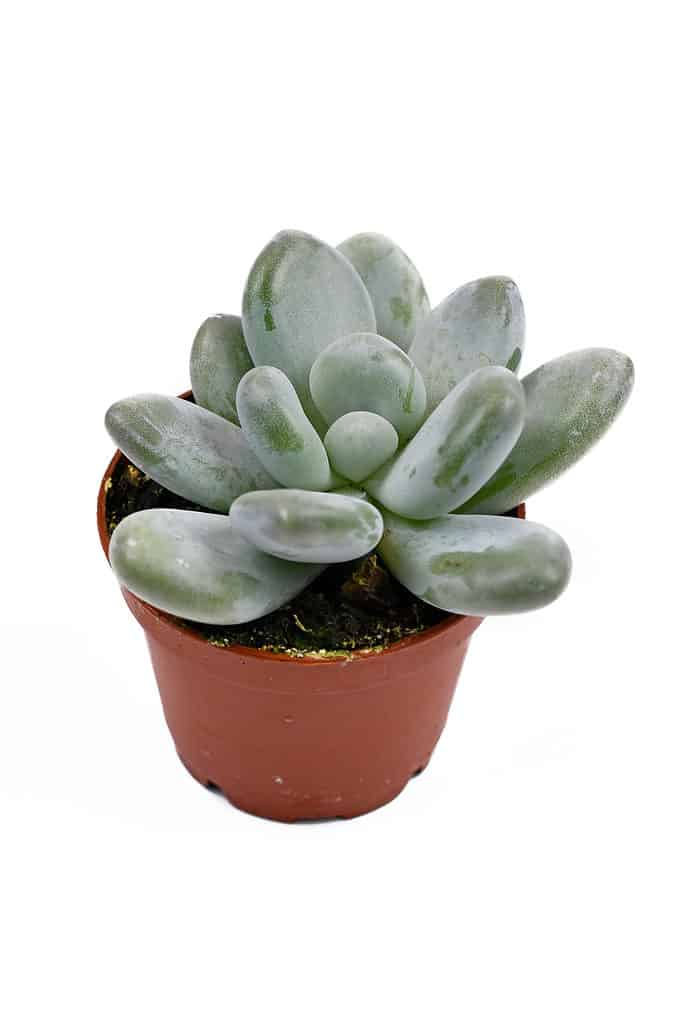
Moonstone succulents thrive in well-draining containers.
©iStock.com/Firn
Common problems
Moonstones are relatively problem-free succulents, but occasionally issues do arise.
The most common mistake when raising moonstones is overwatering. This can lead to root rot, severely damaging or killing the plant.
Botrytis blight is a fungus that can appear in damp, cool weather with inadequate sunlight. This issue can be avoided by remembering that the moonstone’s native habitat is arid. Recreating that dry and sunny environment will help your moonstone remain healthy.
Mealybugs, aphids, spider mites, and leaf miners, while not overly common, can be problematic for the moonstone succulent. Neem oil is a great way to treat and prevent infestations.
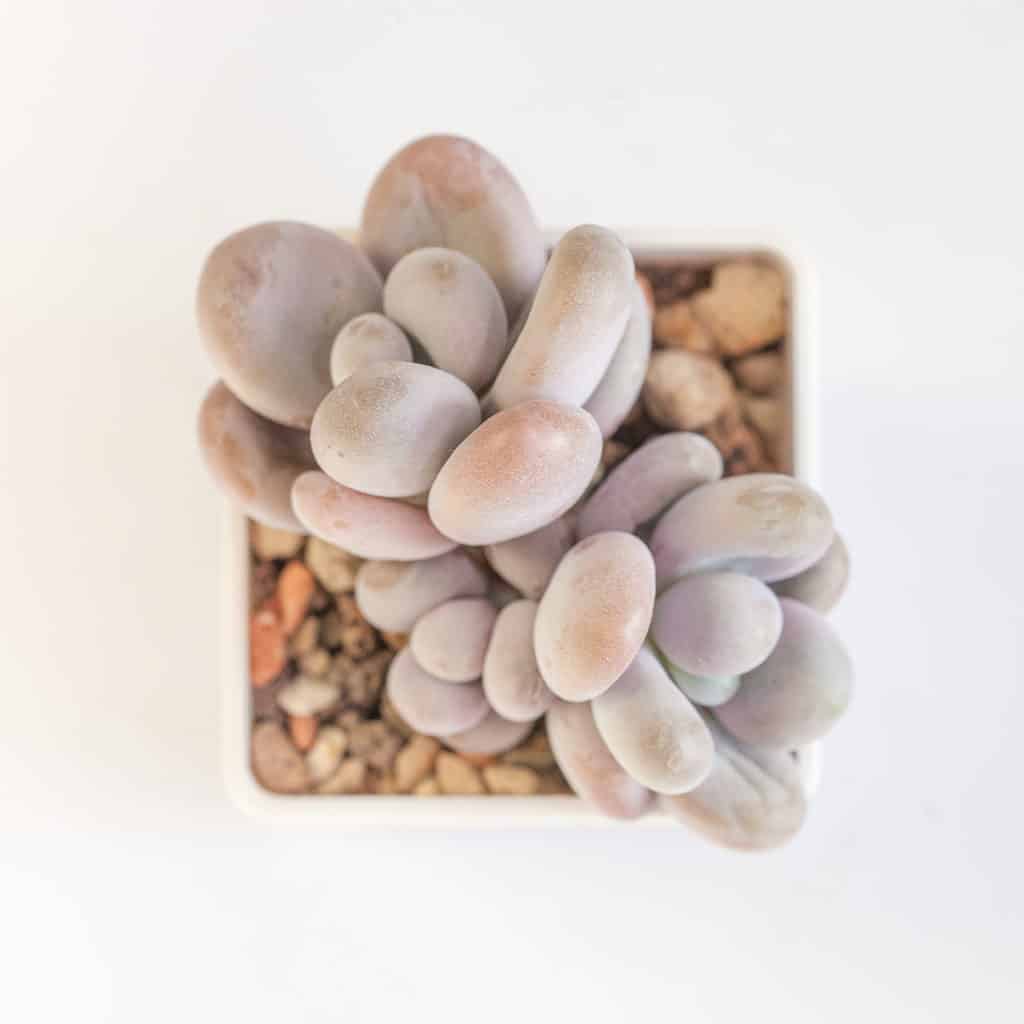
Top view of the moonstone succulent’s unique egg-shaped leaves.
©iStock.com/JNemchinova
Moonstone succulents require minimal care, so don’t worry that you’ll “crater.” With just a little bit of effort, you can successfully “launch” into the unique and beautiful world of the moonstone succulent!
Up Next:
- Succulent vs Cactus: What’s the Difference?
- Coleus Plant Indoors: How to Successfully Grow Coleus in a Pot
- The Flag of Mexico: History, Meaning, and Symbolism
- Do Wolves Really Howl at the Moon?
- Moon Jellyfish