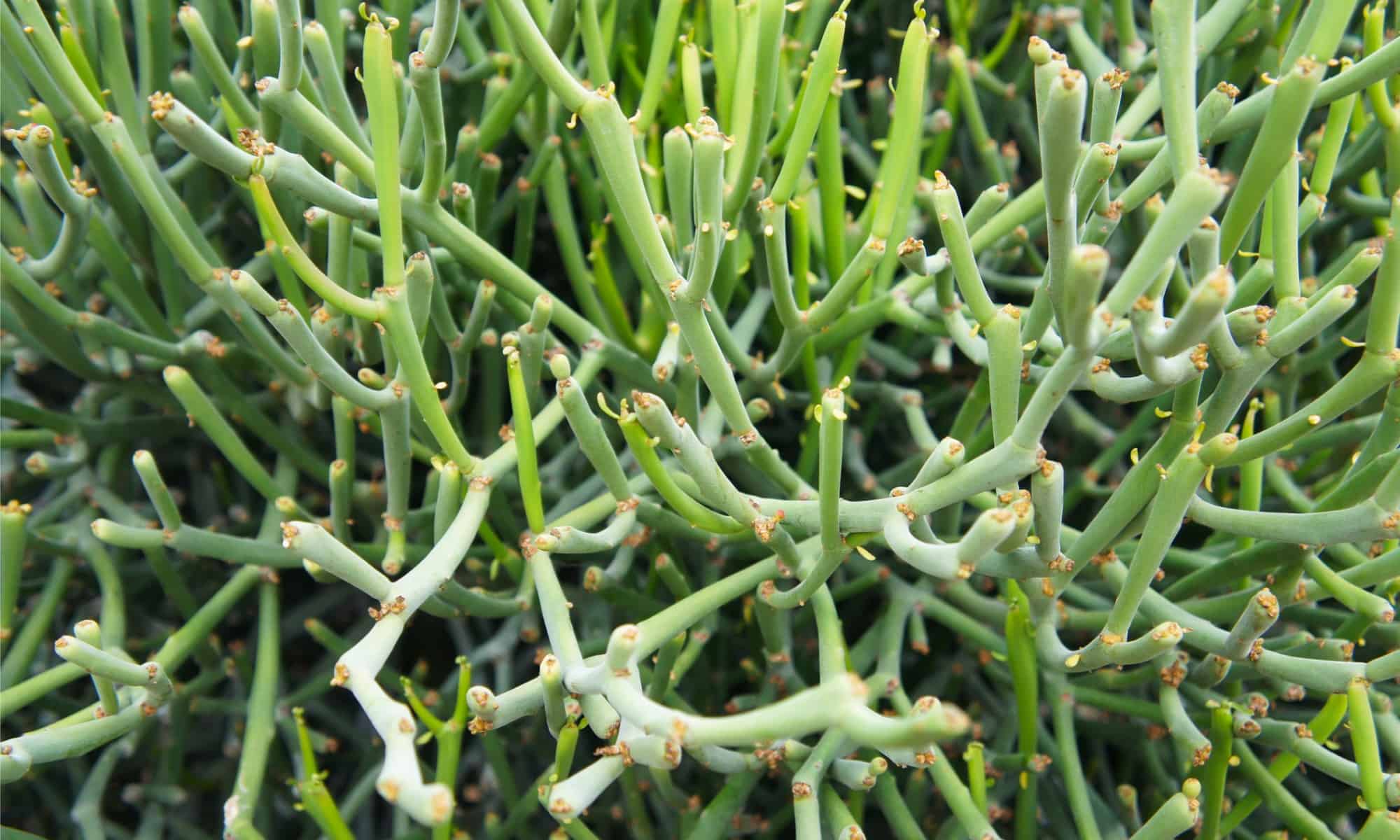

The pencil cactus is a unique succulent. It’s found all over the world as a houseplant and comes in many different colors and sizes. So, how easy is this plant to take care of? Is it beginner friendly? Follow along to learn more about the pencil cactus, including how to take care of it.
What is a Pencil Cactus?
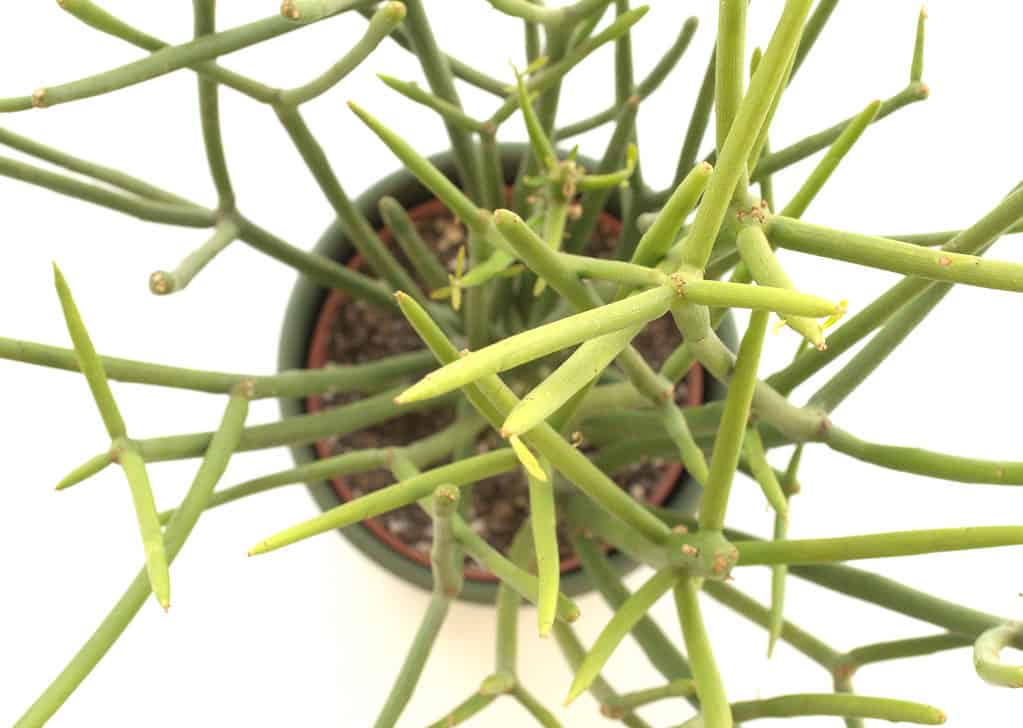
If the pencil cactus has caught your attention, we can’t blame you. This lovely houseplant has many nicknames. Technically, it’s most likely that the pencil-like plant you see in many homes and nurseries is a cultivar of Euphorbia tirucalli, which is native to Africa and thrives in semi-arid tropical climates. Many of the cultivars are designed to stay small, but a pencil cactus in the wild is capable of growing up to 30 feet. Indoors, with the right care, it can reach 6 feet tall.
Despite its name, a pencil cactus isn’t a true cactus. Instead, it’s a small tree or shrub with succulent-like foliage and properties. This lovely shrub has many names including Indian tree spurge, naked lady, pencil tree, milk bush, and fire stick.
The leaves are less than an inch short and succulent-like. They fall off quickly and contain a toxic white sap that you should refrain from touching. This toxic sap can cause redness and irritation on your skin. The milky latex can also cause temporary blindness.
In the wild, a pencil cactus can grow up to 30 feet.
©Speakman/Shutterstock.com
The Colors Pencil Cacti
Most pencil cacti have green foliage and stem. However, some varieties are red, orange, and yellow. During winter, the pencil cactus turns a warm fiery color. Sometimes the new growth is pink on the tips. If you’ve noticed your pencil plant is yellow, but the stems and leaves are squishy, it could be a sign of over-watering. Although pencil cacti are supposed to turn red during cooler temperatures, if they don’t receive enough light, they can remain green.
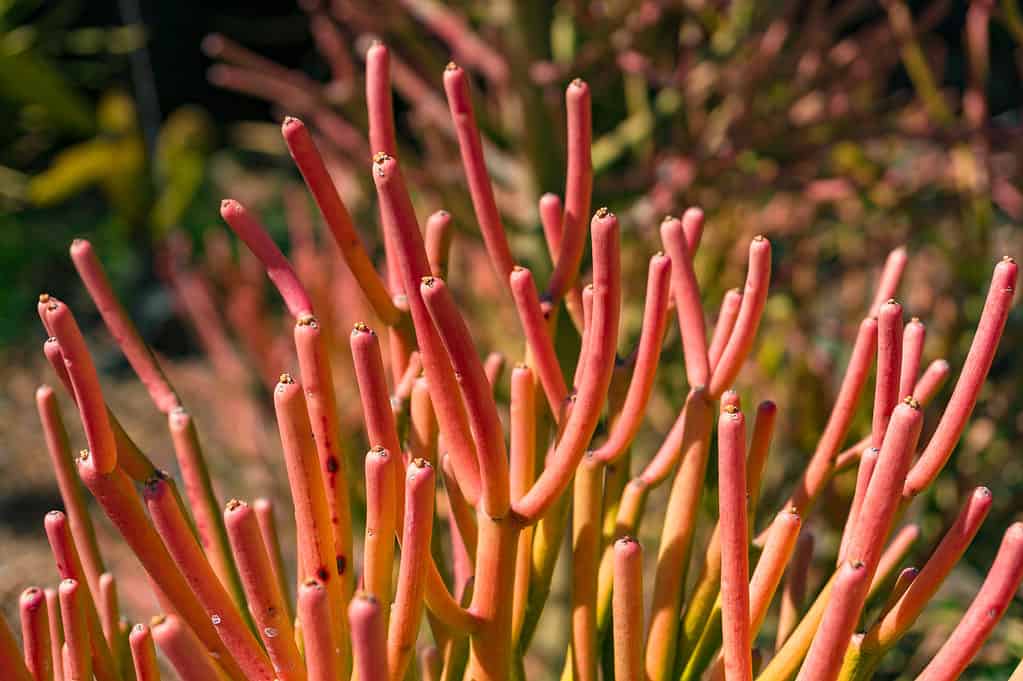
Pencil cacti during cooler weather, turn red, orange, or yellow.
©Olga Kashubin/Shutterstock.com
When Will My Pencil Cactus Bloom?
Pencil cacti produce beautiful tiny yellow flowers in late spring and early summer. They grow on the end of the stems and bloom quickly. However, some pencil cacti don’t produce flowers when planted indoors or in a warm environment with little to no shift in temperature.
Caring for a Pencil Cactus
If the pencil cactus has caught your attention, you’re in luck, it’s very low-maintenance and perfect for people on the go. This lovely plant can survive with little water and some negligence. It’s also a fast grower, unlike true cacti. Pencil plants don’t require a lot of maintenance either. They are great for beginner gardeners with an interest in houseplants. Keep reading to learn how to care for a pencil cactus.
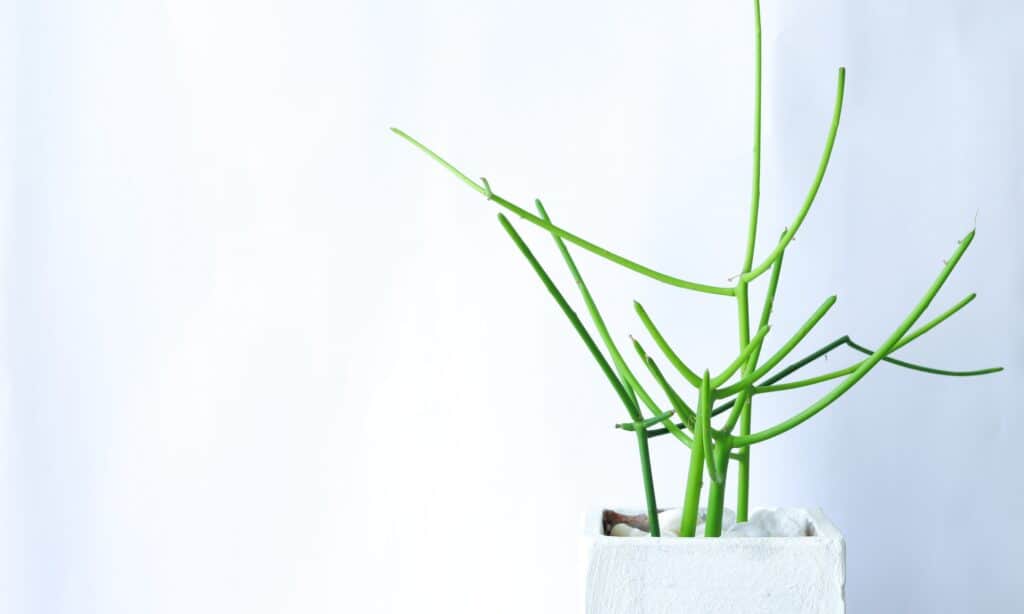
Pencil cacti are great beginner-friendly houseplant for gardeners.
©iStock.com/Vasin Hirunwiwatwong
Watering
Like many dry-loving plants, pencil cacti don’t need much water. Instead of watering your houseplant daily, you’ll want to wait until the first layer of the soil is dry. Never assume the soil is dry, instead look at the top. The top receives direct exposure to light. Brush up some dirt and see if the first 1 to 2 inches is moist. Too much water can cause root rot, which ultimately can kill your precious shrub.
During spring and summer, water your plant once every two to three weeks. More if your plant is getting direct sunlight. In the winter though, the number of times you water your pencil cactus should be reduced to about once a month, sometimes less.
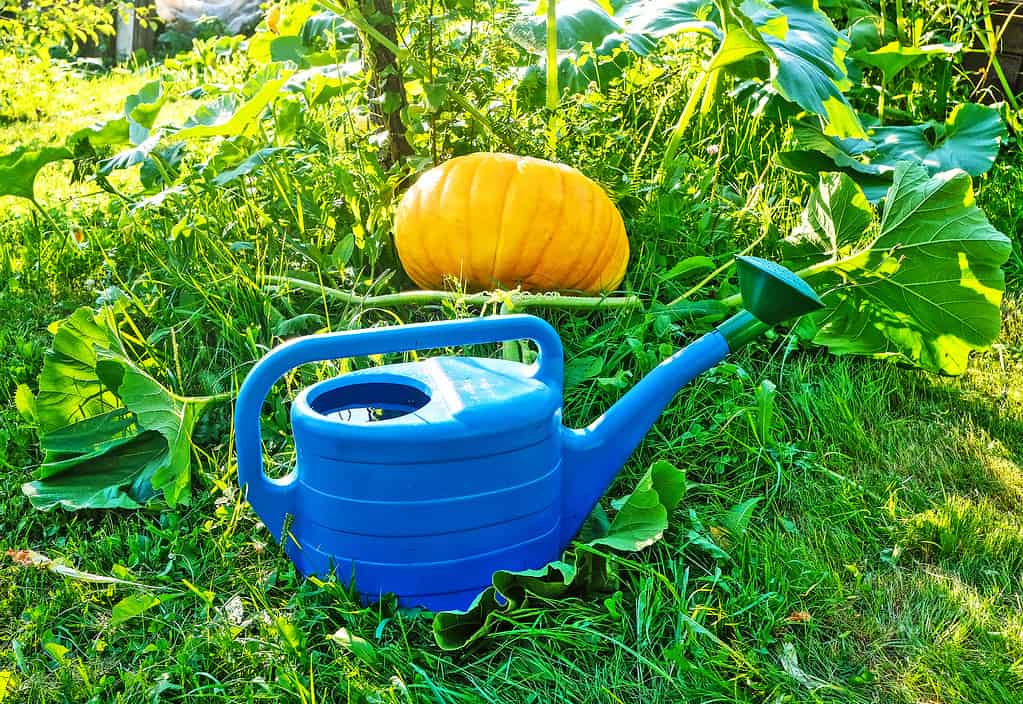
During spring and summer, you should water your pencil cactus once every two to three weeks.
©ElenaG177/Shutterstock.com
Sunlight
Pencil cacti thrive under about 6 hours of sunlight. Direct sunlight works best, however, you can grow pencil cacti indoors with partial shade. Actually, partial shade during hot summers is recommended so that the stems aren’t burned or stressed out. If this plant doesn’t get enough light, it turns light green, almost yellow.
Nutrients
Like other succulents and houseplants, pencil cacti don’t need a lot of fertilizer. Instead, you should only add a succulent-friendly fertilizer once a year during the growing season. It’s best to dilute the fertilizer if possible. Too much fertilizer can overwhelm your plant.
Soil
Pencil cacti like dry soil. If it’s too moist, it can attract pests which bring diseases. These plants grow rather quickly. They can easily reach 6 feet tall indoors in the right container. Repotting pencil cacti requires new soil. Sometimes, reusing old soil can pass diseases. Pencil cacti need a succulent or cactus potting mix.
Planter/Container
You can use many different types of containers. These plants aren’t picky, but it’s good to choose a tall container if you want your pencil cactus to grow tall. They need to be repotted when the plant outgrows its space. However, if you have a small pencil plant, the container shouldn’t be excessively large. If a container is too large, water can get trapped leading to root rot. The planter also needs to have good drainage. Many containers already come with holes on the bottom, but if not, you’ll need to drill two to four drainage holes. While some planters come with a water-collecting pan or tray, these trays retain too much water for your dry-loving houseplant.
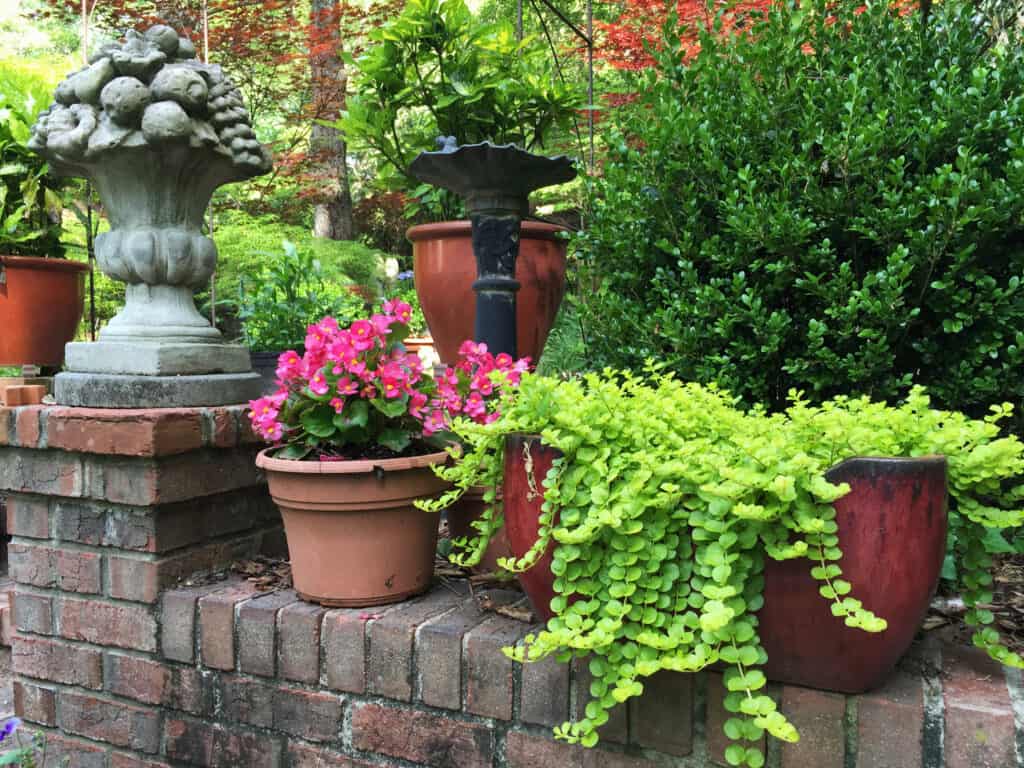
Pencil cacti need containers with good drainage.
©iStock.com/LCBallard
Diseases and Pests
Although pencil cacti are resilient and strong pants, they can suffer from some problems, including diseases and pests. Some common pests include aphids, spider mites, and mealybugs. To get rid of aphids, you can mix light dish soap with water and spray the aphids directly. Although dish soap is harmless, it’s a good idea to wipe the mixture off the plant. Fungal infections are common and can cause your plant to droop. Fungal infections can happen for many reasons but are most common when moisture levels are high.
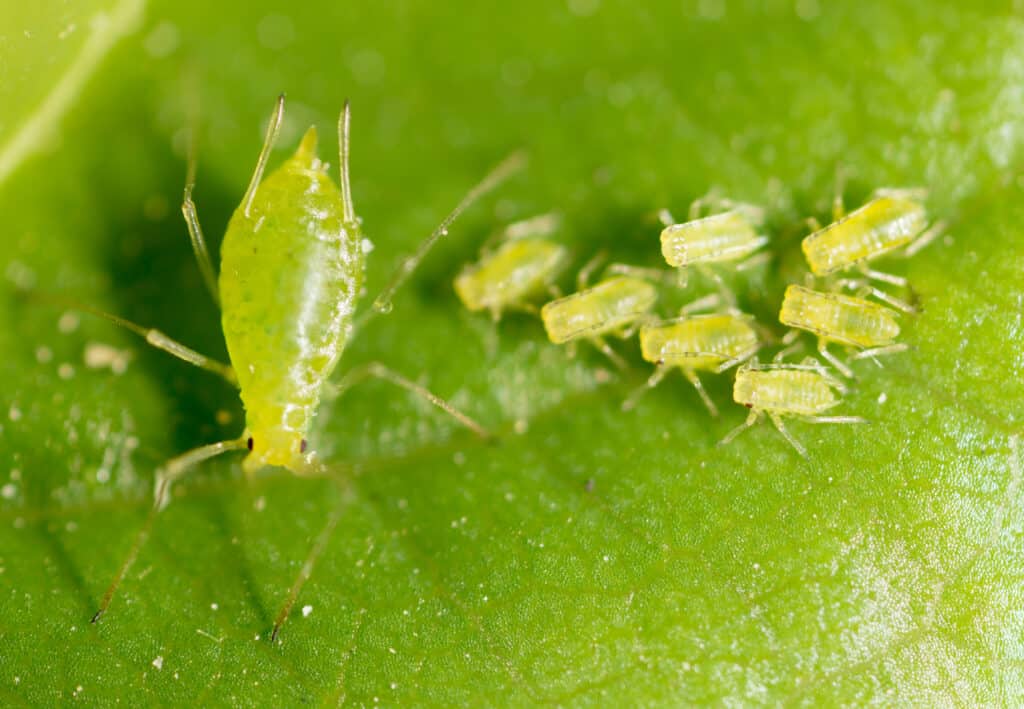
Aphids can invade pencil cacti and suck the nutreints out of the plant.
©schankz/Shutterstock.com
How to Propagate a Pencil Cactus
Who wouldn’t want more than one pencil cactus? This plant is easy to care for and great for beginners. Better yet, it’s easy to propagate as well! Although the plant isn’t a true cactus, you can still take cuttings to propagate the pencil-like shrub. Before you take a cutting off this plant though, it’s important you wear gloves and a long sleeve t-shirt. The plant produces a toxic milky-white sap that can cause irritation and temporary blindness. To avoid accidentally exposing yourself, keep your skin covered and don’t touch your eyes during the process.
Take a 4 to 6-inch cutting, or multiple using sterile scissors or pruning tools. They are easy to snap off and should come out with little resistance. If you are taking cuttings from multiple plants, regardless if they are the same species, always clean your scissors. If one plant is sick, you run the risk of accidentally spreading diseases.
Once you have your cuttings, dip the end into a small amount of rooting hormone. The rooting hormone should contain a fungicide to decrease the chances of a fungal infection. Prepare a container with drainage holes and moist succulent or cactus soil. Place the cutting into the container. Although cuttings are usually lightweight, if you need to, you can use a stick to prop up the cutting.
Keep the soil moist. You can also wrap or cover the pot with plastic to trap moisture. In just a few weeks, the plant should root. To check, gently pull the pencil plant up to see if there is resistance.