









Breed History
The Ragdoll cat breed came about from humble beginnings in 1963, courtesy of Ann Baker, a breeder from Riverside, California. This woman owned a white long-haired female named Josephine, whom she had taken in from the neighborhood she lived in. Ann took an interesting route by cross-breeding Josephine not only with random cats that she already owned but also with other neighborhood strays. The results of these pairings were litters that had unique characteristics she was fond of. From these litters, she chose the offspring with the best temperaments and appearances for her new breeding program. One male kitten she supposedly chose, whom she named Raggedy Ann Daddy Warbucks, looked like a male Birman cat. She used him and his brother Blackie to further develop her new breed.
In 1966, the Ragdoll cat was registered as a new breed, and in 1971, Ann Baker founded the International Ragdoll Cat Association (IRCA) to further the importance of the breed. Whatever the particular characteristics individual Ragdoll cats owned, the one thing they all have in common is that they were the result of their queen mother, Josephine.
What to Know Before You Buy
- The ragdoll will not get their full coat and color until about 3 years old. All ragdolls are born pure white, but most start to develop their coloring before they are 2 weeks old.
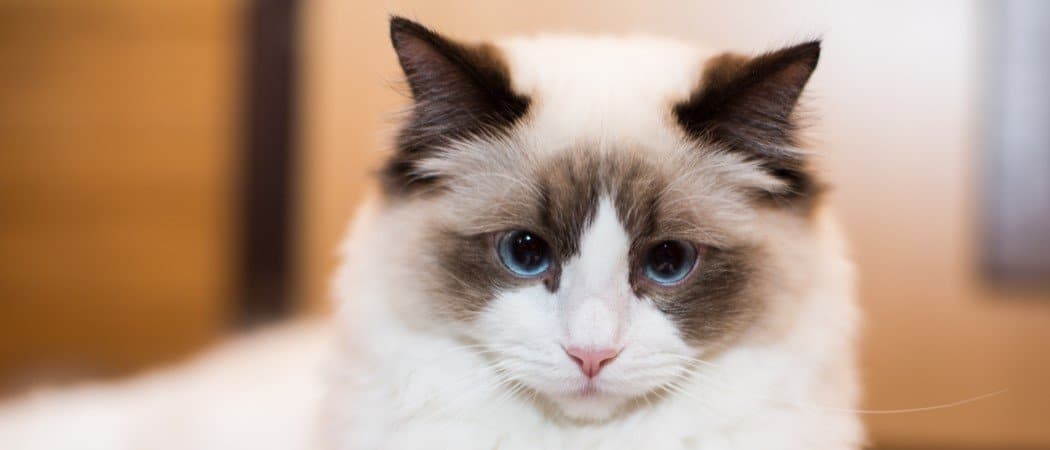
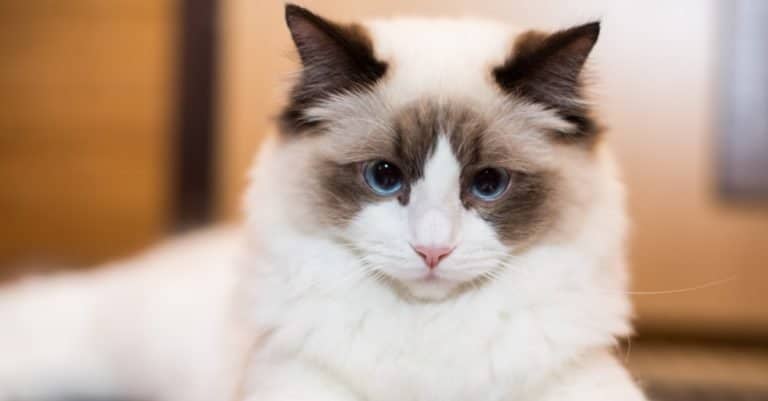
- The ragdoll has a large head with a modified wedge on it and blue eyes.
- Ragdolls are heavy-boned, large-sized cats that can weigh up to 20 pounds. With their long-haired coats, they look even bigger.
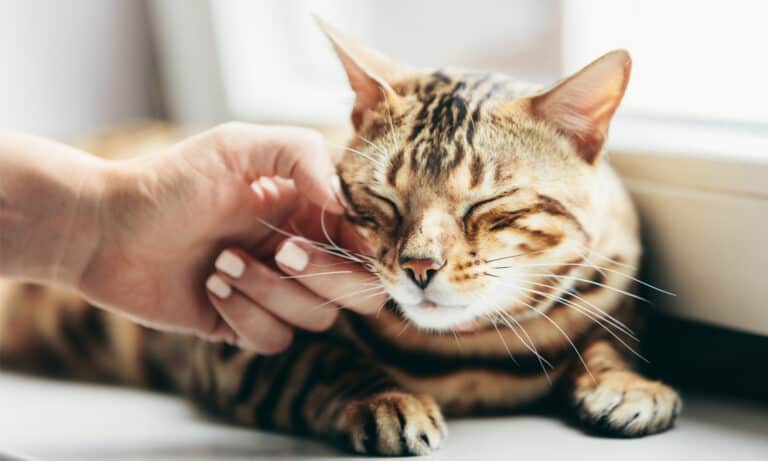
- Ragdolls go limp with pleasure, especially when they are being cuddled. It is this trait that gives this animal its name.
- Ragdolls are generally healthy, but they can be susceptible to bladder stones and hypertrophic cardiomyopathy.
Ragdoll’s Blue Eyes
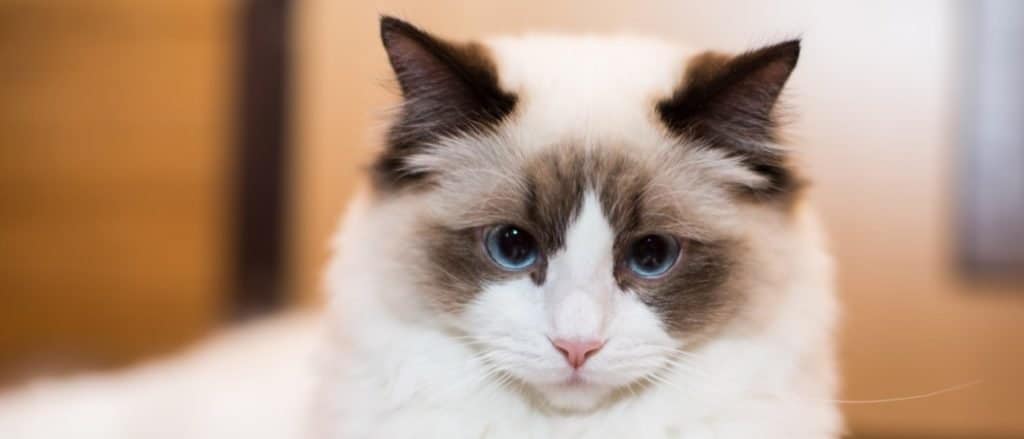
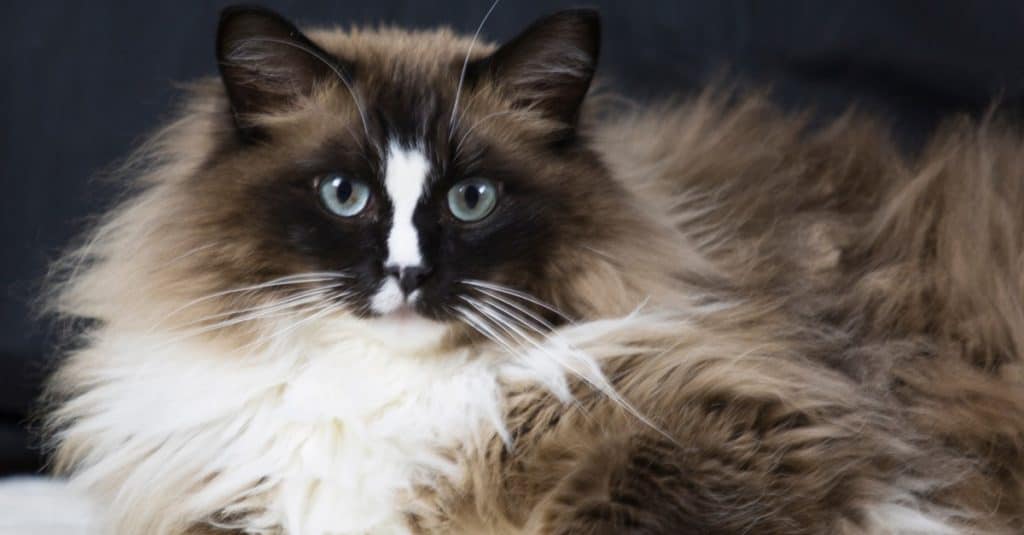
The gorgeous blue eyes of the ragdoll are what attract many people to this breed. The eyes should be wide-set and modestly slanted. They should look great with the wedge on this cat’s face.
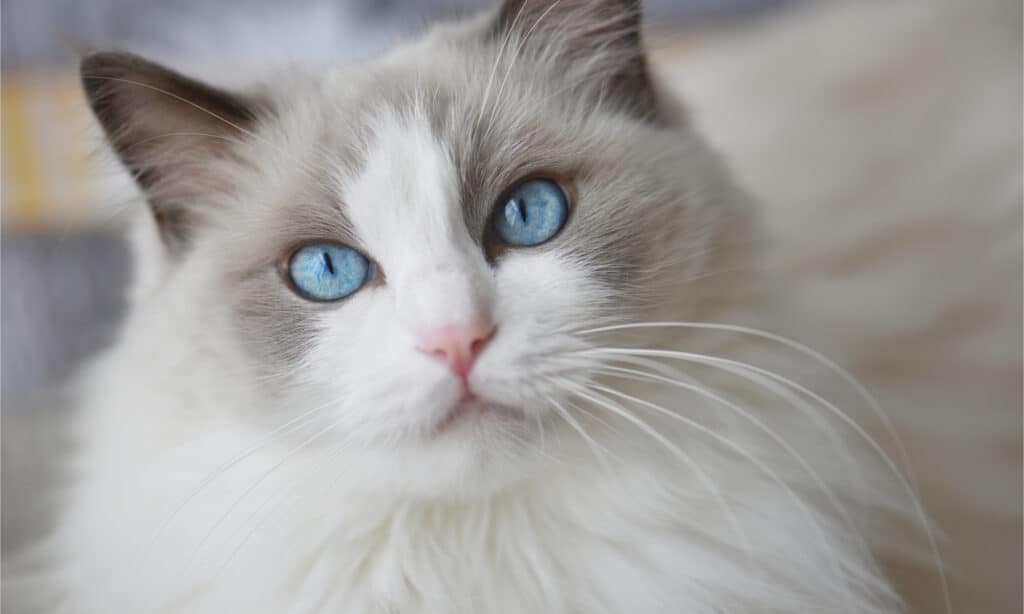
Every purebred Ragdoll cat has stunning blue eyes.
©Luxurious Ragdoll/Shutterstock.com
Personality
Ragdolls are very loyal animals who love to be with you every second of the day. They will follow you around your home in hopes that you will pay them some attention. If you shut the door, then expect to see a paw trying to get under it as this animal wants in to play with you. Owning a ragdoll often means that you will have less space in bed, as many love to sleep with their owners.
Expect to spend time cuddling your ragdoll. Do not be surprised when they suddenly go limp in your arms. Their ability to go limp, like a ragdoll, is where this animal gets its name.
These animals are brilliant. You can teach them games, like fetch. They usually learn very quickly. They love to play and will often carry their favorite toy around in their mouths.
The personality of the ragdoll is often very trusting and docile. While that makes them a great family pet, you need to watch your ragdoll. They trust that they may get into trouble with predators, like large dogs that do not like them.
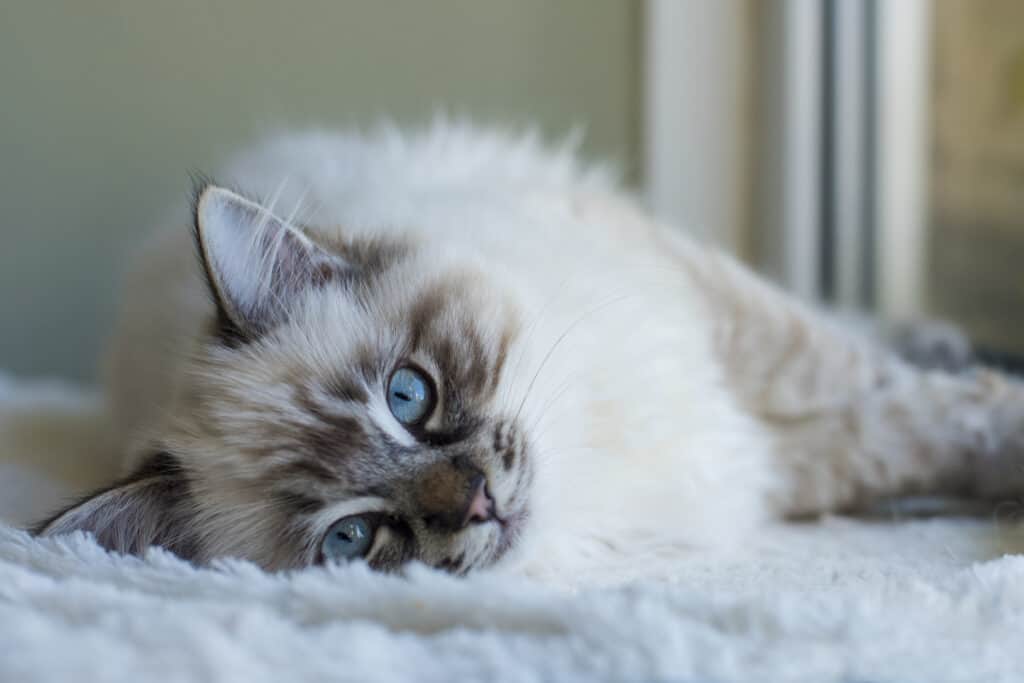
The ability of the Ragdoll cat to go limp in a human’s arms or lap, like a ragdoll, is where this animal gets its name.
©cath5/Shutterstock.com
Size and Weight
While ragdolls are not as big as Maine Coons, they are still huge cats. They look bigger because of their long hair, but they should also be heavy-boned. Male Ragdolls typically weigh between 15 and 20 pounds, while females usually weigh between 10 and 15 pounds. That can be a lot of animal to hold when they suddenly decide to go limp.
By comparison, the domestic shorthair typically weighs between 8 and 10 pounds. Since these animals are much bigger, they often require larger toys, a bigger litter box, and more room.
Besides the Maine coon, there are other large-sized cats that you may want to consider if you do not think the ragdoll is the right breed for you. Think about the Chausie, as they weigh between 15 and 20 pounds, or the Siberian, as they can weigh between 10 and 20 pounds.
Most ragdolls stand between 9 and 11 inches tall at the shoulders. By comparison, the average Persian can stand between 8 and 10 inches tall, but it only weighs between 7 and 12 pounds on average.
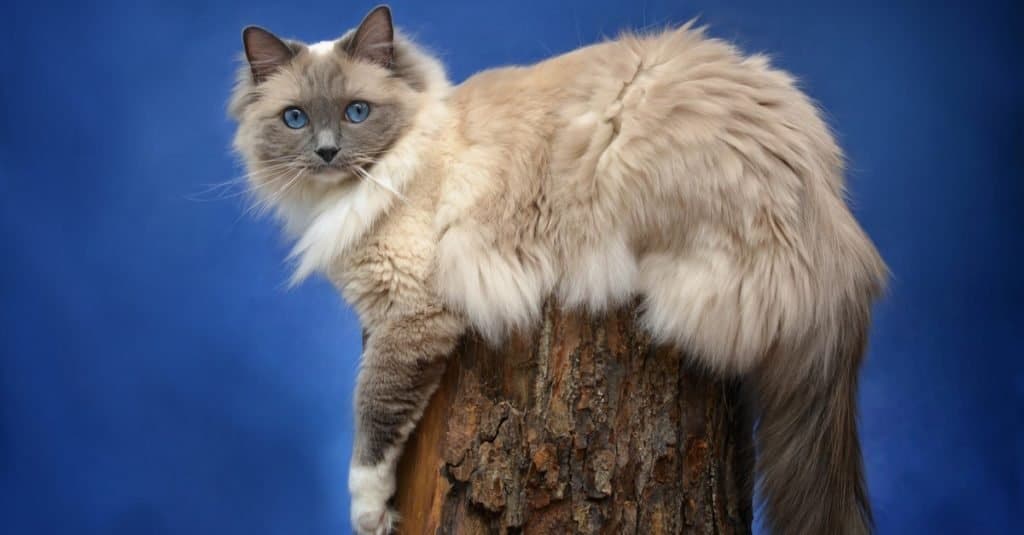
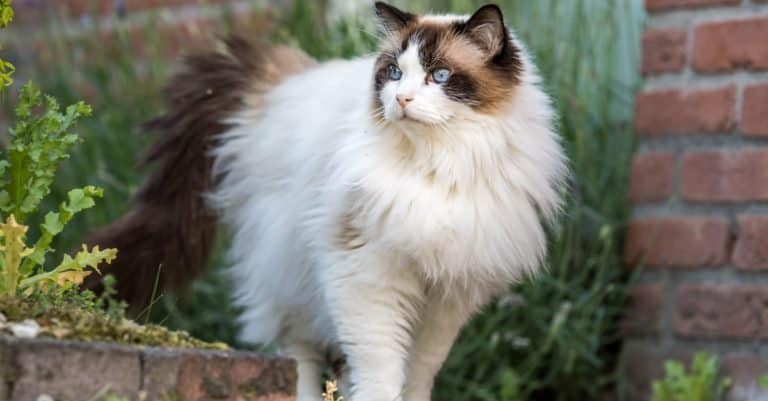
Ragdoll cats look bigger because of their long hair, but they are also heavy-boned, so they typically weigh from 10 to 20 lbs.
©Cindy Creighton/Shutterstock.com
Price
The price of the ragdoll can vary between $150 for one gotten from a shelter to over $2,500 for a show-quality animal. There is also a lot of difference depending on the region where you are looking to buy a ragdoll. They are a little cheaper in the United Kingdom, where the average price is $700. You can find ragdolls for about $50 in Nigeria and $50 in China. In Australia, you will have to pay about $2,000 for a ragdoll.
Think about adoption. Remember that when you opt for adoption through a reputable organization, the animal often has already received basic medical care and sterilization. Therefore, the cost of adoption is often much lower than buying from a breeder.
Even across the United States, prices can vary. Expect to pay about $2,000 in New York, while you may find the same quality sells for about $950 in Arizona. That same quality cat may cost you about $500 in Florida.
The quality of the animal that you are considering can make a lot of difference. For example, you will have to pay top dollar for a show-quality animal, with those who are proven breeders selling for over $2,500. A pet-quality animal from a recognized breeder may cost about $450, while those coming from a shelter may cost even less.
Keep in mind that the initial cost of getting a ragdoll is only part of the cost. You will also need to pay for wellness checks, dental cleaning, and lab work from your veterinarian. You can expect these costs to add up to about $200 per year.
You will need toys and bedding. While this breed is docile, its large size means that you may go through these items faster. Additionally, you can expect to pay about $240 annually to feed the animal.
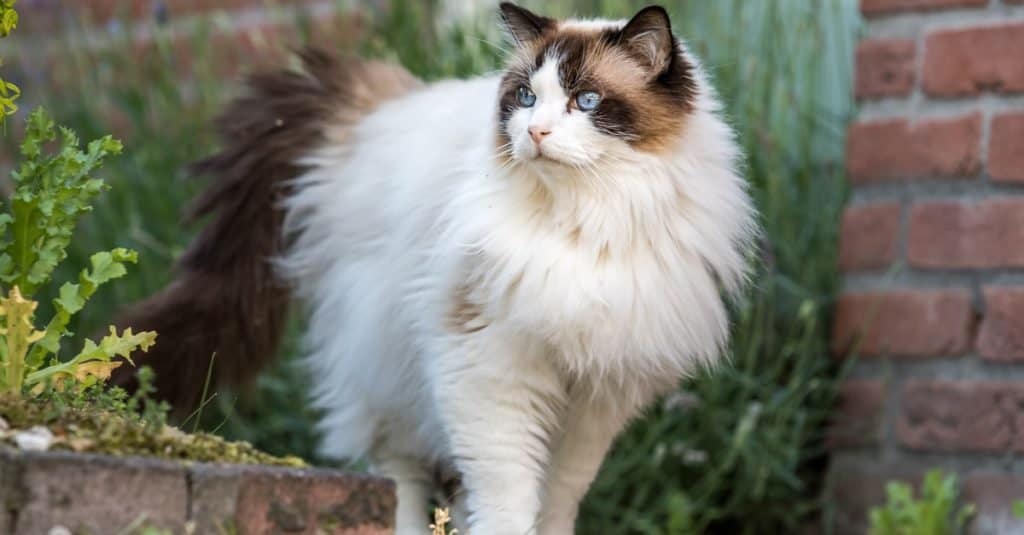
In the U.S., expect to pay from 0 to 00 for a well-bred Ragdoll based on the regional location of the breeder.
©Serita Vossen/Shutterstock.com
Kittens
By the first month, ragdoll kittens usually weigh between 0.8 and 1.7 pounds. That is almost three times the size of an average kitten, as they generally weigh between 3 and 5 ounces. By the end of the second month, these animals typically double in size, weighing almost 3 pounds. Do not be surprised when a ragdoll kitten weighs over 6 pounds when it is 6 months old.
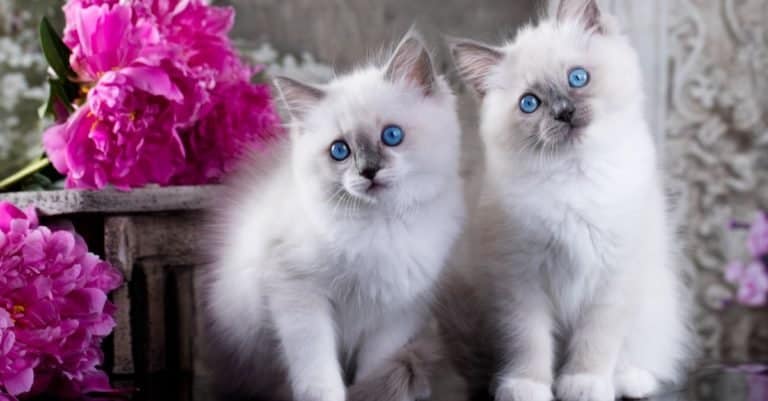
All ragdolls start white. Some kittens will begin developing their colors around 2 weeks, while others may take longer. Generally, bicolor ragdoll will develop their colors first, with others following. A kitten may not get their full colors until they are 2 years old or older.
You can use the colors of the parents to help predict the kitten’s colors, but the genetics of Ragdoll color inheritance is complex and does not follow simple dominant-recessive patterns. Breeding two seal-point Ragdolls increases the likelihood of seal-point kittens, but other color outcomes are possible depending on the parents’ genetic backgrounds. If you want a kitten with a color such as lilac, both parents must carry the genes for lilac, though they do not both have to be lilac themselves.
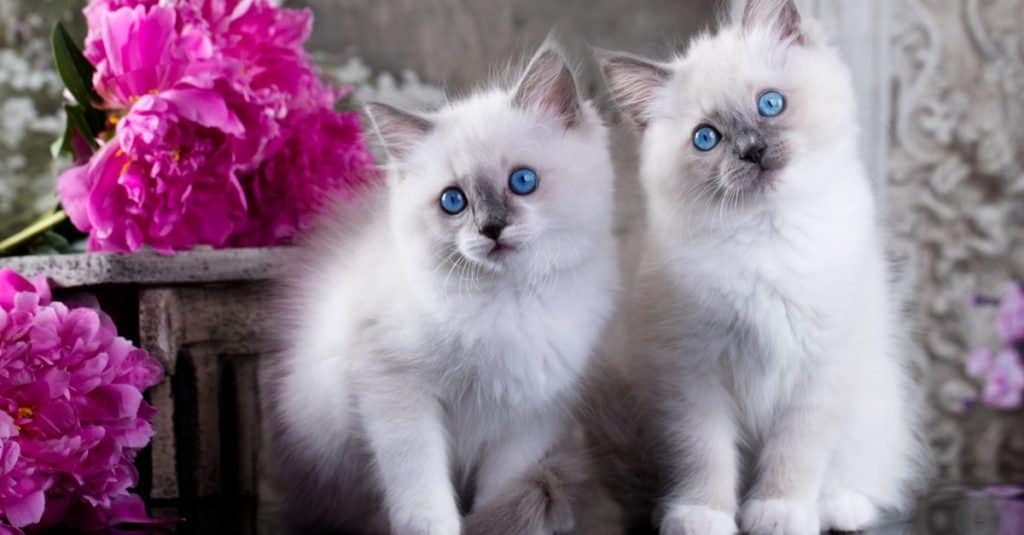
All Ragdoll kittens are born with white coats. Their other colorings begin showing within 2 weeks.
©Liliya Kulianionak/Shutterstock.com
Lifespan
The Ragdoll is one of the longest-living cats in the world. On average, they live for about 15 years. That is comparable to the average lifespan of the Balinese and the Russian Blue.
These animals are very slow to mature. They usually do not reach their full height and weight until they are about four years old.
While the average cat lives 12 to 15 years, some owners of ragdolls report that their cat is older than 23. Owner Lucas Duxbury says that the animal he calls Grandma Cat is very vocal. While she does not always make it to the litter box anymore, she still wants to be involved in what he is doing. Lucas, who lives in Canada, also says that Grandma Cat’s hair mats more than his younger ragdolls.
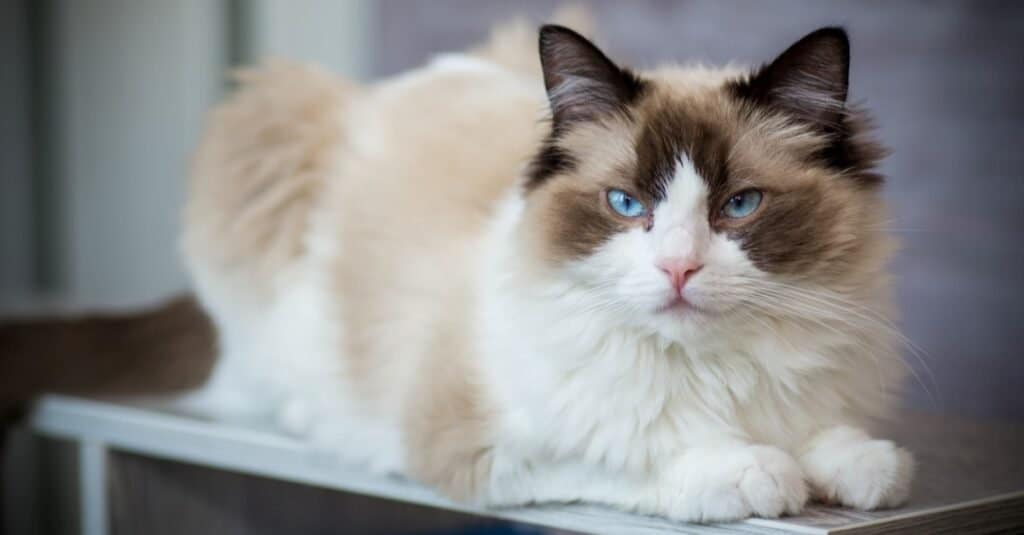
The Ragdoll is one of the longest-living cats in the world, averaging 15 years.
©Peredniankina/Shutterstock.com
Breed Vs. Mixed
There are several ways that you can determine if you are looking at a ragdoll or a mixed breed, including:
- Ragdoll cats have blue eyes. If the cat has a different colored eye, it is not a ragdoll.
- Ragdoll cats have long coats. If the coat is short, then it is not a full-blood ragdoll.
- Ragdoll cats are large cats. Even as kittens, these cats weigh a lot more than the average kitten because of their large-boned structure.
- Ragdoll cats want to be with you, and they will play games. If the cat is avoiding you, then chances are it is not a ragdoll.
- Ragdoll cats are docile. They want to be cuddled and will go limp when you are petting them.
Types of Ragdoll Cats and Colors
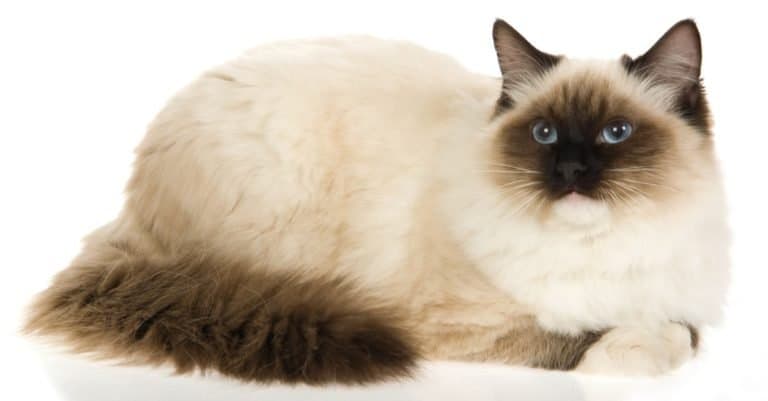
There are many different color combinations in these cats. The ragdoll cat’s coloring can be mitted, which in some cases can appear only on the back legs. It looks as if the cat is wearing mittens over its paws. The mitted coloring can go farther up the legs of other cats, giving the cat the appearance of wearing thigh highs.
These cats can also be pointed. These cats have no white markings on their bodies as adults. The tail, face, ears, nose, and feet of these cats are darker than their bodies.
There are also bicolored ragdoll cats. In this case, they have a white inverted V on the face with a pink nose. Then, they have different colors on their tail, faces, ears, and feet. Setting these cats apart, a lighter shade of this color forms a saddle shape on the cat’s back.
These cats can also have a lynx pattern. These cats look similar to a tabby. They have an M-shape of color on their faces. Then, they have stripes on their bodies, which are often only present on the legs.
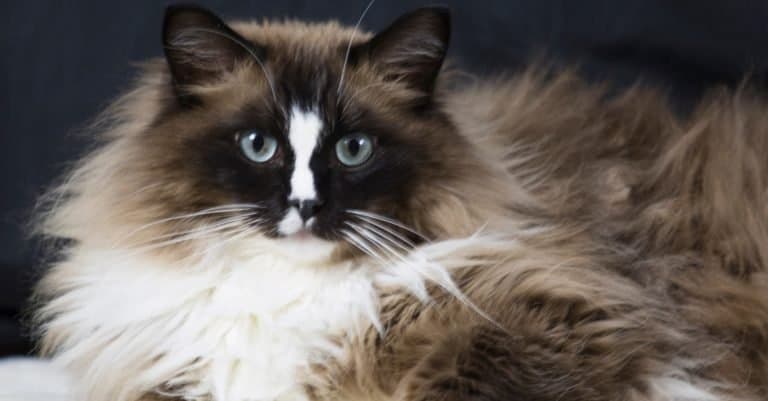
Almost all ragdolls have color point coats. The color point coat can be of any of the selected patterns. One color point coat is not seen as better than another.
Almost all ragdolls have color point coats, which can come in varied patterns. Pictured is a Mink Seal Point Mitted, with Blaze, a Ragdoll Cat.
©Sherri E. Wyatt/Shutterstock.com
In general, the Ragdoll Fancier’s Club recognizes five types of ragdoll coat patterns:
- Colorpoint
- Bicolor
- Mitted
- Lynx Point
- Tortie Point
Ragdoll cats come in six different colors, including:
- Chocolate: The chocolate color can range from a light brown, like a hot chocolate color, to a very dark brown, like your favorite candy bar.
- Seal: These cats have very dark brown fur on their bodies. Many look like extremely large Siamese cats.
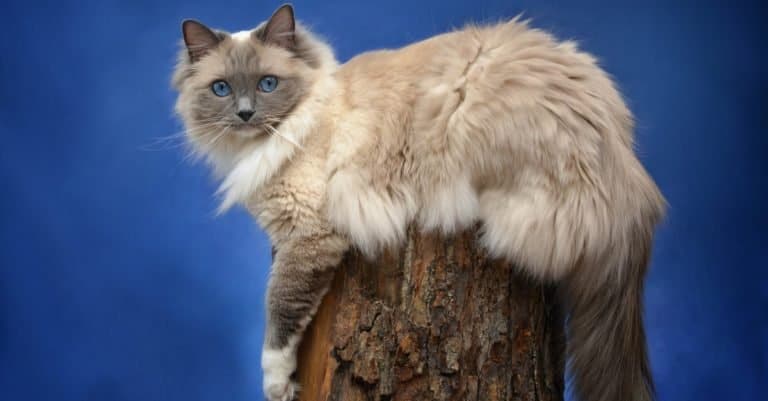
- Lilac: This color ranges from light to medium gray with a pink hue.
- Blue: This color ranges from light to medium gray, but it has a blue hue.
- Flame: Sometimes called red, these cats have an orange cast, which can be very faint or much more prominent.
- Cream: These cats have an off-white body that can range from an orangish to a chocolate tint.
Given the variations in colorings and coat patterns, here’s a more exhaustive list of types of Ragdoll cats:
- Seal: Includes seal colorpoint, seal mitted, and seal bicolor varieties.
- Blue: Includes blue colorpoint, blue mitted, and blue bicolor varieties.
- Chocolate: Includes chocolate colorpoint, chocolate mitted, and chocolate bicolor varieties.
- Lilac (Frost): Includes lilac colorpoint, lilac mitted, and lilac bicolor varieties.
- Red (Flame): Includes red colorpoint, red mitted, and red bicolor varieties.
- Cream: Includes cream colorpoint, cream mitted, and cream bicolor varieties.
- Seal Lynx (Tabby): Includes seal lynx colorpoint, seal lynx mitted, and seal lynx bicolor varieties.
- Chocolate Lynx (Tabby): Includes chocolate lynx colorpoint, chocolate lynx mitted, and chocolate lynx bicolor varieties.
- Lilac Lynx (Tabby): Includes lilac lynx colorpoint, lilac lynx mitted, and lilac lynx bicolor varieties.
- Red Lynx (Tabby): Includes red lynx colorpoint, red lynx mitted, and red lynx bicolor varieties.
- Cream Lynx (Tabby): Includes cream lynx colorpoint, cream lynx mitted, and cream lynx bicolor varieties.
- Seal Tortie: Includes seal tortie colorpoint, seal tortie mitted, and seal tortie bicolor varieties.
- Blue Cream: Includes blue cream colorpoint, blue cream mitted, and blue cream bicolor varieties.
- Chocolate Tortie: Includes chocolate tortie colorpoint, chocolate tortie mitted, and chocolate tortie bicolor varieties.
- Lilac Cream: Includes lilac cream colorpoint, lilac cream mitted, and lilac cream bicolor varieties.
- Seal Tortie Lynx (Seal Torbie): Includes seal tortie lynx colorpoint, seal tortie lynx mitted, and seal tortie lynx bicolor varieties.
- Blue Cream Lynx (Blue Torbie): Includes blue cream lynx colorpoint, blue cream lynx mitted, and blue cream lynx bicolor varieties.
- Chocolate Tortie Lynx (Chocolate Torbie): Includes chocolate tortie lynx colorpoint, chocolate tortie lynx mitted, and chocolate tortie lynx bicolor varieties.
- Lilac Cream Lynx (Lilac Torbie): Includes lilac cream lynx colorpoint, lilac cream lynx mitted, and lilac cream lynx bicolor varieties.
Ragdoll Pictures
View all of our Ragdoll pictures in the gallery.

Peredniankina/Shutterstock.com
Sources
- Cat Fancier's Association / Accessed June 14, 2021
- Vet Street / Accessed June 14, 2021
- Ragdoll Love / Accessed June 14, 2021
- Floppy Cats / Accessed June 14, 2021
- The Spruce Pets / Accessed June 14, 2021
- The Happy Cat Site / Accessed June 14, 2021
- My Ragdoll Cats / Accessed June 14, 2021
- Floppy Cats / Accessed June 14, 2021
- I Am Casper / Accessed June 14, 2021
- Paws For Advice / Accessed June 14, 2021