



S
Species Profile

Salamander

Caudata

Tails, trails, and total regeneration
Media from PLOS journals / Creative Commons

Salamander Distribution

Click a location to explore more animals from that region

Loading map...
salamander

At a Glance

Order Overview This page covers the Salamander order as a group. Stats below are general traits shared across the order.
Also Known As Newt, Eft, Waterdog, Siren
Diet Carnivore
Activity Nocturnal+
Lifespan 10 years
Weight 50 lbs
Status Not Evaluated
Did You Know?

Size spans extremes: from minute salamanders ~2-3 cm long to giant salamanders approaching ~1.8 m.

Scientific Classification

Order Overview "Salamander" is not a single species but represents an entire order containing multiple species.

Salamanders are tailed amphibians (order Caudata/Urodela), generally characterized by a lizard-like body form, moist permeable skin, and life histories that range from fully aquatic to largely terrestrial. Many species have complex reproductive strategies and strong ties to freshwater or moist habitats.

Kingdom
Animalia
Phylum
Chordata
Class
Amphibia
Order
Caudata

Distinguishing Features

  • Tailed amphibians with typically four limbs (some reduced in aquatic forms)
  • Moist, glandular skin; many rely on cutaneous respiration
  • Life cycles may include aquatic larvae or direct development (especially in lungless salamanders, Plethodontidae)
  • High regenerative ability in many species (limbs, tail, and sometimes organs)
  • Includes terrestrial 'salamanders' and aquatic 'newts' (newts are salamanders, not a separate order)

Physical Measurements

Males and females differ in size

Length
5 in (1 in – 5 ft 11 in)
6 in (1 in – 5 ft 11 in)
Weight
0 lbs (0 lbs – 132 lbs)
0 lbs (0 lbs – 110 lbs)
Tail Length
2 in (0 in – 2 ft 11 in)
3 in (0 in – 2 ft 11 in)
Top Speed
4 mph
swimming
Poisonous

Appearance

Primary Colors
Secondary Colors
Skin Type Moist, glandular, permeable amphibian skin; typically smooth to slightly granular. Aquatic species often smoother; some terrestrial taxa show more granular/warty texture. Strong moisture dependence; many rely partly or largely on cutaneous respiration (including lungless Plethodontidae).
Distinctive Features
  • Measurements (range across order): smallest adults ~2-4 cm total length; largest giant salamanders ~150-180 cm.
  • Mass (very broad): tiny species under a gram; largest may reach tens of kilograms.
  • Lifespan (range across species): commonly ~3-15 years; larger, slow-growing taxa can reach ~20-50+ years in captivity/nature depending on species.
  • Body plan: tailed amphibians with elongate trunk, four limbs, and persistent tail in adults.
  • Respiration: combination of lungs, skin, and sometimes gills; many Plethodontidae are lungless and skin/buccal-breathe.
  • Life histories: aquatic larvae with external gills common; metamorphosis typical, but neoteny/permanent aquatic adults occur in multiple lineages.
  • Ecological types (major patterns): fully aquatic stream/river giants (e.g., Cryptobranchidae), terrestrial woodland forms (many Plethodontidae), and pond-breeding mole salamanders (Ambystomatidae); substantial variation beyond these.
  • Habitat ties: strong association with freshwater or consistently moist microhabitats; desiccation risk strongly shapes activity and distribution.
  • Behavior/ecology generalizations: many are nocturnal/crepuscular and secretive; activity often peaks during wet, cool conditions; some aquatic taxa active year-round.
  • Diet: mostly carnivorous, taking invertebrates and sometimes vertebrate prey; aquatic giants can take fish/crustaceans.
  • Reproduction: diverse-spermatophore deposition common; courtship and chemical communication frequent; egg-laying in water or moist terrestrial sites varies widely.
  • Parental care: variable-often none, but egg guarding occurs in some taxa; larval development length ranges from weeks to years.
  • Defense: skin toxins/irritants in many; aposematic coloration in some; tail autotomy in some lineages; remarkable limb/tail regeneration widespread.
  • Biogeography: major diversity hotspot in North America; also diverse in Europe and East Asia with many endemics.

Sexual Dimorphism

Dimorphism is often subtle and seasonal. Males commonly show enlarged cloaca and courtship-related traits (pads/crests), while females may be larger-bodied or appear swollen when gravid; the degree varies widely among families and species.

  • Enlarged or swollen cloaca during breeding season
  • Nuptial pads or roughened toe/hand surfaces in some taxa
  • Tail/fin or dorsal crest development in some aquatic breeders and newts
  • More active courtship behaviors and territoriality in some plethodontids
  • Often larger overall body size in some species (but not universal)
  • Gravid abdomen when carrying eggs
  • Sometimes shorter tail relative to body compared with males (taxon-dependent)

Did You Know?

Size spans extremes: from minute salamanders ~2-3 cm long to giant salamanders approaching ~1.8 m.

Many salamanders can regrow lost tails, limbs, and even parts of organs-regeneration varies by species and age.

Plethodontidae (lungless salamanders) breathe largely through skin and mouth lining, enabling many to live in cool, damp forests.

Newts and some salamanders advertise chemical defenses with bright colors; some (e.g., Taricha) contain potent tetrodotoxin.

Reproduction often uses a spermatophore (a sperm packet) picked up by the female-no external amplexus like many frogs.

Some species skip the tadpole-like larval stage entirely via direct development, hatching as miniature adults.

North America is a major hotspot for salamander diversity, especially in the Appalachian region.

Unique Adaptations

  • Cutaneous respiration: permeable skin enables gas exchange, but forces strong dependence on humid microhabitats and clean water/air.
  • Regeneration: ability to regrow appendages and repair tissues is widespread across the order, though extent and speed vary among taxa.
  • Paedomorphosis/neoteny: in multiple lineages, some adults retain juvenile features (notably external gills) and remain aquatic; in others, metamorphosis is typical.
  • Lunglessness (Plethodontidae): loss of lungs paired with specialized cranial and tongue mechanics, often linked to life in cool, moist environments.
  • Chemical defenses: skin glands can secrete irritants or toxins; some newts are among the most chemically defended vertebrates.
  • Sensory/feeding specializations: aquatic giants have strong lateral-line-like sensing and powerful suction feeding; cave forms may reduce eyes and pigmentation while enhancing other senses.

Interesting Behaviors

  • Moisture-driven activity: many terrestrial species emerge on rainy nights and retreat to logs, leaf litter, or burrows when conditions dry; fully aquatic species remain in streams, springs, or caves.
  • Breeding migrations: pond-breeding "mole salamanders" (Ambystomatidae) often move en masse to seasonal pools during specific weather windows; timing varies by region and species.
  • Territoriality and chemical communication: especially in woodland and lungless groups, individuals may defend small home areas and use scent cues/pheromones for mate choice and spacing.
  • Courtship displays: tail fanning, body arching, nudging, and pheromone delivery are common; details differ widely among families (newts vs. lungless vs. mole salamanders).
  • Feeding strategies range from sit-and-wait ambush in forest-floor species to suction feeding in aquatic larvae/adults; some lungless salamanders use rapid tongue projection.
  • Life-history variation: many have aquatic larvae that metamorphose, while others show paedomorphosis (adults retain larval traits like gills) or direct development (no free-living larva).

Cultural Significance

Salamanders (Caudata) stand for change, strength, and the power of the elements. In Europe they were linked to fire; in East Asia giant salamanders appear in folklore and place names. The axolotl stands for identity and survival. Today they stand for clean water and intact forests.

Myths & Legends

Medieval European bestiaries and Renaissance alchemy often described the salamander as a creature that could live in fire; Paracelsus later framed "salamanders" as elemental spirits of fire in Western esoteric tradition.

In Aztec (Mexica) mythology, the god Xolotl is said to have transformed into an axolotl to evade sacrifice-linking salamanders with shapeshifting and metamorphosis.

In Japan, the giant salamander is linked to the hanzaki legend, a creature said to be hard to kill even if cut in two; this story is strongest in western Japan where they live.

In Slovenia's Karst region, cave salamanders (olms) were historically called "baby dragons," tied to folklore that dragons lived underground and their young washed out of caves after heavy rains.

In parts of China, giant salamanders have been connected to stories and nicknames referencing their infant-like cries (often called "baby fish"), embedding them in local river folklore and oral tradition.

You might be looking for:

Axolotl

16%

Ambystoma mexicanum

A neotenic mole salamander famous for retaining larval features (external gills) into adulthood; endemic to the Xochimilco area (Mexico).

View Profile

Fire salamander

14%

Salamandra salamandra

A common European terrestrial salamander with striking black-and-yellow warning coloration.

View Profile

Eastern newt

12%

Notophthalmus viridescens

A widespread North American newt with a distinct terrestrial juvenile 'eft' stage.

Hellbender

12%

Cryptobranchus alleganiensis

A large, fully aquatic North American salamander inhabiting cool, fast-flowing streams.

View Profile

Tiger salamander

10%

Ambystoma tigrinum

A robust North American mole salamander complex; often associated with ponds and burrows.

View Profile

Red-backed salamander

10%

Plethodon cinereus

A small, lungless woodland salamander common in eastern North America; direct development (no free-living larva).

Life Cycle

Birth 100 larvas
Lifespan 10 years

Lifespan

In the Wild
2–70 years
In Captivity
3–80 years

Reproduction

Mating System Promiscuity
Social Structure Transient
Breeding Pattern Seasonal
Fertilization Internal Fertilization
Birth Type Internal_fertilization

Across Caudata, mating is typically seasonal and brief, with adults mostly solitary outside breeding. Courtship often involves male deposition of spermatophores picked up by females; many species mate multiply, though some show temporary mate guarding or localized aggregations.

Behavior & Ecology

Social Aggregation Group: 2
Activity Nocturnal, Crepuscular, Cathemeral, Diurnal
Diet Carnivore Soft-bodied invertebrates-especially earthworms and insect larvae (a common, high-reward prey across many caudate species).
Seasonal Migratory, Hibernates 3 mi

Temperament

Generally secretive and avoidance-oriented; relies on concealment and moisture refuges
Typically non-gregarious; tolerance increases where shelters or breeding sites concentrate individuals
Seasonally more interactive during courtship, breeding migrations, and communal overwintering in some species
Territoriality and aggression vary widely: some defend cover objects or stream sections, others overlap freely
Defensive behaviors range from freezing and fleeing to biting, tail autotomy, and toxin presentation

Communication

Usually silent; rare faint squeaks/clicks reported in a few taxa under stress or handling
Chemical communication dominates: pheromones for mate attraction, courtship, and individual/territory cues
Tactile courtship: nudging, chin-rubbing, cloacal contact, and amplexus-like holds in some groups
Visual displays vary: tail-fanning, body posturing, color signaling in some newts and salamanders
Substrate/waterborne cues: tail undulations and water movement during courtship can signal receptivity
Defensive signaling: toxin secretion and aposematic coloration in some species discourages predators

Habitat

Biomes:
Temperate Forest Temperate Rainforest Boreal Forest (Taiga) Tundra Alpine Tropical Rainforest Tropical Dry Forest Mediterranean Temperate Grassland Desert Hot Desert Cold Freshwater Wetland +7
Terrain:
Mountainous Hilly Plateau Plains Valley Coastal Island Riverine Volcanic Karst Rocky Sandy Muddy +7
Elevation: Up to 14763 ft 9 in

Ecological Role

Predators of small animals (mesopredators) that link aquatic and terrestrial food webs across moist habitats.

Regulation of insect and other invertebrate populations (including aquatic insect larvae) Energy and nutrient transfer between aquatic and terrestrial ecosystems via biphasic life cycles Prey base for fish, birds, snakes, and mammals, supporting higher trophic levels Contribution to decomposition/nutrient cycling indirectly by consuming detritivore invertebrates and through biomass movement Potential suppression of pest species (context-dependent, especially where salamanders are abundant)

Diet Details

Main Prey:
Insects Terrestrial arthropods Earthworms and other annelids Slugs and snails Crustaceans aquatic insect larvae Zooplankton and small aquatic invertebrates Fish and fish eggs Tadpoles and amphibian eggs and larvae Small salamanders and newts Small reptiles and mammals Carrion +6

Human Interaction

Domestication Status

Wild

Salamanders (Order Caudata) are not domesticated; they remain wild. Some species, like axolotls, have long captive-bred lines used in labs and as pets, but this is breeding, not true domestication. Giant salamanders have been farmed for food, causing conservation and disease problems. Many places ban or limit collecting and keeping them.

Danger Level

Low
  • Skin secretions: many species produce irritating/toxic compounds; risk is typically mild but can be significant if mucus contacts eyes/mouth or if ingested
  • Bites/scratches: usually minor; larger aquatic species can deliver painful bites and cause lacerations
  • Zoonotic pathogens: Salmonella and other microbes can be carried; risk increases with poor hygiene and improper tank cleaning
  • Allergic reactions: sensitization to amphibian skin secretions or tank bioaerosols can occur
  • Biosecurity/ecological risk from human actions: releasing captive animals can introduce disease (e.g., Bsal) or invasive populations; this is a major indirect risk to ecosystems rather than direct harm to humans

As a Pet

Suitable as Pet

Legality: Rules differ by country, state, and species. Captive-bred non-native salamanders may be legal with animal-welfare rules, but many native species need permits. Some places ban movement to stop chytrid fungi (Bsal).

Care Level: Experienced

Purchase Cost: $20 - $1,000
Lifetime Cost: $300 - $6,000

Economic Value

Uses:
Scientific research and biomedical models (development, regeneration, toxicology) Pet/terrarium trade (primarily captive-bred taxa) Food/aquaculture (giant salamanders in some regions) Conservation/ecotourism and environmental education Ecosystem services (insect predation; indicators of ecosystem health)
Products:
  • Live animals for research colonies and education
  • Captive-bred pets (aquatic and terrestrial setups)
  • Meat from farmed giant salamanders (regionally)
  • Interpretive/ecotourism experiences (guided night walks, stream surveys)

Relationships

Related Species 8

Newts and true salamanders
Newts and true salamanders Salamandridae Shared Family
Lungless salamanders Plethodontidae Shared Family
Mole salamanders Ambystomatidae Shared Family
Giant salamanders Cryptobranchidae Shared Family
Mudpuppies and waterdogs Proteidae Shared Family
Sirens Sirenidae Shared Family
Asiatic salamanders Hynobiidae Shared Family
Amphiumas Amphiumidae Shared Family

Ecological Equivalents 4

Animals that fill a similar ecological role in their ecosystem

Frogs and toads Anura They share amphibian physiology (permeable skin and ectothermy) and reliance on aquatic or moist habitats. Many occupy similar insectivorous roles around wetlands and streams, though frogs are typically tailless and often more saltatory.
Caecilian
Caecilian Gymnophiona Amphibians that often use moist subterranean or aquatic environments and consume similar prey (soil and aquatic invertebrates). They overlap most strongly with fossorial and stream-edge salamanders despite a very different body plan.
Skinks and other small lizards Scincidae In habitats such as leaf litter, logs, and the forest floor, they can fill superficially similar small-predator niches and have comparable body sizes, but they differ strongly in skin permeability and reproductive ecology.
Freshwater eels
Freshwater eels Anguillidae Elongate aquatic predators and scavengers in streams and lakes; they can overlap in microhabitat use with eel-like salamanders (e.g., amphiumas, sirens), though they are fishes with fundamentally different respiration and life history.

Types of Salamander

20

Explore 20 recognized types of salamander

Axolotl
Axolotl Ambystoma mexicanum
Tiger salamander
Tiger salamander Ambystoma tigrinum
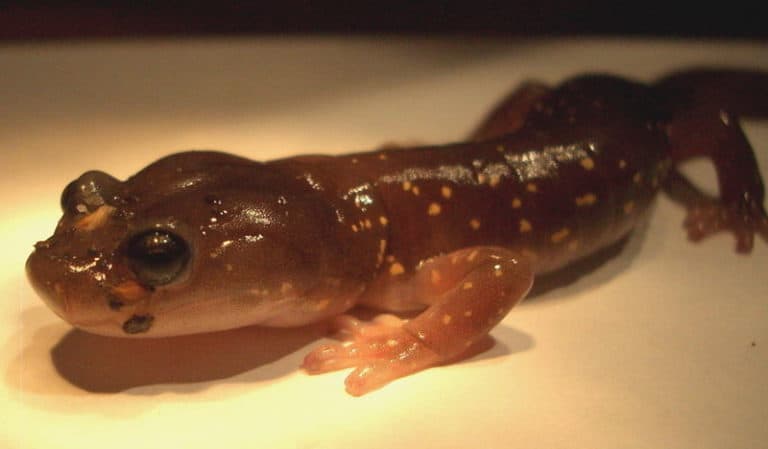
Spotted salamander Ambystoma maculatum
Marbled salamander Ambystoma opacum
Fire salamander
Fire salamander Salamandra salamandra
Alpine salamander Salamandra atra
Eastern newt Notophthalmus viridescens
Rough-skinned newt Taricha granulosa
California newt Taricha torosa
Hellbender
Hellbender Cryptobranchus alleganiensis
Chinese giant salamander
Chinese giant salamander Andrias davidianus
Japanese giant salamander Andrias japonicus
Red-backed salamander Plethodon cinereus
Slimy salamander Plethodon glutinosus
Ensatina Ensatina eschscholtzii
Northern dusky salamander Desmognathus fuscus
Two-lined salamander Eurycea bislineata
Mudpuppy
Mudpuppy Necturus maculosus
Greater siren Siren lacertina
Three-toed amphiuma Amphiuma tridactylum

“Some species of salamander can lay up to 450 eggs at one time”

There are 600-plus species of salamander in the world. Salamanders are carnivores that are active at night. Many salamanders burrow in the mud to make their home under a rock near a body of water. Some species of salamander lay eggs while others give birth to live babies. Most salamanders live an average of ten years, but this varies according to species.
5 Salamander Facts

  • All salamanders must keep their skin wet and cool to survive.
  • Salamanders can’t hear sound, but they can feel vibrations in the ground to detect movements around them.
  • A salamander can regrow a tail it has lost in an attack.
  • Some salamanders live under rocks while others live in trees.
  • Depending on its species a salamander can be less than an inch in length or as long as 6 feet. The largest salamander in the world is the Chinese giant salamander, which can grow to 130 pounds!
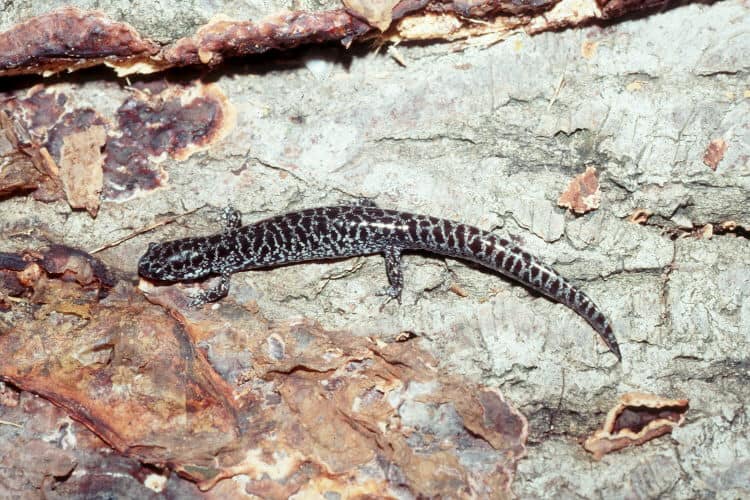
Ambystoma cingulatum

The frosted flatwoods salamander is found only in low elevations in Florida, Georgia, and South Carolina.

Scientific Name

Salamander is the common name for this amphibian, while Caudata is its scientific name. Salamanders belong to the Salamandroidea family and belong to the class of Amphibia. Salamanders have several other names including mud puppy, water dog, triton, and spring lizard.

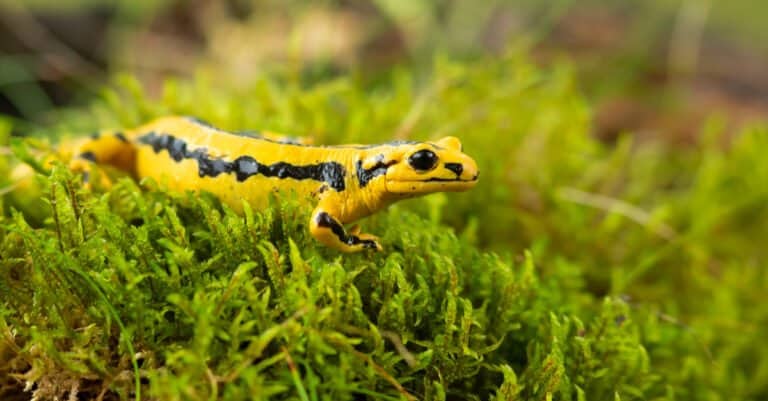
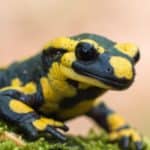
The word salamander comes from the Greek word Salamandra meaning fire lizard. This relates to an old belief that the yellow and black fire salamander has the power to live in fire.

There are several subspecies of salamander. The fire Salamander, the tiger salamander, the Chinese Giant salamander, the Mole salamander, and the Marbled salamander are just a few examples.
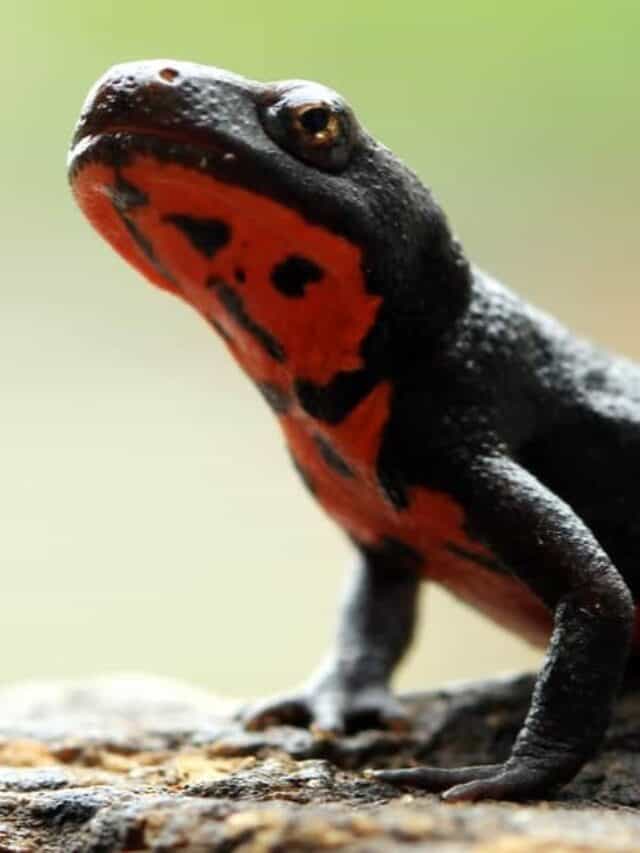
Fire Salamander with red belly sitting on wood.
Salamanders have several other names including mud puppy, water dog, triton, and spring lizard.

History and Evolution

The salamander has been included into legends and myths from around the world. You can find giant salamanders in Japanese stories no doubt due to their large size and dragon-like appearance. Many other cultures associate salamanders as fire-dwelling creatures and claim that their skin is fire-resistant. The reason for these untrue beliefs probably comes from the tendency for salamanders to go into rotten logs in search for food, and then, when those logs are added to a lit fire for additional fuel, the salamander suddenly appears from the flames of the fire without humans realizing from where they came.

For their evolution, there are some discrepancies as to how and when salamanders evolved and diverged from common ancestors. There are two groups from which they descend. The Cryptobranchoidea family contains the giant and the Asiatic salamanders, while the Salamandroidea family holds all of the rest of the salamanders. Some researchers theorize that the siren salamanders, the Sirenidae, are an offshoot from the rest of the Salamandroidea family.

Appearance and Behavior

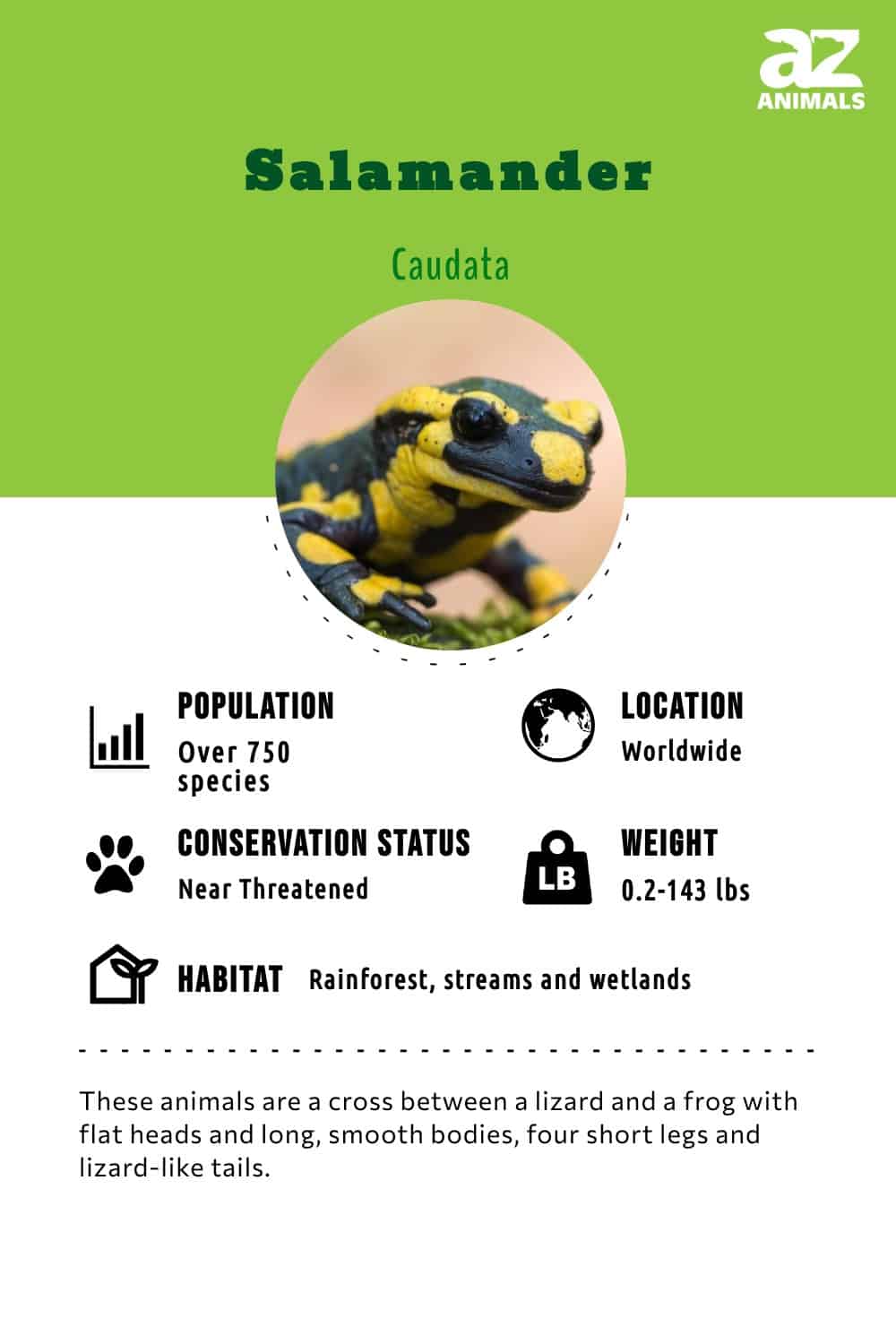
Next time you see a salamander, take a moment to study it. These creatures look like a cross between a lizard and a frog. Its flat head looks kind of like a frog’s head while its long, smooth body, four short legs, and tail look like a lizard’s. Though there are similarities between lizards and salamanders, a lizard is a reptile and a salamander is an amphibian.

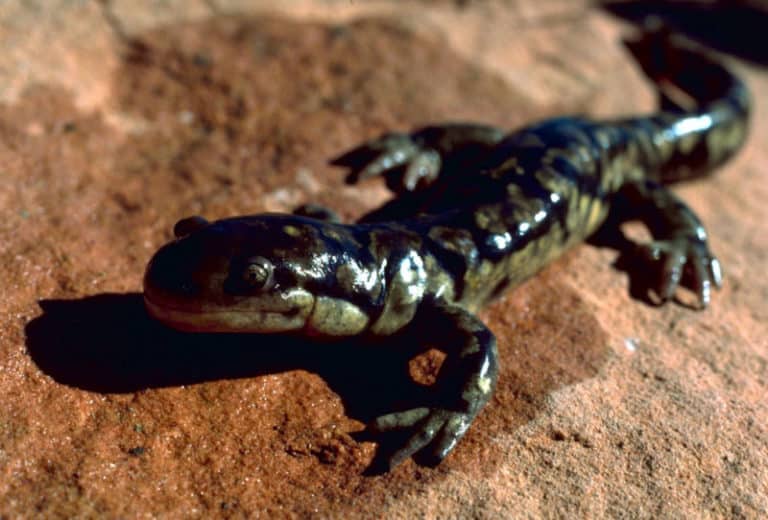
A salamander’s color depends on its species. Many salamanders are solid brown or green. A fire salamander is black with yellow splotches while a tiger salamander has greenish-yellow skin with black stripes. A Chinese giant salamander has dark brownish-red skin with dark speckles.

A brightly colored salamander isn’t just pretty to look at, its bright colors are a signal to predators to stay away. These salamanders have glands in their neck or tail that release poison if the amphibian is grabbed by a predator. Instinctively, most predators know to steer clear of brightly colored salamanders. This is the same with other types of amphibians such as the colorful poison dart frog.

The majority of salamanders measure about 2 to 6 inches long and weigh in the range of 3 to 8 ounces. As an example, a salamander that’s 6 inches long is equal in length to a pencil you might use in school. Furthermore, a salamander weighing 8 ounces is the same weight as a hamster in a pet shop.

The largest salamander in the world is the Chinese giant salamander. It can grow to be almost 6 feet in length and weigh 110 pounds/ This salamander is equal in length to a full-size bed. At 110 pounds, this salamander weighs about the same as 4 bars of gold!

The largest salamander on record was found in 1920 and measured 5.9 feet long. The smallest known salamander is called the Thorius and grows to be less than an inch long. This salamander is smaller than a matchstick!

While many brightly colored salamanders can release poison from glands on their neck or tail, other salamanders have a skin color that blends in with their environment. Salamanders also have the ability to grow back their tail. So, if a predator captures a salamander it can drop its tail in order to escape! These are all excellent defensive features that protect salamanders from predators.

Salamanders are solitary creatures except when it’s mating season. These amphibians, especially the small ones, like to stay hidden. The only time a salamander may become aggressive is during the breeding season while males are competing for mates.
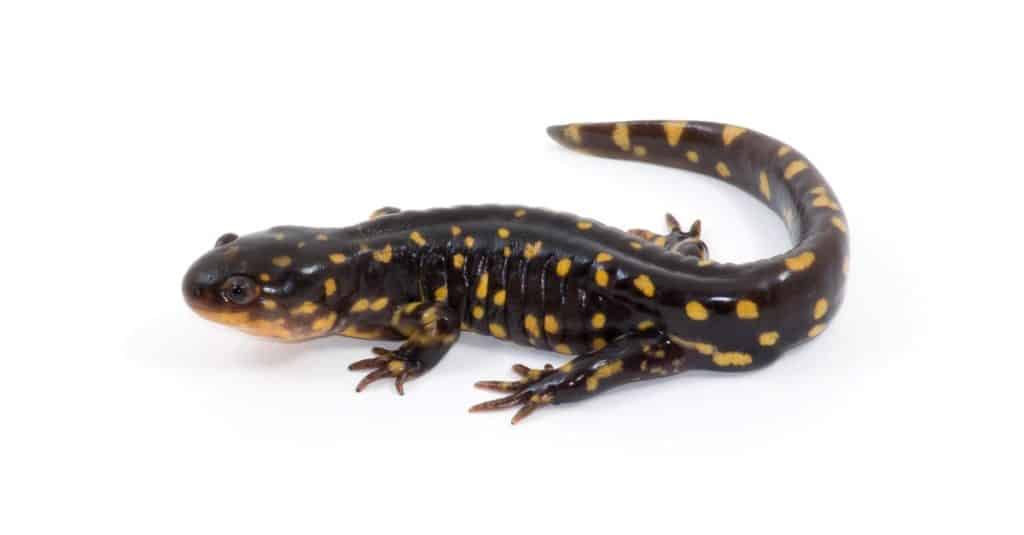
Brightly colored Tiger Salamander isolated against a white background

Salamanders look like a cross between a lizard and a frog, with a flat head that looks like a frog’s head while its long, smooth body, four short legs, and tail look like a lizard’s.

Types of Salamanders

There are over 700 different types of salamanders in the world, and they are organized into ten families, which are split into a few groups. Here are just a few examples of them!

Giant Salamanders

  • Hellbender (Cryptobranchus alleganiensis) – These are one of the giant salamanders. Some giant salamanders belong to the Cryptobranchidae family. Cryptobrachus is Greek for “hidden gill” because these salamanders lose their gills when they become adults. Other giant salamanders are members of the Andrias genus. Andrias is Greek for “statue.” 
  • Hida Salamander (Hynobius kimurae) – Also called Hondo salamanders, this family is known as the Asiatic salamanders. These amphibians can be found in the forests of Japan, and they lay iridescent eggs.

Advanced Salamanders

  • Marbled Salamander (Ambystoma opacum) – These fall under the category of Mole salamanders, which find their habitats in damp woodlands and under logs. They typically only go into the water to breed. To ward off predators, these salamanders have poison glands.
  • Two-toed Amphiuma (Amphiuma means) – These aquatic salamanders are found throughout the southeastern U.S. and have vestigial legs that end in two toes. Interestingly, they can produce auditory clicks at short distances that are used as communication among other salamanders.
  • Red-backed Salamander (Plethodon cinereus) – The Red-backed is on of fifty salamanders in this family. They are also known as Lungless Salamanders because they lack lungs. They obtain the air and gas that they need by absorbing it through their skin. Because of this, they must remain in a moist environment or else dryness will severely damage their porous outer layer of skin.
  • Olm (Proteus anguinus) – One of the only strictly aquatic salamanders, are found in caves in the Alps. This family of amphibians are also referred to as Mudpuppies. Because they live their entire lives in darkness, they are sightless and their other sensory organs have evolved to help them survive underwater in caves.
  • Southern Torrent Salamander (Rhyacotriton variegatus) – One of the Torrent salamanders, these are found in the Pacific Northwestern United States. They are one of the smaller examples of salamanders. Their bodies are somewhat fragile and susceptible to changes in their environment, so they dwell where the temperatures and humidity are just perfect for survival. They take an extraordinarily long time to reach sexual maturity.
  • Alpine Newt (Ichthyosaura alpestris) – These colorful salamanders originally come from continental Europe, and, despite their name, exist in both high and low altitudes. They typically live in forests but move towards more wet environments to reproduce.

Sirens

  • Greater Siren (Siren lacertina) – One of the largest salamanders, these animals can be found in the Southwestern United States coastal plains. They have small lungs and external gills that they rely on for their whole lives. Scientists believe that they also can sense electrical field disturbances and utilize a lateral line system and Jacobson’s organ to help them navigate their surroundings.

Habitat

Salamanders live all over the world, including Europe, Asia, North America and South America. But, the United States has the largest population of salamanders.

Some salamanders live on land part of the time and in the water part of the time while other salamanders stay in the water. Many salamanders make their homes under rocks located near creeks, ponds and lakes. Others live in trees in a rainforest in the Amazon basin and climb down to visit a nearby body of water.

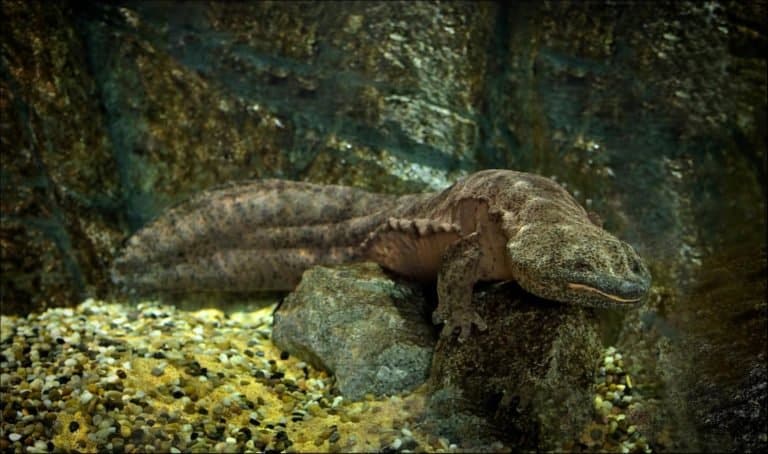
The giant salamander from China lives underwater in fast-moving rivers. Its brownish-gray, splotched coloring helps it to blend in with the rocks near the bottom of a river. Though this salamander lives underwater, it doesn’t have any gills like a fish. Instead, the oxygen it needs to breathe is absorbed through its skin.

There are even a few species of salamander such as the olm that live in caves and spend their lives in underground pools of water. The olm’s eyes have adapted allowing them to survive in such a dark environment.

Most salamanders live near water because that’s where they lay their eggs.

In early spring, many salamanders migrate from the trees down to the forest floor so they can make their way to the nearest body of water to breed.
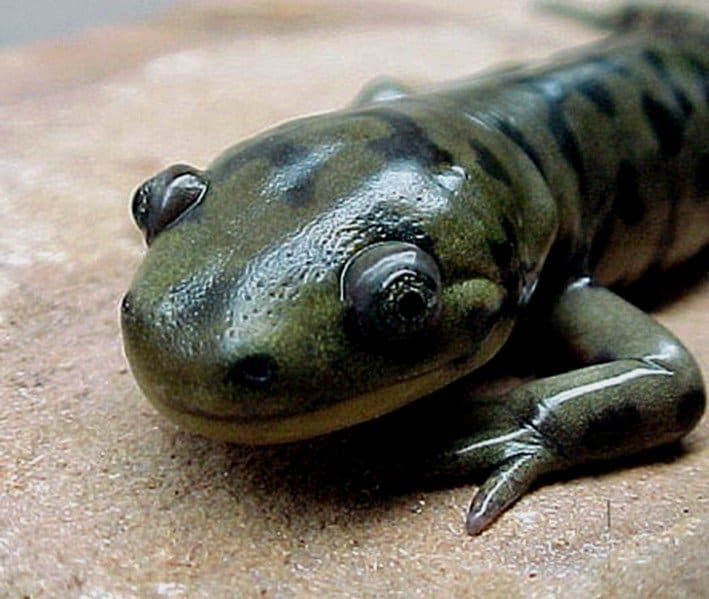
salamander

Most salamanders live near water because that’s where they lay their eggs.

Diet

What do salamanders eat? The answer to this question depends on what species of salamander you’re looking at. Though all salamanders are carnivores, some have larger items on the menu than others!

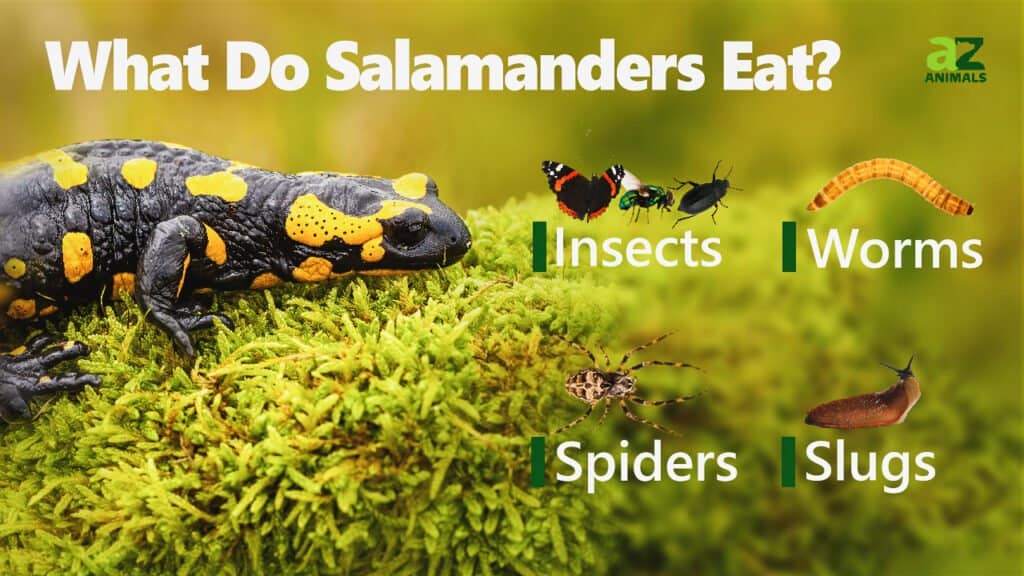
Small salamanders such as fire salamanders or spotted salamanders eat worms, spiders, snails, and slugs. A larger salamander such as the tiger salamander may eat small fish or crayfish. A really big salamander like the Chinese giant salamander dines on frogs, fish, shrimp, and crabs.

Salamanders are nocturnal so they hunt at night and may only eat a few times per week depending on their size. Generally, the larger the salamander, the more often it will need to eat. For a complete list of foods salamanders eat, check out our “What Do Salamanders Eat?” page.
What Do Salamanders Eat image
Salamanders eat insects, worms, spiders, and slugs.

Predators and Threats

As you may have guessed, the smaller species of salamander have more predators than the larger species. For instance, some of the predators that hunt the small spotted salamander include raccoons, skunks, snakes, and turtles. Raccoons and skunks spend time looking for food near creeks and ponds where they dig under rocks. This is commonplace to find salamanders.

Humans are predators to the Chinese salamanders. These large salamanders can end up in the nets of fisherman and sold for food or as pets.

Salamanders that live in the forests of the Amazon basin are at risk of losing their habitat when parts of the forest are cleared by humans. Also, water pollution that makes its way into lakes and creeks can affect the population of salamanders that live and breed there. Unfortunately, some salamanders try to cross busy roads to get to a nearby body of water and end up being killed by cars.

The conservation status of salamanders is Threatened. More efforts are needed to protect salamanders from losing their habitat and being taken from their environment and sold.
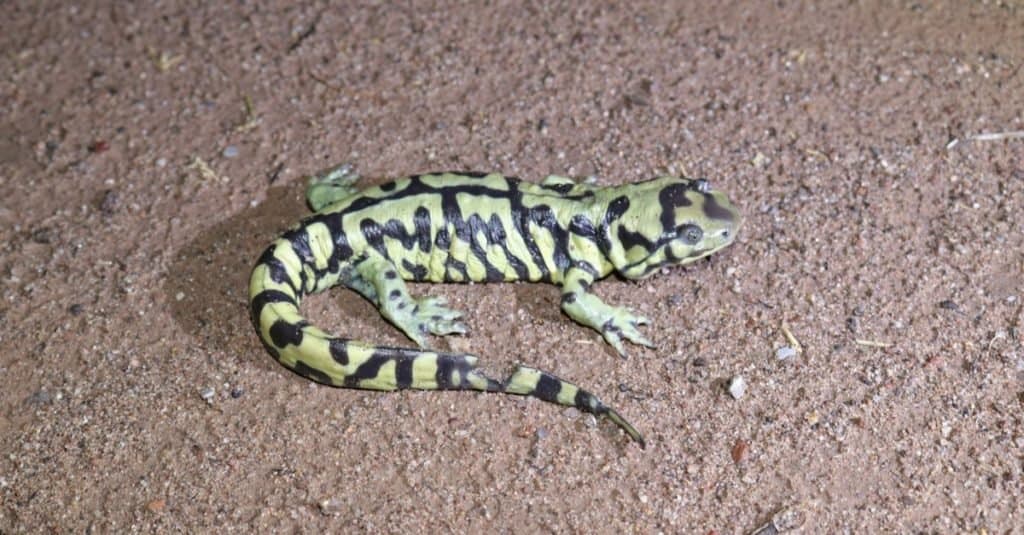
Barred Tiger Salamander in Arizona

Animals that hunt the small spotted salamander include raccoons, skunks, snakes, and turtles.

Reproduction, Babies and Lifespan

Male salamanders compete for the attention of females by releasing a scent. Once the male finds a suitable female, they mate resulting in fertilized eggs. The female lays the jelly-like, shell-less eggs in a body of water and the babies hatch in about 3 to 4 weeks. The average amount of eggs laid by a salamander is 300 though some species lay 450 or more.

There are some salamanders that give birth to live babies instead of laying eggs. The Black Alpine salamander and the fire salamander are two examples. The female Alpine salamander can be pregnant from 2 to 3 years and has just two babies.

The female salamander may stay and protect the eggs or leave after laying them. Once they hatch, the baby salamanders are on their own.

If you walk by a collection of baby salamanders near a creek you may mistake them for tadpoles or frog babies. Tadpoles and baby salamanders, also called salamander nymphs, look a lot alike. During the first three months of their lives, salamander nymphs breathe through gills, then slowly develop lungs. They survive by eating tiny insects floating by in the water. After about 3 months, the young salamanders make a home on land near the water.

Female salamanders lay hundreds of eggs in a creek, pond or other body of water. As you might expect, these tiny eggs are vulnerable to many predators including raccoons, skunks and fish. Just imagine a large fish or snake coming along and swallowing half or more of the eggs laid by a salamander! So, laying a large number of eggs helps increase the chances that at least some of the salamanders will survive into adulthood.

The lifespan of salamanders ranges from 5 to 20 years. A salamander with several predators is likely to have a shorter lifespan than a large salamander with a defensive feature such as the ability to release poison from its glands.

The two oldest salamanders on record lived in the Artis Zoo in Amsterdam. Both were Japanese salamanders that lived to be 52 years old.

An illness that can affect a salamander’s lifespan is a bacteria called Bsal. It is a fungus that spreads quickly among salamanders kept together.
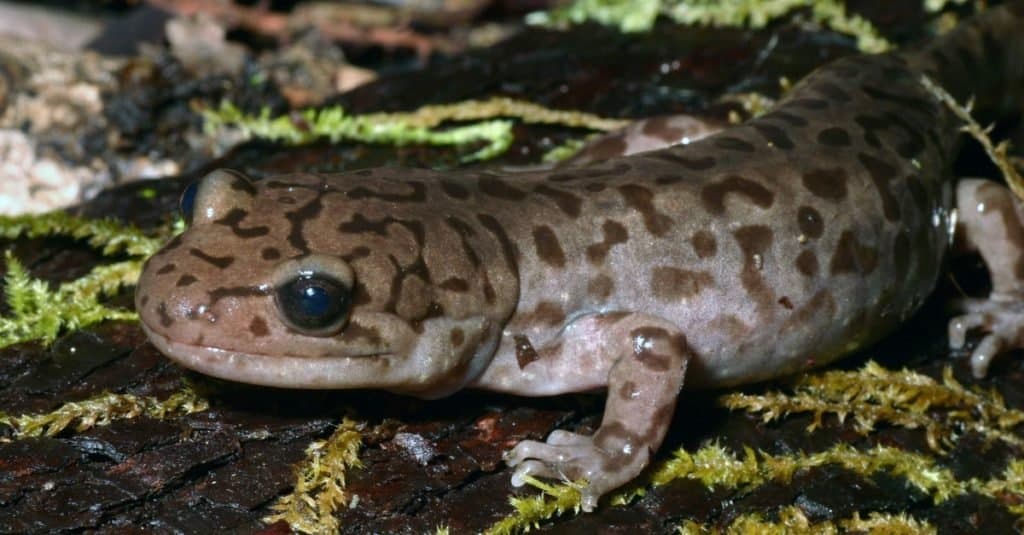
A Coastal Giant Salamander (Dicamptodon tenebrosus) sitting on a mossy log.

Some types of salamanders birth to live babies instead of laying eggs.

Population

Though there are many species and millions of salamanders in the world, their population is still regarded as Threatened. Loss of habitat, water pollution, and poaching by humans all contribute to a decreasing population among the species.

View all 390 animals that start with S

Sources

  1. David Burnie, Dorling Kindersley (2011) Animal, The Definitive Visual Guide To The World's Wildlife / Accessed November 18, 2008
  2. Tom Jackson, Lorenz Books (2007) The World Encyclopedia Of Animals / Accessed November 18, 2008
  3. David Burnie, Kingfisher (2011) The Kingfisher Animal Encyclopedia / Accessed November 18, 2008
  4. Richard Mackay, University of California Press (2009) The Atlas Of Endangered Species / Accessed November 18, 2008
  5. David Burnie, Dorling Kindersley (2008) Illustrated Encyclopedia Of Animals / Accessed November 18, 2008
  6. Dorling Kindersley (2006) Dorling Kindersley Encyclopedia Of Animals / Accessed November 18, 2008
Heather Ross

About the Author

Heather Ross

Heather Ross is a secondary English teacher and mother of 2 humans, 2 tuxedo cats, and a golden doodle. In between taking the kids to soccer practice and grading papers, she enjoys reading and writing about all the animals!

Thank you for reading! Have some feedback for us?


Salamander FAQs (Frequently Asked Questions)

While salamanders have adapted to live most of their life on land, news live almost exclusively in water. Other differences that separate newts vs salamanders include their lifespans, feet, and tails.