
S
Species Profile

Sand Lizard

Lacerta agilis

Green-flanked sprinter of the sands
Ksenia Lada/Shutterstock.com
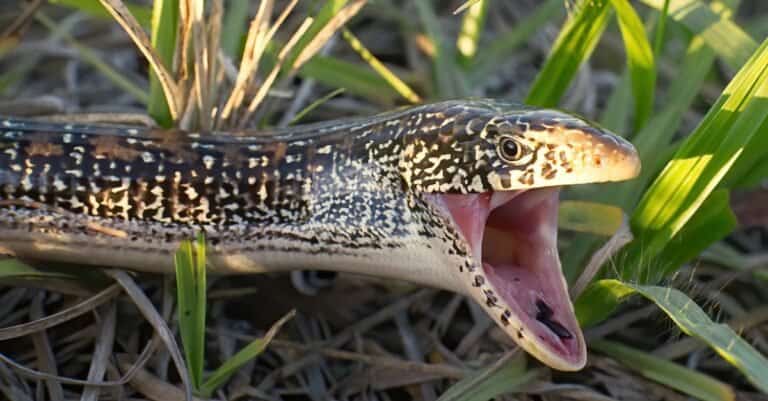
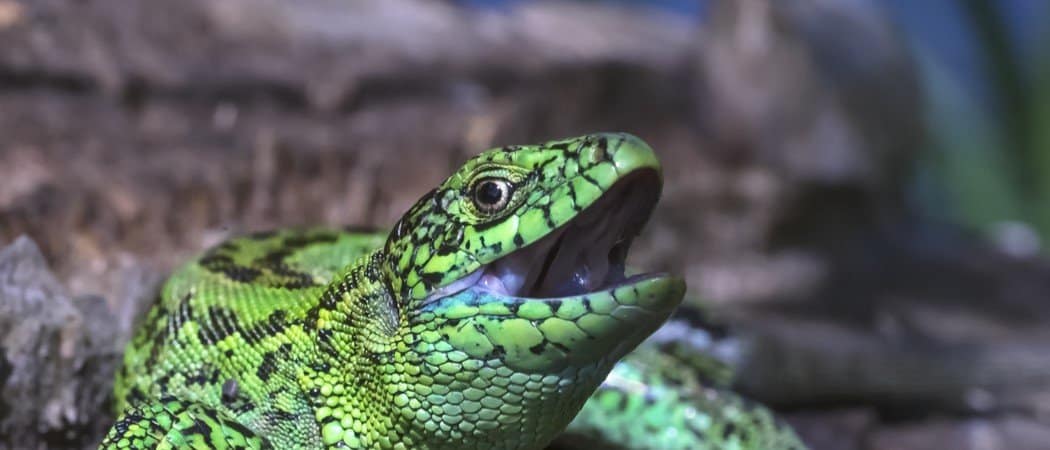
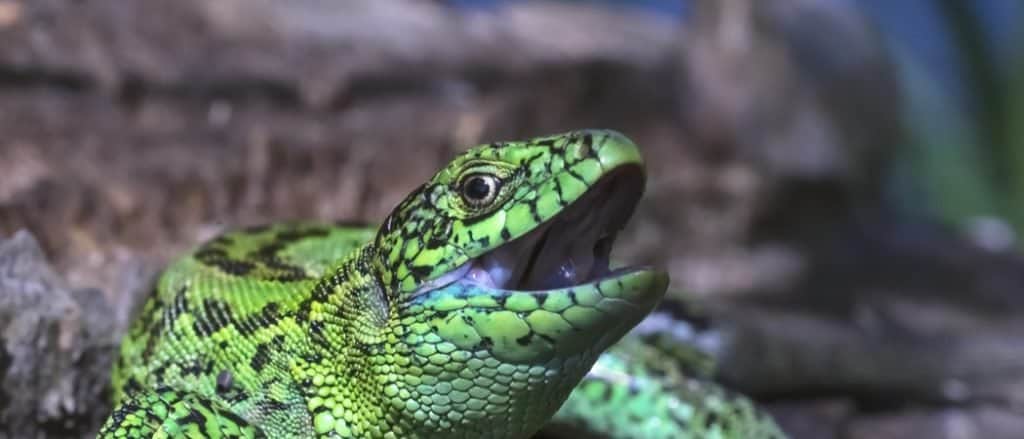
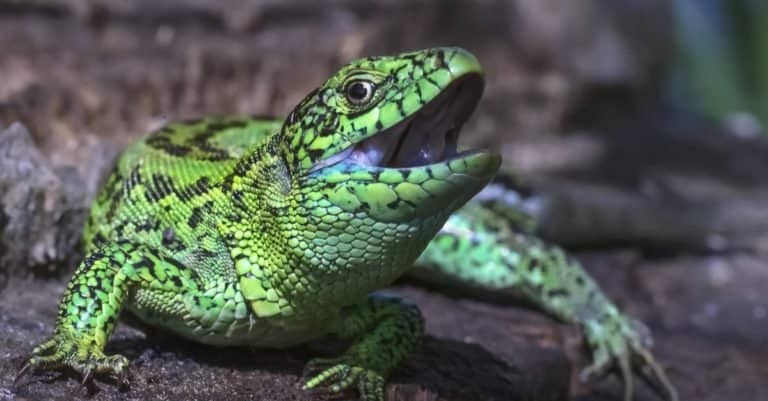
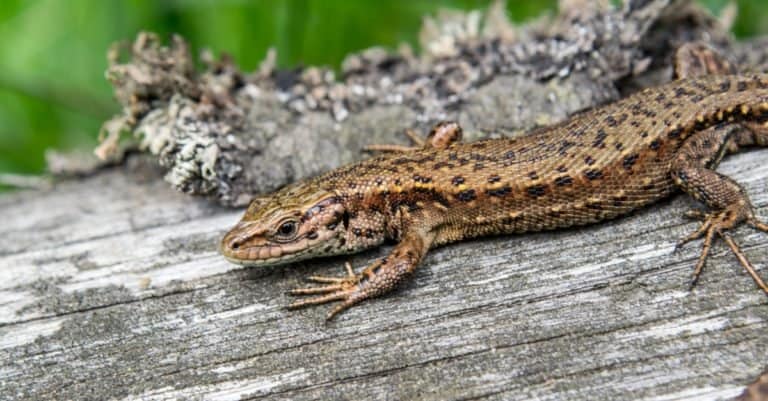
The sand lizard (Lacerta agilis) with an open mouth in nature, close-up

At a Glance

Wild Species
Activity Diurnal+
Lifespan 6 years
Weight 0.03 lbs
Status Least Concern
Did You Know?

Size: typically 18-22 cm total length (incl. tail), occasionally up to ~25 cm (Natural England species account; Speybroeck et al., 2016).

Scientific Classification

A medium-sized lacertid lizard native to much of Europe and parts of western/central Asia, typically associated with sandy heaths, dunes, and open, sunlit habitats. Notable for strong sexual dimorphism in the breeding season, when males often show bright green flanks.

Kingdom
Animalia
Phylum
Chordata
Class
Reptilia
Order
Squamata
Family
Lacertidae
Genus
Lacerta
Species
agilis

Distinguishing Features

  • Typically found in sandy or heathland habitats with patchy vegetation
  • Robust lacertid build; brown/gray dorsum often with rows of light spots/ocelli
  • Breeding males often develop bright green coloration along the sides

Physical Measurements

Males and females differ in size

Length
8 in (7 in – 10 in)
8 in (6 in – 10 in)
Weight
0 lbs (0 lbs – 0 lbs)
Tail Length
5 in (4 in – 6 in)
5 in (4 in – 6 in)
Top Speed
7 mph
running

Appearance

Primary Colors
Secondary Colors
Skin Type Dry, keratinized reptilian scales; dorsal scales distinctly keeled, ventrals smoother; tail scales in whorls.
Distinctive Features
  • Adult total length commonly ~18-23 cm; tail typically ~1.5-2× snout-vent length (field guides/reporting across Europe).
  • Robust head with large symmetrical head shields; ear opening distinct; long toes with sharp claws.
  • Strong basking behavior in open sunny patches on heaths/dunes; retreats into vegetation/burrows when disturbed (diurnal heliotherm).
  • Femoral pores conspicuous (especially males), producing waxy secretions; used in scent marking during breeding season.

Sexual Dimorphism

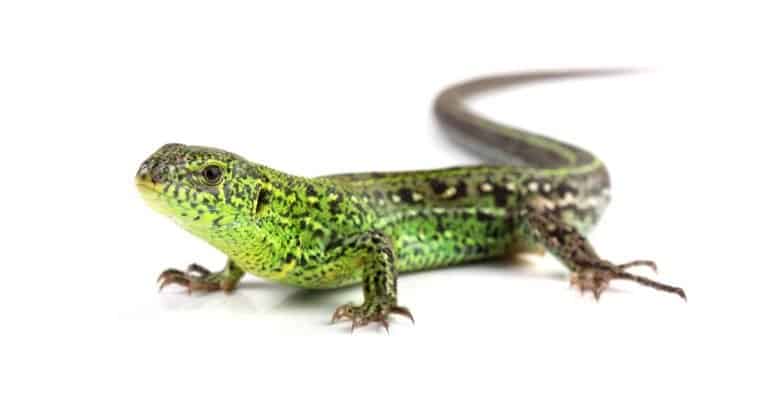
During the breeding season, males show vivid green flanks and a bulkier head with more prominent femoral pores. Females are usually browner/tan with clearer striping/ocelli and often a slightly larger, fuller body.

  • Bright green flanks and sides of head in breeding season; intensity varies by population.
  • Head proportionally larger and more robust; jowls appear broader.
  • Femoral pores typically more prominent; tail base may look thicker.
  • Usually brown/tan with more distinct longitudinal striping and ocellated spotting.
  • Generally less or no green coloration; overall more cryptic patterning.
  • Often slightly larger-bodied with relatively shorter, less robust head.

Did You Know?

Size: typically 18-22 cm total length (incl. tail), occasionally up to ~25 cm (Natural England species account; Speybroeck et al., 2016).

Breeding-season showpiece: males develop bright green flanks with dark spotting/ocelli, while females stay mostly brown/striped-strong seasonal sexual dimorphism (Arnold & Ovenden, 2002).

Reproduction: females usually lay ~6-15 eggs in warm sand/soil; incubation commonly ~6-10 weeks depending on temperature (regional field studies summarized in Speybroeck et al., 2016).

Tail escape: like many lacertids, it can shed (autotomize) the tail to distract predators, then regrow a shorter, cartilage-based replacement.

Seasonal rhythm: active mainly spring-summer; in much of its range it overwinters/hibernates roughly from autumn to early spring (timing varies with latitude and weather).

Unique Adaptations

  • Seasonal male coloration: hormonally driven green pigmentation boosts visual signaling in spring while the species remains cryptic brown outside peak breeding.
  • Sandy-soil reproduction: eggs are laid in loose, sun-warmed substrate that functions as a natural incubator-an adaptation tying the species to dune/heathland mosaics.
  • Tail autotomy and regrowth: breaks at fracture planes reduce blood loss and increase escape odds; regrown tail is functional but structurally different.
  • Thermal specialization for open habitats: behavior and body form suit rapid heating/cooling cycles typical of exposed heaths and dunes (basking, short dashes, frequent use of cover).

Interesting Behaviors

  • Basking-and-bolt lifestyle: it spends long periods basking at vegetation edges, then sprints to cover when disturbed-often returning to the same basking spot once danger passes.
  • Egg-laying site selection: gravid females actively search for exposed, well-drained sandy patches (dunes, heaths, track edges) where solar heating speeds embryo development.
  • Breeding interactions: males patrol small areas in spring, performing close-range chasing and biting during disputes; courtship involves following and grasping prior to mating (typical lacertid behavior documented for L. agilis in European field literature).
  • Microhabitat shuttling: individuals repeatedly move between sun and shade to manage body temperature, using low shrubs, grass tussocks, and bare sand as a fine-scale thermal mosaic.
  • Predator evasion: rapid zig-zag running into dense vegetation, plus tail autotomy as a last resort against birds and mammals.

Cultural Significance

In northwestern Europe (notably the UK), the sand lizard is a flagship species for lowland heath and dune conservation; its presence is used to justify habitat protection, restoration, and reintroduction projects. Its species name means "nimble," and the English name "sand lizard" reflect two defining associations-speed and sandy nesting habitat.

Myths & Legends

In medieval European bestiaries, writers said the sand lizard (Lacerta agilis) could heal or strengthen its sight by facing the sun. It became a moral symbol of renewal and seeking light.

Classical natural-history lore recorded by Pliny the Elder includes medicinal and symbolic claims about lizards (especially in relation to sight and healing), reflecting a long-standing Mediterranean tradition of attributing curative powers to small reptiles.

In rural Europe, Sand Lizards (Lacerta agilis) were seen as omen animals in home and field stories — sometimes spared, sometimes used in amulets or folk remedies, becoming part of everyday belief.

Conservation Status

LC Least Concern

Widespread and abundant in the wild.

Population Decreasing

Protected Under

  • EU Habitats Directive 92/43/EEC: Annex IV(a) (strict protection)
  • Bern Convention on the Conservation of European Wildlife and Natural Habitats: Appendix II
  • United Kingdom: Wildlife and Countryside Act 1981 (Schedule 5) (where applicable)

Life Cycle

Birth 10 hatchlings
Lifespan 6 years

Lifespan

In the Wild
2–12 years
In Captivity
5–15 years

Reproduction

Mating System Polygynandry
Social Structure Solitary
Breeding Pattern Transient
Fertilization Internal Fertilization
Birth Type Internal_fertilization

Breeding April-May; territorial males court and physically guard receptive females, but both sexes mate with multiple partners and clutches often show multiple paternity. Copulation uses hemipenes (internal fertilization); no parental care beyond oviposition.

Behavior & Ecology

Social Solitary Group: 1
Activity Diurnal, Matutinal, Vespertine
Diet Insectivore Grasshoppers and crickets
Seasonal Hibernates

Temperament

Strongly territorial in breeding season; males defend areas and exclude rival males (Olsson 1994).
Intrasexual aggression includes chasing, grappling, and biting; intensity increases with local density.
Generally wary and flight-prone; quickly retreats to vegetation/burrows when approached.
Seasonally variable boldness: more conspicuous during spring basking and mate-searching; cryptic later.
Across populations, mostly solitary and territorial; brief aggregations increase where basking sites and refuges are limited.

Communication

Generally silent; occasional defensive hissing when handled or closely threatened Arnold 1983
Visual threat/courtship displays: lateral body compression, posturing, chasing, and biting Olsson 1994
Color signaling: breeding males develop bright green flanks used in social/sexual signaling Olsson et al. 1996
Chemical signaling via femoral pore secretions; scent-marking and conspecific assessment Cooper & Greenberg 1992
Tactile communication during courtship and copulation: close body contact, male grasping, cloacal alignment.
Spatial signaling via site fidelity and repeated use of basking points, reinforcing territorial ownership cues.

Habitat

Grassland Shrubland Woodland Deciduous Forest Coniferous Forest Coastal Beach Agricultural/Farmland Urban Suburban Alpine Meadow +5
Biomes:
Temperate Grassland Temperate Forest Mediterranean Boreal Forest (Taiga) Alpine
Terrain:
Plains Hilly Plateau Valley Coastal Riverine Sandy Rocky +2
Elevation: Up to 7053 ft 10 in

Ecological Role

Mid-level arthropod predator in sandy heath/dune and open woodland-edge ecosystems; also an important prey item for larger vertebrate predators.

Regulates populations of terrestrial arthropods (including herbivorous insects and other invertebrates) through predation Transfers energy from invertebrate prey to higher trophic levels (raptors/corvids, snakes, small carnivorous mammals) Contributes to trophic stability in open, sunlit habitats by linking arthropod communities to vertebrate predator guilds

Diet Details

Main Prey:

Human Interaction

Domestication Status

Wild

Sand lizards (Lacerta agilis) have no domestication history. People affect them by changing heathland, dunes and grassland, and through research and conservation (legal protection, monitoring, translocations and reintroductions). Adults ~18–23 cm; lay ~4–14 eggs; are daytime, bask in sun; males show bright green sides; live a few years in wild, ~10 years captive.

Danger Level

Low
  • May bite if handled; generally minor superficial injury.
  • Zoonotic risk common to reptiles if hygiene is poor (e.g., Salmonella carriage potential); wash hands after any contact with reptiles or their enclosures.
  • No venom; not considered dangerous under normal circumstances.

As a Pet

Not Suitable as Pet

Legality: Keeping wild Sand Lizards (Lacerta agilis) is often illegal or needs permits. Many countries protect them (e.g., EU Habitats Directive Annex IV). Always check local laws before taking or moving one.

Care Level: Experienced

Purchase Cost: Up to $300
Lifetime Cost: $2,000 - $7,000

Economic Value

Uses:
Conservation management Education/outreach Scientific research Nature tourism
Products:
  • No mainstream commercial products; value is largely non-consumptive (biodiversity and educational value) and through conservation-funded habitat restoration/management projects.

Relationships

Related Species 8

Western green lizard Lacerta bilineata Shared Genus
European green lizard Lacerta viridis Shared Genus
Schreiber's green lizard Lacerta schreiberi Shared Genus
Balkan green lizard Lacerta trilineata Shared Genus
Viviparous lizard Zootoca vivipara Shared Family
Common wall lizard Podarcis muralis Shared Family
Italian wall lizard
Italian wall lizard Podarcis siculus Shared Family
Ocellated lizard Timon lepidus Shared Family

Ecological Equivalents 5

Animals that fill a similar ecological role in their ecosystem

Viviparous lizard Zootoca vivipara Common viviparous lizard. Both occur in sunny heath and grassland, are diurnal, ground-dwelling lizards that bask and eat small insects. Zootoca vivipara favors cooler, wetter sites and often gives birth to live young; Lacerta agilis lays eggs and prefers warm sandy heath and dunes.
Common wall lizard Podarcis muralis Both are small, diurnal, insectivorous lizards that bask, sprint, and use shelters. Podarcis muralis is associated with rocks and walls, while Lacerta agilis prefers sandy heaths, dunes, and loose soil for laying eggs.
Western green lizard Lacerta bilineata Close relative that shares woodland edges, scrub, and hedgerows and feeds on insects. Where their ranges meet, both use sunny spots and dense vegetation; L. bilineata is larger and favors taller, bushy margins, while Lacerta agilis prefers open, sandy areas.
European green lizard Lacerta viridis Large, diurnal, insectivorous lizard that basks and uses patchy cover. Lives in warm, open areas with shrubs and grass, often on slightly wetter, vegetated slopes and woodland edges, in contrast to the sandier habitats preferred by Lacerta agilis.
Steppe runner Eremias arguta In the eastern portion of the sand lizard's broader Eurasian range, this species is a functional analogue in sandy and steppe substrates: diurnal, ground-dwelling, thermophilic, arthropod-feeding, and reliant on open, sparsely vegetated sand or soil for movement and refuge.

The sand lizard is one of the rarest reptiles in Europe, but wildlife officials are working to establish new populations.

If you are hiking in sandy areas along the Jurassic Coastline, watch for a sandy-brown lizard with dark splotches that is about 20 centimeters long to run across your path as it may be fa a male sand lizard. Alternatively, if you see a sandy-brown lizard with green flanks, you may be seeing a male sand lizard. Their sides become a brighter green during the breeding season, which occurs from April to May because it makes it easier for females to see them. These lizards weigh about 15 grams. Loss of habitat has made spotting one rare, but wildlife officials are starting new populations in many areas of Europe.

5 Incredible Sand Lizard Facts!

  • Sand lizards are about 20 centimeters long when mature, and they weigh about 15 grams.
  • Sand lizards can be found across much of Europe. A small population exists on the Isle of Coll in the Inner Hebrides in Scotland. Researchers have also found them living in Scandinavia, the Iberian Peninsula, and western areas of Russia, Mongolia, and China.
  • Sand lizards burrow during the winter months. This process is called brumation.
  • Sand lizards quickly lift each foot off the ground if ground temperatures get too warm to keep their feet from burning. They may also lay on their bellies with all four feet in the air at the same time.
  • Sand lizards can live up to 20 years.

Sand Lizard Scientific name

The scientific name for sand lizards is Lacerta agilis. The word “lacerta” derives from the Latin language, and it means lizard while “agilis” is a Latin word meaning mobile, swift or agile. Sand lizards are the only member of this family. It is sometimes called viviparous lizard.

There are at least three sub-species of sand lizards that live in different regions of England. It is hard without scientific testing to determine the difference between those living in the Surrey area, like East Hampshire and West Sussex heathlands, and along the Kentish coast, from those living in the Dorset region around East Hampshire and the West Sussex heathlands. The dorsal stripe on these subspecies may be broken or missing.

The third subspecies lives in the coastal dunes of West Lancashire, Wales, and along the Kentish coast. These lizards are smaller and slimmer. The males are a lighter green than those living in the Surrey or Dorset regions. Unlike those in the Dorset or Surrey area, males may stay green throughout the year. Generally, the dorsolateral stripes on this sub-species are broader and more prominent.

Sand Lizard Appearance

The sand lizard is usually sandy brown. They have dark splotches on their sides that some people believe look like eyes as these markings are typically lighter in the middle and darker around their outsides. These spots often vary in size.

Compared to the European green lizard or the Western green lacerta, sand lizards have a very stocky body. They have incredibly long tails that are often at least 1.5 times as long as their bodies. Like other lizards, this species can lose its tail if it gets trapped somehow.

Males tend to be stockier than females. Males have larger heads with more prominent jaws. The female’s eyes sit about 50% back on the head while the male’s eyes are about 33% back.

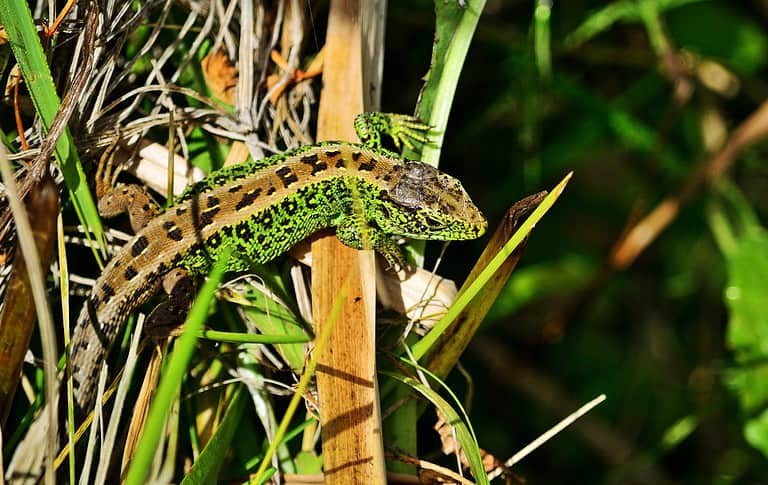
Most males have green flanks that turn brighter green during mating season. Scientists believe that this is so that females can see them easier and will find them more attractive. The markings along the flanks are more closely crowded together on the male than on the female.

These lizards lead a solitary life, but you may see two sunning together on a large rock. Often, they are about the same size. During mating season, males become very aggressive. They will fight each other to death.
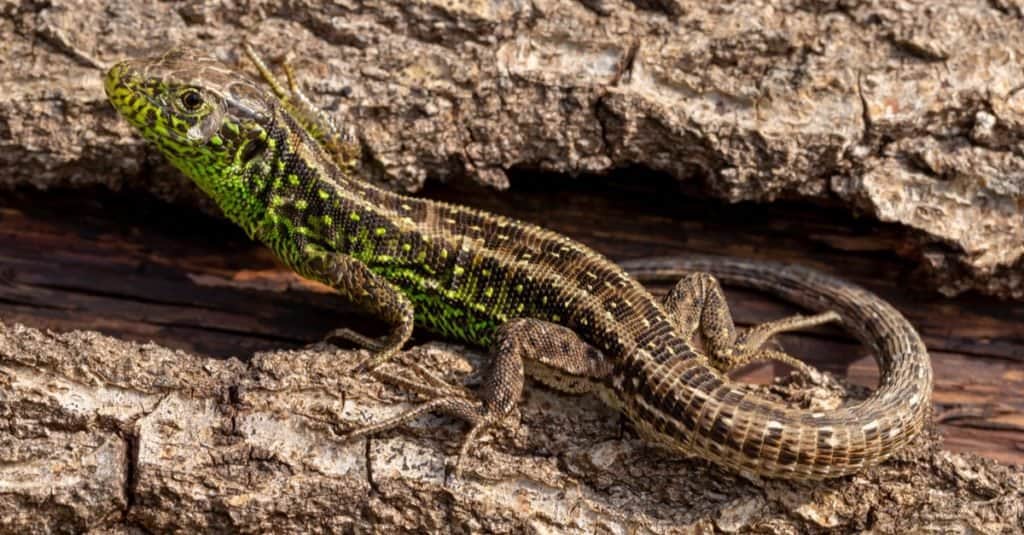
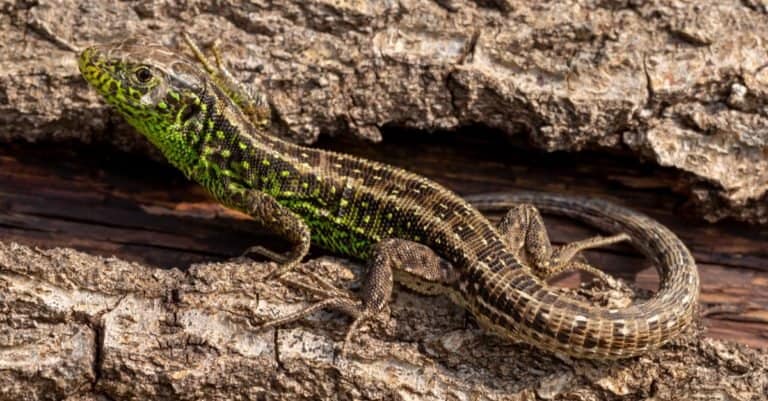
Wildlife portrait of rare Sand lizard (Lacerta agilis) warming up on fallen tree trunk, displaying his vibrant green mating colors.

Sand Lizard Behavior

Sand lizards move around during the day. You will often see pairs of sand lizards basking on top of a sand pile together. They must count on the sun to warm their bodies because they do not generate body heat.

Sand lizards live in burrows underground. They will not come out until they sense that the day is warming up. They stay in their burrows throughout the winter months. When it is time to come out in the spring, males usually leave their burrows before females.

Once they emerge from their burrows in the morning, sand lizards bask in the sun. Scientists believe that they need sunlight to warm their bodies before they have the energy to hunt.

Sand lizards move several meters when foraging for food. Then, they will stop and listen for movement. Once they hear a sound, they will move their heads backward until they locate the source. Then, they pounce on it with their mouths. If the prey gets more than 60 centimeters away, they will ignore it and continue foraging for food.

Sand Lizard Habitat

While this lizard typically lives in dry heathlands, it is very adaptable. The Surrey subspecies must have a gravel or sandy substrate to thrive. The Dorset subspecies also live in cliff-top meadows.

While adaptable throughout much of their lives, they prefer to live in a sloped area. They also need a place that is soft enough that they can create their burrows. Generally, they prefer a mossy area that is at least 30 centimeters deep. They will build their nests and lay their eggs in this area.

These lizards often hunt for their food in grassy areas. Then, return to sandy areas when the sunsets.

Sand Lizard Diet

Sand lizards are carnivores. They prefer to dine daily on grasshoppers, spiders, and insects, but they can survive for long periods if food is not available. Male sand lizards have eaten their hatchlings and the hatchlings of the common lizard if they get hungry.

Sand Lizard Predators and Threats

The main predators of sand lizards are birds of prey, especially kestrels. Another predator is the smooth snake.

While this lizard has a hard time escaping from these predators, other predators, like foxes, badgers, weasels, and crows, will try to eat them.

This lizard uses several techniques to escape its predators. First, it will stay perfectly still in hopes that the predator does not notice it. If that does not work, then it will try to escape to its burrow. In cases where those two techniques do not work, then it will release its tail. The tail will wiggle on the ground for several minutes, which is usually enough to capture the predator’s attention giving the lizard time to escape. The bite is not poisonous.

Humans are another massive threat to these lizards because of deforestation and the breaking of forests into multiple smaller sections through logging or for housing development. While the International Union for Conservation of Nature considers the species to be of least concern, the Wildlife and Countryside Act of 1981 and the United Kingdom Post-2010 Biodiversity Framework list it as a priority species.

When people build too close to the sand lizard’s habitat, domestic cats and dogs can also be a problem for this reptile.

Sand Lizard Reproduction, Babies, and Lifespan

Scientists believe that the female sand lizard chooses her mates. They seem to prefer those that are distantly related. Each female typically mates with several males during March and April, but she will only lay eggs one time each year. If the female is successful in choosing a mate that is more distantly related, then she will usually lay more eggs.

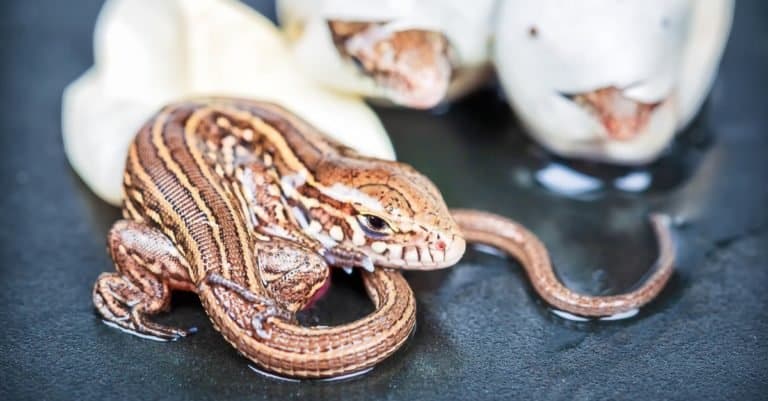
The sand lizard is the only native reptile in the United Kingdom to lay eggs. The eggs will stay in the nest for three-to-four months before they hatch in August or September.

Most nests are near the bare ground on a south-facing slope. Some nests are in sandy areas near marram grass because the female can find warmth and food in the grass.

Baby sand lizards, called hatchlings, must fend for themselves when they are born as the mother does not return to the nest after laying her eggs. Hatchlings reach sexual maturity in about two years.

In their natural habitat, the lifespan most is about 12 years old. Some have a lifespan of about 20 years in captivity.

Sand Lizard Population

No one knows for sure exactly how many sand lizards there are in the world. Scientists believe that the number is severely declining. They feel that there are no remaining sand lizards in North and West Wales, Cheshire, Kent, Sussex, Berkshire, Hampshire, Devon, and Cornwall. They also believe that the population has decreased by over 90% in Merseyside, Surrey, and Dorset.

View all 390 animals that start with S

Sources

  1. The Wildlife Trusts / Accessed February 27, 2021
  2. Animal Corner / Accessed February 27, 2021
  3. YPTE / Accessed February 27, 2021
  4. Learn About Nature / Accessed February 27, 2021
  5. The Guardian / Accessed February 27, 2021
  6. BMC Ecology and Evolution / Accessed February 27, 2021
  7. Soft Schools / Accessed February 27, 2021
  8. Discover Wildlife / Accessed February 27, 2021
A-Z Animals Staff

About the Author

A-Z Animals Staff

AZ Animals is a growing team of animals experts, researchers, farmers, conservationists, writers, editors, and -- of course -- pet owners who have come together to help you better understand the animal kingdom and how we interact.
Connect:

Thank you for reading! Have some feedback for us?


Sand Lizard FAQs (Frequently Asked Questions)

Sand Lizards are Carnivores, meaning they eat other animals.