
Quick Take
- Baboons are intelligent primates that use tools.
- Baboons are accomplished climbers that often sleep in trees.
- Baboons are omnivores that eat a wide variety of foods.
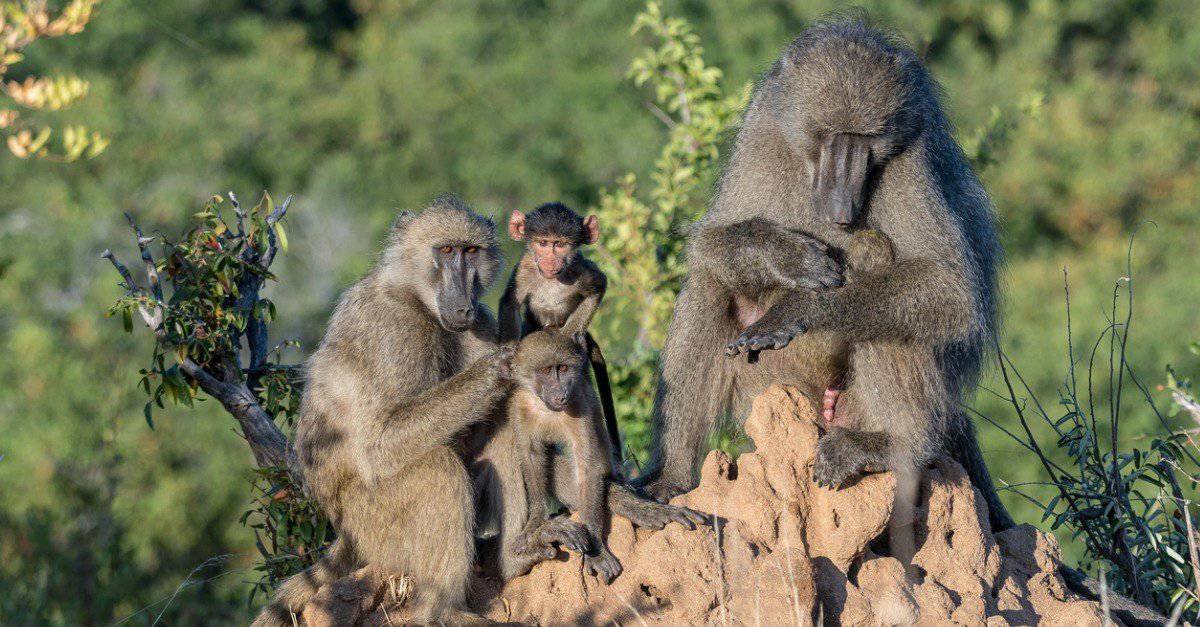
Baboons are members of the primate family, with six species located across Africa. Ranging from 31 lbs to 88 lbs, each species of baboon has its own specialized range and diet. Although they are terrestrial, they sleep in trees, and much of their diet comes from the canopy. Continue reading to learn what baboons eat.
What do Baboons Eat?
Baboons eat grasses, roots, seeds, fruits, fungus, insects, mammals, birds, smaller monkeys, and shellfish.
True omnivores, baboons will eat almost anything they can get their hands on. Known as opportunistic feeders, baboons forage through the day and eat whatever they happen to come across.
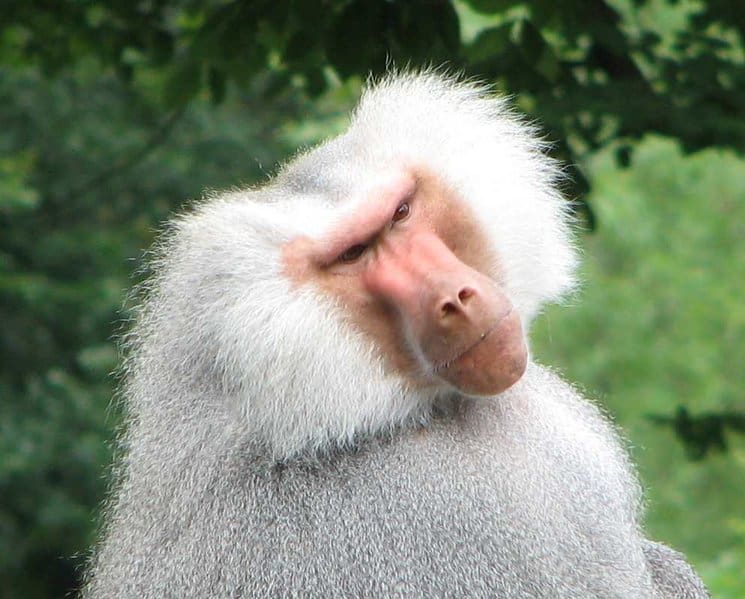
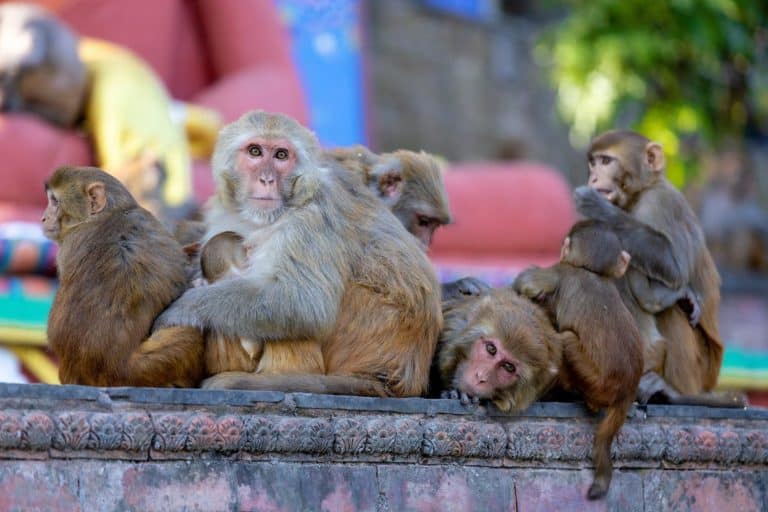
Baboons are among the world’s largest monkeys and are notable for their intense social structures and complex communication.
Baboons forage, mostly looking for food sources rather than hunting prey. They eat grasses, roots, tubers, fruits, nuts, and vegetables. Although they are omnivores, most of their nutrition comes from these sources.
However, baboons have no qualms about eating meat. Aside from vegetation, baboons will eat insects, rodents, fish, shellfish, birds, smaller monkeys, and even baby antelopes. Baboons have been observed using tools to aid their consumption of foods like shellfish.
Baboons often live close to humans. As a result, these opportunists will rifle through dumpsters, break into cars, and even sneak into homes in search of food. In some cases, entire troops of baboons will raid farms, eating crops and preying on chickens, goats, and sheep for meat.
Common foods that baboons eat include:
- grasses
- roots
- tubers
- seeds
- nuts
- fruits
- bark
- fungus
- insects
- spiders
- worms
- fish
- shellfish
- mice and other small mammals
- other monkeys
- birds
- human resources (such as crops and garbage)
Although baboons can eat almost anything, most of their diet consists of grasses and other vegetation.
Do Baboons Use Tools to Get Food?
Baboons are incredibly intelligent and use their brains as they forage.
As one of their primary food sources, grasses are relatively easy to come by in many of the habitats where baboons are found. Acquiring grass is as easy as seeing it and plucking it from the ground for most baboons. Although baboons eat grass, they can’t entirely live on it alone. Without a rumen (a specialized stomach organ) to break down the grasses, it’s difficult to extract all of the needed nutrients to survive, specifically protein.
To supplement, baboons will forage for insects. There have been documented cases of baboons using sticks to poke at termite nests, causing the termites to emerge so the baboons can eat them.
There have also been documented cases of baboons using rocks to aid in foraging. Baboons know that scorpion stings are dangerous and won’t touch one without good reason. One report claims that a chacma baboon was using a rock to smash scorpions, killing them, which makes them safe to eat.
Baboons have reportedly used rocks to smash open fruits with hard exterior shells. Once the shells are opened, the baboons are able to eat the nutrient-rich seeds contained within.
What do Baby Baboons Eat?
Baby baboons, called infants, gain a pound every three months until they reach adulthood. Like other primate species, baby baboons feed on their mother’s milk until they are old enough to forage for themselves.
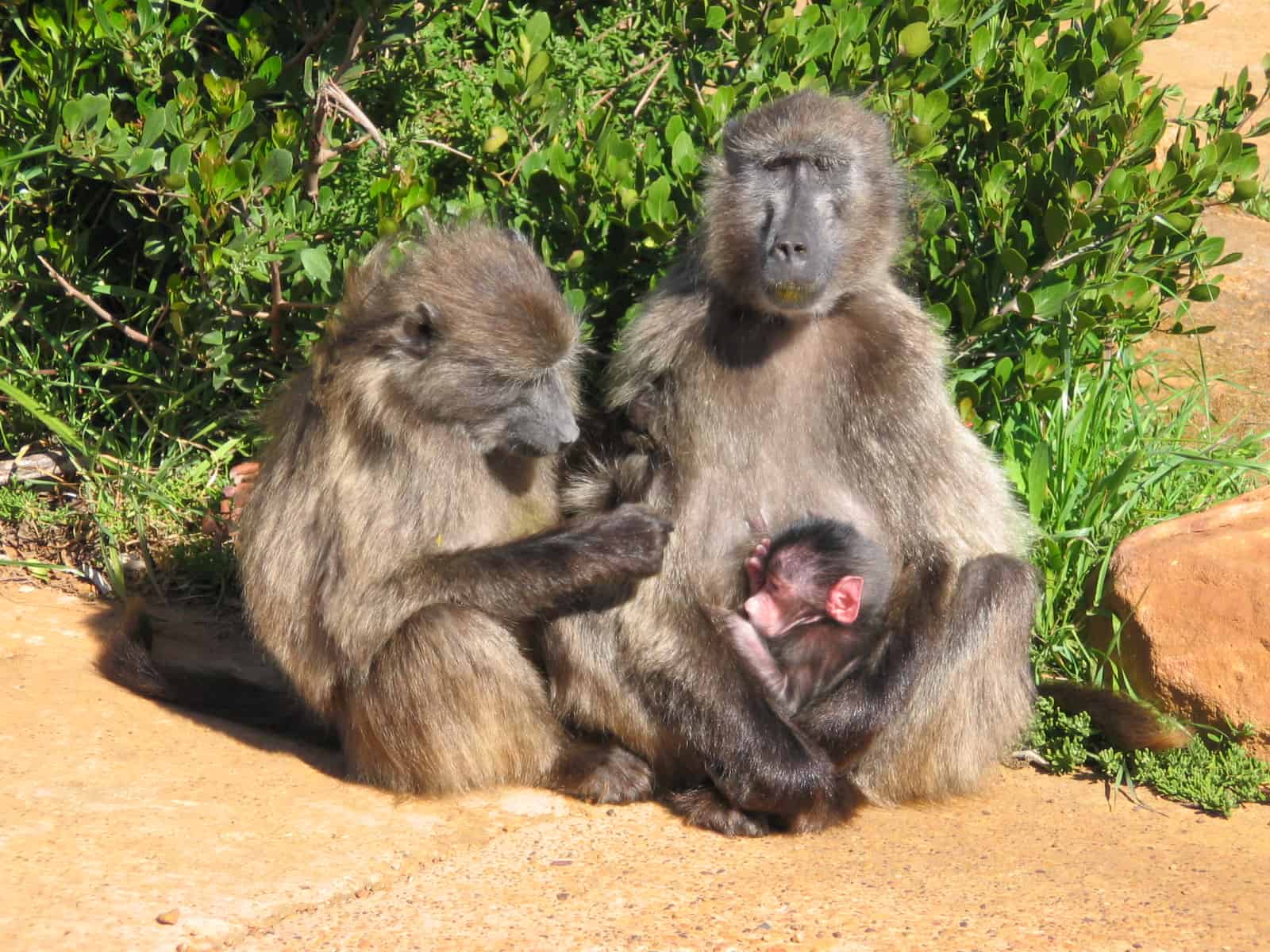
Baby baboons, called infants, gain a pound every three months until they reach adulthood.
A baby baboon begins to eat its first solid food around three to four months of age. Flowers and berries are introduced during this stage. After a year, baby baboons are almost entirely foraging on their own, although they may continue to nurse occasionally, especially when resting in the nest at night.
Baboon and human conflicts over food
Baboons can change the focus of their food sources depending on their proximity to humans. Baboons have been known to scale the sides of apartment buildings, checking for unlocked windows. If they find one, the baboons will pry it open, enter, and raid the house for food.
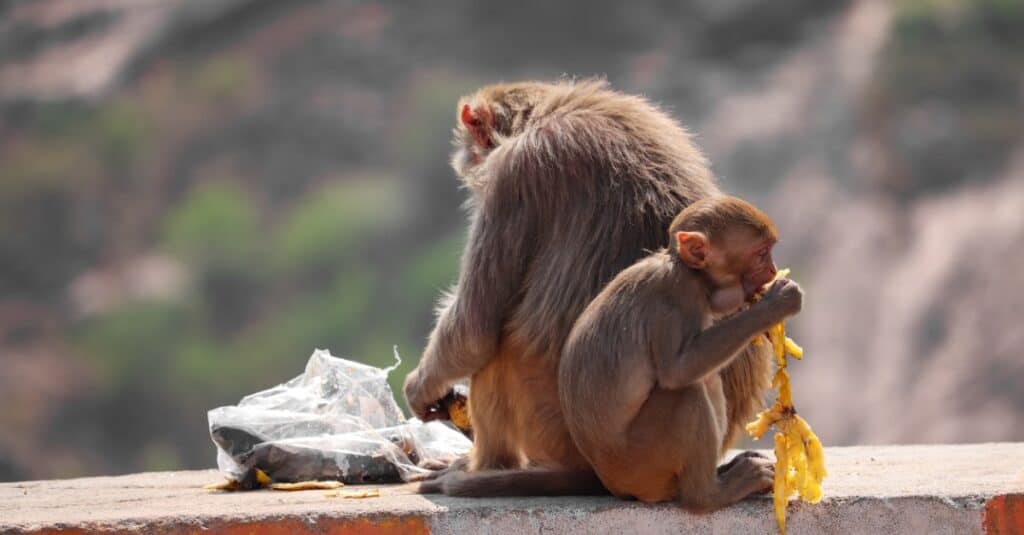
Known to steal food from humans, baboons will break into cars and apartments in search of food.
©iStock.com/Akash Kaparaveni
Besides house burglaries, baboons are also known to search trash heaps. They are so adept that some baboon troops have learned the schedule of garbage trucks and wait for fresh trash to be dumped. When it comes to crops, baboons can strip vines, leaves, and fruit trees bare.
Common deterrents include paintball guns and pepper sprays, but these resilient creatures tend to keep returning. In some regions, baboons may have legal protections or restrictions on lethal control, but in many areas where they are considered pests, management strategies such as deterrents, relocation, or even culling are permitted under local regulations