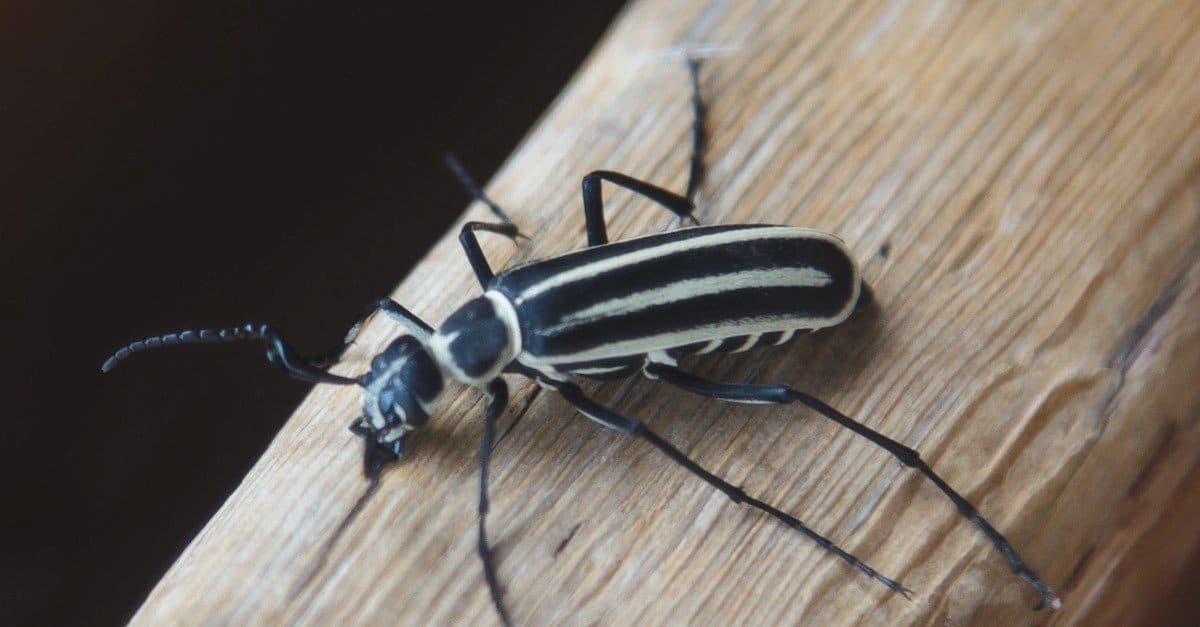

The blister beetle is a family of toxic insects that live worldwide and cause skin damage to people upon making contact. With some 7,500 known species, their appearance varies widely and they come in many different shapes and sizes, but most of them are swathed in bright yellow or orange colors and measure up to an inch long. They feed on other insects as larvae and then switch to a diet heavy in flowers or leaves as adults. When threatened, these beetles can secrete a painful blistering substance called cantharidin from their joints. This makes predators think twice before attacking them.
Humans are not normally the targets of their aggression, but if disturbed, they will respond with their defensive measures. This article will cover everything you need to know in order to properly treat the wound, including some important information about the symptoms and signs of the blister.
How to Identify the Symptoms of a Blister Beetle
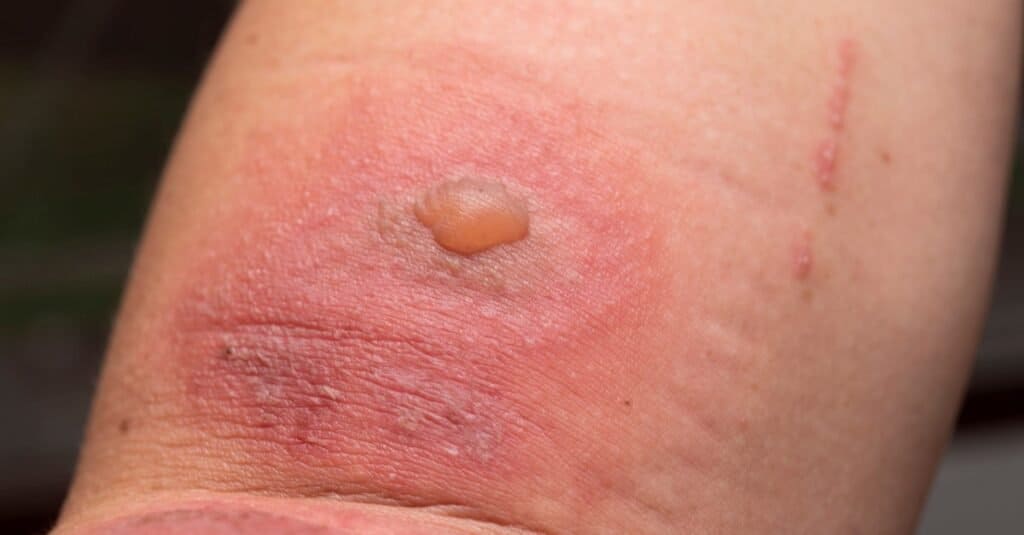
Blisters from blister beetles are caused by a caustic substance secreted from the joints of the body of the beetle when threatened.
©Kittibowornphatnon/Shutterstock.com
People often harbor some very large misconceptions about how the blister beetle causes skin damage. The truth is that symptoms are rarely caused by the actual bites. The jaws are generally not powerful enough to puncture the skin and draw blood. Blister beetles also do not have a stinger to deliver their toxin. Instead, the worst effects come from a caustic (meaning acidic) substance called cantharidin that it secretes directly from the joints of its body when threatened by another animal. If you experience symptoms, then it’s almost certainly not because it bit you.
When it makes direct contact with the skin, this caustic substance will induce significant pain, irritation, and redness. You may also notice signs of a large welt or blister developing on your skin. The welt looks just like a red patch of raised skin, while the blister is a large pocket of fluid or pus. The reaction usually develops one or two days after initial contact with the skin.
The good news is that topical exposure to cantharidin does not cause any systemic or body-wide effects. The symptoms of the toxin should be limited to the immediate area of the skin where it made contact. If you have recently come into contact with a blister beetle, then you should monitor the affected area for signs of any skin damage. However, it’s also important to note that ingestion of cantharidin can cause serious effects, so it’s important to avoid it.
Treatment of Blister Beetle Symptoms
The symptoms of blister beetle encounter should go away without much intervention after about a week. They will leave behind no permanent scarring or marks. However, there are a few things you can do to speed up recovery. The best thing you can do is to apply cold compression and topical steroids or creams (specially designed for blisters) several times a day on the affected area to reduce the swelling and pain. You should also wash the blister every day with warm soap and water to prevent it from developing an infection.
The blister is rarely serious enough to see a doctor unless you develop a secondary infection or get some of the cantharidin in your eye. If an infection does occur, then your doctor may prescribe some antibiotics to deal with it. During the appointment, you should bring a list of medications and a detailed description of how you obtained your blister.
Prevention of Blister Beetle Symptoms
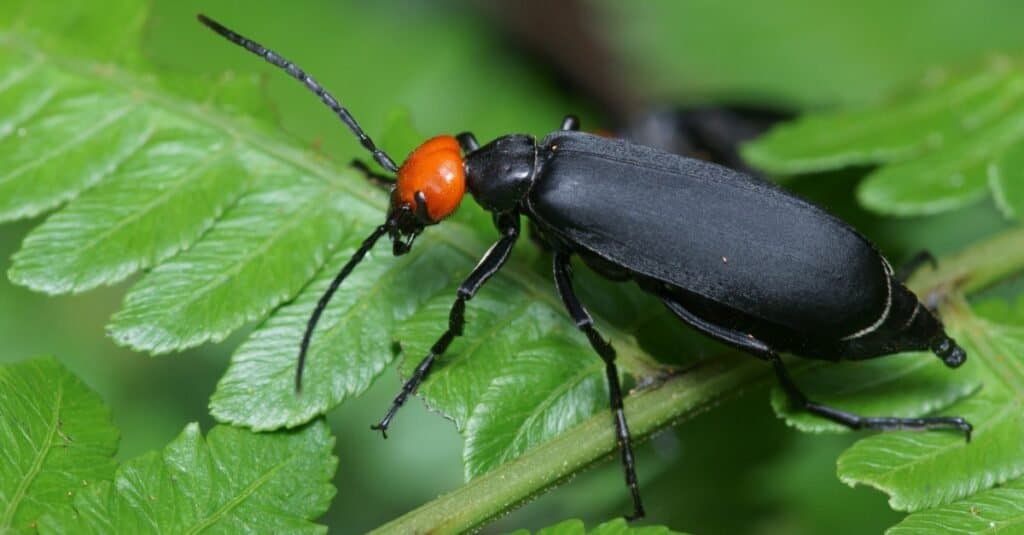
If a blister beetle lands on you, blow or brush it off your skin.
©Suede Chen/Shutterstock.com
Blister beetles should be fairly easy to avoid because they do not normally infest the home. But when you’re outdoors during the summer, you should be careful around common blister beetle locations, including flower beds, light fixtures, and grassy fields. It’s a good idea to wear a long-sleeved shirt and pants so the beetle doesn’t make direct contact with your skin.
If one happens to land on you, then the last thing you should do is crush it, because this will release its caustic substance onto your skin. Instead, you should gently blow it off or wipe it away, and then immediately wash any clothing that has come into contact with the blister beetle. If it has come into direct contact with your skin, then wash the area with water and soap immediately. This should help with the prevention of any symptoms.