
Quick Take
- Black and white coloration serves more than aesthetic purposes. Some birds use it to confuse predators, while others weaponize it to catch prey.
- One tiny warbler on this list pulls off a migration feat that puts most birds to shame by flying nearly 1,800 miles nonstop over open ocean.
- Two birds on this list look so identical that even experienced birders mix them up, though a key difference separates them.
- The world's largest falcon is hiding on this list, living somewhere most people would never think to look for a bird.
Black and white coloration is visually striking. A deep contrast in colors can draw the eye and make birds and other animals stand out. However, sometimes, it helps them blend in. Birds can be black and white for several reasons, including camouflage and confusion. In other words, black and white coloration helps birds catch prey or escape predators. Check out these 26 black and white birds and discover where they live, what they eat, and how to identify them.
1. Common Loon
Identification: The common loon (Gavia immer) is a large, diving waterfowl that appears duck-like, but it belongs to a different family. They have rounded black heads, red eyes, black and white collars, and black-and-white checkered backs. Their bills are long and straight, and they have short tails. These birds measure 2 to 3 feet long with a wingspan of over 4 feet.
Habitat and Location: They live throughout Canada and the United States, where they breed on freshwater lakes and winter along the coast. You can also find them in rivers and estuaries.
Diet: They eat fish, crayfish, shrimp, and aquatic vegetation.
Nests: They nest in mounds of dead grass near the water’s edge.
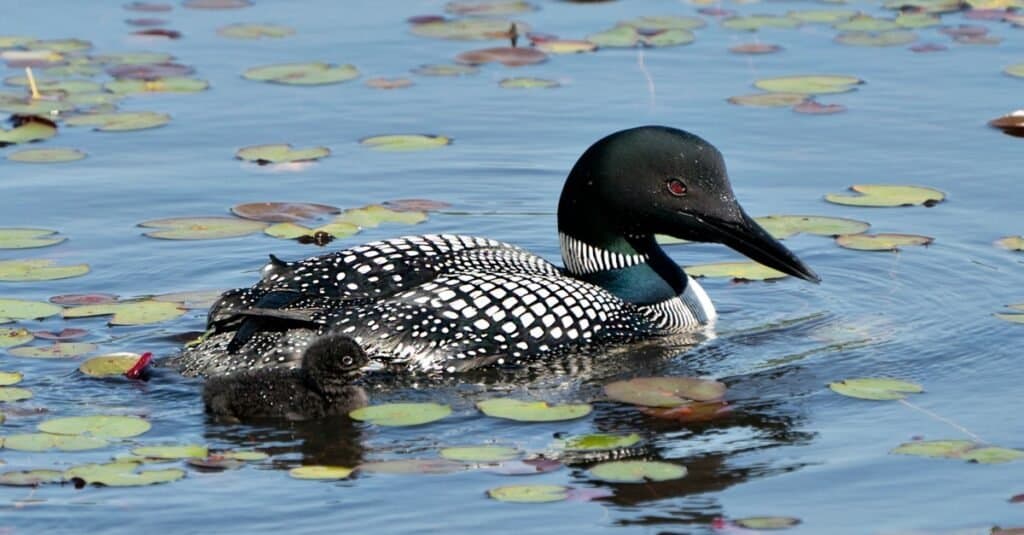
Common loons breed on freshwater lakes and winter along the coast.
©Rejean Bedard/Shutterstock.com
2. Black-Capped Chickadee
Identification: Black-capped chickadees (Poecile atricapillus) are tiny and round with a long tail and a short beak. Their heads and throat are black, and Their cheeks and the sides of their heads are white. They have streaky grayish-blue backs and pale undersides. These birds are 4 to 6 inches long with a wingspan of 6 to 8 inches.
Habitat and Location: They live in wooded and forested areas, including woodlots, forests, parks, backyards, and fields. They live year-round in the northern U.S. and most of Canada.
Diet: They consume insects, spiders, snails, caterpillars, berries, seeds, and small fruits.
Nests: They nest in cup-shaped moss nests placed in a tree cavity.
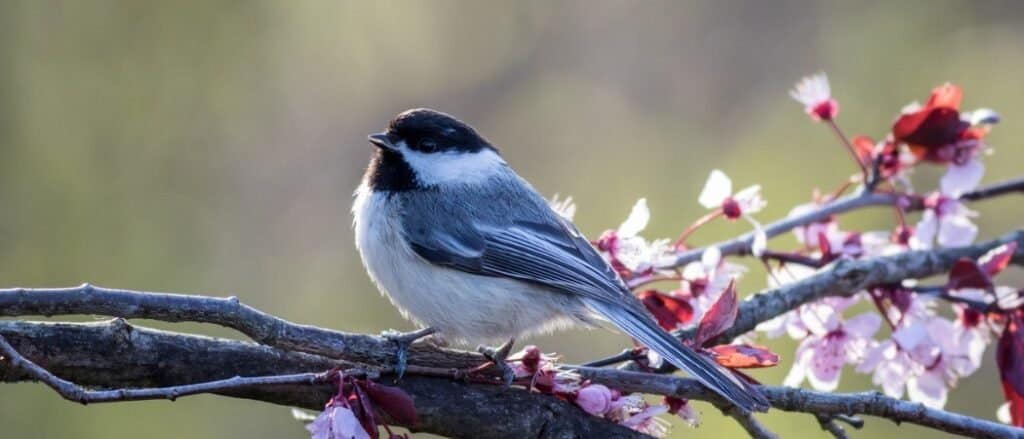
The black-capped chickadee lives in various wooded and forested areas.
©Rabbitti/Shutterstock.com
3. Black-and-White Warbler
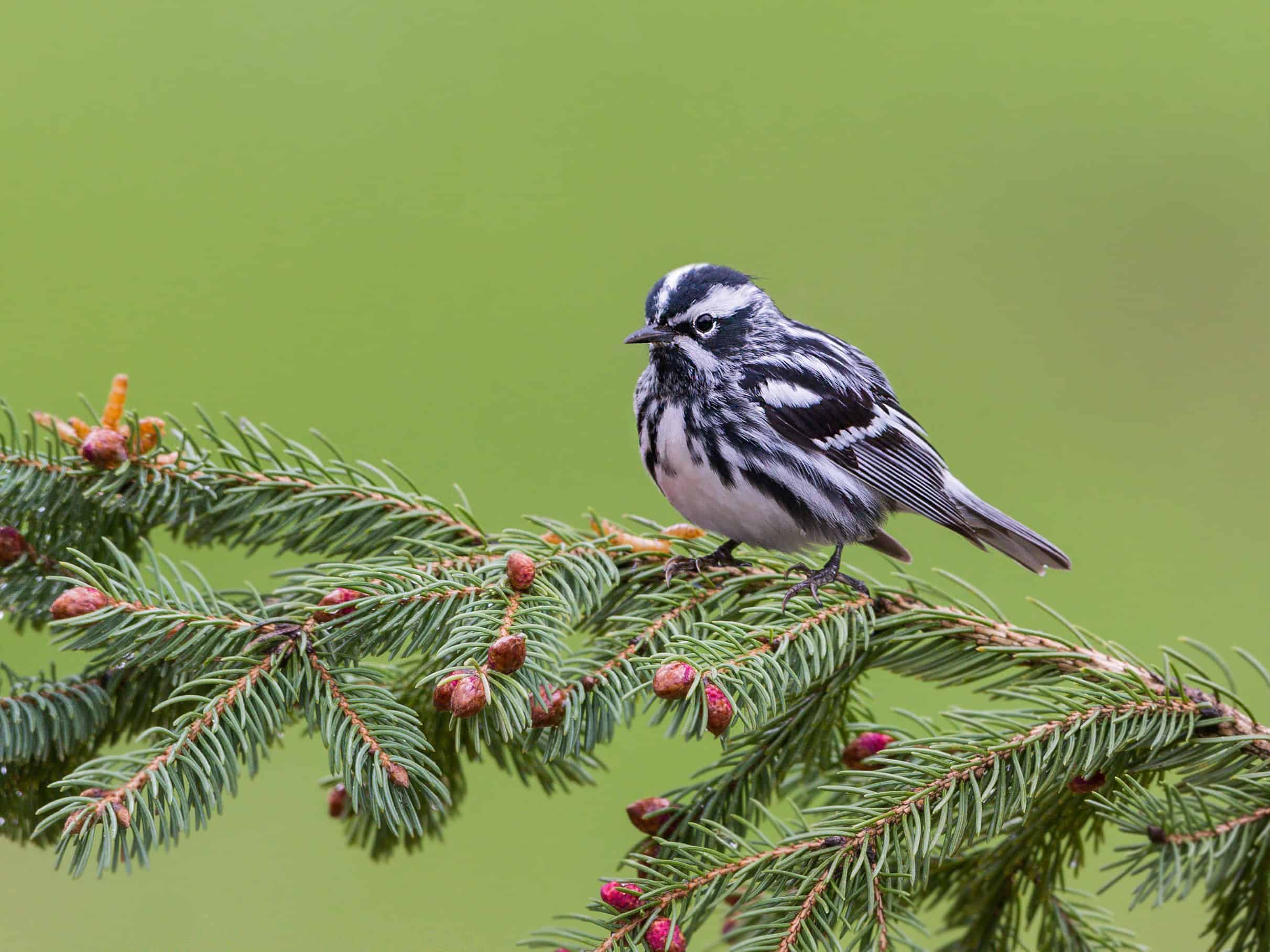
Identification: The black-and-white warbler (Mniotilta varia) is small songbirds are quintessential black and white birds. They are white with heavy black stripes all over their body. The male’s stripes are crisper than the female’s. They have long wings, long bills, and short tails. Black and white warblers measure 4.3 to 5.1 inches in length with a wingspan of 7.1 to 8.7 inches.
Habitat and Location: They live in deciduous and mixed forests in Eastern Canada, the United States, Mexico, Central America, and northern South America.
Diet: Moth and butterfly larvae, ants, spiders, beetles, and flies are their favorites.
Nests: They lay eggs in open leaf cups hidden at the base of a tree, log, or bush.
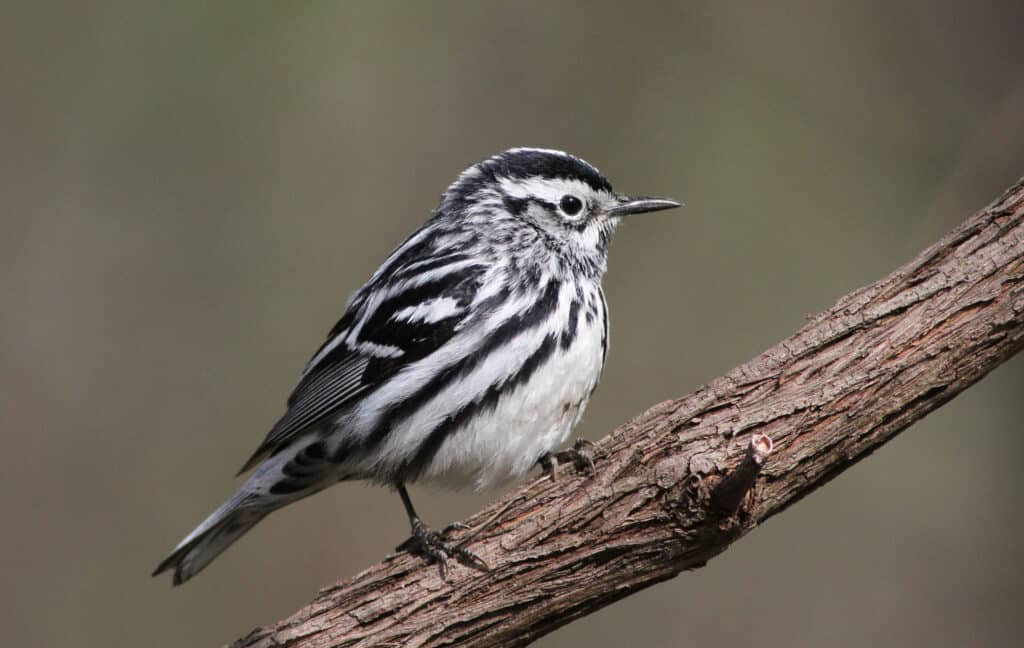
Black-and-white warblers have bold black and white stripes with black wings and white bars.
©Mircea Costina/Shutterstock.com
4. Carolina Chickadee
Identification: The Carolina chickadee (Carolina chickadee) is tiny and round, with a short neck, a long tail, and a relatively large head. They look very similar to the black-capped chickadee, with a gray back, wings, and tail, whitish underparts with buff-colored flanks, and a black cap and throat with bright white cheeks. They measure 3.9–4.7 inches long with a wingspan of 5.9–7.9 inches.
Habitat and Location: The Carolina chickadee lives in forested areas, parks, suburban backyards, and urban areas. They live year-round in the southeastern U.S.
Diet: They snack on insects, spiders, seeds, and vegetation.
Nests: They’ll use tree cavities or a nest box.
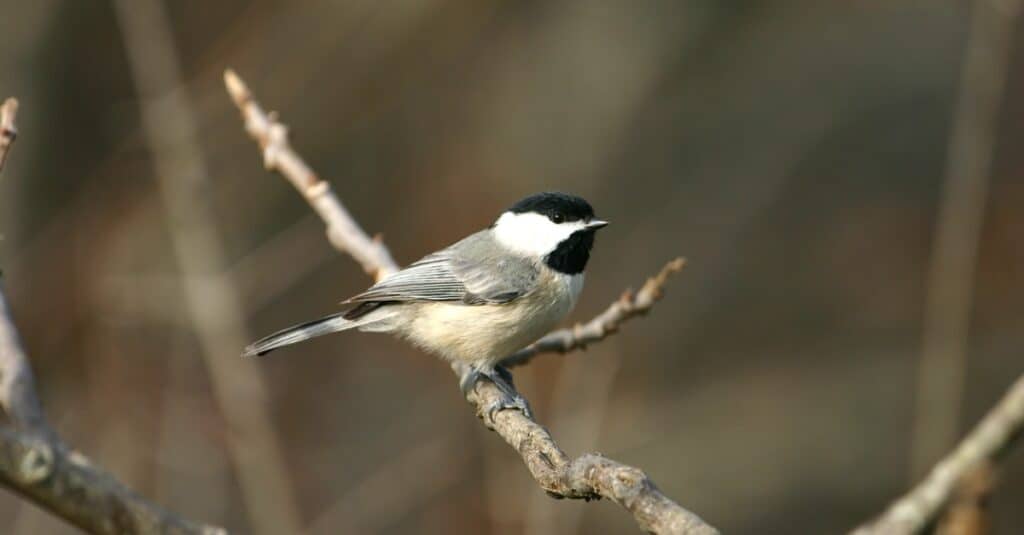
The tiny Carolina chickadee measures less than 5 inches in length.
©iStock.com/lgunderson
5. Lark Bunting
Identification: Lark buntings (Calamospiza melanocorys) are large sparrows with heavy conical bills and round bodies. Adult breeding males are black with white wing patches. Outside of the breeding season, males appear streaky brown like females. They measure 5.5-7.1 inches in length with wingspans of 9.8-11.0 inches.
Habitat and Location: Lark buntings live in open grasslands and agricultural fields in the central U.S. and Mexico.
Diet: They eat grass seeds, cactus fruit, spiders, grains, and insects.
Nests: They build loose grass cups at the base of cacti or shrubs.
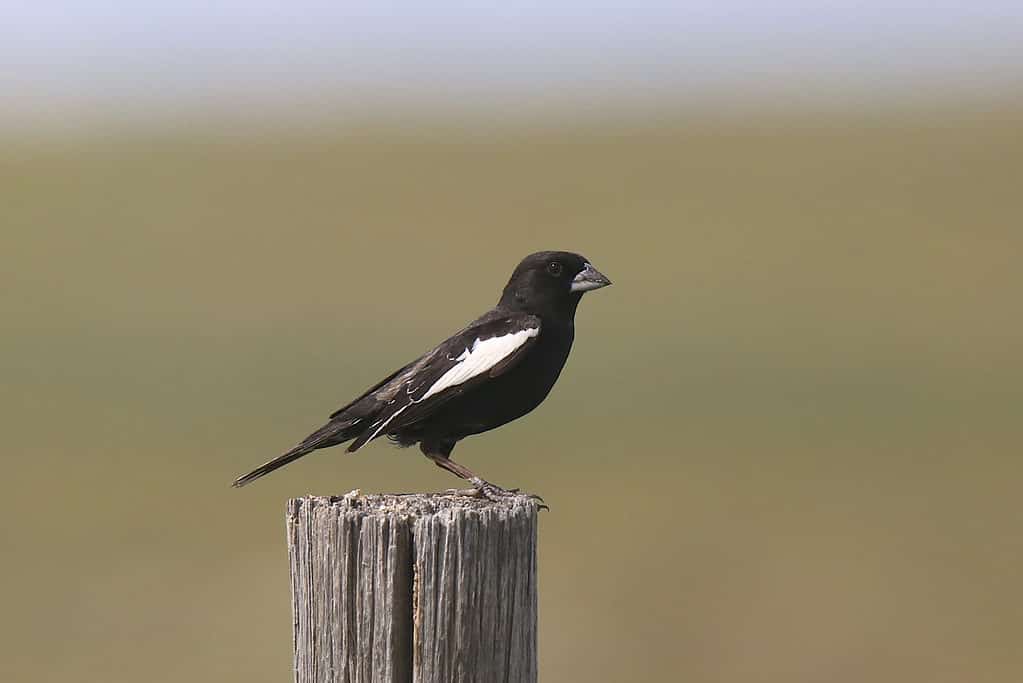
Lark buntings have heavy conical bills and white wing patches.
©iStock.com/Nancy Strohm
6. Black Phoebe
Identification: The black phoebe (Sayornis nigricans) is a small, round flycatcher with a black head, dark gray upper parts, and white underparts. They have relatively large heads, medium-length tails, and straight bills. These birds are 6.3 – 7.1 inches in length with a wingspan of 11-12.6 inches.
Habitat and Location: They live near rivers, streams, lakes, and the ocean. You can find them along the coast of California and parts of the southwest, Mexico, Central America, and South America down to Argentina.
Diet: They’ll eat flies, wasps, beetles, bees, spiders, termites, and grasshoppers.
Nests: They use a mud cup lined with vegetation in rock faces, boulders, and tree hollows as a nesting site.
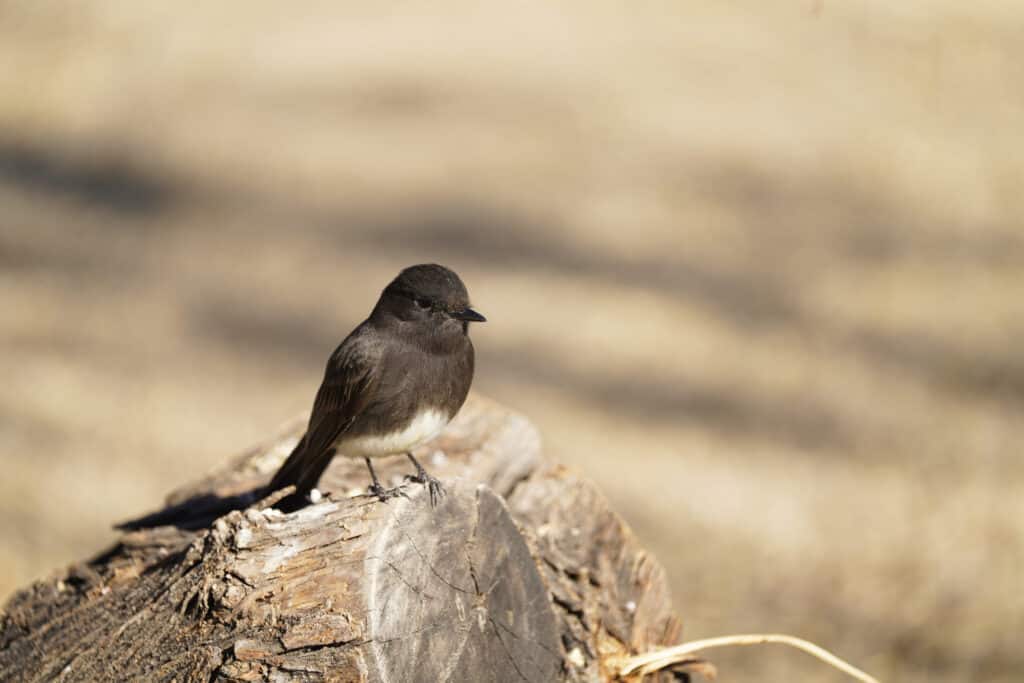
Black phoebes mainly eat insects that they catch in the air.
©iStock.com/G Parekh
7. Blackpoll Warbler
Identification: The blackpoll warbler (Setophaga striata) is a long-winged warbler with a short tail and a small bill. Breeding males have streaky black and white plumage with black caps and white cheeks. They reach up to 5.5 inches long with a wingspan of 8.3–9.1 inches.
Habitat and Location: They inhabit boreal, evergreen, and deciduous forests. They breed in Canada before migrating to South America for the winter. You can spot them in the eastern U.S. during migration. They have one of the longest non-stop overwater migrations of any migratory songbird, traveling around 1,800 miles over the Atlantic.
Diet: They frequently consume spiders, caterpillars, ants, beetles, lice, honeysuckle, and pokeberry.
Nests: They construct a twig cup near the tree trunk of a spruce or fir.
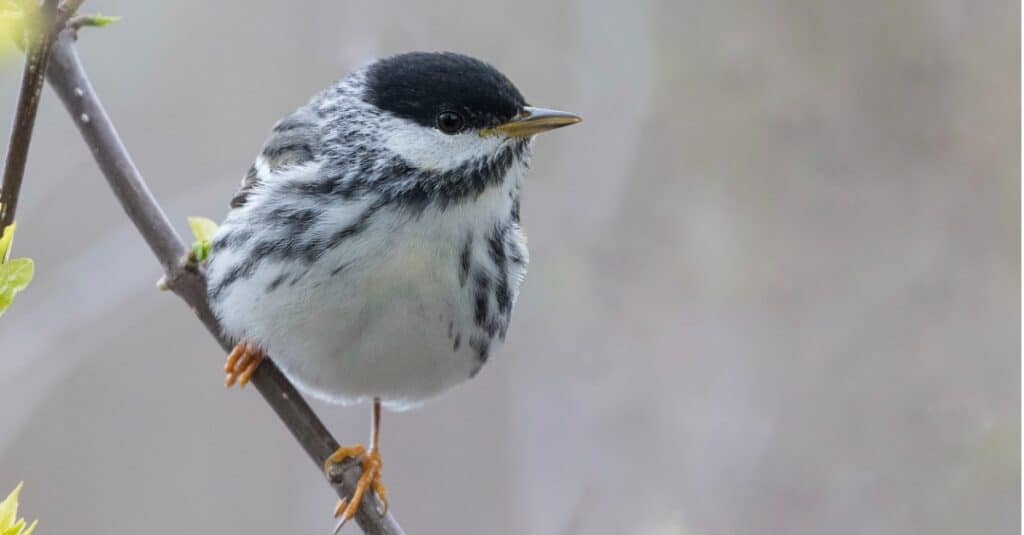
The male blackpoll warbler has black and white striped wings.
©iStock.com/Cam-Image
8. Black-Billed Magpie
Identification: The black-billed magpie (Pica hudsonia) is a relatively large bird belonging to the corvid family. This stunning bird has a black and white body with bluish-green iridescent wings and tail. They have very long tails and heavy bills. They measure 17.7-23.6 inches long with a wingspan of around 2 feet.
Habitat and Location: These birds are common in towns, fields, and near streams year-round in the northwestern United States and southwestern Canada.
Diet: Fruit, grain, beetles, grasshoppers, small mammals, baby birds, and carrion are their favorite foods.
Nests: Their nests are stick and mud domes placed in trees, shrubs, buildings, or utility poles.
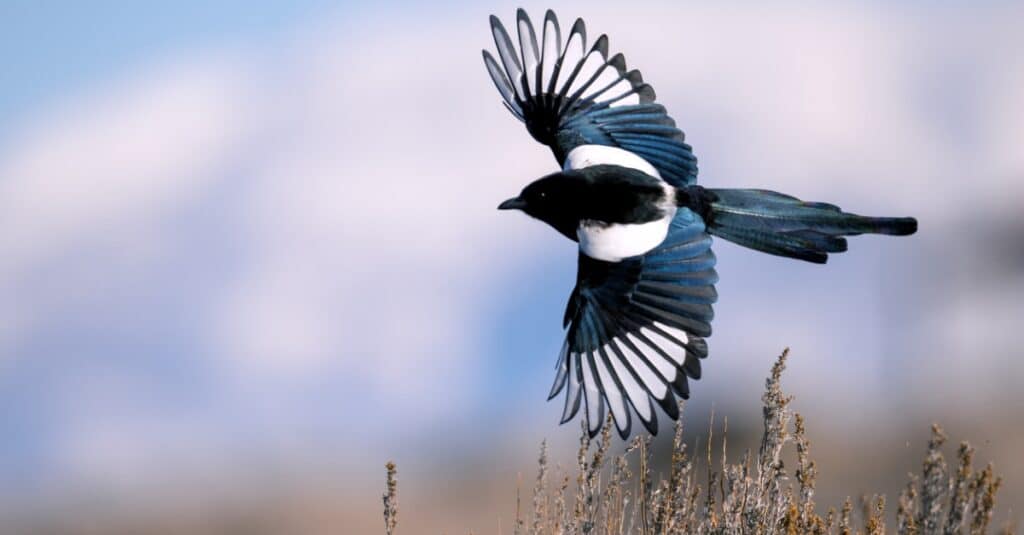
Black-billed magpies are curious and social birds.
©iStock.com/kojihirano
9. Rose-Breasted Grosbeak
Identification: Rose-breasted grosbeaks (Pheucticus ludovicianus) are medium-sized, robust songbirds with thick conical bills and squared tails. Adult males are black and white with distinctive pinkish-red breasts. These birds measure between 7 and 9 inches in length with wingspans of 11 to 13 inches.
Habitat and Location: They favor deciduous and coniferous forest edges and parks in the eastern United States and Canada and migrate to Central and South America for the winter.
Diet: Their diet is made up of beetles, ants, flies, moths, butterflies, berries, buds, flowers, grains, and seeds.
Nests: They build loose stick cups set in a tree fork.
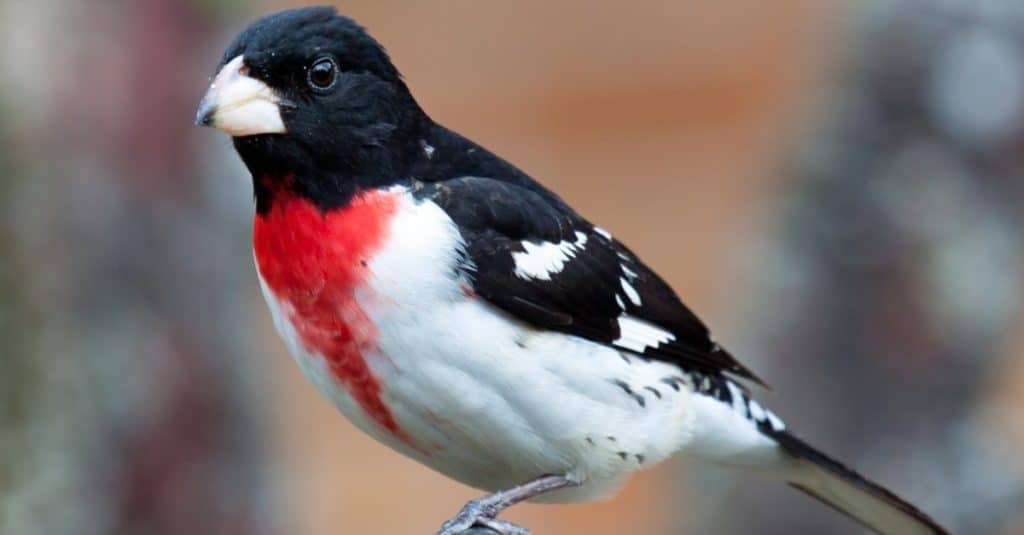
The rose-breasted grosbeak is a robust songbird with a thick conical bill.
©Mike Truchon/Shutterstock.com
10. American Oystercatcher
Identification: The American oystercatcher (Haematopus palliatus) is a large shorebird with a black head, brown upper sides, and white undersides. They have a long, bright orange bill, long legs, and a thick neck. Adults have bright yellow eyes with reddish-orange eye rings. They are between 16.5 and 19.7 inches long, with a wingspan of up to 2 feet 10 inches.
Habitat and Location: The oystercatcher inhabits beaches, reefs, saltwater marshes, and islands. They live year-round along the coasts in the southeastern U.S., Mexico, Central America, and South America.
Diet: Mollusks, clams, oysters, mussels, and other marine creatures make up the bulk of their diet.
Nests: They nest in sand scrapes on barrier beaches behind dunes.
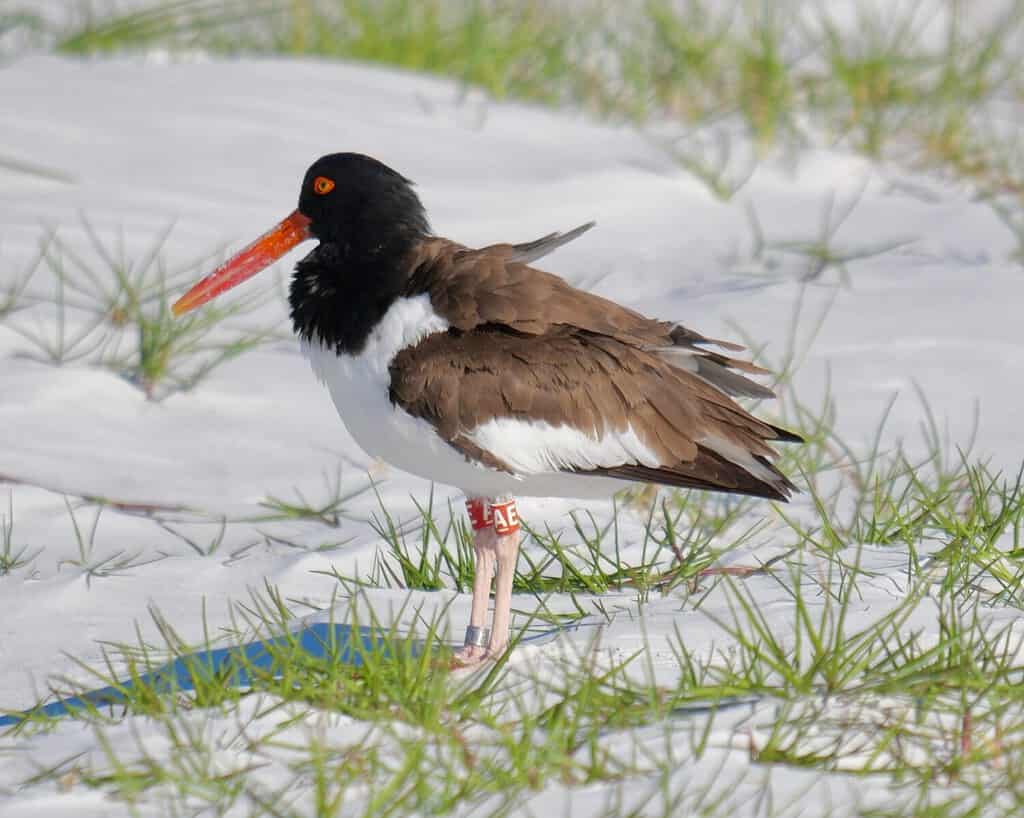
American oystercatchers have long, vivid orange bills.
©Archaeopteryx Tours/Shutterstock.com
11. Black-Necked Stilt
Identification: The black-necked stilt (Himantopus mexicanus) is a tall shorebird with a small body, long pinkish legs, a long bill, and a long neck. Their bodies are black above and white below. They measure between 13 and 17 inches with a wingspan of over 2 feet.
Habitat and Location: They live in shallow water, such as saltwater marshes, ponds, flooded fields, and mudflats. They breed in scattered locations in the U.S. but reside permanently in Mexico and South America. There are also several subspecies, including a population in Hawaii known as the aeʻo.
Diet: Aquatic insects, crustaceans, small fish, amphibians, and snails keep these birds going.
Nests: They form depressions in the dirt on small islands.
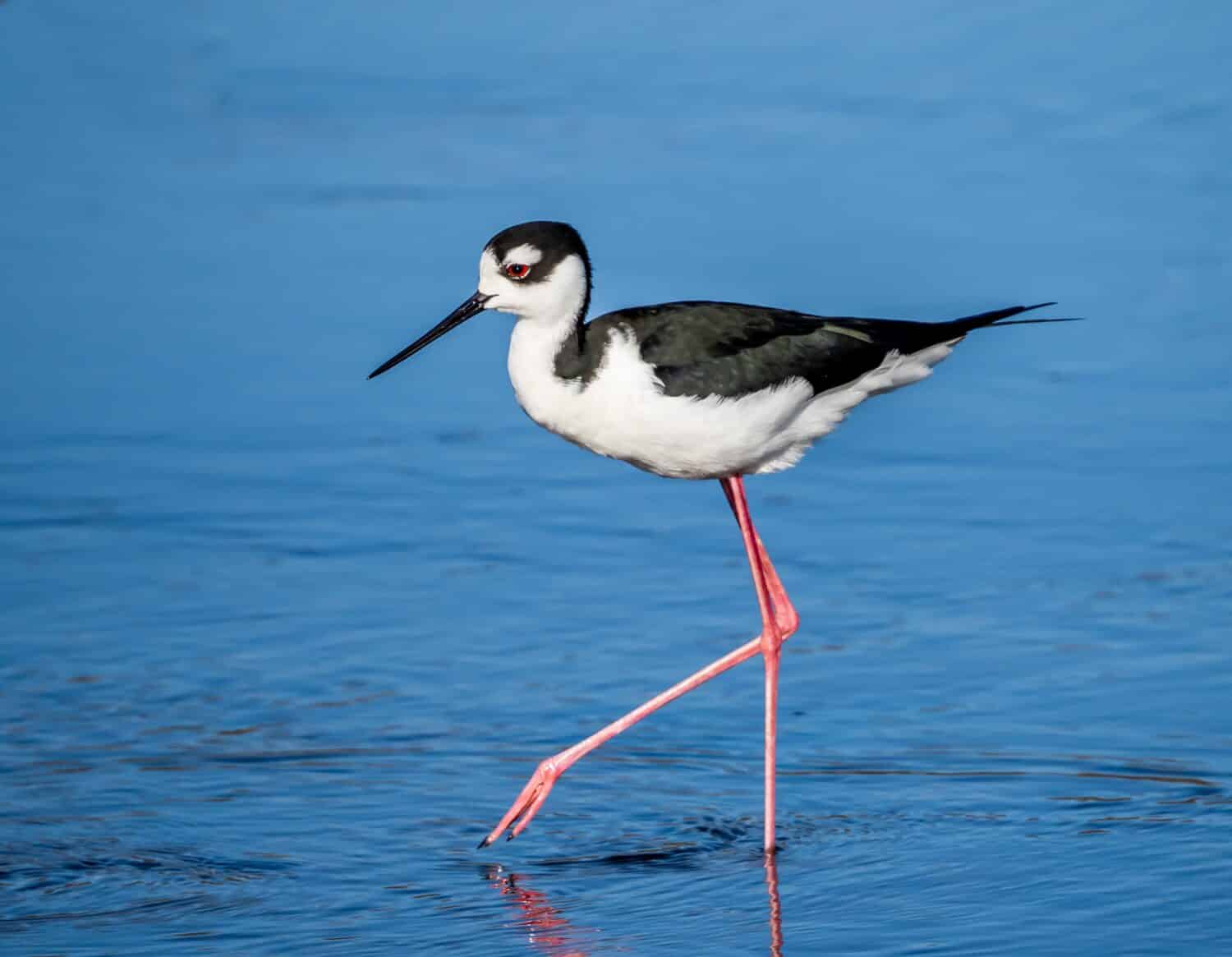
The black-necked stilt has a black and white body with long pink legs.
©Jim Schwabel/Shutterstock.com
12. White Wagtail
Identification: White wagtails (Motacilla alba) are small, slender passerines with characteristically long, wagging tails. Adults have black heads with white face masks. Their bodies are bluish-gray above and white below. They measure 6.5-7.1 inches and have a wingspan of around 9 to 12 inches.
Habitat and Location: They inhabit many environments, including grasslands, shorelines, farmland, parks, and towns. This species lives across Europe, Asia, and parts of Northern Africa.
Diet: They prefer beetles, snails, spiders, worms, crustaceans, maggots, and small fish.
Nests: They use crevices in stone walls and other structures.
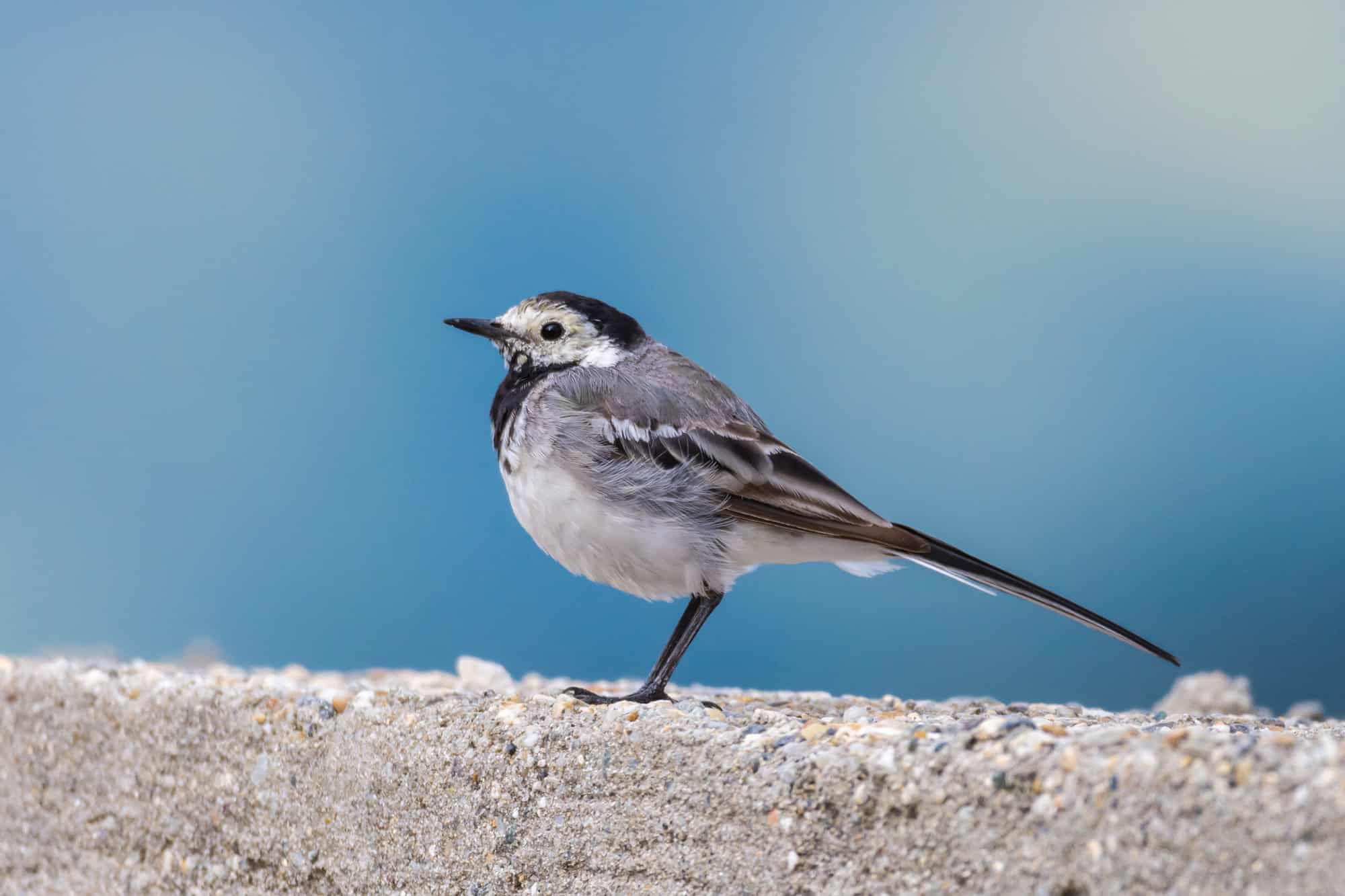
The white wagtail lives in many habitats, including grasslands, shorelines, and parks.
©iStock.com/ConstantinCornel
13. Pied Avocet
Identification: The pied avocet (Recurvirostra avosetta) is a tall, slender, and small-bodied wading bird. They have white plumage with black caps and black wing patches. It is known for its long, slim, upward-curving bill. This bird is 16.5 to 18 inches in length and has a wingspan of 2.5–2.6 feet.
Habitat and Location: They inhabit shallow lakes and other brackish wetlands in Asia, Africa, and Europe.
Diet: They primarily eat aquatic insects and crustaceans.
Nests: A scrape on open ground or a vegetation mound works as a nest.
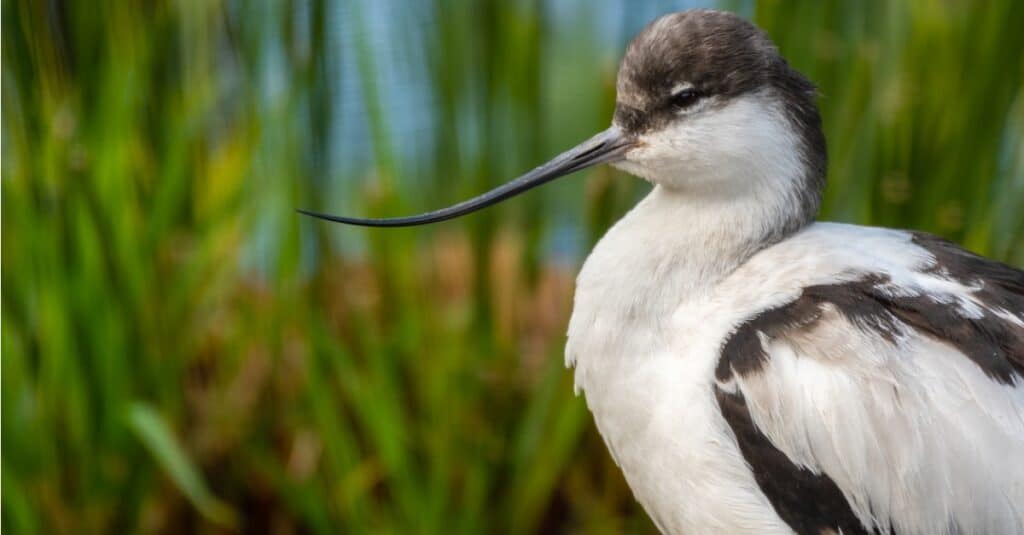
The pied avocet’s beak is thin with an upward curve.
©iStock.com/Ian Fox
14. Black-Headed Ibis
Identification: As its name suggests, the black-headed ibis (Threskiornis melanocephalus) has an all-black head with a white body and black legs. These wading birds have long legs, heavy bodies, long necks, and long, thick bills. They measure roughly 26 to 30 inches with a wingspan of over 4 feet.
Habitat and Location: They live in freshwater and saltwater wetlands in Asia, including marshes, lakes, ponds, rice fields, and reservoirs.
Diet: Fish, aquatic insects, crustaceans, and frogs are their main food sources.
Nests: They build a stick platform near wetlands in colonies.
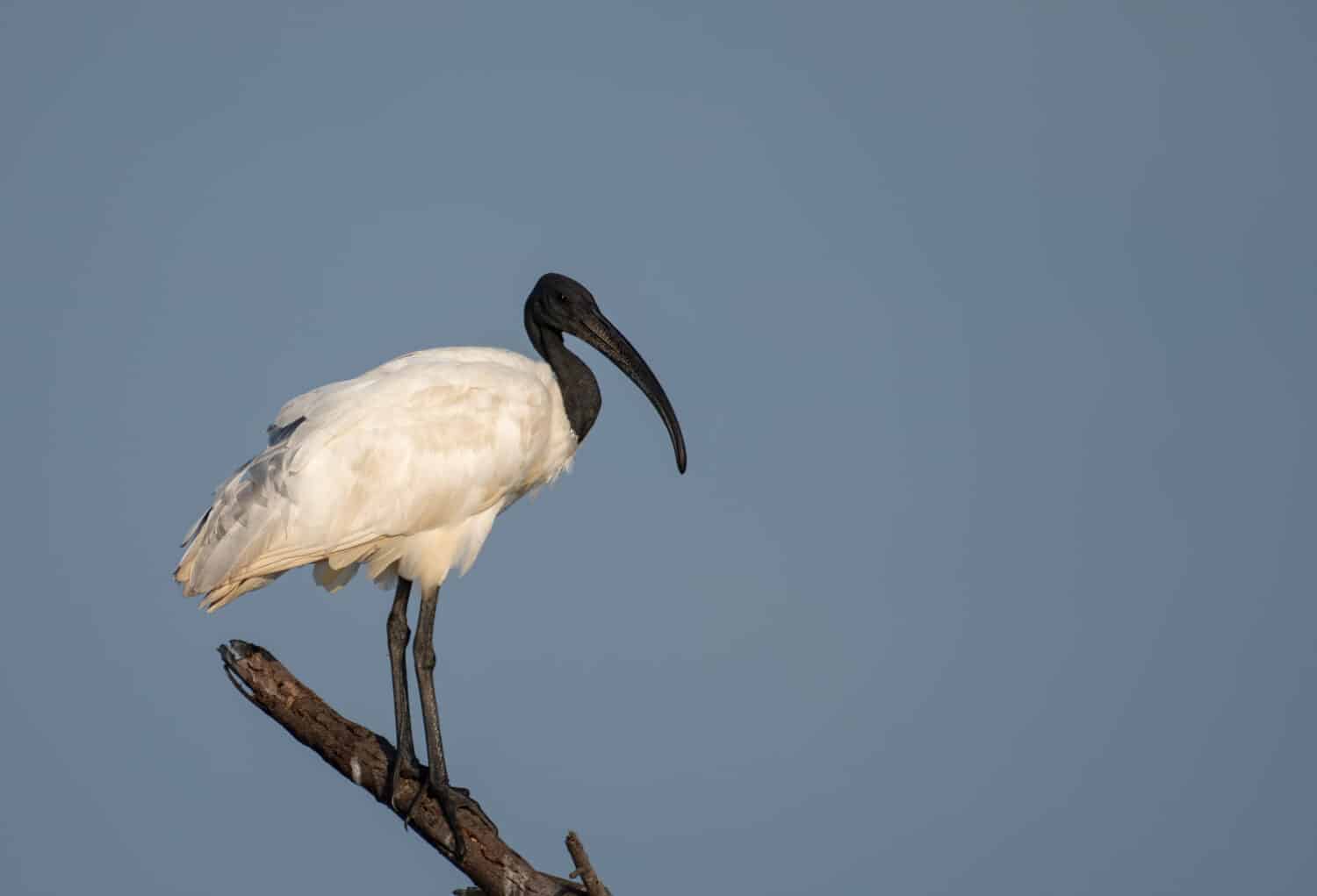
The black-headed ibis lives in saltwater and freshwater wetlands in Asia.
©mihirjoshi/Shutterstock.com
15. Australian Magpie
Identification: The Australian magpie (Gymnorhina tibicen) is a robust passerine, with long legs and a light-colored, wedge-shaped bill. Adults are mostly black with white backs and napes. It measures up to 15.7 inches in length with a wingspan of up to 2.8 feet.
Habitat and Location: They are native to Australia and southern New Guinea, where they inhabit grasslands, fields, parks, golf courses, and gardens.
Diet: They typically eat worms, millipedes, spiders, scorpions, cockroaches, beetles, frogs, mice, grain, fruits, and nuts.
Nests: They form stick bowls near human habitations.
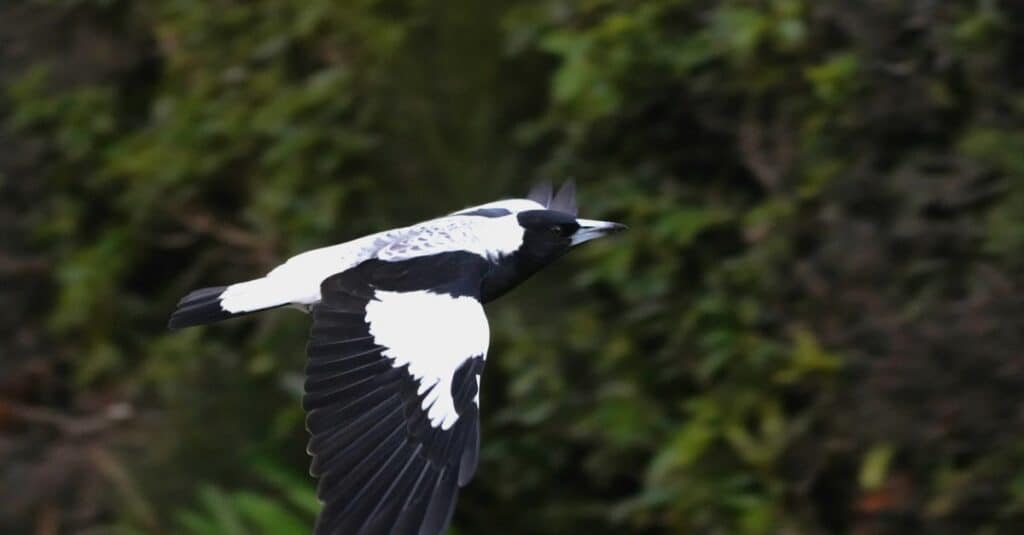
Australian magpies are native to Australia and southern New Guinea.
©iStock.com/LKR Photography
16. Yellow-Bellied Sapsucker
Identification: These small, migratory woodpeckers have long wings and broad, straight bills. Yellow-bellied sapsuckers (Sphyrapicus varius) have black and white checkered bodies with pale yellow bellies, black-and-white patterns on the face, and bright red foreheads or crowns. Males also have bright red throats, while females have white throats. These woodpeckers are 7.1–8.7 inches long with a wingspan of 13.4–15.8 inches.
Habitat and Location: They inhabit hardwood and coniferous forests across the eastern United States, Canada, Mexico, and Central America.
Diet: Sap, ants, spiders, and flying insects are their main foods.
Nests: They nest in tree cavities.
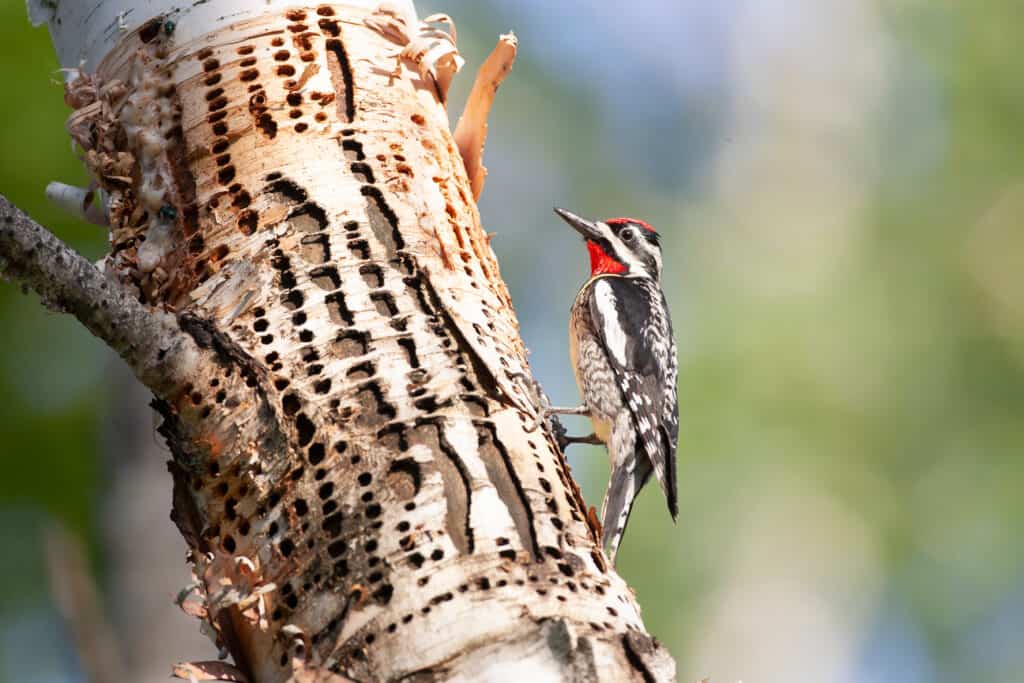
While sap is not the only thing yellow-bellied sapsuckers eat, it is a significant part of their diet.
©Dennis W. Donohue /Shutterstock.com
17. Bufflehead
Identification: Bufflehead sea ducks (Bucephala albeola) are small and compact, with short bills and round heads. Adult males are white with black or dark brown back streaks. Their heads are iridescent purple and green. They have a body length of up to 15 inches and a wingspan of up to 2 feet.
Habitat and Location: They breed in Alaska and Canada but migrate to southern North America in the winter. They stay near lakes and saltwater bays.
Diet: They love aquatic insects, mollusks, and crustaceans.
Nests: They prefer tree cavities, old woodpecker holes, and nest boxes.
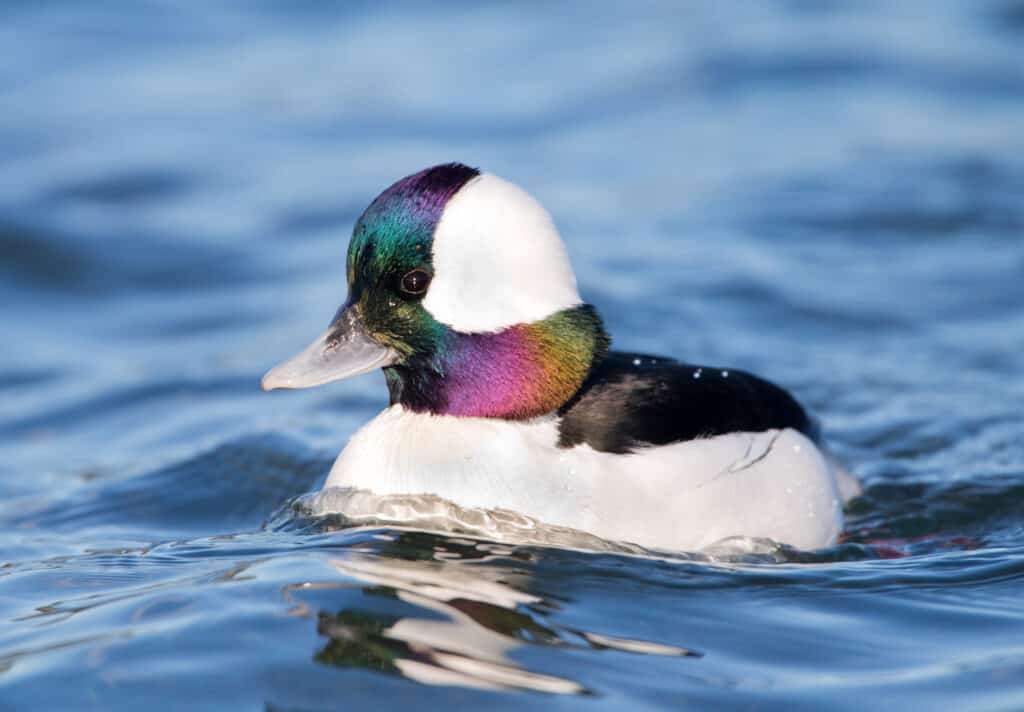
The peak of the bufflehead migration is in November. They stay near lakes and saltwater bays.
©Birdiegal/Shutterstock.com
18. Razorbill
Identification: The razorbill (Alca torda) is a robust seabird with skinny wings, a long tail, and a broad bill. Adults are black with white undersides and fine white lines on their faces and bills. They measure 15–17 inches in length with a wingspan of around 2 feet.
Habitat and Location: These birds inhabit rocky cliffs and offshore islands but can mainly be found in open water in the North Atlantic. The largest numbers are found in western Iceland, but they can also be found in the U.K., Ireland, Greenland, Scandinavia, Canada, and the Gulf of Maine.
Diet: Small fish, crustaceans, and bristle worms are their top choices.
Nests: Their nest may be a scrape lined with pebbles.
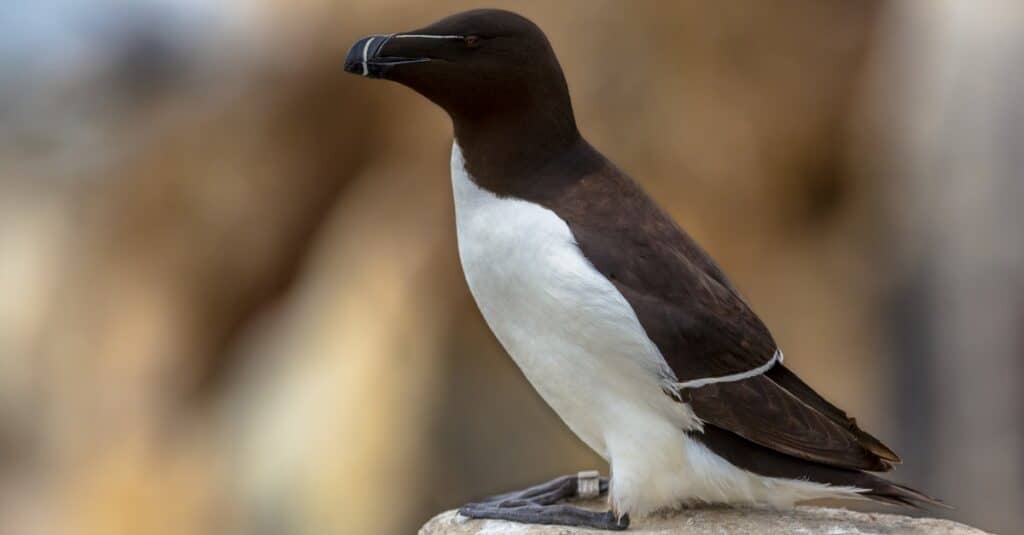
Razorbills inhabit open water and rocky cliffs in North America.
©iStock.com/CreativeNature_nl
19. Downy Woodpecker
Identification: The downy woodpecker (Dryobates pubescens) is the smallest woodpecker in North America, measuring between 6 and 7 inches in length with a wingspan between 10 and 12 inches. They have broad shoulders and small, straight bills. These birds are black and white checkered with white bellies and a patch of red on their heads.
Habitat and Location: They inhibit open woodlands, orchards, suburban backyards, and parks. This species lives year-round in Canada and the U.S. These woodpeckers are common and widely distributed.
Diet: They consume insects, berries, seeds, grains, and acorns.
Nests: Excavated holes in dead trees are their nests.
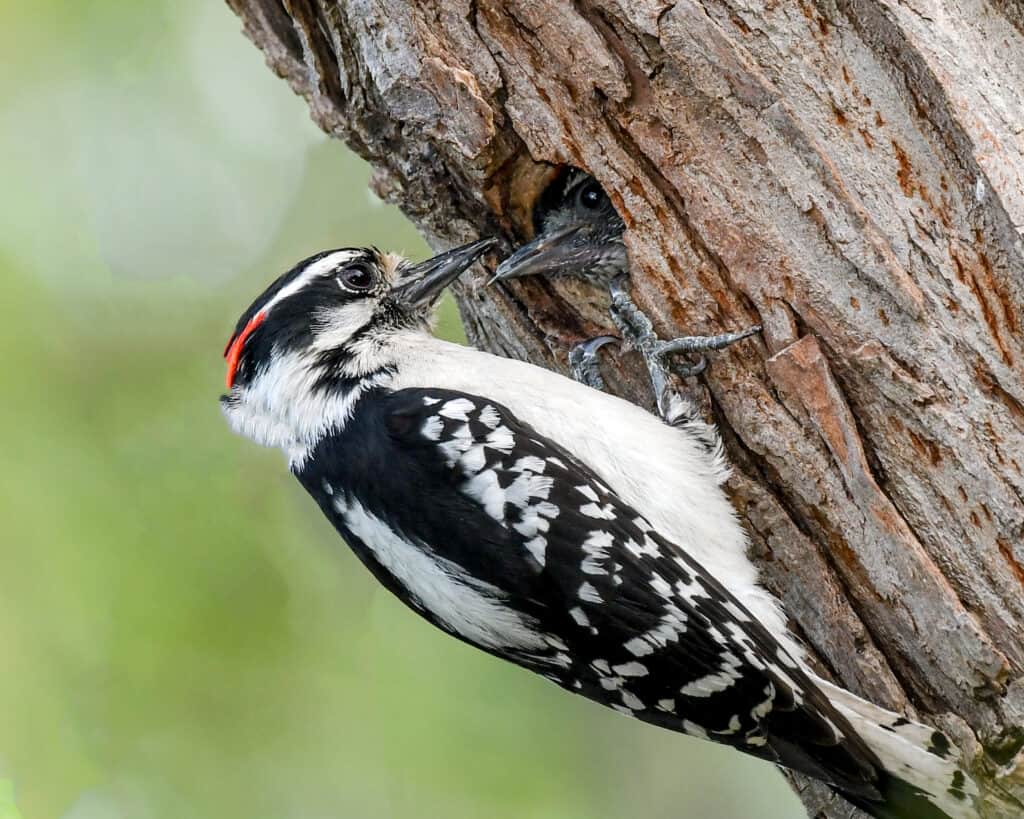
Downy woodpeckers are small with black and white checkered plumage.
©Brent Barnes/Shutterstock.com
20. Hairy Woodpecker
Identification: The hairy woodpecker (Dryobates villosus) is a medium-sized bird with long tail feathers and a long bill. They measure around 7-10 inches with a wingspan of 13-17 inches. Their coloring is almost identical to downy woodpeckers, with black and white checkered plumage, white bellies, and a patch of red on their heads.
Habitat and Location: Hairy woodpeckers live in mature forests, backyards, and parks across most of Canada and the United States. Some also live in Mexico.
Diet: They like to eat beetle larvae, ants, moth pupae, fruits, and seeds.
Nests: They nest in dead tree cavities.
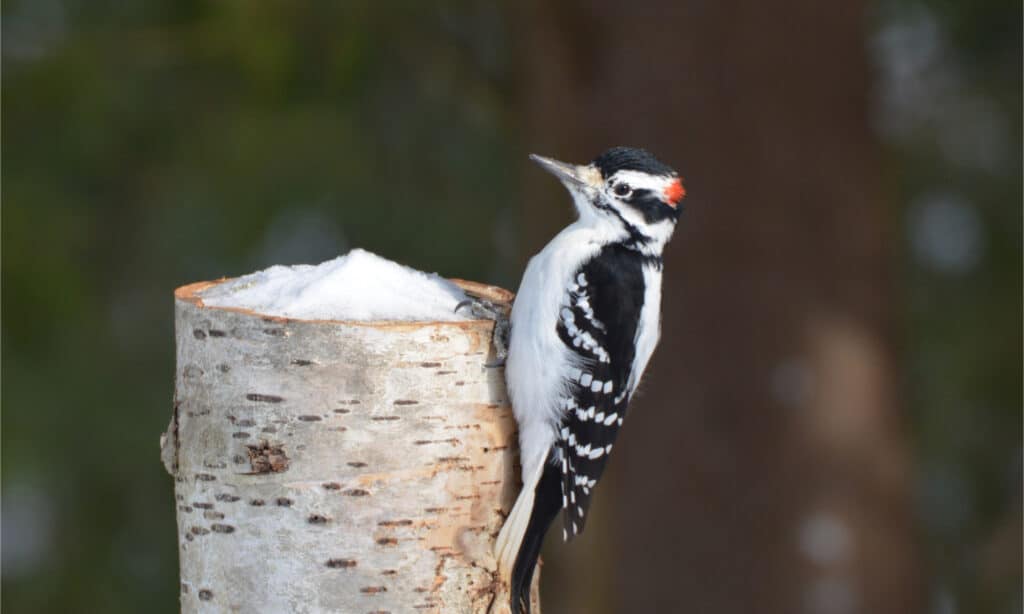
Hairy woodpeckers look similar to downy woodpeckers, but they are slightly larger.
©C. Hamilton/Shutterstock.com
21. White-Breasted Nuthatch
Identification: The white-breasted nuthatch (Sitta carolinensis) may be the largest nuthatch, but it is a small bird measuring only 5.1-5.5 inches with a wingspan of 7.9 to 10.6 inches. It has a compact body and a very short tail. These birds also have a long, slightly upturned bill. They have grayish-blue backs, white undersides, white faces, and black caps. Their wings also have black edging.
Habitat and Location: They live in mature woodlands and coniferous forests throughout most of the United States and Mexico.
Diet: Insects, seeds, nuts, and birdfeeder products are their favorites.
Nests: They nest in tree cavities and abandoned woodpecker holes.
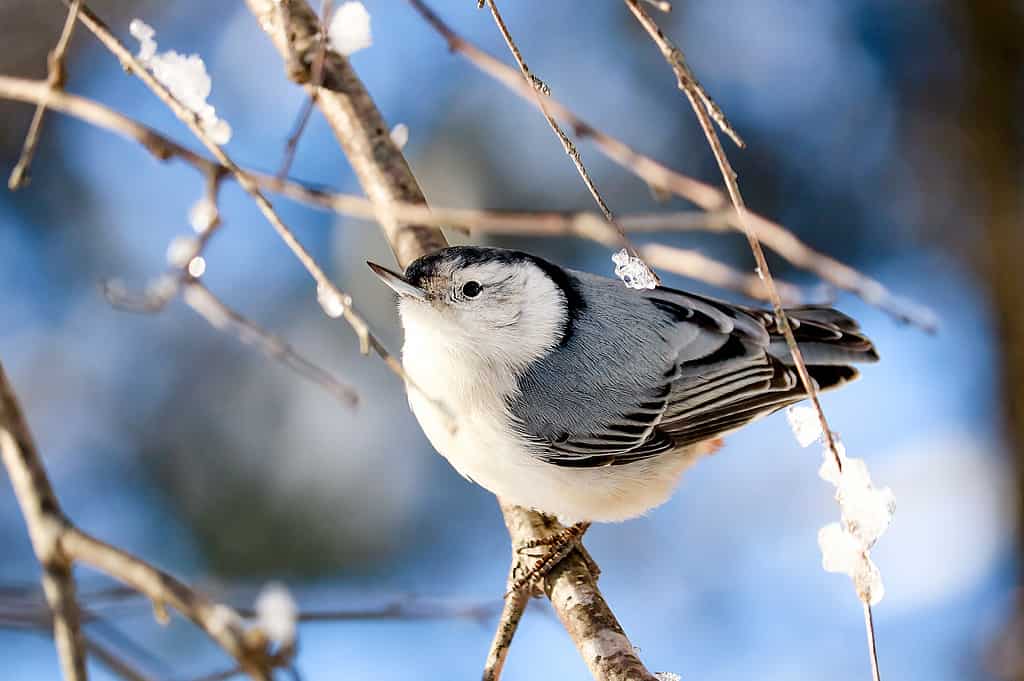
White-breasted nuthatches are small birds at up to 5.5 inches, but they are the largest nuthatches.
©lauraag/iStock via Getty Images
22. Penguins
Identification: Penguins (Spheniscidae) are a group of flightless birds with round, stocky bodies, short legs, and flippers. Among the 18 penguin species, most have black and white plumage, with black feathers on their upper parts and white undersides. Penguins come in a wide range of sizes, from blue fairy penguins at about 12 inches tall to emperor penguins at over 4 feet tall.
Habitat and Location: They are aquatic birds primarily inhabiting the Southern Hemisphere, where they live in oceans and along coasts. They can be found in Antarctica, the sub-Antarctic islands, New Zealand, Australia, South Africa, South America, and the Galápagos Islands (the only penguins in the Northern Hemisphere).
Diet: Krill, squid, and fish make up their diet.
Nests: Scrapes in the ground, rock crevices, and underground burrows are turned into nests.
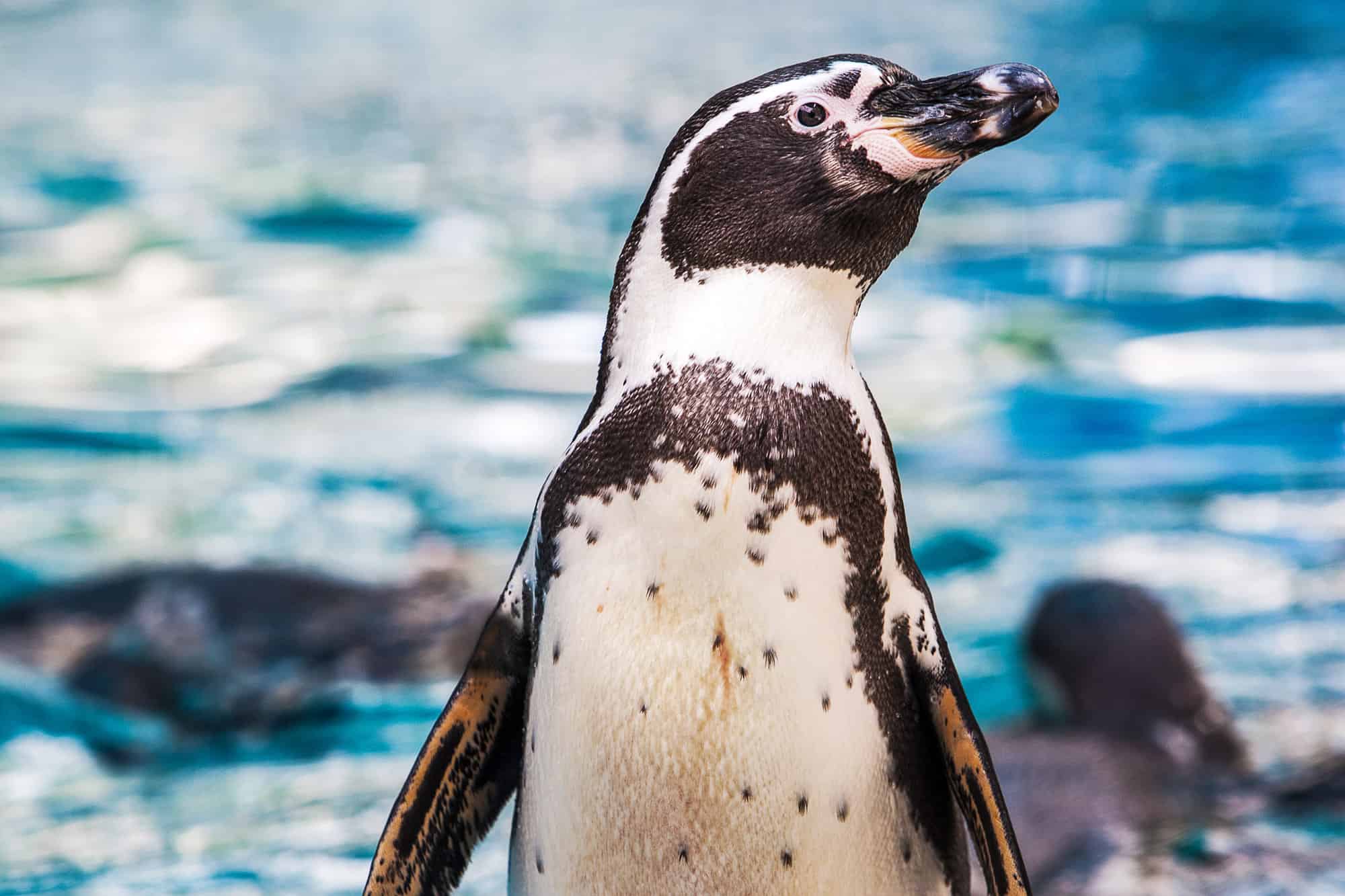
Penguins are black and white flightless birds that primarily inhabit the Southern Hemisphere.
©Smile Fight/Shutterstock.com
23. Black-Crowned Night Heron
Identification: The black-crowned night heron (Nycticorax nycticorax) is a small, stocky heron with a thick neck, flat head, and heavy bill. They are light gray with a black back, white undersides, and a black cap. These birds are around 23-26 inches in length with a wingspan of up to 3.9 feet.
Habitat and Location: They inhabit wetlands, such as estuaries, marshes, reservoirs, and lakes. This species has a wide distribution across North and South America.
Diet: Their food sources are aquatic insects, crustaceans, fish, amphibians, reptiles, birds, eggs, and small mammals.
Nests: A stick platform in trees or cattails is used as a nest.

The black-crowned night heron or black-capped night heron is a small, stocky heron.
©Nycticorax nycticorax/Shutterstock.com
24. Black-and-White Hawk Eagle
Identification: Black-and-white hawk eagles (Spizaetus melanoleucus) are relatively small eagles with white heads, necks, and undersides. The upper wings and backs are black, there are black rings around the bright yellow eyes, and the tips of their beaks are also black. They measure 20 to 28 inches in length with a wingspan of between 3.3 and 4.4 feet.
Habitat and Location: They live in many types of lowland forests, rainforests, and montane cloud forests. They range from central Mexico down to northern Argentina.
Diet: Birds, mammals, reptiles, and amphibians are all prey.
Nests: They construct stick platforms in trees.
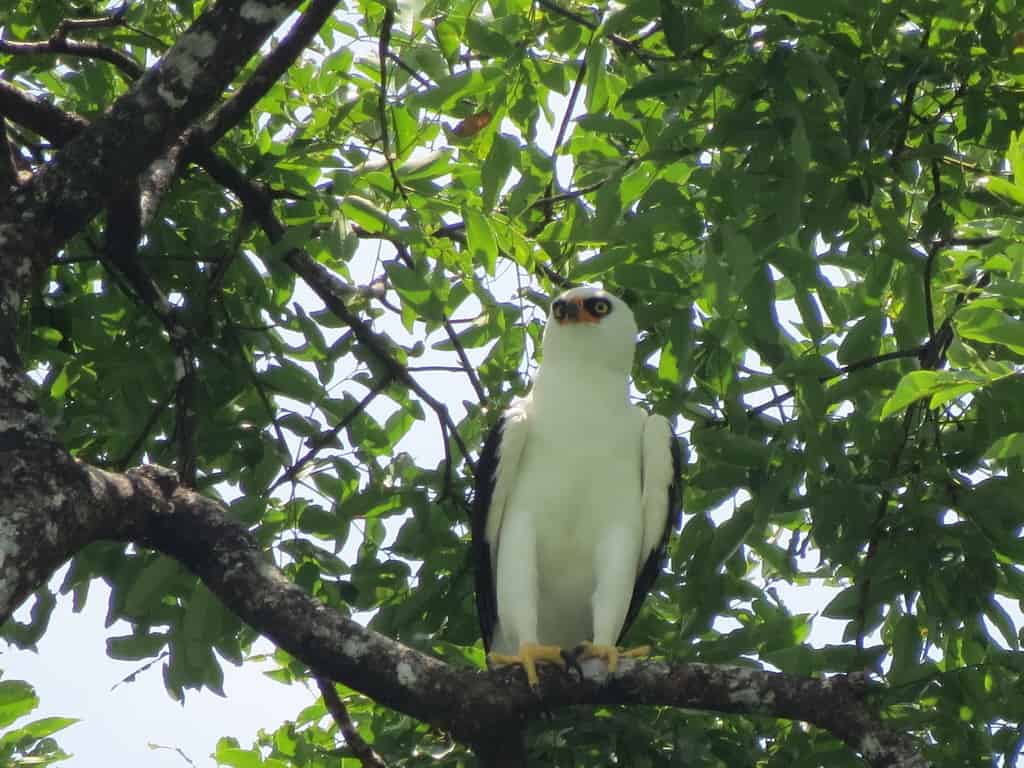
Black and white hawk eagles have hooked orange beaks with black on the tip.
25. Gyrfalcon
Identification: The gyrfalcon (Falco rusticolus) is the largest falcon in the world. It has long, pointed wings, a long tail, and a thick body. They are white with gray to black banding and spotting. These falcons measure 22 to 25 inches long with a 4-foot wingspan.
Habitat and Location: They live along the coasts and in the tundra of the High Arctic. You will find them across Canada and Alaska, as well as parts of Europe and Asia. Some may even travel south as far as southern Canada and the northern United States.
Diet: They prey on birds and small mammals.
Nests: These birds typically build stick nests or debris piles on remote cliffs and mountain bluffs. They also build tree nests.
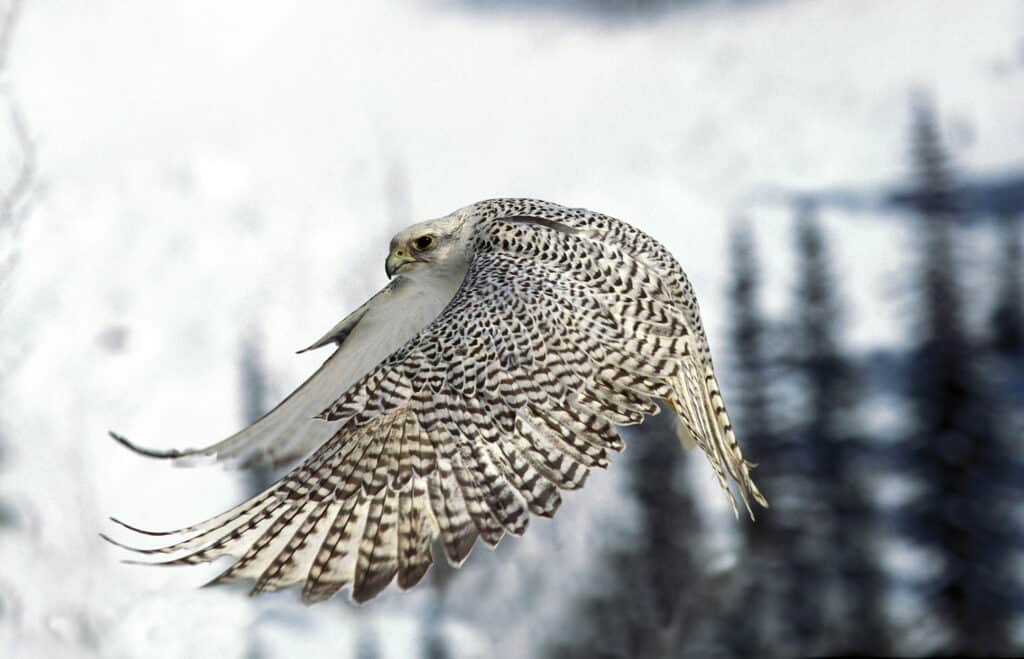
Gyrfalcons are white with gray to black banding.
©iStock.com/slowmotiongli
26. American Coot
Identification: American coots (Fulica americana) are round and plump waterbirds, with short tails, short wings, and large feet. Adults are dark gray to black overall with white bills. The measure between 13 and 17 inches long with a wingspan of about 2 feet.
Habitat and Location: You will find them in freshwater ponds, marshes, and reservoirs throughout North America.
Diet: Aquatic plants, insects, crustaceans, and snails are their top food choices.
Nests: They build unique shallow, floating baskets.

American coots live in wetlands throughout North America.
©Keneva Photography/Shutterstock.com