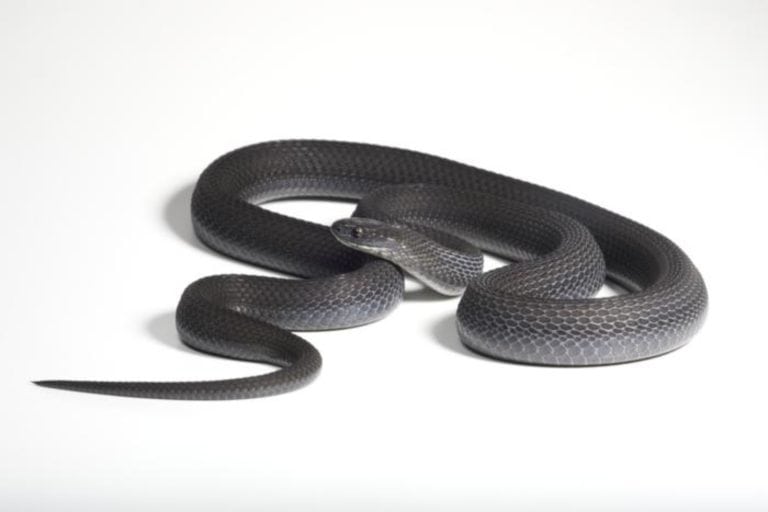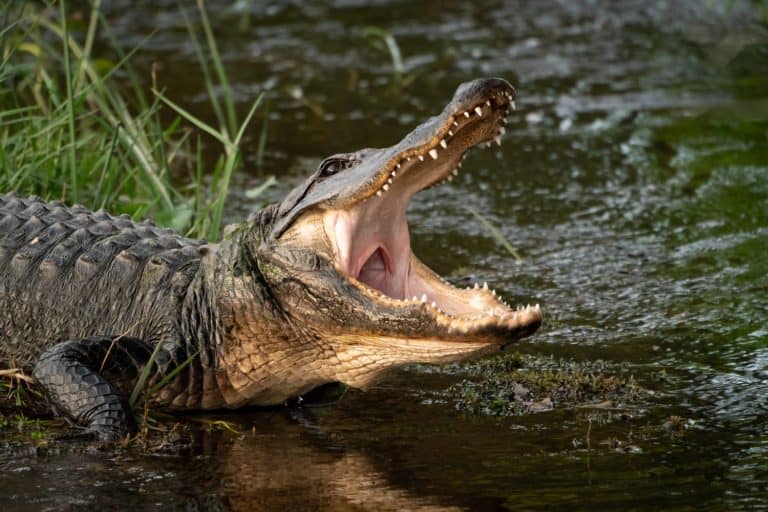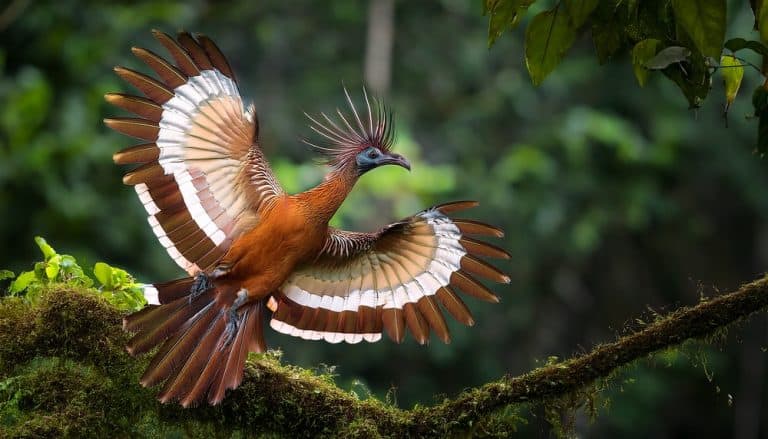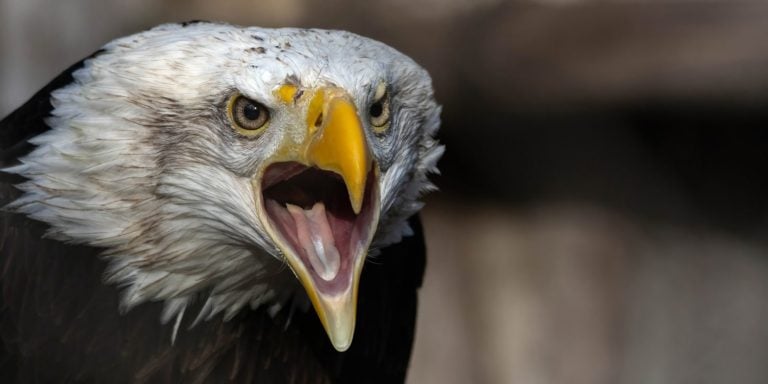

Most animals are opportunistic feeders and eat whatever they can to survive. While some animals have adapted to eat nuts, seeds, or berries, others have evolved to consume other animals. Of these hunters, a few have developed a taste for snakes and the skills necessary to hunt them. The Greek word “ophiophagy” refers to the behavior of eating snakes. Some animals, such as the mongoose, primarily eat snakes, while others eat snakes only occasionally in order to survive.
There are a number of birds that eat snakes. These feathered hunters possess the sharp beaks, talons, and hunting instincts required to catch snakes in the wild. In this article, we’ll cover seven different birds that eat snakes. In addition to their eating habits, we’ll also discuss their physical attributes and their habitats.
#7: Red-Tailed Hawk
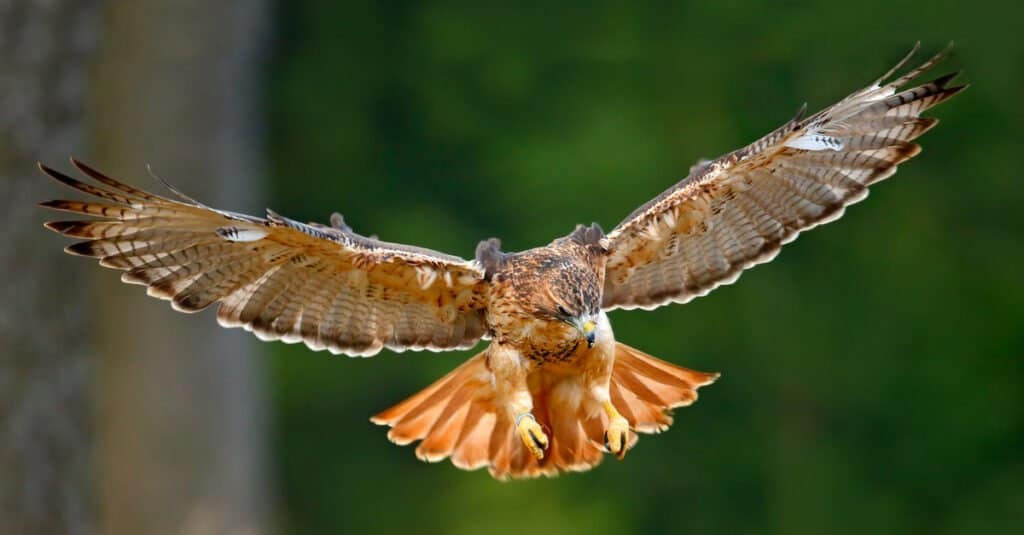
In some areas, snakes make up 40% of a red-tailed hawk’s diet.
©Ondrej Prosicky/Shutterstock.com
Also known as the chickenhawk, the red-tailed hawk (Buteo jamaicensis) is one of the most common hawks in the world. It ranges throughout North America, living as far north as Alaska and as far south as Panama. They thrive in various habitats, including grasslands, forests, mountains, deserts, and urban areas. On average, they measure around 18 to 26 inches long and weigh from 1.5 to 3.5 pounds. While they vary in appearance, most adult red-tailed hawks have light to dark brown plumage and distinctive red tail feathers.
Red-tailed hawks eat a wide variety of animals, including rodents, small mammals, other birds, and reptiles. Due to geographic limitations, snakes make up a large part of some hawks’ diets. In some areas, snakes make up over 40% of a red-tailed hawk’s diet. To date, scientists have identified over 40 snake species targeted by red-tailed hawks.
#6: Great Blue Heron
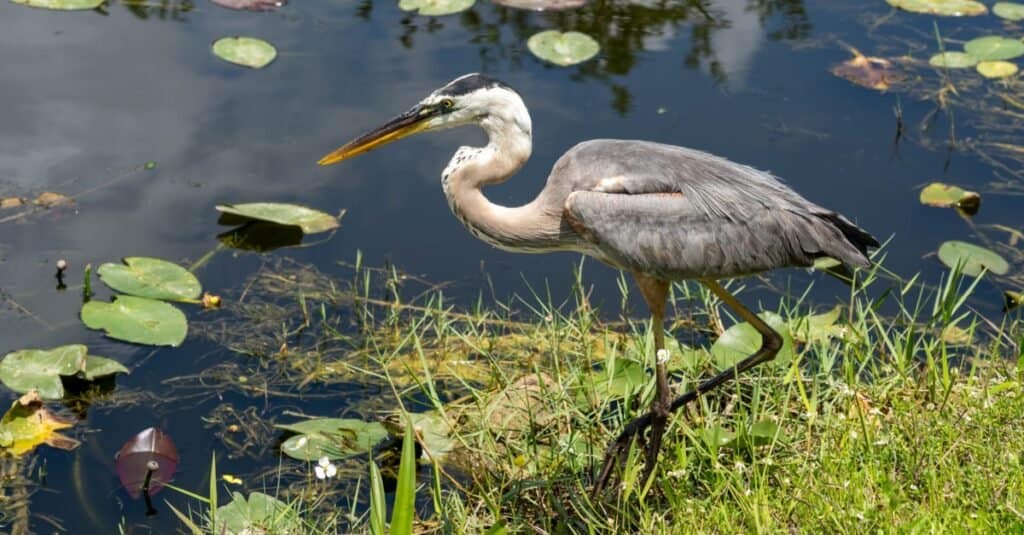
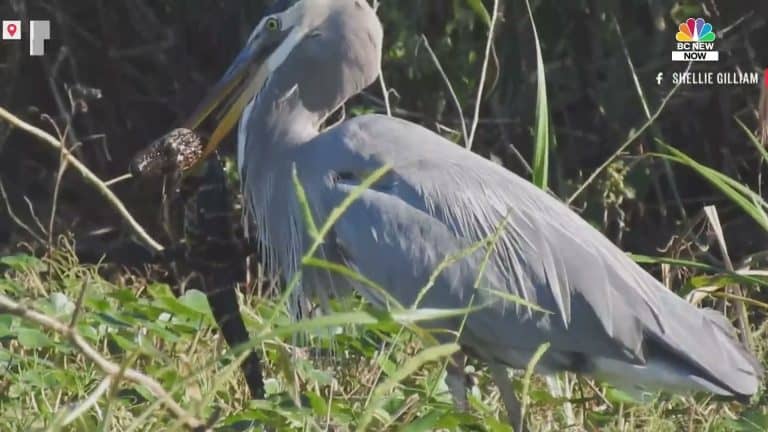
The great blue heron stands very still before grabbing a passing water snake with its long beak.
©ttomasek15/Shutterstock.com
The great blue heron (Ardea herodias) is a large wading bird common throughout North America, the Caribbean, and the Galapagos Islands. It’s the largest native heron in North America, measuring 36-54 inches long and weighing 4-7.9 pounds. The great blue heron gets its name from its large size and blue-gray plumage. They live in various wetland habitats and spend most of their time wading near the water’s edge, hunting for food.
Great blue herons primarily eat fish, but they will also eat birds, rodents, small mammals, amphibians, and reptiles. The great blue heron will also occasionally hunt and eat snakes. In order to catch a water snake, a heron will stand very still and let the snake slither into range. Once the snake is in range, the heron will lash out with its long beak and swallow the snake whole.
#5: Secretary Bird
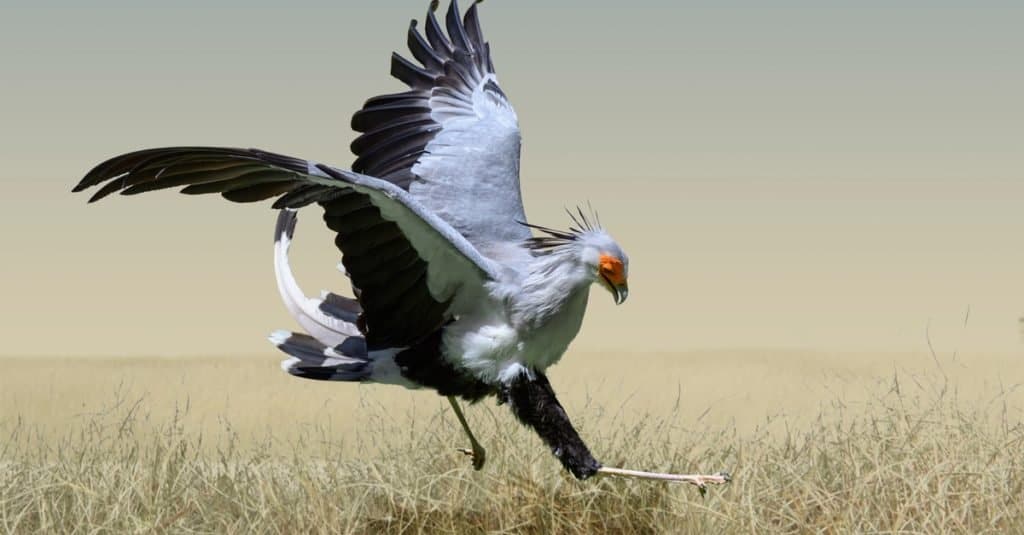
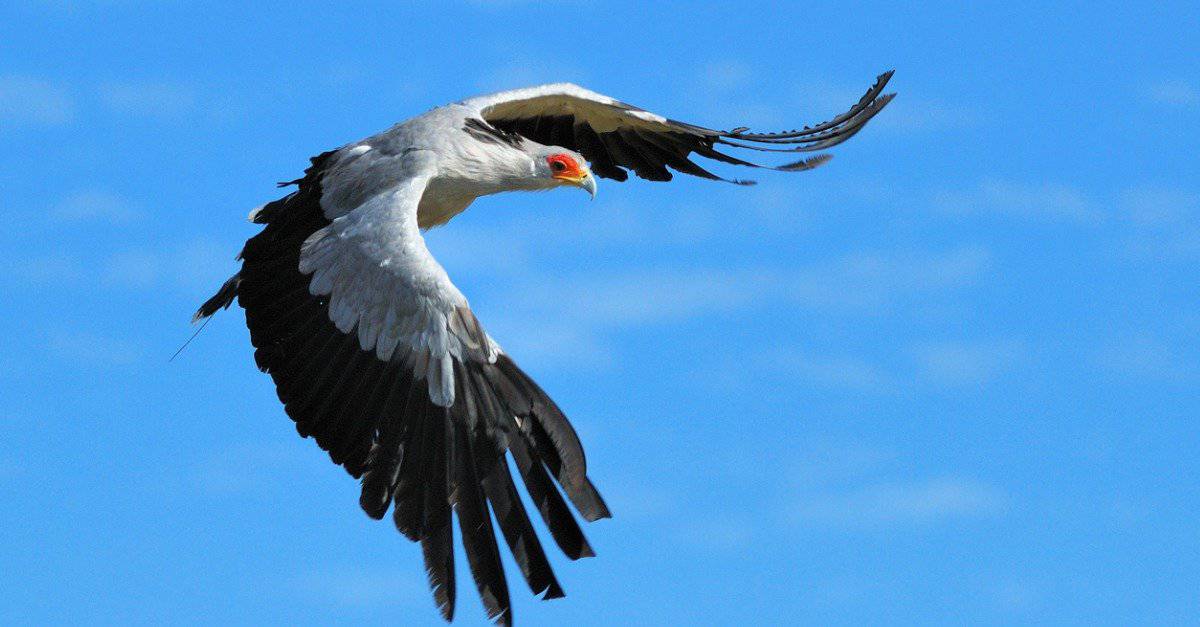
A secretary bird possesses the head of an eagle and the legs of a crane.
©Barbara Ash/Shutterstock.com
The secretary bird (Sagittarius serpentarius) is a large bird native to the grasslands and savannas of Africa. In many ways, it looks like a mixture between an eagle and a crane, with long legs and a raptor’s head and body. Secretary birds measure 44 to 59 inches long and weigh between 8.2 and 9.4 pounds. They have blue-gray feathers on their crown, upperparts, and wings, as well as white feathers on their underparts.
Unlike most predatory birds, the secretary bird hunts on foot, although it is capable of flight. They eat a large variety of prey, including insects, rodents, crabs, small birds, and reptiles. Among birds that eat snakes, the secretary bird uses a unique hunting method. Once it spots a snake, it will stomp on it with a force equal to five times its body weight. They may also strike with their razor-sharp bills. These birds can even eat venomous snakes. These birds can even eat venomous snakes. Their long legs, quick reflexes, and tough scales on their legs help protect them from snake bites.
#4: Laughing Falcon
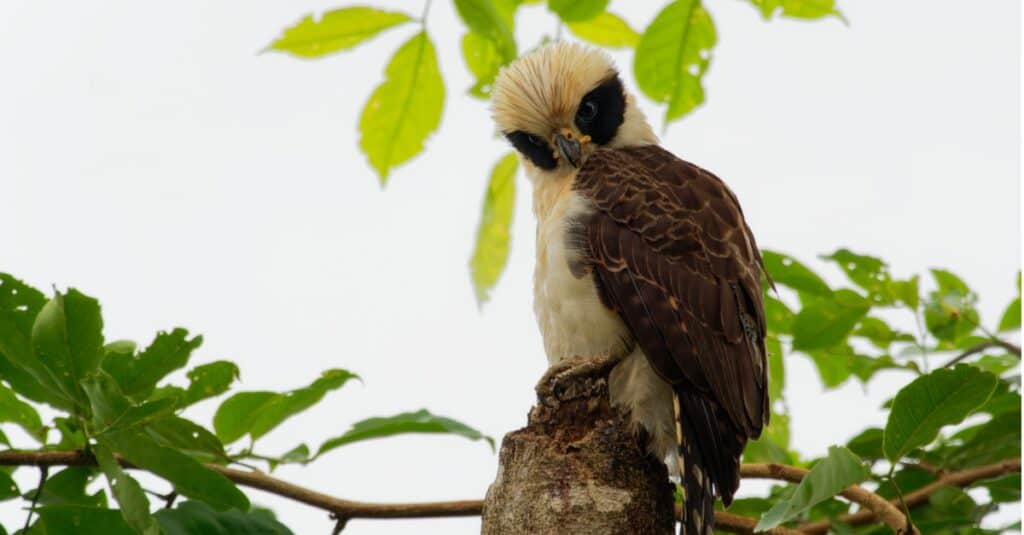
The laughing falcon gets its name from its strange vocalizations, which make it sound like it is laughing.
©iStock.com/phototrip
Also known as the snake hawk, the laughing falcon (Herpetotheres cachinnans) gets its name from its unusual vocalizations, which make it sound as if the bird is laughing. Laughing falcons range throughout Central and South America and prefer to live in humid regions with some tree cover. These falcons are medium-sized birds, measuring 18 to 22 inches long and weighing between 0.9 and 1.8 pounds. They have a whitish head, neck, and underparts, with dark brown wings and a brown and white striped tail.
The laughing falcon’s main food source is small snakes. It will even hunt venomous snakes such as the coral snake. To kill a snake, the laughing falcon will pounce on it from the air and bite its head with its sharp beak. They may also occasionally eat fish, bats, rodents, and lizards.
#3: Great Horned Owl
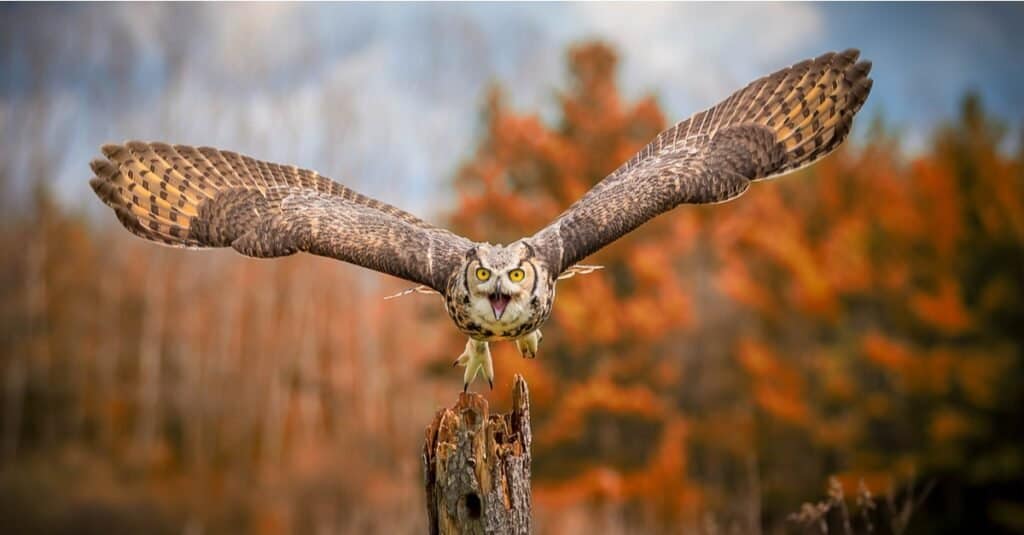
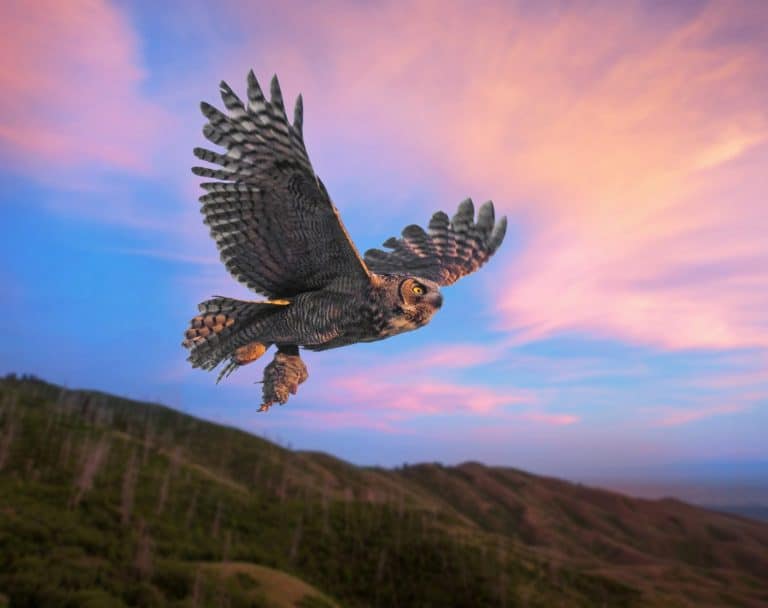
The great horned owl relies on its talons, curved, sharp beak, and stealth to catch snakes and other prey.
©Imran Ashraf/Shutterstock.com
The great horned owl, or tiger owl (Bubo virginianus), is a large bird of prey. It is the most common true owl species in the Americas. It is also one of the largest owls, measuring 17 to 25 inches long and weighing 2.5 to 5.5 pounds. The great horned owl gets its name from its large size and the distinctive tufts of feathers on its head that look like horns. It has dark brown-gray plumage that allows it to blend into its environment.
Like the majority of owls, the great horned owl hunts at night. Almost no creature is safe from the great horned owl, and it eats a wider variety of prey than any other raptor. Although its diet mostly consists of rodents and small mammals, it is also one of the birds that eat snakes, including rattlesnakes. Great horned owls use stealth and ambush tactics to catch their prey.
#2: Brown Snake Eagle
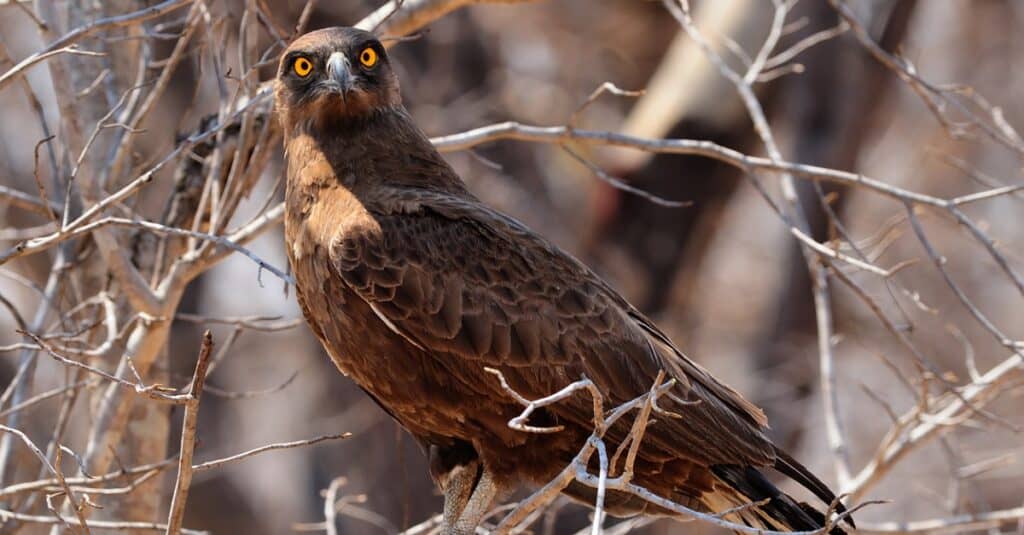
The brown snake eagle eats a wide variety of snakes, including puff adders, cobras, and black mambas.
©iStock.com/Shumba138
The brown snake eagle (Circaetus cinereus) is a large raptor endemic to parts of Africa. A relatively solitary bird, a brown snake eagle’s territory can span hundreds of miles. They typically live in woods or grasslands with plenty of tree cover. On average, they measure 26 to 31 inches long and weigh 3.3 to 5.5 pounds. As its name implies, the brown snake eagle gets its name from its almost uniformly dark brown plumage.
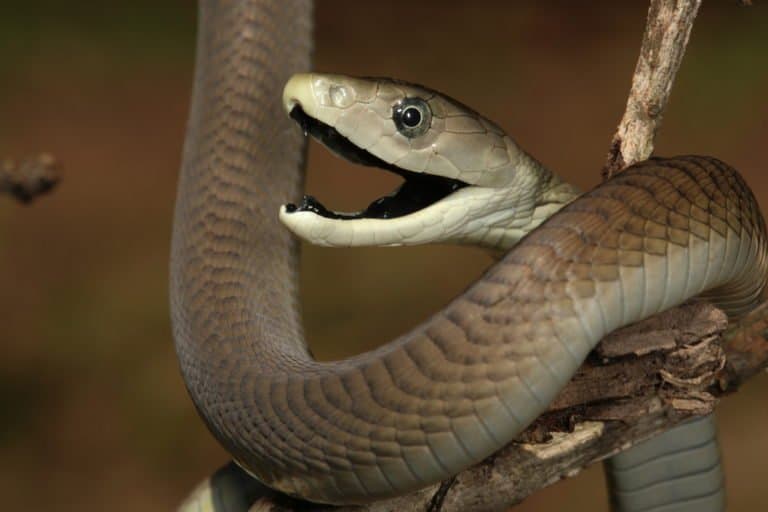
Its diet is similar to that of other snake eagles, all of which eat snakes. The brown snake eagle almost exclusively eats snakes in the wild and does not discriminate as to species. Brown snake eagles will eat large, small, or venomous snakes, including puff adders, cobras, and black mambas. Once they catch a snake, they will swallow it whole or tear it apart if the snake is too large.
#1: Chicken
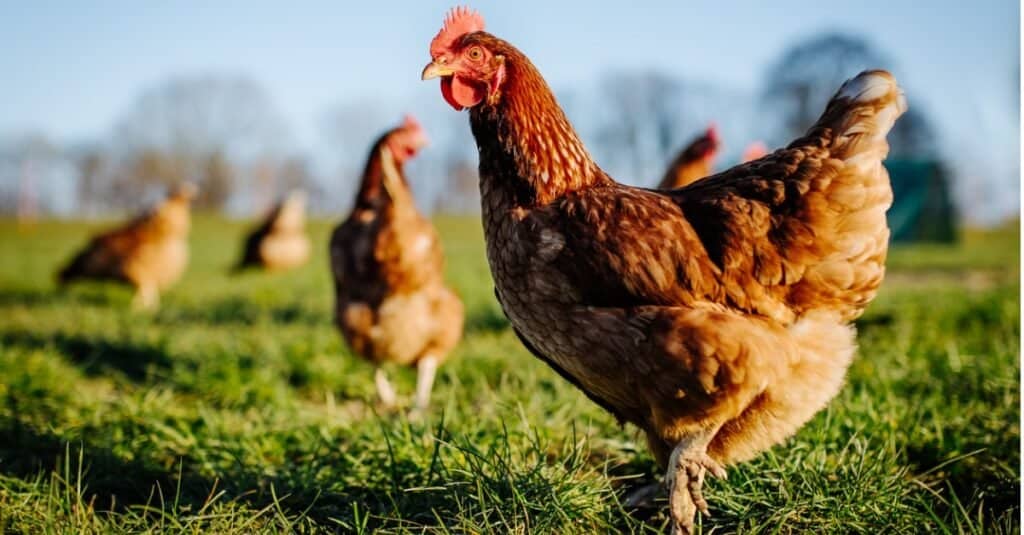
Chickens will attack and eat small snakes if given the opportunity.
©iStock.com/Sonja Filitz
The chicken is one of the most common domesticated animals — and the most common domesticated bird — on the planet. These backyard birds live on every continent, and many cultures consider them a staple of their diet. People typically raise chickens for their meat and eggs.
However, some people also keep chickens as a natural form of pest control. Not only do they eat ticks, but they are also one of the birds that eat snakes. Chickens are opportunistic omnivores, so a chicken will instinctively attack and kill small snakes. To kill a snake, a chicken will peck at it with its sharp beak and may even pick it up with its feet. If the snake is small enough, the chicken will swallow it whole.