
Quick Take
- Bobcats don't just pick one spot to sleep, and their den strategy is actually more complex than you'd expect from a solitary wildcat. Explore their den strategy →
- Calling bobcats 'nocturnal' is actually misleading, as their activity pattern follows a different rhythm entirely. See their real activity pattern →
- If a bobcat shows up in your yard, the instinct to back away quietly may not be your best move. Get safe deterrent advice →
- Bobcats thrive in some habitats and vanish from others, but the deciding factor is not what most people assume. Discover what drives habitat choice →
Bobcats are nocturnal wildcats with adorable feline faces and quiet personalities. Although we don’t see them often, they are very common. While they occasionally wander into neighborhoods, they typically stay to themselves. So when are they active, and where do they sleep? Keep reading to find out more about where bobcats sleep and more fun facts about this wild feline.
About Bobcats
Bobcats (Lynx rufus) are the smallest of the two native North American lynx species. Bobcats are often confused with lynxes, but bobcats generally live in warmer climates. The Canada lynx (Lynx canadensis) favors the cold weather of Canada, Alaska, and northern U.S. states where there is more snow. Most bobcats live in the U.S., but their range spans from southern Canada to Mexico. Bobcats can be found in 47 states, except Delaware, Alaska, and Hawaii.
Bobcats stand 1.5-2 feet at the shoulder and weigh between 9 and 33 pounds, with larger animals living farther north. They are generally buff to brown with lighter undersides and brown and black markings. Like other lynxes, bobcats have facial ruffs, tufted ears, and short tails. There are also white spots near the tips of their ears.
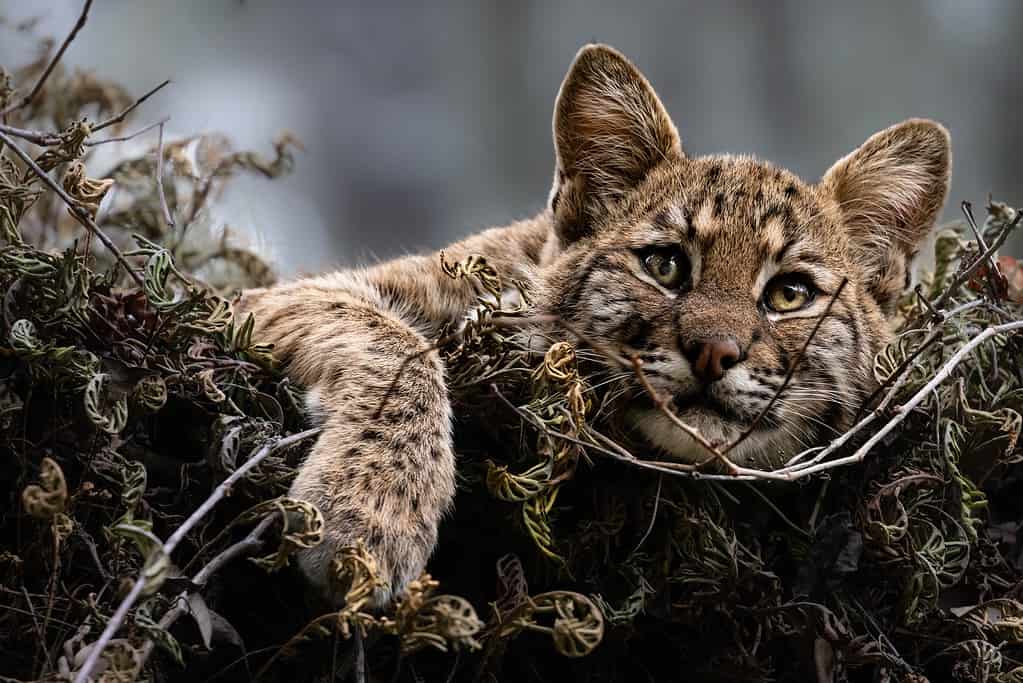
Most bobcats live in the United States.
©WhirlVFX – Pamela Werrell/Shutterstock.com
Where Do Bobcats Sleep?
Bobcats are very territorial and live alone, except mother bobcats taking care of their kits. Once their kits mature, the mother bobcat lives alone again. Bobcats build multiple dens across their home range. They have a central den for giving birth and several additional dens for temporary shelter.
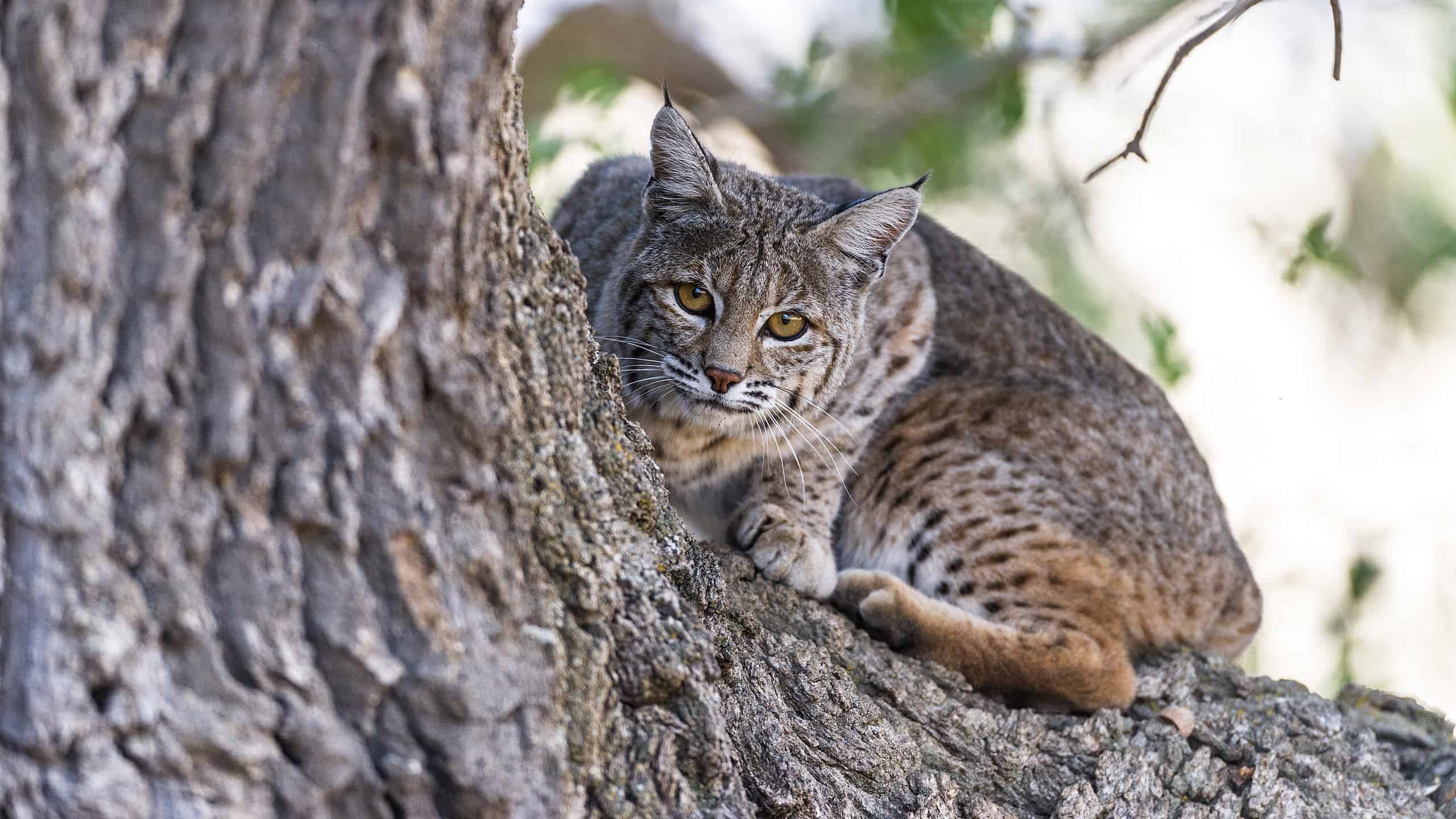
A bobcat’s den may be a hollow tree, a fallen log, a cave, rocky cervices, old animal burrows, bushes, thickets, or dense brush. They may sometimes use man-made structures such as underneath decks or in abandoned buildings. Bobcats are excellent climbers and often sleep on tree branches. They occasionally use elevated tree cavities as dens.

Bobcats are solitary except when they are raising kits.
© Johann Knox/Shutterstock.com
What Time of Day Are Bobcats Active?
Like domestic cats, bobcats only sleep for about 2-3 hours at a time. However, they sleep multiple times a day. Bobcats are generally crepuscular, which means they are most active around dawn and again around dusk. However, they can be active any time of the day or night since they wake up frequently.
Bobcats hunt and patrol their territory from a few hours before sunset until around midnight, then again for about an hour before sunrise to a few hours after sunrise. They prefer hunting for their food in darkness, so they can blend in and use their excellent hearing and sight.
The Bobcat Habitat
You can find bobcats basically anywhere in North America. They are adaptable and can thrive in a wide variety of different habitats, including wetlands, swamps, bogs, deserts, scrublands, mixed forests, and mountainous areas with rocky outcroppings. Bobcats generally avoid areas with agriculturally cleared land, as there is nowhere to hide. They can also be seen in suburban and near-urban neighborhoods where there are greenways, dense trees, or canyons to provide cover.
Bobcat males have a home range of 30 to 75 square miles, while females’ home ranges average about 6 to 12 square miles. A male’s home range may overlap several females’ ranges. Bobcats typically stay in their territory their entire lives, unless they are forced out by harsh conditions like snow or destruction from natural disasters.
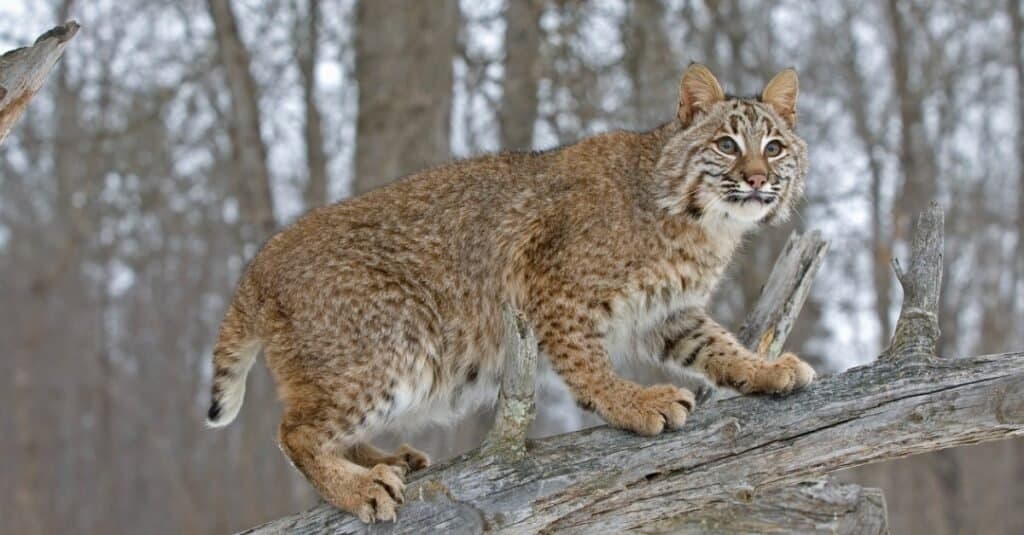
You can find bobcats in a variety of habitats from swamps to deserts to forests.
©iStock.com/JohnPitcher
What Do You Do if You See a Bobcat in Your Yard?
Although uncommon, some bobcats wander into backyards and neighborhoods, feeding on small rodents. They move wherever their main food source moves. However, bobcats leave when they are done hunting and go back to their territory, preferring to sleep in their den rather than in your backyard.
However, if your pet is outside or the bobcat doesn’t leave right away, make as much noise as possible. You can do this by clapping your hands or stomping your feet. The abruptness should scare them away. If you have safe access, you can also turn on the sprinklers or your hose. If the bobcat gets wet, it will run away.
Bobcats rarely cause conflicts with humans, but they may be a threat to small livestock. Ensure you keep coops away from remote or wooded areas and keep animals in your barn at night. While it’s unlikely a bobcat would attack you, it’s still not safe to try to interact with a wild bobcat. They are not like domestic cats and can react negatively when they feel threatened.