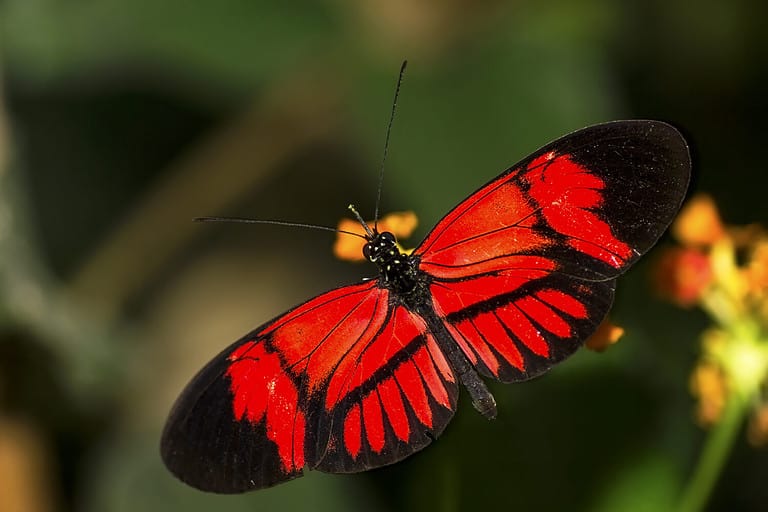

When telling a friend about your favorite type of butterfly, you probably start by describing its wings. After all, a butterfly’s wings are its most attractive feature. We know a lot about a butterfly’s wings, but have you ever taken note of a butterfly’s legs? In a lot of ways, butterfly legs are just as interesting as butterfly wings. So, how many legs does a butterfly have? Find out the answer to this question, along with facts about the purpose of a butterfly’s legs and the special way a monarch butterfly uses two of its legs.
How Many Legs Does a Butterfly Have?
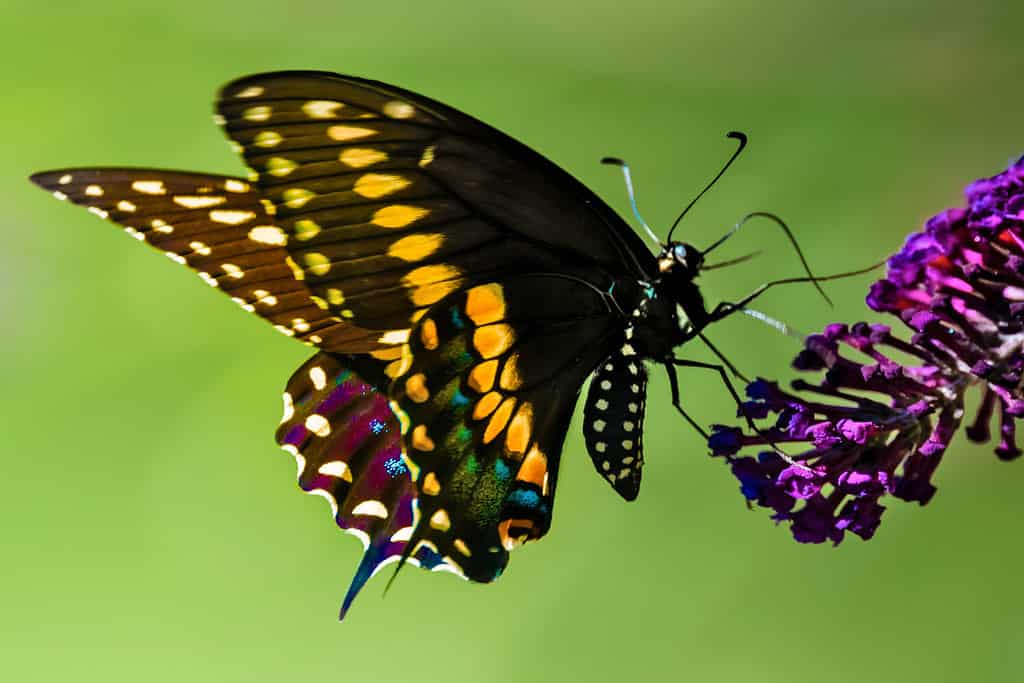
Butterflies have a total of six legs, three on each side of the thorax.
©Jay Gao/Shutterstock.com
A butterfly has six legs. Take a close look at the body of a butterfly and you’ll see three sections: a head, a middle area called the thorax, and an abdomen. A butterfly has three legs on each side of its middle section, or thorax. It has a pair of forelegs located closest to its head. Next are its midlegs, and finally its hindlegs, which are located nearest to its abdomen.
Each leg has a femur (thigh), a tibia (shin), and a tarsus (foot). As you can see, butterfly legs have many of the same parts as human legs.
How Does a Butterfly Use Its Legs and Feet?
Of course, a butterfly uses its legs and feet to walk on a flower, hang from a leaf, or climb a tree branch. However, there is another, more unusual way that a butterfly uses its legs and feet.
A butterfly has sensors called chemoreceptors on its legs and feet. Butterflies can pick up the taste of a flower, a piece of fruit, or another item just by standing on it. These taste receptors allow them to determine whether they are standing on something they can eat or if they’ve landed on something harmful. Think of this insect’s sensors as similar to the taste buds you have in your mouth.
A butterfly’s legs are necessary for it to take flight. It grasps onto a flower, twig, or branch and starts flapping its wings. As its wing muscles warm up, the butterfly is able to lift off and travel to its next destination. A butterfly’s legs also allow it to rest at night. Most butterflies hang upside down from leaves or twigs while resting after the sun goes down.
Why Does It Appear That Some Butterflies Have Fewer Than Six Legs?
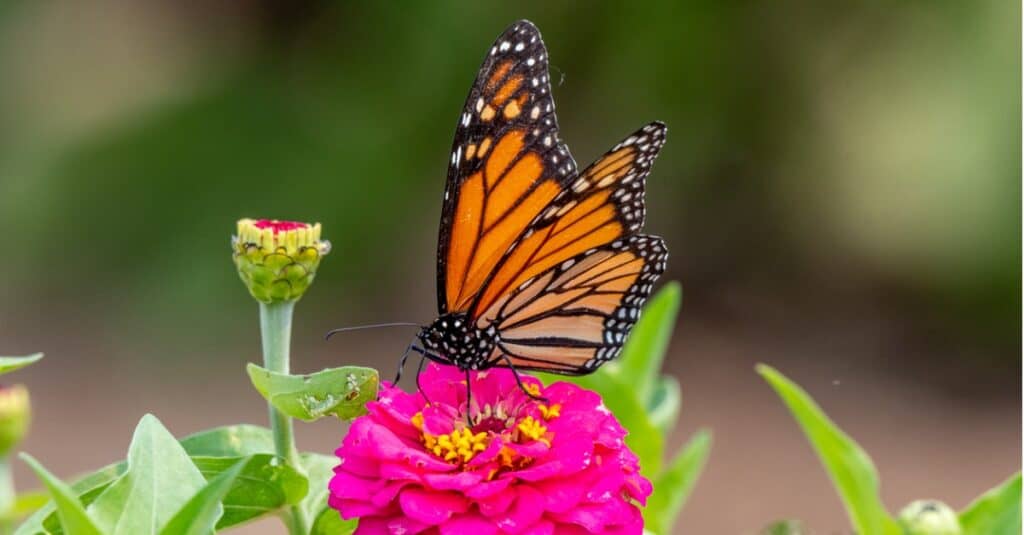
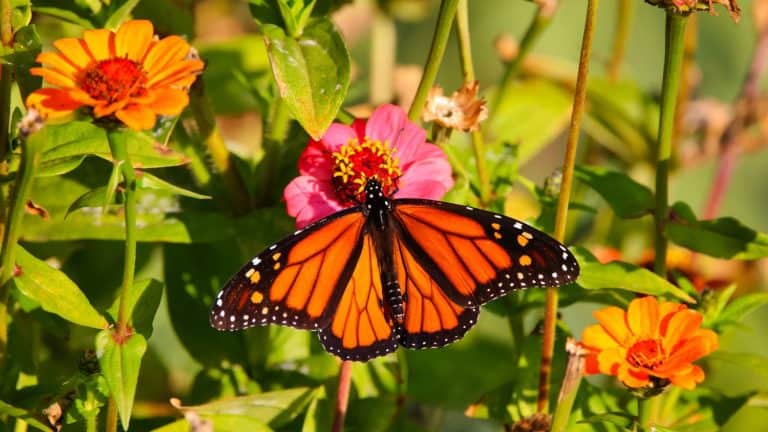
A monarch butterfly typically holds its short, brush-like forelegs against its body.
©iStock.com/Christophe Merceron
All butterflies have six legs. However, monarch butterflies and other members of their family use their legs a little differently. Butterflies are classified into one of six families. Those families are the Lycaenidae, Hesperiidae, Nymphalidae, Papilionidae, Pieridae, and Riodinidae. Though all butterflies have six legs, butterflies in the Nymphalidae family have reduced forelegs.
The monarch butterfly is a well-known member of the Nymphalidae family. If you look at a monarch butterfly sitting on a flower, you may think it has only four legs. This is because monarch butterflies and others in the Nymphalidae family fold both of their forelegs up against their thorax, so it looks like they only have four legs. Their forelegs are small with a brush-like texture. This is how these insects earned the name brush-footed butterflies. The butterflies in this family use their midlegs and hindlegs to do the walking and climbing.
Why Do Butterflies in the Nymphalidae Family Have Forelegs?
So, if monarch butterflies and other members of the Nymphalidae family rarely use their forelegs, why do they still have them? Although they rarely unfold these legs, the forelegs are still a crucial part of their anatomy.
When a butterfly in the Nymphalidae family lands on a flower, pollen sticks to its body. The insect delivers some of this pollen to the next flower it visits. This is called pollination. A butterfly with leftover dusty pollen on its body may use its forelegs for grooming purposes.
Female butterflies also use their forelegs to determine whether a plant is a suitable host for their eggs. They tap on the leaves of plants to release plant juices that they can test with the chemoreceptors in their forelegs.