
Quick Take
- A rooster might actually be the cheapest flock management tool you're overlooking, though most owners don't anticipate the hidden trade-off that comes with one. See the hidden trade-off →
- A crowing rooster is louder than most people realize, and the science behind it might make you rethink your backyard setup entirely. Hear the science on crowing →
- Happy hens lay better eggs, and a rooster may be the unexpected key to unlocking both outcomes. See how hens benefit →
- Buying only female chicks doesn't guarantee you won't end up with a rooster. Here's what actually works. Find what actually works →
Are you considering adding a rooster to your flock? You might be wondering how useful they can be. Do roosters lay eggs? What is a rooster’s job within the flock? They can also wake you up bright and early in the morning to release the chickens from their coop. In this article, we’ll discuss 6 essential jobs that roosters have and whether you should add one to your coop.
#1: They Protect the Hens
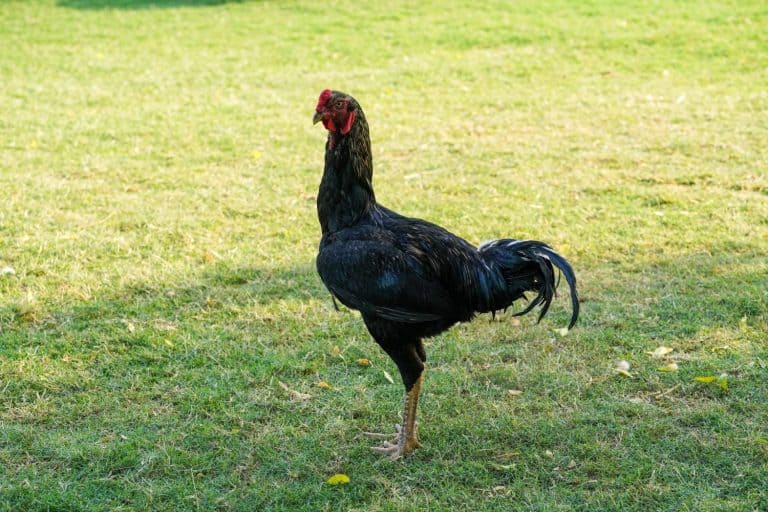
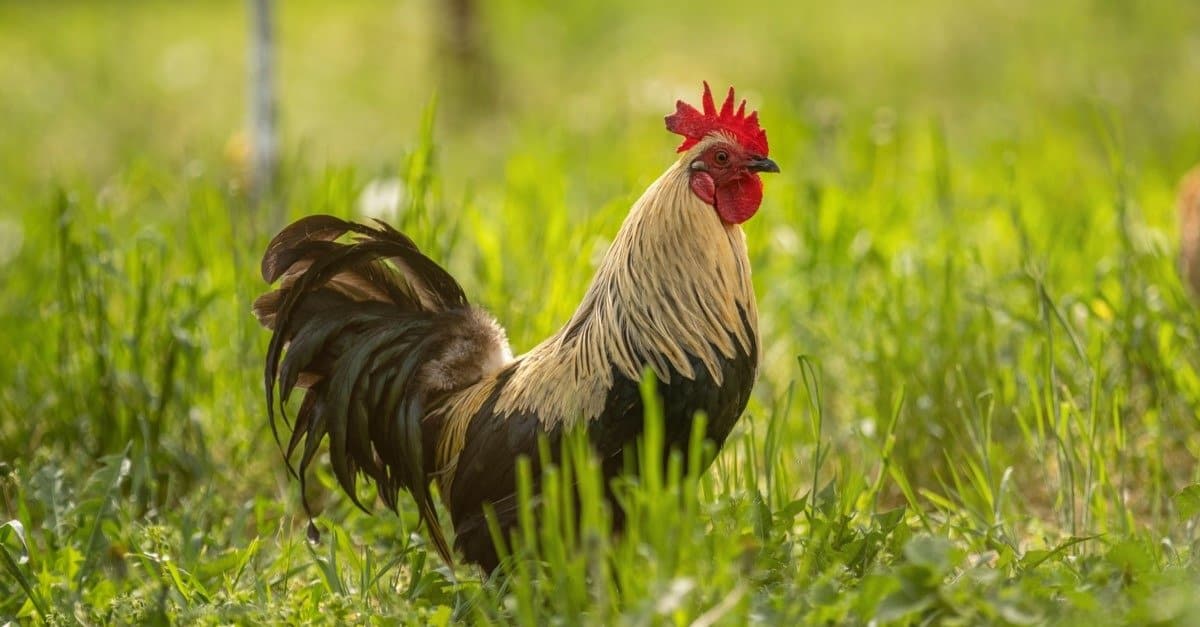
Roosters will typically try to protect their flock, both by crowing in warning when a predator is near and by fighting off predators. Roosters constantly scan the ground and the sky for threats. They may be even more protective if there are chicks in the flock. The downside is that a rooster who sees you as a threat may try to fight you in the same way, but this is less common in roosters raised from chicks or if you spend plenty of time socializing your flock.
Many roosters are incredibly protective and will fight for their hens.
©Mirian Goulart Nogueira/Shutterstock.com
#2: Roosters Provide for Their Flocks
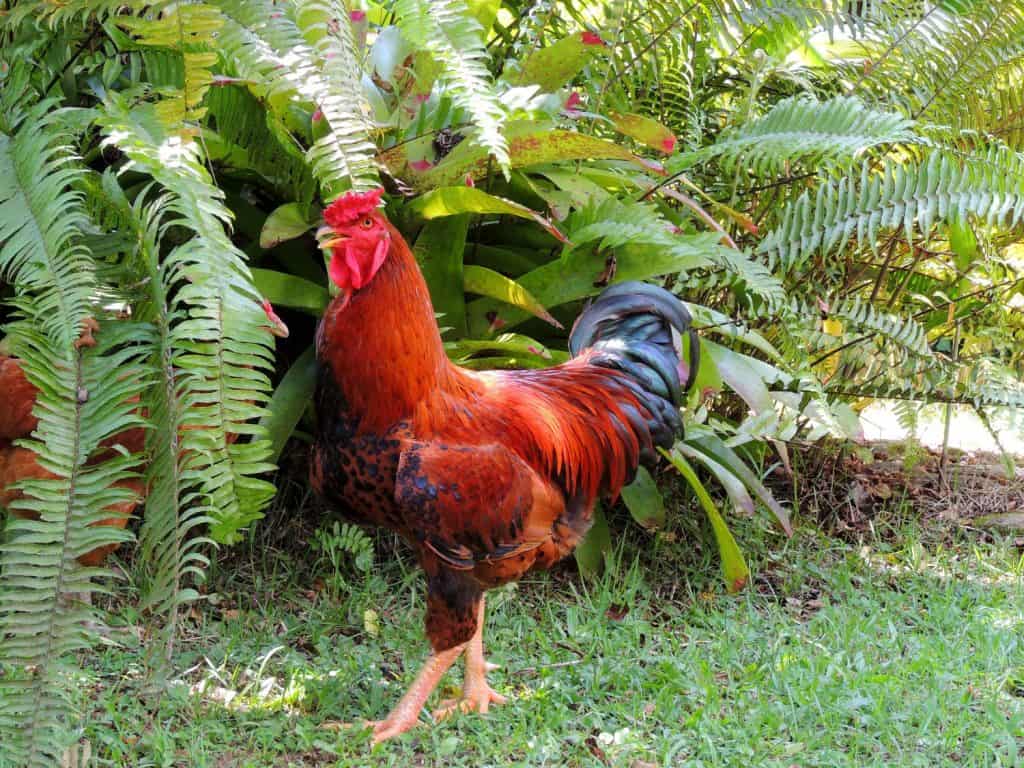
Roosters also provide for their flocks. They’ll dig for bugs or forage for seeds to feed the hens. It can be fascinating to watch your rooster develop relationships within the flock and fulfill his role as the caretaker. This is also how the rooster shows off his skills to get hens to mate with him.
Roosters will often feed hens large bugs, providing them with added nutrients in their diet.
©dooguzi/Shutterstock.com
#3: Roosters Fertilize Eggs
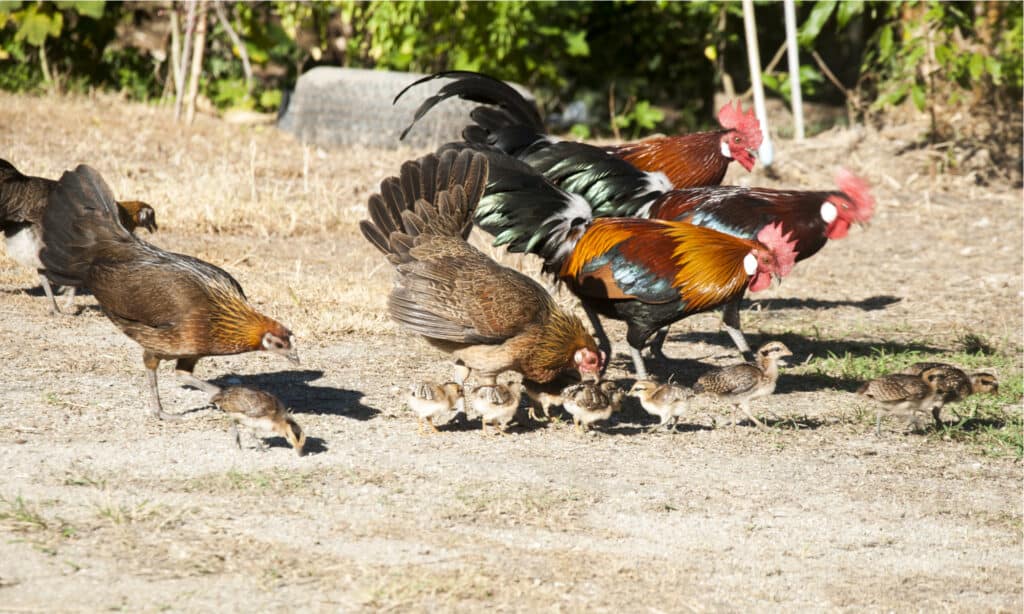
Of course, roosters can’t have eggs. Chickens can have eggs without a rooster, but they’ll never be fertilized. This means no chicks will hatch from them. You need a rooster if you want to hatch any chicks. Having a rooster can save you money that you’d otherwise spend adopting new chicks. However, it also makes it possible for your broody chickens to hide and hatch eggs, leaving you with a larger flock than you planned.
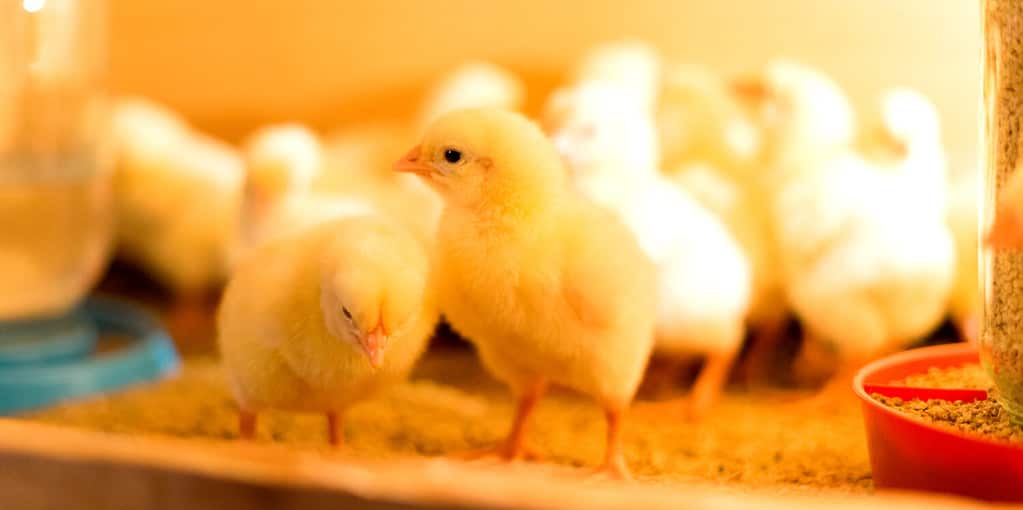
Without a rooster to fertilize the eggs, none of your chickens’ eggs will hatch.
©UncleFedor/Shutterstock.com
#4: They Act as an Alarm Clock
Roosters crow loudly in the early hours of the morning primarily driven by an internal circadian clock. However, dominance also plays a role: the top-ranking rooster crows first, with others following in order. They also crow to communicate with their flock. They might crow to indicate whether it’s safe or unsafe outside of the coop or out of excitement, such as around feeding time. A crowing rooster can also get you up and moving to let the chickens out of their coop. However, it can also disturb you and your neighbors if you are sensitive to noise. Researchers found that a crowing rooster can reach up to 140 dB, which is comparable to the noise level on an aircraft carrier deck.
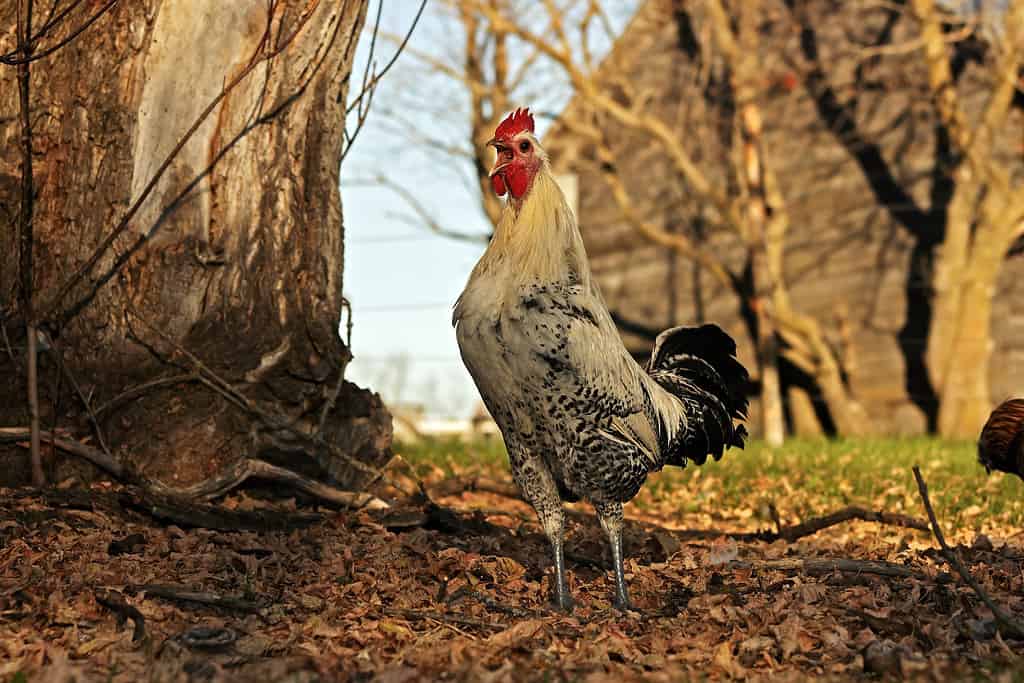
Roosters crow for many reasons, including to alert the flock to nearby predators.
©Tim Belyk/Shutterstock.com
#5: Roosters Lead the Flock
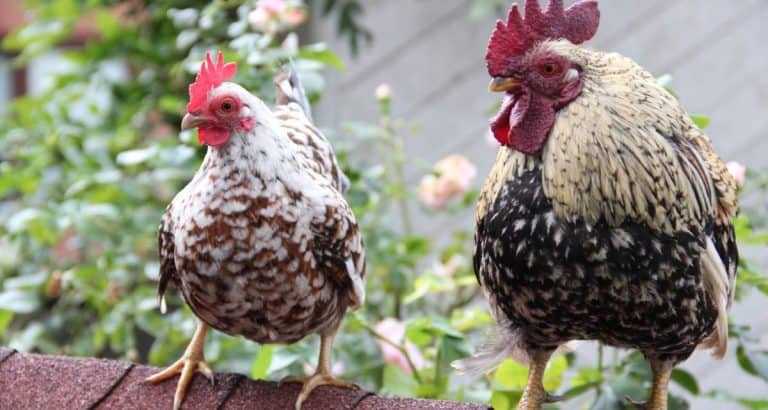
Roosters will try to keep the hens nearby and discourage them from wandering off. This can keep your flock safer and makes training them to return to the coop easier. Just train your rooster, and his hens will follow. As the leader of the flock, your rooster may also make integrating new hens into the coop easier. Roosters break up disputes between the hens, which can help the current hens learn to get along with the new arrivals.
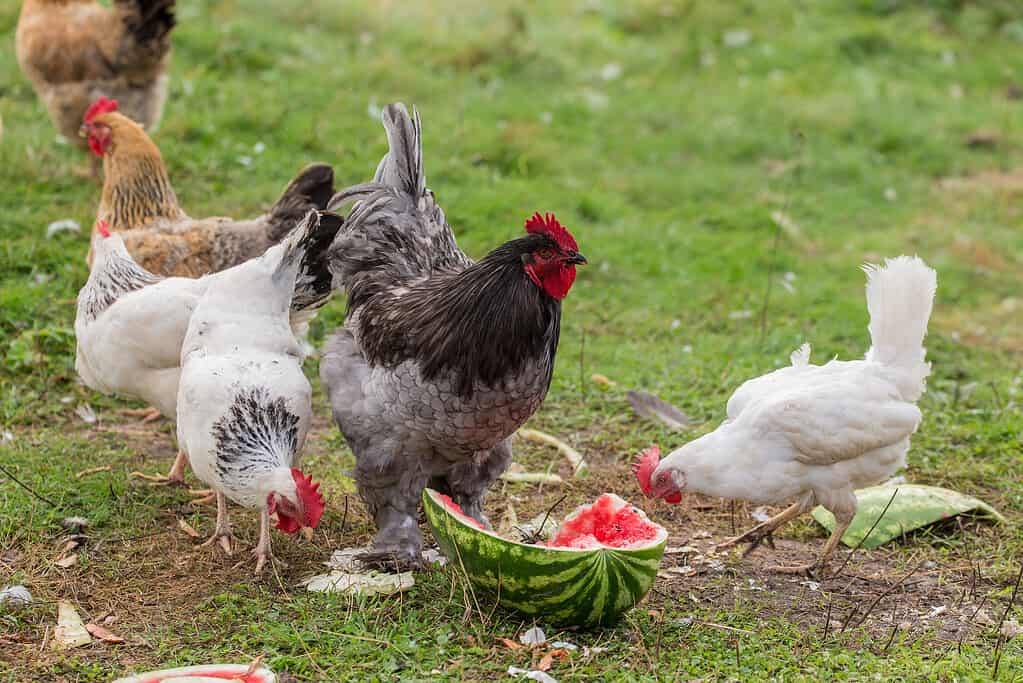
Roosters can help integrate new members into the flock.
©Argument/iStock via Getty Images
#6: Roosters Make Hens More Content
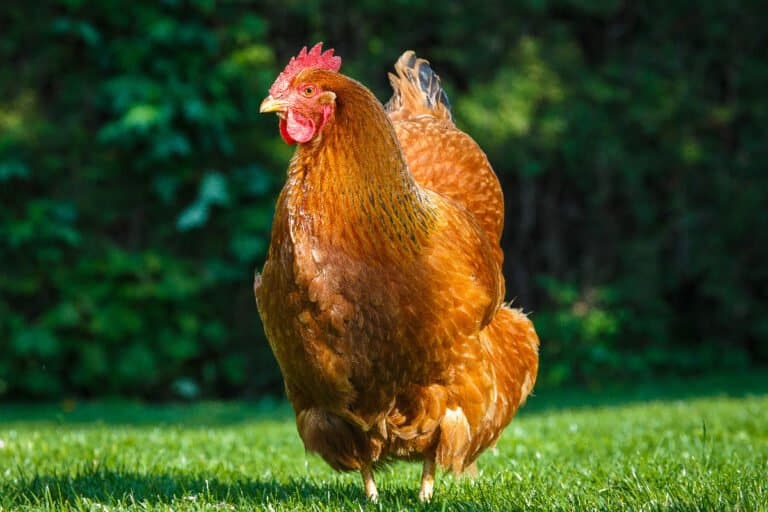
In nature, flocks consist of one rooster and many hens. Replicating this dynamic in a coop can make for a more peaceful environment. The hens may squabble for dominance less and bond with one another more easily. This can increase their quality of life. Hens that are made happier and healthier by adding a rooster will produce more eggs, and you may see a difference in quality as well.
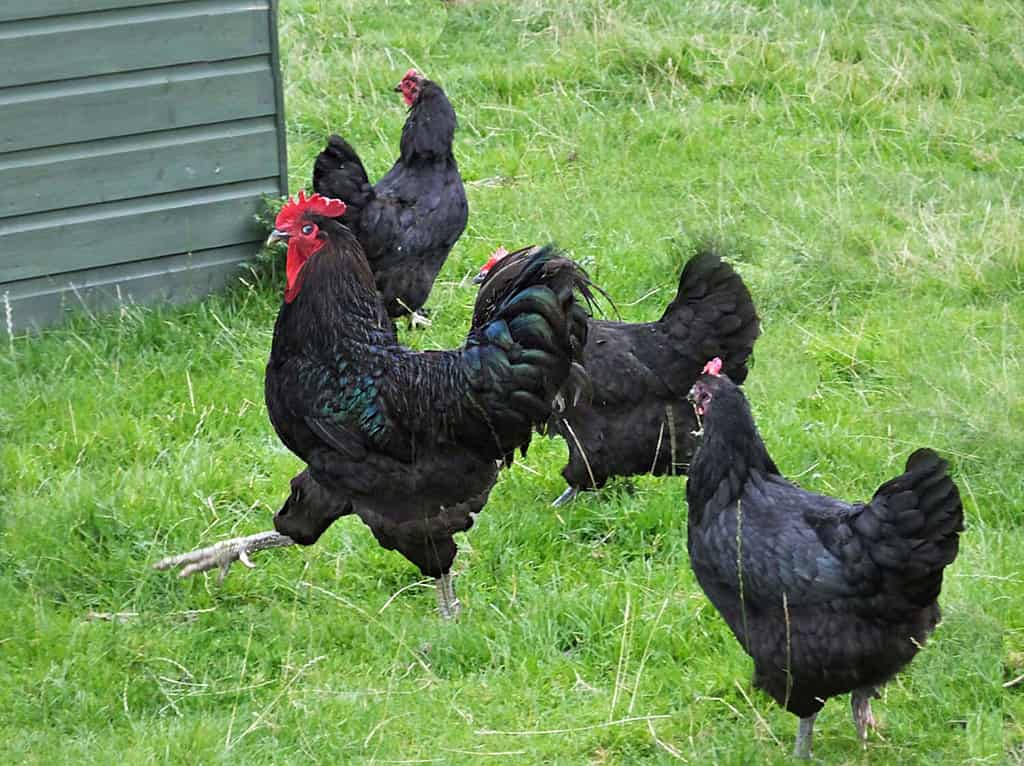
It’s natural for hens to live with a rooster.
©Ballygally View Images/Shutterstock.com
Is a Rooster Right for You?
Now that we’ve discussed a rooster’s jobs for the flock, let’s figure out if one is right for you. Here are some reasons why you might not want to add a rooster to your coop:
- Your local laws may ban or limit roosters. This is typically due to their crowing, which can disturb the neighbors. Speaking of neighbors, they might not want to live near a crowing rooster. Discussing the idea in advance can give you a good idea of how your neighbors will react to the new addition.
- Do you want to hear him crow? Putting aside noise ordinances and neighbors, it’s important to think about whether you want to hear a rooster crow each day.
- Some roosters are aggressive. If you don’t want to deal with this, it may be better not to add one to your flock. However, hand-raised chicks tend to be more people-friendly than unsocialized birds.
- They might hurt your hens. Roosters can injure hens while mating, especially if they choose a favorite hen and overdo things. They may leave wounds on her neck or back. Some people cover their hens with saddles to prevent this.
- Roosters don’t tend to get along with one another. In confined spaces especially, two or more roosters are likely to fight. If you want more than one, you might consider providing ample space or separating your chickens into multiple flocks.
How to Avoid Roosters or Ensure You Get One
Has this article made you ready to adopt a rooster right away, or are you now certain you never, ever want one? Either way, you might be wondering how to know the sex of the chicks you adopt. Often, baby chicks aren’t accurately sexed. You may try to purchase only females to have one or more grow into roosters!
To avoid this, you’ll need to go with an autosexing breed. This means the chicks display different colors or markings based on their sex, making it easy to determine whether they are male or female at a glance. You can also adopt an older bird. This is especially useful if you want a rooster, as you’re likely to find many roosters up for adoption that were incorrectly sexed and rehomed by people who couldn’t keep them.