
Chimpanzees (Pan troglodytes) are not our direct ancestors, but they are our closest living relatives. Humans and chimpanzees share a significant portion of their DNA because both species evolved from a common ancestor. This means that humans and chimpanzees are not direct descendants of each other, but rather share a lineage that split millions of years ago. Humans have evolved to have the longest lifespan of all primates. While other great apes may live into their 50s, humans can live well into their 70s, 80s, and beyond. This extended lifespan is a result of evolutionary changes, particularly in areas like immune function and nutrition. Though chimpanzees don’t have the same life expectancy as humans, they are among the longest-lived primates, along with orangutans and gorillas. Continue reading to discover more about the life expectancy of the chimpanzee.
How Long do Chimpanzees Live?
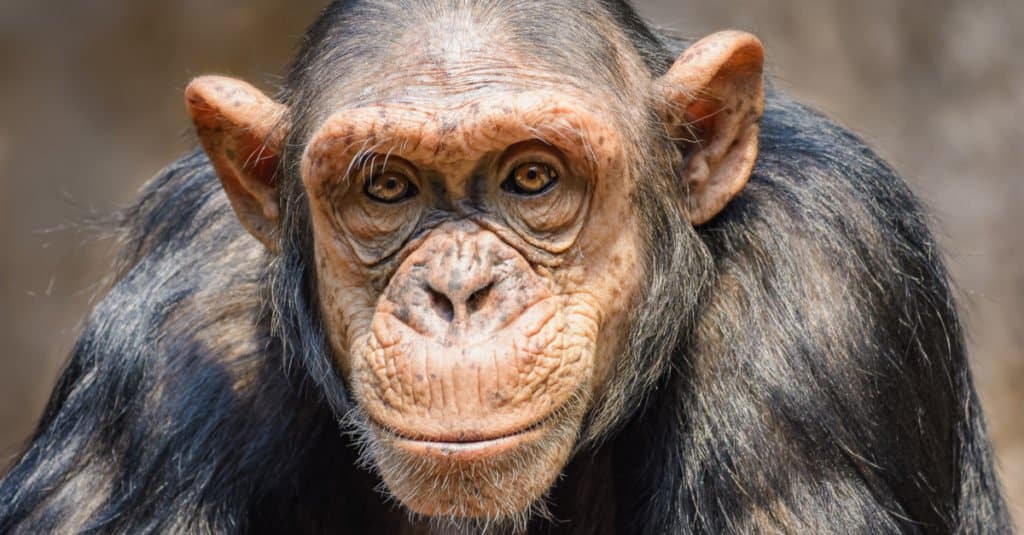
Humans and chimpanzees had a common ancestor that lived between 6 and 13 million years ago.
©Thorsten Spoerlein/Shutterstock.com
A species’ lifespan is primarily determined by genetics and inherent biological limits, whereas life expectancy is influenced by various factors such as environment, lifestyle, nutrition, access to healthcare, and the prevalence of disease. While a chimpanzee’s lifespan is relatively static, their life expectancy can vary significantly, especially between wild and captive individuals or populations.
The difference in life expectancy between chimpanzees in the wild and those in captivity is due to variations in environmental conditions, medical care, and safety. In the wild, chimpanzees typically live between 33 and 38 years, although many do not reach old age due to disease, injury, predation, and human activity.
Captive chimpanzees often live significantly longer, into their 40s, 50s, and even 60s. Their increased longevity is largely due to consistent access to food, veterinary care, and protection from predation. However, the quality of life and enrichment in captivity also play a crucial role in their long-term health and well-being.
The oldest chimpanzee on record is Joao, a male chimpanzee who reached 82 years of age, surpassing previous records
Principal Causes of Chimpanzee Mortality
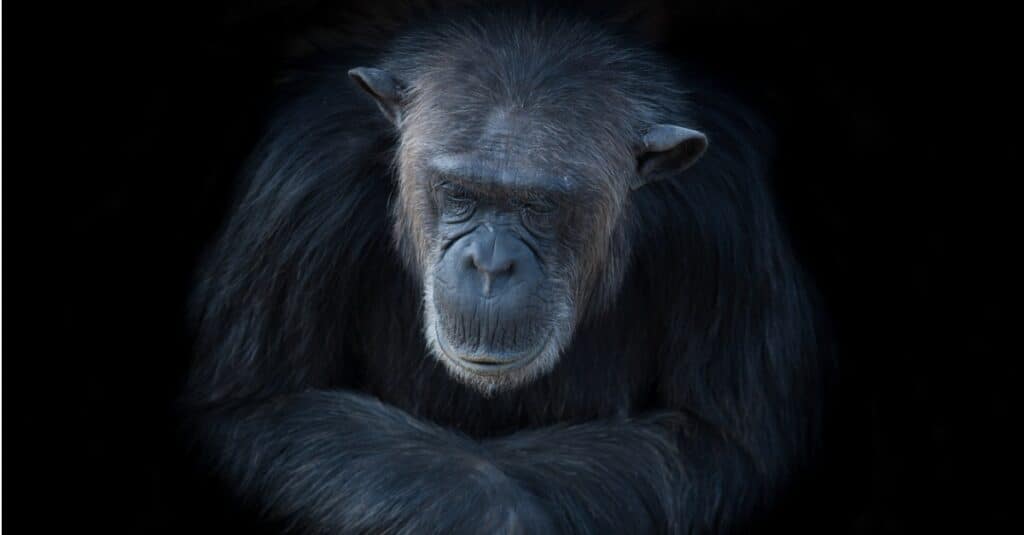
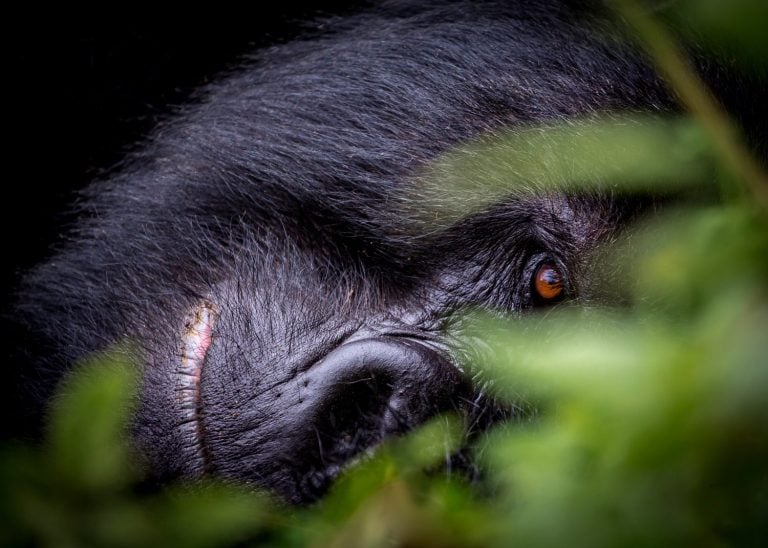
Wild chimpanzees face multiple threats that affect their life expectancy.
©iStock.com/herbertlewald
Chimpanzees face a variety of serious threats in the wild that are driving them toward extinction. Habitat loss due to deforestation, agriculture, and human settlement is one of the most significant dangers affecting chimps, limiting their access to food and shelter. They are also targeted by poachers for bushmeat and the exotic pet trade. Infectious diseases, sometimes transmitted from humans, pose a growing threat to wild populations. Combined, these pressures have led to steep population declines.
According to the IUCN Red List, the general chimpanzee population is classified as Endangered, while the Western chimpanzee (Pan troglodytes verus) is listed as Critically Endangered, facing an extremely high risk of extinction in the wild
How does the Chimpanzee Lifespan Compare to Other Primates?
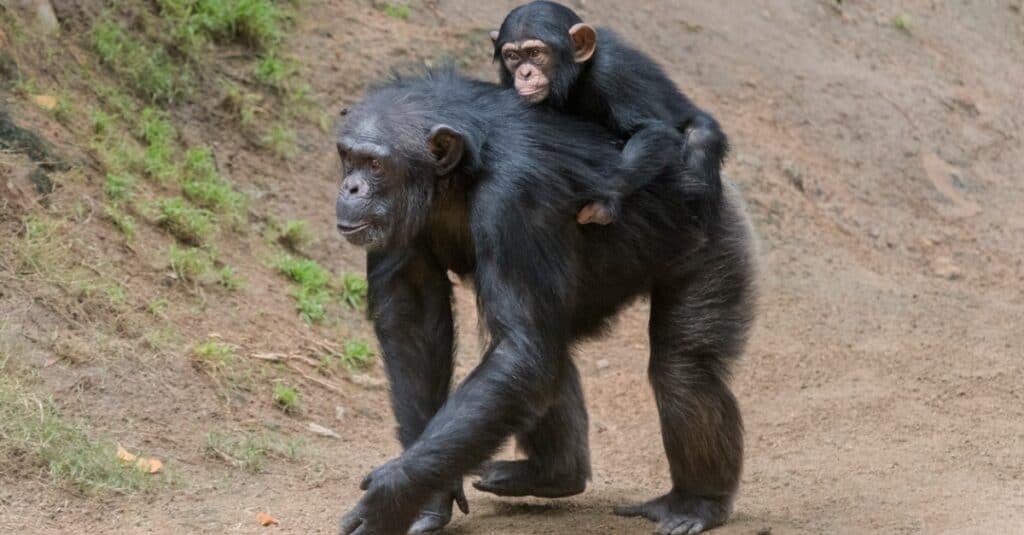
A baby chimpanzee on its mother’s back.
©iStock.com/JeannetteKatzir
Primates exhibit a wide range of lifespans, which vary significantly across species and between wild and captive environments. Smaller primates, such as mouse lemurs, typically have shorter lifespans, often living only 5 to 10 years. Medium-sized primates like capuchin monkeys may live up to 25 years in the wild and even longer—into their 40s—in captivity.
Great apes, including gorillas, orangutans, and chimpanzees, generally have the longest lifespans among primates. In the wild, these species often live into their 30s or 40s, while in captivity, with access to medical care and consistent nutrition, they can live well into their 50s or beyond.
Humans, as the longest-living primates, regularly reach lifespans of 70 to 100 years, depending on healthcare, lifestyle, and genetics. These differences in lifespan reflect both biological factors, such as size and metabolism, and external factors, including environmental conditions and quality of care.
The oldest human on record is Jeanne Calment, who was 122 years old when she passed away, a record that remains officially recognized as of 2025.