
Quick Take
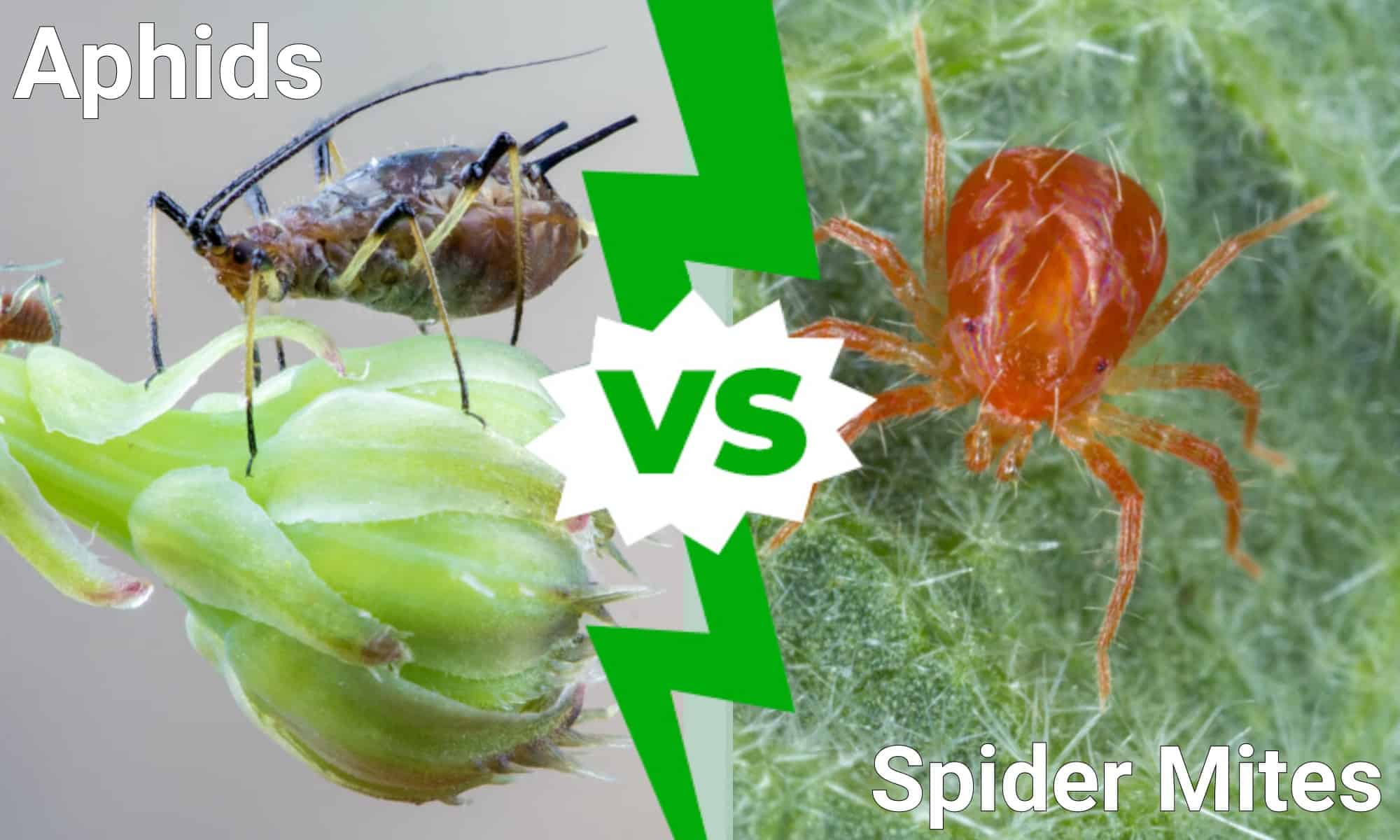
- Aphids are insects, while spider mites are arachnids.
- Aphids excrete a sticky, sugary residue on plants called honeydew.
- Spider mites are significantly smaller than aphids.
Both aphids and spider mites are pests that invade greenhouses, gardens, crops, and even potted plants. They cluster together in large groups and can be seen on the leaves and stems. However, their small size makes it understandably difficult to tell the difference between these two pests. With around 5,000 species of aphids, which are classified as insects, in the family Aphididae and over 1,200 species of spider mites, which are arachnids, in the family Tetranychidae. This comparison focuses on general differences between these two groups. The primary differences are in their appearance, the damage they cause, and the residue these pests leave behind. Understanding the differences between aphids and spider mites can help determine how to successfully eradicate them. Continue reading to learn more about these pests and discover what sets them apart.
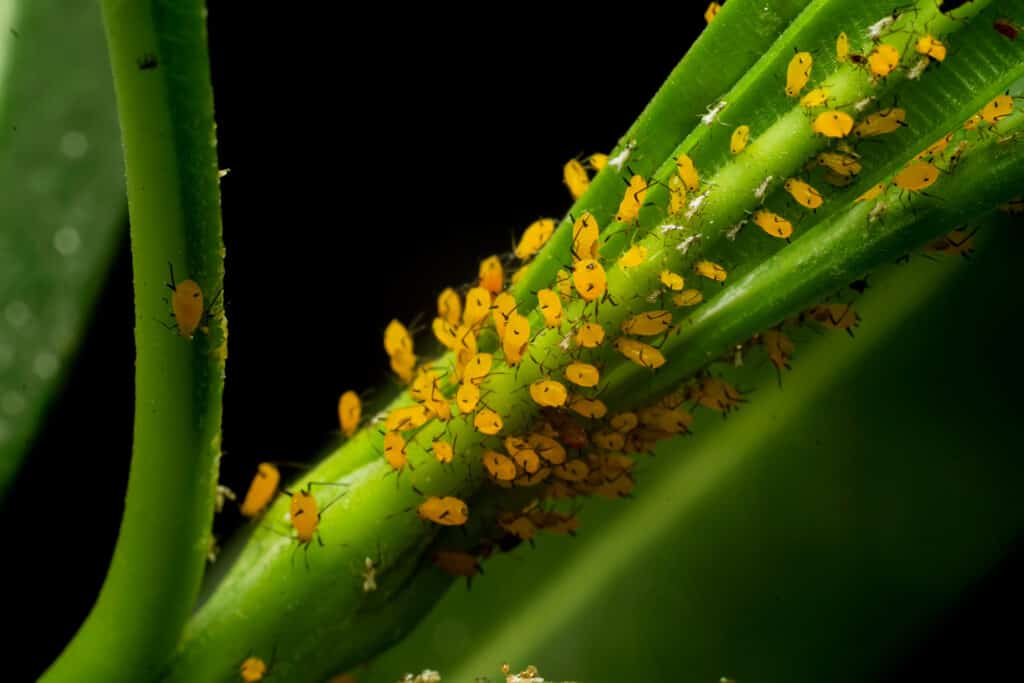
Aphids cause damage to plants by sucking out the sap.
©Goodly Pixels/Shutterstock.com
What Do Aphids and Spider Mites Look like?
The most noticeable difference between aphids and spider mites is their appearance. Aphids have six legs, antennae, and a pear-shaped body with a narrow head. They are one-sixteenth to one-eighth inch long, and their colors can vary: green, white, brown, black, pink, yellow, red, or grey.
Aphids have two cornicles (tail-like extensions) at the end of their bodies. Additionally, some aphid species have wings, allowing them to travel easily between plants.
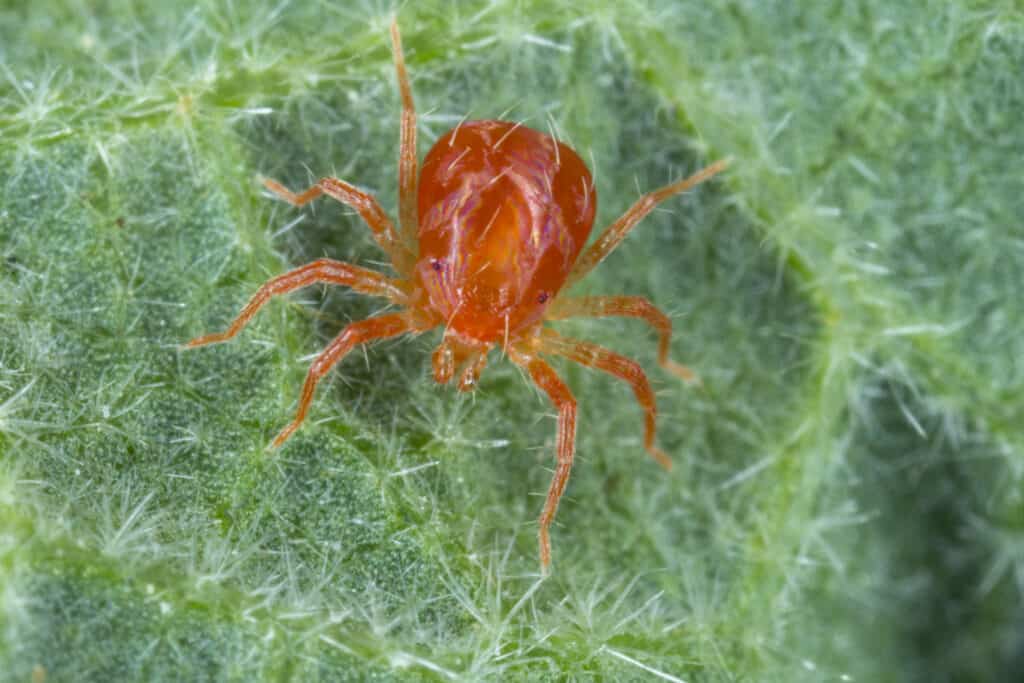
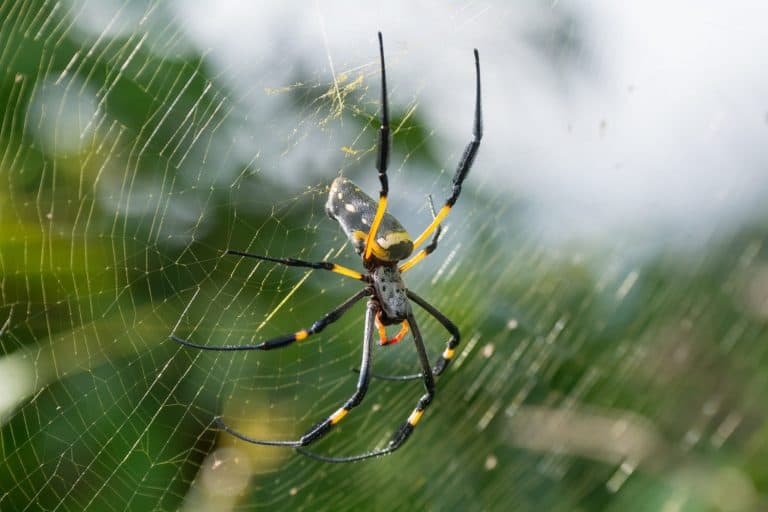
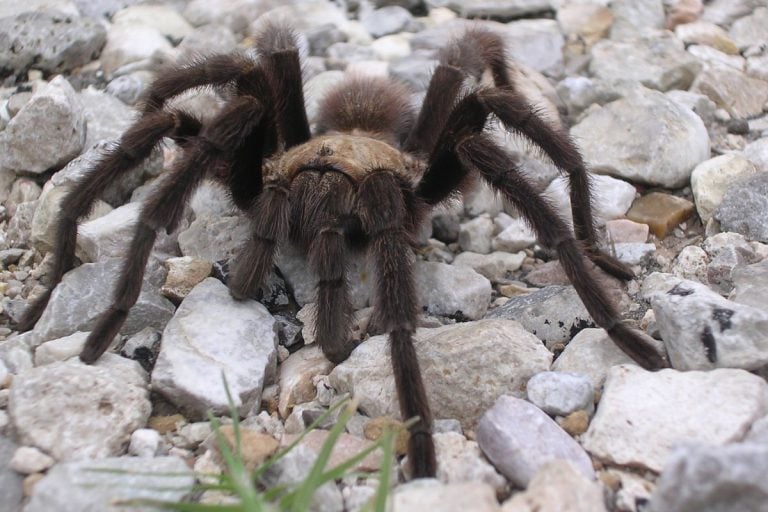
Spider mites are arachnids, so they have eight legs.
©Tomasz Klejdsz/Shutterstock.com
In comparison, spider mites have eight legs but lack antennae and a tail. They are also difficult to see with the naked eye, averaging around one-fiftieth of an inch in length. They have an oval-shaped body with a wide midsection and are often reddish-brown, but can also be yellow, green, orange, brown, or red. Spider mites do not have wings and cannot fly. However, they are able to travel using a process called ballooning. Spider mites release silken threads that catch air currents and carry them to other plants.
Damage
Aphids can be found on the tops and undersides of leaves, flower buds, stems, and the tips of new growth. They use their piercing-sucking mouthparts to extract sap from tender leaves. This can cause the leaves to yellow, wilt, curl, or become misshapen. It can also stunt the plant’s growth.
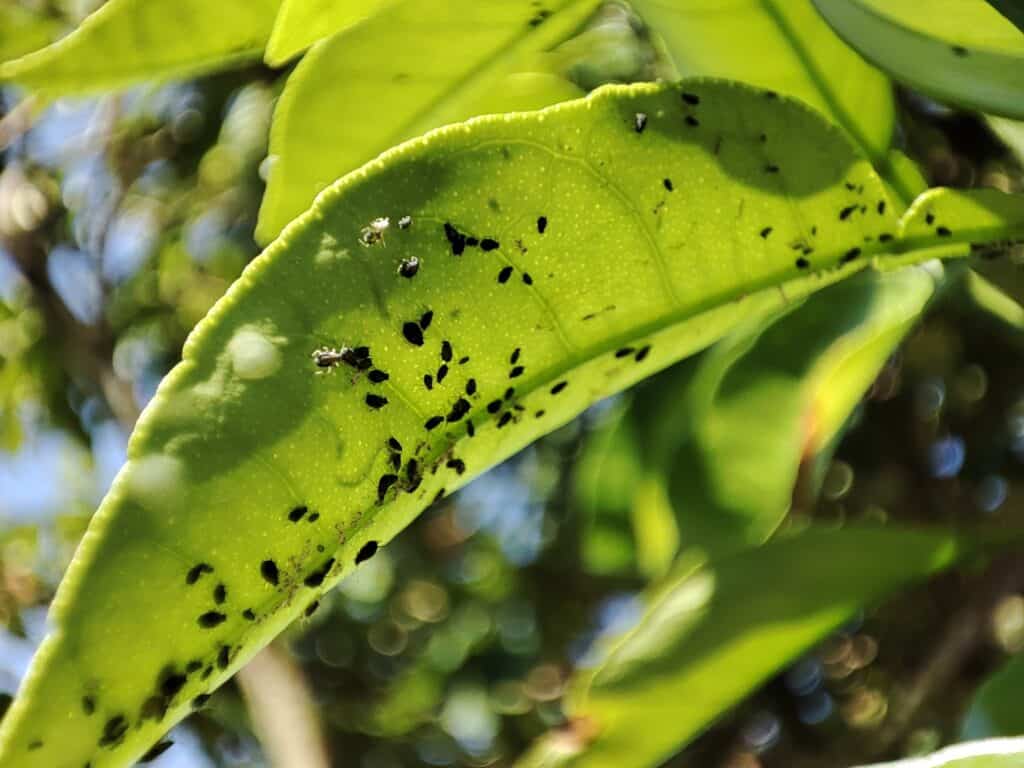
Aphids don’t just attack the topsides of leaves, so it’s important to check the undersides as well.
©jamaludinyusuppp/Shutterstock.com
A severe infestation can significantly weaken plants or cause them to wilt and die. Aphids can also transmit plant viruses, acting as major vectors, spreading hundreds of viral species between plants while feeding on phloem sap. Aphids can also transmit plant viruses, acting as major vectors that spread hundreds of viral species between plants as they feed on phloem sap.
Spider mites are generally found on the undersides of leaves. They use their needle-like mouthparts to pierce plant tissue and extract the contents of individual plant cells. This feeding causes stippling, which appears as tiny yellow or white spots on the leaves. They can also cause leaves to turn yellowish or become bronzed. If left unchecked, spider mite infestations can lead to a total loss of plant vigor and eventual death.
What Type of Residue Do Aphids and Spider Mites Leave Behind?
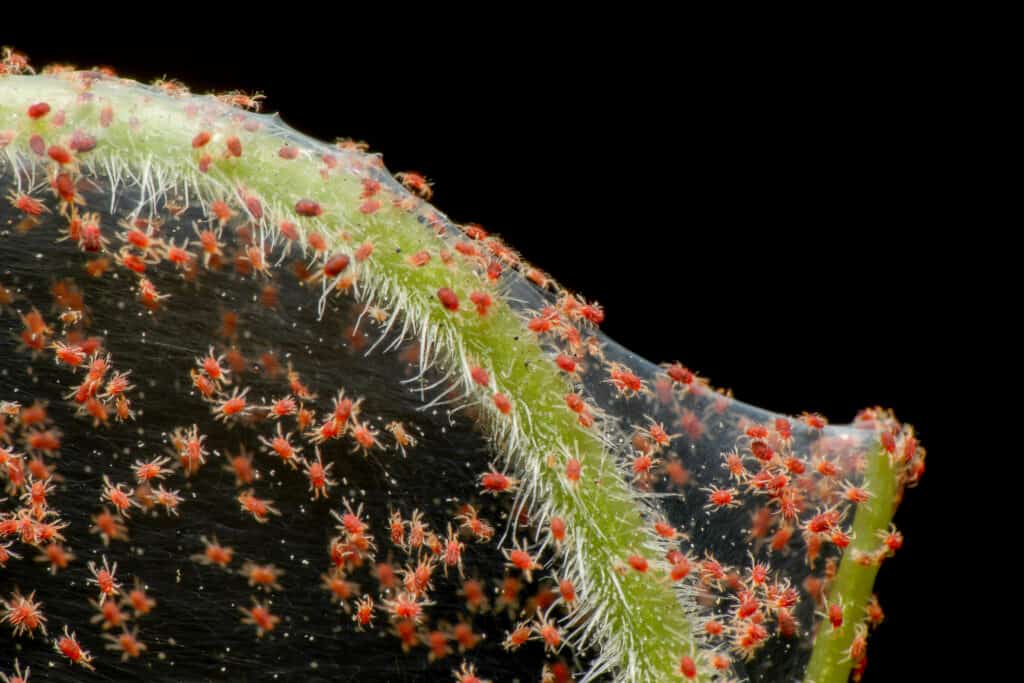
Spider mites leave a fine, white webbing on plants.
©BirdShutterB/Shutterstock.com
Aphids excrete a sticky, sugary residue on plants called honeydew. The honeydew may attract ants, which offer the aphids protection from their natural predators, such as ladybugs. The honeydew also provides an environment for a black fungus called sooty mold to grow. This mold blocks sunlight, further weakening the plant.
Spider mites leave a fine, white webbing behind. It starts on the undersides of leaves but can eventually cover the rest of the plant in severe infestations. Spider mites can also leave behind what appears to be a layer of dust, which consists of shed exoskeletons and waste products.
How to Eliminate Aphids and Spider Mites
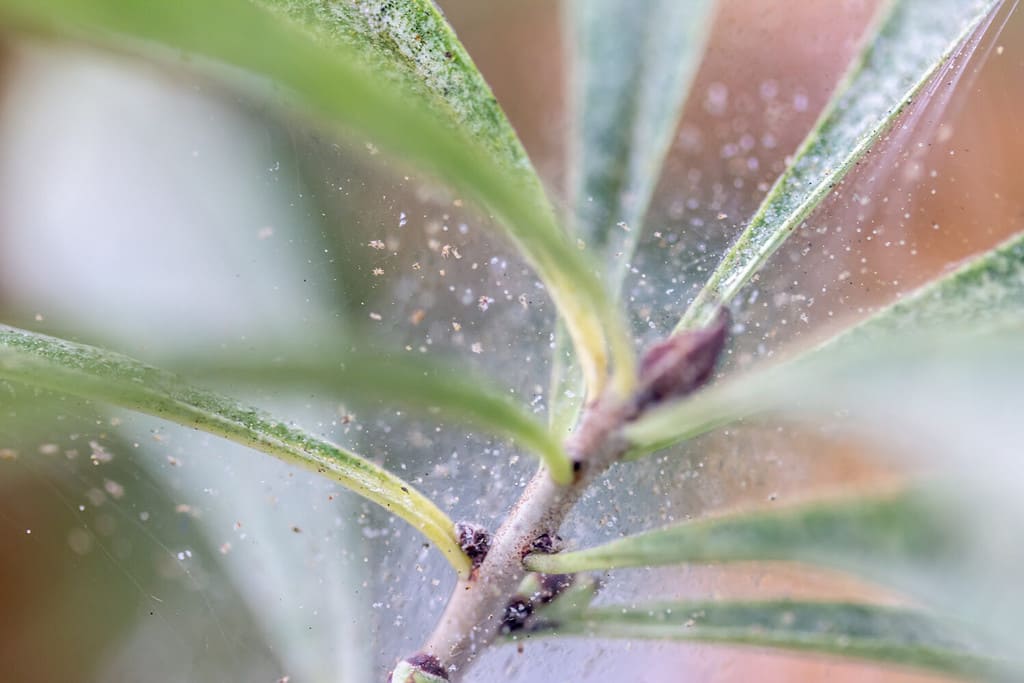
You can spray the leaves of your plant with water to wash off spider mites and webbing.
©Robert Lessmann/Shutterstock.com
If you suspect your plants have been invaded by spider mites or aphids, here are some steps you can take to get rid of them.
How to Get Rid of Aphids
- Spray cold water on the infected leaves several times throughout the day. You can use a spray bottle and keep the water in the fridge between each spray.
- You can use horticultural oils, neem oil, or insecticidal soaps on the leaves of each plant. These products, available at local plant nurseries, help prevent aphids from infesting the plant.
- You can also mix one teaspoon of dish soap with water in a spray bottle and apply it to plants that are not intended for consumption.
- For severe infestations, consider using a targeted insecticide labeled for aphid control. Always select products that minimize harm to beneficial insects and pollinators.
How to Get Rid of Spider Mites
- Introduce natural predators to the plants, like ladybugs and other predatory mites, to control spider mites.
- Isolate the affected plants from others, as spider mites can travel via webbing and ballooning between different plants.
- Apply insecticidal soaps containing potassium salts of fatty acids, which are effective against spider mites. If infestations persist after using soaps or horticultural oils, use a miticide.
- Neem oil can be applied to the affected leaves to deter spider mites.
- Spray the leaves of the plant with water to wash off spider mites and webbing.