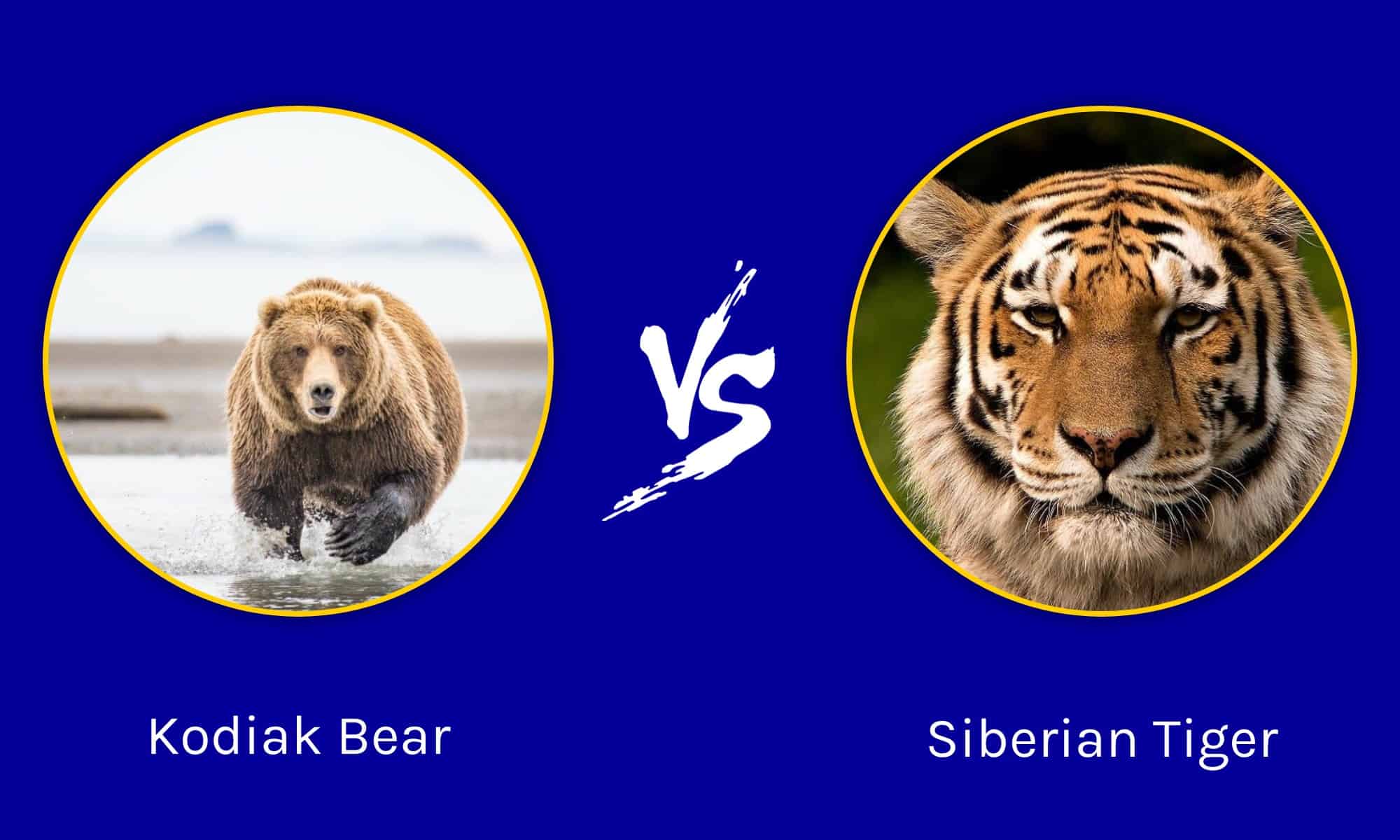

Hypothetical fights between large, dangerous mammals are always exciting. We’ve taken a few looks at what happens when the world’s largest feline encounters various species of bears. So, what happens when the biggest tiger subspecies goes up against the second-largest bear species? That’s a good question, and one that we’re going to explore in this article. We’ll pit a Kodiak bear against a Siberian tiger, show you which animal has the greatest advantages in a fight, and then determine which of the two would survive a conflict.
What Are Key Differences Between a Kodiak Bear and a Siberian Tiger?

Siberian tigers are large and heavily muscled, while Kodiak bears are massive and thickly built.
©Volodymyr Burdiak/Shutterstock.com
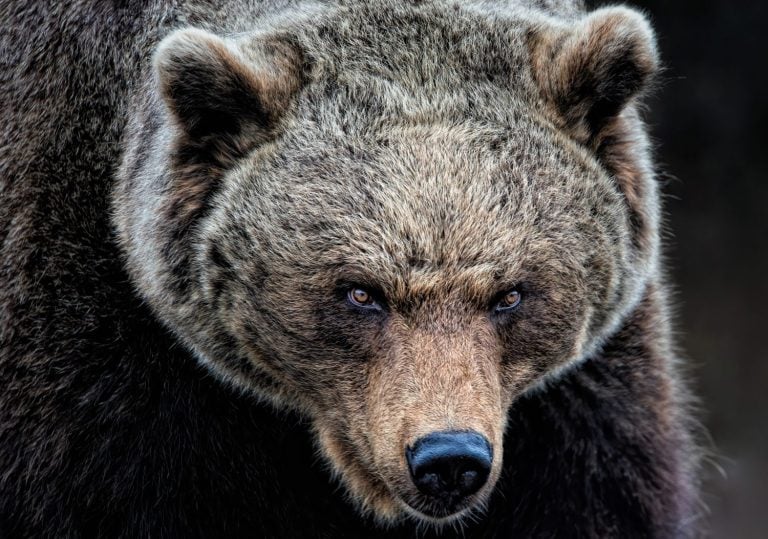
The Kodiak bear (Ursus arctos middendorffi) is a type of brown bear that lives exclusively on the Kodiak Archipelago, a group of islands off the coast of Alaska. They are omnivores that eat more vegetation than meat. Kodiak bears are typically solitary, but the limited space and abundant food sources on the islands sometimes force them into large groups at feeding sites. This increased contact has led them to develop complex social behaviors and communication to avoid conflict. Their lifespan is 20-25 years in the wild.
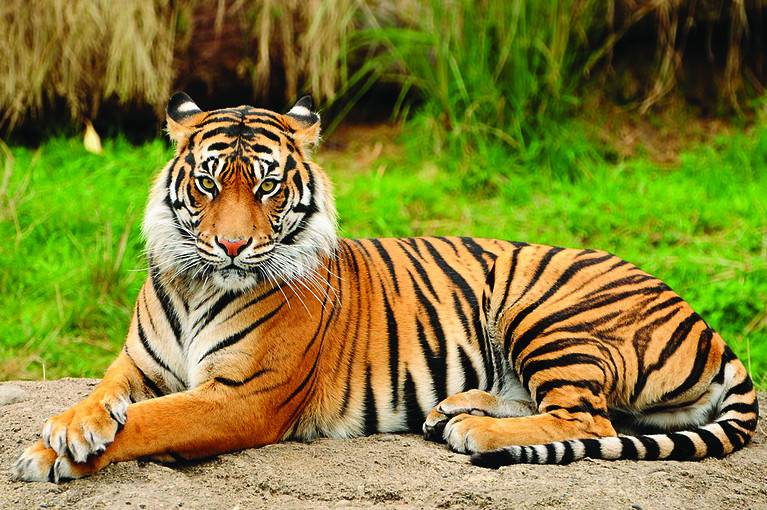
The Siberian tiger (Panthera tigris altaica), also known as the Amur tiger, is a carnivorous animal that primarily eats hoofed mammals. It has to hunt over a large area to find prey because of its snowy environment. They are primarily found in the Sikhote-Alin mountain region of Primorye, Russia, with much smaller and fragmented populations in northeastern China. The average lifespan of the Siberian tiger, the most solitary of all tiger subspecies, is 16-18 years in the wild.
The most significant differences between a Kodiak bear and a Siberian tiger are found in their physical appearance and size. The Siberian tiger is a large, heavily muscled quadrupedal feline that weighs up to 770 pounds, measures up to 11 feet long, including its tail, and stands about 3.5 feet tall.
The Kodiak bear is a massive, primarily quadrupedal mammal that can weigh over 1,500 pounds, stand nearly 5 feet tall at the shoulder, and reach lengths of up to 8 feet. Its large, thickly built body provides significant protection from harm.
The size difference and the fact that the Kodiak bear can stand on its hind legs are significant factors that could determine the victor of this hypothetical brawl. Five key factors that will determine which animal would win in a fight are size, speed, defense, offensive capabilities, and behavior.
Size
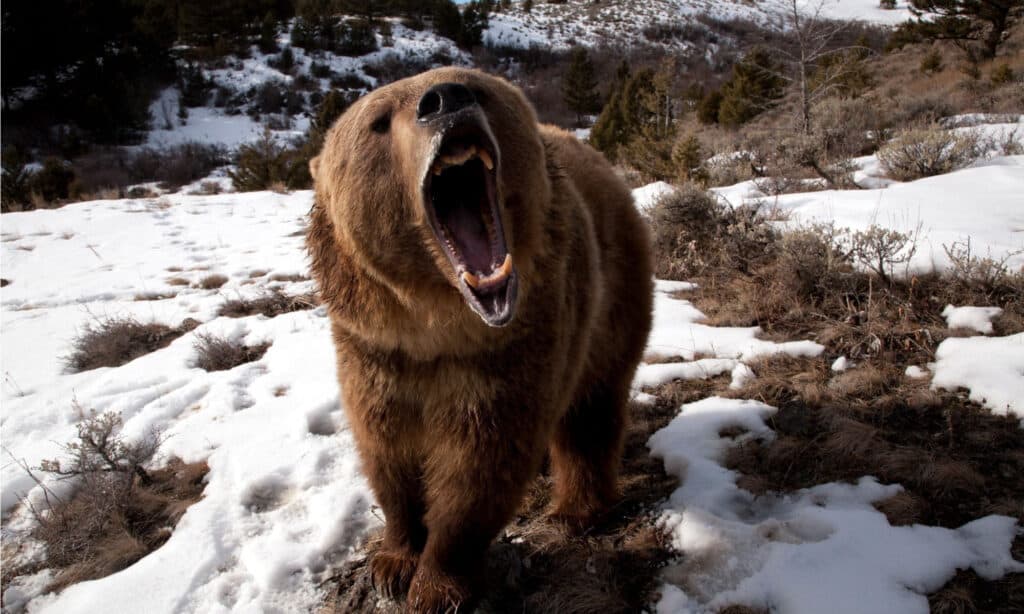
Kodiak bears are apex predators, as are the Siberian tigers.
©Falade Adewale/Shutterstock.com
At its largest, a Kodiak bear is much larger than a Siberian tiger. The average male Kodiak bear can weigh upwards of 1,300 pounds but the largest Kodiak bear weighed 2,130 pounds. Moreover, these bears can stand up almost 5 feet at the shoulder while on all fours, and they can grow upwards of 8 feet long or more!
Although Siberian tigers are the largest tiger species, they only tip the scales at 770 pounds at their greatest average. They can reach up to 11 feet in length, although much of that length is due to their tail. Also, they stand about 2.5 to 3.5 feet tall at the shoulder.
The Kodiak bear has a massive size advantage against the Siberian tiger.
Speed and Movement
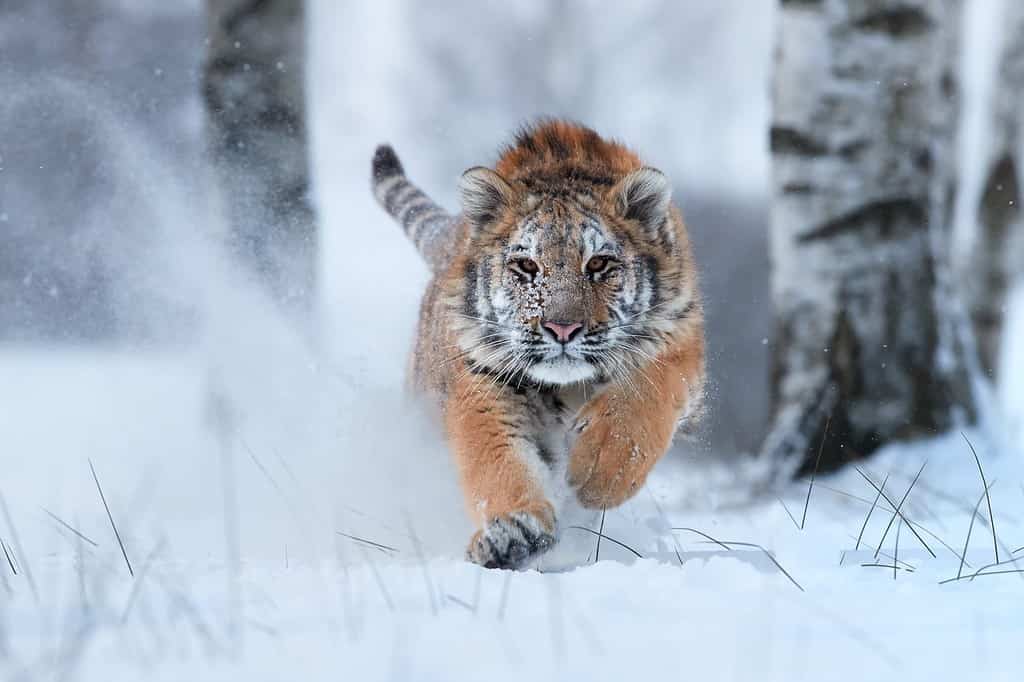
Siberian tigers can run faster than Kodiak bears.
©Martin Mecnarowski/Shutterstock.com
Siberian tigers are faster than Kodiak bears by a fair margin. The maximum speed achieved by a Kodiak bear on flat ground is about 30 to 35 miles per hour (mph), similar to other large brown bears. They are fast enough to chase down a wide variety of prey, and they easily outpace the fastest humans.
Siberian tigers can reach speeds of up to 40 mph in short bursts when running at their top speed. However, they can only maintain this speed for short bursts. Overall, they are still much faster than Kodiak bears and are more likely to initiate an attack.
Siberian tigers have a speed advantage.
Defenses
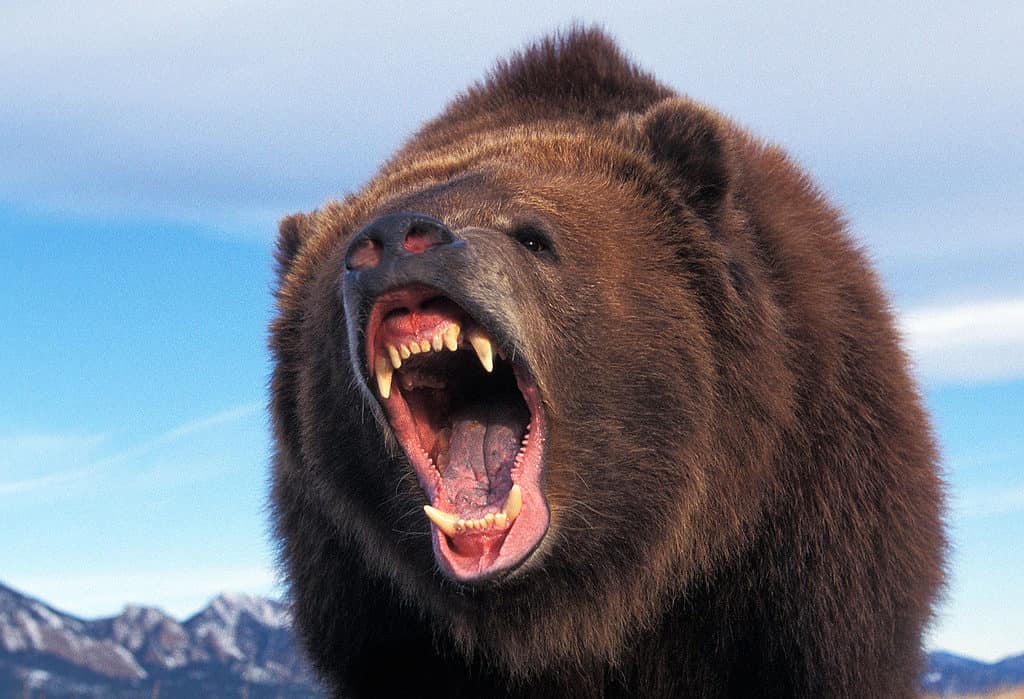
Kodiak bears have sharp teeth and powerful jaws.
©slowmotiongli/Shutterstock.com
A Siberian tiger has some defenses that it can use to ward off harm. For example, a Siberian tiger has its speed and massive size to scare off predators, as well as the camouflage from its unique colors and patterns. They can blend into their surroundings, and they know how to use long grass to hide.
Kodiak bears have more potent defenses. They have thick skin as well as a thick layer of muscle and fat that protects their vital areas, like the neck and vital organs. Their sheer size also helps protect them, and their ability to stand on their hind legs can intimidate other animals and force them to engage in close combat.
Kodiak bears have stronger defenses than Siberian tigers in a physical sense, but they cannot hide as well as the big cats.
Offensive Capabilities
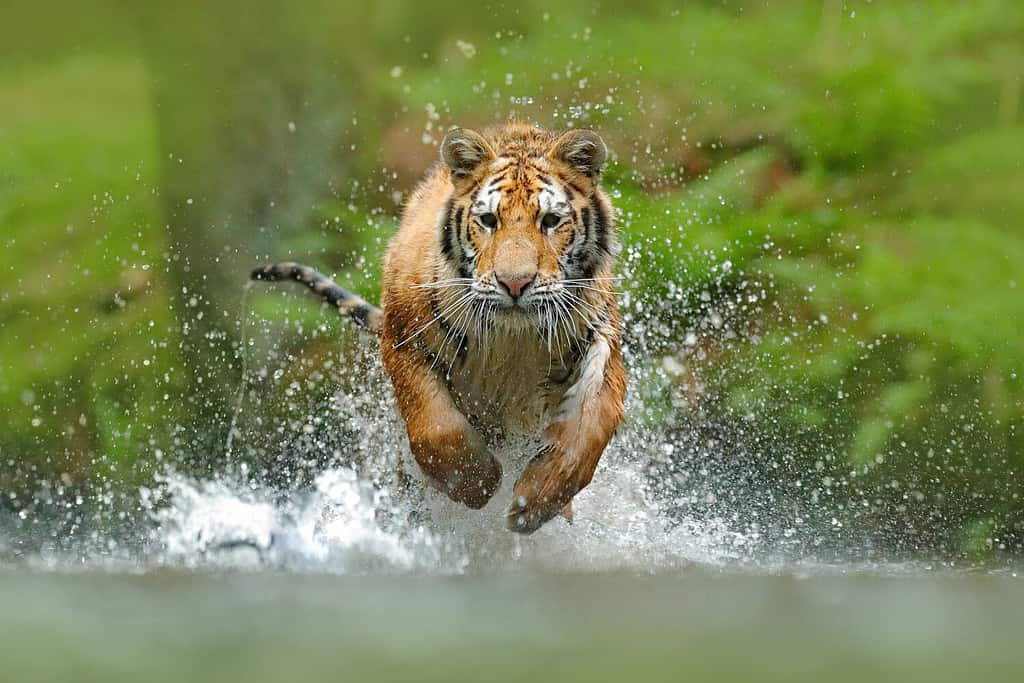
Siberian tigers are not inherently aggressive.
©Ondrej Prosicky/Shutterstock.com
Both Kodiak bears and Siberian tigers are effective killers. Kodiak bears have a very strong bite that is probably similar to a grizzly bear at 975 pounds per square inch (PSI), with enough power to break bones. They have teeth that measure 2 inches long or more, enough to puncture deep into prey.
Kodiak bears possess the sheer strength necessary to overwhelm their prey, often using their massive weight and power to deliver a crushing blow and secure a kill. Their raw power allows them to effectively knock down and maul their targets.
Siberian tigers, masters of the hunt, have a bite force of about 1,050 PSI, canine teeth up to 4 inches long, and 4-inch sharp claws; their jaws are strong enough to latch onto prey and suffocate it if its neck is not broken outright.
Siberian tigers have superior offensive powers.
Predatory Behavior
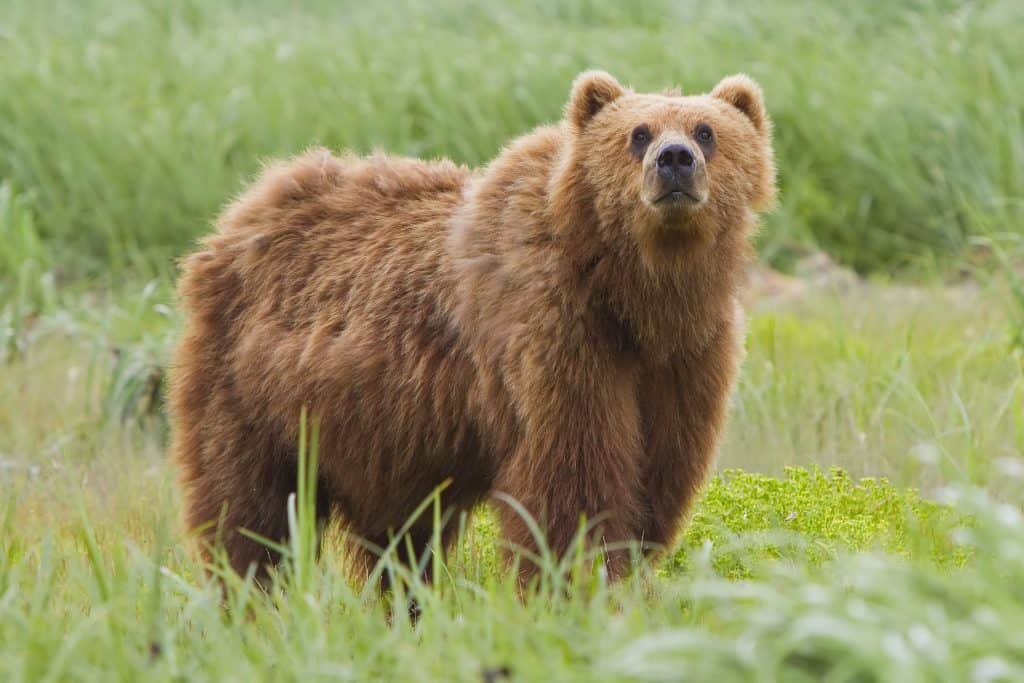
Kodiak bears are the largest brown bear subspecies.
Kodiak bears are opportunistic omnivores, not solely predators. They are versatile foragers who will hunt, scavenge, and eat anything from fish and berries to carrion and garbage when the opportunity arises.
Siberian tigers are masterful ambush predators. They lie in wait for prey to come by and attack them from cover. They use a burst of speed to catch prey off-guard. Next, they bite their prey on the neck and drag it to the ground, often tearing major blood vessels or breaking the neck in the process.
Siberian tigers are deadlier predators than Kodiak bears.
Who Would Win in a Fight Between a Kodiak Bear and a Siberian Tiger?
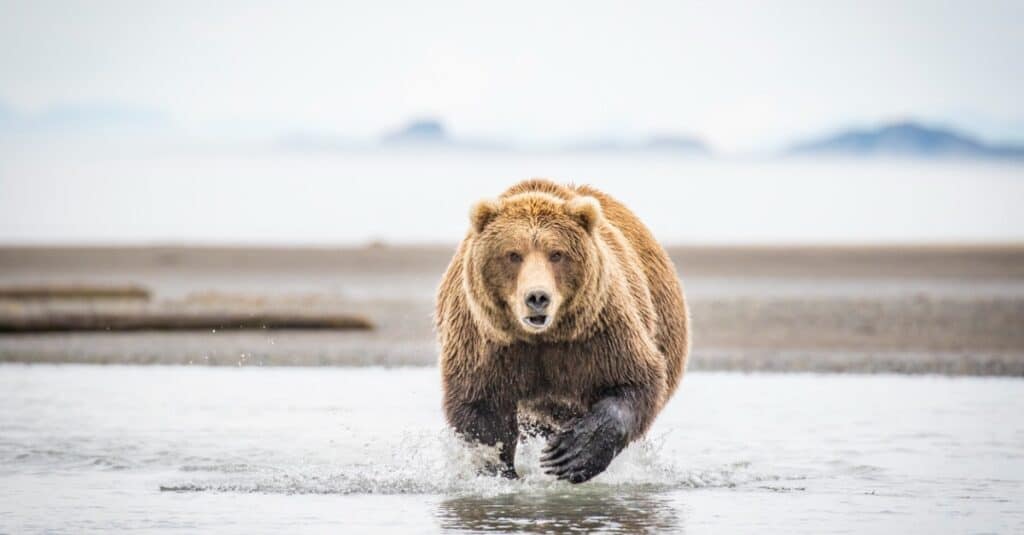
Kodiak bear could use its sheer size to win the fight with a Siberian tiger.
©iStock.com/Jess Bray
A Kodiak bear would win a fight against a Siberian tiger. We examined a Siberian tiger vs grizzly bear fight and initially awarded the win to the tiger. However, the size difference between a Siberian tiger and a Kodiak bear plays a much larger role in this case.
The Kodiak bear can be twice as heavy, longer in body, and much taller than the Siberian tiger. This mammal has a huge body, thick fur, and all sorts of protection in its body to make the fight last a long time.
If the Siberian tiger were lucky and landed an ambush blow, it could defeat this bear. However, its chances of doing so are small given the Kodiak bear’s thick and powerful neck. Without an ambush kill, this becomes a battle of size and power. While the tiger has bigger teeth and a stronger bite, it will also take a lot of damage from the Kodiak bear.
The large bear would likely rear up on its hind legs, lure the tiger closer, and then use its full weight and strength to overpower and maul the tiger.
Either way, this would be a drawn-out and bloody affair. Yet, size wins in the wild, and that edge clearly belongs to the bear.