
D
Species Profile

Dachsador

Canis lupus familiaris

Big heart, low chassis.
UrbanSidhe / CC BY-SA 3.0

Dachsador Distribution

Click a location to explore more animals from that region

Origin Location

This map shows the native origin of the Dachsador. As a domesticated species, they are now found worldwide.

Loading map...

Size Comparison

Human 5'8"
Dachsador 1 ft 1 in

Dachsador stands at 20% of average human height.

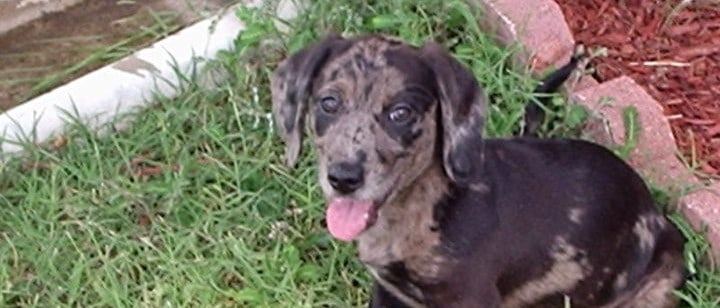
Dachsador sitting on grass

At a Glance

Domesticated
Also Known As Dachshund–Lab mix, Dachshund Lab mix, Labrador–Dachshund mix, Labshund
Diet Omnivore
Activity Diurnal+
Lifespan 5 years
Weight 25 lbs
Status Not Evaluated
Did You Know?

Not a standardized breed: "Dachsador" is a popular nickname for a Dachshund and Labrador Retriever cross, so looks and size can vary a lot.

Scientific Classification

A mixed-breed domestic dog produced by crossing a Dachshund with a Labrador Retriever. Traits vary widely, but many inherit a longer body/shorter legs than a typical Lab and a friendly, active companion temperament.

Kingdom
Animalia
Phylum
Chordata
Class
Mammalia
Order
Carnivora
Family
Canidae
Genus
Canis
Species
Canis lupus

Distinguishing Features

  • Designer cross of Dachshund × Labrador Retriever (variable appearance)
  • Often medium-small to medium size; may show elongated body and relatively shorter legs
  • Coat typically short to medium; color can reflect Labrador and/or Dachshund patterns
  • Temperament often energetic and social; may retain Dachshund digging/scenting tendencies

Physical Measurements

Males and females differ in size

Height
♂ 1 ft 1 in (9 in – 1 ft 4 in)
♀ 1 ft 3 in (10 in – 1 ft 8 in)
Length
♂ 2 ft 6 in (1 ft 12 in – 2 ft 11 in)
♀ 2 ft 7 in (1 ft 12 in – 3 ft 1 in)
Weight
♂ 44 lbs (22 lbs – 66 lbs)
♀ 40 lbs (22 lbs – 60 lbs)
Tail Length
♂ 9 in (7 in – 12 in)
♀ 10 in (7 in – 1 ft 2 in)
Top Speed
22 mph
Moderate speed, short stride

Appearance

Primary Colors
Secondary Colors
Skin Type Typical dog skin with short-to-medium double coat (often Lab-like with undercoat) or a short, close coat; sometimes slight feathering. Skin usually pigmented to match coat; grooming and parasite checks keep it healthy.
Distinctive Features
  • Mixed-breed domestic dog created by crossing a Dachshund with a Labrador Retriever; appearance and temperament can vary widely even within the same litter.
  • Often distinguished from the base domestic dog "average" by a frequent Dachshund-influenced silhouette: longer back relative to height and shorter legs than a typical Labrador, paired with a sturdier Lab-like chest/neck.
  • Head and muzzle can range from Lab-broad to more tapered; ears are commonly medium-length and floppy (often Lab-like), sometimes set slightly lower (Dachshund influence).
  • Tail typically medium to long and thick (Lab-like "otter" tendency), though carriage may be lower if legs are shorter.
  • Coat is commonly short and dense with potential undercoat; seasonal shedding can be moderate to heavy if the Lab double coat is inherited.
  • Movement may show a lower ground clearance and longer body swing; maintaining lean body condition helps protect joints and back.
  • Dachsadors with long backs and short legs have higher risk of IVDD and back problems; they may also get hip or elbow dysplasia (Lab side), obesity, ear infections (floppy ears), and dental crowding.
  • Care requirements: prioritize controlled, low-impact exercise and core/strength conditioning; avoid repetitive high jumps and uncontrolled stair use in long-backed individuals; use ramps where appropriate and a harness rather than a collar to reduce neck/back strain.
  • Regular brushing (more during shedding), check and clean floppy ears, trim nails, brush teeth, and feed measured portions on a steady diet to avoid extra weight that hurts the back and joints.
  • Temperament is commonly friendly, social, and eager to engage (often Lab-like), but can include Dachshund-like independence or vocal alerting; early training and structured enrichment help channel energy and reduce nuisance barking.

Sexual Dimorphism

Sexual dimorphism in Dachsadors is usually mild and can vary. Males are often a bit larger and heavier with broader heads and necks. Females are usually slightly smaller and more refined. How strong this is depends on which parent's traits they inherit.

♂
  • Often slightly larger overall with broader head and thicker neck/shoulders.
  • May carry more muscle mass and a deeper chest, especially with stronger Labrador influence.
♀
  • Often slightly smaller/lighter with a more streamlined build.
  • May show a narrower head and slightly finer bone structure, though variability is high.

Did You Know?

Not a standardized breed: "Dachsador" is a popular nickname for a Dachshund and Labrador Retriever cross, so looks and size can vary a lot.

Many inherit a "low rider" outline-shorter legs and a longer back than the base species' typical domestic dog shape, reflecting Dachshund ancestry.

Coat can range from Lab-like short and dense to slightly longer; common colors include black, chocolate, yellow/cream, and dapple-like patterns if Dachshund genes contribute.

Temperament often blends the Labrador's sociability with the Dachshund's bold, curious streak-some are especially vocal watchdogs.

Scent-driven instincts can be strong: the Dachshund's hunting heritage plus the Lab's retriever drive may equal a dog that loves tracking smells and carrying toys.

Because it's a mixed cross, two littermates can look quite different-one more "mini Lab," another more "big Dachshund."

Unique Adaptations

  • Conformation variability: many develop a slightly elongated spine and shorter limbs than a typical Labrador, which can affect biomechanics (jumping/stairs) compared with the base domestic dog average.
  • Often combines athletic endurance (Lab) with compact leverage (Dachshund), making them agile in tight spaces but not always built for repeated high-impact leaps.
  • Some inherit strong "oral" tendencies (carrying/chewing), so providing safe chew outlets and structured retrieval games can channel the behavior.
  • Potential for powerful scent focus; harness walking and scent games can work with this trait rather than against it.

Interesting Behaviors

  • Nose-to-ground "investigation walks," pausing often to follow scent trails (common in many domestic dogs, amplified by hound ancestry).
  • Toy-carrying and "presenting" objects to people, echoing retriever tendencies-sometimes paired with possessive "treasure" behavior.
  • Burrowing into blankets or squeezing into cozy dens, a classic Dachshund-style comfort habit.
  • Watchful alert barking at door sounds or passing strangers, especially in individuals leaning toward Dachshund temperament.
  • High enthusiasm for water or puddles in some individuals (Lab influence), while others prefer dry, den-like resting spots.
  • Stubborn streaks during training; responds best to short sessions, clear cues, and food/toy reinforcement.

Cultural Significance

The Dachsador (Dachshund × Labrador Retriever), a designer mix of Canis lupus familiaris, blends the Lab's friendly family nature with the Dachshund's long body and bold personality, from breeding for retrieving, scenting, and burrow work, now seen as fetching, sniffing, and making dens at home.

Myths & Legends

Dachshunds are tied to German hunting lore and nickname traditions: the breed name literally means "badger dog," and old hunting tales celebrate their bravery entering badger setts despite their small size.

In British country-house stories, Labradors appear as steady gun dogs who were trusted to bring shot game back gently. These tales helped build the Lab's image as loyal and soft-mouthed.

Old stories about "black dogs" as ghostly omens exist across the British Isles (for example, the Black Shuck). Though not about Labradors, black retriever-type dogs are often included in these old rural tales.

Stories about designer mixes like the Dachsador spread in late 20th and early 21st century pet culture through breeders, rescues, and media. They tell a modern legend of combining the 'best' traits, though outcomes vary.

Conservation Status

NE Not Evaluated

Has not yet been evaluated against the criteria.

Population Stable

Life Cycle

Birth 5 pups
Lifespan 5 years

Lifespan

In the Wild
2–10 years
In Captivity
10–16 years

Reproduction

Mating System Polygynandry
Social Structure Managed Domestic
Breeding Pattern Transient
Fertilization Internal Fertilization
Birth Type Internal_fertilization

Canis lupus familiaris (domestic dog) mates by internal fertilization with a mating "tie"; pregnancy is about 63 days. Dogs show polygynandry with no lasting pair bond. Humans usually control mating; Dachsadors have no unique system.

Behavior & Ecology

Social Pack Group: 4
Activity Diurnal, Cathemeral, Crepuscular
Diet Omnivore Meat-forward complete diet (high-quality kibble or wet food) with poultry or fish as the primary protein (often highly motivating, especially for Lab-leaning appetites).

Temperament

Breed-distinguishing blend: often combines Labrador sociability and food/play motivation with Dachshund boldness, alertness, and occasional stubborn independence; expression varies strongly by which parent traits dominate.
HUBS (common across many Dachsadors): people-oriented companion behavior, strong reinforcement responsiveness (especially food), and a tendency to shadow family members; variation includes some individuals being more reserved with strangers (Dachshund-leaning) versus broadly friendly (Lab-leaning).
Generally affiliative with familiar dogs; may show selective reactivity to unfamiliar dogs if Dachshund traits (guardy/terrier-like persistence) are pronounced-early socialization is a key moderator.
Prey/chase drive can be moderate to high (Dachshund influence); may pursue small animals and engage in digging or scent-tracking games; reliable recall often requires structured training.
Play style often energetic and mouthy (Lab influence) but may be lower-to-the-ground with bursts of speed (Dachshund influence); can enjoy retrieving, tug, and scent games.
Trainability: typically good with positive reinforcement; may show occasional stubbornness or distraction by scents. Short, varied sessions prevent disengagement.
Attachment profile: many develop strong bonds and can be prone to separation distress (vocalizing, pacing, chewing) if under-exercised or under-enriched.
Health-related behavior considerations (breed-specific risks): potential long back/short legs can increase susceptibility to intervertebral disc disease (IVDD)-avoid repetitive jumping, uncontrolled stairs, and rough play that twists the spine.
Watch for obesity (they love food), hip and elbow dysplasia (Lab lines), ear infections (droopy ears), crowded teeth (small jaws), and possible bloat in deep chests. Control weight and get regular vet checks.
Daily exercise and mental work (retrieving, scent puzzles, obedience) cut barking and digging. Use a harness, keep nails short for traction and spine safety, and clean floppy ears regularly.
Good family dog potential when supervised with children; because body proportions can increase injury risk, teach calm handling and prevent children from lifting or allowing high-impact jumping.
Alert watchdog tendencies: may bark at novel sounds/visitors; with training, can shift to 'alert then settle' routines.

Communication

Barking Often frequent/alert barking if Dachshund-leaning; excitement barking during play
Whining/whimpering Attention seeking, frustration, separation distress
Growling Play growls; also boundary-setting when uncomfortable
Howling/baying Occasional, more likely if Dachshund scent-hound traits are strong
Yips/squeaks High arousal during play or greeting
Body posture and facial expressions Relaxed vs stiff stance; lip licks/yawns as stress signals
Tail signaling Wag style and height indicating arousal/confidence
Scent marking and investigative sniffing Urine marking; strong environmental sampling
Play bows and chase invitations Social play initiation
Mouthing/bringing objects Retrieve-driven communication; offering toys to engage
Pawing/leaning/licking Affiliative contact-seeking
Eye contact and following behavior Checking-in with handler; social referencing

Habitat

Biomes:
Temperate Forest Temperate Grassland Mediterranean Desert Hot Desert Cold Boreal Forest (Taiga) Tundra Alpine Wetland Freshwater Savanna Tropical Dry Forest Tropical Rainforest +7
Terrain:
Plains Hilly Valley Plateau Mountainous Coastal Island +1
Elevation: Up to 13123 ft 4 in

Ecological Role

Domestic companion omnivore; primarily reliant on humans for nutrition, but can act as a local mesopredator/scavenger if allowed to roam.

human companionship and mental-health support therapy/service potential (trainability, sociability) household alerting/guard deterrence localized rodent/pest control (when hunting occurs) scavenging of food waste (when unmanaged; can also be a nuisance)

Diet Details

Main Prey:
Small rodents Rabbit Squirrels and chipmunks Ground-nesting birds and eggs Fish Invertebrates
Other Foods:
Berries and other fruits Vegetables Grasses Cooked grains and starches Commercial dog kibble ingredients

Human Interaction

Domestication Status

Domesticated

Dachsador (Dachshund × Labrador Retriever), Canis lupus familiaris, is a mixed companion dog made by human crossing, not a kennel-club breed. It often has a long back, short legs or a heavier Labrador build. Temperament mixes friendly trainable Lab traits with Dachshund alertness. Common roles: family pet, exercise partner. Watch for back problems and obesity; provide daily exercise and training.

Danger Level

Low
  • Bites/scratches if fearful, poorly socialized, in pain (notably back pain), or mishandled
  • Knock-down risk for small children/elderly if the dog is large/boisterous (Labrador influence)
  • Zoonotic risks typical of domestic dogs if unvaccinated/untreated (e.g., parasites); mitigated with routine care
  • Nuisance behaviors (barking, chasing) that can lead to conflicts or minor injuries on leash

As a Pet

Suitable as Pet

Legality: Dachsador (Canis lupus familiaris) is usually legal where dogs are allowed but must follow local dog license, leash laws, shots (e.g., rabies), and any breed rules; rentals or HOAs may add limits.

Care Level: Moderate

Purchase Cost: Up to $800
Lifetime Cost: $15,000 - $35,000

Economic Value

Uses:
Companion animal ownership Pet services industry Veterinary and preventive care Training and behavior services Pet retail (food, crates, harnesses, ramps) Informal breeding/adoption markets
Products:
  • Adoption fees or purchase price (if from a breeder/private party)
  • Routine veterinary care (vaccines, parasite prevention, checkups)
  • Spay/neuter services
  • Food and supplements (weight-control diets common)
  • Training classes/private behavior consults
  • Grooming supplies (brushes, shedding tools)
  • Mobility/back-protection items (ramps, supportive harnesses, non-slip flooring aids)
  • Boarding/daycare and pet-sitting services
  • Pet insurance (often valuable due to back/joint risk)

Relationships

Ecological Equivalents 5

Animals that fill a similar ecological role in their ecosystem

Quick Take

  • A Dachsador requires 45 minutes of daily exercise to prevent specific behavioral outcomes.
  • The 30 to 40 pound weight range creates a high risk for intervertebral disc disease.
  • Combining a German badger hunter with a Labrador creates a contradictory work ethic.
  • Frequent vet examinations are required during the puppy stage to identify early paralysis risks.

The Dachsador is a mixed-breed dog believed to have originated during the last few decades. This breed combines the bravery and boldness of the Dachshund with the strong work ethic of the Labrador Retriever. This may seem like an odd mix, since both parent breeds have starkly different origins. The Dachshund is a spunky badger hunter from Germany (the name literally means badger hound or dog) that was originally bred in the 17th Century to find and then flush out prey from its den. In some countries, it’s classified as a type of scent hound. The Labrador Retriever, on the other hand, was originally bred in Newfoundland, Canada, in the 1800s, as a waterfowl retriever and a fisherman’s companion.

The standard term for a mixed dog from two different purebred parents is a “designer dog.” As a designer, the Dachsador has the chance to inherit an array of different traits from both breeds. Most of these dogs will have extremely dense, medium-length hair with a mixture of black, chocolate brown, and even yellow, depending on the coat color of their parents. The muscular body shape tends to be somewhat long, like the Dachshund, with short and stubby legs. And like its two parent breeds, the Dachsador is a loving, loyal companion.

An educational infographic about the Dachsador dog breed, featuring green and tan color schemes with various dog illustrations, health charts, and care instructions.
A 'contradictory' work ethic meets high-stakes health risks in this unique designer mix—find out what it takes to keep a Dachsador healthy. © A-Z Animals

3 Pros And Cons Of Owning A Dachsador

ProsCons
Friendly and Affectionate
The Dachsador likes to make friends and bond with people.
Stubborn
This dog does have a stubborn streak that may make it slightly difficult to train.
Athletic
This dog is an excellent choice for owners who want a fun-loving playmate and exercise companion.
Strong Prey Drive
The Dachsador has the tendency to chase after smaller animals and explore its surroundings.
Intelligent
With a keen intelligence, it can be taught to perform lots of different tricks and tasks.
Weight Gain
This dog does have a tendency to gain weight.

Size And Weight

The Dachsador is a small to medium-sized dog that tends to have a body shape somewhere in between the Dachshund and Labrador Retriever. There are minimal differences in size between males and females.

Height (Male)15 to 25 inches
Height (Female)15 to 25 inches
Weight (Male)30 to 40 pounds
Weight (Female)30 to 40 pounds

Common Health Issues

The Dachsador tends to be a very healthy dog with a lifespan of some 12 to 14 years, but it is difficult to predict exactly which health problems it will inherit from either parent breed. The most common conditions are back pain/weakness, epilepsy, cancer, obesity, and progressive retinal atrophy. Less commonly, there is a chance it will suffer from intervertebral disc disease (a degenerative spine, causing loss of movement and even paralysis) and hip dysplasia (a developmental disorder that causes the hip joint to form incorrectly, causing lameness and limping). Good breeders will attempt to eliminate the risk for hip dysplasia and other inheritable conditions, but some risk will always remain.

Temperament

The Dachsador is a friendly, self-confident, and fun-loving companion with a big, charming personality that forms a deep and lasting bond with its owner. The Dachsador’s traits strike a good balance between being an energetic and athletic dog with a high-intensity motor and a chill house dog that likes to snuggle up with people on the couch. But regardless of whether it’s active or chill, the Dachsador does need an engaged owner who will give it plenty of time and attention. If left to its own devices without a task to do, then this dog might resort to destructive or unwanted behavior.

How To Take Care Of The Dachsador

The Dachsador is a medium-maintenance dog that will benefit most of all from the steady hand of an experienced and attentive owner or family. However, even novice owners can learn how to care for this dog with enough time and effort. Starting as a puppy, the Dachsador will need regular physical examinations at the vet to catch potential health problems as early as possible. If you have any other questions or concerns about dog ownership, then you should consult with your vet.

The Best Dog Food

The Dachsador should do best with high-quality dry food specially formulated for their age and activity level. The amount, too, will depend on the physical characteristics and behavior of your dog. Highly active dogs will obviously need more food. The Dachsador has no other dietary requirements, but it does have a tendency to gain weight, so you should not leave out more food than is necessary.

Maintenance And Grooming

The Dachsador’s grooming needs shouldn’t be too onerous for its owner. It does require about 10 to 15 minutes of grooming daily with a rubber curry or slicker brush to remove loose or dead hair. This should be combined with regular teeth brushings three times a week with a high-quality canine paste. The ears also need to be checked regularly for excess wax and debris, and then cleaned out with a cotton swab or ball. Bathing should be done as necessary with a shampoo formulated for its hair type whenever the dog becomes dirty. Finally, the nails need to be trimmed regularly, preferably once every few weeks, to keep them short.

Training
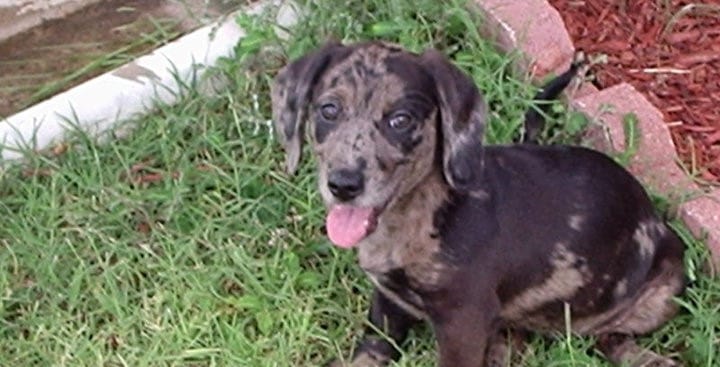
Dachsador sitting on grass

This breed is intelligent but has a slight stubborn streak.

The Dachsador is an intelligent and quick learner that can be taught a variety of different basic and advanced commands. But owners should be aware that this mix might have a slight stubborn streak that requires patience and discipline to overcome. If it appears to be resisting your commands, then do not raise your voice or lash out at it. This may just cause it to shut down. Positive reinforcement methods in the form of treats or praise should work best to entice your dog into compliance. If something isn’t working, then try to change up the routine until you’ve settled on a good formula. If you’re still struggling with the routine, then it might be a good idea to sign up for a training program with a local professional.

Exercise

The Dachsador generally needs at least 30 minutes and perhaps as many as 45 minutes of exercise every single day. It should ideally receive two walks per day, in addition to ball games and playtime. A fenced yard or other enclosed space is recommended to let your dog run around freely and play; just don’t leave it unattended for long. Because of its strong prey drive, you should be cautious about letting it off the leash in an open space. Owners should also be aware that this dog may have trouble climbing up stairs or furniture.

Puppies

As a designer dog, the Dachsador does not have a breed standard. Compared to a typical purebred dog, these puppies can be a bit more random. Some puppies are more like one parent than another; they can also be a more even mix of the two. Fortunately, these dogs do have tendencies for certain traits. They will tend to have a black, chocolate, or yellow coat color and stubby appearance that should become evident fairly quickly after birth. They also tend to be naturally curious and friendly. But there is no guarantee that one Dachsador will be similar to another. Regardless of their traits, these puppies should be introduced to a variety of different situations and people as early as possible so they can become well-behaved and good-natured adults.

Dachsadors And Children

The Dachsador is a great family dog with a strong affinity toward children. Its friendly and playful personality, responsible demeanor, and protective nature should appeal to kids of all ages.

Dogs Similar To The Dachsador

Besides the Lab and the Dachshund, these dogs bear the strongest resemblance to the Dachsador:

  • Goldenshund: This mix between a Dachshund and a Golden Retriever is like the Dachsador in many respects. Its small, cute, friendly, affectionate, intelligent, and athletic nature should appeal to owners who want a loving and engaging companion.
  • Beagle: Much like the Dachshund, the Beagle is a small hunting hound with an extraordinary sense of smell. It has a fun-loving but gentle personality that should appeal to families and kids of all ages.
  • American Foxhound: This is a long-legged, short-haired scent hound with a very gentle, easygoing, and amiable personality. The coat color usually comes in black, white, and tan, but other colors and combinations are sometimes accepted as well.

View all 450 animals that start with D

Sources

  1. Wag Walking / Accessed April 9, 2021
  2. Doggie Designer / Accessed April 9, 2021
Melissa Bauernfeind

About the Author

Melissa Bauernfeind

Melissa Bauernfeind was born in NYC and got her degree in Journalism from Boston University. She lived in San Diego for 10 years and is now back in NYC. She loves adventure and traveling the world with her husband but always misses her favorite little man, "P", half Chihuahua/half Jack Russell, all trouble. She got dive-certified so she could dive with the Great White Sharks someday and is hoping to swim with the Orcas as well.
Connect:

Thank you for reading! Have some feedback for us?


Dachsador FAQs (Frequently Asked Questions)

The Dachsador is a hybrid dog that crosses together the Dachshund and the Labrador Retriever. The result is a friendly, playful, fun-loving dog with a somewhat stout, elongated body. The Dachsador comes in the same three colors as the Labrador: black, chocolate brown, and yellow. Its coat color will therefore largely depend on the color of the Lab parent.