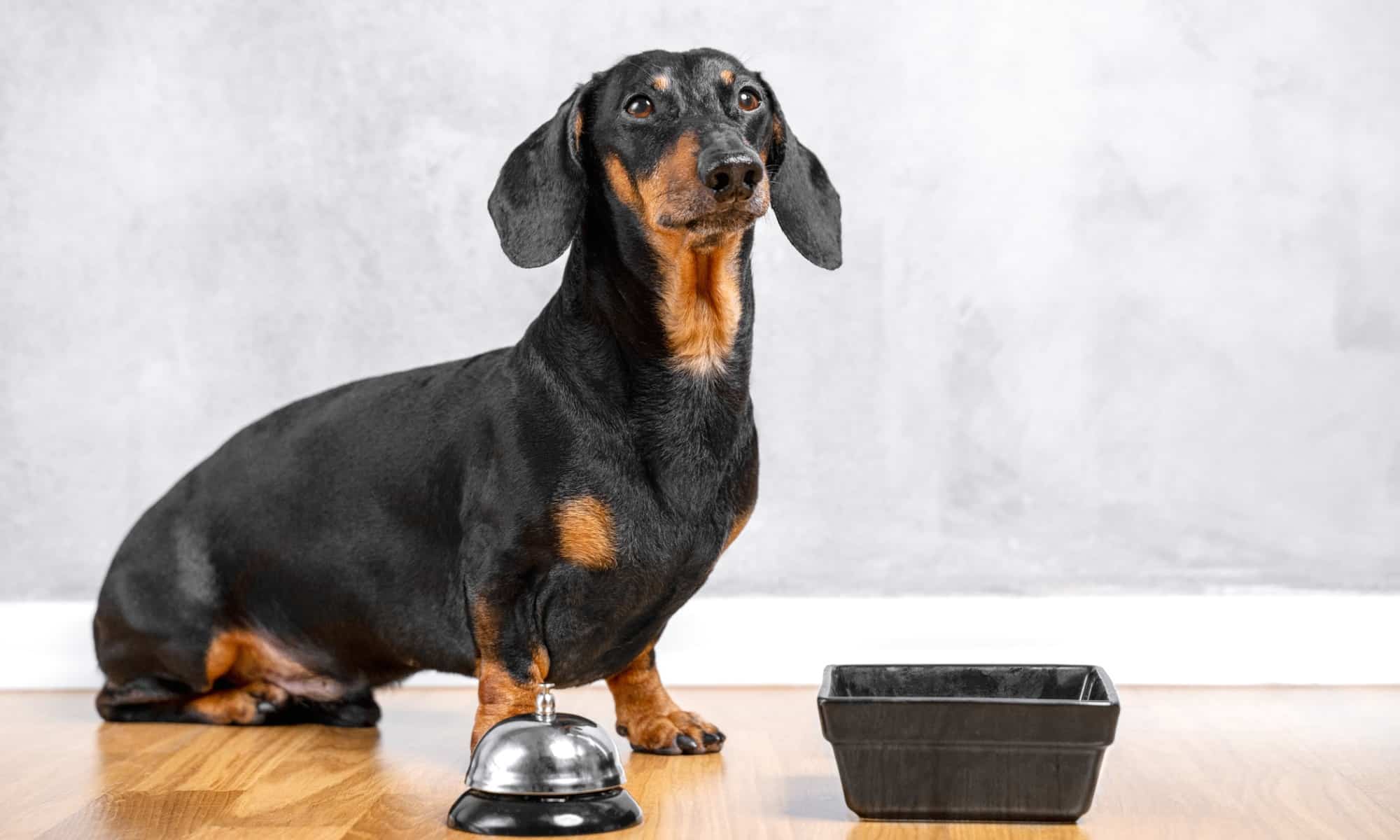

Also known as the wiener dog, badger dog, or sausage dog, the dachshund is an iconic dog breed. It belongs to the hound or terrier family, with some breeders arguing for one over the other, while some claim it descends from both. A playful and energetic breed, dachshunds love to chase small animals and can be quite stubborn. They also make popular family pets and are prolific hunters and diggers. Today, we’ll discuss 10 incredible dachshund facts and explore what makes dachshunds such magnificent dogs.
1. Dachshunds Originated in Germany
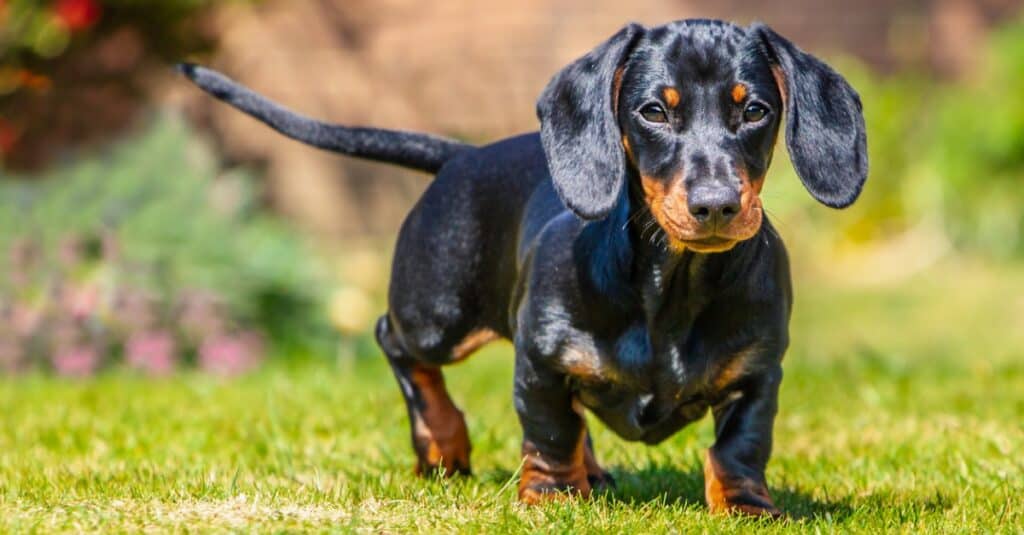
The Dachshund hails from Germany, and its name translates to “badger dog.”
©iStock.com/CBCK-Christine
As you might have guessed from their name, Dachshunds originally came from Germany. The name combines two German words, Dachs meaning “badger” and hund meaning “dog.” That said, in Germany, many people refer to them as Dackel, while hunters prefer the term Teckel.
German breeders created dachshunds by combining German, English, and French hounds and terriers. They were first mentioned in 18th-century books as Dachs Kriecher or Dachs Krieger, which translates to badger crawler or badger warrior, respectively. However, historians aren’t certain exactly when the breed first appeared. While some believe that foresters bred dachshunds in the 18th century, others argue that dachshunds appeared as early as the 15th century.
2. People Bred Dachshunds to Hunt Small Animals
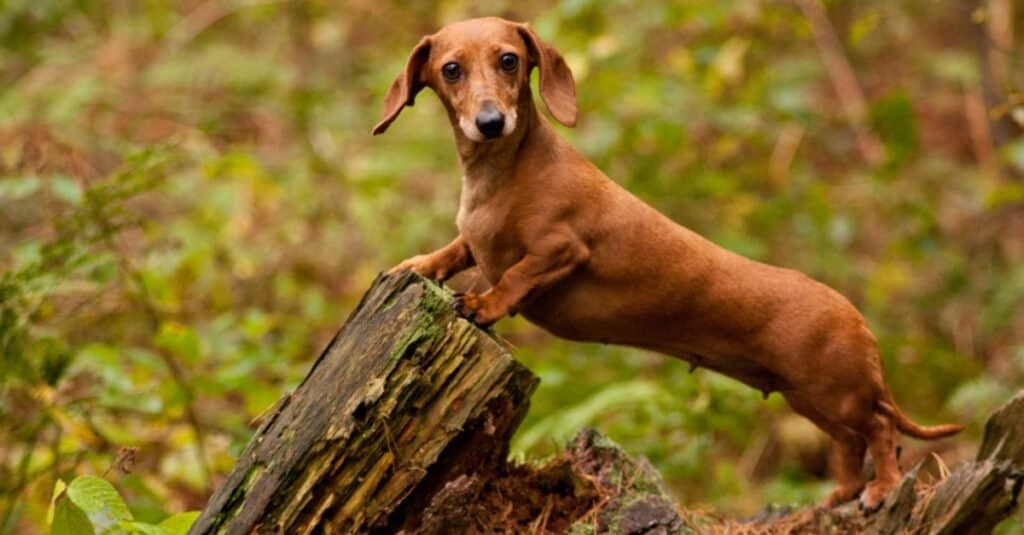
Dachshunds were bred to hunt small animals.
©iStock.com/NORRIE3699
Given that their German name literally means “badger dog,” it’s no wonder people bred dachshunds to work as hunting dogs. Despite their small stature, dachshunds were bred with killer instincts. Foresters and hunters bred them to go after small animals, particularly burrowing animals. In particular, breeders selected traits that made dachshunds exemplary hunters, hence their name. However, they also excel at hunting other small game, including rabbits and foxes. On occasions, hunters even used a pack of dachshunds for hunting wild boars, deer, and wolverines.
3. Dachshunds Are Extremely Popular

Dachshunds are one of the most popular dogs in America.
©iStock.com/JLSnader
It’s an understatement to say that dachshunds symbolize Germany. After all, they remain the second most popular dog breed in Germany, second only to the equally, if not more iconic, German Shepherd. Thanks to their small size, interesting looks, and high energy level, dachshunds make popular family pets.
Although dachshunds originated in Germany as hunting dogs, today they enjoy widespread appeal outside of Europe. As of 2024, the American Kennel Club identified dachshunds as the sixth most popular dog breed in the United States. Truly, the dachshund remains steadfastly popular and is one of the most recognizable breeds in the world.
4. Americans Briefly Referred to Dachshunds as Liberty Hounds
Although Americans can’t seem to get enough of dachshunds today, that wasn’t always the case. Since their creation, dachshunds have practically been synonymous with Germany. While normally innocuous, this worked against their favor during World War I. Many in the US came to resent the breed due to its association with Germany and the war in Europe. In fact, sentiments got so bad that many dachshunds were killed by angry mobs or begrudgingly put down by their owners.
To combat anti-dachshund sentiment, some breeders and owners began a marketing campaign to change the narrative around dachshunds. At the time, owners and breeders referred to them as “liberty hounds.” That said, their efforts had marginal success. Many breeders stopped breeding dachshunds, and by the end of the war, only a handful of dachshunds remained in the US.
5. Dachshunds Come in Three Different Coat Varieties and Two Sizes
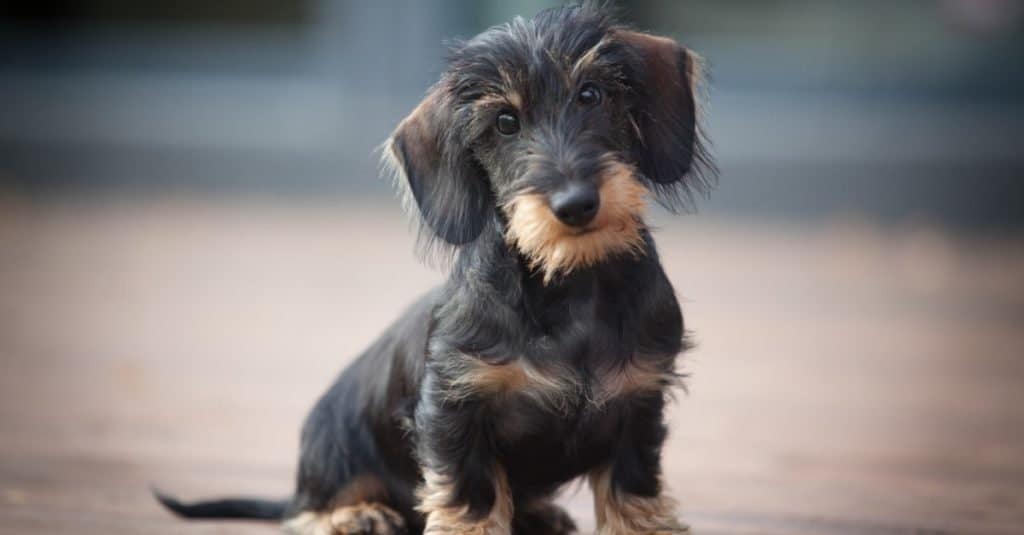
Dachshunds are either standard-sized or miniature.
©kallevalkama/Shutterstock.com
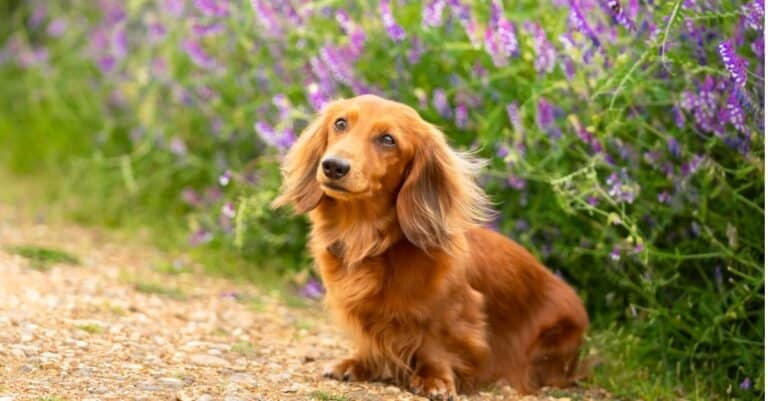
When most people think of dachshunds, they picture small dogs with very short brown hair. While this picture is accurate for many dachshunds, it only tells part of the story. In reality, dachshunds come in three different coat varieties and two different sizes.
Dachshunds come in both standard size and miniature size. Standard dachshunds range from 14 to 19 inches long and weigh between 16 and 32 pounds. Meanwhile, miniature dachshunds measure 12 to 15 inches long and typically weigh less than 16 pounds.
In addition to the smooth-haired breed mentioned above, dachshunds come in long-haired and wire-haired varieties. Long-haired dachshunds have a long, wavy coat and feathered ears, while wire-haired varieties have coarser, harsher hair. Although most dachshunds appear red, they can also look black or tan.
6. Dachshund Ears Are Designed for Protection
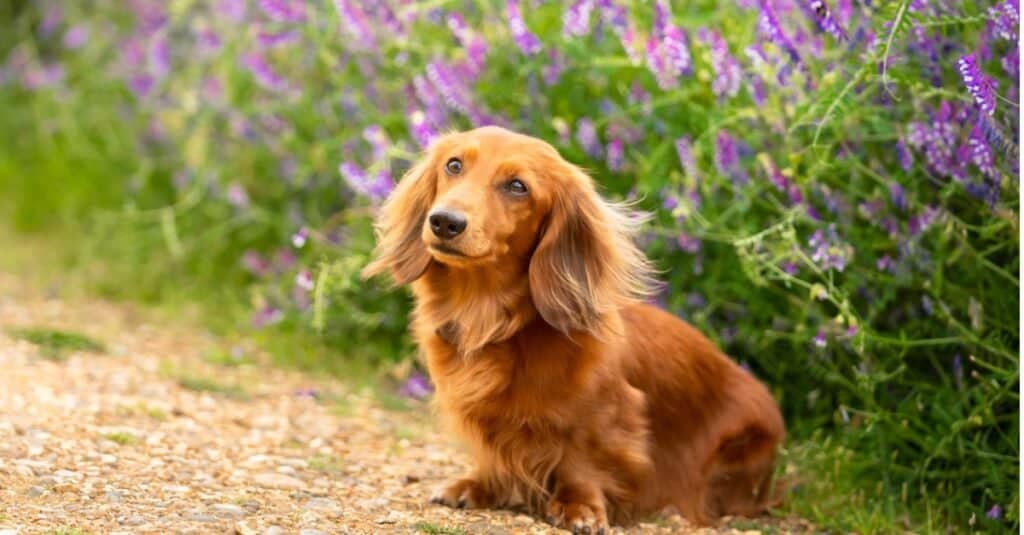
Dachshunds have long ears that help keep debris out of the ear canals.
©iStock.com/romitasromala
As mentioned, German breeders created dachshunds to hunt small animals such as badgers. Their distinctive narrow body and short legs make them excellent at chasing after animals hiding in burrows underground. However, dachshunds also possess a mysterious secret weapon that enables them to be great underground hunters: their ears.
Dachshunds have characteristically large ears that flap downward and cover their ear canal. Breeders originally selected dogs with this trait because it allowed them to be more effective when hunting underground. Their floppy ears act as a built-in shield that keeps dirt, grass, and other debris out of the ear canal.
7. One of the First Olympic Mascots Was a Dachshund
Animals have long been associated with sports and sporting events. Many teams are named after animals, and many others use animals as their mascots or icons. Meanwhile, the Olympics are the premier sporting event in the world, but they only started frequently incorporating mascots in 1968. That year, the unofficial mascot named “Shuss” was a little man depicted skiing downhill.
When it was Germany’s turn to host the 1972 Summer Games, the country turned to the beloved dachshund. Thus, the dachshund became the first official mascot of the Olympic Summer Games. The dachshund, Waldi, not only served as the game’s mascot but was also incorporated into the course design for the marathon event at the games.
8. People Race Dachshunds for Entertainment
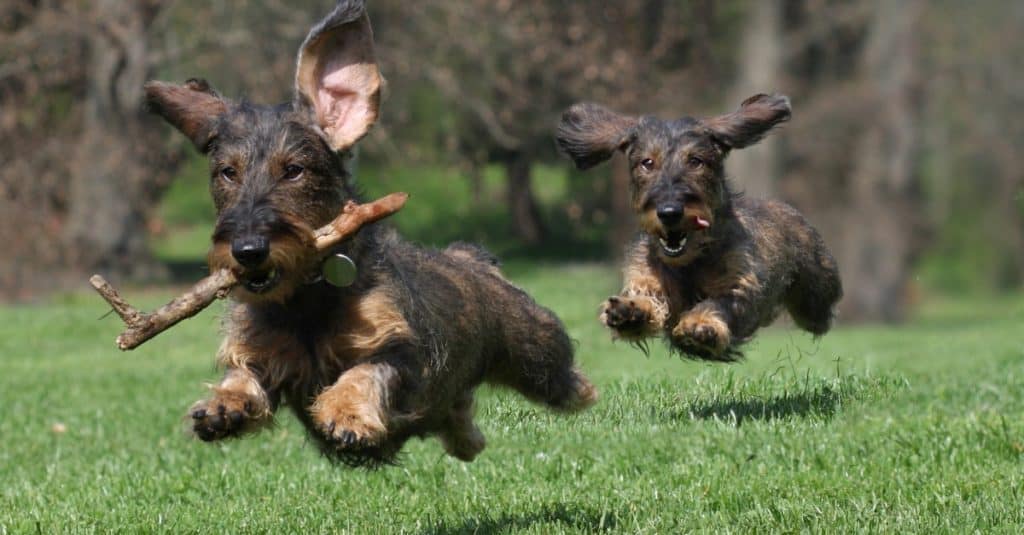
Some owners race dachshunds at competitions such as the Wiener Nationals.
©Gianfranco Bella/Shutterstock.com
Generally speaking, people don’t associate dachshunds with sports and athleticism. Due to their small size, people tend to see dachshunds as less athletic than larger dogs. However, in reality, dachshunds are naturally extremely fit thanks to their breeding, compact build, and high-energy level. It’s not surprising that some people enjoy racing dachshunds for entertainment.
The Wiener Nationals is a dachshund racing event held every year in California since 1996 and the event has served as a charity fundraiser for the local Seal Beach Animal Care Center. Similar events can also be found throughout the US and frequently draw thousands of visitors to watch the dachshunds race. In addition to races, dachshunds compete in earthdog trials, wherein the dogs try to navigate tunnels to find bait.
9. Dachshunds Commonly Deal With Spinal Problems

Dachshunds often deal with spinal issues.
©Masarik/Shutterstock.com
This next entry on our list of dachshund facts is not for the faint of heart. Although dachshunds are athletic dogs bred for hunting, they suffer their fair share of medical issues. Most notably, dachshunds commonly deal with spinal problems such as intervertebral disk disease. Their long spine and small rib cage make the spine very susceptible to injury, and obesity and excess activity can make spinal conditions more likely. For this reason, many animal advocates condemn the practice of dachshund racing.
Thankfully, certain medical procedures and treatments exist that can mediate or reverse spinal issues in dachshunds. Anti-inflammatories and pain medication are both common treatments, as light but regular exercise can control obesity. If you have a dachshund with known spinal issues, consult your veterinarian to learn about treatment options.
10. The Hot Dog May Get Its Name from the Dachshund

One theory is that the hot dog is likely named after the dachshund.
©iStock.com/Ирина Мещерякова
The hot dog is one of the most iconic American foods. However, historians still debate how the hot dog got its name. That said, the prevailing theory is that the hot dog got its name from the dachshund.
The term hot dog appeared in print as early as the 1890s. Back then, the term was used in a derogatory manner to refer to meat of questionable origin sold in “dog wagons” outside of college dorms. Meanwhile, references to “Dachshund sausages” can be traced back to German immigrant communities throughout the US during the 1800s. Germans often called frankfurters “little dogs” or “Dachshund sausages,” so that’s how the name likely stuck.