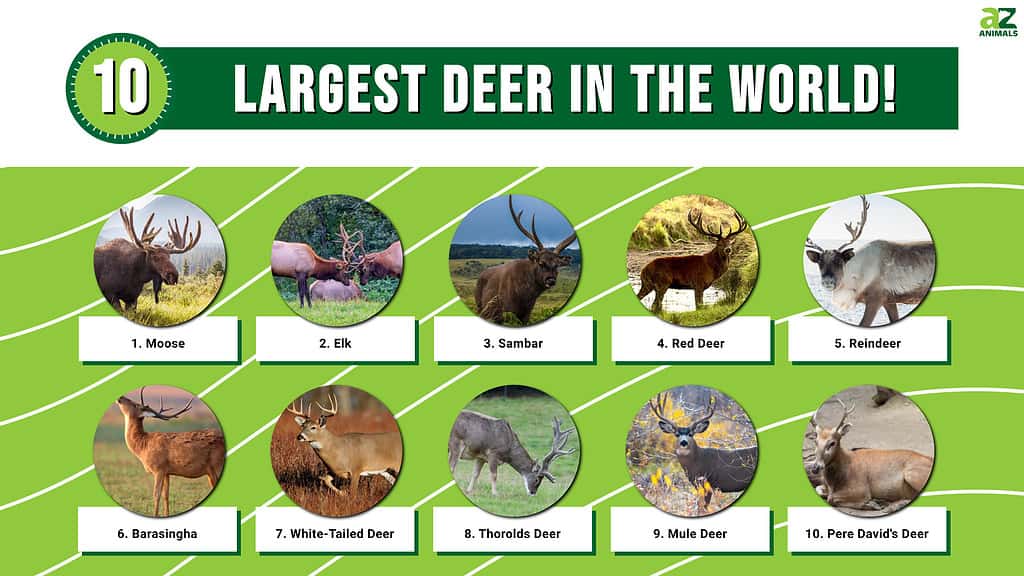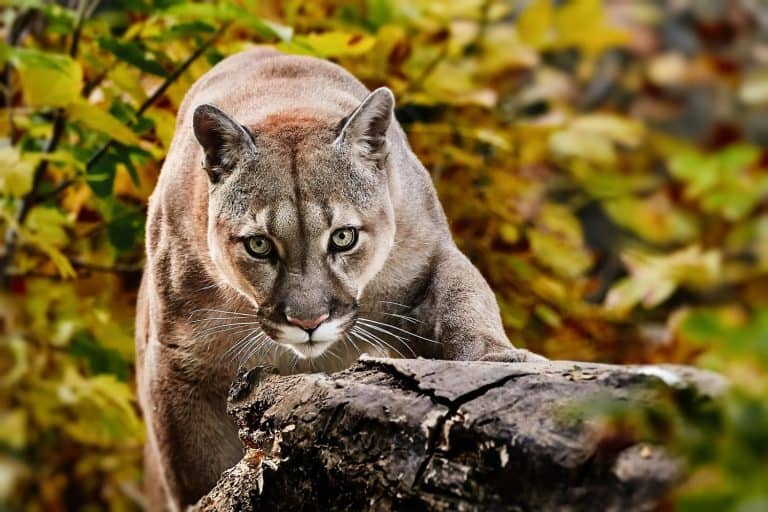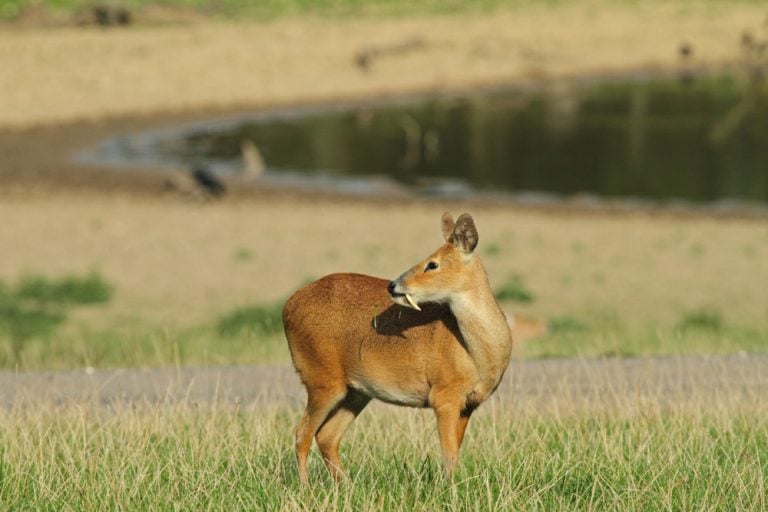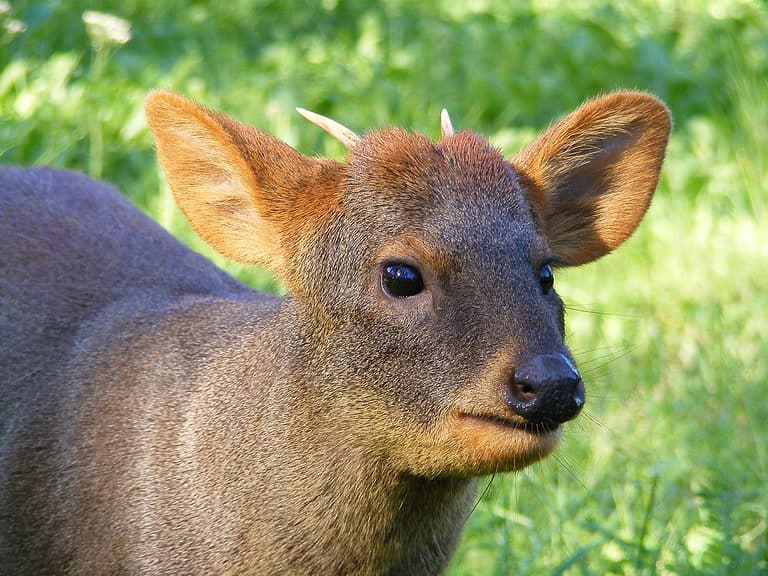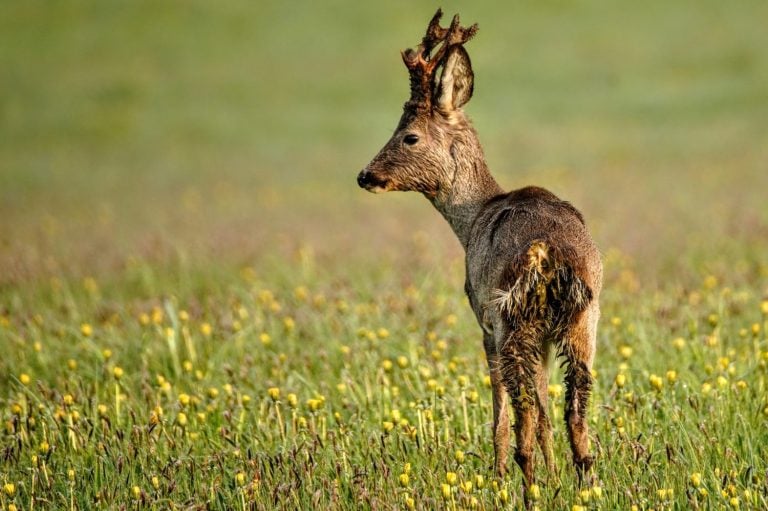

In the animal kingdom, there are many types of animals that have horns or antlers. Not all of these qualify as “deer.” An antelope, for example, is similar to a deer but occupies an entirely different scientific family. So, what is a deer? A deer is a member of the Cervidae family of herbivorous mammals that share common characteristics like hooves and, aside from rare exceptions, males with antlers. Within the Cervidae family, there are many large species, but which are the largest? Since antler size varies among species, size is calculated by the maximum observed weight and the animal’s height at the shoulder. Now, let’s take a look at the 10 largest deer in the world.
10. Pere David’s Deer
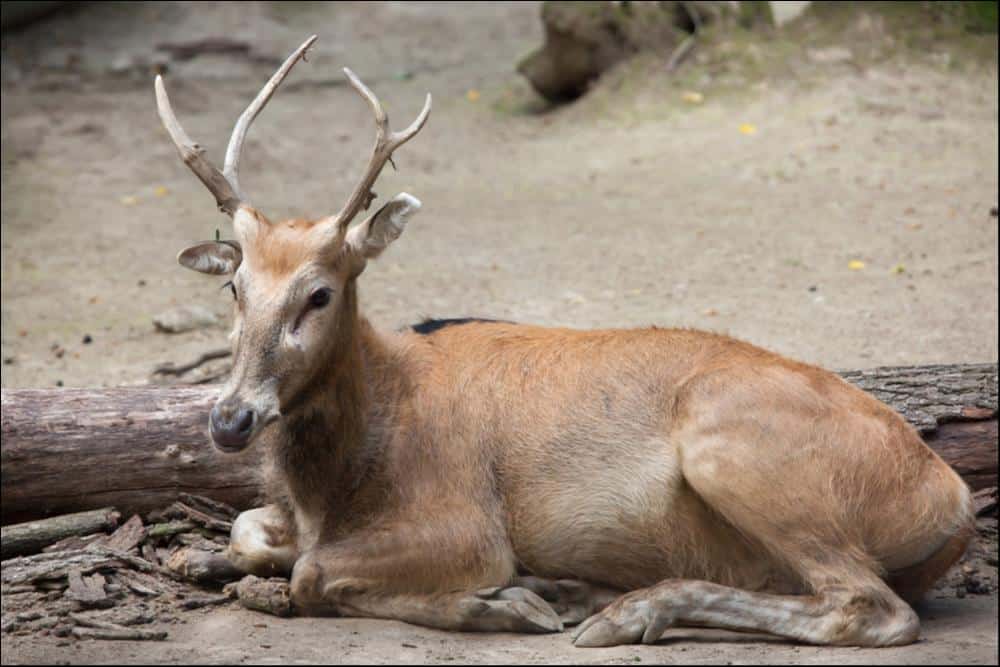
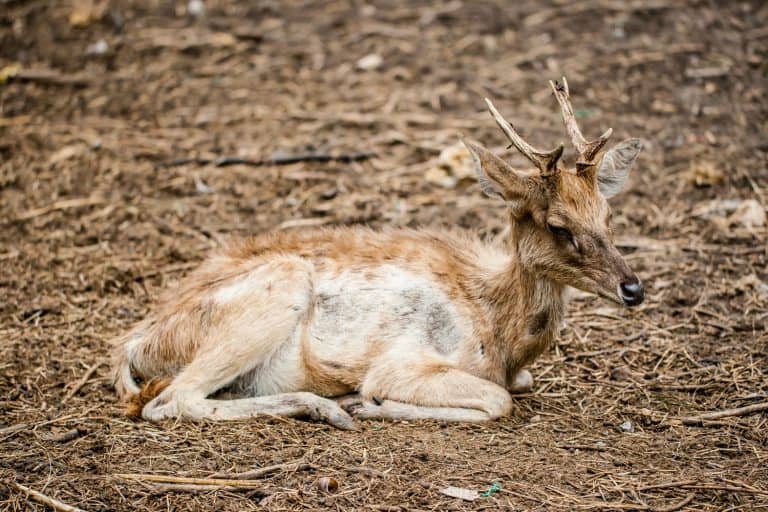
Pere David’s deer are native to the marshes and wetlands of China.
©iStock.com/wrangel
- Maximum Weight: 441 pounds
- Height: 3.9 feet from hoof to shoulder
Coming in at number 10 on our list, Pere David’s deer (Elaphurus davidianus) is a large deer native to Asia. It is the only member of its genus. As of the late 19th century, it was no longer found in the wild. Captive populations in zoos, private animal collections, and game reserves constituted the last members of the species. However, a small population of Pere David’s deer were re-introduced to the Central Yangtze region in 1985 and 1986. From the original 77 deer, there is now believed to be a population of over 8,000 individuals living in China.
The deer has a peculiar appearance, with a horse’s head, antlers that point up and backward, a donkey’s tail, and cow-like hooves with webbing between the toes. They are also resourceful animals, with the ability to use their hooves as tools for digging and scraping. These deer prefer marshland habitats and will spend hours wading.
9. Mule Deer
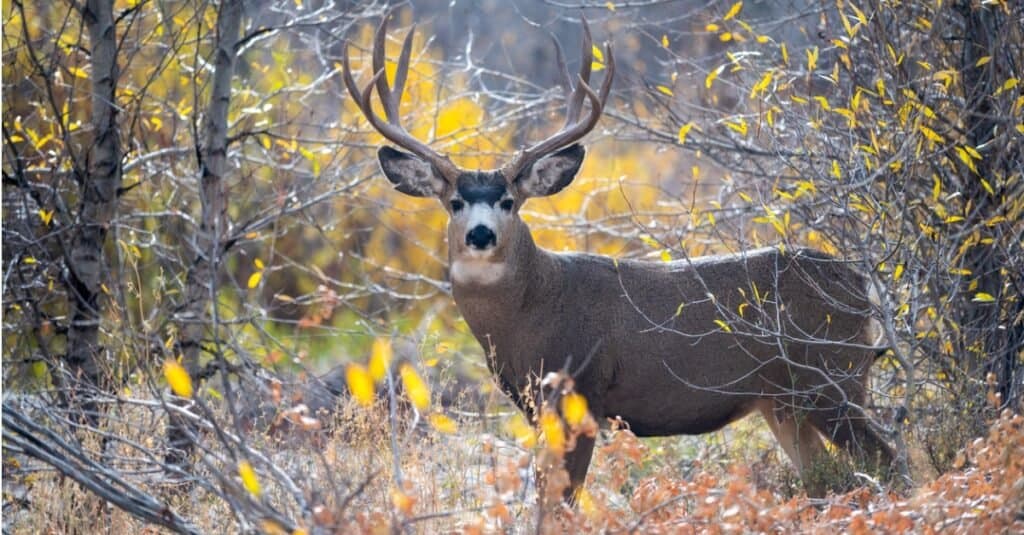
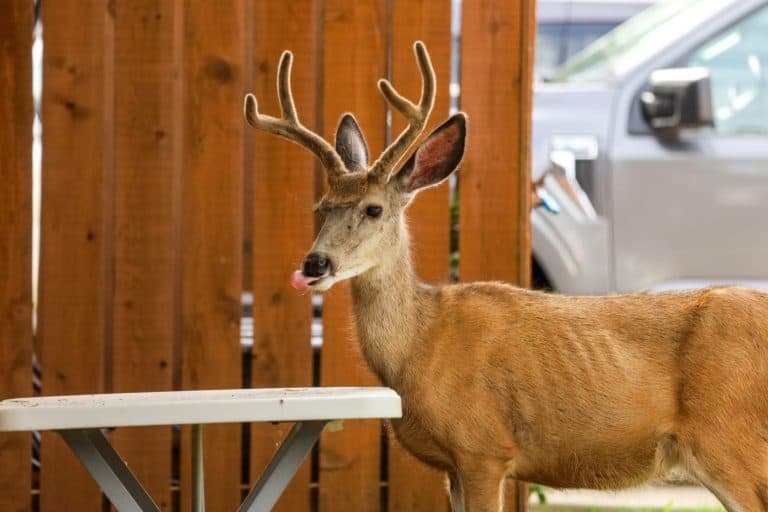
The mule deer is an iconic example of wildlife in the American West.
©iStock.com/EEI_Tony
- Maximum Weight: 463 pounds
- Height: 3.9 feet from hoof to shoulder
Named for their large, mule-like ears, these deer are among the most iconic examples of wildlife in the American West. Another defining characteristic of mule deer (Odocoileus hemionus) is their tail, which is short, all-white, and has a small black tip. Once prominent amongst the western regions of North America, mule deer populations are believed to be declining in some parts of their native range.
There are roughly 4 million mule deer spread across their range, with at least 7 subspecies described. According to the IUCN, they are listed as least concern, but they face challenges such as urban development and habitation fragmentation. Mule deer are hunted by humans but also experience predation from coyotes, mountain lions, eagles, bears, wolves, lynx, and bobcats.
8. Thorold’s Deer
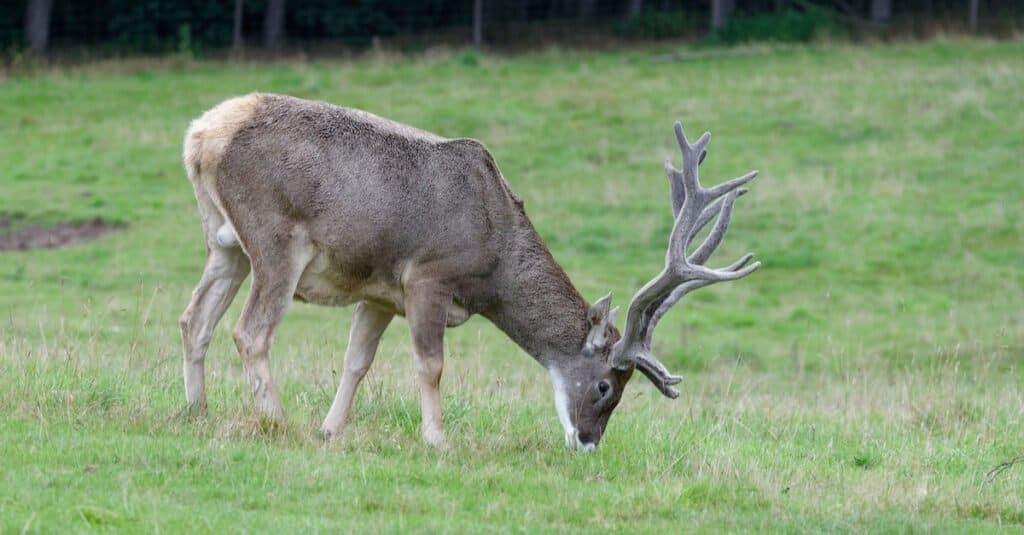
Thorold’s deer is also called the Chinese white-lipped deer because of its white muzzle.
©Martin Fowler/Shutterstock.com
- Maximum Weight: 507 pounds
- Height: 4.6 feet from hoof to shoulder
This threatened species lives at high altitudes on the eastern side of the Tibetan Plateau. Thorold’s deer (Cervus albirostris) are also known as the Chinese white-lipped deer due to pronounced patches of white around their muzzles. The Latin species name albirostris comes from the words albus, meaning white, and rostrum, meaning snout.
Thorold’s deer have a dark brown upper coat and their eyes have distinct white-eye rings. Their antlers can also be very large and differ from other species because of their cream coloration. Overhunting has resulted in its current conservation status of vulnerable. Like many deer, Thorold’s deer is crepuscular, meaning they are more active during twilight.
7. White-Tailed Deer
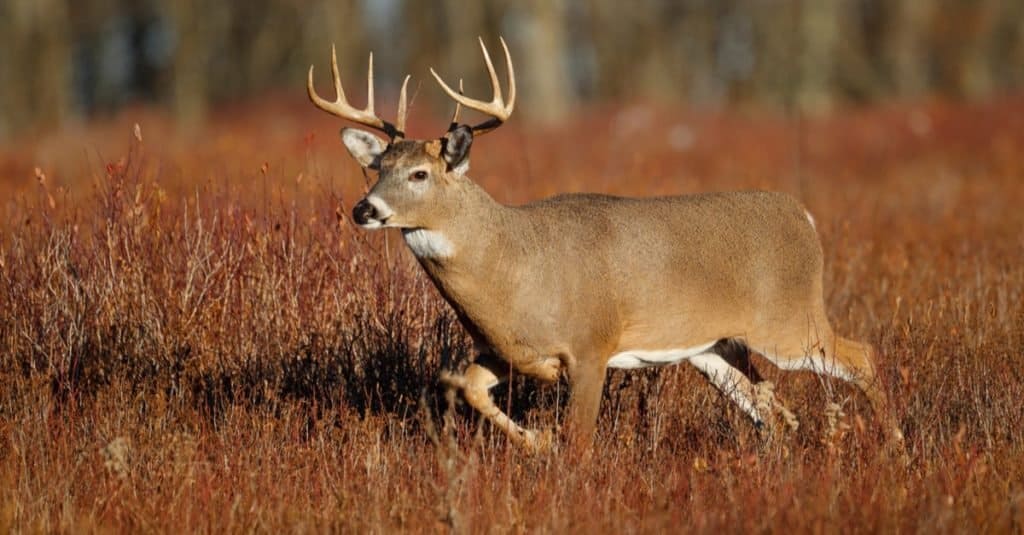
There are about 5 million white-tailed deer in Texas.
©Paul Tessier/Shutterstock.com
- Maximum Weight: 512 pounds
- Height: 4 feet from hoof to shoulder
The white-tailed deer (Odocoileus virginianus) is one of the most common deer species on earth. It has a wide natural range from North America through Central America and down into parts of South America. It has also been introduced in other areas like New Zealand, the Caribbean, and Europe. In the U.S. state of Texas alone, there are over 5 million white-tailed deer. They have reddish-brown coats in the summer which fade to grayish-brown in winter.
White-tailed deer are one of the more skittish deer species, often swishing their tails back and forth when they are nervous. When confronted with danger, white-tails can run up to 30 mph and are adept swimmers, capable of making it across strong rivers and lakes to escape. Along with other deer species such as the mule deer, chronic wasting disease, sometimes called zombie deer, has been observed in white-tail populations. An infected deer can suffer from drastic weight loss, stumbling, listlessness, and other neurological symptoms. To date, no infection has been transmitted to humans, but the prevalence of the disease has become a concern to hunters and conservationists alike.
6. Barasingha
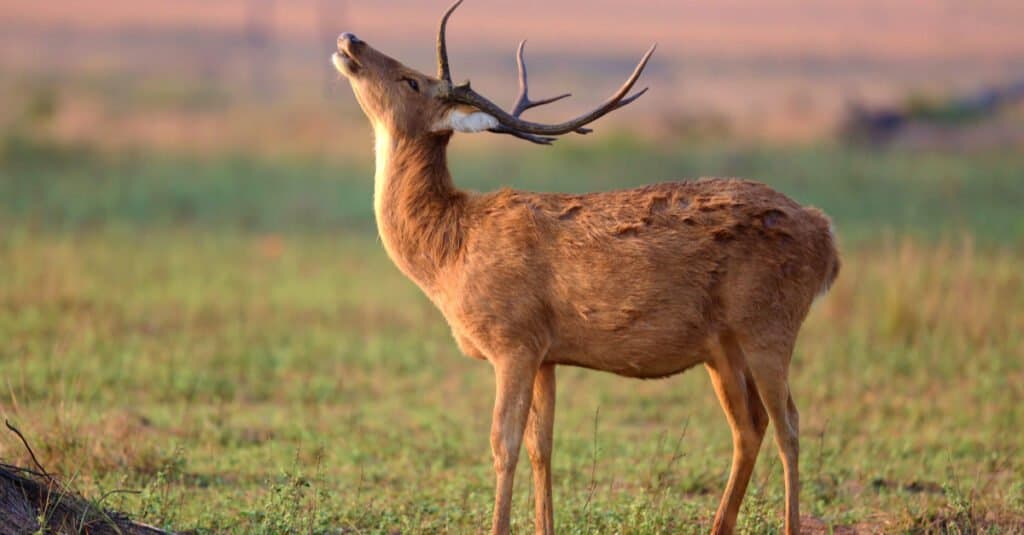
Efforts to repopulate the barasingha began in 1967, and it is now listed as vulnerable.
©PhotocechCZ/Shutterstock.com
- Maximum Weight: 617 pounds
- Height: 4.3 ft from hoof to shoulder
The barasingha (Rucervus duvaucelii), also known as the swamp deer, is a deer that is native to the Indian subcontinent. They have a wooly, yellowish-brown to orange coat with white spots on their backs. The males have numerous points on their antlers, numbering anywhere from 14-20. The word barasingha means “12-horned” in Hindustani.
The barasingha has been the focus of a successful repopulation program, which began in 1967 when the Kanha National Park population had dwindled to just 66 individuals. The IUCN currently lists the barasingha as vulnerable. There are three identified subspecies, all occurring on the Indian subcontinent. Although repopulation efforts have been successful, the main threat to the longevity of the species is the conversion of wetlands to agriculture and urban development, which destroys the deer’s preferred habitat.
5. Reindeer
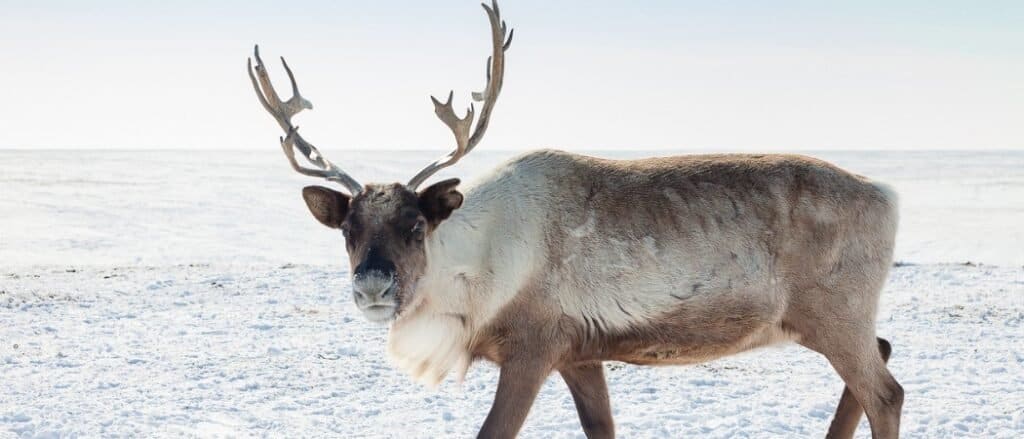
Reindeer have deeply cloven hooves that enable them to travel in snow.
©Vladimir Melnikov/Shutterstock.com
- Maximum Weight: 701 pounds
- Height: 4.9 ft from hoof to shoulder
We begin the top 5 with the reindeer, or caribou (Rangifer tarandus). Wild reindeer are called caribou in North America. They are arctic specialists, living in large populations above the arctic circle in North America, Europe, Siberia, and Greenland. Generally speaking, there are two types of reindeer — forest and tundra reindeer. The tundra reindeer migrate in enormous herds, sometimes totaling more than half a million members. Forest reindeer tend to be larger, and they are also more sedentary.
Some of the more prominent physical characteristics of reindeer include thick coats, deeply cloven hooves for snow travel, and enormous antlers, sometimes numbering up to 44 points. Domesticated reindeer have had a long history with humans in the polar regions. Reindeer in northern Europe are important to the Sami, Swedes, Finns, Norwegians, Russians, and the Inuit in North America. They have often been used to pull sleds and are still hunted by some for their fur, meat, and bones, which are then used to craft tools. The domestication of reindeer is believed to have begun at least 2,000 years ago.
4. Red Deer
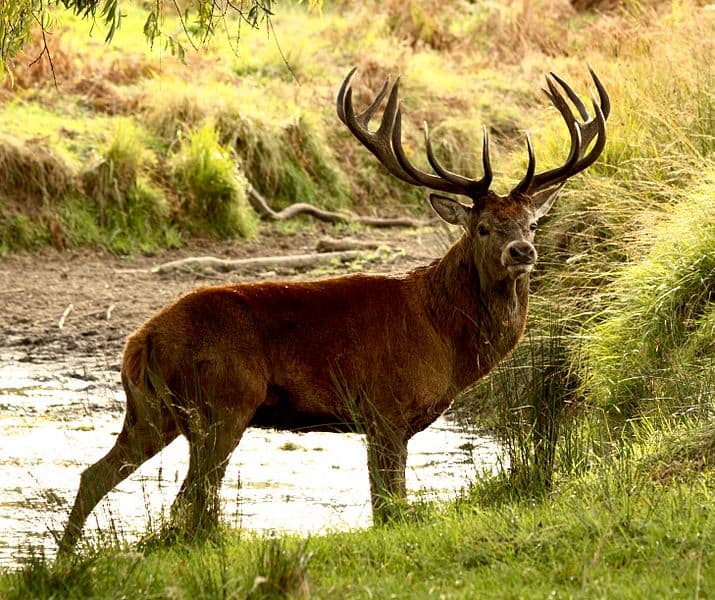
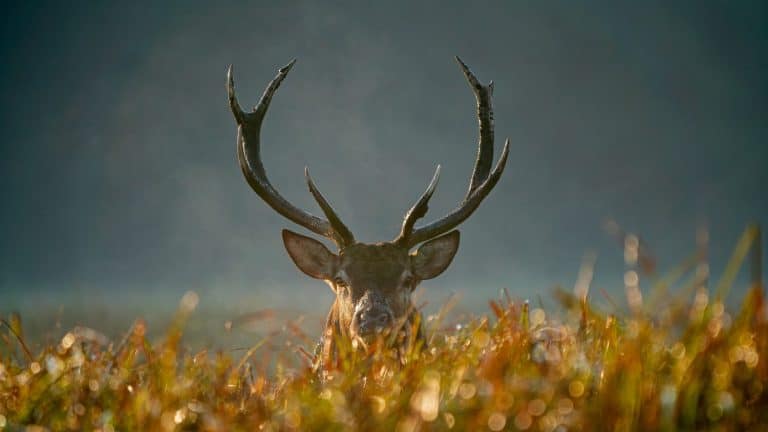
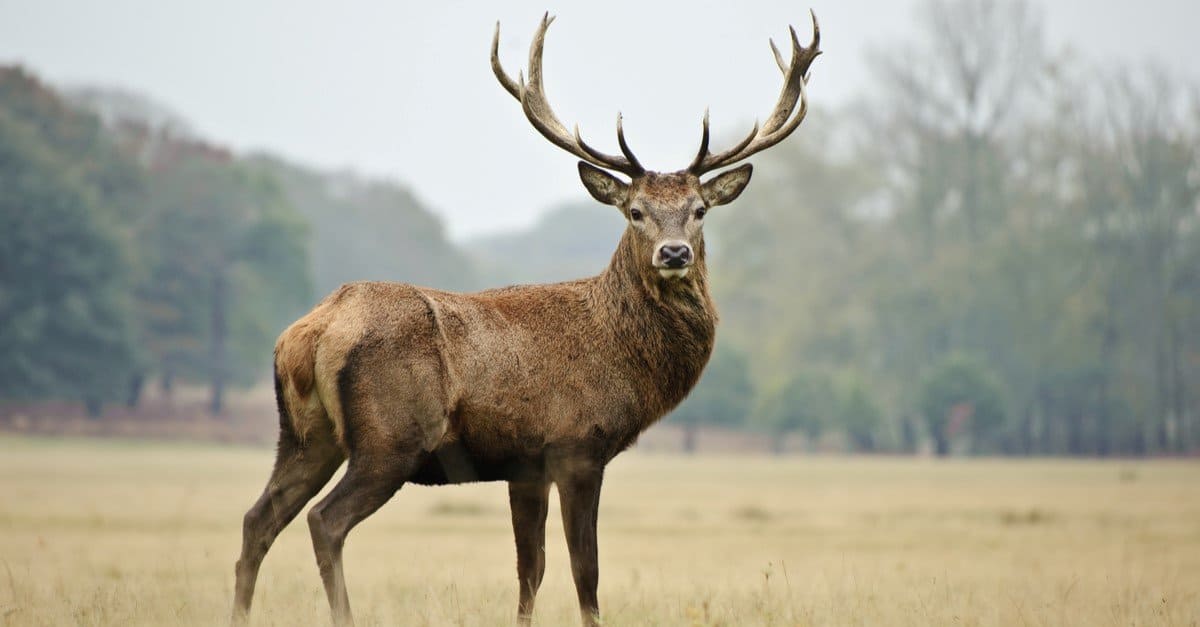
Red deer share a common ancestor with elk.
©Donald Macauley / Creative Commons – Original
- Maximum Weight: 1,102 pounds
- Max height: 4.6 feet from hoof to shoulder
Our first entry to have a maximum observed weight over 1,000 pounds in a fully grown adult is the red deer (Cervus elaphus). This species is prominent in Europe, the Caucasus region, Turkey, and parts of Iran. There are also small numbers present in the Atlas Mountains of Northern Africa. These deer have reddish brown coats with a pale rump patch. The males also have impressive antlers which they shed annually.
Red deer are often compared to elk in North America and share a common ancestor. Historically, North American elk were considered a subspecies of red deer, but genetic studies now recognize them as separate species. Overall, red deer populations are prominent and stable, with conditions varying somewhat by location.
3. Sambar
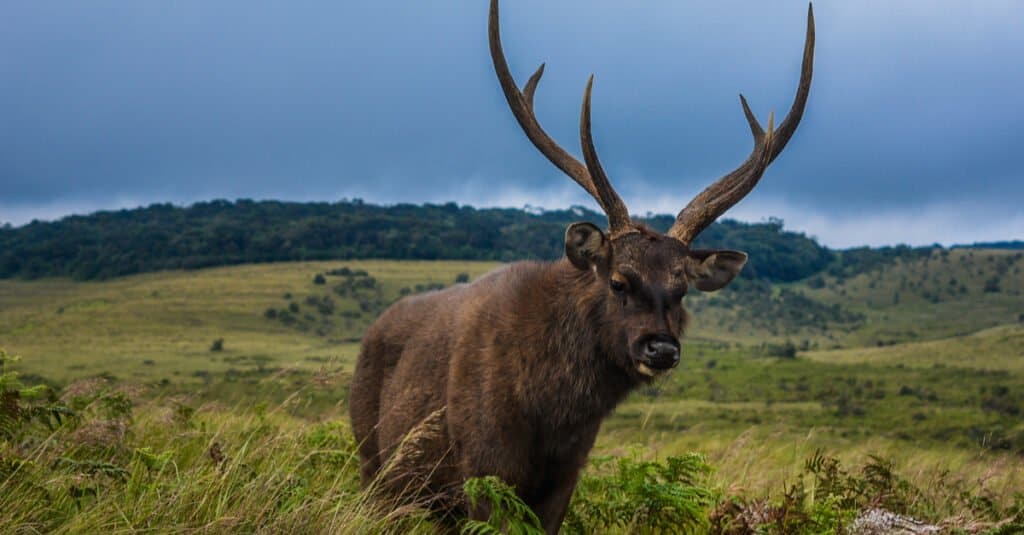
Sambar are large deer native to India and southeast Asia.
©Swarna367/Shutterstock.com
- Maximum Weight: 1,204 pounds
- Height: 5.2 feet from hoof to shoulder
The sambar (Rusa unicolor) is the largest deer species native to India and southeast Asia. The appearance and size of each sambar can differ wildly, which has led to some classification confusion in the past. Generally speaking, they have short, dark coats and a long tail with a black tip, similar to the mule deer. Males have prominent antlers and tend to spar like other deer species. However, they have been observed to stand on their hind legs and slam their antlers down, which is unique amongst deer and resembles the sparring techniques of bighorn sheep.
The sambar has been introduced in a few countries with varying degrees of success, including New Zealand and Australia, where it has become a popular hunting prize. Currently, there are seven extant and one extinct subspecies. Conservation efforts are ongoing but vary between locations. The IUCN lists the sambar as vulnerable.
2. Elk
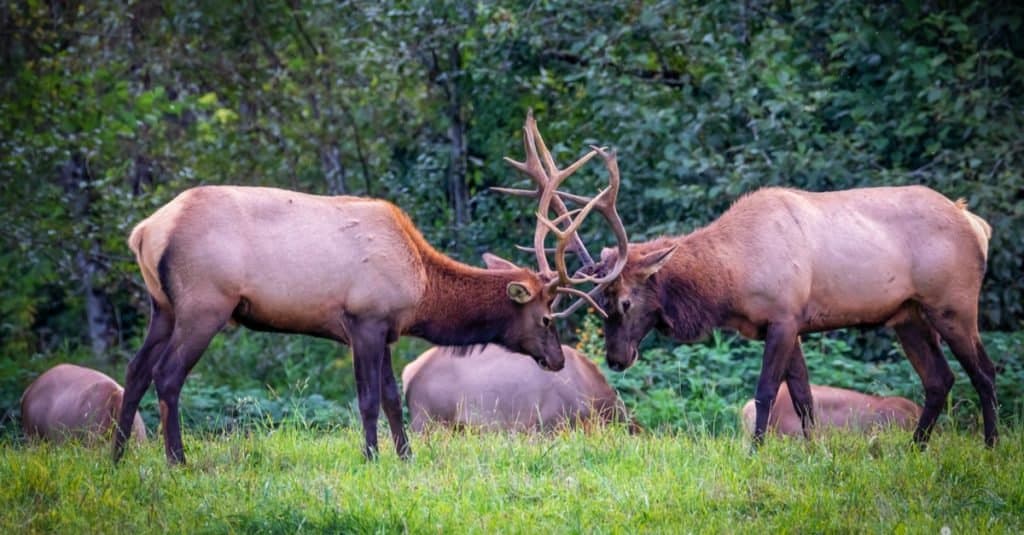
The Roosevelt elk are named for President Theodore Roosevelt, and are the largest type of elk in North America.
©Mark A Lee/Shutterstock.com
- Maximum Weight: 1,323 pounds
- Height: 5.2 feet from hoof to shoulder
This massive deer is a mainstay in many locations. Their rut, or mating season, which occurs every autumn, is a tourist magnet in places like Estes Park, Colorado, drawing thousands of visitors every year. The males showcase their antlers, occasionally spar with other males, and let out a haunting bugle intended to attract females. They have light brown coats with shaggy manes and a pale rump patch.
Elk (Cervus canadensis) are also called wapiti, which comes from the Shawnee and Cree Native American word “waapiti,” meaning white rump. In Europe, they are exclusively called wapiti, which was adopted by European explorers, while moose are called elk. Elk populations are largely stable, so they are listed as least concern according to the IUCN. They were hunted to extinction in many areas, but large reintroduction efforts have been implemented over the past hundred years. There are now over 1 million elk in North America.
1. Moose
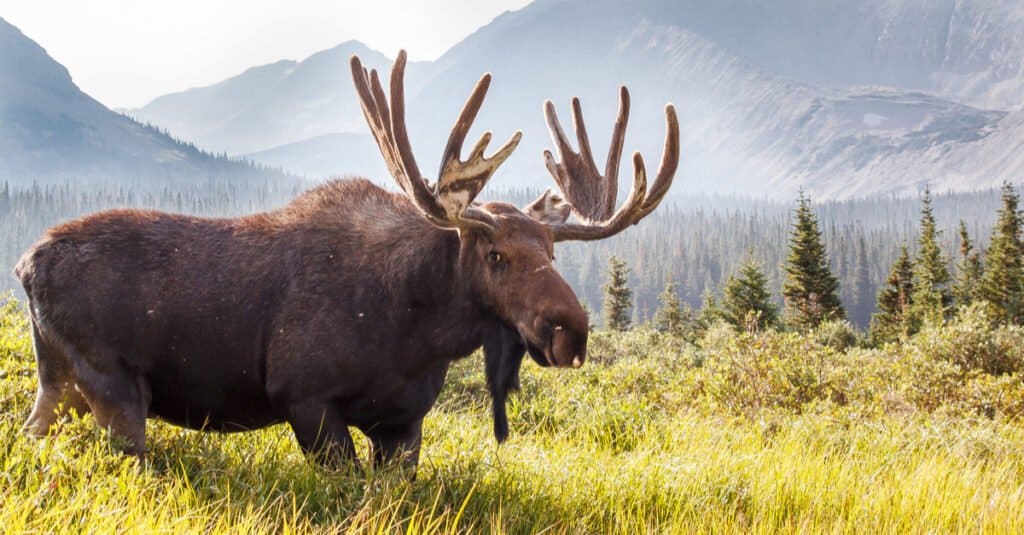
The largest deer species in the world is the moose.
©Michael Liggett/Shutterstock.com
- Maximum Weight: 1,800 pounds
- Height: 7 feet 8 inches
The largest deer on Earth is the moose (Alces alces), referred to as elk in Europe. Moose are enormous, with broad, open-palmed antlers with points extending beyond the palm. The largest moose ever recorded weighed around 1,800 pounds. Unlike most deer species, moose are largely solitary, except during the mating season. It is common to see solitary bull moose and either solitary females or females with 1 to 2 offspring. Their range in North America is large, extending from Alaska through Canada, the northeastern U.S., and the Rocky Mountains region. European elk live in large numbers in Scandinavia, the Czech Republic, Ukraine, Belarus, and Russia.
Moose, while resembling deer in many ways, also have some identifiable differences. Moose have brown to black fur. They have a dewlap, which is a fold of skin underneath the chin, which is much more prominent in males. Male moose have large antlers that they shed every year. They also have a really big, bulky nose. Like other deer, they are adept swimmers and can even dive up to 18 feet.
The Largest Deer That Ever Lived
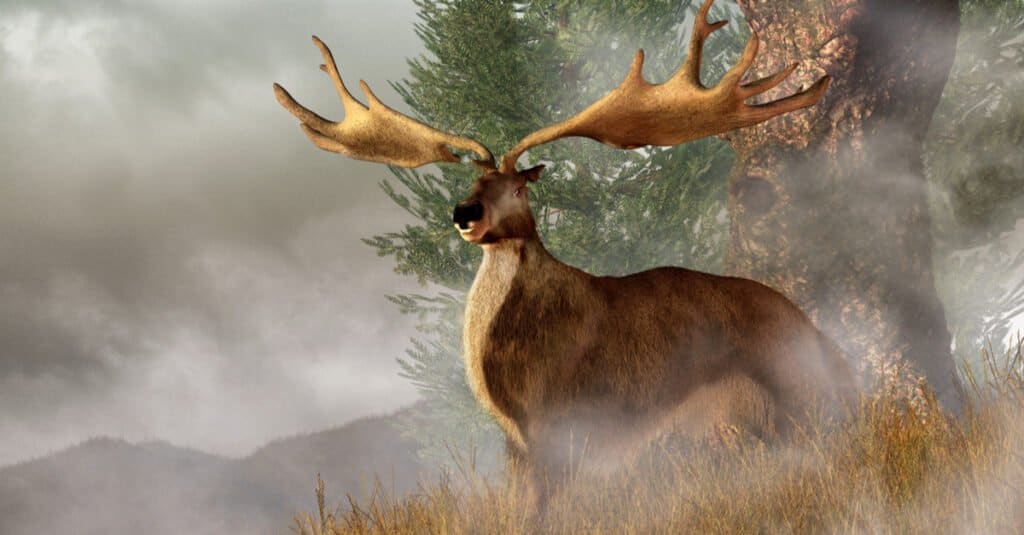
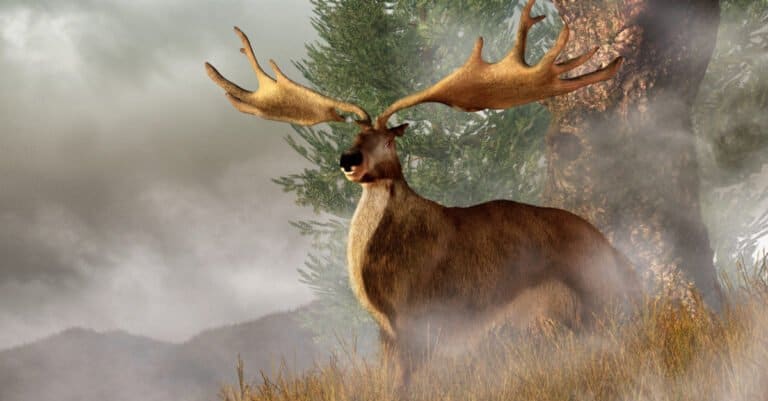
The Irish elk had massive antlers and is believed to have weighed more than 2,000 pounds.
©Daniel Eskridge/Shutterstock.com
The Irish elk, which resembles a North American moose, was one of the largest deer to ever walk the earth. Fossils indicate the Irish elk was on par with the Alaskan moose in terms of size, with the largest male Irish elk estimated to have weighed around 1,500 pounds. However, they had the largest antlers ever recorded at 12 feet across and weighing nearly 90 pounds. The Irish elk went extinct in most of Europe about 11,000 years ago, with the last known populations surviving in western Siberia until around 7,700 years ago.