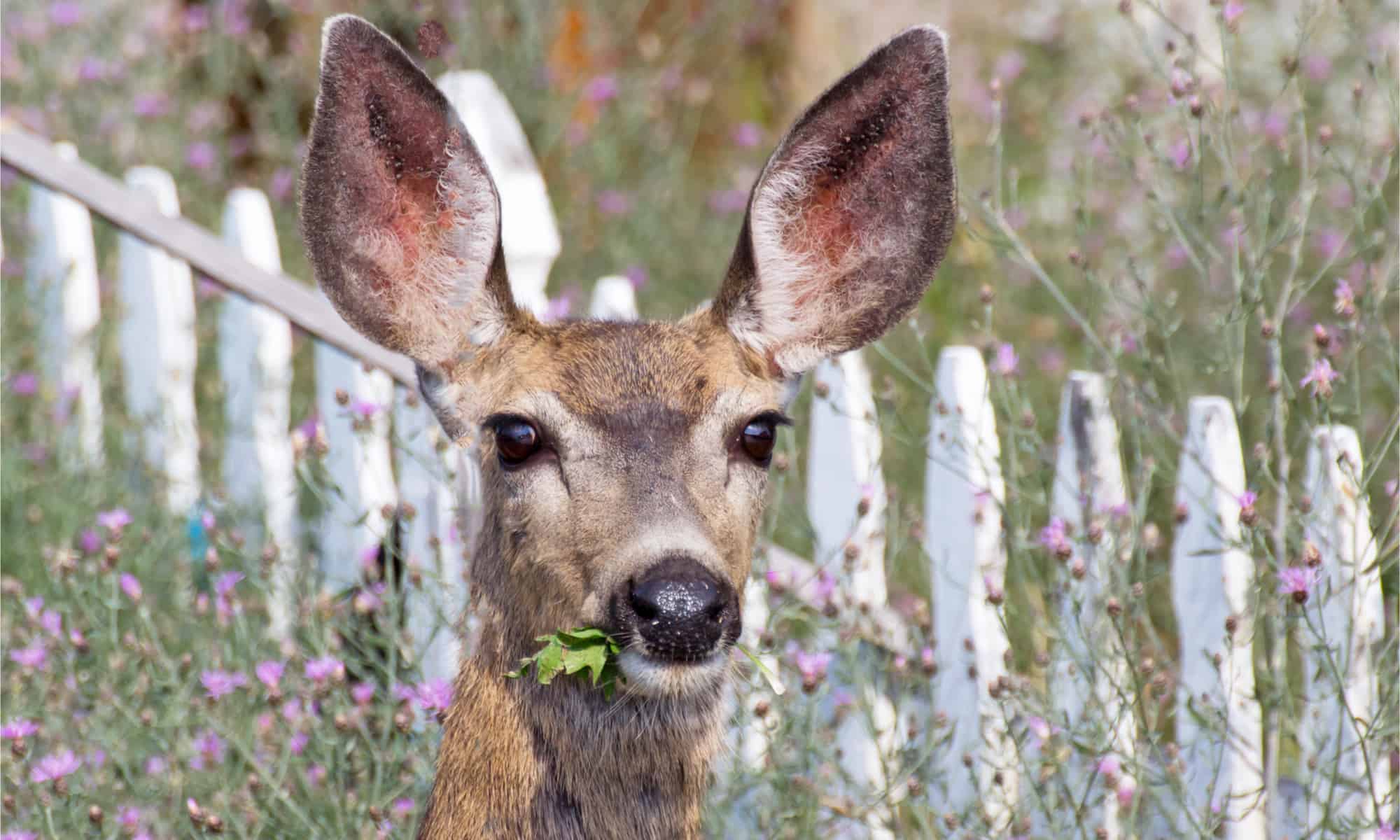

Oh, dear! Or actually, deer! Deer are beautiful animals that often remind us of our childhood favorite, the movie Bambi. However, when you grow a beautiful garden and deer are gobbling it up, you might not feel too optimistic about Bambi. If you share living space with these animals and want your garden to thrive, you might want to discover which plants and flowers deer do not eat. Let’s get started!
Flowers That Deer Do Not Eat
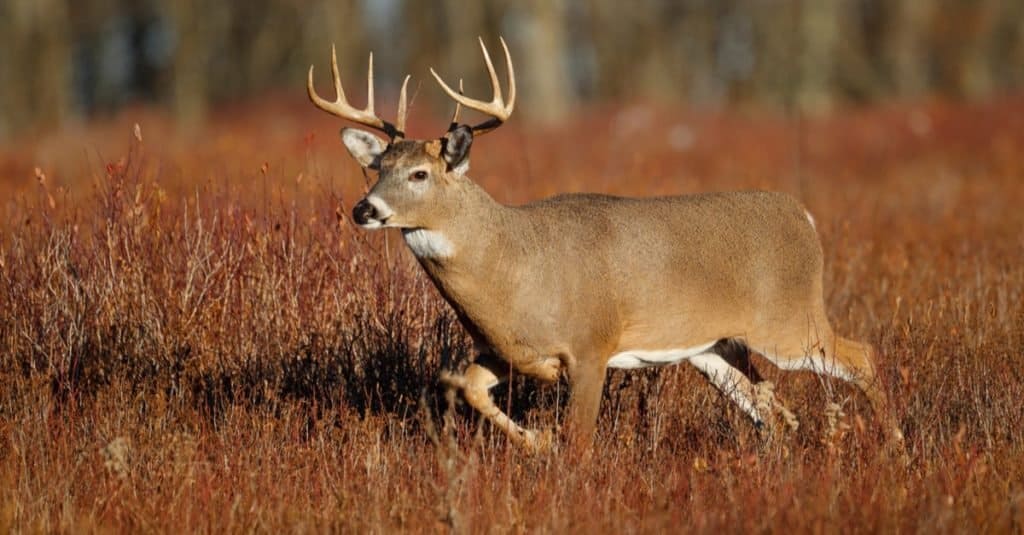
A white-tailed deer standing in a meadow
©Paul Tessier/Shutterstock.com
If you struggle with deer eating your plants, then you might want to consider planting some of the plants that deer do not typically eat. If you love daffodils, foxgloves, and poppies, these flowers are a great choice for your garden. These flowers are actually poisonous to deer, which means they will usually avoid them. Besides poisonous flowers, deer also tend to avoid blossoms with a strong scent.
Other examples of flowers that deer do not eat are lavender, peonies, and bearded irises. However, although deer usually avoid flowers with strong odors, they may still eat them if they are hungry and desperate.
Deer also don’t like eating something that has a rough texture. As a result, prickly plants are perfect for growing in your garden. An example of a prickly-flowered plant is Globe Thistle (Echinops). If you have a shady garden, then you could also plant bleeding hearts and astilbe. Different types of astilbe that deer won’t eat are the bridal veil, visions, and fanal. If you have a sunny garden, we suggest planting Zagreb. This flowering plant is known to attract bees and not deer, which is very useful for your garden. Other sun-favoring flowering plants that are deer-resistant are blazing stars, Echinacea purpurea, wood sage, and the shasta daisy.
Which Other Plants Do Deer Not Eat?
In addition to the plants we’ve already mentioned, deer tend to avoid plants that have thick and dense leaves. Examples of these are yucca and thorn-filled plants. However, even though rose bushes have thorns, deer see these as a tasty snack.
Many ornamental grasses are deer-resistant though, which is a bonus as this has become a new trend in garden landscaping. If you want to use ornamental grass, we suggest using Japanese blood grass, as it is deer-resistant.
Deer also don’t like eating shrubs like lilacs, butterfly bushes, boxwood, forsythia, and Rose of Sharon. These are also a great choice if you want to add beautiful bursts of color to your garden.
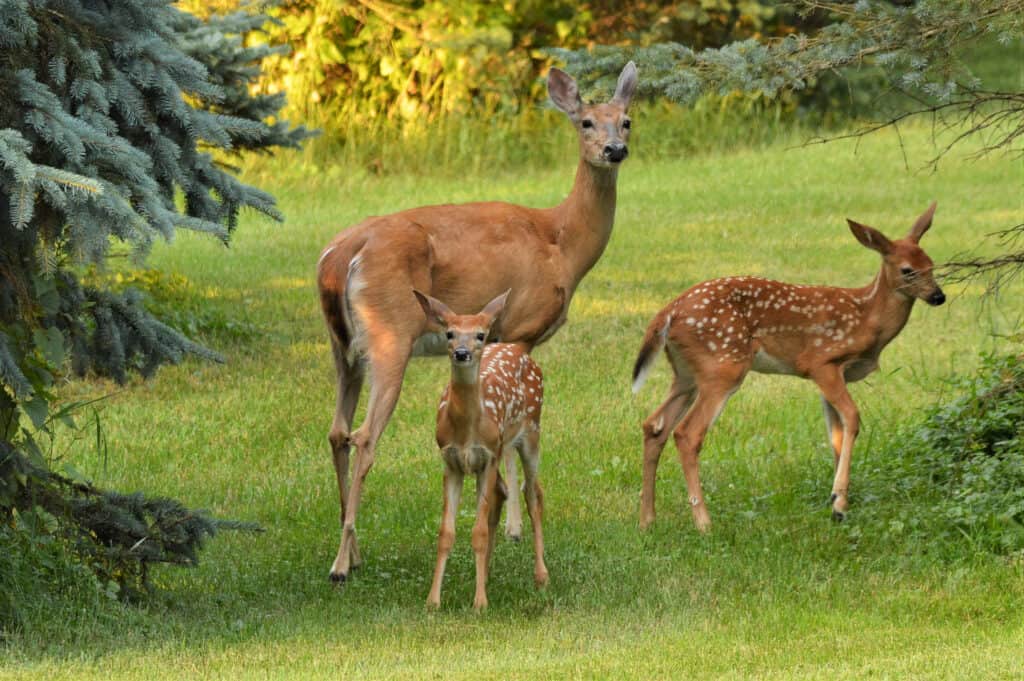
What flowers do deer not eat in your garden?
©Lester Graham/Shutterstock.com
Besides this, here are a few more plants that deer are sure to steer clear of unless they are desperate:
- Yarrow
- Monkshood
- Ageratum
- Onion
- Allegheny Serviceberry
- Common Tansy
- Snapdragon
- Horseradish
- Catmint
- Mint
- Tarragon
- Silver Mound
- Cinquefoil
- Jack-in-the-pulpit
- Wild Ginger
- Asparagus
- Pine
- Aster
- Barberry
- Borage
- Buttercup
- Pot Marigold
What Do Deer Eat?
Now that you know what deer don’t like to eat, how about what they do like? Deer are foragers and herbivores, and they spend most of their time looking for food, which is why they have a vast diet. Additionally, they consume large amounts of food, as they must ingest 6% to 8% of their body weight daily from spring till fall.
This consumption rate ensures they stay healthy and prepare themselves physically well for the winter months. If deer can eat nutrient-rich plants and flowers with more protein, energy, and minerals, they will prefer these kinds of food. Conversely, they will likely eat deer-resistant flowers and plants if they cannot find their favorite nutrient-rich foods.
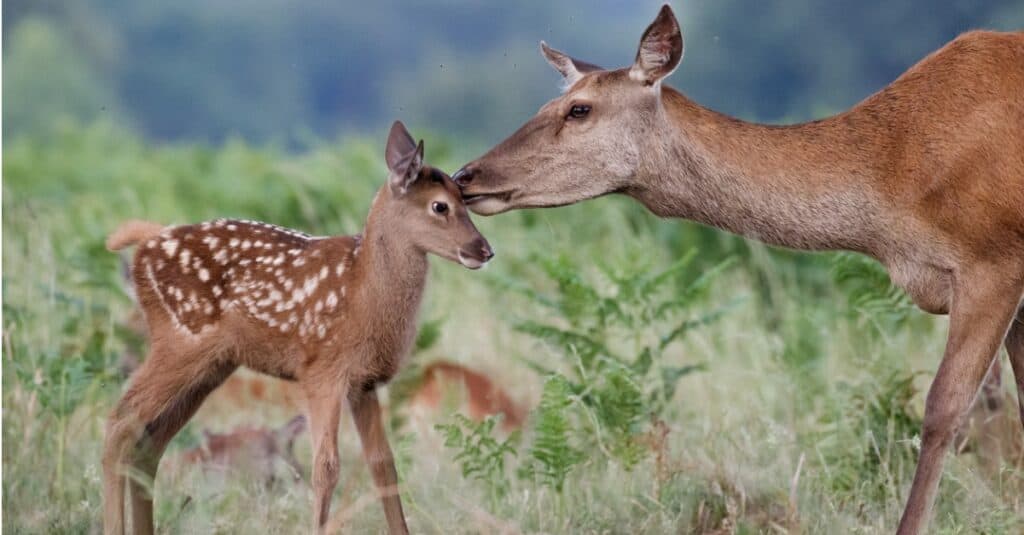
In order to prepare for the winter months, in the fall, deer begin eating nuts and berries to add a layer of fat to their bodies.
©shaftinaction/Shutterstock.com
The diet of deer can be classified into five groups, ranking in dominance. These categories are browse, forbs, mast, crops, and lichen.
1. Browse
Deer browse the leaves of plants and the ends of twigs. Also, the plants they often enjoy in this category include trees, different shrubs, and vines. And even though deer do not favor foods with rough textures, like twigs, this is often one of the only food sources available during the winter. Twigs are an excellent food source, though, as they have high fiber content and assist digestion.
2. Forbs
Forbs are the leaves and stems of herbaceous plants. Herbaceous plants are not woody and are known to have broad leaves. Examples of these plants are weeds and some types of crops. Deer eat forbs during the late spring and summer, which they mostly find in suburban areas. You should avoid cultivating this plant if you don’t want to attract unwanted visitors. Deers love forbs as they are high in nutrients, can be easily digested, and taste good.
3. Mast
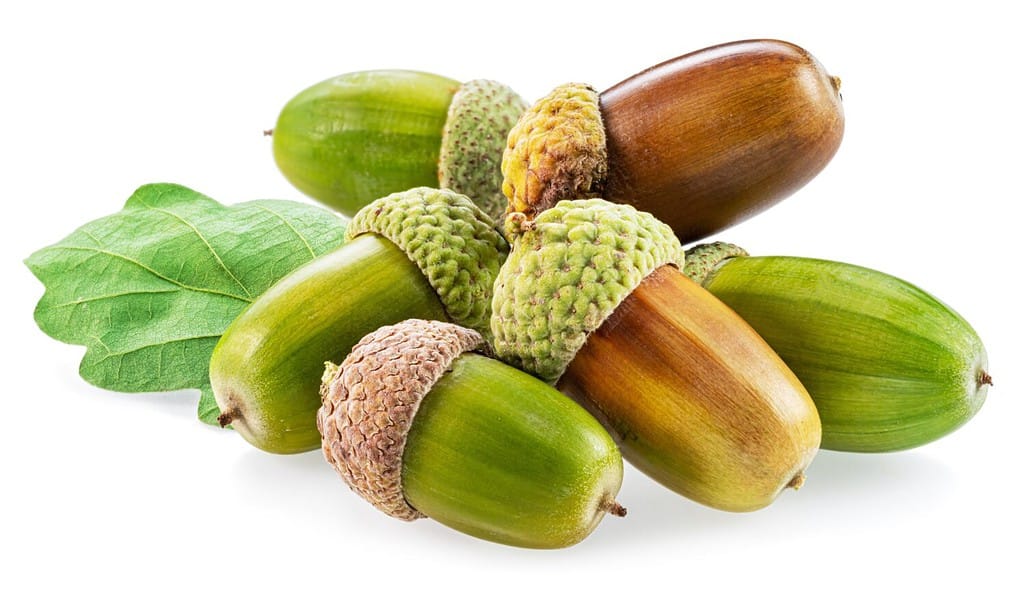
Acorns are a staple diet for deer during the winter.
©Valentyn Volkov/Shutterstock.com
The mast is a hard or soft fruiting plant. Examples of these plants are acorns, nuts, berries, and apples, to name a few. These foods provide a source of high energy and nutrients while tasting good. When it comes to soft mast, like berries and apples, deer will often eat these during the warmer months because of their high sugar levels and vitamin content. This food type gives deer energy and prepares them for winter. On the other hand, they eat hard mast like acorns and nuts during the colder months because of the high levels of fats and carbohydrates. This hard mast effectively sustains them during the colder months when other foods are scarce or non-existent.
4. Crops
Deer also eat the leaves and stems of grass. Examples of these plants are warm and cool-season grasses, sedges, and corn. Although deer do eat grass, it is not their favorite food. Deer don’t find grasses easily digestible, and they are low in nutrients, so they mostly avoid this food. Also, deer only eat grass during late winter and early spring, as it is often the first new plant and is widespread.
5. Lichen
Lichen and fungus are plants that grow on trees, rocks, and some soils. Examples of lichen and fungus that deer eat are old man’s beard, moss, and mushrooms. Although these plants have nutritious value, they are often found in small quantities and used as an emergency source of food rather than a primary source of food.