
Quick Take
- Dragonflies are carnivorous predators and only consume animal matter.
- They are members of the order Odonata, meaning “toothed one” in Greek.
- They have strong, serrated upper jaws called mandibles that resemble teeth.
- Most dragonflies’ mouthparts cannot break human skin, so bites are uncommon.
With the exception of Antarctica, dragonflies are found everywhere on Earth. There are around 3,000 known dragonfly species in the world. Dragonflies and their ancestors have been on Earth for over 300 million years, which is about 100 million years before the first dinosaurs. Along with damselflies, dragonflies are members of the order Odonata, meaning “toothed one” in Greek. But do dragonflies really have teeth? Keep reading to find out exactly why dragonflies are called “toothed.”
Dragonfly Facts
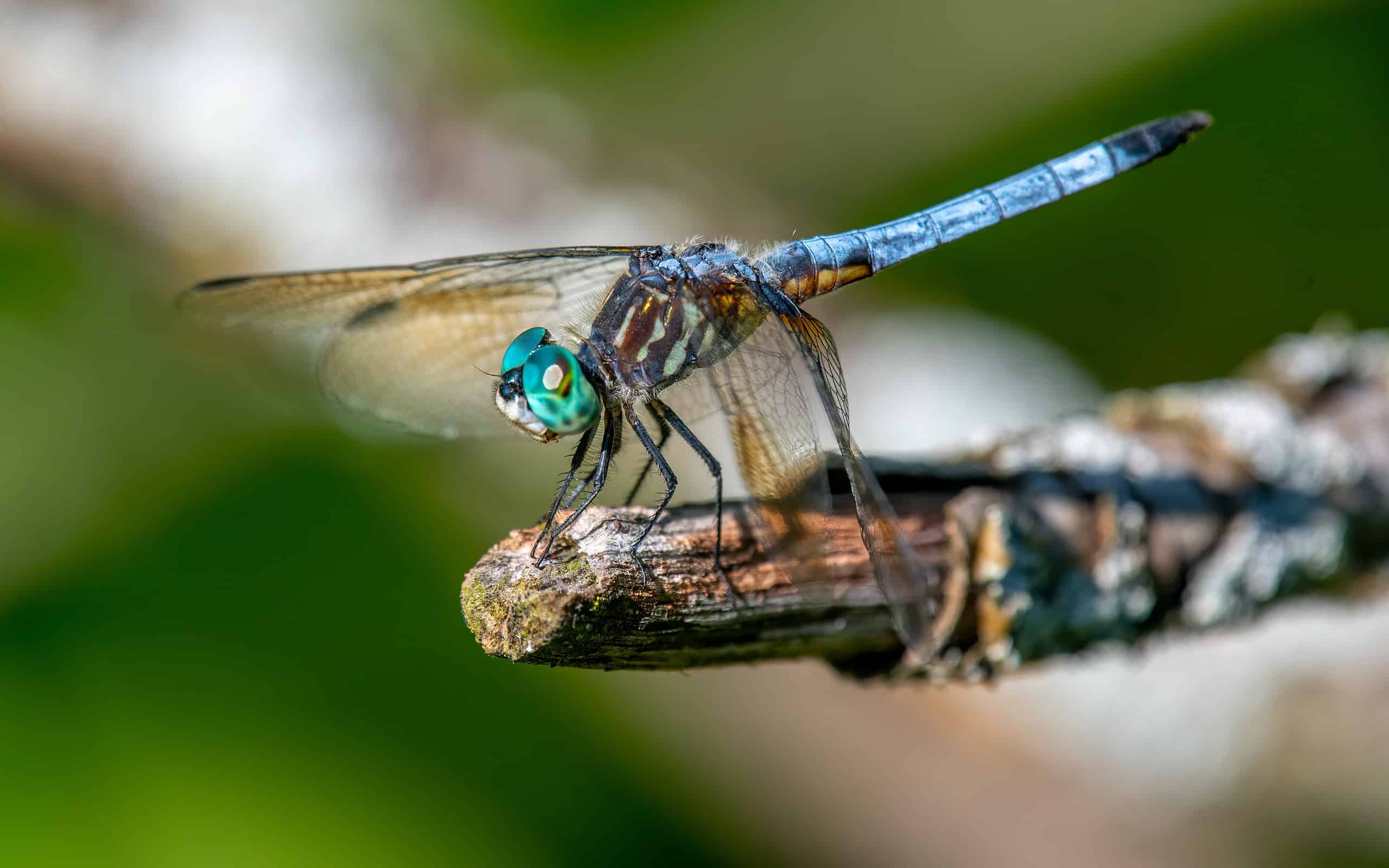
Dragonflies have long, thin abdomens, robust bodies, small heads, and huge eyes. They have two pairs of wings that stretch open horizontally, even at rest. They typically measure between 1 to 5 inches in length with wingspans of around 6 inches. Dragonflies have six legs, but their legs are not used for walking. Their legs are primarily used for catching and holding prey, climbing, and perching. They are exceptional fliers, able to operate each wing independently. This allows them to fly backward, vertically, and hover in place like helicopters. They are among the fastest flying insects on Earth, reaching speeds of up to 36mph.
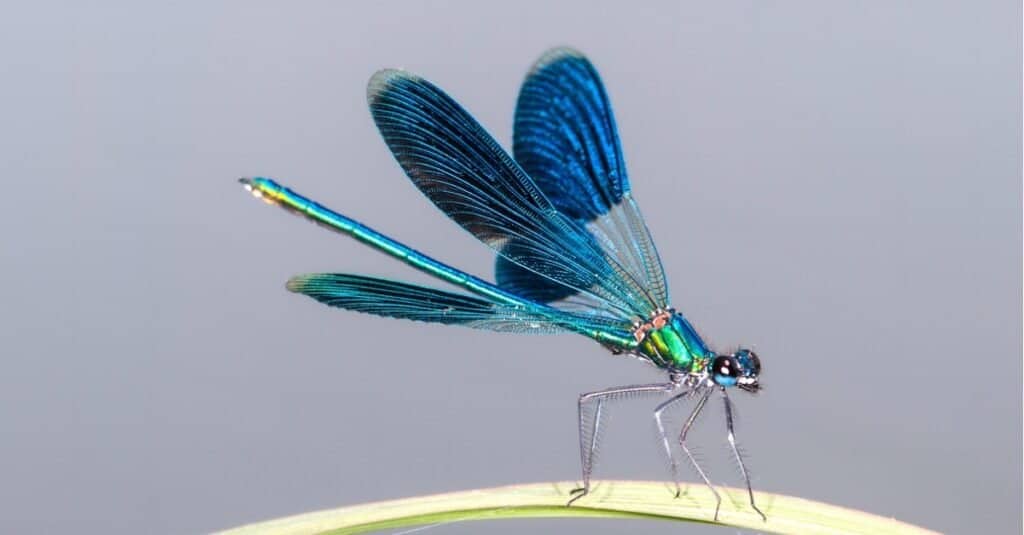
A dragonfly’s field of vision is around 360 degrees.
©iStock.com/MBadnjar
Their compound eyes are so large that they have a nearly 360° field of view, and they can process around 200 images per second. Some species can even detect ultraviolet and polarized light. Most dragonfly species are found near freshwater habitats, including streams, ponds, bogs, marshes, swamps, lakes, and rivers. Dragonflies require water in which to lay their eggs, particularly around submersed tree roots and other aquatic vegetation.
Do Dragonflies Have Teeth?
Despite belonging to a taxonomic order that means “toothed,” dragonflies lack true teeth. However, dragonflies are carnivores, so they have mouthparts that bite and chew. They have strong, serrated upper jaws called mandibles that resemble teeth. Their mandibles shear sideways during biting and chewing. Lower, multi-segmented jaws called maxillae work in conjunction with the mandibles to grasp, manipulate, and chew food. Research has found that the mandibles are typically more active during the biting process, while the maxillae are more active during chewing.
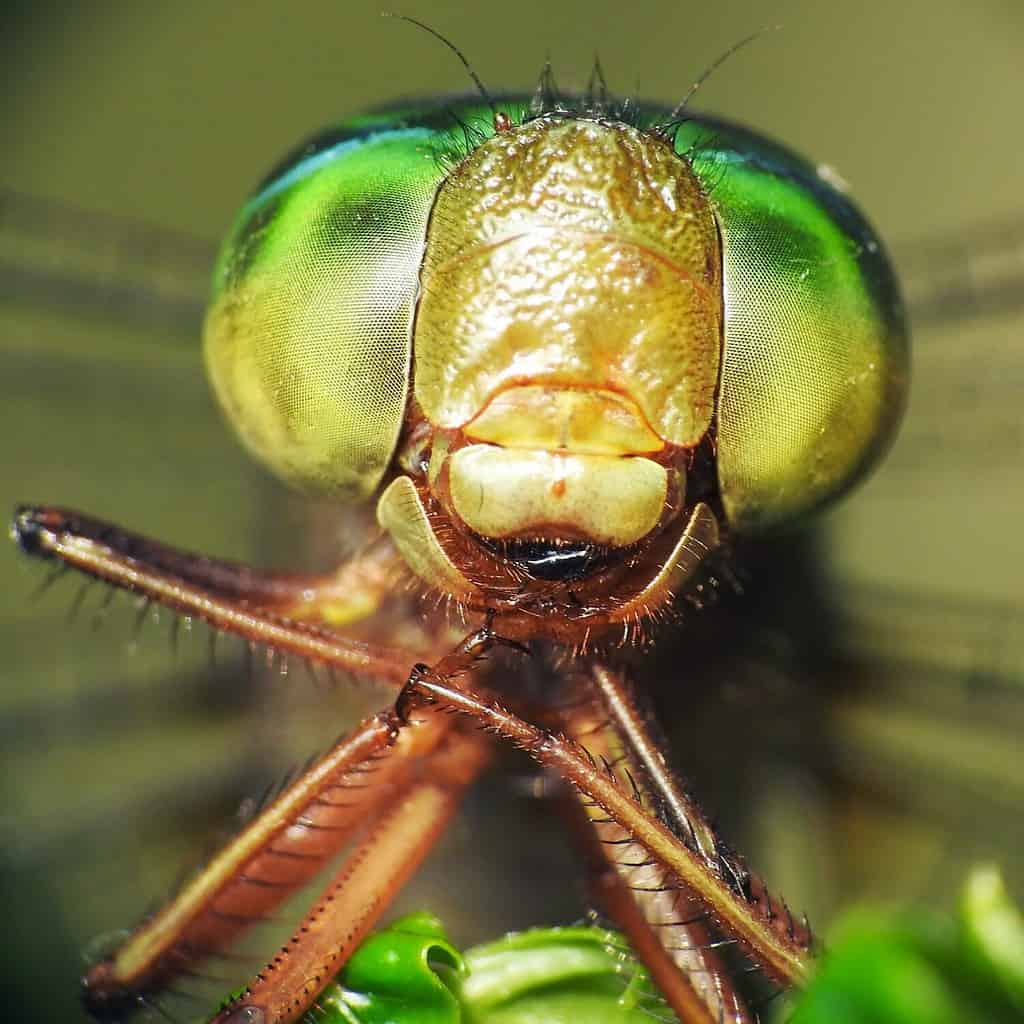
Dragonflies do not have teeth, but they have serrated mandibles that resemble teeth.
©Reno Abimanyu/Shutterstock.com
The dragonfly’s labrum serves as an upper lip. This flap-like structure covers the mouth and helps secure prey during feeding. The lower lip, or labium, is an extendable appendage that captures prey, especially in the larval stage. In dragonfly nymphs, the labium functions as a sort of scoop that shoots out and snatches underwater prey such as mosquito larvae and worms. Adult dragonflies have other methods of capturing prey.
Dragonfly Hunting Tactics
Dragonflies rely on their exceptional vision to hunt for prey. As mentioned above, they have a nearly 360° field of view, and they can process images very quickly. Their compound eyes are made up of individual units called ommatidia. Each ommatidium points in a different direction and contains a lens, a cone, pigment cells, and photoreceptors. Each eye can contain as many as 30,000 ommatidia. They also have three smaller eyes, called ocelli, each with a single lens to aid in stabilization during flight. Excellent vision and extraordinary flying abilities allow dragonflies to calculate the trajectories of other insects and intercept them mid-air. This is why dragonflies have capture rates of up to 97%.
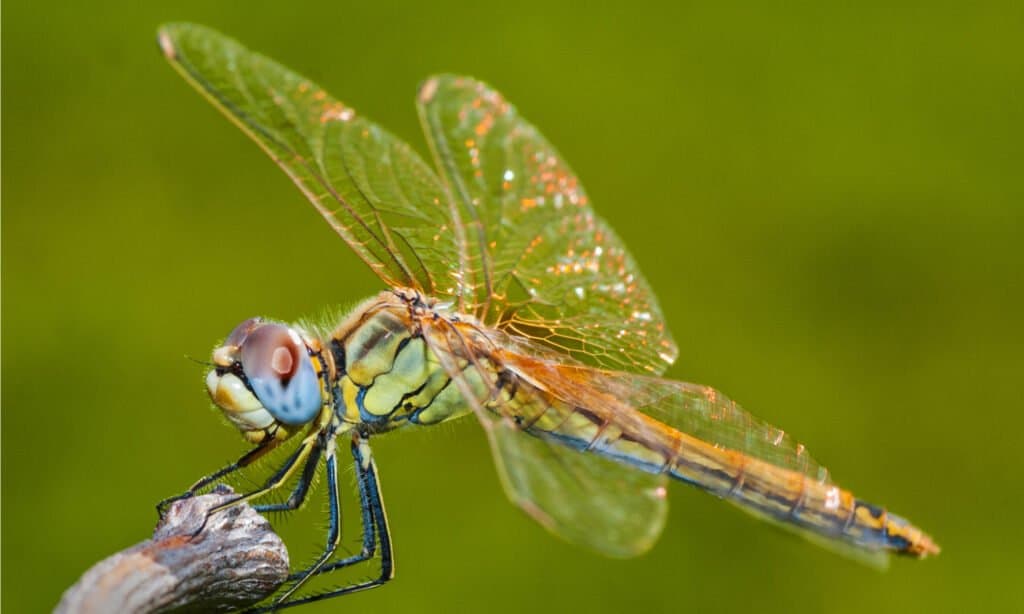
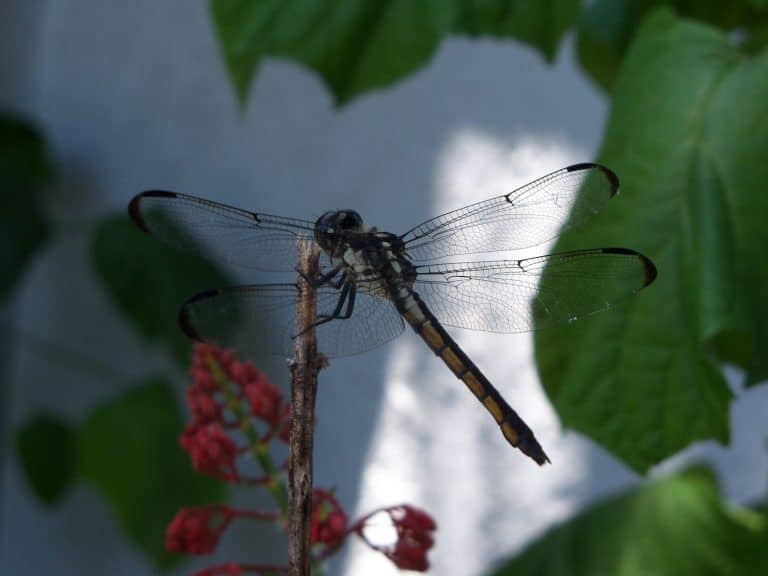
Dragonflies sometimes perch on plants and wait for prey to pass by before swooping in to grab it.
©kesipun/Shutterstock.com
Although dragonflies’ movements may seem random to us, they are actually using different hunting tactics to capture prey. Hunting methods also vary by species. These methods include:
- Gleaning: hovering over vegetation to snag insects that are perched on the stems and leaves
- Hawking: darting back and forth, using their spiny legs to form a net, scooping up insects in mid-air
- Sallying: waiting for prey to pass by their perch before swooping in to grab it
The Dragonfly Diet
Dragonflies are carnivorous predators and only consume animal matter. They typically eat other flying insects, with mosquitoes, midges, and gnats making up a large part of their diet. They may also consume wasps, bees, flies, butterflies, moths, and smaller dragonflies. Their flight abilities require a great deal of energy, so dragonflies must eat up to 20% of their body weight or more each day.
Dragonfly larvae are also carnivores and active hunters. They hatch in the water and consume a variety of aquatic organisms, including mosquito larvae, worms, tadpoles, small fish, other insects and invertebrates, and other dragonfly nymphs. Like adult dragonflies, nymphs are voracious eaters, but they may not eat every day depending on prey availability.

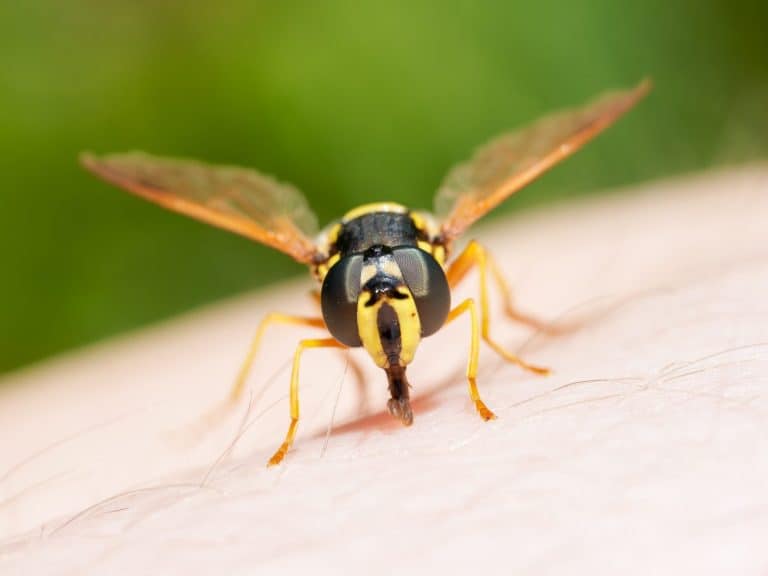
Dragonflies are not aggressive towards humans, but they may bite in self-defense.
©Renjot/Shutterstock.com
Do Dragonflies Bite?
While they are certainly dangerous predators to other flying insects, dragonflies are not known to be aggressive towards humans. They do not have stingers or venom. However, if they are mishandled or feel threatened, they may bite in self-defense. While most dragonflies’ mouthparts cannot break the skin, some of the larger species, such as giant darners and emperor dragonflies, have jaws that are powerful enough to do so. However, bites are rare and are not dangerous.