
Fish constitute more than half of all known vertebrate species on Earth. To date, scientists have described roughly 34,000 to 38,000 fish species, though some estimates exceed 40,000, and new ones are discovered every year. Of these, over 41% inhabit freshwater, despite freshwater representing only about 0.01% of the Earth’s total water and 0.3% of its freshwater resources.
Remarkably, the Great Lakes in North America contain approximately 20% of the world’s surface freshwater. Anglers from across the continent flock to these waters each year in search of exciting catches. With around 160 species of fish inhabiting the Great Lakes, opportunities abound—but some species truly stand out for their size.
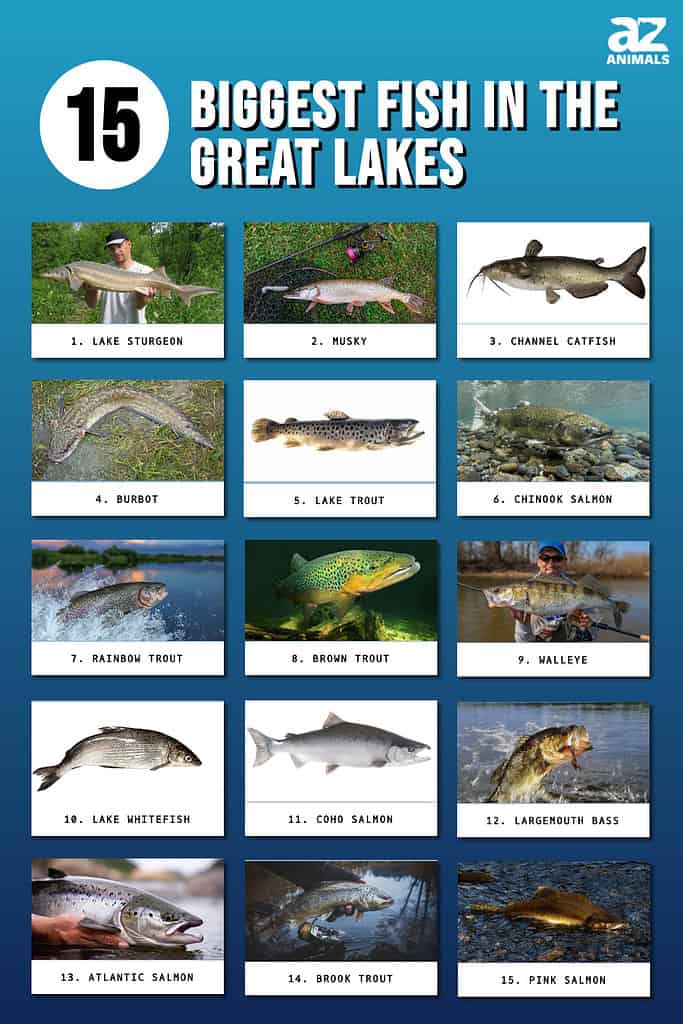
Here’s a guide to the 15 largest fish species found in the Great Lakes.
Where Are the Great Lakes?
The Great Lakes, which include Superior, Michigan, Huron, Erie, and Ontario, are located in the northeastern portion of North America. Together, they form the largest group of freshwater lakes by surface area in the world.
They span eight U.S. states (Minnesota, Wisconsin, Illinois, Indiana, Michigan, Ohio, Pennsylvania, and New York) and the Canadian province of Ontario. (Note: Quebec does not border any of the Great Lakes, though it lies within the broader watershed.)
These lakes are interconnected by rivers, including the Detroit River, St. Clair River, and the Niagara River, and they ultimately drain into the Atlantic Ocean via the St. Lawrence River. The Great Lakes basin is home to more than 35 million people and serves as a vital source of drinking water, recreation, and commerce.
The 15 Largest Fish in the Great Lakes
15. Pink Salmon (Oncorhynchus gorbuscha) — Up to 15 lbs (typically ~4-5 lbs)
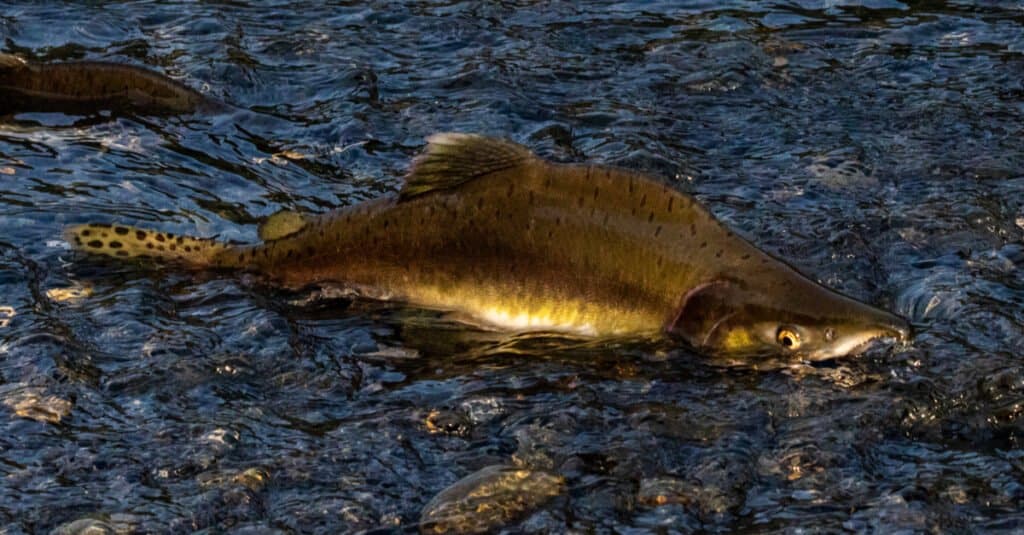
The smallest salmon species in the Great Lakes is the pink salmon.
©Mark A. McCaffrey/Shutterstock.com
The pink salmon is the smallest salmon species inhabiting the Great Lakes, weighing 4.8 lbs on average. Originally native to Pacific and Arctic waters, pink salmon were introduced to the Great Lakes in the 1950s. They’ve since established self-sustaining populations, particularly in Lake Superior. Though small compared to other salmonids, pink salmon are still a notable catch in these freshwater systems.
14. Brook Trout (Salvelinus fontinalis) — 6-15 lbs
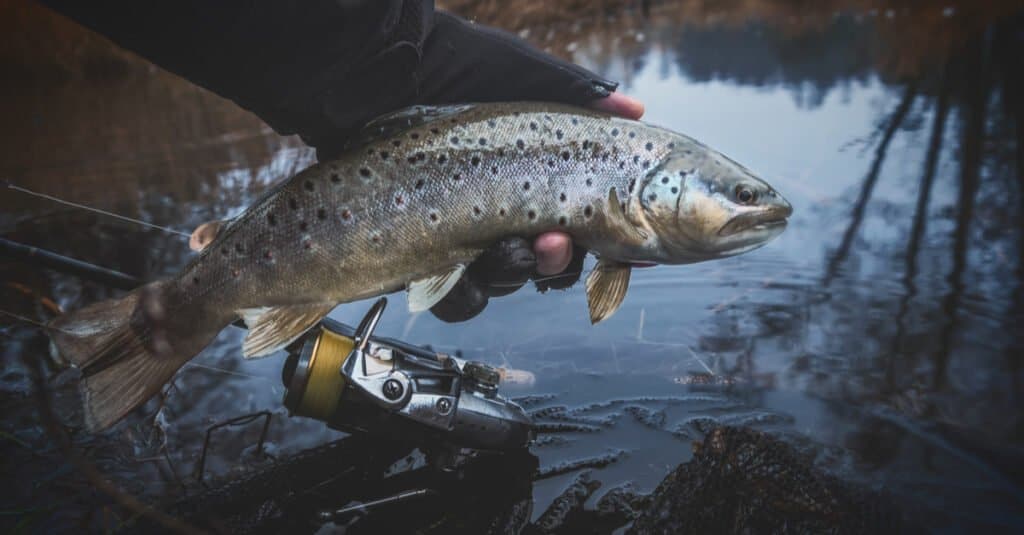
A brook trout typically weighs 6 pounds and can weigh as much as 15 pounds.
©wwwarjag/Shutterstock.com
The brook trout, Michigan’s state fish, is native to cold, clean waters throughout the region. Most weigh 1-6 lbs, but exceptionally large individuals, particularly in Lake Superior, can reach 14–15 lbs. Their vibrant coloration and sporting challenge make them a favorite among anglers.
13. Atlantic Salmon (Salmo salar) — 8-12 lbs
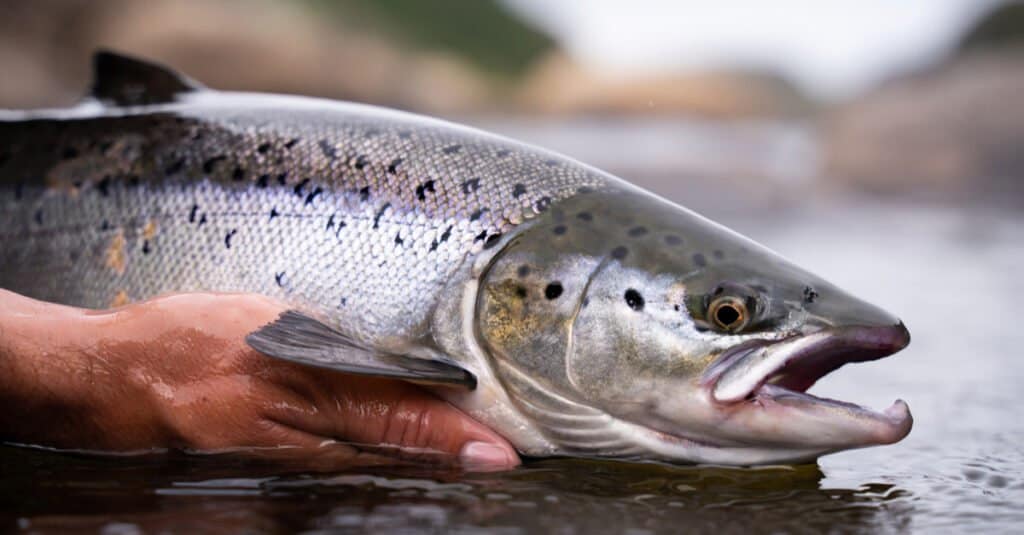
The third-largest Salmonidae species is the Atlantic salmon.
©Ilya Marchenko/Shutterstock.com
Atlantic salmon are native to the North Atlantic but have been stocked in some Great Lakes, particularly Lake Ontario, where restoration efforts continue. They typically weigh 8-12 lbs, though larger specimens can occur.
12. Largemouth Bass (Micropterus salmoides) – Up to 22 lbs (typically 3-6 lbs)
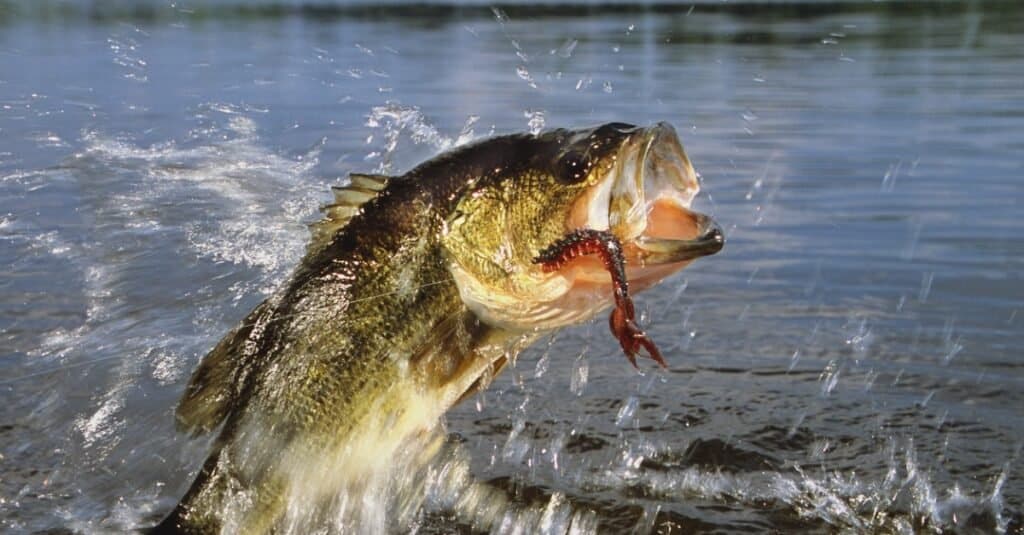
One of the most common species to catch in the United States is the largemouth bass.
©iStock.com/stammphoto
Popular among sport anglers, largemouth bass are abundant in warm, weedy shallows of the Great Lakes region. While trophy specimens can exceed 10 lbs, most catches fall under that mark. The world record is just over 22 lbs.
11. Coho Salmon (Oncorhynchus kisutch) – Up to 18.5 lbs
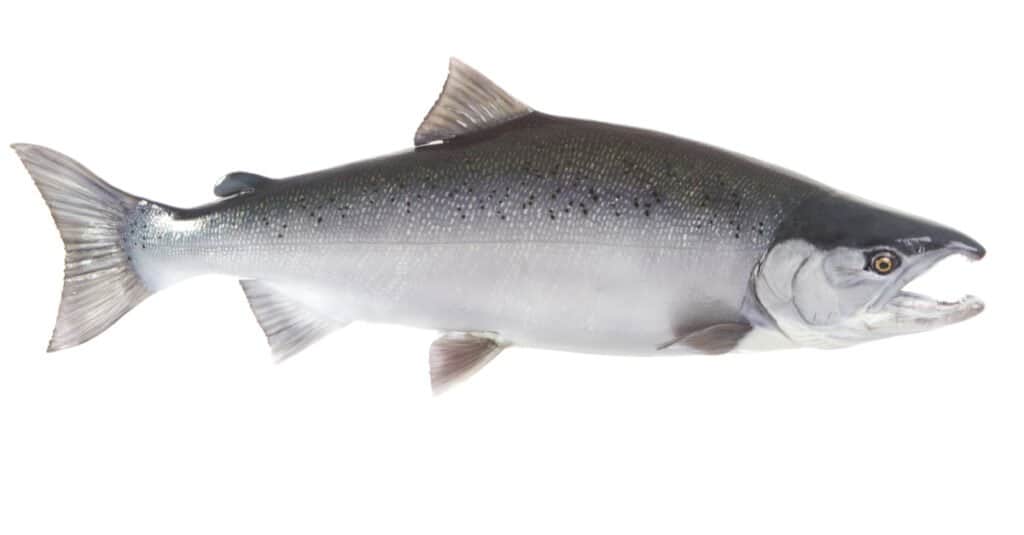
Coho salmon eat small fish, including anchovies, herring, and sardines.
©Keith Publicover/Shutterstock.com
Weighing about 18.52 lbs or 8.4 kg, the coho salmon is another huge salmon species that is considered a good catch in the Great Lakes or any other lake. Introduced to the Great Lakes in the 1960s to control invasive alewives, coho salmon have since become a prized game fish. They are known for their aggressive strikes and strong fights.
10. Lake Whitefish (Coregonus clupeaformis) – Up to 22 lbs
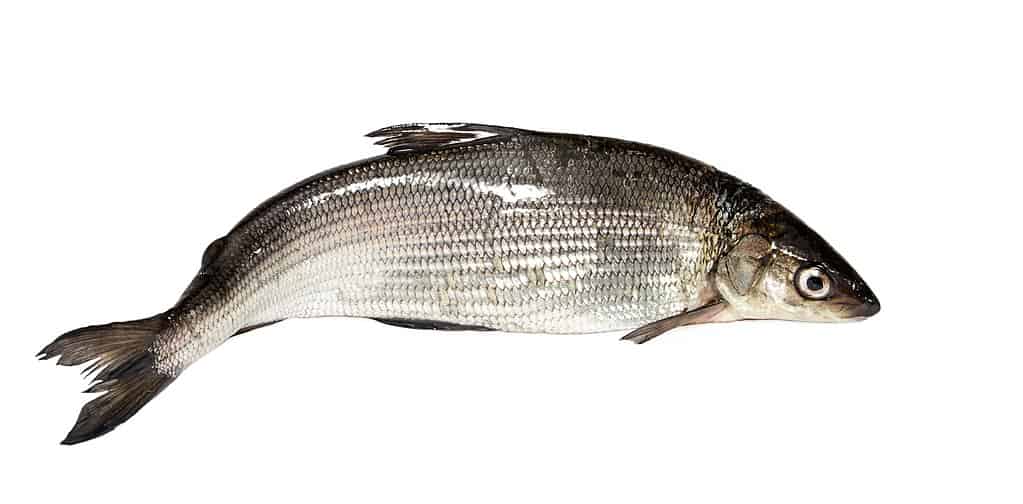
Weighing around 22 lbs, lake whitefish is one of the largest in the Great Lakes.
©Natalya Osipova/Shutterstock.com
Once a dietary staple for Indigenous peoples and early settlers, lake whitefish remain important both commercially and recreationally. Though most weigh 4-8 lbs, individuals up to 22 lbs have been recorded.
9. Walleye (Sander vitreus) – Up to 24 lbs

The walleye is the largest member of the perch family.
©FedBul/Shutterstock.com
The walleye is one of the Midwest’s most sought-after fish. Known for their excellent table fare, they are especially active in spring and fall. The largest on record weighed 25 lbs, caught in Tennessee (not the Great Lakes).
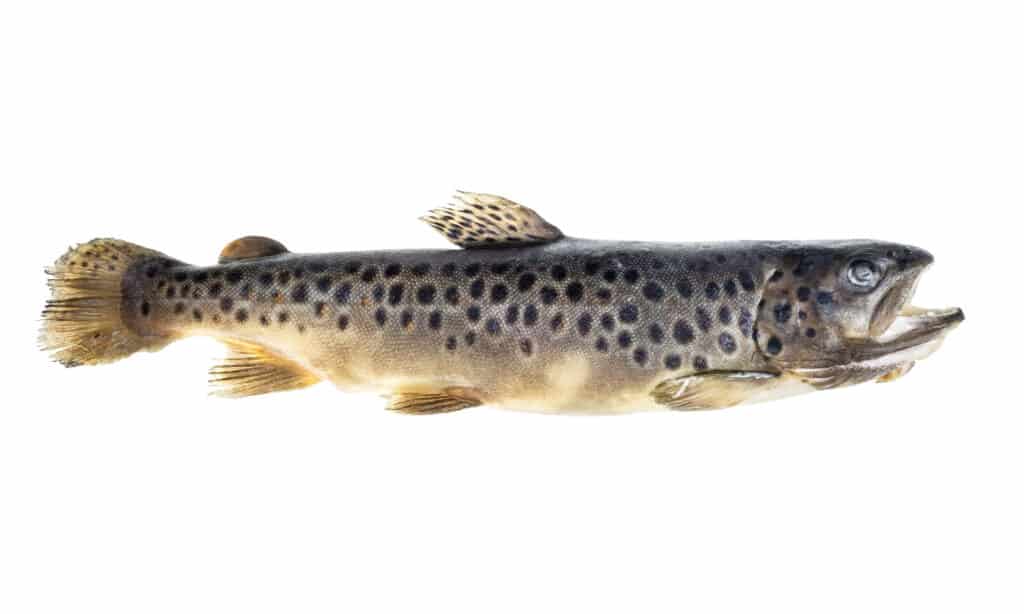
8. Brown Trout (Salmo trutta) – Average 10-26 lbs, max 40-50 lbs
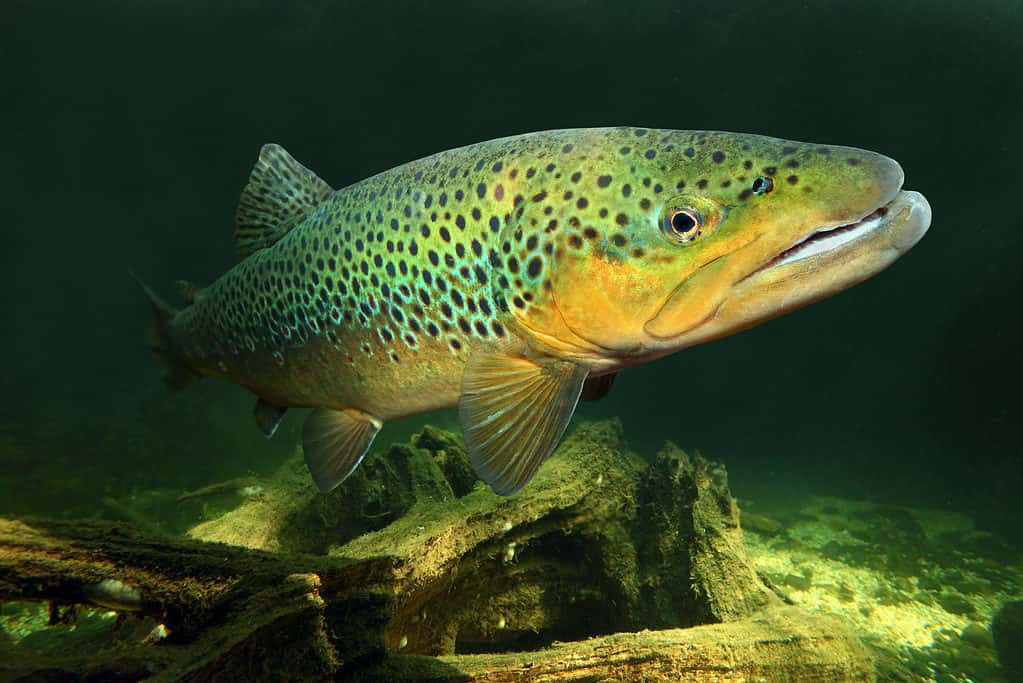
Although adults average 26.45 pounds, some brown trout can weigh 53 pounds.
©iStock.com/abadonian
Brown trout were first introduced to the Great Lakes in the late 1800s and have thrived, particularly in Lake Michigan and Lake Ontario. While most weigh under 20 lbs, lake-run specimens have topped 40 lbs.
7. Rainbow Trout / Steelhead (Oncorhynchus mykiss) – Average 5-15 lbs, max 25-30 lbs
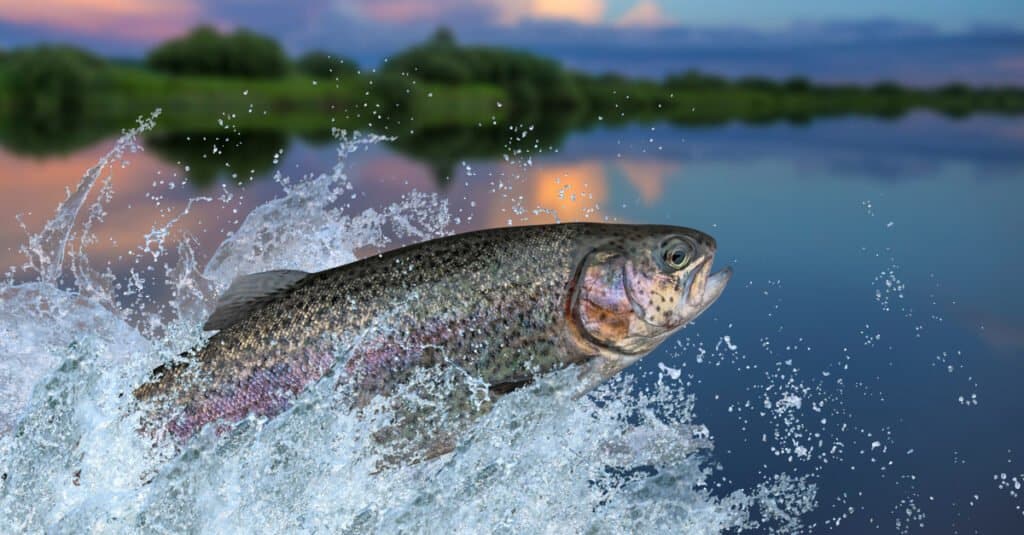
Rainbow trout weigh 26.45 lbs.
©FedBul/Shutterstock.com
Native to the Pacific coast, rainbow trout (known as “steelhead” when lake-run) are widely stocked in all five Great Lakes. Their size can rival brown trout, with some reaching or exceeding 25 lbs.
6. Chinook Salmon (Oncorhynchus tshawytscha) – Up to 30.86 lbs
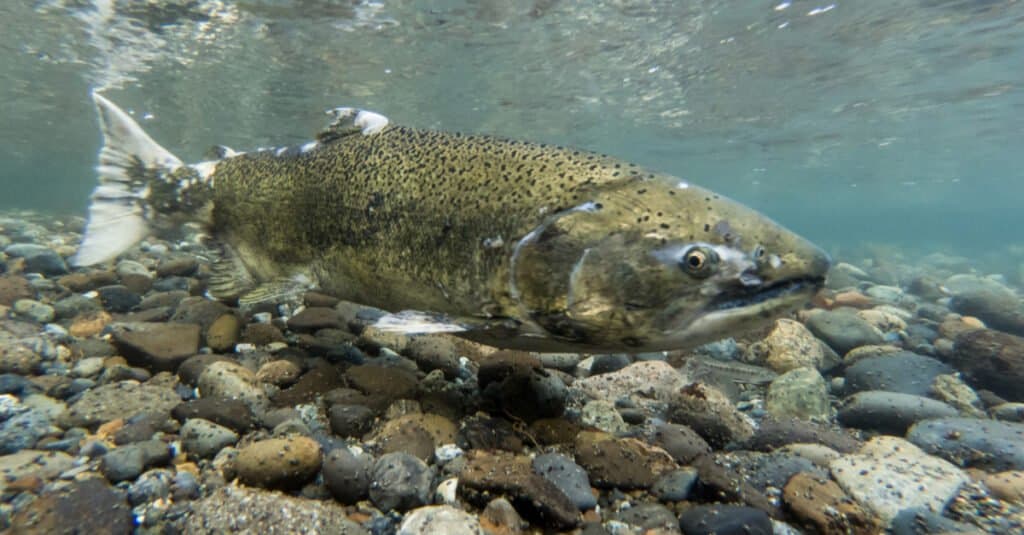
The Chinook salmon is the largest among the Pacific salmon.
©Kevin Cass/Shutterstock.com
Also known as king salmon, Chinooks are the largest of the Pacific salmon species and have adapted well to the Great Lakes since their introduction in the 1960s. Specimens over 30 lbs are possible.
5. Lake Trout (Salvelinus namaycush) – Up to 40 lbs
The fifth-largest fish in the Great Lakes is the Lake Trout.
©iStock.com/VvoeVale
A native deep-water predator, lake trout populations suffered dramatically due to overfishing and invasive sea lamprey but have rebounded thanks to stocking and conservation. Trophy specimens can approach 40 lbs.
4. Burbot (Lota lota) – Up to 41.89 lbs
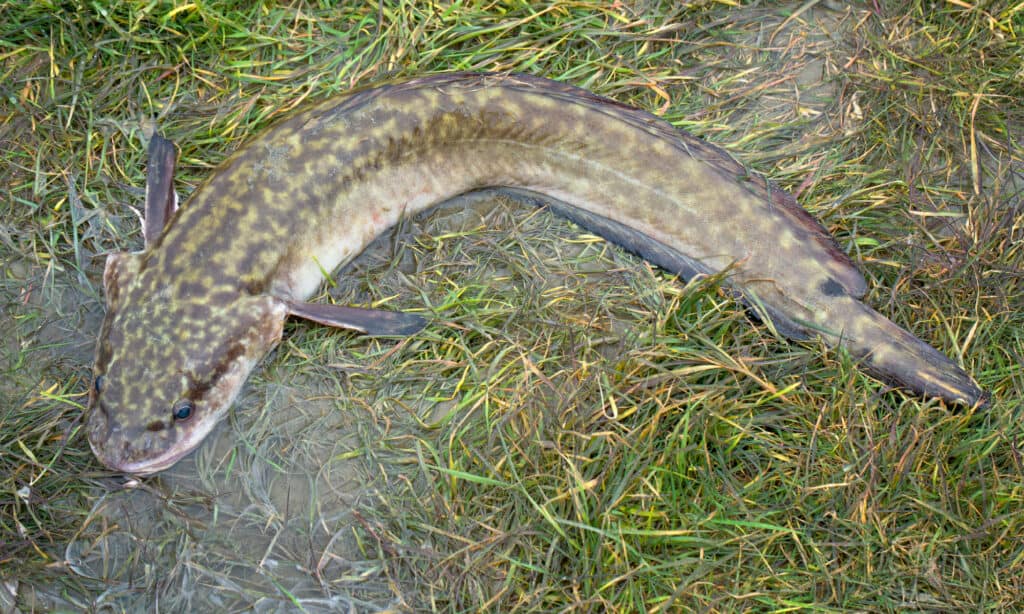
The burbot looks like a cod.
©iStock.com/Krugloff
The burbot is the only freshwater member of the cod family and thrives in cold, deep waters. Rarely targeted, this strange-looking fish is often overlooked but can grow surprisingly large.
3. Channel Catfish (Ictalurus punctatus) – Typically 5-20 lbs, max 50+ lbs
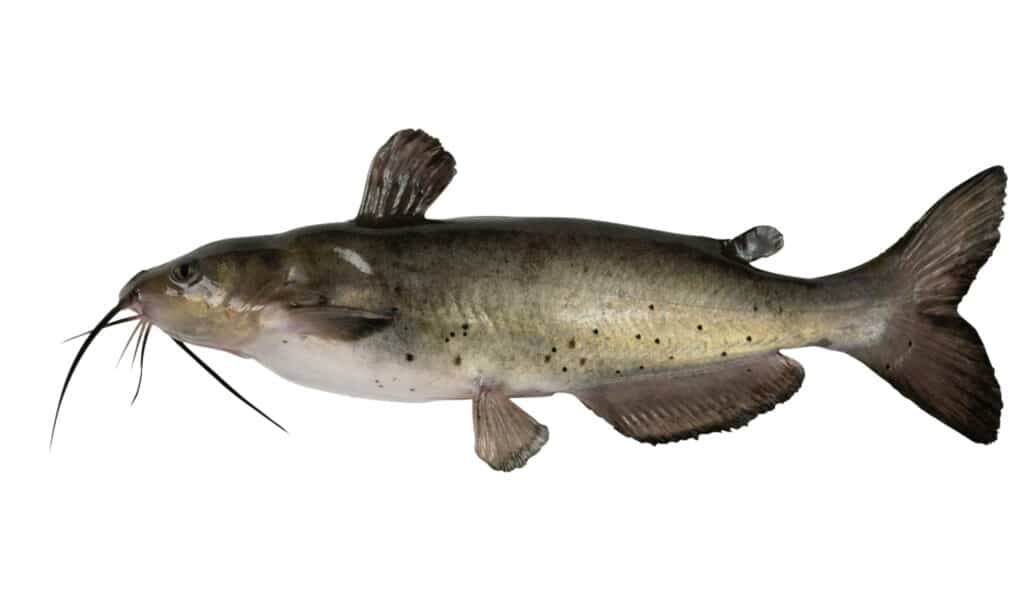
Channel catfish can be found in all Great Lakes apart from Lake Superior.
©Sergey Goruppa/Shutterstock.com
Found in all the Great Lakes except Lake Superior, channel catfish are bottom-dwelling scavengers that are also valued as a food fish. Trophy-sized individuals can exceed 50 lbs.
2. Muskellunge (Esox masquinongy) – Up to 70 lbs
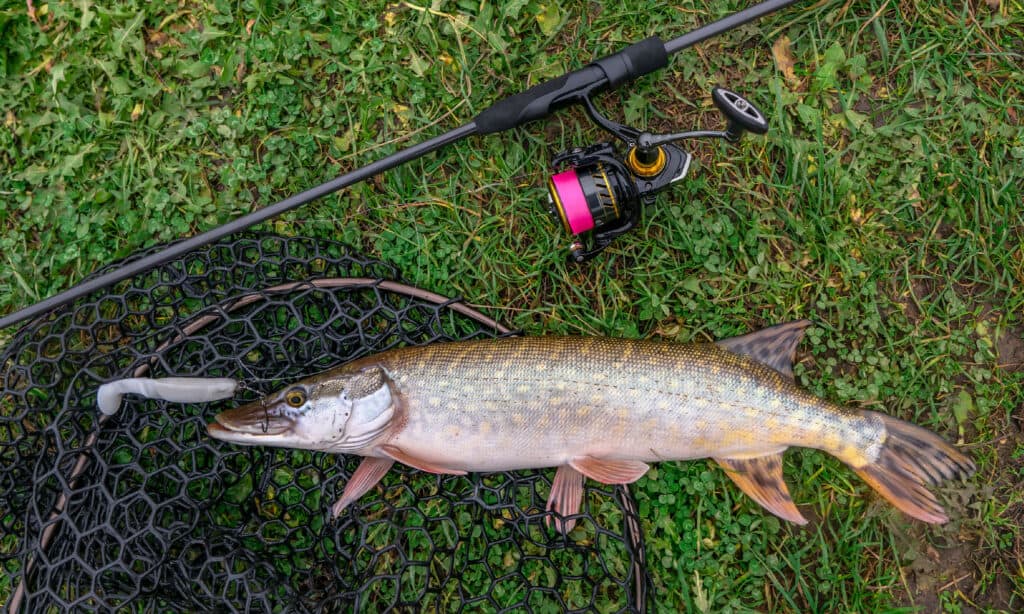
After sturgeon, muskies are the second-largest fish in the Great Lakes.
©iStock.com/FedBul
The muskellunge, or musky, is one of North America’s premier freshwater predators. Although most range between 10-40 lbs, giants over 60 lbs have been caught. Known as the “fish of 10,000 casts,” muskies are elusive and powerful.
1. Lake Sturgeon (Acipenser fulvescens) – Up to 200 lbs

The lake sturgeon is the biggest Great Lake Fish.
©Fabien Monteil/Shutterstock.com
The lake sturgeon is the undisputed heavyweight of the Great Lakes. This ancient, bottom-feeding species can live for over 100 years and exceed 7 feet in length. The largest on record from these waters weighed nearly 200 lbs.
Honorable Mentions: Biggest Fish In The Great Lakes

There is a small population of Beluga Whales that live in the St. Lawerence River.
©Marco De Luca/Shutterstock.com
Beluga Whale (Delphinapterus leucas)
While not a resident of the Great Lakes themselves, beluga whales do inhabit the St. Lawrence River, which connects Lake Ontario to the Atlantic Ocean. Their presence near the mouth of the river is notable, but they are not considered part of the Great Lakes ecosystem proper.
Bluegill (Lepomis macrochirus)
One of the most common panfish in North America, bluegills are typically small (4-6 inches), though record-sized specimens have reached 4 lbs. They are a popular species for beginners and kids.
White Perch (Morone americana)
Native to the Atlantic coast, white perch have established invasive populations in several Great Lakes. Most specimens are under 1 lb, but larger individuals can reach 2 lbs or more.
Summary: The Largest fish in the Great Lakes
With roughly 160 fish species in the Great Lakes, the variety is vast—but in terms of sheer size, these 15 species dominate. From the ancient lake sturgeon to introduced Pacific salmon and elusive muskellunge, these giants help define one of the most iconic freshwater ecosystems on Earth.