Some of the largest fish of the Ganges River are the stuff of legends, while others are relatively unknown. The Ganges River is spiritually, economically, and ecologically vital to India and its people. Starting in the western Himalayas, the Ganges River, known locally as the Ganga, or the Padma, travels nearly 1,600 miles east across the northern face of India before emptying into the Bay of Bengal.
Here, we’ll explore the Ganges River and focus on the types of fish that inhabit this incredible waterway. We’ll learn about some of the most common fish in the Ganges River and also discover which is the largest fish in all of India. Then, we’ll take a closer look at the three largest fish in the Ganges River, including one that might not even seem like a fish at first glance. Read on to discover just how big the largest fish of the Ganges River grow.
What Kind of Fish Live in the Ganges River?
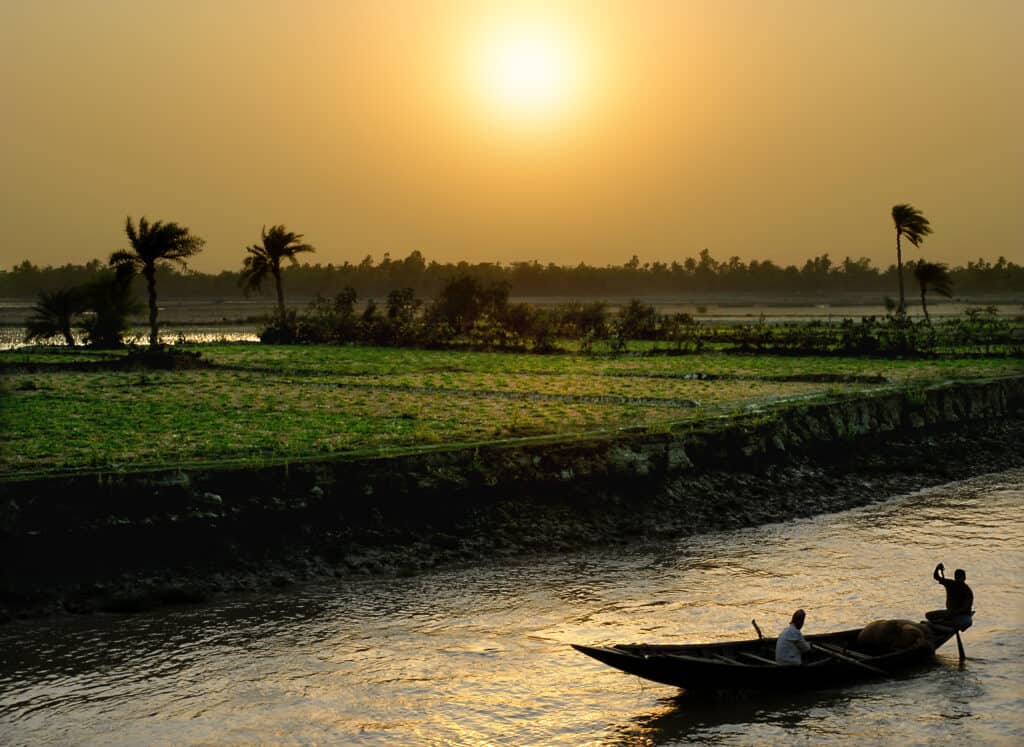
Apart from fish, the Ganges River is home to South Asian river dolphins, gharials, and many species of mammals and reptiles.
©Jono Photography/Shutterstock.com
There are nearly 150 species of fish living in the Ganges River today. Of these, only a few can be counted as the largest fish of the Ganges. Unfortunately, the Ganges River is one of the most polluted waterways in the world. That, combined with overfishing, loss of wetland areas to agricultural needs, and the construction of dams, puts many of the river’s fish in peril.
Some of the most common fish in the Ganges River include the silver mahseer, snow trout, wallago, Indian mottled eel, clown knifefish, bronze featherback, bata, and spotted barb. Many of the fish in the Ganges are economically important to the people living on the river’s banks. They provide both food and a livelihood for millions of people.
The Largest Fish of the Ganges River
The Ganges River is home to more than one giant fish, and as it turns out, determining which species gets the title is no easy feat. Some of these fish are rare and endangered, so they are infrequently seen and little is known about them. The following three river monsters living in these murky waters, together, share the crown. Let’s take a look at the three contenders for the biggest fish in the Ganges River.
Ganges Shark
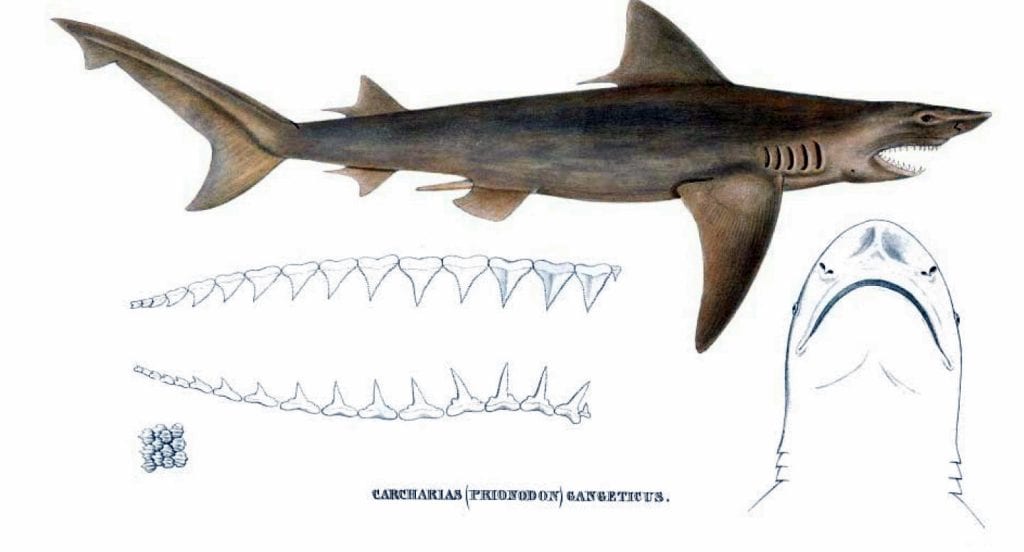
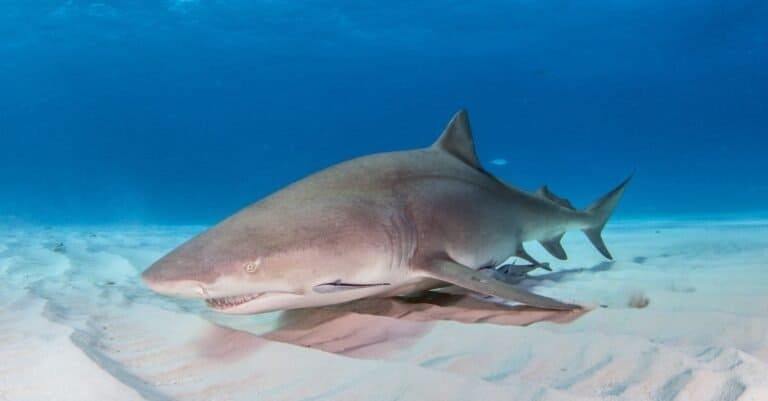
The Ganges river shark is one of the few shark species adapted to live exclusively in freshwater environments.
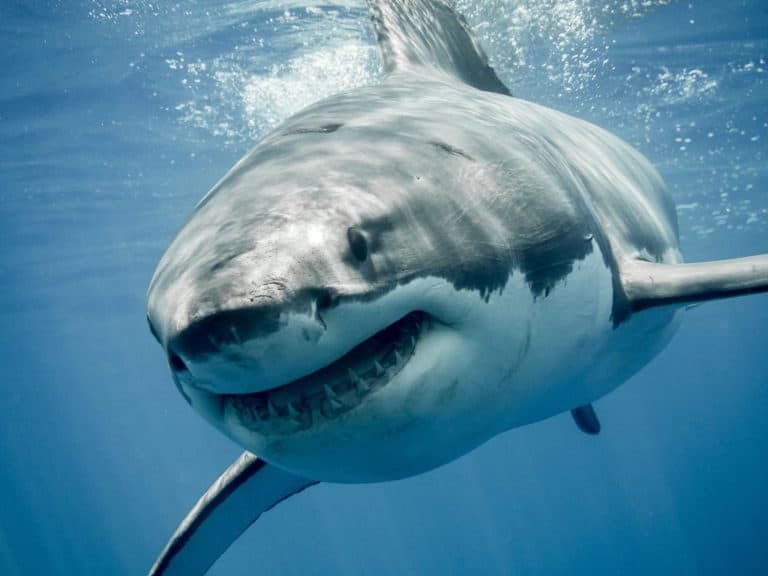
The Ganges shark (Glyphis gangeticus) is one of the largest fish in the Ganges River. This elusive fish lives exclusively in its salt-free waters and is one of the few freshwater sharks in the world. Ganges sharks, formerly thought to be two species—the Borneo river shark and the Irrawaddy river shark—are critically endangered. They are requiem sharks, similar to bull sharks, spinner sharks, and tiger sharks. They are often mistaken for bull sharks, which are aggressive and unpredictable sharks that can live in freshwater, brackish water, and marine environments.
Ganges sharks can grow up to 8.7 feet long. They are estimated to weigh several hundred pounds, although official weight records are lacking. Their bodies are gray to brownish gray, with lighter undersides. They have short, round snouts. Like many requiem sharks, they have large pectoral and dorsal fins. Due to their rarity, little is known about these sharks. However, they are thought to eat various freshwater fish and stingrays, and they likely spend most of their time on the murky bottom of the Ganges.
Goonch Catfish
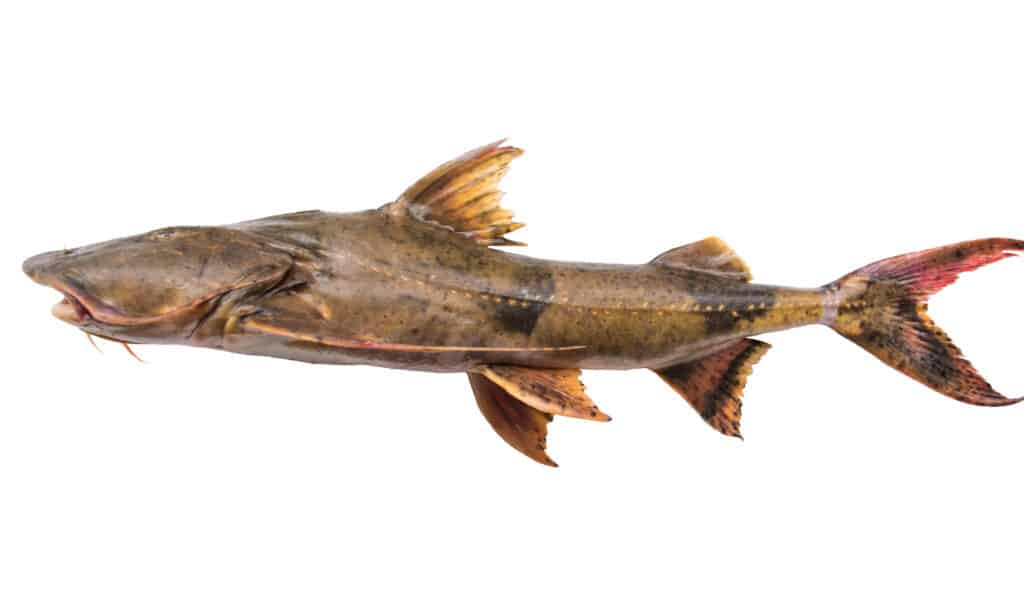
Also known as the giant devil catfish, the goonch catfish is little known outside of India.
©IAM Priew/Shutterstock.com
Made famous by TV appearances on “River Monsters” and “Fish Warrior,” the goonch catfish (Bagarius yarrelli) grows up to 6.5 feet long. The largest ever officially recorded weighed 165 pounds and 5 ounces. However, some sources suggest they can reach over 200 pounds. They’re among the largest fish in the Ganges River and also among the most striking. These opportunistic, ambush predators have spawned a number of local legends, including a reputation as man eaters, as they are known to consume human remains found in the river.
Goonch catfish have heavy bodies and wide mouths designed for life in the muddy depths of the Ganges. They are typically a dark brownish-gray with dark brown to black bands near the fins. Their dorsal fins are tall and highly variegated, and they have large pectoral fins. Like most catfish, goonch catfish have several feelers on their mouths, which they use to detect prey. However, they also have razor-sharp, recurved teeth that are unusual in catfish. Though little is known about their life cycle or population, they’re currently listed as Vulnerable. It’s highly likely that, given the tremendous size they grow to, goonch catfish are vulnerable to threats like overfishing and pollution.
Golden Mahseer
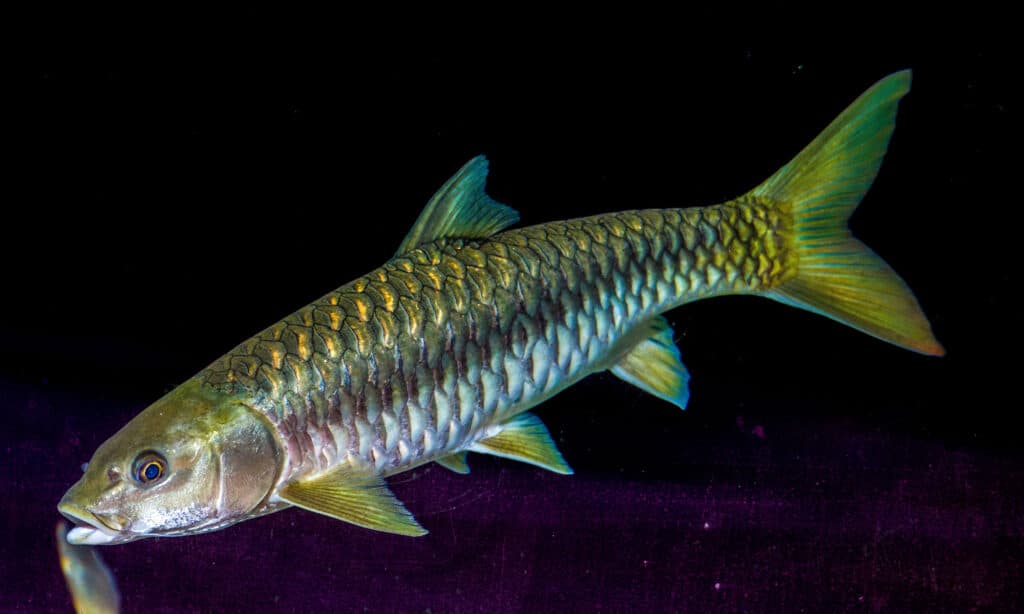
The golden mahseer is the national fish of Pakistan.
©Danny Ye/Shutterstock.com
One of India’s prettiest fish, the golden mahseer (Tor putitora) is undoubtedly one of the largest fish in the Ganges River. Golden mahseers may exceed 9 feet long, although specimens of over 6 feet have not even been adequately documented. They can reach up to 119 pounds. These fish have torpedo-shaped bodies with three pairs of pectoral fins. They range from red-purple to golden along the sides and fins. They have pointed snouts, and, in their domain, they are considered apex predators.
Golden mahseers eat a wide variety of food, including aquatic vegetation and algae, insects, amphibians like frogs and toads, fish, crustaceans, and even fruit that falls into the water. They’ve long been popular targets for sports fishermen due to the ferocious fight they put up when on a line. Unfortunately, they’ve been negatively impacted by overfishing, pollution, and even hybridization with other species.