
Quick Take
- One of these Mississippi fish can survive in both freshwater and the open ocean, which makes it the last species you'd expect to find in a river. Meet the river shark →
- One fish on this list hunts entirely by sensing electricity, and its closest living relative just vanished from Earth. Discover the electric hunter →
- One of these creatures looks so much like a reptile that its name reflects the confusion, and it may outlive your grandchildren. See the near-century survivor →
- A fish the size of a linebacker lurks in this river and can launch its entire body nearly 10 feet into the air. Meet the leaping giant →
The Mississippi River, which starts in Minnesota’s Lake Itasca and ends in the Gulf of Mexico, is home to over 260 species of fish. Some of the river’s more commonly found species include bass, catfish, crappies, and bluegills. The Mississippi is also home to some rarer and weirder species of fish. Some of these fish may just look unreal, but others are so rare they’re practically a myth. Take a look at some of the weirdest fish in the Mississippi River.
Paddlefish
Paddlefish (Polyodon spathula) are usually gray or green and have smooth skin. On average, they grow as long as 5 feet and weigh more than 60 pounds. The paddlefish gets its name from its long, paddle-like snout. These snouts are called rostrums, and they help the fish detect prey. Electroreceptors in their rostrums detect weak electrical fields emitted by zooplankton, allowing the paddlefish to hunt in dark or turbulent river waters. Despite their large size, paddlefish mainly feed on plankton by straining their food from the water with their large mouths, which is called filter-feeding.
Paddlefish are often referred to as primitive fish because they have only evolved slightly from the earliest fossil records when compared to other fish species. Paddlefish are also known as American paddlefish, as there used to be another species, the Chinese paddlefish. Unfortunately, this fish was last seen alive in 2003 and was declared extinct in a 2020 study, making the American paddlefish the only surviving paddlefish species. The paddlefish’s eggs are used to make caviar, making humans the species’ greatest predators.
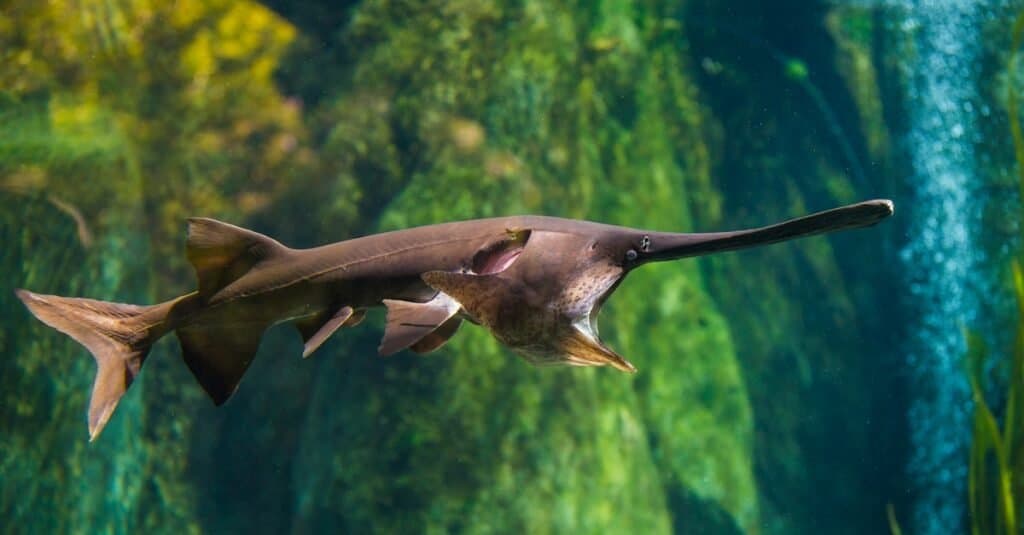
Paddlefish are often referred to as primitive fish because of how little they’ve evolved.
©Saran Jantraurai/Shutterstock.com
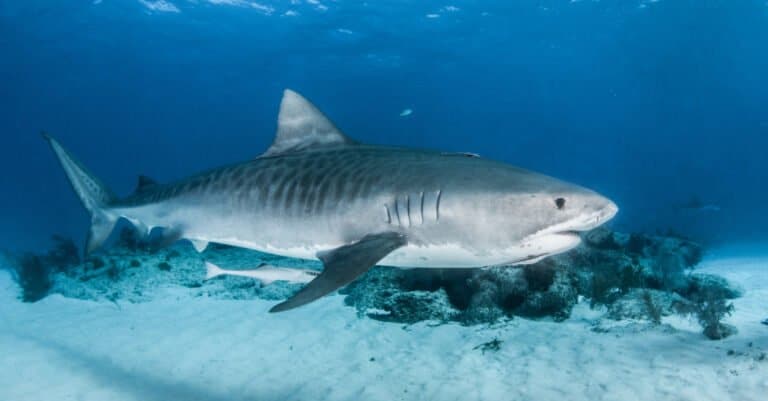
Bull Shark
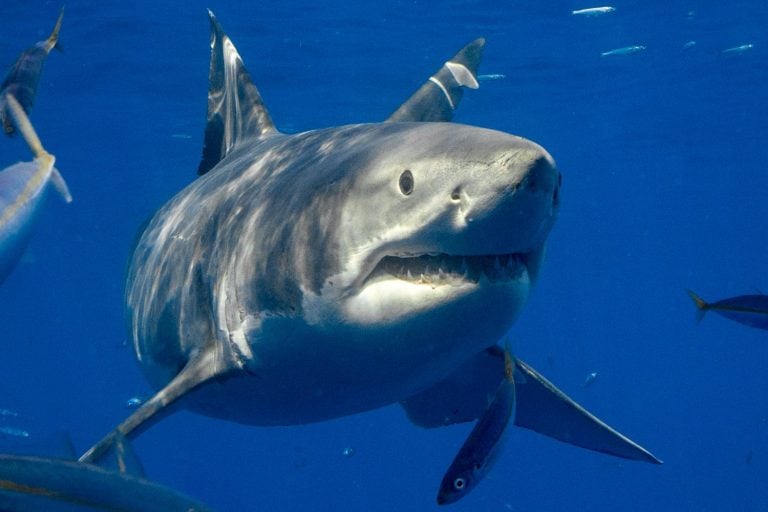
Although it may be hard to believe, there have been sharks (which are technically fish) spotted in the Mississippi River. Bull sharks (Carcharhinus leucas) can thrive in both freshwater and saltwater because their specialized kidneys and rectal gland allow them to regulate salt levels, recycling salt and producing very dilute urine in freshwater while excreting excess salt in saltwater. Luckily, there have only been two sightings of bull sharks in the entire 2,340 miles of the Mississippi. Despite how far inland they can swim in rivers, they are not commonly seen.
The bull shark has a stout body with a grey back and a white belly. It can grow up to 13 feet in length and can weigh up to 698 pounds. Bull sharks are often regarded as the most dangerous shark species. This is because of their aggressive natures, as well as their ability to swim in rivers, putting them in closer contact with humans. Bull sharks mostly eat various species of fish, as well as other shark species. Typically, these sharks live for up to 16 years.
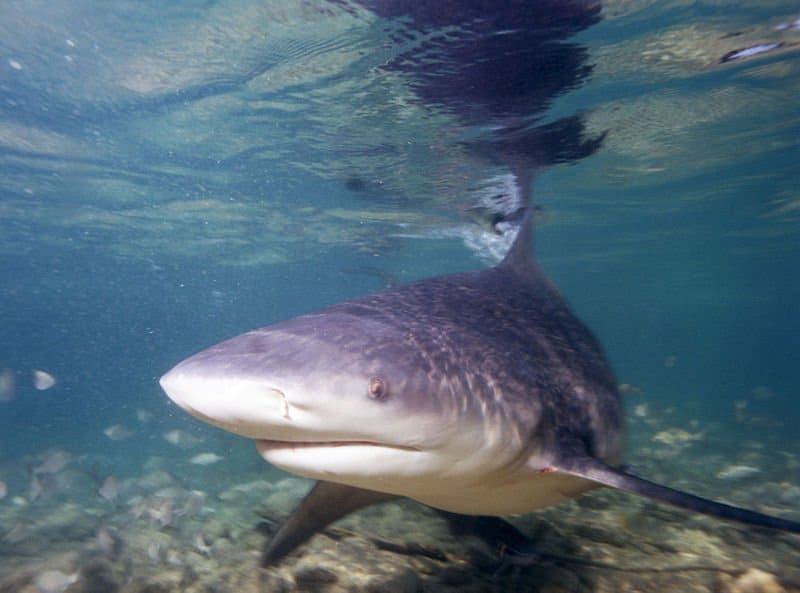
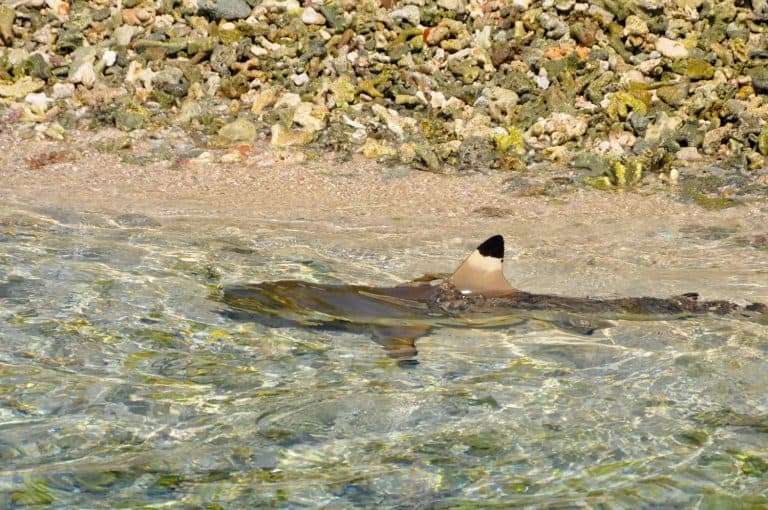
Bull sharks have been found in the Mississippi River, although this is rare.
Gulf Sturgeon
The Gulf sturgeon (Acipenser oxyrinchus desotoi) is one of the seven species of sturgeons scattered across America. This species has historically been found in the Mississippi River. Although it is rare in the main stem today, it is still found in Mississippi River drainages. This fish stands out because of its prehistoric appearance and gigantic size. It is black to olive brown on its back, with lighter sides and a white belly. It has five rows of scutes, which are bony plates that run along the length of its body. Its snout has four barbels that hang in front of its mouth. Like sharks, the upper and lower parts of its tail are different sizes.
The species is known to grow as long as 9 feet and weigh more than 300 pounds, making it a massive fish. Gulf sturgeons can also leap out of the water up to 9 feet in the air. Just like salmon, they are anadromous. This means gulf sturgeons start their lives in freshwater and then move to saltwater as adults. Incredibly, these fish can live for over 40 years, with some individuals living even longer.
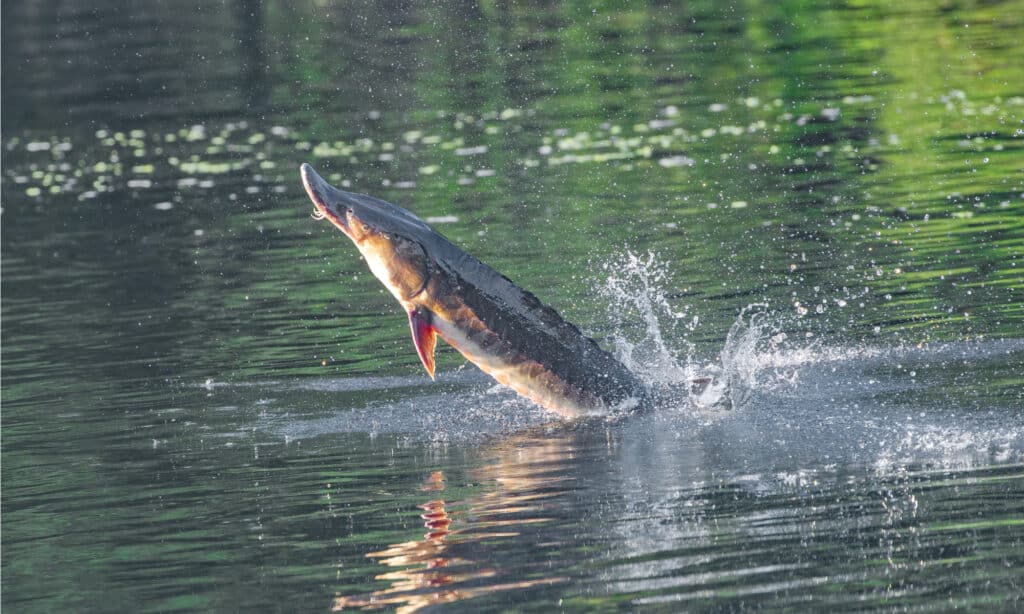
Gulf sturgeons can leap up to 9 feet out of the water.
©Chase D'animulls/Shutterstock.com
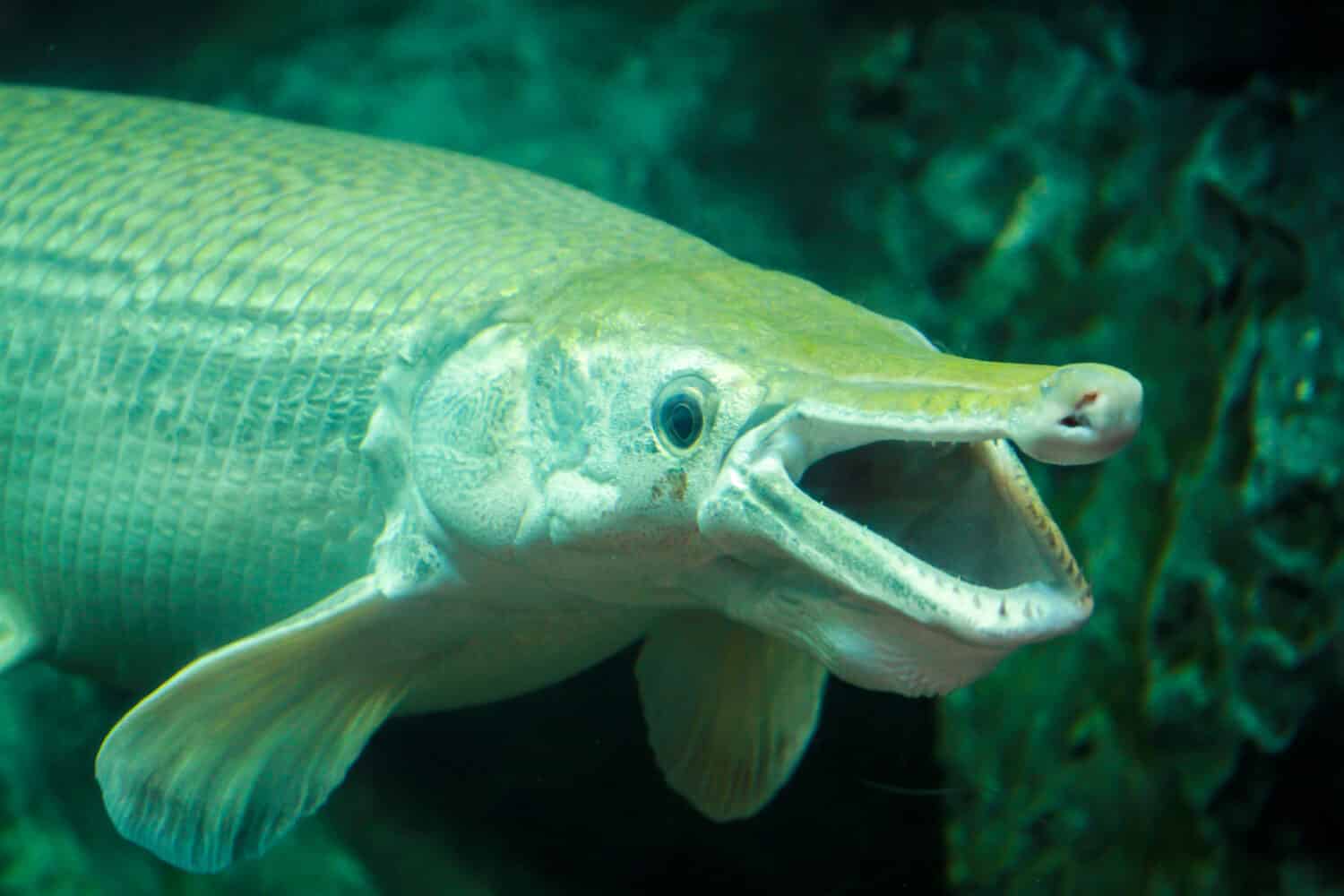
Alligator Gar
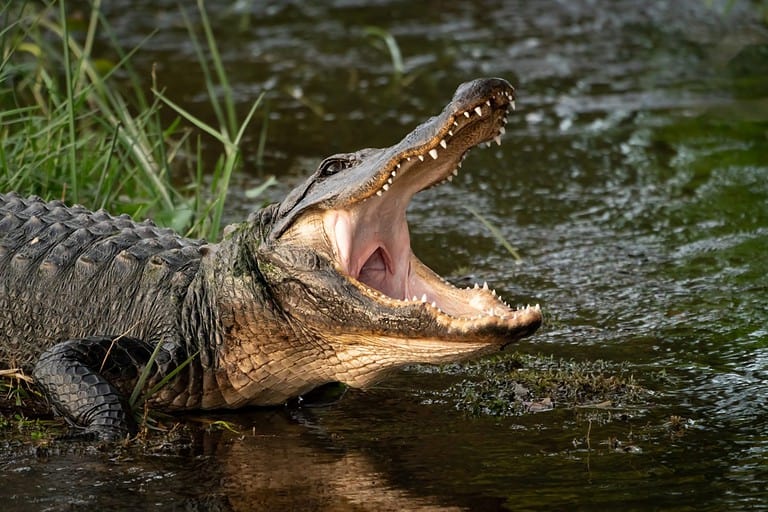
The alligator gar (Atractosteus spatula) is a fish that looks like an alligator and plays a similar role to sharks in the ecosystem. This fish is named after its looks. It has a long body and a long, slender snout with over 80 needle-like teeth. It is a dark olive green with white undersides, and it is covered in diamond-shaped scales. The alligator gar is one of the largest freshwater fish in North America. On average, they grow around 6.5 feet and up to 100 pounds, but some alligator gars can grow up to 10 feet in length and weigh up to 327 pounds.
The alligator gar isn’t a picky eater and eats many different species of smaller fish, as well as turtles, mammals, and birds. They have excellent vision and the ability to detect chemicals in the water. These traits make them amazing hunters, helping to keep the population of other species in check, just like other apex predators such as sharks and actual alligators. Alligator gars can also leap several feet out of the water, especially when startled. Female gars can regularly live to 50 years old, but some individuals have been estimated to reach nearly 100 years of age.
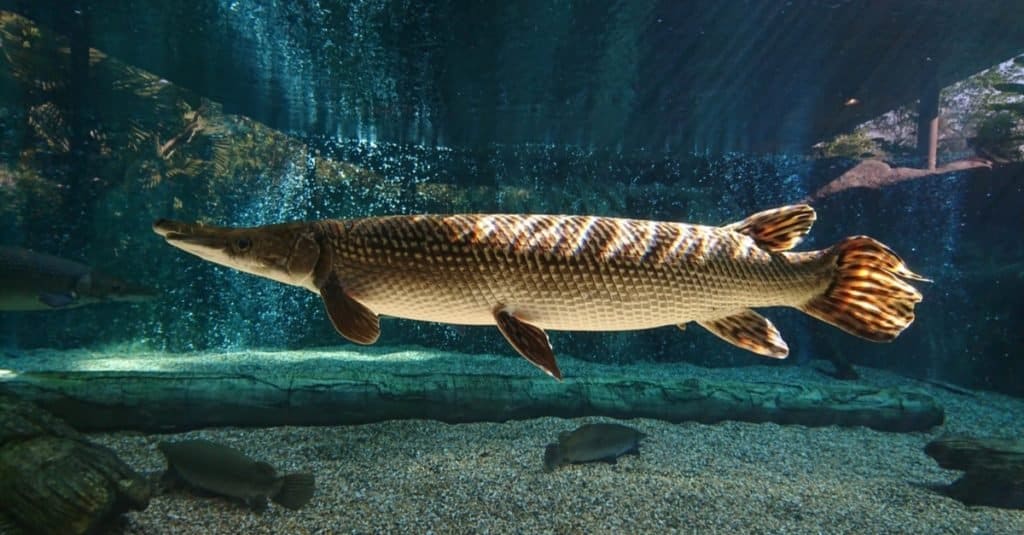
The alligator gar is one of the largest freshwater fish found in North America.
©Cheng Wei/Shutterstock.com