
Quick Take
- One fish on this list has eyes built like a cat's, and that biology completely changes when you should be on the water. Walleye's low-light biology →
- Most anglers target catfish at night, but for one species in New Mexico that strategy actually works against you. Catfish season strategy →
- New Mexico has an official State Fish, but most visiting anglers have no idea where to find it. Find New Mexico's state fish →
- One panfish here tastes closer to a popular restaurant staple than most people expect, though it's likely the last species you'd order off a menu. Bluegill's surprising taste →
New Mexico is most known for its diverse landscape, but it’s also a popular fishing spot. There’s the Rio Grande, bountiful lakes, and plenty of quaint fishing ponds. The waters are teeming with a variety of fish. However, certain species are more popular than others. We’ve put together this guide to help you know which fish to target and where to find them. Here are the best fish to catch in New Mexico.
Bluegill
Bluegill are also sometimes called bream. They belong on our list of the best fish to catch in New Mexico because they’re so abundant. They taste surprisingly good and are similar to tilapia, with mild, delicate white flesh. The thin fillets go well with all sorts of seasoning. Bluegill usually grow to reach around 6-8 inches long. However, it is possible to catch one that’s over a foot long. They are usually under one pound, though larger individuals can weigh around 1.5 pounds.
The best time to fish for bluegill in New Mexico is late spring through early summer. From about May through July, water temperatures warm up, which causes bluegill to move into shallow water to spawn in large groups. Top locations to fish for bluegill in New Mexico include Elephant Butte Reservoir, Navajo Lake State Park, and Caballo Lake State Park.
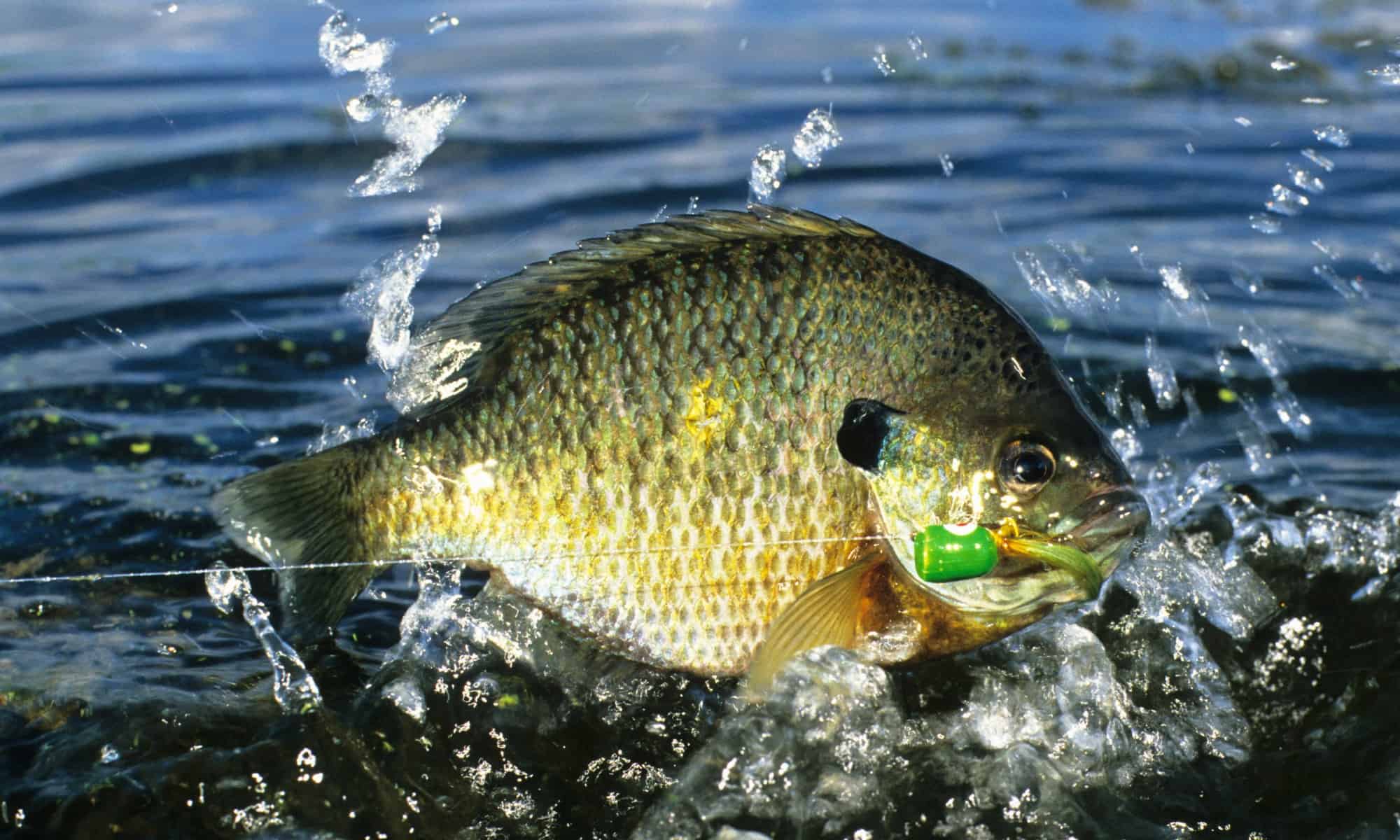
Bluegill in Nevada waters usually grow to around 6 to 8 inches.
©iStock.com/stammphoto
White Crappie
White crappies are flat fish that belong to the sunfish family. They have olive-green to grey backs with greenish sides and silvery bellies. They also have dark, vertical bars on their sides and five to six dorsal spines. White crappies in New Mexico waters generally reach 9 to 10 inches and weigh between 1 and 2 pounds.
Late March through May is the best time to fish for crappies in New Mexico, as the water warms up, causing the fish to move into shallower water to feed and spawn. The top spots for crappie fishing in New Mexico are large southern reservoirs like Elephant Butte Lake and Caballo Lake. Conchas Lake to the east is also a popular location. These are warm-water lakes that are known to have healthy populations of crappie.
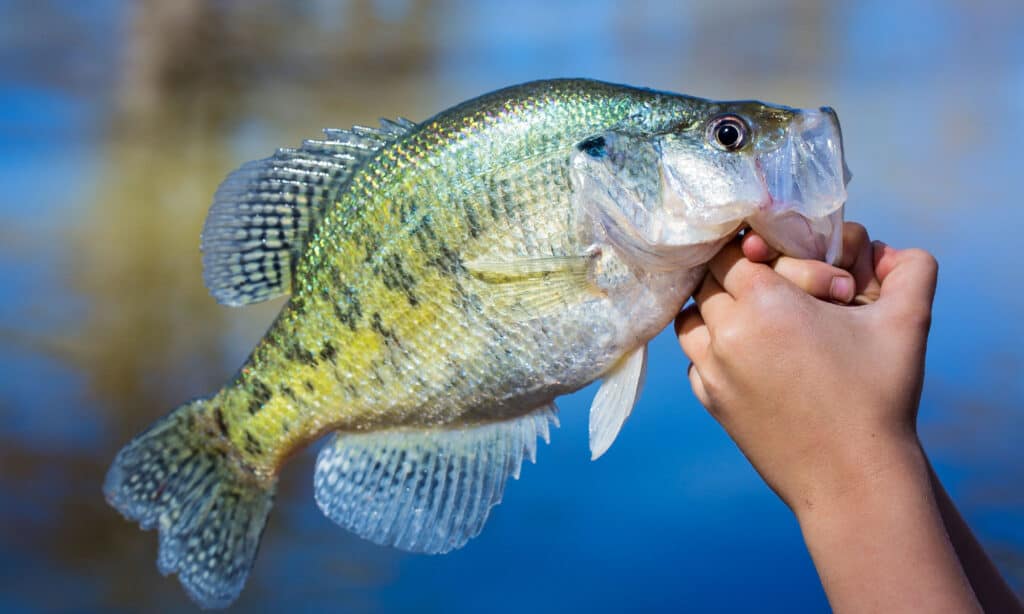
White crappies in New Mexico generally reach 9 to 10 inches long.
©Jennifer White Maxwell/Shutterstock.com
Walleye
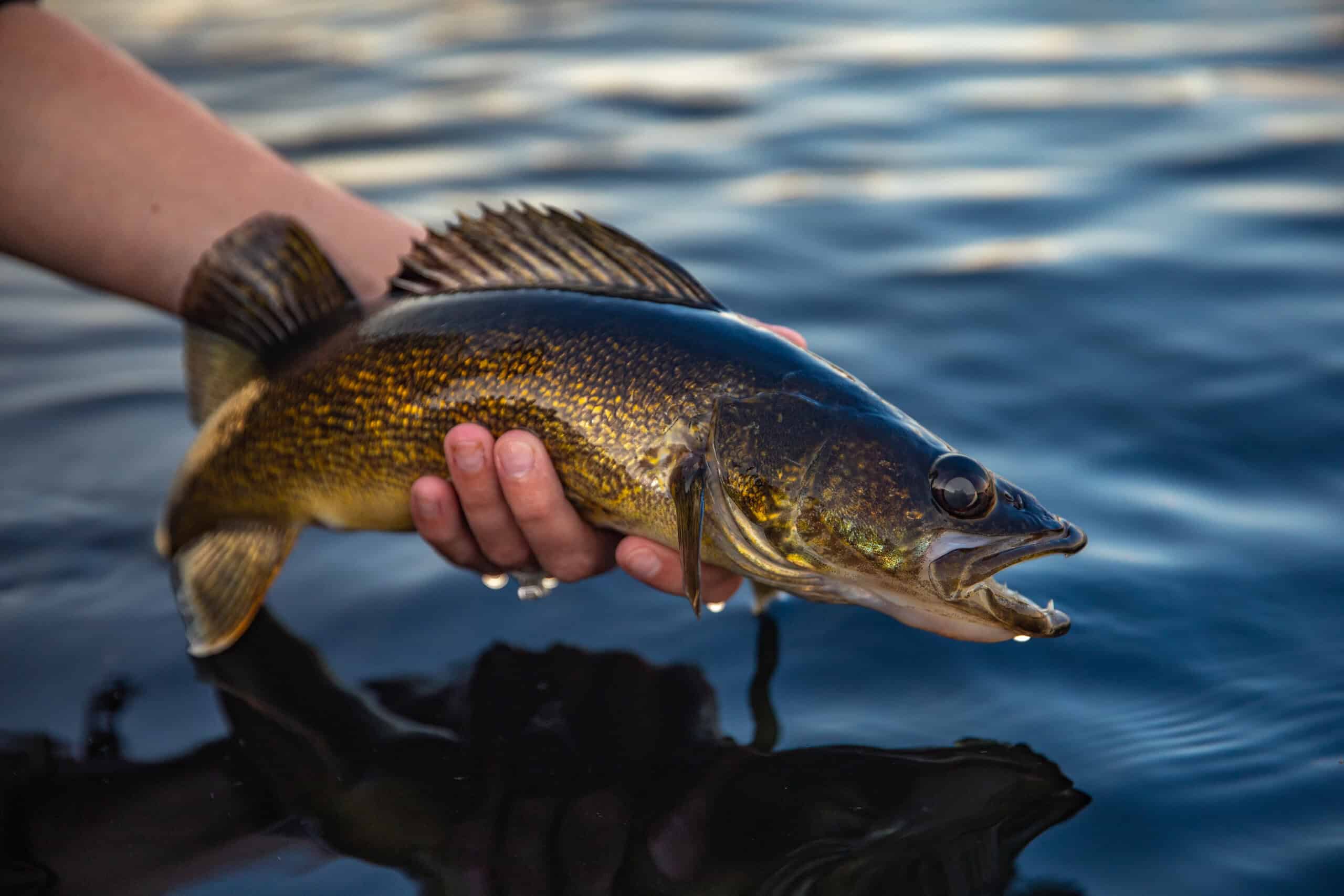
If you want a challenge, walleyes are a great fish to target. Walleyes also make good table fare. These are large fish in the perch family. They have long, golden brown to olive bodies with dark vertical stripes and a large mouth with sharp teeth. They also have large, opaque eyes with a reflective layer called the tapetum lucidum, similar to cats and dogs. This allows the fish to see in dark or murky water. Walleyes average 14 to 22 inches long and weigh 2 to 4 pounds.
The best times of year to fish for walleye are windy days in April through May after they spawn, and again during the fall when water temperatures drop and they return to shallow water. Low-light hours in the early morning, late evening, and at night are the most productive times of day to fish due to walleyes’ vision. The best places to fish for walleye in New Mexico are large, warm water reservoirs including Ute Lake, Conchas Lake, and Caballo Lake. Up to 40 million walleye are stocked in area reservoirs by the New Mexico Department of Wildlife (NMDOW).
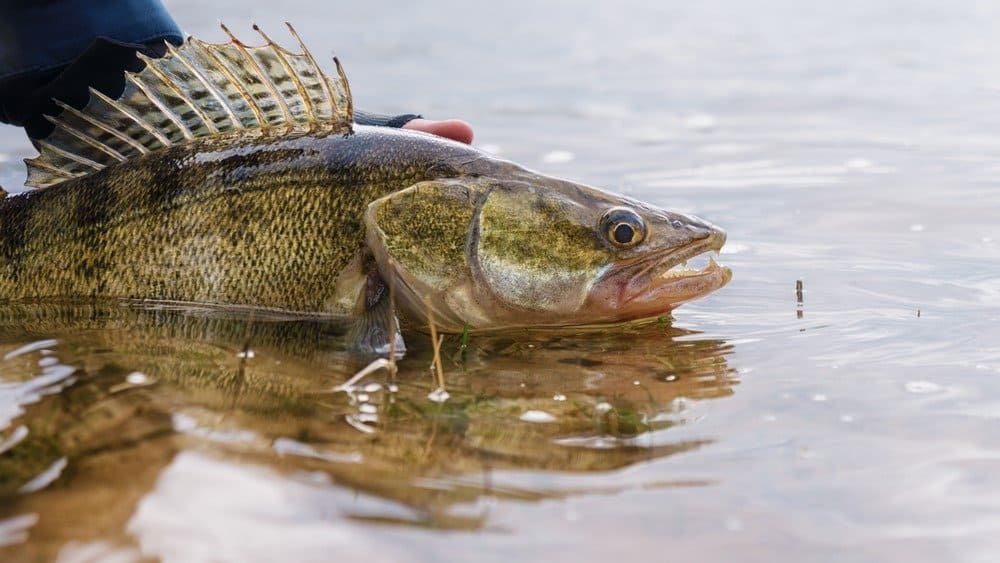
Walleyes average 14 to 22 inches long and weigh 2 to 4 pounds.
©wwwarjag/Shutterstock.com
Trout
Trout is also a popular sport fish in New Mexico. Anglers can target native species like Rio Grande cutthroat (New Mexico’s State Fish) and Gila trout, as well as wild and stocked rainbow, brown, and brook trout. Most stocked and stream trout measure 10-14 inches and weigh around a pound. However, trout in large rivers may grow bigger.
Fishing for trout in New Mexico is considered to be good during the spring after the snowmelt runoff clears. However, many anglers favor September through November when water temperatures are cooler and insect activity is high, prompting aggressive feeding. Popular locations include the San Juan River tailwater below Navajo Dam for large numbers of rainbow and brown trout, as well as the Rio Grande in the Gorge near Taos. Anglers can also fish the upper Pecos River for Rio Grande Cutthroat and the headwaters of the Gila River watershed for Gila trout.
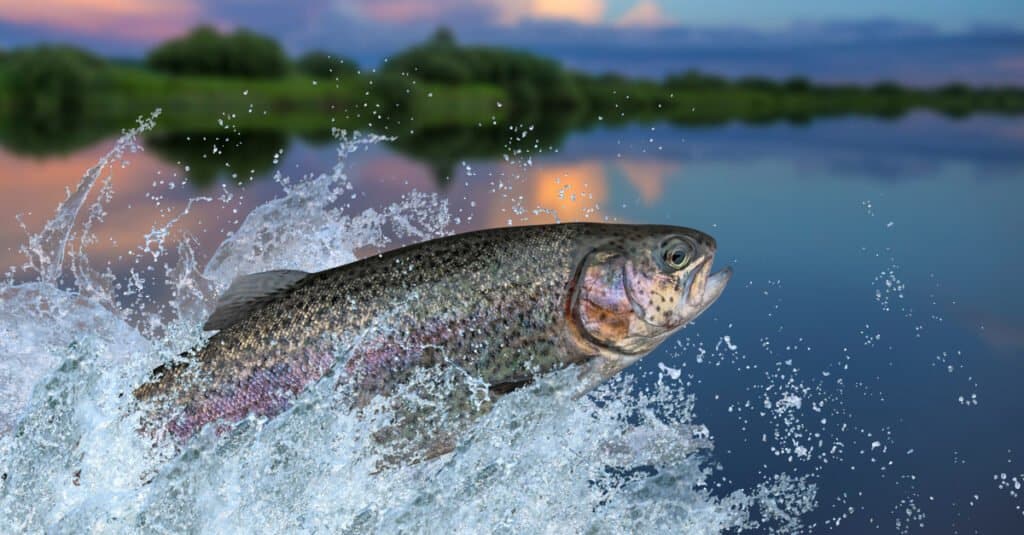
Rainbow trout are abundant in the San Juan River.
©FedBul/Shutterstock.com
Catfish
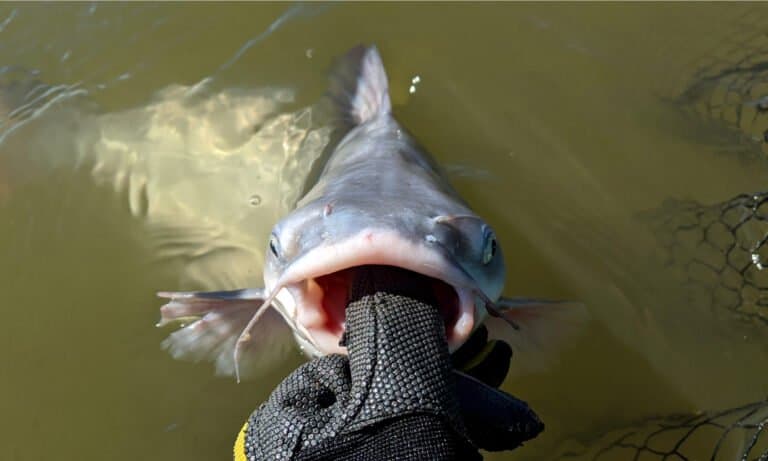
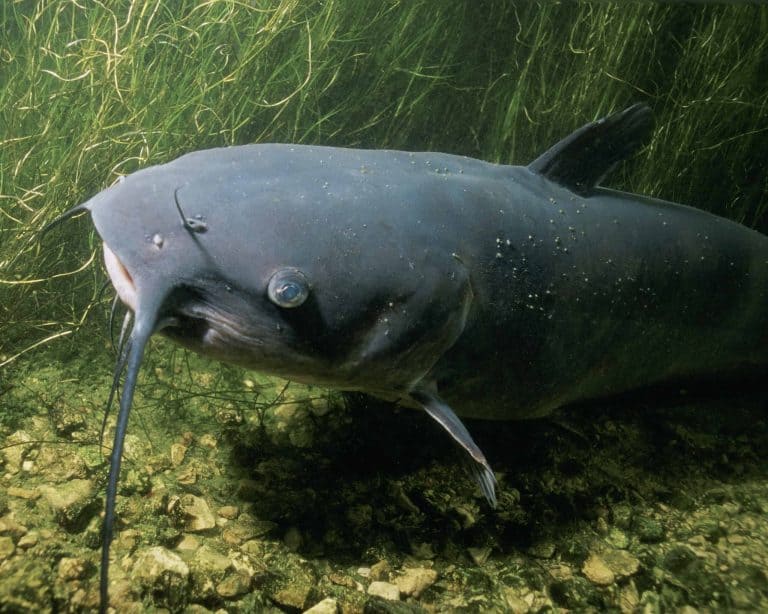
Another tasty and challenging fish to catch in New Mexico is catfish. The state is home to blue, flathead, and channel catfish. The NMDOW stocks public waters with channel catfish, while major reservoirs have large populations of all three of the major catfish species. Typical catch sizes for common channel catfish range from 1 to 5 pounds.
The best time of year to catch catfish is spring and early summer, when water temperatures reach at least 60 degrees and catfish become most active leading into their spawn. Catfish tend to feed at night, especially during the summer after it rains. According to NMDOW, the highest numbers and the largest fish are found in the reservoirs. Elephant Butte, Conchas, Caballo, and Ute Lakes are known to have good populations of catfish, including very large fish.
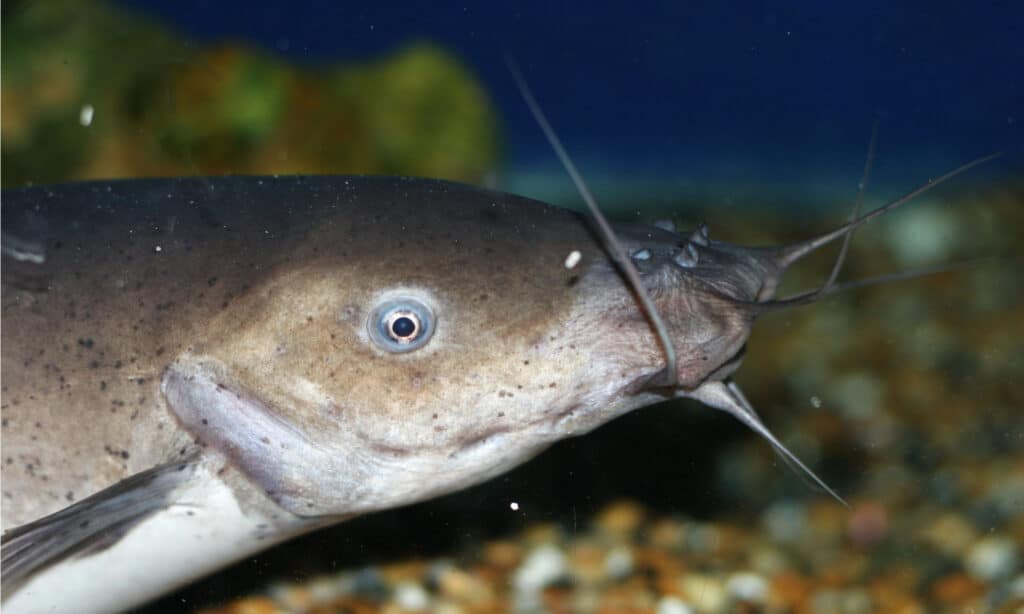
The best time of year to catch catfish is spring and early summer.
©Pavaphon Supanantananont/Shutterstock.com