
Have you ever wondered what the longest fish in the world are? There are approximately 34,000 species of fish in the world, with scientists discovering new species every day. While most fish are cold-blooded, at least one species of warm-blooded fish exists. But what do you need to know about some of the longest fish ever found?
In order to compile this list, we looked only at the total body length of fishes that are alive today. Only verified measurements by reputable organizations were accepted when making this list. Let’s begin.
#11. Southern Sunfish – 9-11 Feet
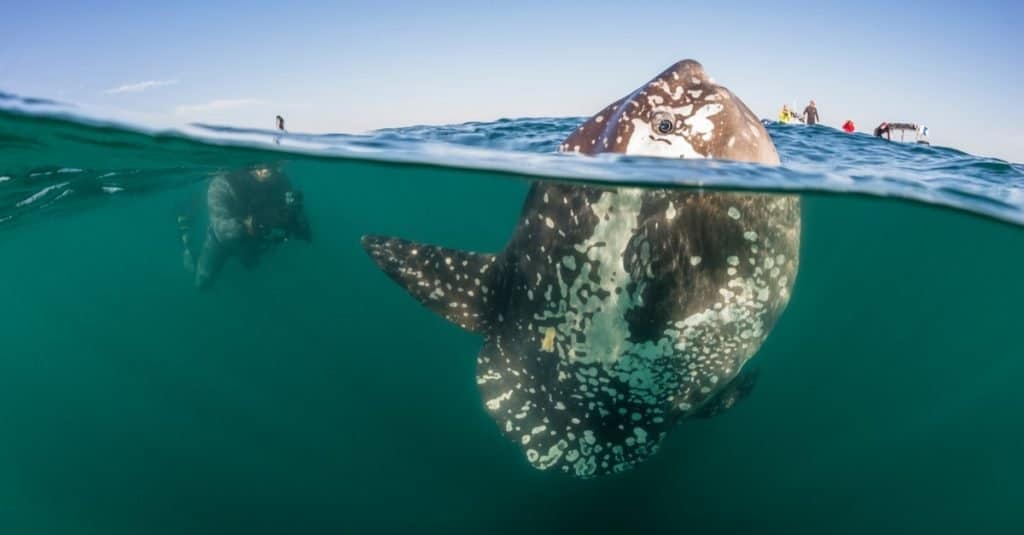
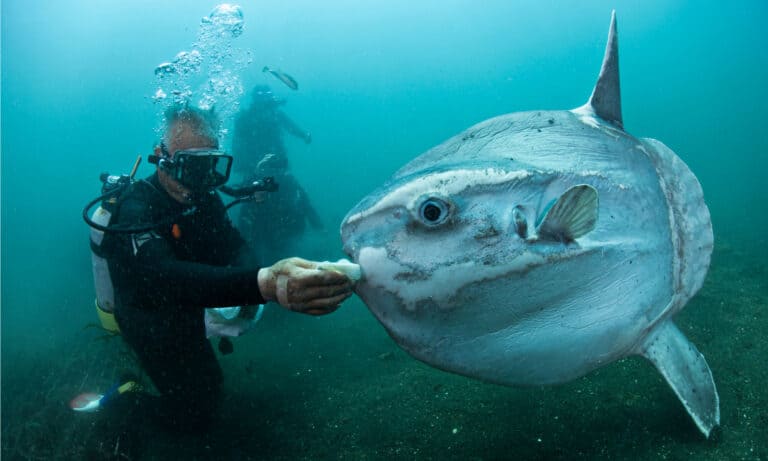
The Southern Sunfish measures 9-11 feet long and is native to the southwestern Pacific Ocean.
©wildestanimal/Shutterstock.com
Also called the bump-head sunfish, the largest southern sunfish was found dead and floating in the Azores in October of 2022. It now holds the record for the heaviest bony fish at 6,049 pounds and was 11 feet long.
Southern sunfish are native to the southwest Pacific but can be found throughout the Southern Hemisphere, including around Australia, New Zealand, Chile, and South Africa. The southern sunfish has a unique habit of basking in shallow waters on its side. Scientists believe that this habit encourages seabirds to eat the parasites that often invade their skin so that the animal stays healthier.
#10. Ocean Sunfish – 10-14 Feet
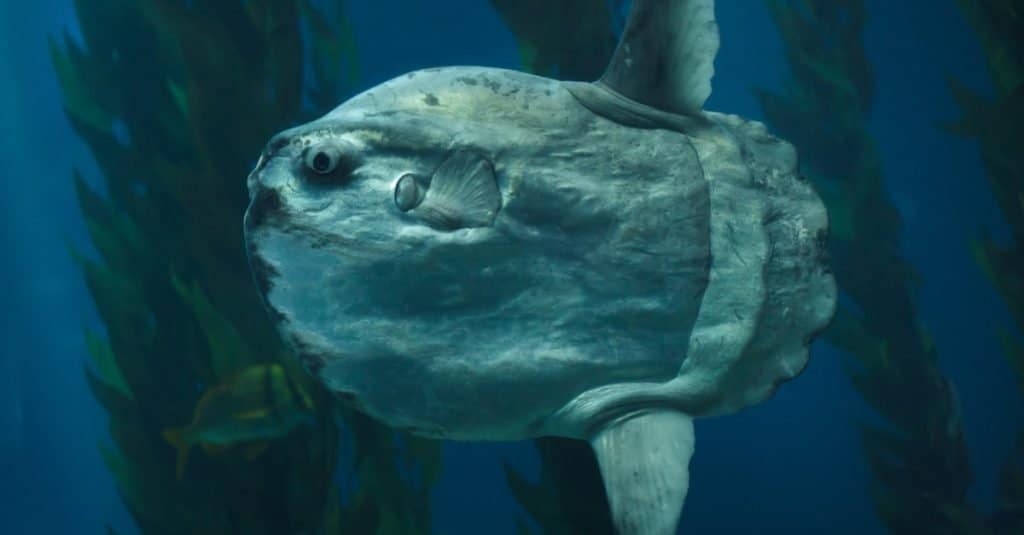
Mola molas are some of the largest fish in the world.
©Vladimir Wrangel/Shutterstock.com
The Ocean Sunfish, also known as common mola or mola mola, is the largest bony fish in the world. The largest one known reached up to 14 feet long and 10 feet wide. These fish live in waters worldwide where they feed on small fish, fish larvae, squid, and crustaceans.
Ocean sunfish are unique because they have a beak-like structure instead of a mouth. The beak cannot be fully closed. These fish are not good at swimming where they intend to go. Sunfish don’t have a tail; their dorsal and anal fins are fused into a rudder-like structure called a clavus. The sunfish thus swims by flapping its dorsal and anal fins synchronously, like oars.
Due to having the fin on their back, they are often mistaken for sharks; however, ocean sunfish bob up and down while swimming whereas the shark’s fin cuts straight through water. Ocean Sunfish do not pose any danger to humans.
#9. Reef Manta Ray – 16-18 Feet
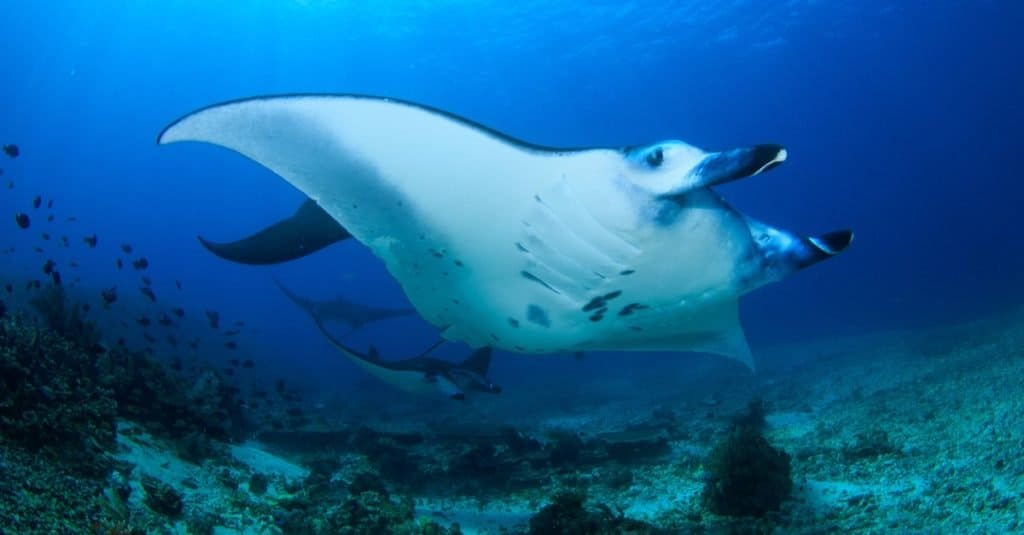
Reef Manta Rays live in the Indo-Pacific and have unique cephalic fins that can roll up.
©SergeUWPhoto/Shutterstock.com
Reef Manta Rays (Manta alfredi) are related to the shark; however, they do not pose any threat to humans as they do not have a stinger. They prefer eating plankton, shrimp, crabs, and small- to medium-sized fish.
The largest reef manta ray was 18 feet long; these fish routinely grow to be 16 feet. They live in the subtropical parts of the Indo-Pacific, but they have been observed at diverse locations in the West Atlantic and Eastern Pacific oceans. These rays have unique cephalic fins at the front of their bodies that they can roll up when they want to swim or unroll to help move water that contains food into their mouths.
#8. Tiger Shark – 18 Feet
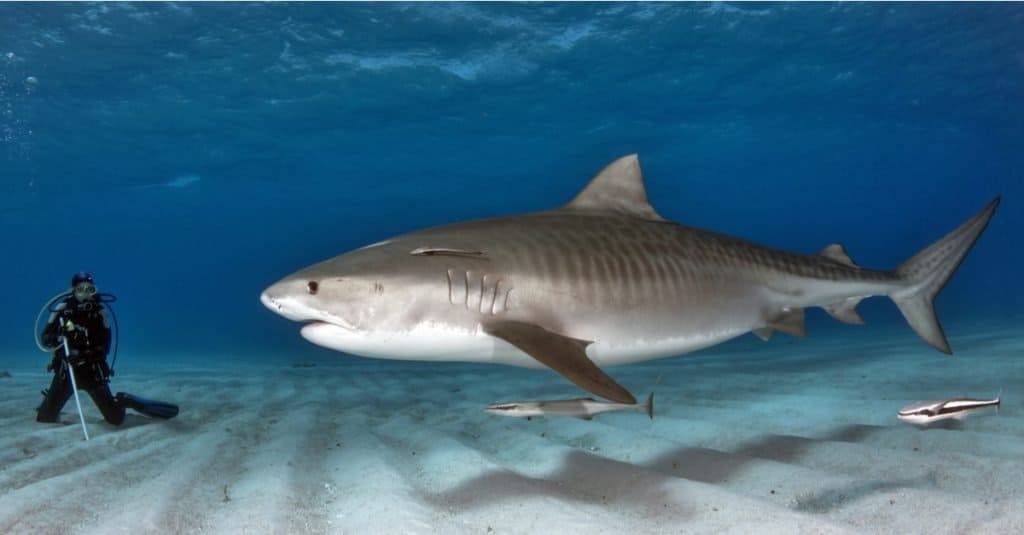
Tiger sharks are named for the dark, vertical stripes on juveniles that fade with age and almost disappear.
©Tomas Kotouc/Shutterstock.com
A team of researchers recorded a video of an 18-foot tiger shark off the coast of French Polynesia. There have reportedly been even bigger tiger sharks caught, but none have been verified. Tiger sharks are the second most aggressive shark in the ocean.
This shark tends to live around the equator, but they have been spotted in waters off Japan and New Zealand. They tend to stay closer to shore during the day and swim out into deeper water at night. Tiger sharks are opportunistic, and they will eat almost anything.
#7. Kaluga – 18.25 Feet
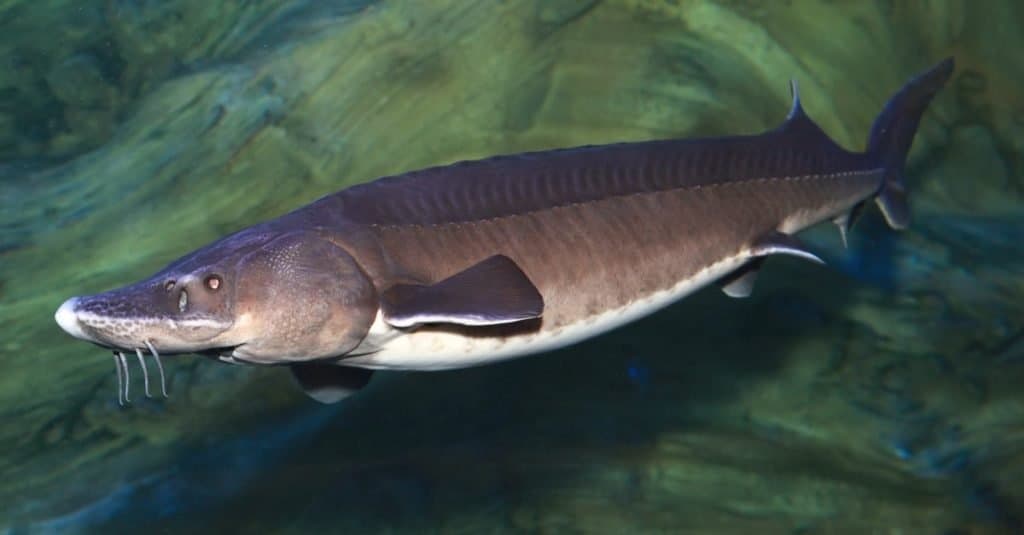
The Kaluga is a large predatory sturgeon found in the Amur River basin between China and Russia.
©Tatiana Belova/Shutterstock.com
The Kaluga (Huso dauricus) is a sturgeon fish that lives most of its life in the Amur River, located between China and Russia. These fish can grow up to 18.25 feet long and are very aggressive. There are unconfirmed reports of them tipping over boats and trying to hurt anglers.
They spend part of their lives living near freshwater gravel beds and part of their lives in saltwater. These fish are unique because they can move part of their mouth to the side of their face to catch fish. Overfishing for their roe has almost caused this fish to go extinct.
#6. Giant Ocean Manta Ray – 20.3 Feet
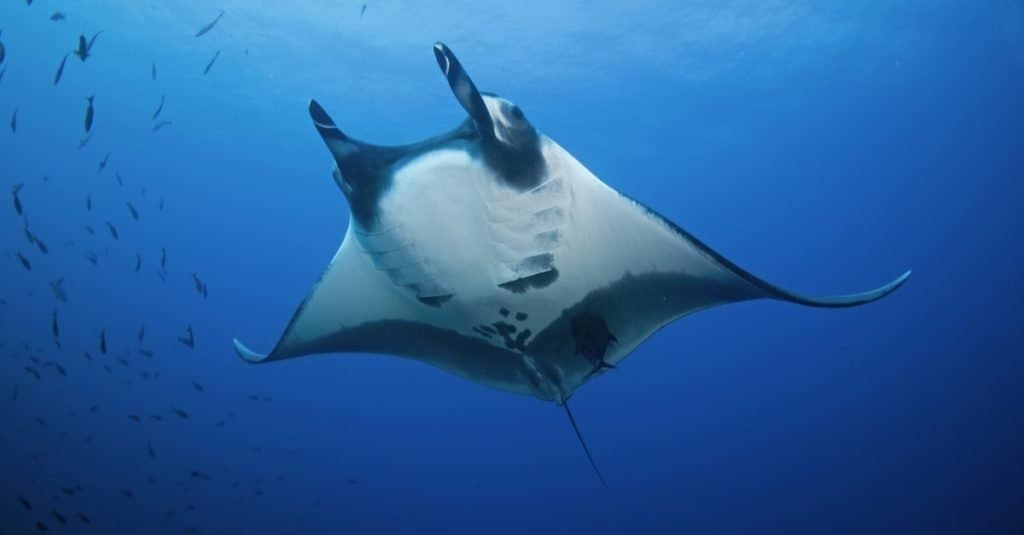
Manta rays are nicknamed “devil fish” because of the two horn-shaped fins protruding from their heads.
©Martin Prochazkacz/Shutterstock.com
According to researchers at Duke University, the largest giant oceanic manta ray was 20.3 feet long. Generally, the largest ones are near Ecuador, but this manta ray can be found in warm waters throughout the world. Their reproduction rate is much lower than most other fish. Females weigh much more than males. The heaviest giant oceanic manta ray ever recorded weighed over 5,998 pounds.
While it has been assumed that manta rays migrated long distances, researchers from the Scripps Institution of Oceanography in San Diego, California, have found that manta rays like to stay at home. Those living off Indonesia’s coast often traveled less than 149 miles annually while those living off Mexico’s coast traveled about 373 miles.
#5. Greenland Shark – 23 Feet
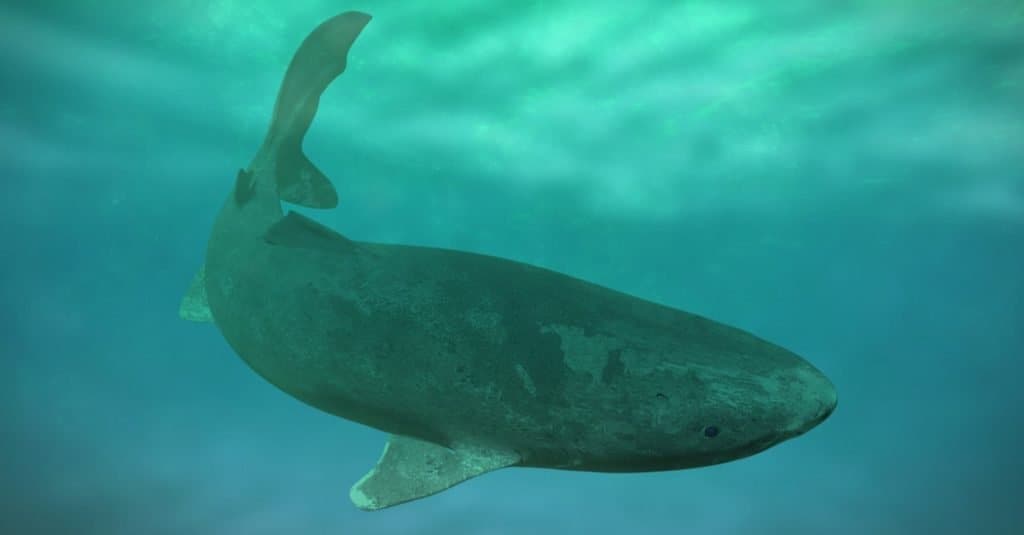
Greenland sharks are native to the North Atlantic waters around Greenland, Canada, and Iceland.
©Dotted Yeti/Shutterstock.com
The Greenland shark, known for its ability to live in sub-Arctic and Arctic temperatures, can grow up to 23 feet long. It has the longest lifespan of any known living vertebrate. This fish can live to be over 500 years old, and scientists believe that it does not reach sexual maturity until it is 150 years old.
This shark has been observed actively hunting seals off Canada, Greenland, and Iceland, but it generally eats other fish, and it often catches its prey asleep. A large buccal cavity allows it to suck its prey into its mouth, where it often swallows it whole.
#4. Great White Shark – 21-23.3 Feet
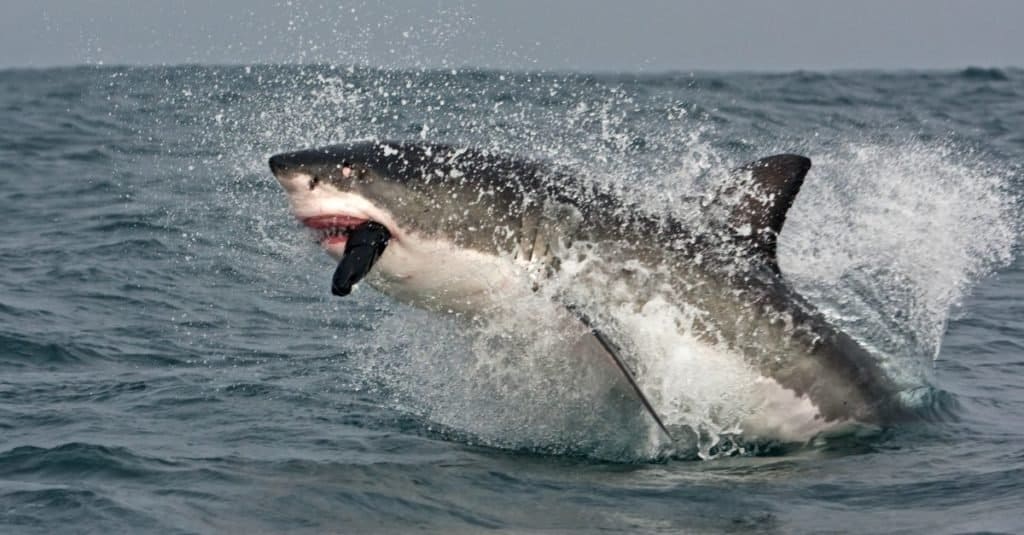
Great white sharks can reach speeds up to 24 km/hr (15 mph).
©Martin Prochazkacz/Shutterstock.com
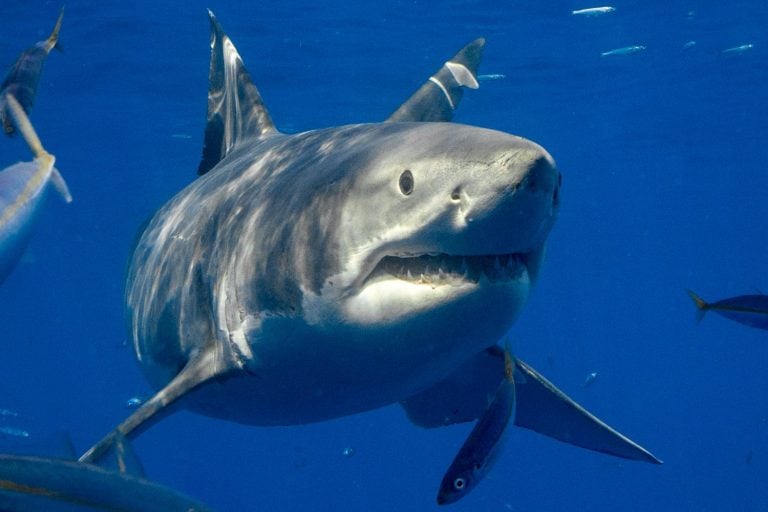
Great white sharks normally grow up to 21 feet long, but two great white sharks longer than 23.3 feet have been caught, one in Malta and another near Kangaroo Island in Australia. Typically, great white sharks (Carcharodon carcharias), dine on larger marine animals (such as the seal seen in the picture above), and they may need only one large meal a month. Great white sharks can reach speeds up to 24 km/hr (15 mph). They use their speed and coloring to help them hunt, searching for prey at the surface of the ocean while swimming below.
These sharks are unique because of the capillary network between their swimming muscles. By constantly swimming, they can use this network to raise their body temperatures above the temperature of their environment. These sharks are spotted globally because they often migrate. While it is not unusual for great white sharks to migrate shorter distances, like between Mexico and Hawaii, great white sharks in South Africa have migrated over 675 miles to Australia. Scientists still do not understand why they migrate.
#3. Beluga Sturgeon – 20-23.5 Feet
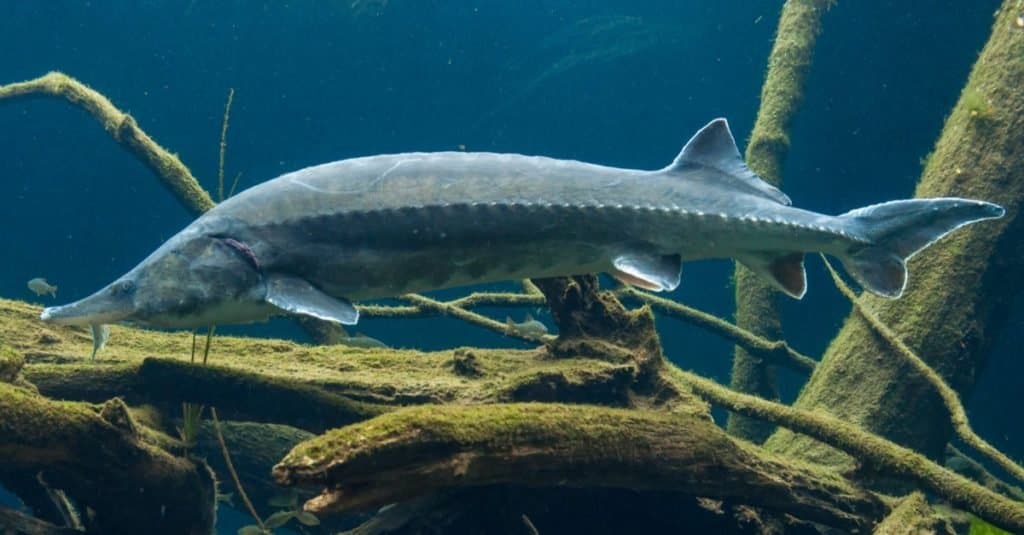
The female Beluga sturgeons are larger than the males.
©Mick Rush/Shutterstock.com
Beluga sturgeons (Huso huso) have been caught that are up to 23.5 feet long. They feed mainly on other fish. This sturgeon is one of the largest predators of the sea. If it cannot get enough fish, then it will eat seal pups and waterfowl.
This species lives mainly in the Caspian and Black Seas, but it swims into freshwater to spawn. The female beluga is about 20% larger than the male. Numbers have become greatly reduced through overfishing and poaching because of their roe, which is more often called beluga caviar.
#2. Basking Shark – 26-32 Feet
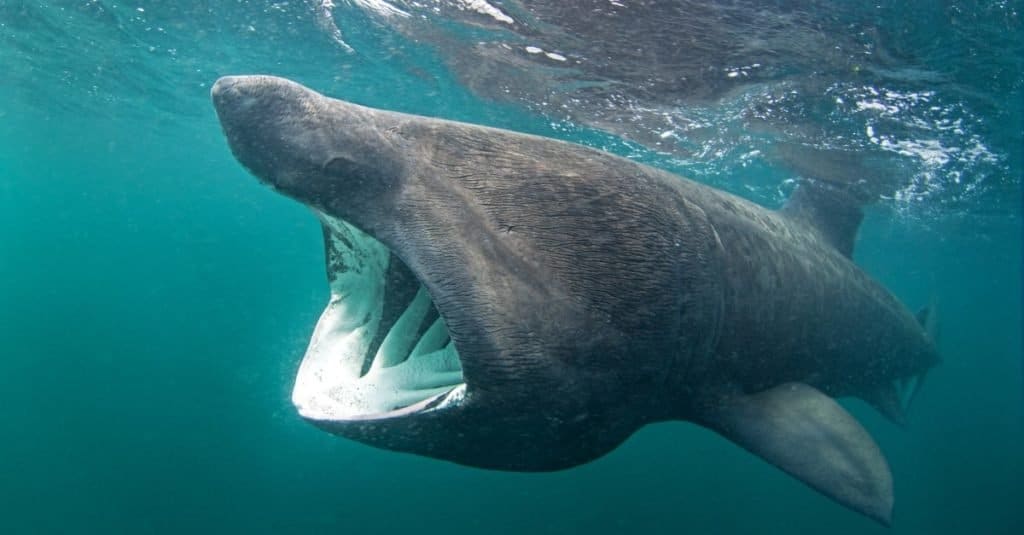
Basking sharks live mainly in the Atlantic and Pacific Oceans, but also in other seas.
©Martin Prochazkacz/Shutterstock.com
According to researchers at Duke University, the largest basking shark (Cetorhinus maximus) ever recorded was 32 feet long. However, they are normally about 26 feet long. While they mainly live in the Atlantic and Pacific Oceans, they have been found in the Mediterranean, Adriatic Sea, and the Indian Ocean. They live near shorelines where they dine on planktonic crustaceans during the warmer months but migrate further out to sea when temperatures start dropping.
Basking sharks are filter feeders who can open their mouths up to 6.5 feet wide. Due to their passive temperament, basking sharks have the smallest weight-to-brain weight ratio of any shark.
#1. Whale Shark – 60-61.7 Feet
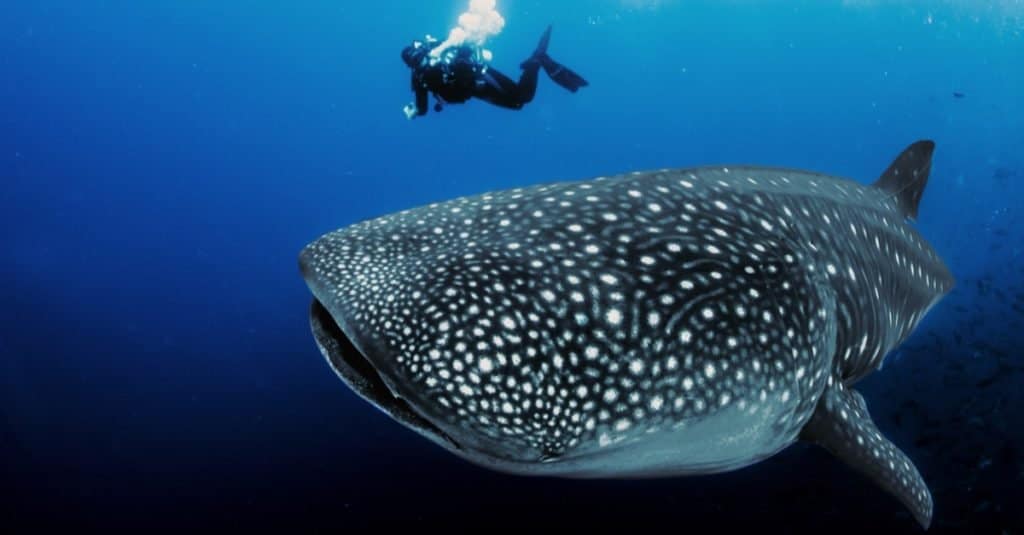
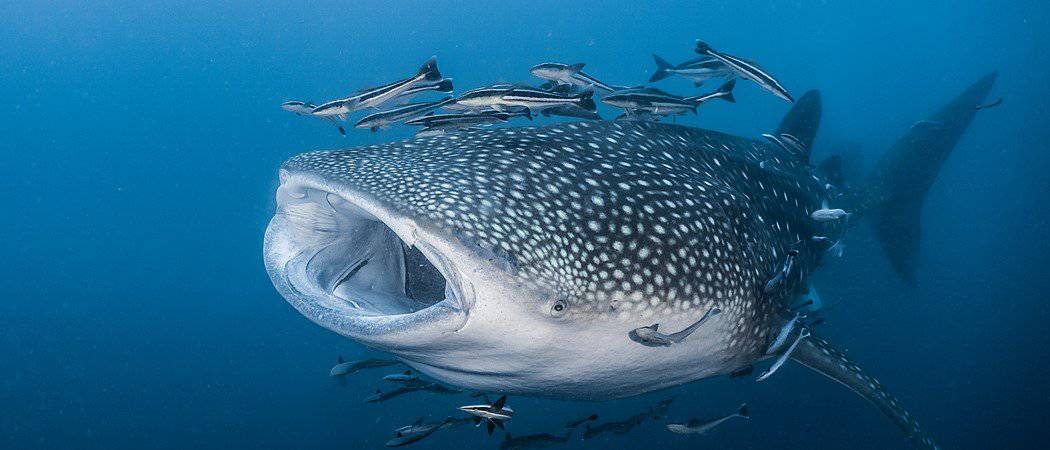
Each whale shark has its own unique pattern of spots, like an identification code.
©Lindsey Lu/Shutterstock.com
According to the Georgia Aquarium, the largest whale shark in the world is 61.7 feet long. These sharks are filter feeders despite having over 300 small teeth inside their mouths. They live in the Atlantic, Pacific, and Indian Oceans. Even though whale sharks often weigh more than 41,000 pounds, they can only eat zooplankton, such as fish eggs and krill, because they have a very tiny throat opening. The mouth of whale sharks can be up to 4-5 feet wide.
Each whale shark has its own unique pattern of spots, much like human fingerprints. Newborn whale sharks are usually about 23 inches long. In addition to being the biggest fish, they also have one of the longest lifespans, often living up to 130 years.
Factors Affecting the Growth of Fish
Like other animals on Earth, fish are affected by their surroundings. Specifically, reproduction and growth can be influenced by the physical properties of the water they live in. Temperature is a big factor in promoting or decreasing fish growth. Chemical properties and makeup of the water, such as pH, salinity, alkalinity, hardness, and metals also determine the size parameters of fish. Some fish are also better adapted to their specific environments than others, giving them the upper hand when it comes to growth.