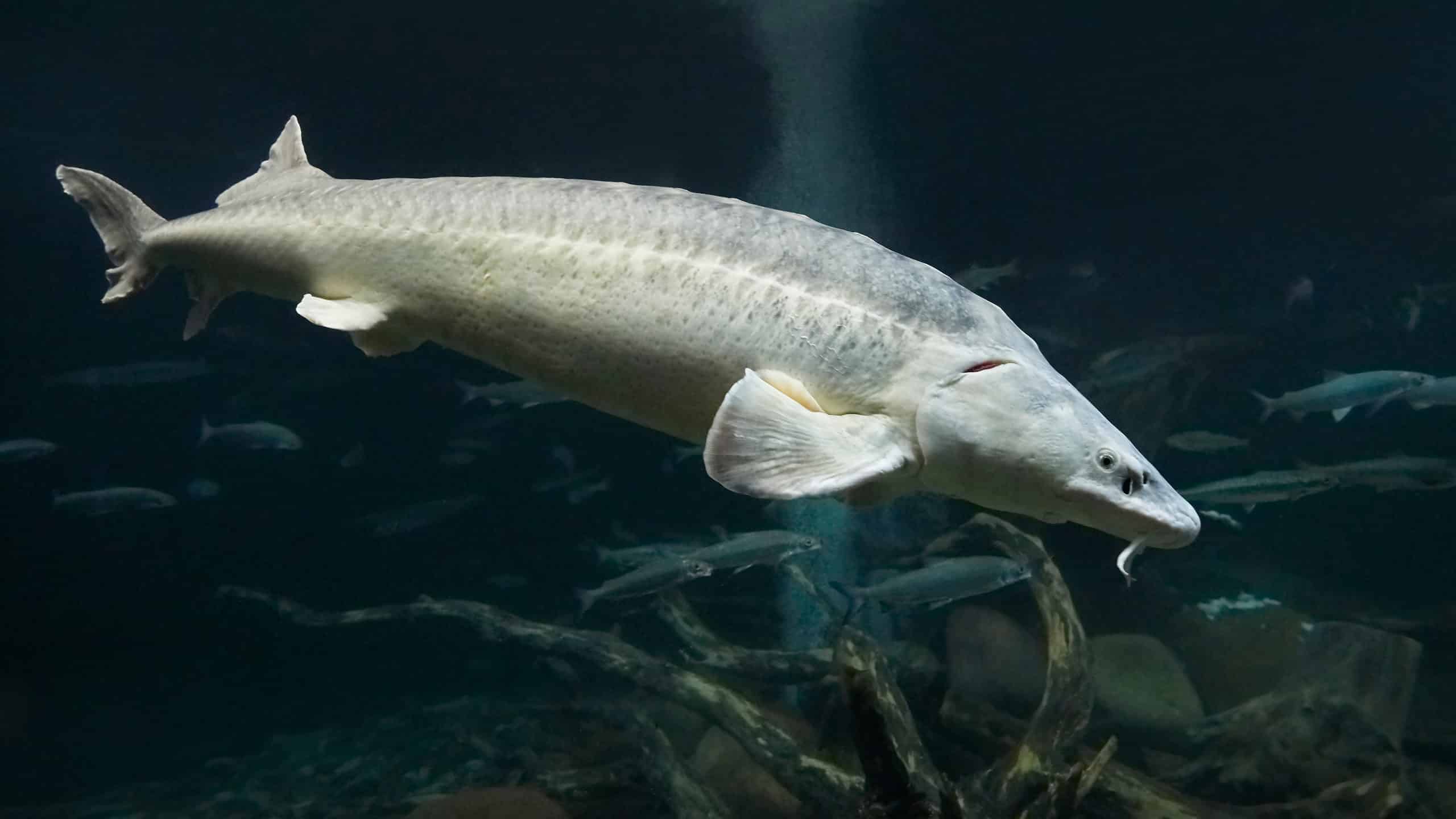

Quick Take
- There are 27 species of sturgeon, with 7 inhabiting the waters of North America.
- Sturgeon generally eat shellfish, crustaceans, small fish, insects, and gastropods.
- Sturgeon can locate prey in total darkness without utilizing any visual sensory input.
Sturgeon are ancient fish that have been around for 201 million years, understandably earning them the title of “modern fossils.” They usually live in freshwater, but some species feed in brackish environments, while others migrate up coastlines in seawater. There are 27 known species of sturgeon, all with their own unique habitats and behaviors. Let’s look at these amazing fish and learn what foods are on a sturgeon’s menu.
What Do Sturgeon Eat?
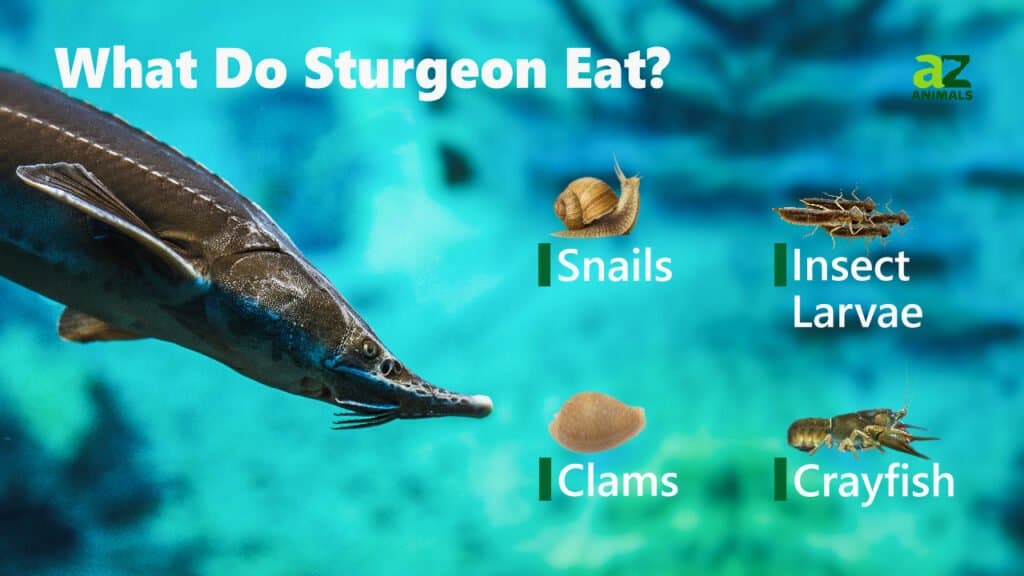
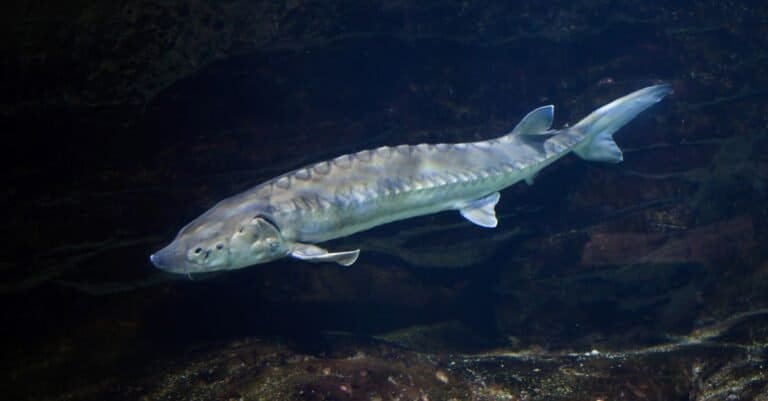
Sturgeon are benthic feeders that suck up their food with vacuum-like mouths, swallowing it whole.
©/Shutterstock.com
Sturgeon eat shellfish, crustaceans, small fish, insects, and gastropods. There are many species of sturgeon, all with different diets. Some of these diets will be discussed in the following section. However, there are general similarities between them. Sturgeon are benthic feeders, meaning they feed on the bottom layer of a water ecosystem. This equates to sea floors, river beds, and lake beds.
Most species stick to smaller prey, particularly when they are smaller themselves. These benthic feeders often feed on the filter feeders that live near the bottom of an ecosystem, providing an important link from filter to predator. They generally act as a vacuum and sweep the muddy beds of watery ecosystems, looking for any food they prefer.
While there is some variation depending on habitat, here are some of the basic foods sturgeon eat:
- Crayfish
- Shrimp
- Snails
- Plants
- Insects
- Larvae
- Worms
- Slugs
- Clams
- Fish
- Frogs
- Lamprey
Different Foods for Different Species of Sturgeon
There are seven species of sturgeon inhabiting the waters of North America. Most of the North American species are found in freshwater, with some occasionally migrating through saltwater. White sturgeon are the largest freshwater fish in North America, with historical records of individuals reaching up to 20 feet long and living more than 100 years, though most large individuals today are 10 to 12 feet long. White sturgeon live in rivers and estuaries near the ocean but migrate inland to spawn. White sturgeon eat fish eggs, shrimp, clams, and other fish. Salmon, flounder, and herring are all prey for these massive animals.
Lake sturgeon live in freshwater environments across North America. They eat leeches, clams, crayfish, and small fish. They tend to have a preference for worms, slugs, and snails. The Alabama sturgeon is a rare species now believed to exist only within a 130-mile stretch of the Alabama River. These small sturgeon only measure 2-3 feet and eat invertebrates and other small fish.
Bay dwelling, Atlantic, and shortnose sturgeon live in the Chesapeake Bay. They generally eat shrimp, crustaceans, insects, mollusks, and worms. The fish migrate inward towards freshwater when they breed and lay eggs, where their diet changes accordingly.
How Do Sturgeon Hunt and Forage for Food?
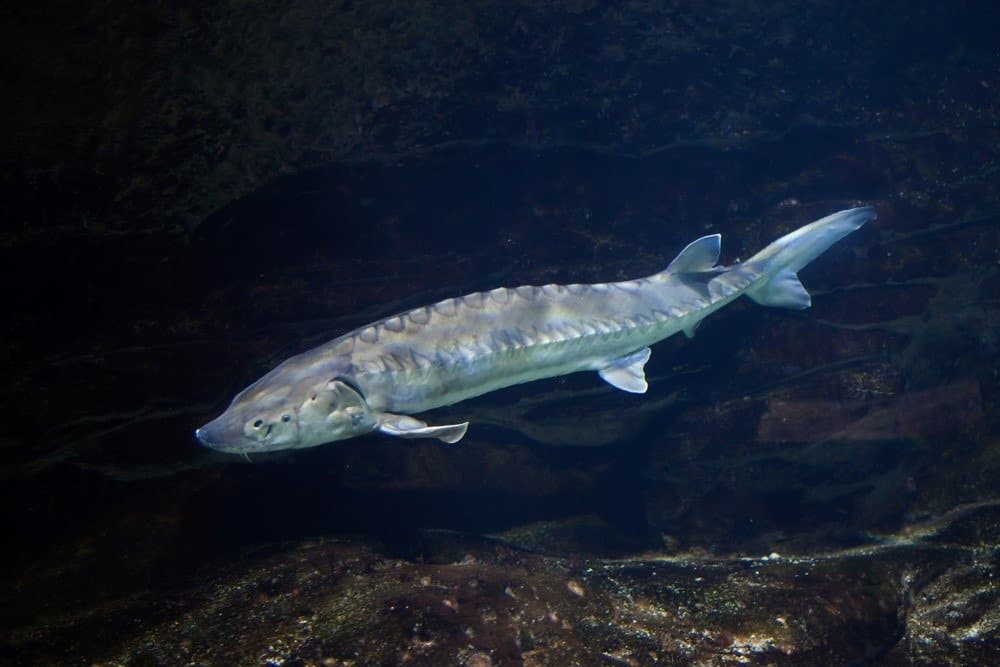
Sturgeon have an array of senses that allow them to find food in complete darkness
©Vladimir Wrangel/Shutterstock.com
Sturgeon don’t have teeth. Instead, these large fish sweep the bottoms of their environments, looking for their food. They then suck it up through their vacuum-like mouth, swallowing and digesting it whole. Their mouths are similar to suction tubes, and they will generally eat anything they can get into their mouths.
To aid in their search for food, sturgeon have an array of senses that allow them to find food in complete darkness. In fact, they don’t use visual sensory input at all in their search for food. Instead, they can taste, feel, and chemically sense nearby prey using their barbels situated at the front of their heads. A barbel is similar to whiskers on a cat, but for fish. Catfish also have barbels.
Additionally, sturgeon have electroreceptors in their heads. These sensors allow them to feel electrical signals from prey so they can then hone in on them with accuracy. Since animals put off a weak electric field, the sturgeon can find small prey in the dark, muddy bottoms of rivers and lakes.
Sturgeon also love to leap out of the water and have become famous for their behavior. While there are multiple theories, and multiple reasons why, sturgeon do this, one of the obvious reasons is to catch insects in the air or on the surface of the water. Occasionally, the jumping act will land large sturgeon into unsuspecting boats.