

Quick Take
- A frog toxic enough to kill 1,200 mice is nearly gone from the wild, and predators are not to blame. Meet the deadly frog →
- Unlike every other frog you know, Panamanian golden frogs don't call to attract mates. Instead, they do something far more unexpected. See the unique courtship →
- One waterborne pathogen has driven more than 200 amphibian species to decline or extinction, and the golden frog is one of its most visible victims. Explore the deadly pathogen →
- No confirmed sighting since 2009, yet this species isn't written off, and the reason why hinges on a surprising partnership. See the survival partnership →
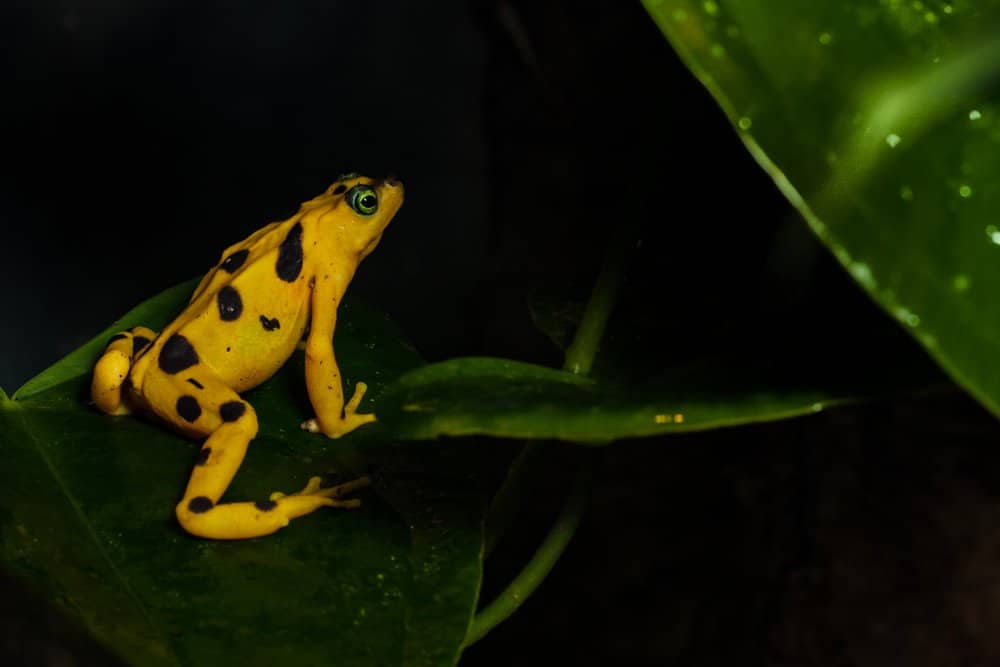
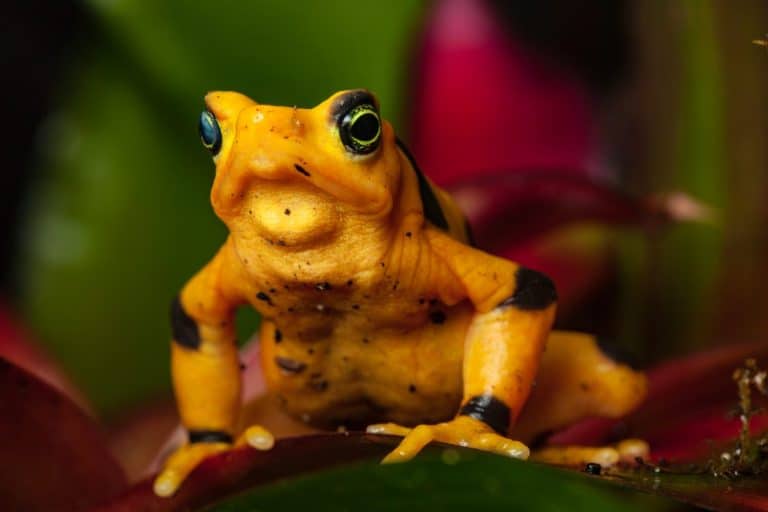
The Panamanian golden frog, or Atelopus zeteki, is a small toad native to Central Panama. They are bright yellow with black spots on their backs. The bright coloring is aposematic, which is a warning to prospective predators that they are toxic. Researchers estimate the glands on their skin produce enough toxins to kill 1200 mice. So, how could such a deadly frog all but disappear from the wild? Keep reading to learn about the Panamanian golden frog and the threats to their continued survival.
The Flashiest Frogs in the Forest
Historically, the Panamanian golden frog was found in both wet and dry habitats. Curiously, individuals in wet rainforest streams are nearly double the size of the frogs found in the dry cloud forest streams. As with most other frog and toad species, female Panamanian golden frogs are larger and heavier than males. Adult male frogs grow up to 4.8 centimeters and weigh 3-12 grams. Female frogs get as large as 6.3 centimeters and typically weigh 4-15 grams.
Panamanian golden frogs have unique courtship rituals. The males do not call out to the females like other frogs and toads do. Instead, they use flashy visual displays to attract a mate. The male frogs stomp and hop in place or twitch their heads and legs. They might even wave their arms at females, who will wave back if interested.
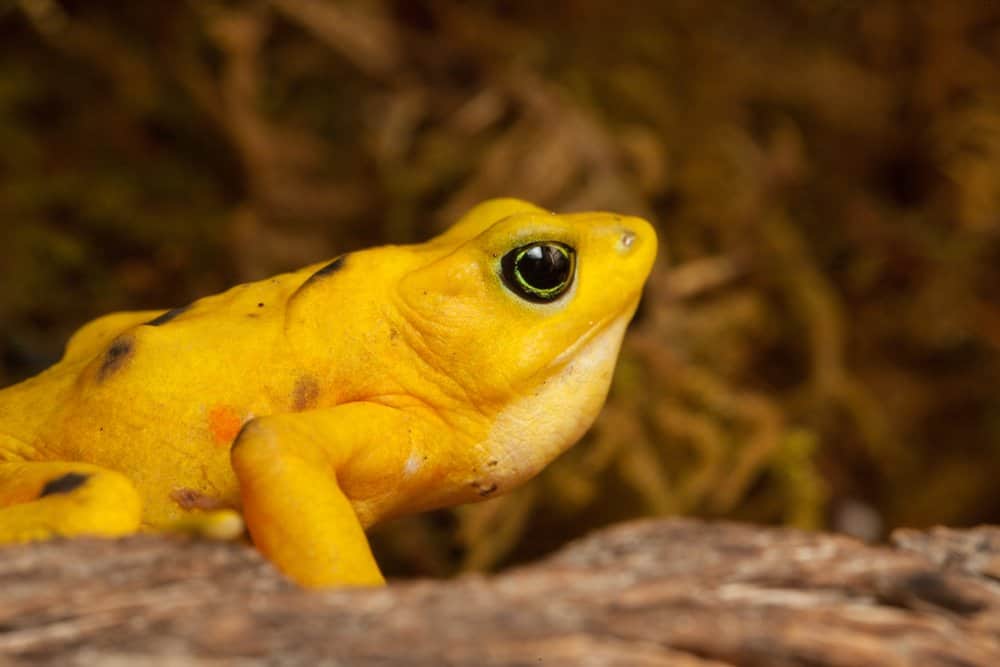
The toxic yellow skin of the Panamanian golden frog is a defense mechanism against predators.
©K Hanley CHDPhoto/Shutterstock.com
Why Have the Panamanian Golden Frogs Disappeared?
The IUCN considers the Panamanian golden frog Critically Endangered. The organization estimates there are fewer than 50 individuals left in the wild, but there have been no confirmed sightings since 2009. Researchers believe they may actually be extinct in the wild. However, small populations of frogs can still be found in zoos around the world.
The primary cause of the catastrophic decline in wild populations is chytridiomycosis, a disease caused by a waterborne fungal pathogen. Scientists at Cornell believe the disease is responsible for the decline or extinction of more than 200 amphibian species. Other factors include habitat loss from deforestation, the illegal pet trade, and increasing water and air pollution.
Conservation Efforts
Fortunately, there are ongoing conservation efforts to preserve the Panamanian golden frog. One of these efforts is the Panamanian Golden Frog Species Survival Program (SSP). Zoos and NGOs have partnered with the Panama Amphibian Rescue and Conservation Project (PARC) to save the golden frog and 12 other at-risk amphibian species in Panama.
Another key effort is Project Golden Frog. The Maryland Zoo, one of the partner institutions, was the first to breed the frogs outside of their native habitat. The Maryland Zoo is believed to have the largest Panamanian golden frog population outside of Panama. Under Project Golden Frog, the Panamanian golden frog population has grown to around 1,000 adult frogs among over 50 institutions in the U.S. and Canada.



Leave a Reply