
Geckos are one of the most common reptiles on the planet. There are nearly 2,000 species of gecko in seven distinct gecko families. This makes geckos one of the most diverse reptile clades. You can find geckos on every continent except Antarctica, in environments ranging from rainforests to deserts. Geckos get their name from their unique vocalizations, which include clicks, hisses, and chirps. While some geckos are diurnal, meaning they are active during the day, most are nocturnal, or active at night. However, once they become active, what do geckos eat, and how do they find food? Keep reading to learn what geckos eat and how they hunt for food.
The Gecko Diet

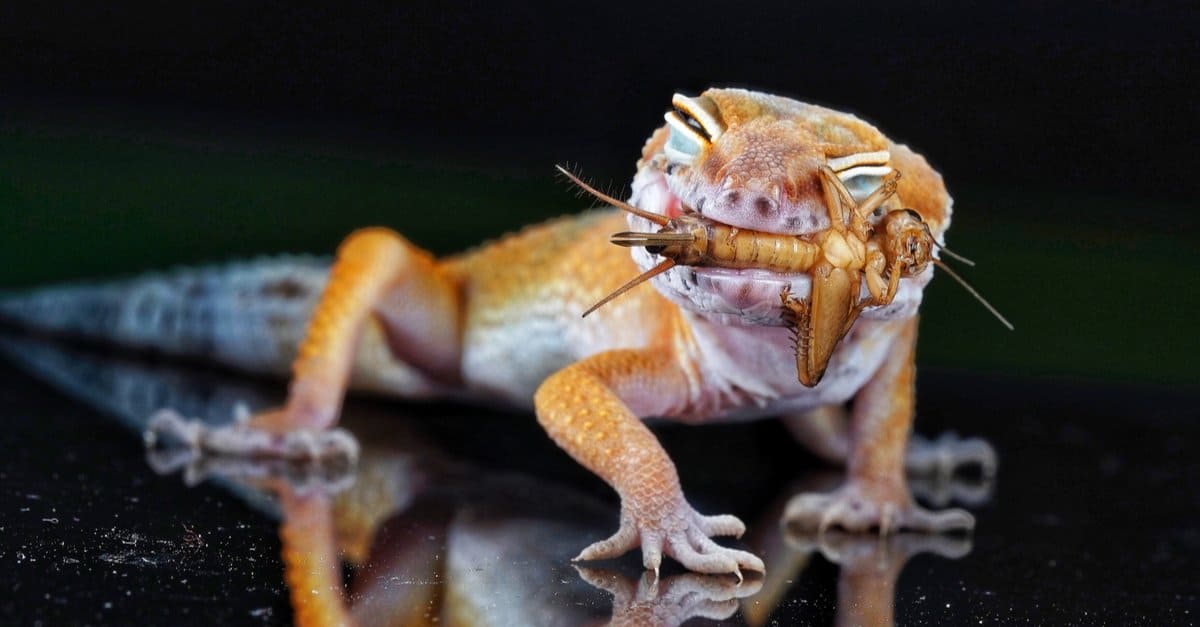
For most gecko species, insects make up the majority of their diet.
©iStock.com/Heru Agung
Like most lizards, geckos are largely carnivorous. Insects make up the bulk of most geckos’ diets. However, baby geckos and some gecko species are omnivorous and eat both plant and animal matter. Not known as picky eaters, geckos will eat almost anything smaller than themselves. The foods that geckos eat typically consist of insects that are abundant in the local environment. However, there are certain foods that geckos eat more often than others and in larger quantities. In addition, geckos prefer to eat live prey, so most gecko species rarely eat carrion.
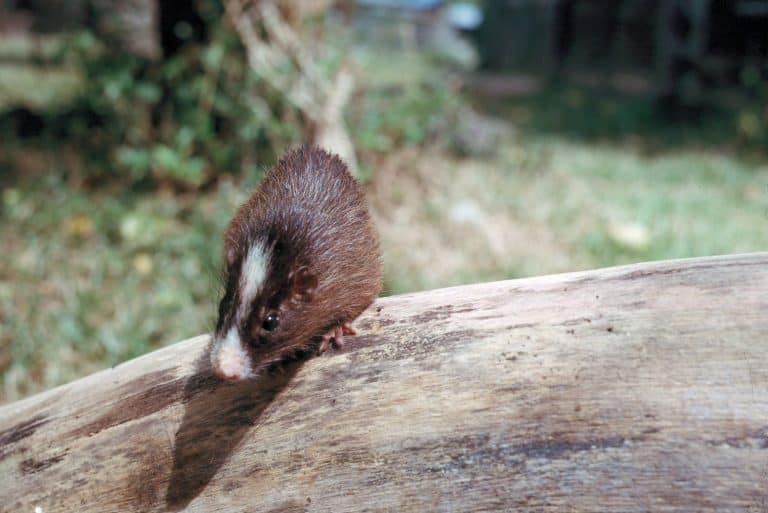
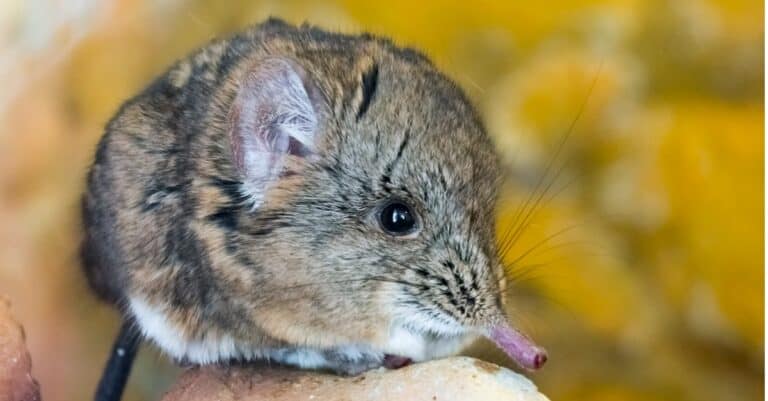
Common insects that geckos eat include flies, mosquitoes, beetles, crickets, cockroaches, grasshoppers, and termites. In addition, geckos will also eat other invertebrates, including worms, snails, caterpillars, moths, and spiders. While predominantly insectivores, wild geckos will prey upon anything smaller than themselves. On rare occasions, the largest geckos may eat very small rodents such as baby mice or shrews if they can catch them. They will even target small snakes and other small reptiles.
Other geckos eat a more omnivorous diet, which includes fruits and berries. These geckos consume locally available fruits, including grapes, apples, apricots, pears, mangos, and more. On rare occasions, carnivorous geckos will also eat moss or other vegetation. However, this is usually a sign of a nutrient deficiency. Some species, like crested geckos, eat nectar and seeds and can tolerate common vegetable matter. Day geckos also consume pollen.
Although a gecko’s diet is dependent on species and habitat, some of the foods that geckos typically eat include:
- Insects
- Small invertebrates such as spiders, centipedes, worms, and snails
- Rodents
- Snakes
- Scorpions
- Smaller geckos
- Gecko eggs
- Nectar and pollen
- Soft seeds
- Fruit
- Berries
- Other vegetable matter
The only limits to their diet are their size and the foods that are readily available in the area. Therefore, the larger the gecko, the larger the prey it can eat. As a result, larger geckos may eat a wider variety of prey, while smaller geckos might eat a less varied diet.
How Do Geckos Hunt for Food?
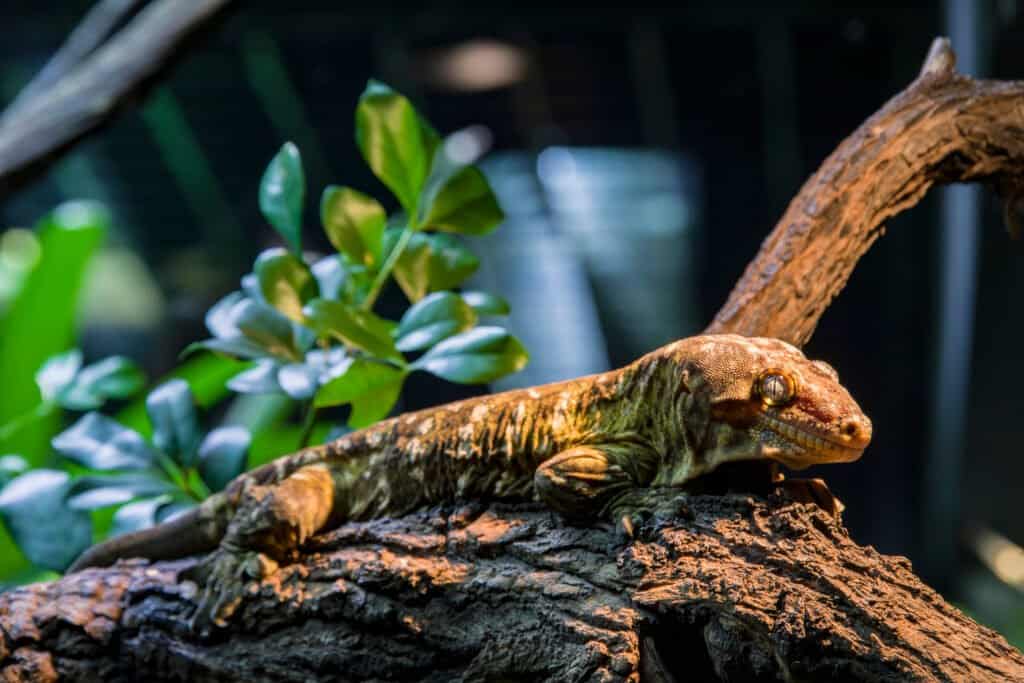
The New Caledonian is the largest gecko species in the world.
©Danny Ye/Shutterstock.com
Geckos have evolved highly attuned senses to help them hunt and forage for food. First, they possess excellent eyesight. Some nocturnal geckos have eyes that are 350 times more sensitive to light than human eyes. This allows them to pick out colors, shapes, and movements that the human eye simply cannot see. Their multifocal optical system enables them to see objects in crystal-clear detail.
Geckos have also evolved remarkable tactile abilities. Many geckos have adhesive pads on their toes that allow them to stick to almost any surface. This aids them in both pursuing prey and running away from predators. Additionally, geckos have good hearing. Not only can they hear airborne sounds, but they can also detect vibrations in the ground or water. They have a structure in their inner ears called the saccule, which allows them to detect low-frequency vibrations in their environment. Geckos also possess a keen sense of smell to help them sense both predators and prey.
Most geckos rely on ambush tactics when hunting, particularly for larger or faster prey. However, geckos may stalk or chase down slower prey such as crickets or beetles. Some geckos can run about 35 body lengths per second, which makes them capable of chasing down most prey. Once a gecko has its target in sight, it will shoot out its long, sticky tongue to catch its prey. A gecko’s tongue is long, flexible, and coated in sticky saliva, similar to a frog’s tongue.
Alternatively, a gecko may forgo using its tongue and simply catch prey with its mouth. Geckos usually have between 50 to 100 teeth, which they use to bite and hold onto prey. On average, a gecko will regrow and replace most of its teeth every 3-4 months throughout its lifetime.
What Do Geckos in Captivity Eat?
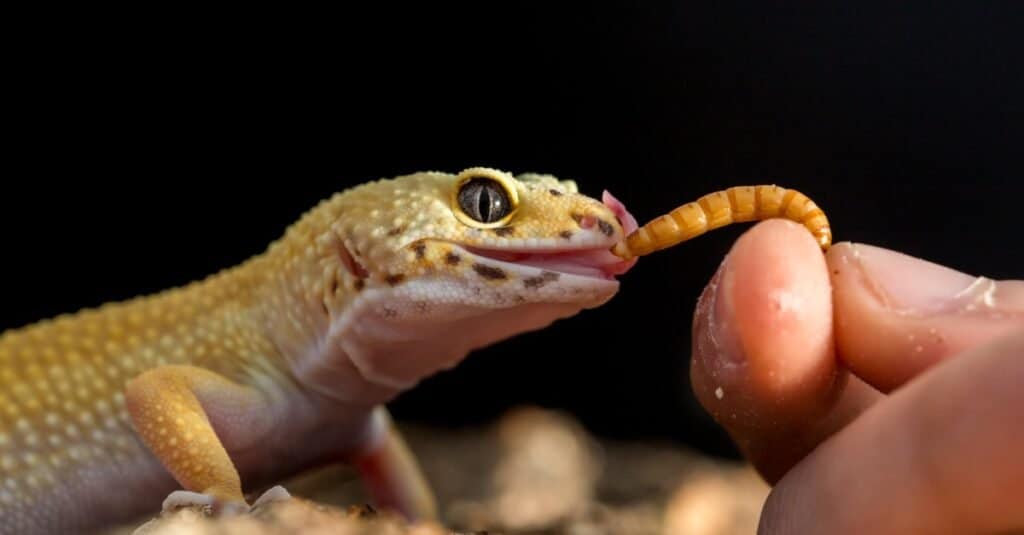
Mealworms are often recommended for pet leopard geckos.
©iStock.com/MattiaATH
Different gecko species have different nutritional requirements. For example, you should not feed fruit to a leopard gecko, which is carnivorous, whereas you should feed fruit to a day gecko. It is important to replicate the diet your pet gecko would eat in the wild as much as possible. Before starting a diet for your pet gecko, always consult your veterinarian or an expert at your local pet store.
The backbone of any carnivorous pet gecko’s diet will include crickets and dubia roaches. In addition to being cheap and readily available, these insects also pack a lot of nutrition. However, it’s important to ensure that insects are mixed with mineral supplements, particularly calcium and vitamin D. Other common foods include mealworms, waxworms, superworms, and flies.
Larger geckos can also eat pinky mice to help them maintain a healthy weight. Remember, insects can bite a pet gecko, so it’s important to remove insects from a gecko’s enclosure if they remain uneaten for an extended period of time.
The Baby Gecko Diet
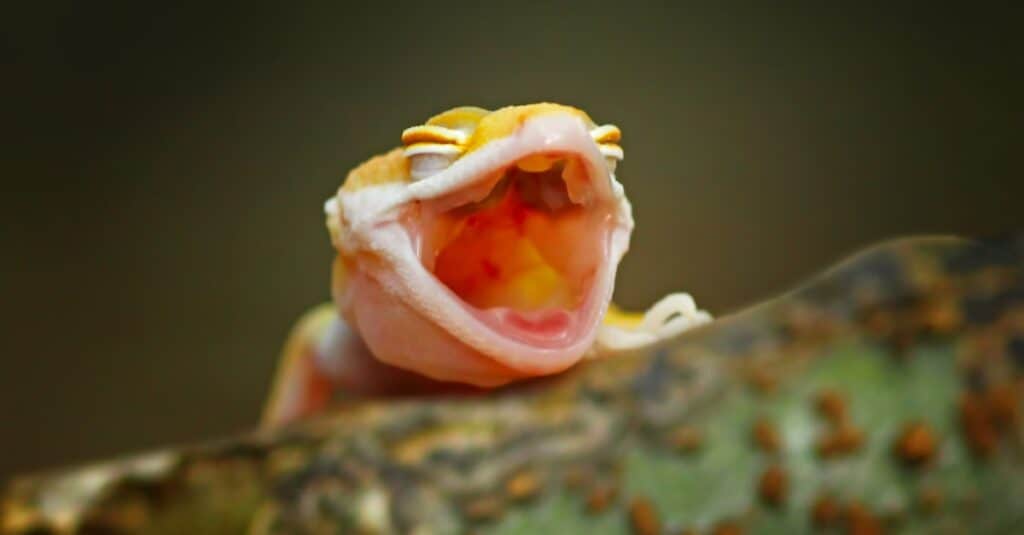
Baby geckos may eat a more omnivorous diet until they are large enough to hunt and capture a wider variety of prey.
©iStock.com/agus fitriyanto
Generally, baby geckos eat many of the same foods that adult geckos eat. However, baby geckos may eat a more omnivorous diet, especially in the wild, where they have to hunt and forage for food to survive. They often prey on smaller crickets and beetles, which are easier to catch.
Pet baby geckos should only be fed insects that are about the size of the gecko’s head. However, prior to starting a new diet for a baby gecko, it’s important to consult with your veterinarian or local pet store expert. This ensures that your pet baby gecko receives all the nutrients it needs to grow up healthy and strong.