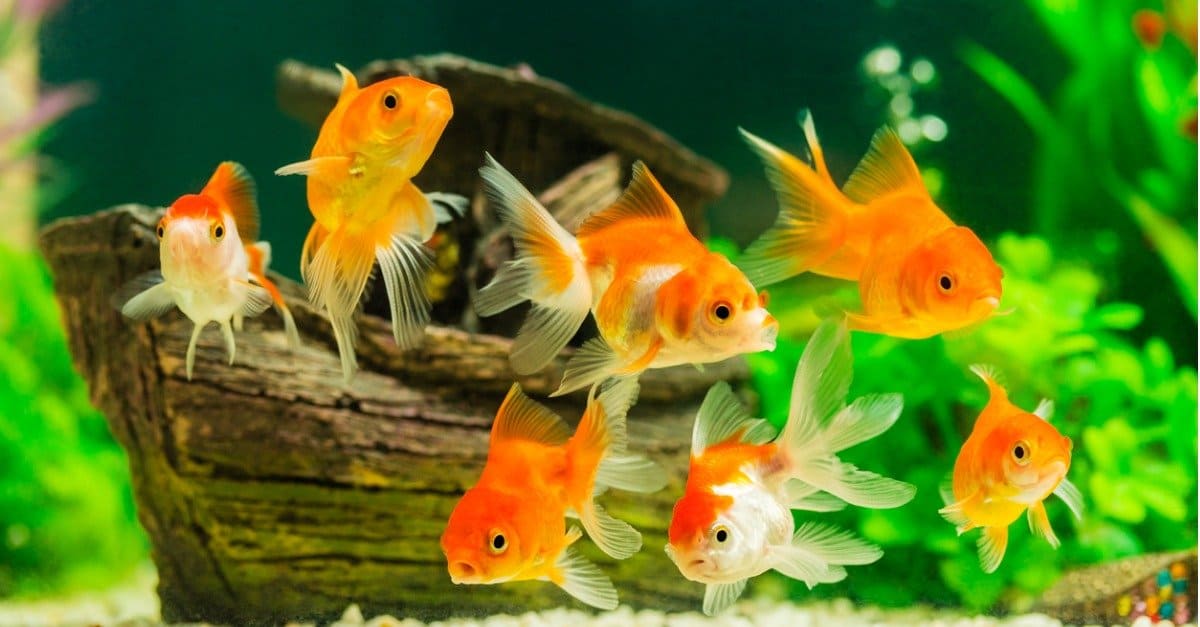

Based on their availability and ease of maintenance, goldfish are one of the most popular pets on the planet. But how long do goldfish live, and are we responsible for extending their life span as long as possible?
You may have owned a goldfish in the past, or perhaps you are considering bringing some home with you from your local pet store. Whether you are a goldfish pro or a new fish owner, knowing how long your goldfish may live is important. Let’s learn more now.
How Long Do Goldfish Live?
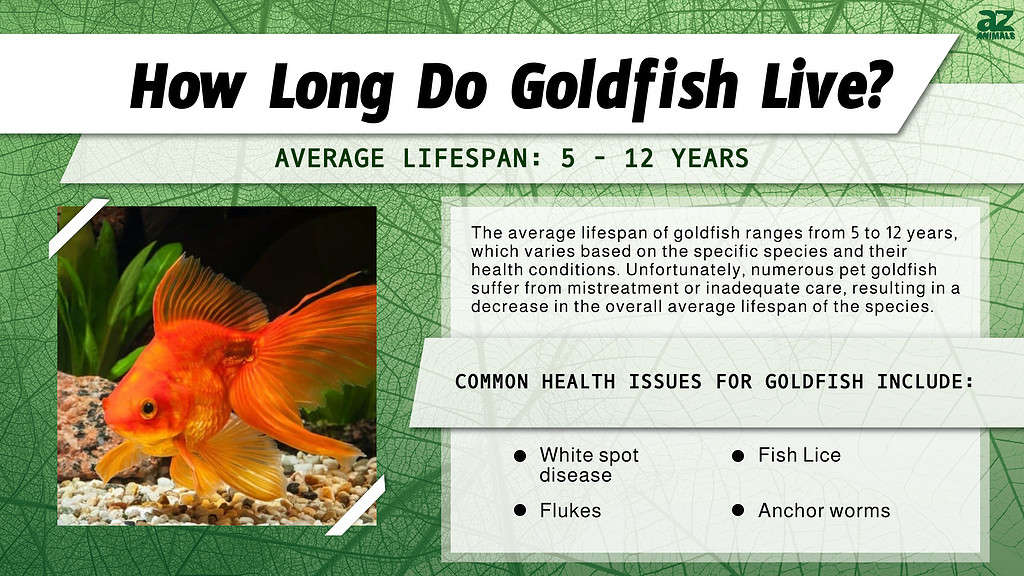
Goldfish live an average of 5 to 12 years, depending on species and health conditions. Many pet goldfish are not cared for properly, and this brings down the overall average lifespan for the species.
Some varieties of goldfish can live over 20 years, with 30 years being a possible lifespan for these types. In fact, the Guinness Book of World Records currently has a 43-year-old goldfish named Tish listed as the oldest goldfish on record.
There are other goldfish that have claimed incredibly long lifespans (but are not verified). These include:
- George: A goldfish that lived in the United Kingdom and reportedly reached 44 years old. George was won at a state fair in 1974 and given as a romantic gesture. That romantic gesture led to a marriage that lasted George’s entire life. He passed away in 2019.
- Goldie: A goldfish that reportedly reached 45 years of age. Goldie was another long-living goldfish that lived in the United Kingdom.
While these ages are longer than Tish’s, remember that reports of older animals often lack certification and records. Therefore, 43 years old stands as the current record for the oldest goldfish on record. While this high number may surprise you, most goldfish don’t live longer than a couple of years because of tank conditions and the environment.
Poor breeding or care at pet stores may also negatively impact the lifespan of a goldfish. It’s advised that you pay close attention to goldfish behavior at a pet store before you buy. If you notice any fish that are struggling to swim, seem to be droopy or unhappy, or even ones that are flopped over on their side, you should avoid bringing them home.
The Average Goldfish Life Cycle
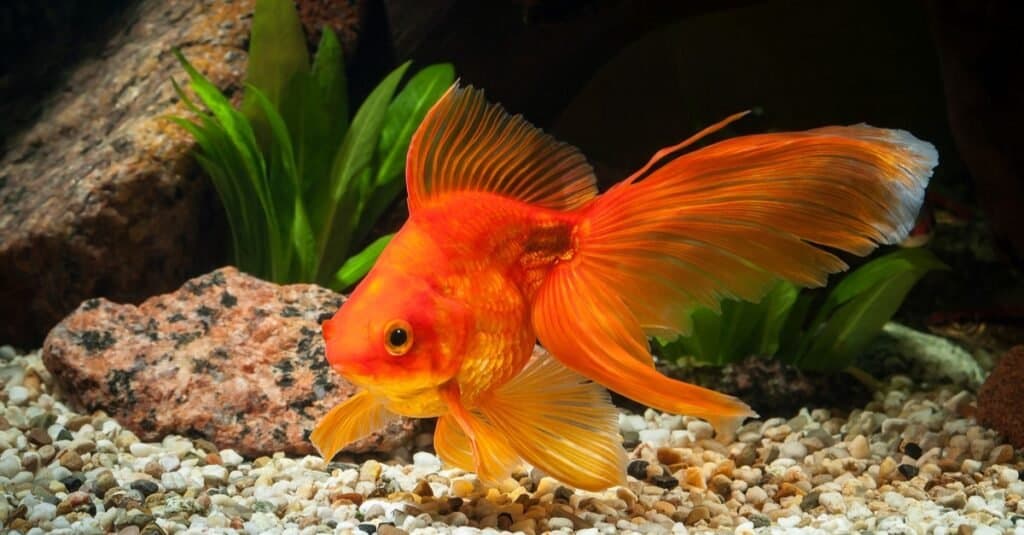
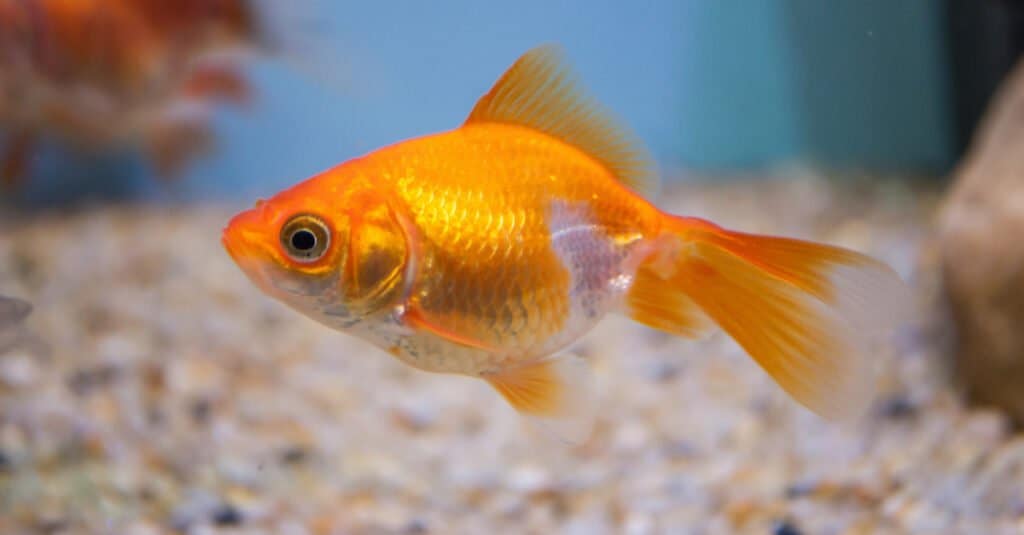
Some goldfish can exceed 12 years of age.
©dien/Shutterstock.com
Curious about what life is like for the average goldfish? Here is an overview of their life cycle, from egg to adult goldfish. This may give you some insights about how to best take care of your new pet.
Newly Born Fish
Goldfish lay their eggs in large groups, and it takes only a few days for them to hatch. It is important to remove any adult fish from the tank during this time, as goldfish and other fish will consume both the eggs and baby fish.
Newly born goldfish start to look more like their adult counterparts at the end of their first week of life. However, their lives are often cut short during this time because of their small size and inability to hide from predators.
Young Fish, or Fry
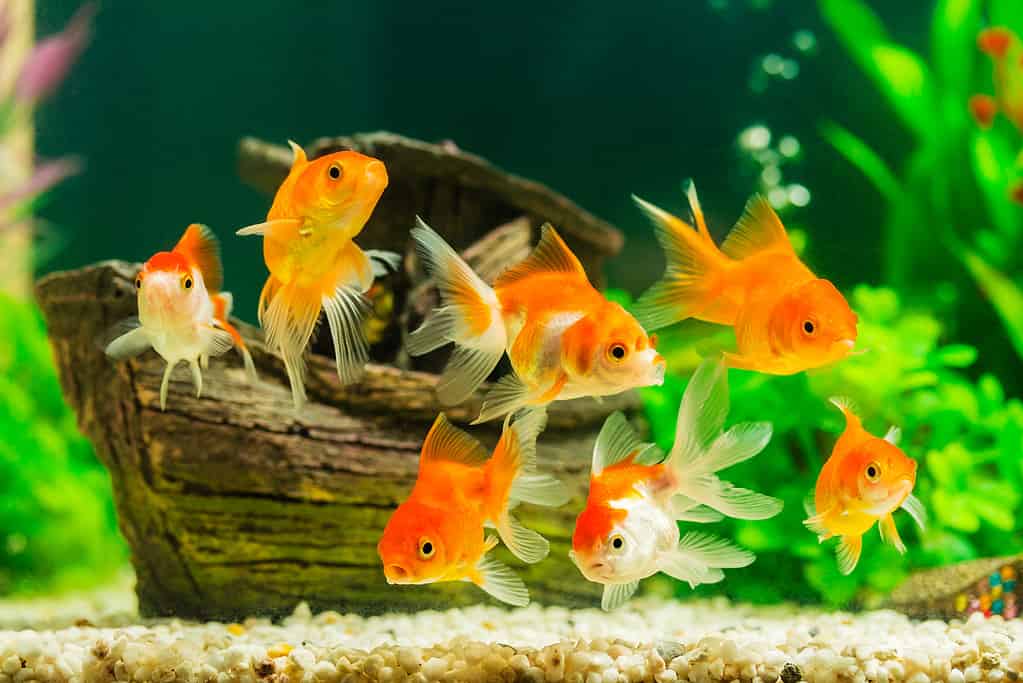
Young goldfish begin to look like adults after their first week of life.
©satit_srihin/iStock via Getty Images
While newly hatched goldfish are hardly recognizable, young goldfish start to look more like the fish we know and love. Baby goldfish are also known as fry, and these babies tend to cling to plant matter before they are strong enough to swim great distances on their own.
Once they can swim, they are able to feed. If you are raising young fish at home, they are ready for fish flakes at this time. Goldfish grow quickly and age relatively fast in the animal world. Your goldfish will be considered an adult from six months to a year of age.
Adult Goldfish
Depending on the species, your adult goldfish may grow up to six to 12 inches long. However, the average adult goldfish is only around an inch or two. This is especially true for fancy goldfish and more compact breeds.
However, no matter their size, grown goldfish need adequate space to swim around. Whether you are keeping one or a dozen, you should anticipate purchasing at least a 50-gallon size tank so that they can swim and feed without crowding one another.
An overcrowded fish tank is one of the main causes of goldfish death. It makes it difficult for them to swim around and enjoy their life, and having many fish crammed into one tank will more likely result in territorial disputes and a dirty tank.
How to Extend the Life of Your Pet Goldfish
An overcrowded fish tank is one of the main causes of goldfish death.
©Darko Cvetanoski/Shutterstock.com
It is important to know how to properly care for your goldfish to extend their lifespan as much as possible. Here are some tips for keeping your pet goldfish happy:
- Keep your fish tank at an adequate temperature: While goldfish are hardy, they prefer water temperatures of roughly 70 to 75 degrees Fahrenheit. You can purchase heat lamps and devices that keep your tank’s water warm, and be sure to clean the tank regularly, given that warm water breeds more bacteria.
- Pay attention to signs of disease: Goldfish are often victims of a variety of bacterial infections and waterborne diseases. There are products and water additives that you can purchase to ensure that your fish makes a full recovery. Some of these items are also preventative, such as water conditioners or preventive medicine for your fish. Goldfish often show signs of infection through their skin and tails, with molting scales and moldy-looking spots occurring with some more severe infections. You may consider separating your infected fish from the others so that the disease doesn’t spread to your healthy goldfish.
- Consider an outdoor environment: While goldfish tanks are best enjoyed inside the home, your goldfish may, in fact, thrive better outside. Home ponds and other bodies of water are ideal situations for many breeds of goldfish. This allows them to live out their natural instincts and life while you provide them with food and less maintenance overall. While this isn’t an option for everyone, it may be something to consider.