Quick Take
- Milk snakes can't actually drink milk, and the story behind their name is stranger than you'd expect. See the name origin →
- Despite having no venom, milk snakes regularly hunt and kill venomous snakes, something their body has a surprising advantage that makes possible. Discover their venom resistance →
- Milk snakes and coral snakes look nearly identical, but the popular rhyme people use to tell them apart isn't as reliable as most believe. Check the coral snake comparison →
- A milk snake's diet shifts dramatically as it grows, and what it eats as a juvenile would surprise most people. Explore their shifting diet →
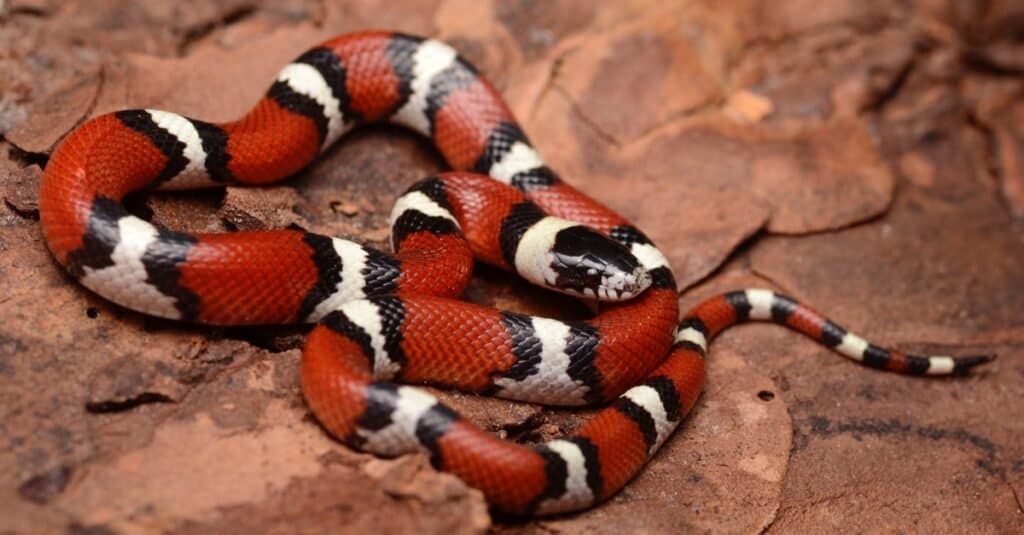
Milk snakes (Lampropeltis triangulum) are colorful reptiles that are native to the United States, Canada, and Central and South America. These common snakes are often mistaken for their more dangerous doppelgängers, coral snakes (Micrurus fulvius). Because they are common in barns, an old wives’ tale suggested that these snakes drank milk directly from the cows’ udders. However, milk snakes lack the physical ability to suckle, and as obligate carnivores, they cannot digest milk. Continue reading to learn everything you need to know about what milk snakes eat.
What Do Milk Snakes Eat?
As carnivores, milk snakes only eat other living things, particularly reptiles, insects, birds, and rodents. When it comes to their diet, they aren’t too picky and will usually eat anything that they can easily kill. Their specific diet will vary depending on their location, but wild milk snakes all eat similar things.
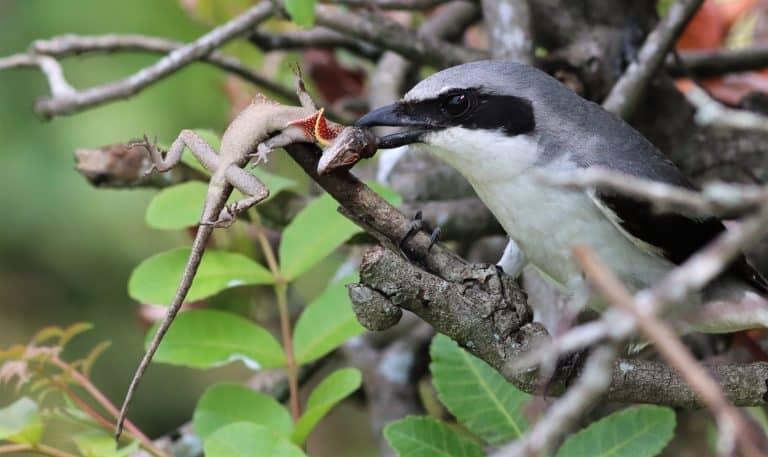
Milk snakes eat lizards, rodents, birds, eggs, and other snakes.
©TheTexasNaturalist/Shutterstock.com
When they are young, milk snakes feed on small prey, typically limited to insects and slow-moving worms. Their juvenile diet includes things like crickets, slugs, earthworms, and, where available, small lizards and skinks.
As milk snakes mature, their diet broadens, and they begin to hunt larger prey. In the wild, they primarily feed on small mammals such as rats, mice, and voles, although captive milk snakes may have a different diet. Most of their dietary nutrition comes from small mammals. Rats, mice, voles, and other rodents are their most common food in the wild, although captive snakes may have a different diet.
In addition to rodents, milk snakes also prey on reptiles such as lizards, skinks, and other snakes, especially in warmer climates. Remarkably, milk snakes can kill and eat venomous snakes, even though they are not venomous themselves. Due to their diet of rodents and venomous snakes, milk snakes play a crucial role in the ecosystem in which they live.
Milk snakes will also eat birds and bird eggs. Although primarily terrestrial, milk snakes can swim and climb, which allows them to reach nesting birds and their eggs.
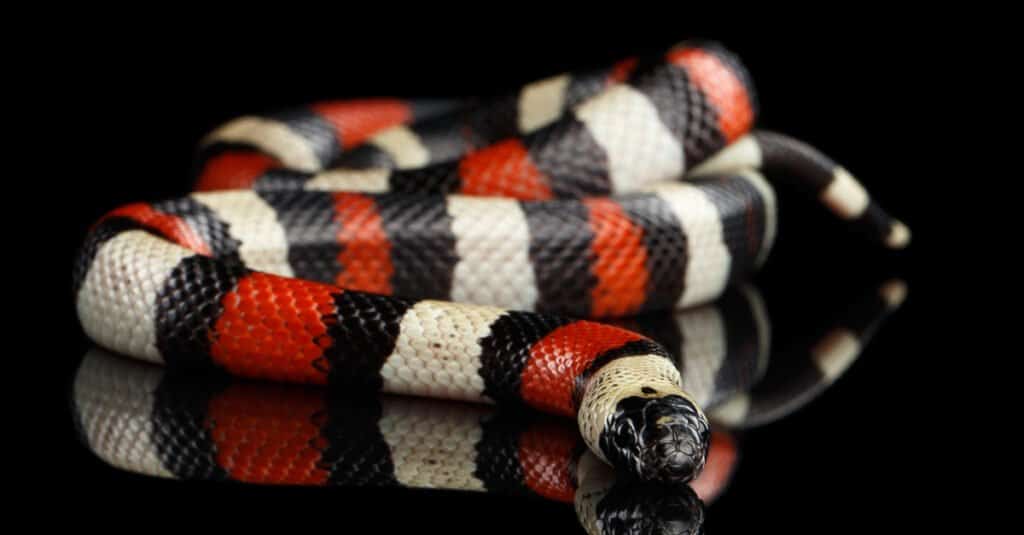
Milk snakes often eat other snakes and are specially adapted to do so.
©Seregraff/Shutterstock.com
Foods that milk snakes eat include:
- Mice
- Rats
- Voles
- Moles
- Lizards
- Skinks
- Frogs
- Snakes
- Snake eggs
- Birds
- Bird eggs
- Insects
Juvenile milk snakes eat mostly insects and sometimes small snakes, while adults primarily feed on rodents. Typically, milk snakes eat about once every two weeks.
How Do Milk Snakes Hunt?
Milk snakes kill a variety of prey, but their hunting strategy remains similar for all of them.
Milk snakes are nocturnal, usually emerging at dusk and remaining active throughout the night. However, during particularly wet or cold conditions, they may hunt during the day.
Once they start hunting, they slowly move around, looking for their preferred foods or anything they happen to come across.
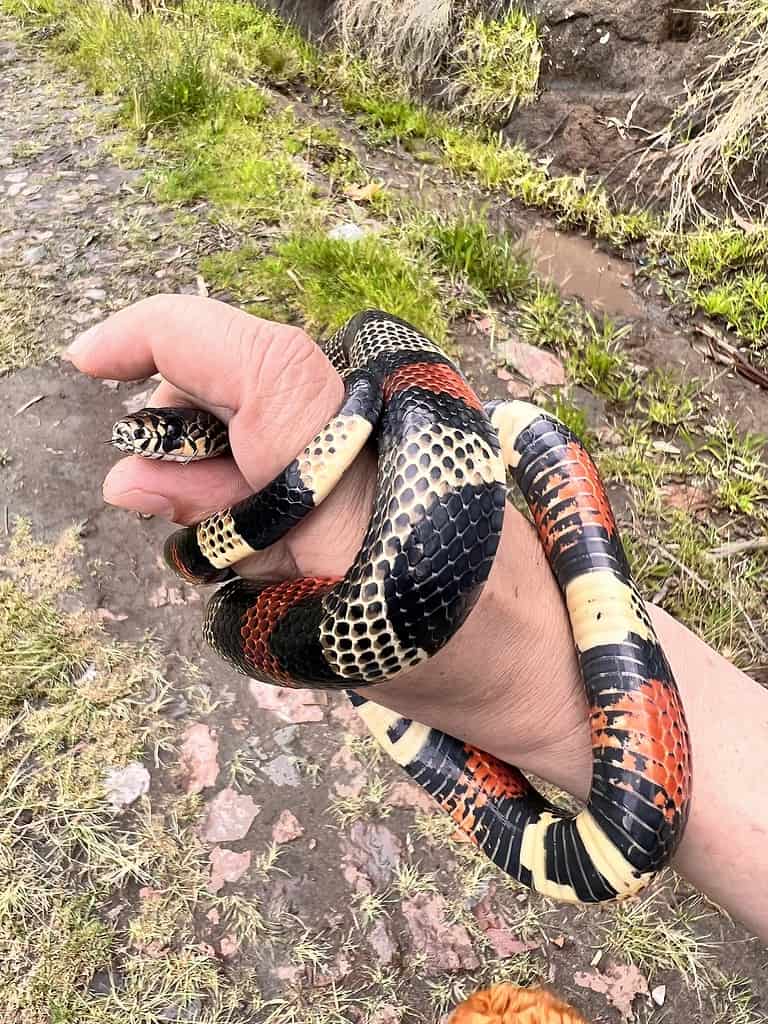
Although milk snakes have a reputation as strong constrictors, they are not strong enough to pose a threat to humans.
Once they identify prey, milk snakes strike with a bite and then coil around their meal, gradually tightening their grip each time the prey exhales. This process makes it increasingly difficult for the prey to breathe, eventually leading to suffocation. Some studies suggest that certain kingsnakes, a group that includes milk snakes, can exert higher constriction pressures relative to their body size compared to some other snakes, which may help them subdue other snakes as prey.
Where Do Milk Snakes Live?
Milk snakes are a widely distributed species of snake that can be found from Southeastern Canada to South America. Generally, they prefer woodlands and can be seen among leaves and on the forest floor.
Milk snakes are also found on rocky cliffs and slopes and in prairies and meadows, which are often home to small rodents. Essentially, milk snakes can be found wherever there are rodents.
Are Milk Snakes Venomous?
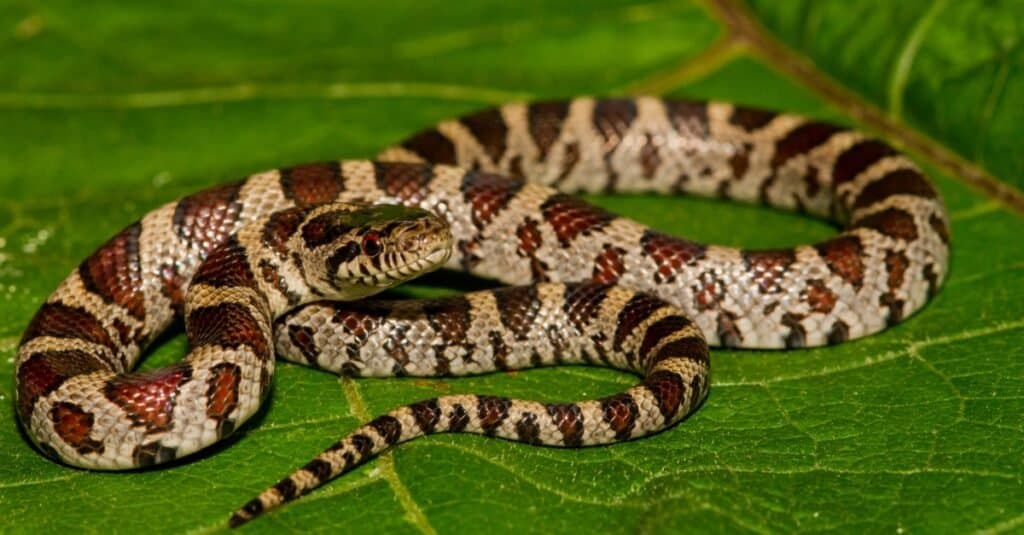
Eastern milk snakes are very beneficial animals, especially for farmers, as they hunt down small rodents often found in farm buildings and barns.
©Jay Ondreicka/Shutterstock.com
Milk snakes are not venomous and instead hunt using powerful constriction. They do, however, resemble venomous snakes. Known as Batesian mimicry, this evolutionary adaptation allows harmless species to avoid predation.
The Eastern milk snake (Lampropeltis triangulum triangulum) is one of the most commonly misidentified snakes, as it comes in so many colors and variations. These harmless snakes are commonly misidentified as copperheads (Agkistrodon contortrix), which are venomous.
Another common misidentification is between highly venomous coral snakes and milk snakes. They both have striating bands of red, yellow, and black. While sayings like red on black, friend of Jack; red on yellow, kill a fellow are popular for distinguishing coral snakes from their mimics in the United States, these rhymes are not always reliable, especially outside the U.S., and misidentification can result in injurycan result in injury.
While milk snakes aren’t venomous, they are active predators of nearly all other snakes. As part of the kingsnake family, they are ophiophagous, meaning they eat other snakes. Some species of kingsnake are even resistant to the venom of other snakes, making them excellent at hunting their dangerous cousins.
What Do I Feed a Pet Milk Snake?
Generally, adult milk snakes are fed a small mouse or rat once a week. Although live feeding may seem entertaining, offering thawed or frozen food is safer and less likely to cause injury to the snake. When milk snakes are small, pinkie mice are usually given every three to five days. It’s important to ensure that any food offered is smaller in width than the widest part of the snake’s body, allowing them to eat and swallow it safely.