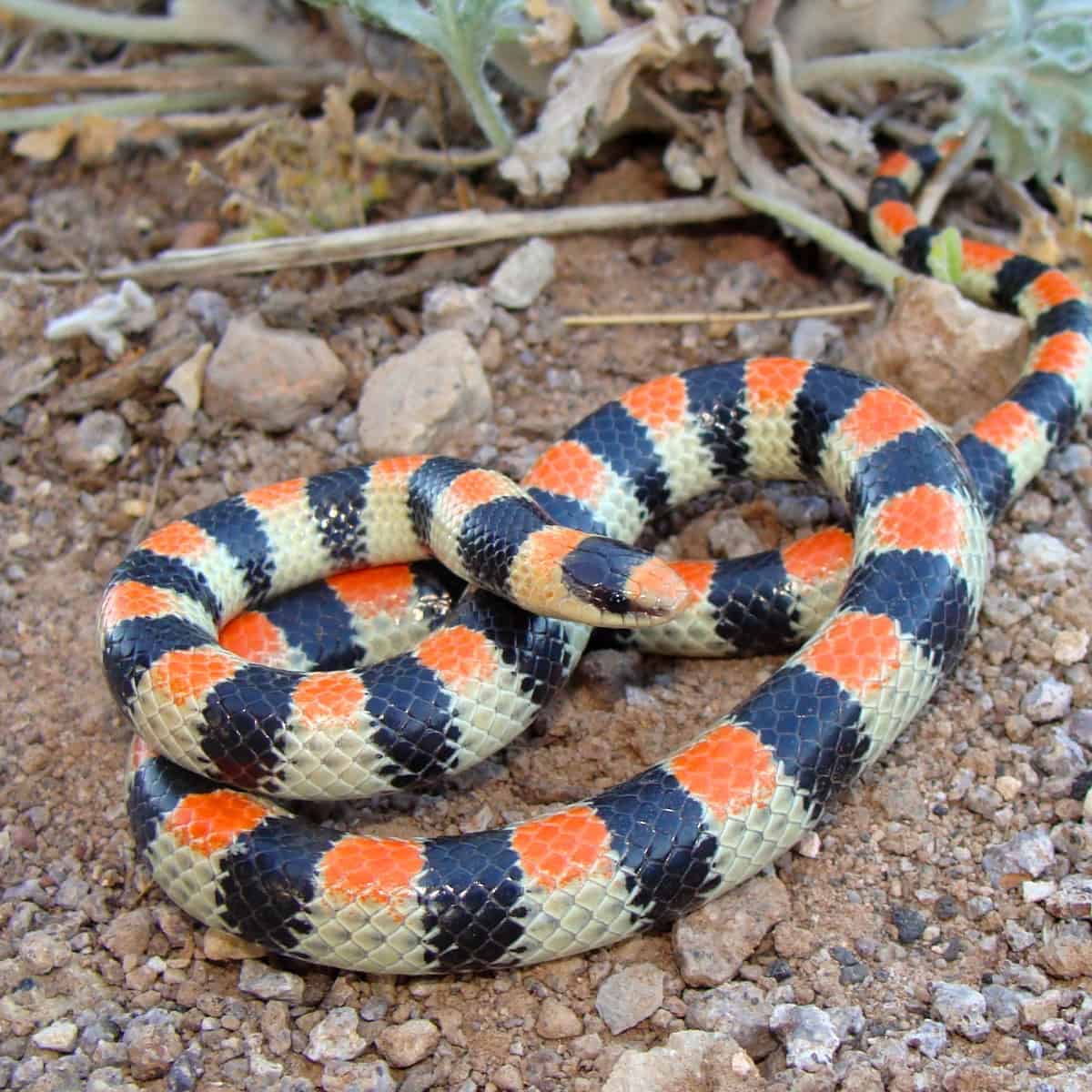
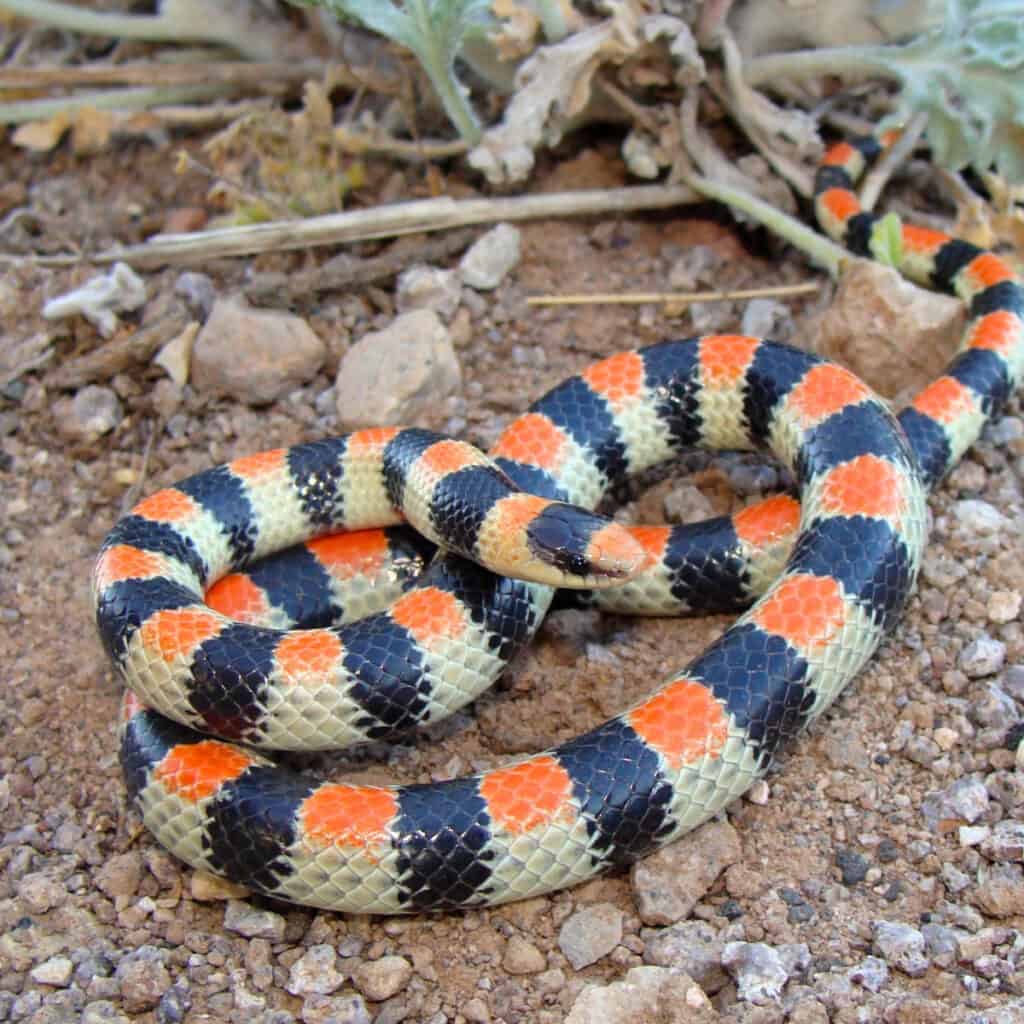
The western ground snake uses its thick head to dig burrows in its sandy habitat.
The western ground snake goes by a couple of other names including the common ground snake and the variable ground snake. It’s native to North America, specifically the southwestern portion of the United States as well as northern Mexico. This snake has a variety of color patterns including orange, red, or brown with horizontal black bands.
This non-venomous snake grows to an average of about eight inches long, making it a manageable pet for some reptile enthusiasts.
4 Amazing Facts
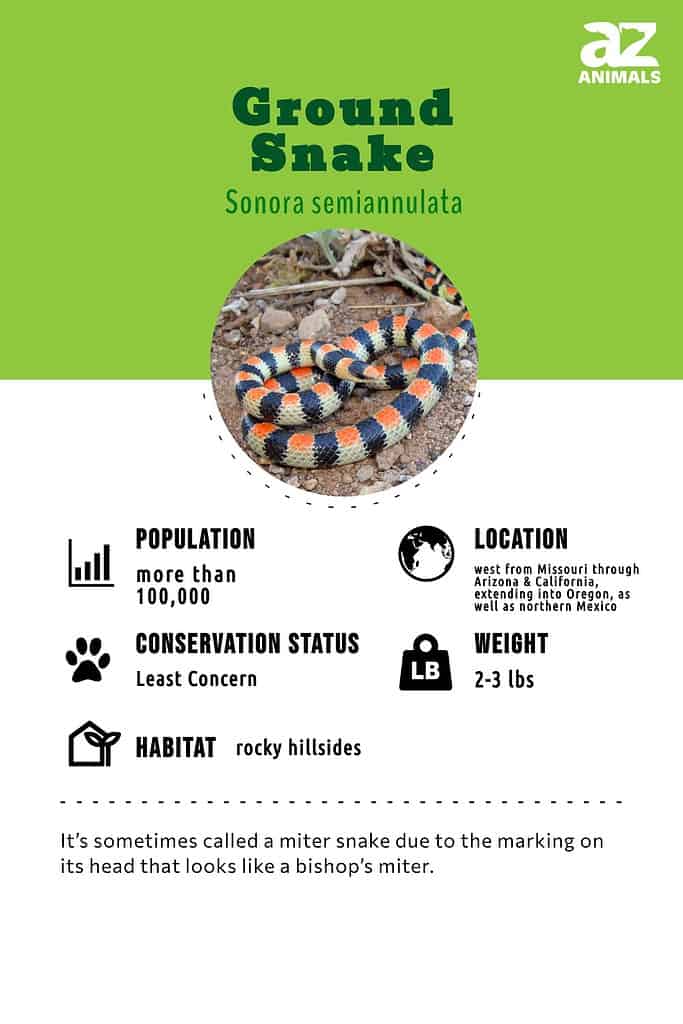
- This small snake uses its thick head to burrow into the sand and loose dirt in its habitat
- Because of its small size, this snake is preyed upon by larger snakes including the sidewinder
- It is sometimes mistaken for the similar-looking rough earth snake whose territory extends into the eastern part of the United States
- It’s sometimes called a miter snake due to the marking on its head that looks like a bishop’s miter
Where to Find Ground Snakes
Western ground snakes are found in the southwestern part of the United States. Its territory runs to the west from Missouri through Arizona and into California. This snake’s range also extends north into parts of Oregon. In addition, it’s found in Durango, Sonora, and Coahuila in northern Mexico.
These snakes live in a rocky hillside habitat where they can burrow into the loose, sandy ground. They are particularly active during their breeding season in the spring and in the summer when they lay their eggs.
In some regions, these snakes go into brumation when the weather becomes colder in November. This period of brumation allows them to keep warm and save their energy for the breeding season. Western ground snakes come out of brumation in the later part of February or early in March.
Scientific Name
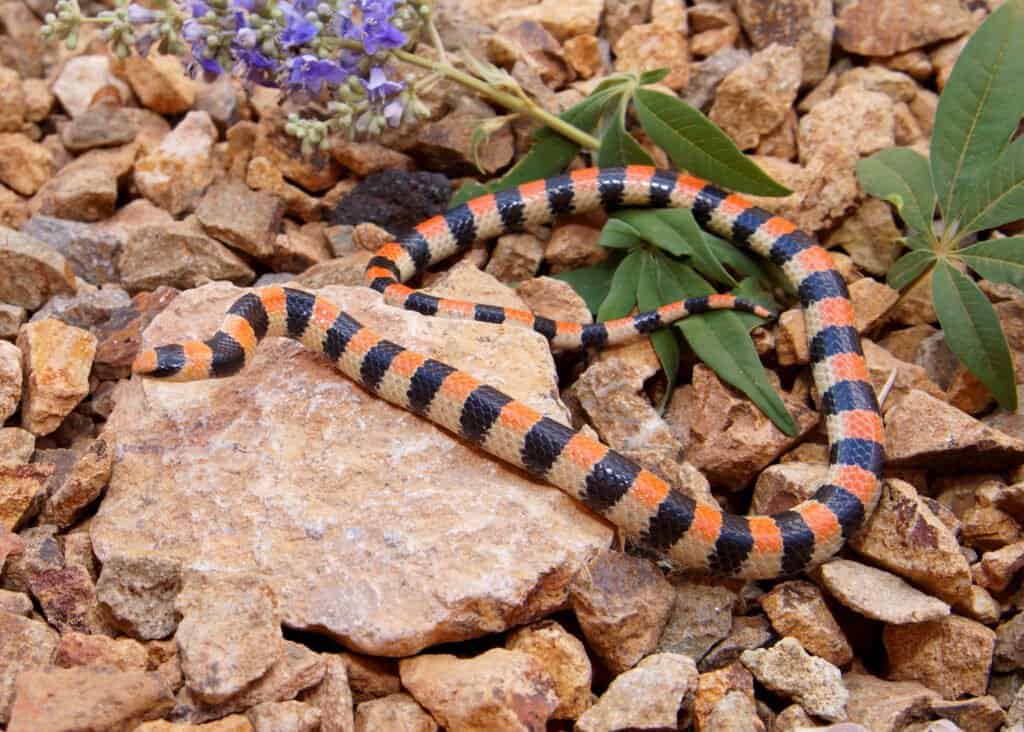
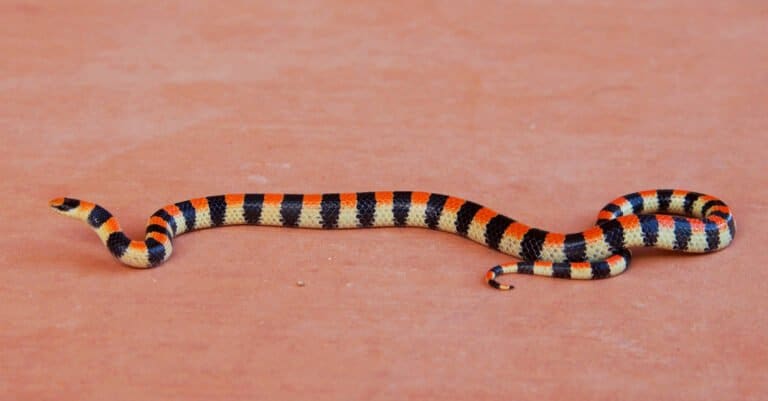
On average, Western Ground snakes are 8 inches long.
©Matt Jeppson/Shutterstock.com
Sonora semiannulata is the scientific name of the western ground snake. Other names of this snake include the common ground snake, the variable ground snake, and the miter snake. The Spanish word Sonora refers to its home in the Sonoran Desert in Arizona. The word semiannulata refers to its colorful scale pattern. This reptile is sometimes called a miter snake because some of them have a black mark on their head similar in shape to a bishop’s miter.
It is in the Reptilia class and the Colubridae family.
The Different Types of Western Ground Snake
Though the western ground snake doesn’t have subspecies, the snake comes in an array of colors and patterns. All of them have a cream-colored ventral area, which can help a person differentiate them from other small makes such as the flat-headed and red-bellied snakes. The scales of the common ground snake are also smooth, while those of snakes such as the similar-looking rough earth snake are keeled. The western ground snake can be told apart from other members of Sonora by differences in their tails or noses. Scientists sometimes but not always can tell the snakes apart by simply noting where they live.
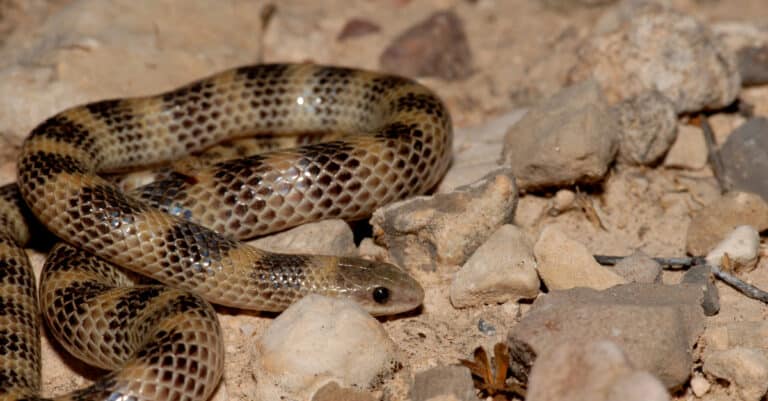
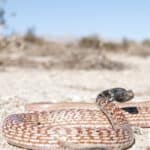
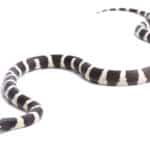
Western ground snakes can come in solid colors, which are most often shades of brown, gray, orange, or red. They can be striped or have full or partial bands. Bands are usually black, though some snakes found in west Texas have gray cross bands. The color patterns of the snake do not change with age and do not disclose the animal’s sex.
Population & Conservation Status
The population of the western ground snake is estimated at more than 100,000 and its numbers are stable. It’s listed by the conservationists in the IUCN Red List of Threatened Species as the Least Concern.
Evolution and History
Though there isn’t much information about western ground snakes regarding their evolution. However, much has been researched lately about their persistent vibrant color patterns. Ground snakes have color polymorphism, and they can mimic venomous coral snakes in an attempt to avoid being hunted.
Appearance and Description
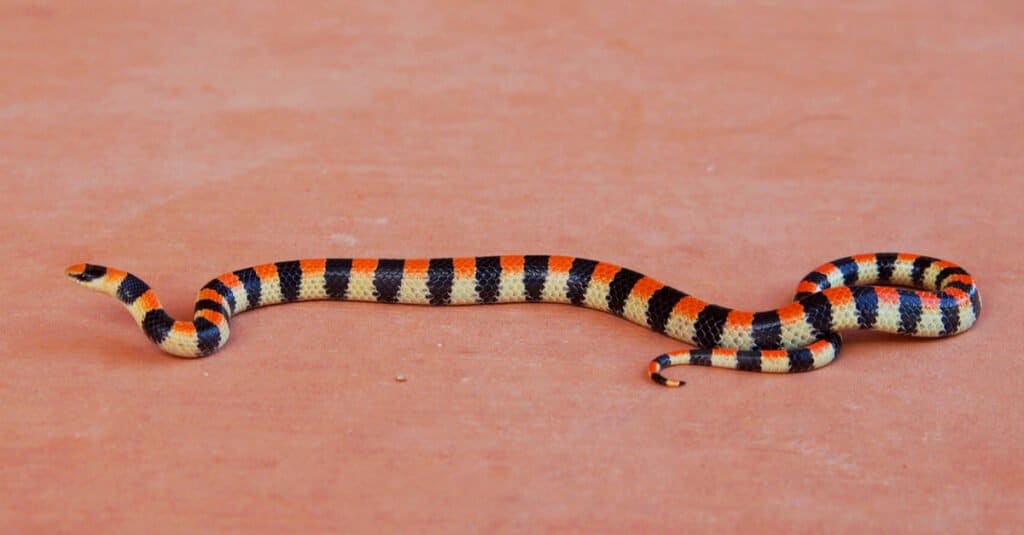
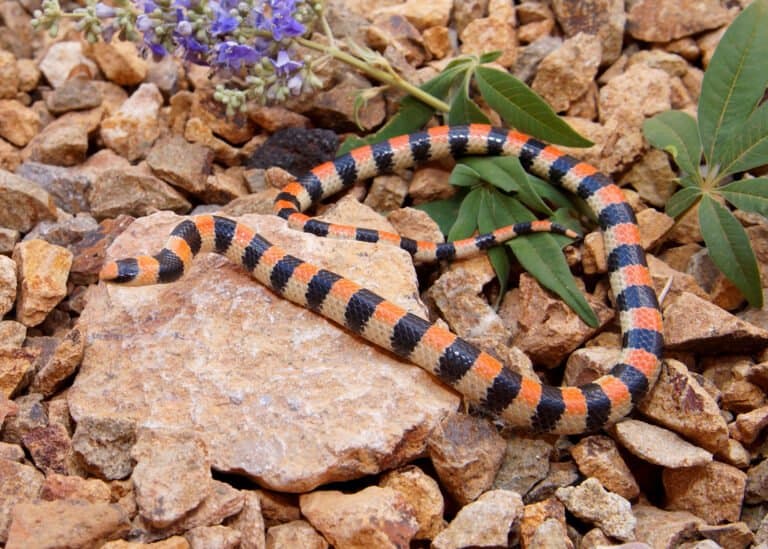
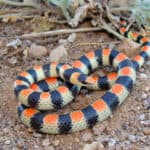
Western Ground snakes banded colors can mimic coral snakes
©Matt Jeppson/Shutterstock.com
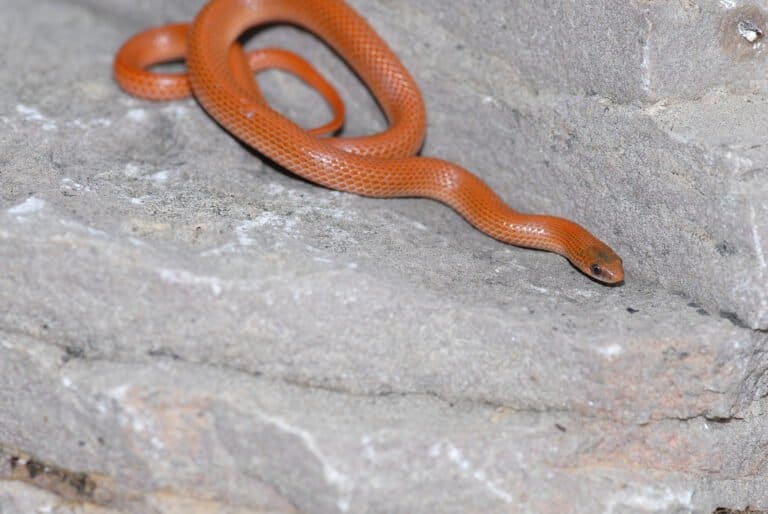
The colors and markings of the non-venomous, western ground snake can vary. In short, this snake can be solid in color with light brown or red scales with a white belly. Or, it could have red or orange scales featuring black bands running the length of its body as well as on its belly. In other words, you could see two western ground snakes side by side and think you’re looking at two different species of snake!
Western ground snakes with solid brown scales are sometimes mistaken for another species of non-venomous ground snake. Officially, it’s known as a rough earth snake and is about the same length as a western ground snake.
The territories of these two snakes overlap. However, the territory of the rough earth snake aka ground snake extends into the eastern part of the United States. Specifically, they inhabit an eastern range running from Virginia down to the northern part of Florida.
Western ground snakes are an average of eight inches long but can be as long as 20 inches. They have thick bodies along with uniformly thick heads. This snake’s eyes have round pupils. This snake is nocturnal. So, it uses both its vision and sense of smell to find prey in the dark. Their insect prey of centipedes, spiders, and crickets is nocturnal, as well.
How to identify a western ground snake:
- Solid in color with shiny brown or red scales
- May also have a pattern of brown, orange, or red scales with horizontal black bands
- An orange or red snake with black bands can have a miter shape on its head
- A white belly or one with a banded pattern
- Thick head and body
- Round pupils
How Dangerous Are They?
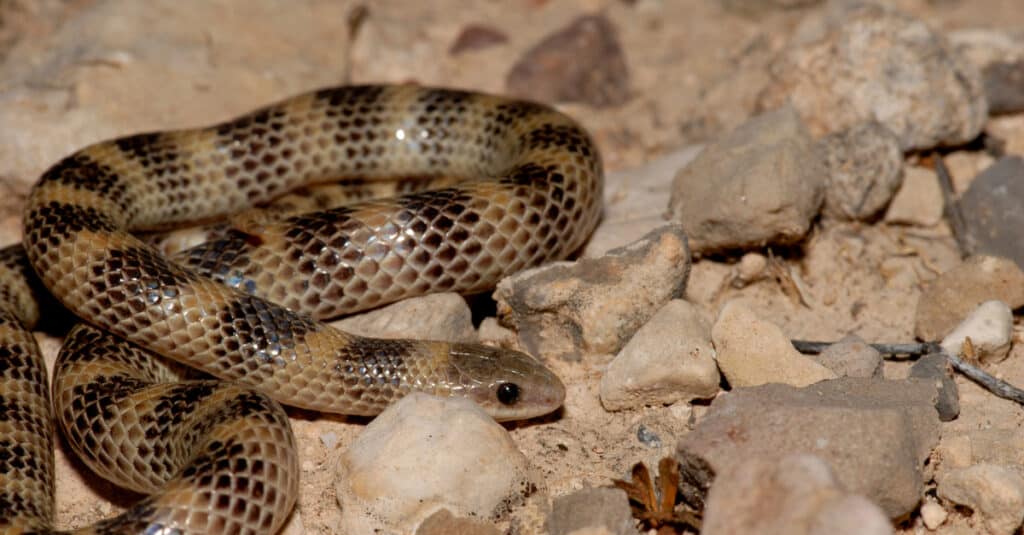
Western Ground Snakes have round eyes, with thick heads and bodies.
©Rusty Dodson/Shutterstock.com
These snakes are not venomous. In addition, due to their small size, their bite is not painful.
A person who is bitten by one of these snakes may not even realize it. But, if a person is bitten, there are certain steps to take to avoid infection. First, the person should thoroughly clean the wound with soap and warm water. Next, it’s a good idea to put first-aid ointment on the bite area before putting a clean bandage over it. As a note, this snake’s teeth are very small and may not even be strong enough to penetrate a person’s skin. If swelling or excessive redness occurs, see a medical professional for treatment.
Behavior and Humans
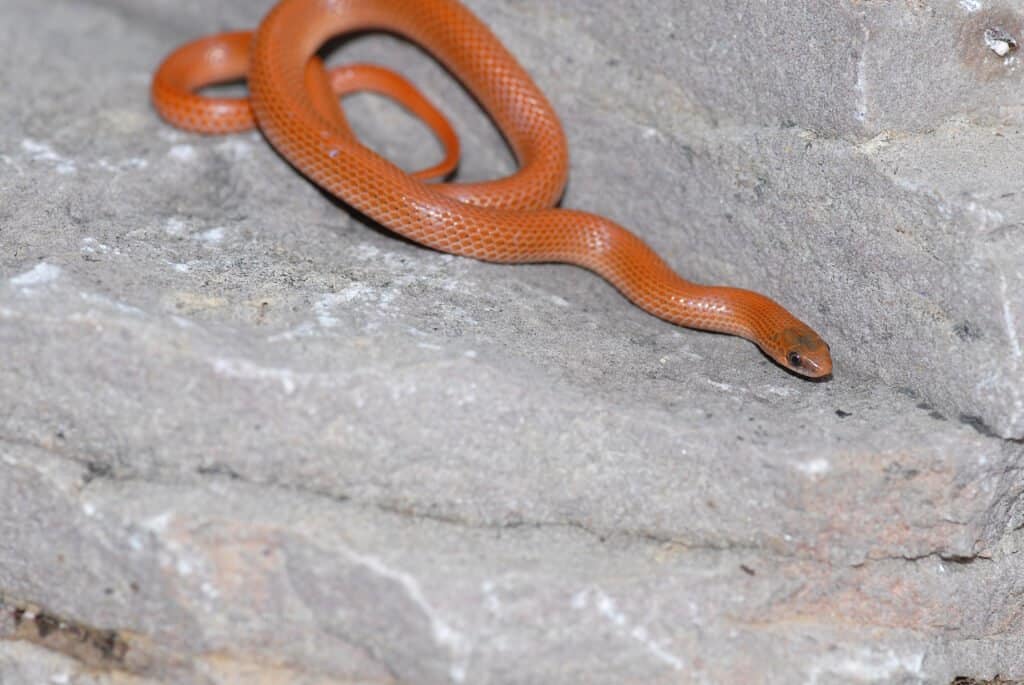
This Western Ground snake is almost completely orange, while many feature strong bands of color.
©Rusty Dodson/Shutterstock.com
Common ground snakes have a shy temperament and hide in burrows they build in loose sand or soil. If they see a human approaching or sense a predator in the area, they will try to get away.
Normally, these snakes are active at night. But someone walking in their rocky hillside habitat during the day may find one by lifting a rock or looking beneath a pile of dense vegetation. These snakes take cover during much of the day to stay cool in their extremely hot environment. Of course, surprising this snake in the daytime could result in a bite. It’s best to leave them alone in their hiding places.
Some people choose this snake as a pet because of its small size and shy nature. But it can be challenging to recreate its natural environment and diet.
Common ground snakes are rarely seen by humans because they live in habitats with soil they can easily burrow under. They are also nocturnal, which means they hunt at night. Sometimes a gardener may find one if they turn over the soil or leaf litter in their garden, and, like earthworms, a good rain can wash them to the surface. They are completely harmless to humans and don’t even seem to bite in self-defense.
As for keeping the snake as a pet, some experts believe that the common ground snake needs such specialized care that it doesn’t make a good pet, even though is a small, nonvenomous, and often very pretty snake. Others believe they make good pets that are easy to care for, even if they are a little secretive. They just need a 10-gallon tank with an earthen substrate and a rock the snake can hide under. After that, the rest of the snake’s care involves providing small insects and a water dish.
The variable ground snake probably mates from May to June and lays one to six eggs during the summer months. It is believed to lay the eggs underground, where they incubate for about two months before they hatch. Unlike some snakes where juveniles and adults look very different from each other, baby ground snakes look very much like adults, and they keep their patterns and colors throughout their lives.
The western ground snake is common in its range and its conservation status is the least concern. This innocuous snake is prey for many other animals, including other snakes, lizards, and mammals. They have even been known to be taken by invertebrates such as large centipedes.
Why is it called a variable ground snake?
Sonora semiannulata is called a variable ground snake because it can come in so many different types of morphs. It can come with stripes, full bands or partial bands, or even in solid colors. For a long time, scientists believed these different color morphs were different subspecies of the snake.
Ground Snake Pictures
View all of our Ground Snake pictures in the gallery.

Matt Jeppson/Shutterstock.com
Sources
- Wikipedia / Accessed April 18, 2022
- USA Snakes / Accessed April 18, 2022
- IUCN Redlist / Accessed April 18, 2022
- Reptiles of AZ / Accessed April 18, 2022
- Wikipedia / Accessed April 18, 2022
- Digital Atlas of Idaho / Accessed April 18, 2022