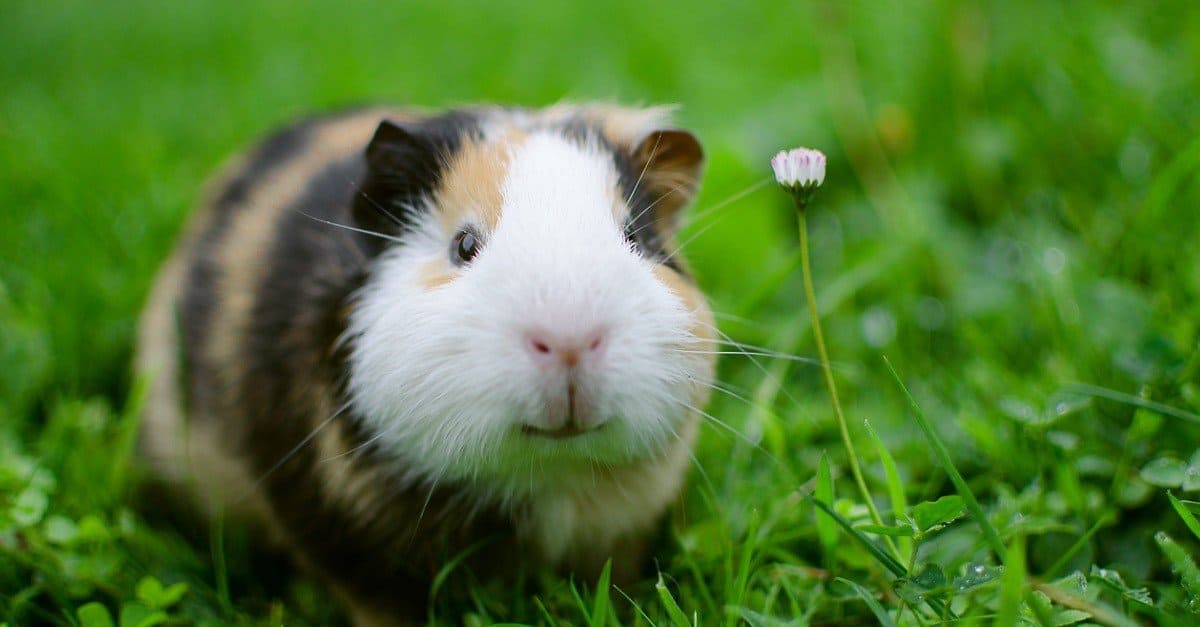

Guinea pigs make wonderful pets, but it is important to treat them with care. Their small size means that gentle handling is necessary to avoid scaring them or even injuring them. Guinea pigs are generally good-natured and affectionate, and will not bite unless they feel they have no other option.
Before assuming that a guinea pig is trying to bite, it is important to understand how they explore the world. Much like babies, guinea pigs use their mouths to explore their surroundings. If you are nervous, you might think the guinea pig is about to bite, but this mouthing behavior is normal and harmless.
Do Guinea Pigs Bite?
Yes, guinea pigs do bite. They don’t bite often, and they don’t bite without a reason, but it is important to know that these fluffy creatures can bite.
However, it’s also important to remember that each guinea pig is an individual. When handling a guinea pig you are unfamiliar with, pay attention to its cues to determine whether it is comfortable with the interaction.
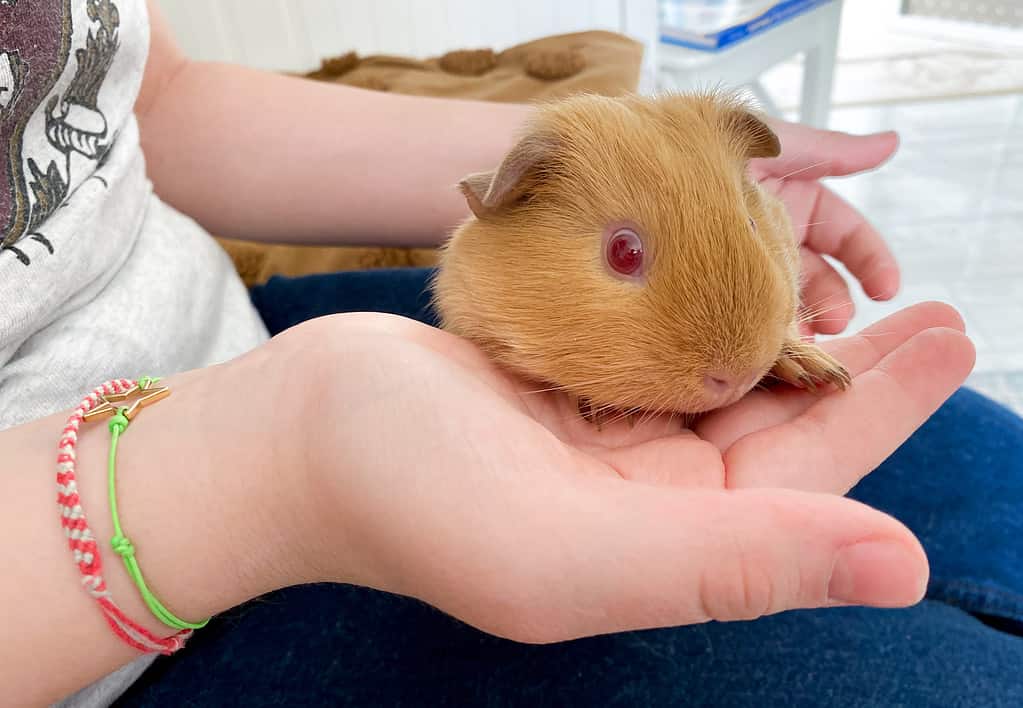
Ensure that anyone who holds your guinea pig knows how to do so safely.
©Goroda/iStock via Getty Images
Why Do Guinea Pigs Bite?
The most common reason guinea pigs bite is because they feel frightened, threatened, or bullied. Guinea pigs may also bite if they are defending their space or their pups. They may bite if handled roughly or in a way that makes them feel uncomfortable. Finally, a guinea pig that isn’t feeling well may bite as a signal that it wants to be left alone. Let’s take a deeper look at the reasons why guinea pigs bite.
Fear
The most common reason a guinea pig bites is fear. A guinea pig who feels cornered or frightened may attempt to defend itself by biting. Also, if you suspect your guinea pig is being bullied, separate the animals immediately. We will discuss the signs of a frightened guinea pig below.
Defense
Another reason that a guinea pig may bite is when defending its space. The home where your guinea pig lives, its food dish, and its toys make up its world. Abruptly sticking your hand in the enclosure to grab a dish or to clean the cage may provoke an aggressive reaction. Also, if you have a female guinea pig with pups, she may become defensive in the protection of her babies.
Poor Handling
If a guinea pig shows any signs of stress when you reach into its cage, you should take it as a sign that you are rushing your interactions with it. Poor handling, such as startling them, being too rough, laying them on their backs, and holding them in ways that are uncomfortable, may trigger a bite response.
Illness
Guinea pigs that do not feel well may also bite. If they are in pain or ill, they may bite as a warning that they want to be left alone. Pregnant guinea pigs may be more sensitive or uncomfortable due to physical and hormonal changes, and could be less tolerant of handling, which might increase the likelihood of defensive behaviors such as biting.
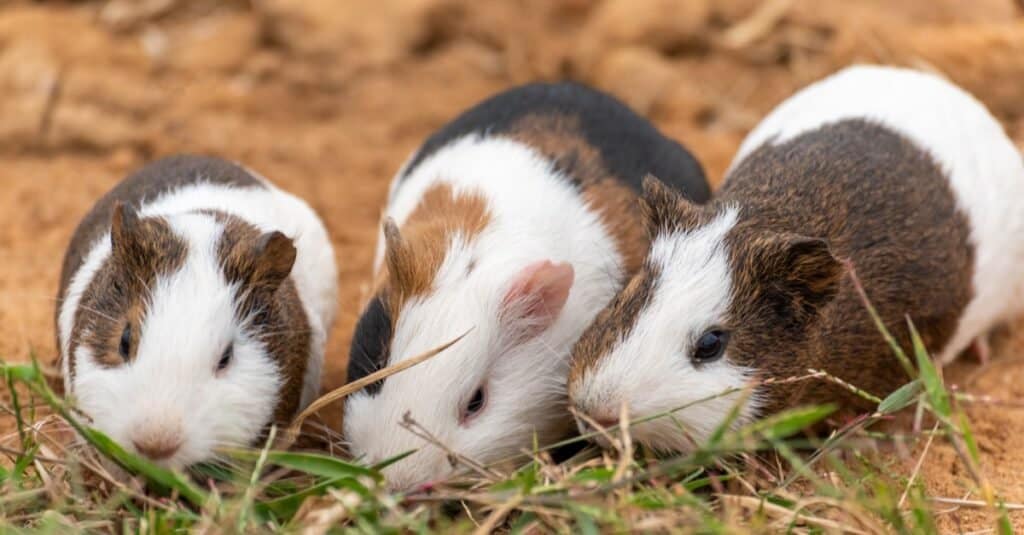
Guinea pigs sometimes bite when feeling threatened or bullied.
©Weiming Xie/Shutterstock.com
Signs of Nervousness or Fear in Guinea Pigs
There are a few warning signs that indicate a guinea pig is uncomfortable. Noticing these signs and putting a stop to whatever is creating anxiety for the animal will help it calm down and, over time, help it become less fearful.
When guinea pigs are frightened, they often open their eyes extra wide. If you can see the whites of your pet’s eyes, that is an indication that it is frightened. Another easy-to-recognize sign that your guinea pig is frightened is if it begins squeaking excessively. Once you become accustomed to the normal noises your pet makes, you will easily notice if it is more vocal than usual.
Other signs that your pet is frightened include shivering and grinding its teeth. These mannerisms are a little more difficult to notice, but if you have reason to believe your pet is nervous, pay attention to its body language before continuing the interaction.
What to Do If You Are Bitten by a Guinea Pig
By paying attention to your pet’s body language, you should be able to avoid a bite from your guinea pig. These good-natured animals rarely resort to biting, and typically only do so when they feel they have no other option.
If you are bitten by a guinea pig, there are a few things you should do right away. The first is to control the impulse to overreact. If you are holding your guinea pig, gently return it to the enclosure. Dropping it may lead to injury, and your negative response will only lead to increased fearful behavior.
Once you return it to the enclosure, treat the wound. Experts recommend washing the wound with soap and water under the faucet for at least five minutes. Rough scrubbing is unnecessary and can cause further damage. Pat the wound dry and keep it covered with a sterile bandage.
While most bites heal quickly on their own, look for signs of infection such as redness around the wound, oozing from the bite, pain that increases rather than decreases, or a fever. If you have any concerns that the wound is infected, seek medical attention immediately.
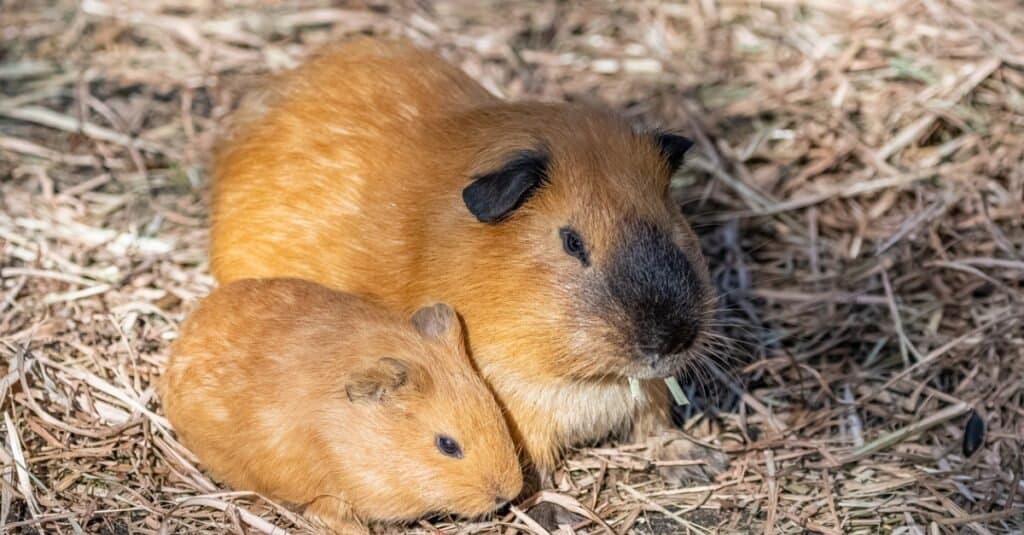
A guinea pig may bite to protect her baby.
©iStock.com/Pascale Gueret
How to Stop a Guinea Pig from Biting
If you have a guinea pig with a tendency to bite, there are a few things you can do to help break this bad habit. The first is to always be patient. Your pet will pick up on your frustrations, and this heightened anxiety will make it much more likely to bite.
Choose a time when you are relaxed and not rushed to work with your pet. Patience is your best tool in training your guinea pig not to bite. Always be gentle when handling your pet. Spend time sitting alongside his enclosure, letting him know you are there. When he is calm, use both hands to gently scoop him up, approaching his body from the side rather than from directly overhead. This lets him know you are there and will prevent him from being startled.
Don’t try to build a bond with your pet by sticking your fingers in its enclosure. While this may seem harmless, it often results in your fingers being nipped. Instead, use your hand to gently pet your guinea pig. If your guinea pig runs away when you try to pick it up, be patient. Don’t corner it in the enclosure. Feeling cornered or trapped is one of the main reasons guinea pigs bite.
Encouraging Positive Guinea Pig and Human Interaction
The best way to prevent guinea pig bites is to encourage positive guinea pig and human interaction. Spend time with your guinea pig every day. Take time to talk to it and reward it with a treat for coming up to you in the enclosure. Gradually increase the amount of time you hold him outside the enclosure. He can get cranky or even sore when held for extended periods.
One of the most important responsibilities you have as a pet owner is to protect your guinea pig from injury or frightening situations. This means keeping it safe from other pets, friends, and family members.
No matter how much your guinea pig trusts you, if someone else handles it roughly or frightens it, it may take some time to rebuild that trust. If others want to hold or pet your guinea pig, make sure they know how to do so safely and always supervise the visits.