If you house male and female guinea pigs together, you may start to wonder if your female is pregnant. But, how do you know? The following article details how to tell if your guinea pig is pregnant. Plus, learn how to take care of your pregnant guinea pig, the length of its gestational period, and the typical size of a litter. Get all of the information you need to take the best possible care of your furry mother-to-be.
When Are Guinea Pigs Sexually Mature?
It’s important to be aware of when a guinea pig is sexually mature. Owners should also note that breeding can reduce the lifespan of female guinea pigs. Knowing when your pets become sexually mature allows you to separate male and female guinea pigs you don’t intend to breed.
Male and female guinea pigs become sexually mature at different times. Male guinea pigs reach sexual maturity at 2-3 months old. Female guinea pigs are sexually mature at just two months old. However, both males and females can be fertile earlier.
Signs Your Guinea Pig Is Pregnant
If you suspect your guinea pig is pregnant, take your pet to the veterinarian. A veterinarian can give a definitive answer on whether a guinea pig is pregnant. A vet will do a quick physical exam and listen to the guinea pig’s abdomen with a stethoscope. Your vet can also tell you how far along your pet is in her pregnancy. If you are unsure whether to take your pet for a checkup, here are some of the signs that your guinea pig might be pregnant.
A Larger Appetite
A bigger appetite is one sign a female guinea pig is pregnant. She is increasing her food intake to nourish the baby guinea pigs growing inside her. As females progress in their pregnancy, they may eat twice the amount of food they ate when not pregnant.
Weight Gain
Of course, weight gain is another indication that a guinea pig is pregnant. You can monitor your guinea pig’s weight by putting her on a small kitchen scale. If the scale has a flat top, you may want to place your pet in a large bowl and keep a hand close by to ensure she doesn’t fall. Record her weight each week to see if there’s a gradual increase.
Changes in Your Pet’s Body Shape
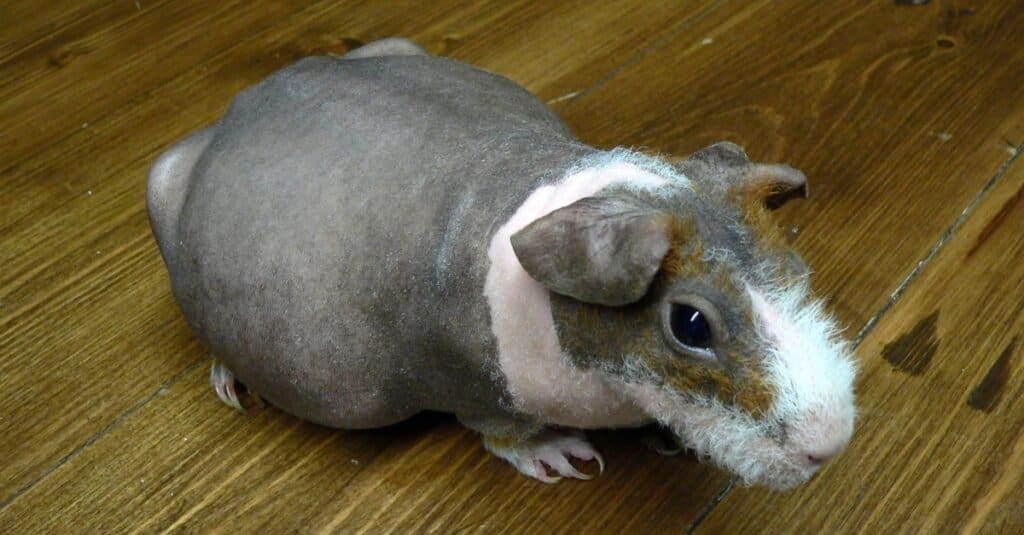
A pregnant guinea pig’s sides will curve outward. Take your pet to the veterinarian if you think she might be pregnant.
©Lucie3/Shutterstock.com
A quick way to check your guinea pig’s size is to look down at her while she’s moving around the cage. A pregnant guinea pig’s sides will curve outward and continue to expand as her pregnancy progresses. If you have trouble seeing any changes, take a picture of her each day and compare the photos. You can also compare your potentially pregnant female with another female who’s not pregnant. The pregnant female’s sides will curve out much further than the non-pregnant guinea pig’s.
Reduced or Awkward Movements
Keep a close eye on the movements of your pet. A pregnant guinea pig may walk or run a little awkwardly to accommodate the new weight on her body. You may see her avoid jumping or popcorning. This will be even more obvious if she was very active before becoming pregnant.
Behavioral Changes
A change in behavior is another indication of pregnancy. A female who is expecting babies may not be as playful or social as she was before pregnancy. She is feeling tired and focusing her energy on nourishing her babies instead of playing and running around. Also, not all pregnant guinea pigs want to be touched. So, if she runs away, hides, or growls at your hands entering the cage, move them away immediately.
How Long Is the Gestational Period?
The gestational period of a guinea pig is from 59 to 72 days. It’s difficult for an owner to pinpoint the exact number of days a guinea pig will be pregnant for. However, knowing the gestational range for your pet will help you estimate when to prepare for your new arrivals.

Your guinea pig needs plenty of vitamin C-rich foods during her pregnancy.
©iStock.com/Ольга Гурьянова
Taking Care of a Guinea Pig During Pregnancy: What to Consider
Pregnancy can be a stressful time for a guinea pig. One way to care for her during this time is to put her cage in a quiet area. Being in a quiet environment helps a pregnant guinea pig rest and keep her stress levels low. You may also be tempted to pick up a pregnant guinea pig. After all, she’s just so cute! However, it’s best to avoid picking her up unless necessary. Her growing body is fragile, and she will feel particularly vulnerable when being held. So, unless it’s absolutely necessary, keep your pregnant guinea pig in her cage. However, continue to talk to her and gently pet her throughout her pregnancy.
Many owners wonder whether they should keep other guinea pigs in the cage with a pregnant guinea pig. The decision depends on their behavior. If other guinea pigs in the cage seem to be bothering her, remove them from the cage. If the pregnant guinea pig seems short-tempered or irritated with the other guinea pigs, then it’s best to separate them. Leave the pregnant guinea pig in her familiar habitat. Putting her in a new cage is likely to cause her more stress.
Give your pregnant guinea plenty of vitamin C-rich foods. Alfalfa hay should also be provided throughout your pet’s pregnancy. Pregnant guinea pigs need more sustenance as they approach giving birth. Leafy vegetables, as well as a constant supply of regular hay, are both essentials for a pregnant female. Be sure to give her a fresh supply of water each day, too. She is going to drink more water during her pregnancy, so it should always be available. You may want to discuss your guinea pig’s diet with your veterinarian so you can ensure she and the pups get the nutrition they need.
How Do I Know My Guinea Pig Is Going Into Labor?
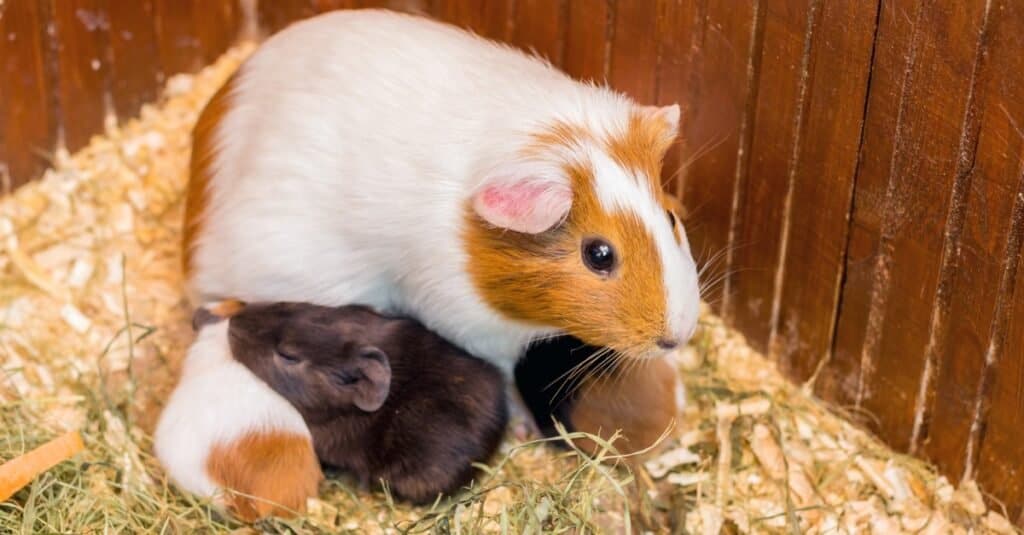
Guinea pig babies are born with full coats of hair and the ability to see.
©MVolodymyr/Shutterstock.com
There are a few indicators that your pet is going into labor. She may squeak and display restless behavior. She may also stop eating and drinking. If she starts making hiccuping sounds, she is likely experiencing contractions. Your guinea pig might also appear to be straining, or you might see mucus or bloody discharge. The whole process generally only lasts around 30-45 minutes. However, if the labor seems to be taking a long time or your pet appears tired or in pain, seek veterinary care immediately.
Litter sizes can range from 1 to 8 pups, but 2 to 4 pups is more common. Guinea pig babies are born fully covered in hair and with their eyes open. They’ll begin nursing right away and can even eat solid food within about two days. You should avoid holding or touching the mother unnecessarily and allow her to recover with her pups once she has given birth.