
Quick Take
- The fisherman caught the biggest halibut ever recorded, but it didn't count as a world record for a reason many wouldn't expect. Why it wasn't official →
- The fish was too dangerous to bring into the boat, so the crew turned to equipment you don't usually find on a fishing trip. See the unofficial catches →
- Halibut can outlive most dogs, cats, and even some humans. That longevity is the secret behind their record-breaking size. Discover the longevity secret →
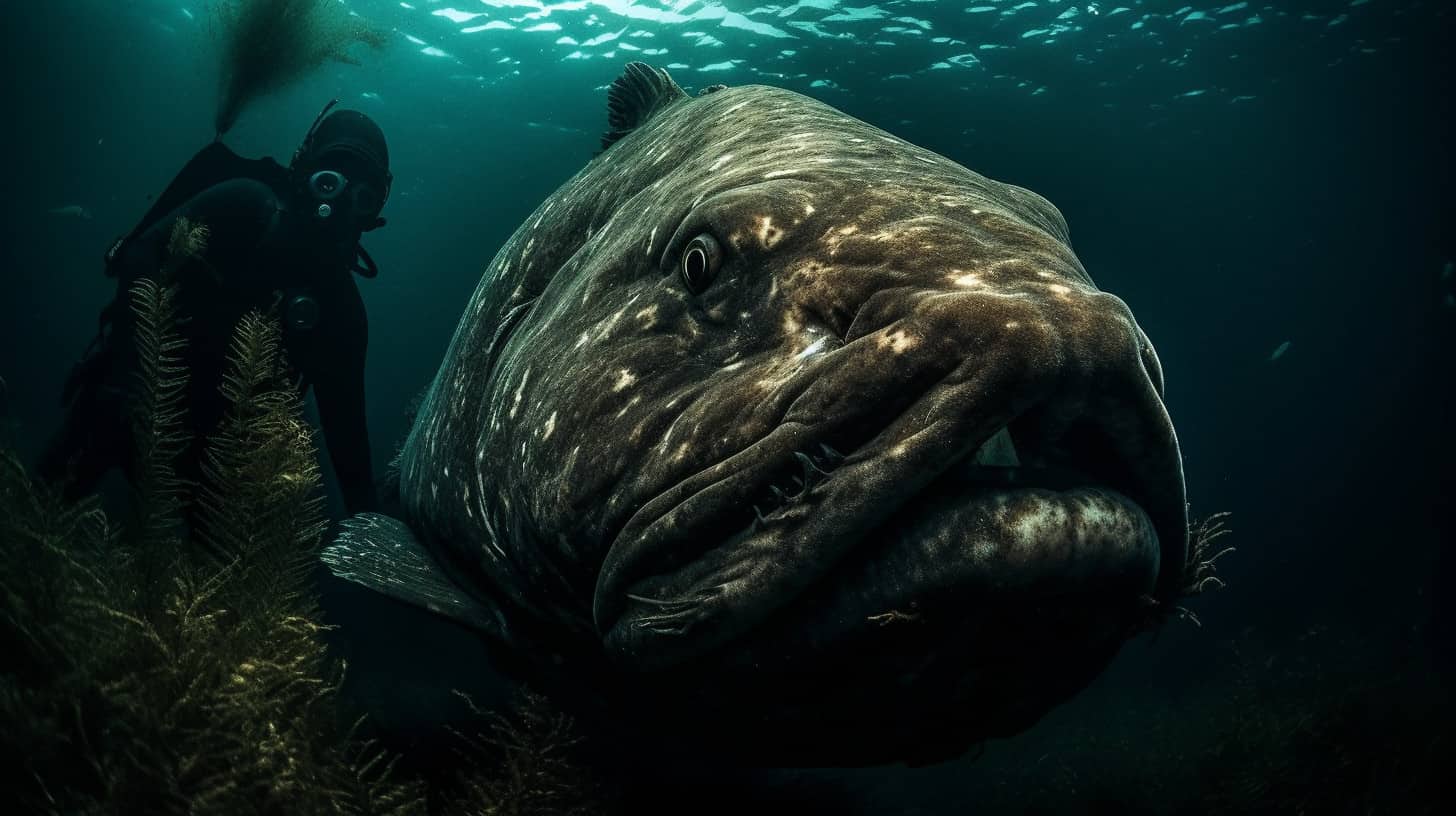
What’s bigger than a gorilla but smaller than a submarine? Would you believe it’s the world’s largest halibut? When this massive fish was caught by Marco Liebenow in 2013, he joked that he thought he’d hooked one of those underwater boats instead. Find out how and where Liebenow caught the largest halibut ever recorded.
The Biggest Halibut in History
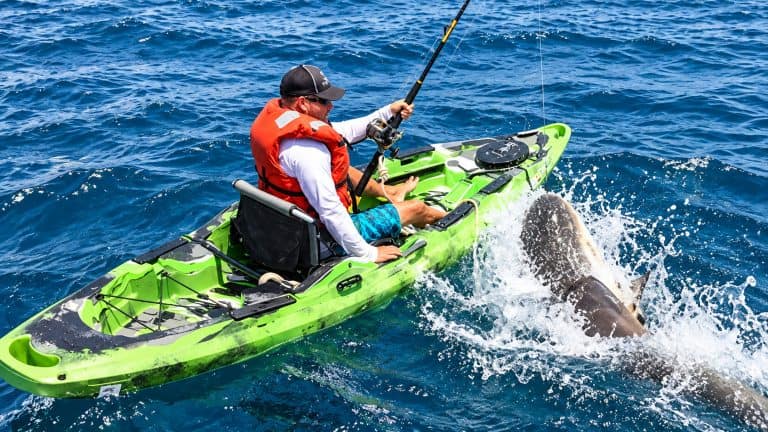
The monster fish was caught off the waters of Kjollefjord, Norway. The village is located on the Nordkinn Peninsula, on the shore of a small fjord that provides shelter from the open sea. Because of this protection, it has been a haven for seafarers and a marketplace since the 1500s. In 2013, Liebenow’s Atlantic halibut measured nearly 9 feet in length and weighed around 515 pounds, which is heavier than a western lowland gorilla. The fish was so large that it was considered too dangerous to pull into their 19-foot boat. So the group secured the monster fish with rope and towed the beast back to land. A crane was needed to hoist the fish ashore.
Before the German fisherman and his companions hauled in the massive fish, the world-record halibut was a 418-pound, 13-ounce Atlantic halibut caught by Thomas Nielsen in 2004. That record still officially stands, although Liebenow’s catch was much larger. The International Game Fish Association rules require that the fish be hooked, fought, and brought in by one person without assistance. Since Liebenow received physical help from his fishing companions, including tying ropes to the fish to tow it to shore, the catch is not eligible for the official world record. However, Liebenow’s catch has been widely documented, and is considered by many to be the largest halibut ever recorded. It’s reported that Liebenow had his fish weighed and then donated it to a local fish dealer. Then, of course, he celebrated his record catch with a few beers with his friends.
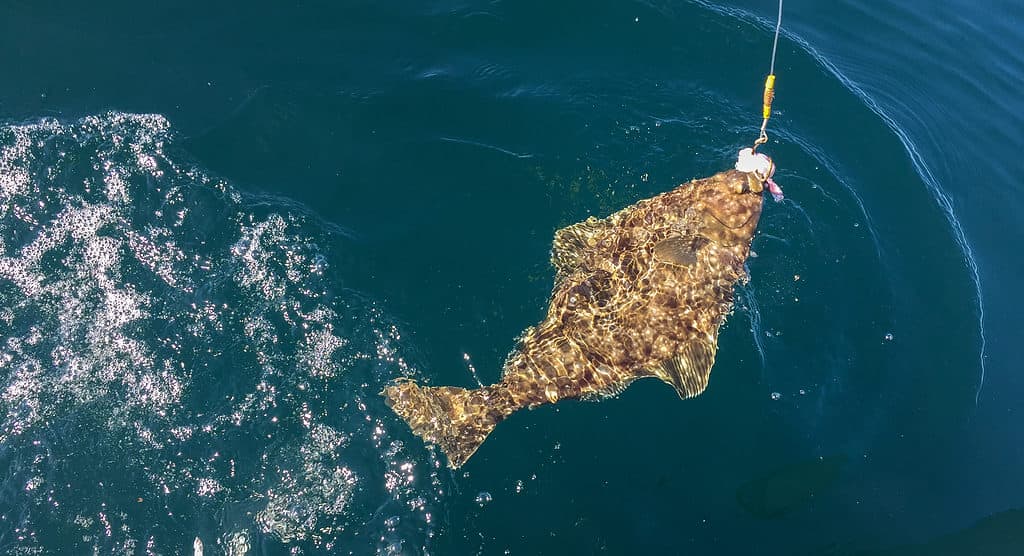
Adult halibut generally weigh between 30 and 150 pounds, depending on the gender and the species.
©Jon C. Beverly/Shutterstock.com
Largest Pacific Halibut
Although Atlantic halibut is the largest halibut species, Pacific halibut, or Alaskan halibut, can also grow very large. The official record for the largest Pacific halibut is that of a 459-pound fish, caught by Jack Tragis in 1996, in Dutch Harbor, Alaska.
Of course, every year, halibut are caught by fishermen all over the world, so many past records have likely been broken. In fact, one of the biggest estimated halibut was caught in Alaska, weighing in at 533 pounds. The commercial catch, however, was not eligible for the record. Other reports claim Atlantic halibut can reach over 600 pounds, but there are no official records for halibut of this size to date.
How Do Halibut Get So Big?
A halibut is a flat fish, sometimes confused with flounder. It is highly prized by anglers for its fight, and by chefs for its flavor. Most mature halibut caught today weigh between 30 and 150 pounds. This applies to either Pacific halibut (Hippoglossus stenolepis) or Atlantic halibut (Hippoglossus hippoglossus). Obviously, some fish can weigh far more than this, sometimes significantly outweighing humans. But how do they get so large?
One factor that experts believe impacts the size of these humongous fish is their large home ranges. Halibut can live in deeper water, from 200 to 1,600 feet, generally around continental shelves. This range provides halibut with a wider variety of prey, which helps them achieve this massive size. Halibut are known to eat:
- Fish such as cod, haddock, herring, turbot, and pollock
- Cephalopods, including both squid and octopus
- Crustaceans, such as crab and shrimp
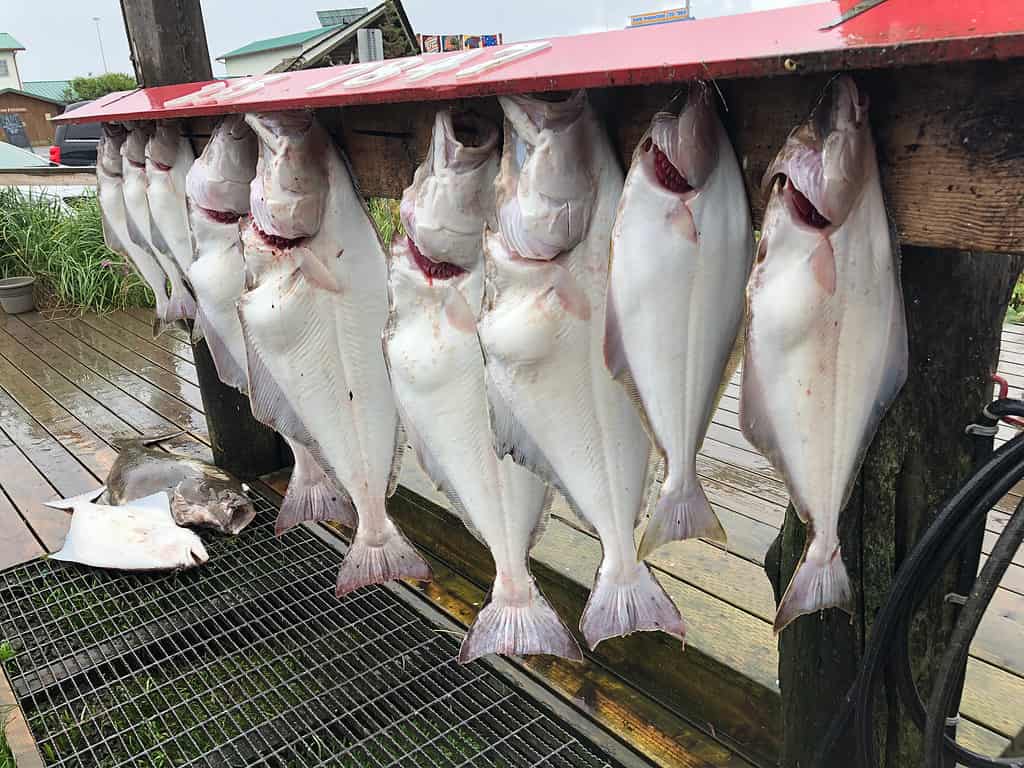
The halibut is prized for its fight and its flavor.
©melissamn/Shutterstock.com
Halibut are slow-growing and have an unusually long lifespan for this type of fish. They’ve been known to live 30 to 55 years, and some that have escaped capture are likely to have lived even longer. Because of their lengthy lifespan, these fish have the opportunity to keep growing, which enables them to reach these massive sizes. Once halibut reach maturity, they have few natural predators. This allows them to live longer and ultimately grow even larger. Female halibut grow much faster and larger than males, so the world record fish are overwhelmingly females.
Threats for Halibut
Currently, there is not a great deal of concern over Pacific halibut. Abundant, healthy populations have been noted overall for the species. However, Atlantic halibut in the waters off the U.S. and Canada have been listed as endangered by the IUCN (International Union for Conservation of Nature). No directed commercial fishery exists for Atlantic halibut in the U.S., though bycatch of halibut does occur in fisheries.
Warming waters, pollution, bycatch, and overfishing pose consistent and ongoing threats that concern conservationists. Fishery management measures have been in place since 1923 to help prevent overfishing, but these have limits, as seen in the decline of the Atlantic halibut population, but, again, other threats remain to their habitats.