
Quick Take
- Hares have a digestive trick so counterintuitive that most people assume it's a sign of poor health, even though it's actually essential to their survival. Discover the digestive trick →
- The fastest land mammal in Europe runs on a diet most people would consider barely adequate, and there is a reason that actually works. Explore the sparse hare diet →
- When two hare species share the same territory, the outcome might not be what you would expect. See how species share territory →
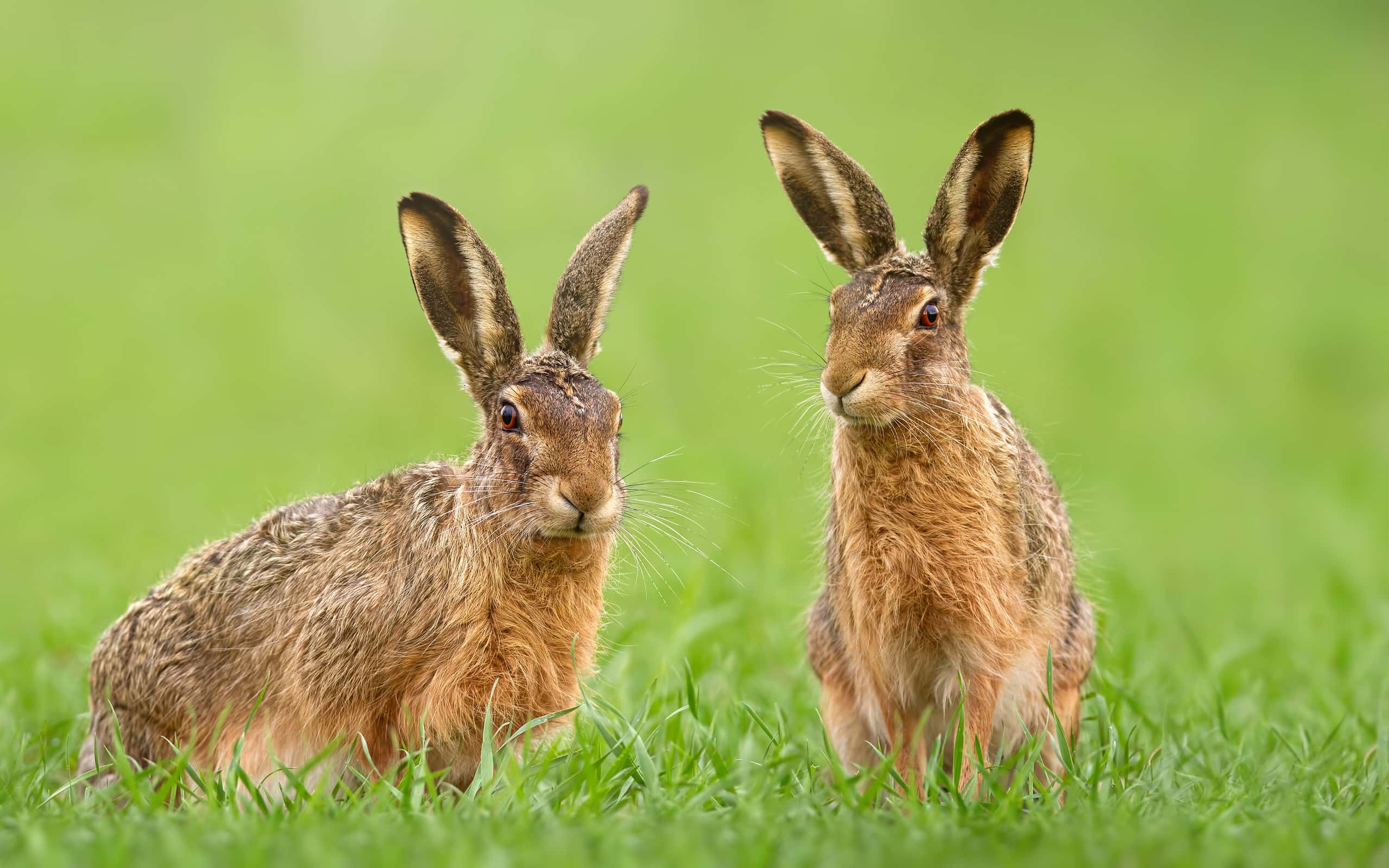
Hares are small mammals that are closely related to rabbits. They have long, large ears, big hind feet, and hop as their primary mode of locomotion. Hares live on almost every continent and are some of the fastest and most adaptable animals on the planet. However, what do hares eat to give them the energy that they need to survive, and why do they eat their own waste? Read on to learn more about the hare diet and digestive processes.
All About Hares
Hares and rabbits both belong to the same family, Leporidae, and even the same order, Lagomorpha, but they are distinctly different species. Hares belong to the genus Lepus, while there are at least 10 different genera for wild rabbits. There are approximately 30 to 40 species of hare across the world. Hares are native to North America, Europe, Asia, and Africa, but they have been introduced to every continent except Antarctica. Hares are generally larger and heavier than wild rabbits, ranging from approximately 13 to 30 inches and typically weighing from 3 to 11 pounds.
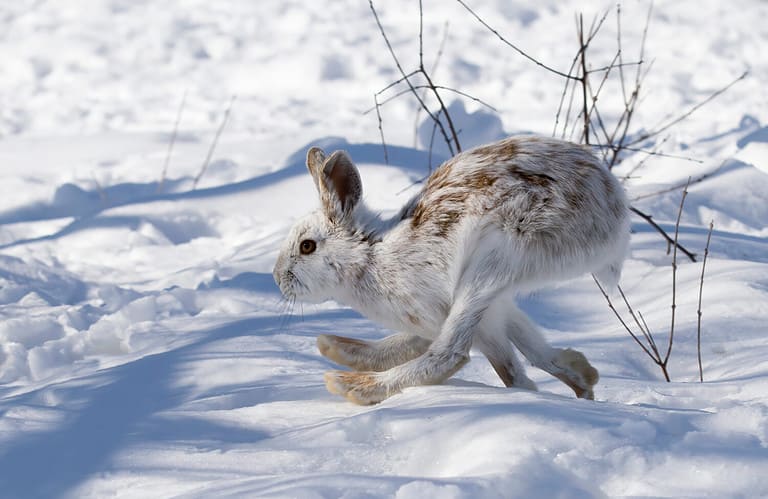
Some of the most recognized hares are the Arctic hare, the brown hare, and the snowshoe hare. The Arctic hare (Lepus arcticus) has adapted to survive in the Arctic through reduced ear size, increased levels of body fat, and thicker fur than any other hare species. The brown hare (Lepus europaeus) is generally considered the fastest land mammal in Europe and the fastest hare species, capable of reaching speeds of up to 45 mph to escape predators. The snowshoe hare (Lepus americanus) is known for its incredibly large feet, allowing it to run on top of deep snow without sinking, an important survival benefit in the far north.
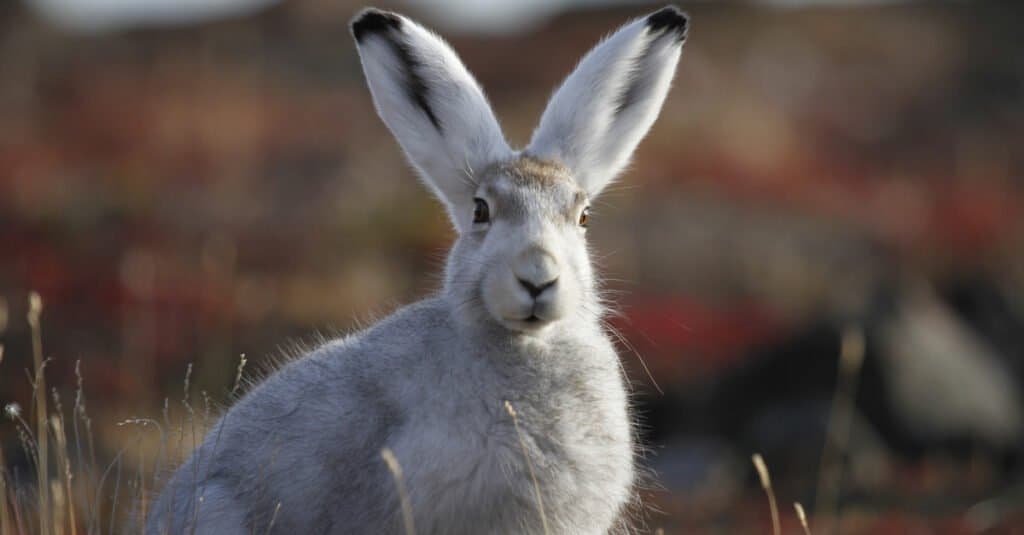
Arctic hares are well-adapted for cold, with thicker fur than any other hare species.
©Sophia Granchinho/Shutterstock.com
The Hare Diet
As mentioned above, hares are some of the most adaptable animals on the planet and live in some of the harshest environments. As a result, their diets are adaptable and reflect their living conditions. Hares are herbivores that primarily eat tough grasses. They are able to eat almost any grass, but they prefer the kinds of grass that are typically dried and used as hay. Timothy hay, orchard hay, and oat hay are the favorites of hares and rabbits alike.
Hares also supplement their diet with fruits, nuts, berries, and other items they can forage in their habitat. Unlike most animals that eat grass, hares are not ruminants. Ruminants are animals that have a specialized organ called a rumen, containing bacteria and enzymes that break down grass to break down grass. Instead, hares are hindgut fermenters. They have an enlarged organ called a cecum that ferments high-fiber food. Hares also eat their own fecal matter to digest it a second time and maximize nutrient absorption.
Foods That Hares Eat
While there are some species and regional differences, hares generally eat the following foods:
- A variety of grasses depending on their region
- Berries
- Fruits
- Nuts
- Fungi
- Woody plants
- Mosses
- Lichens
- Bark
- Flowers
- Garden plants
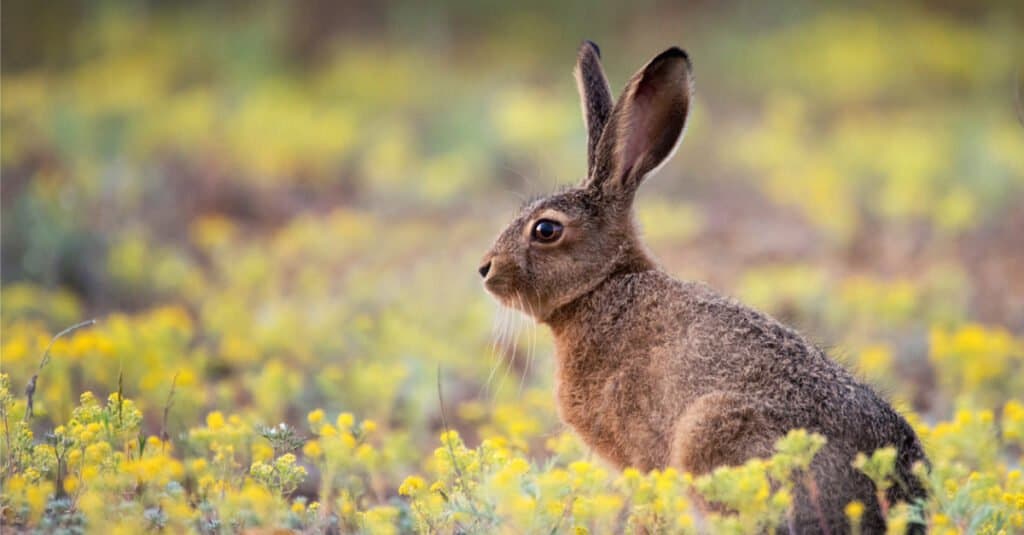
Hares forage during dusk and dawn to avoid predators.
©iStock.com/MriyaWildlife
How Do Hares Forage for Food?
Hares are generally described as nocturnal, but since they are most active at dusk and dawn, they are more accurately crepuscular. They spend most of their day resting before going out to forage and graze at night. Since hares often live in open areas and are near the bottom of the food chain, crepuscular and nocturnal foraging strategies help them avoid predators.
Most hares are relatively solitary, but they do not all forage in the same manner. Researchers have found that brown hares change their behavior to benefit from foraging in groups. However, the benefits depend on how the food is distributed. If the food is spaced out, all of the animals in the group can benefit. If the food is close together, dominant hares try to take over the resources.
Researchers have also found that some hares adopt different foraging behaviors where their ranges overlap to decrease competition. The Alpine mountain hare (Lepus timidus varronis) and the European hare live in the Alps in areas that overlap. In order to reduce competition, Alpine mountain hares display specialist foraging behavior, while European hares exhibit more generalist foraging behavior.