Quick Take
- Hawaiian monk seals have a foraging habit so bizarre that researchers have had to physically intervene, and this phenomenon occurs only in juveniles. See the eel phenomenon →
- Most seal species wouldn't survive where Hawaiian monk seals thrive, and this comes down to a key physical difference between them. Discover their warm-water edge →
- A mother monk seal's nursing strategy is one of the most physically extreme in the animal kingdom, and she accomplishes this entirely on her own. Learn about the nursing toll →
- Don't let a lounging monk seal fool you. What it can do the moment it hits the water would catch most swimmers completely off guard. See their swimming speed →
Hawaiian monk seals (Neomonachus schauinslandi) are the state mammal of Hawaii. These endangered marine mammals can only be found in the Hawaiian archipelago in the North Pacific Ocean. They can grow over 7 feet long and weigh between 400 and 600 pounds. These seals spend around two-thirds of their lives at sea, hauling out to rest or give birth and nurse their young. Read on to learn 10 fascinating facts about Hawaiian monk seals.
1. Eels Get Stuck Up Their Nose
Can you imagine what it would feel like to have an eel stuck up your nose? A Hawaiian monk seal can. Several times, researchers and volunteers have noticed the eel-in-the-nose problem. It seems to only happen to juvenile seals, which may have to do with how they search for food. Since monk seals are foragers, they root around on the ocean floor. Between the ages of 1-3 years, juvenile monk seals tend to stay in the sand fields where the eels are more common.
A scared eel might rush up the seal’s nose in the heat of the moment to escape danger. NOAA scientists also think the seals may have tried to regurgitate the eel out their noses. Fortunately, getting the eels out of their nose is easily accomplished with a gentle tug, and the monk seals can go on their way with no injuries. The eel, on the other hand, doesn’t survive the fiasco.
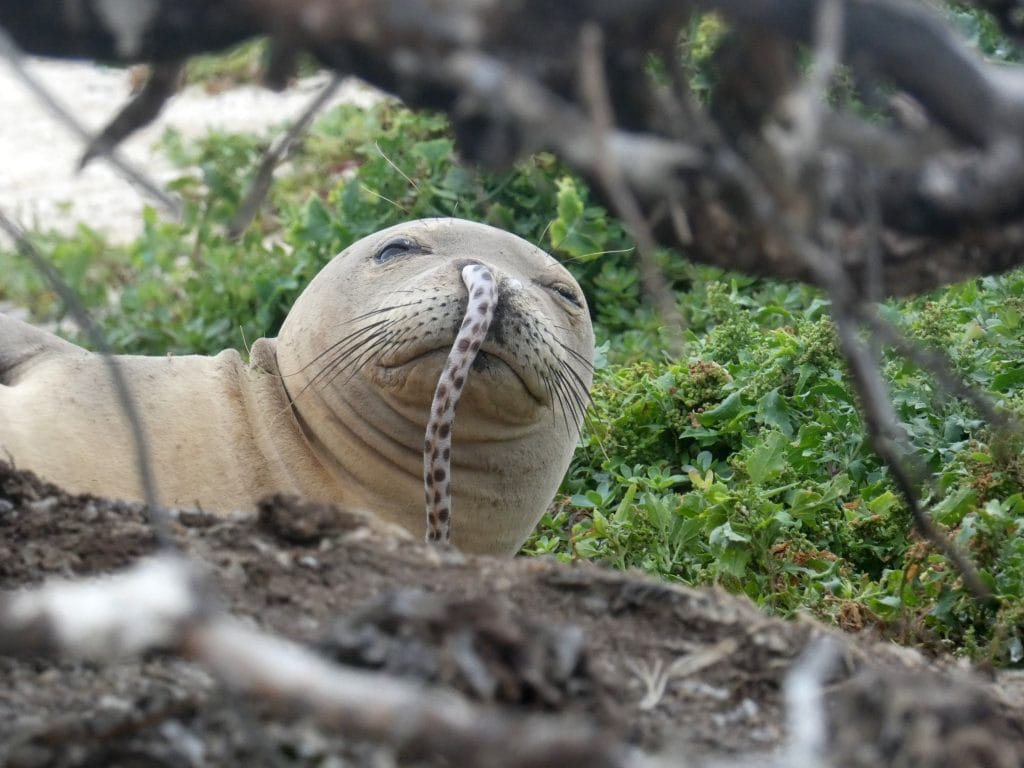
Juvenile monk seals occasionally get eels up their noses while foraging.
©Brittany Dolan, NOAA Fisheries / Public Domain PDM 1.0 – Original / License
2. They Were Named for Their Behavior and Appearance
How did the Hawaiian monk seal get its name? In Hawaiian, the seal is called “‘īlio holo i ka uaua” meaning “dog that runs in rough water.” The name is believed to come from the seal’s ability to easily navigate powerful ocean waves and strong currents.
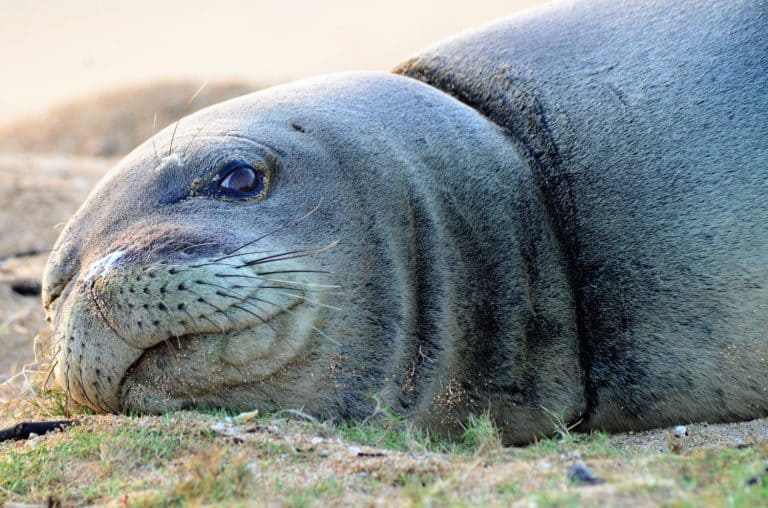
However, you may be wondering where the monk part of their name comes from. Early scientists thought these seals looked and acted like medieval monks. The seals have solitary habits like monks and loose rolls of skin and fur around their heads resembling a monk’s cowl. That is why scientists named the monk seal genus Monachus (now Neomonachus), which is Latin for “monk.”
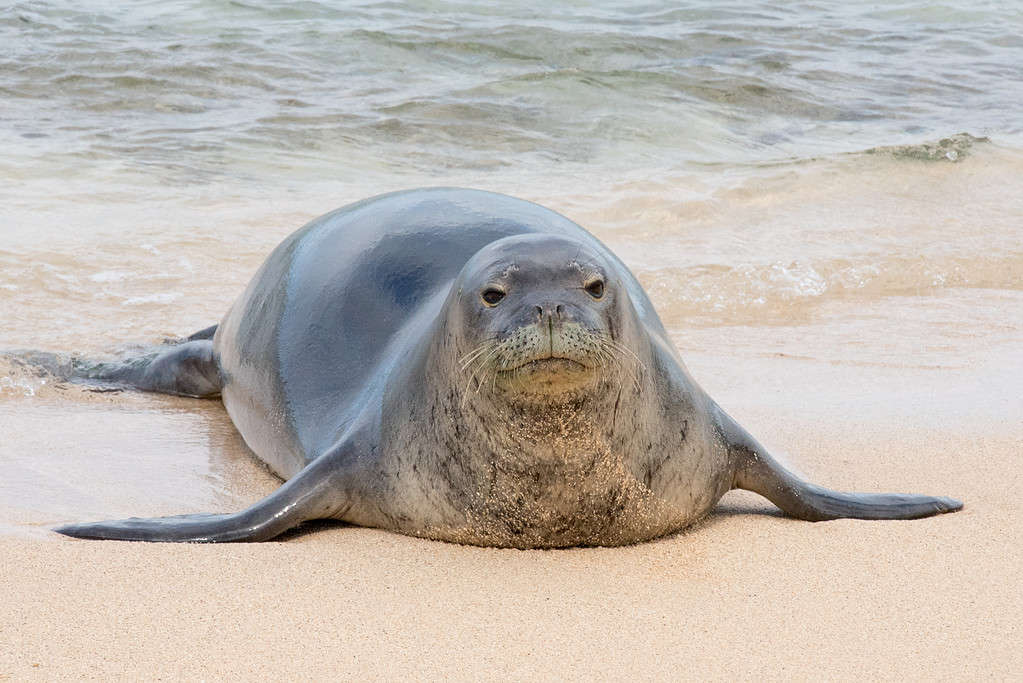
Early scientists thought the rolls of skin and fur around the seals’ heads resembled a monk’s cowl.
©Lorraine Logan/Shutterstock.com
3. Hawaiian Monk Seals Prefer Warm Water
The majority of seal species prefer cold waters in temperate and even polar regions. However, Hawaiian monk seals are an exception. These seals prefer living in the warm, subtropical waters off of the coast of remote Hawaiian islands. While Hawaiian monk seals do have a blubber layer, they do not have the thick layers of blubber that seals in the Arctic and Antarctic require to stay warm.
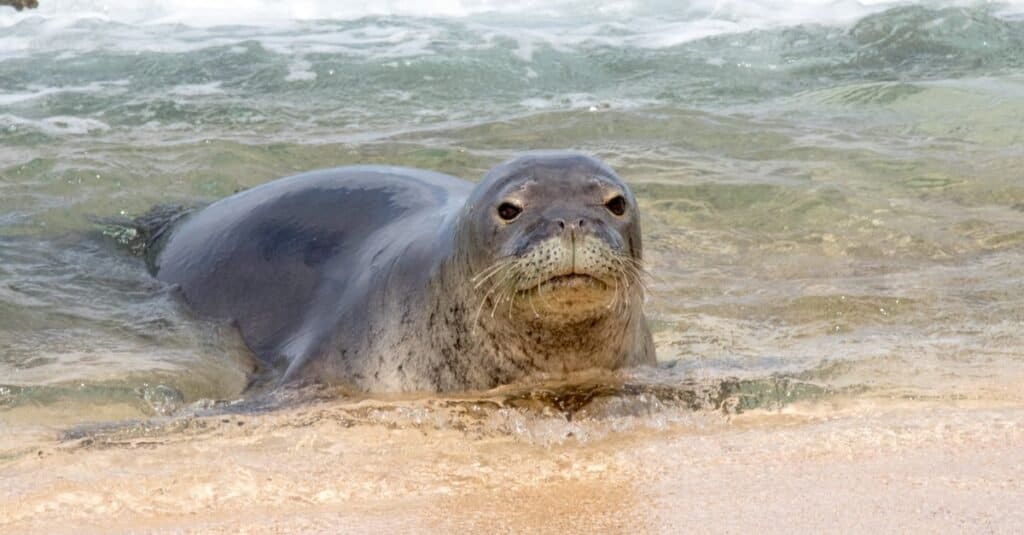
Hawaiian monk seals prefer warm water.
©Lorraine Logan/Shutterstock.com
4. Hawaiian Monk Seal Mothers Lose Hundreds of Pounds While Nursing
Becoming a new parent can be stressful for any species. However, Hawaiian monk seals make things extra hard on themselves by fasting the entire time the pups are nursing. Their bodies turn their thick fat layer into milk. Mother monk seals stay with their pups and fast for the first five to seven weeks. A mother monk seal could lose hundreds of pounds, while her 30-pound pup grows to nearly 200 pounds when it is weaned. When she is done nursing, the mother leaves the pup to fend for itself and returns to the sea to feed and regain her lost weight.
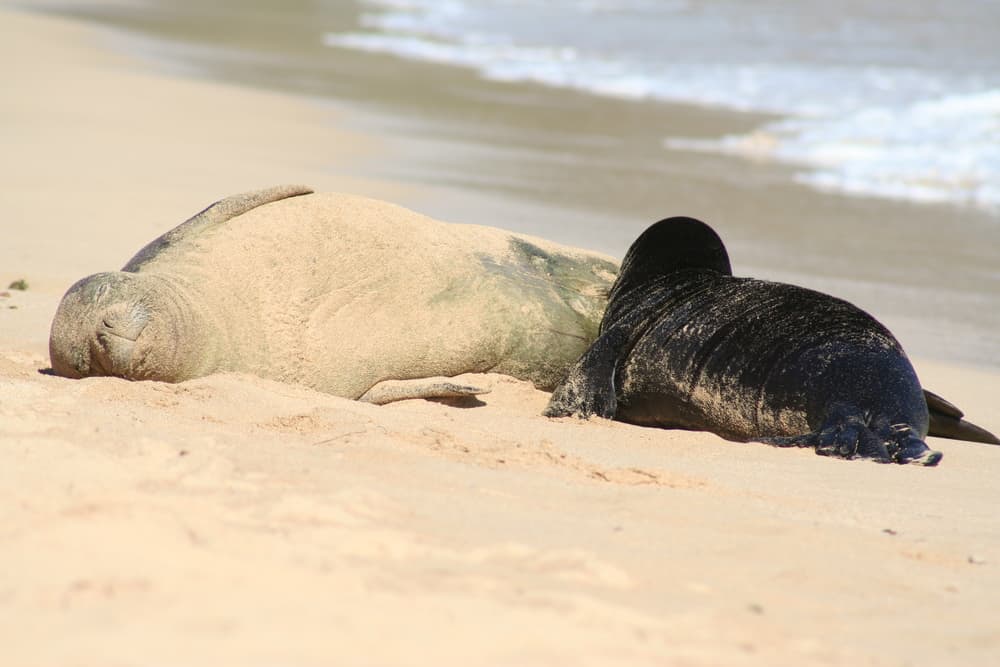
Hawaiian monk seal mothers fast the entire time pups are nursing.
©Rhiannon Coburn/Shutterstock.com
5. Newborn Pups Have Black Fur
Although most adult Hawaiian monk seals have dull brownish fur with yellowish undersides, newborn monk seal pups are born with a coat of woolly black fur. By around 6 weeks, they have completed shedding their black fur for silvery-grey to brown coats with lighter grey to creamy-colored undersides. The fur on their backs may also become darker again as they age, especially among male monk seals, but some females may also darken.
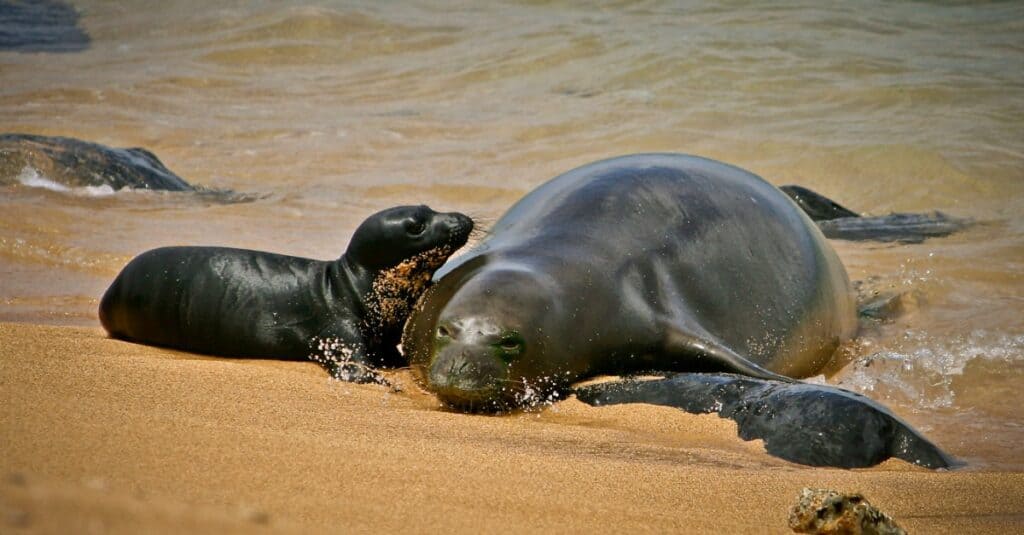
Hawaiian monk seal pups have black fur.
©iStock.com/JudyLaNier
6. They Have Unique Markings That Help Identify Them
Most Hawaiian monk seals have natural markings like scars or pale, irregular patches that look like bleach spots on their dark coats. These markings help scientists identify individual seals. About once per year, monk seals shed the top layer of their skin and fur to grow a new silvery-grey coat. Seals that have been at sea foraging for long periods can grow algae on their fur. The seals that look green are likely due to molt soon.
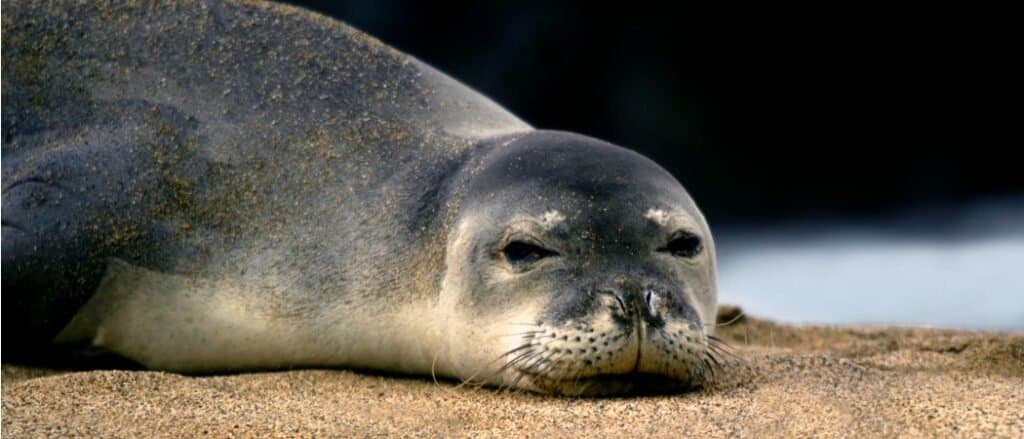
Hawaiian monk seals that look green have algae on their fur because they have been at sea a long time.
©Bonita R. Cheshier/Shutterstock.com
7. Monk Seals Sometimes Nap Underwater
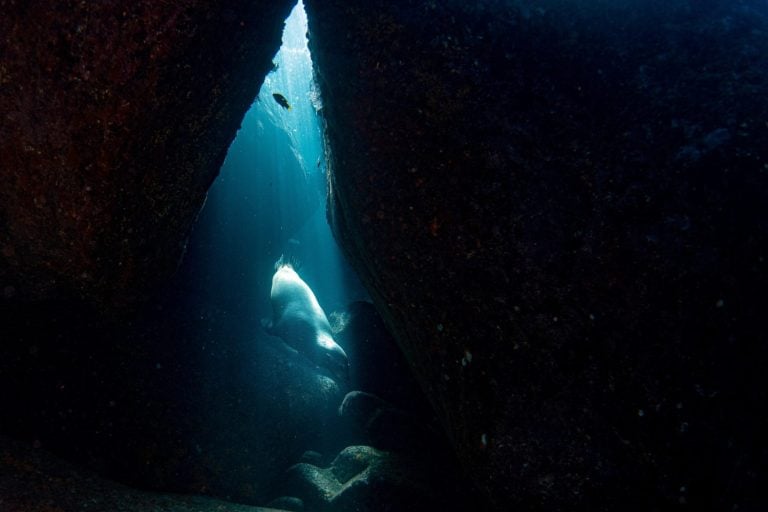
Although they spend most of their sleeping time on the beach, researchers and divers have reported that Hawaiian monk seals sometimes nap underwater. They have been found napping in underwater caves or under ledges on the seafloor. Their cousins, the Mediterranean monk seals, have also been observed sleeping underwater near the surface or resting with their heads slightly submerged before automatically coming up for air.
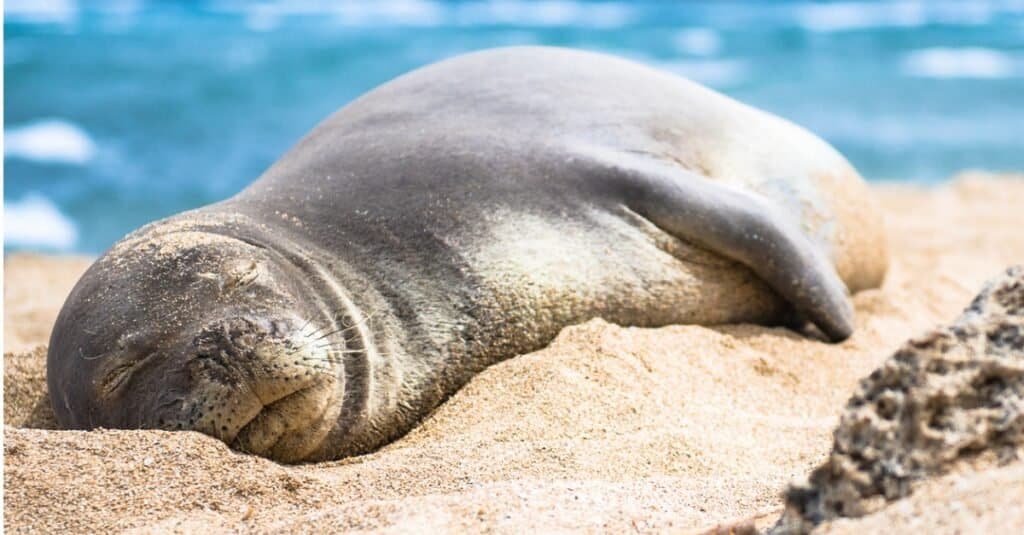
Hawaiian monk seals like taking 15-minute naps.
©iStock.com/greghonda
8. Hawaiian Monk Seals Are Champion Divers
Hawaiian monk seals can hold their breath for up to 20 minutes. These seals have also been recorded to dive to depths of greater than 1,800 feet. However, they usually only dive to depths of less than 200 feet to forage for food on the seafloor. Most of their dives average around 6 minutes.
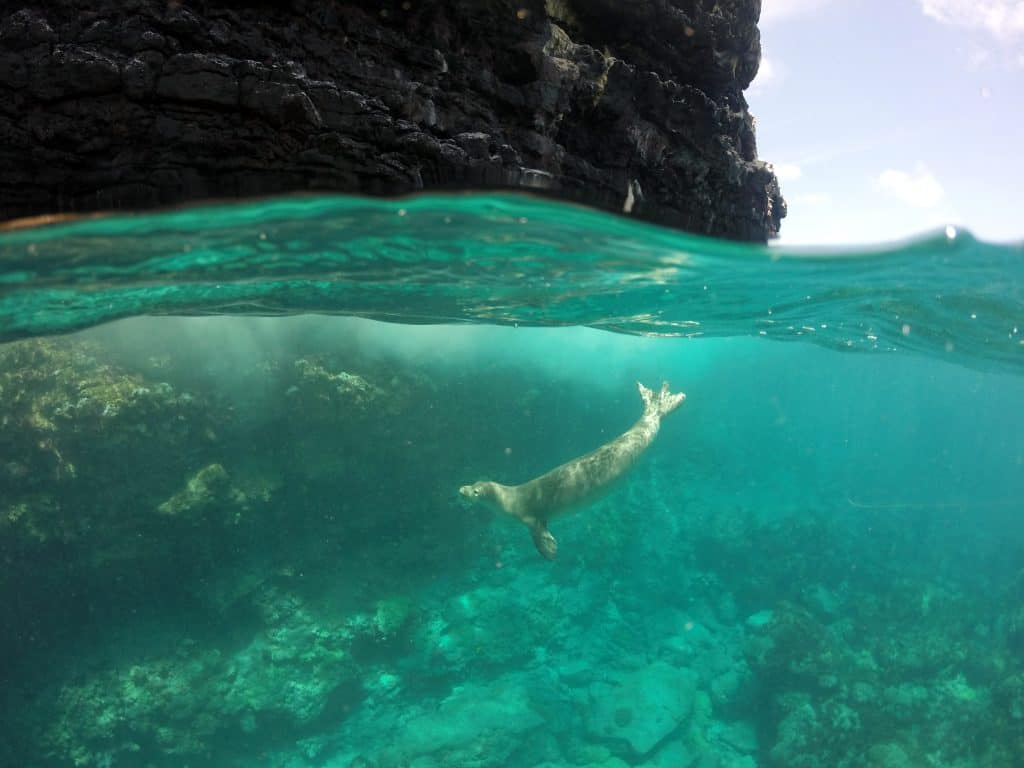
Hawaiian monk seals can dive to depths of over 1,800 feet.
9. Hawaiian Monk Seals Are Fast
They tend to be slow and clumsy on the beach, but Hawaiian monk seals are fast, efficient swimmers. Mother seals with pups are especially motivated when protecting their pups. According to NOAA scientists, the average person can swim 3 feet per second, but adult monk seals swim at least three times faster than a human. These seals can also swim in high-speed bursts. They can be lounging on the beach one moment and beside you in the water the next.
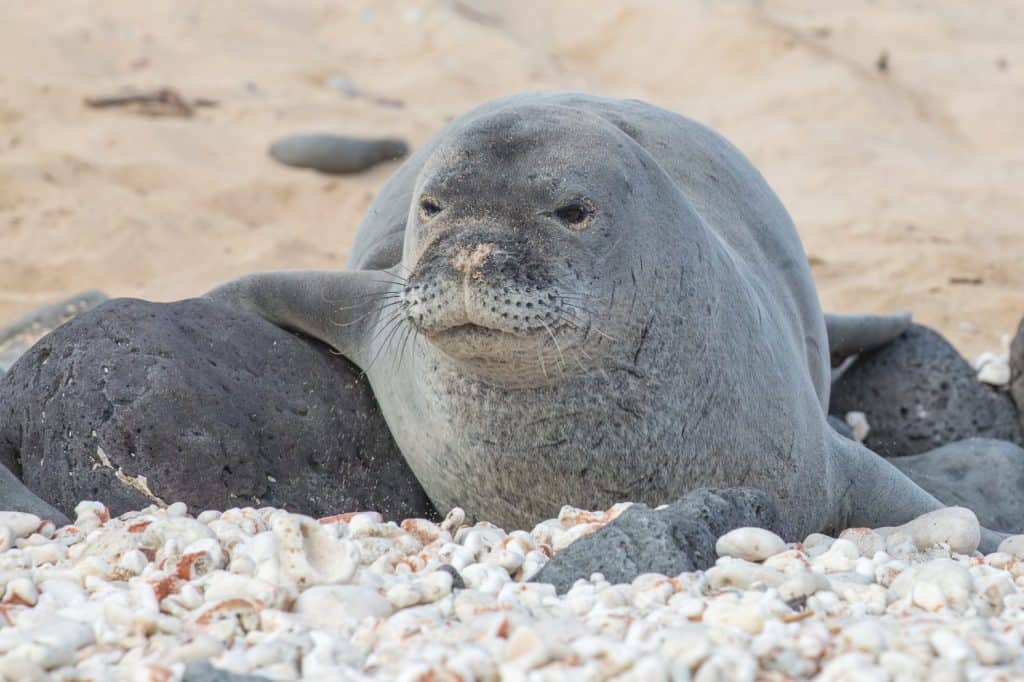
Hawaiian monk seals can be lounging on the beach one moment and in the water the next.
©Shane Myers Photography/Shutterstock.com
10. They Are One of the Rarest Seal Species in the World
Historically, Hawaiian monk seals were hunted almost to extinction for their blubber and oil. According to the State of Hawaii Division of Aquatic Resources, Hawaiian monk seals are still among the most endangered marine mammals in the world. Researchers estimate that there are only around 1,600 Hawaiian monk seals left on Earth. About 1,200 monk seals live in the more remote Northwestern Hawaiian Islands, while about 400 seals inhabit the Main Hawaiian Islands. Fortunately, due to the conservation efforts of NOAA and its partners, Hawaiian monk seal numbers are finally increasing.
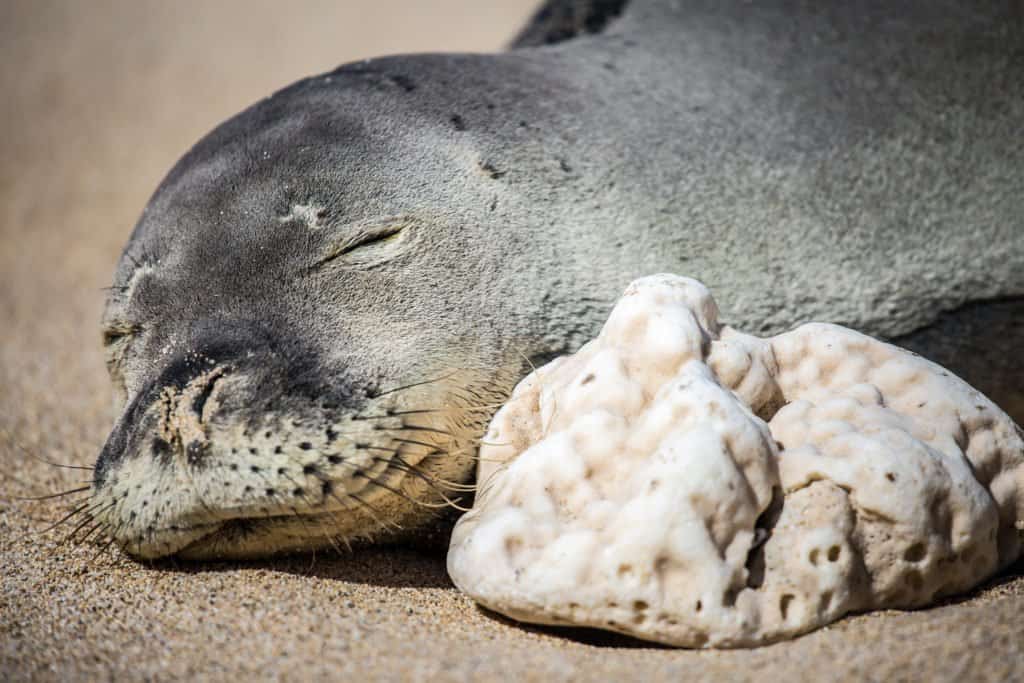
Researchers estimate that there are only around 1,600 Hawaiian monk seals left in the wild.
©Evan Austen/Shutterstock.com