
Quick Take
- One hawk species earned a nickname that tells you exactly what it eats, and its hunting strategy is far more calculated than a simple aerial strike. Meet the laughing falcon →
- Hawks deploy a specific distraction technique against venomous snakes mid-hunt that has nothing to do with talons or speed. See the wing-distraction technique →
- Some Florida hawks regularly take on prey that can grow to 19 feet long, and documented records show they walk away the winner. Read about python hunting →
- Rattlesnakes stop being apex predators the moment certain hawk species enter their territory, and the hunting method those hawks use is surprisingly methodical. See how hawks hunt rattlesnakes →
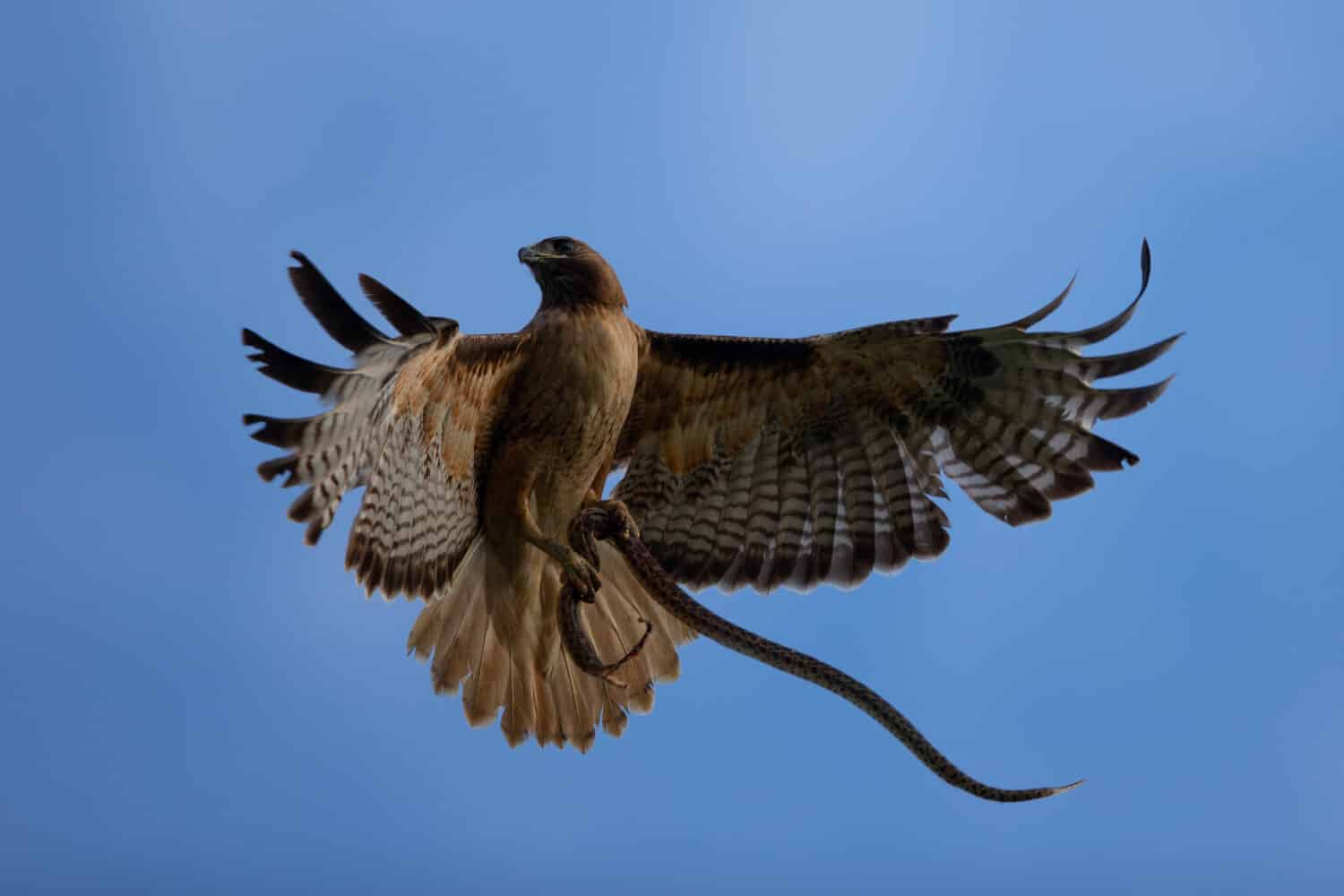
Not all birds of prey compete for the same food sources all the time. Falcons frequently hunt aerial prey, such as birds, bats, and insects. Many eagle species eat fish. However, hawks hunt small mammals including rats, rabbits, and squirrels. But do hawks really eat snakes? Some hawk species are opportunistic and will eat snakes, and one hawk species is known for its snake-catching abilities. These predators are masters at catching even venomous snakes because of their speed and agility. Continue reading to find out which species of hawk eat snakes and how they catch them without getting bitten.
Hawks That Eat Snakes
There are around 50 species of hawks in the genus Accipiter, often referred to as “true hawks.” Most hawks feed on ground mammals such as rabbits, rodents, lizards, squirrels, and chipmunks. It is risky for these birds of prey to hunt snakes because there is always a chance the snake could bite them. However, the red-tailed hawk doesn’t shy away from venomous snakes and is renowned for its snake-hunting skills. They are known to eat at least 35 species of snakes.
The laughing falcon earned the nickname “snake hawk” as they almost exclusively feed on snakes. There are even hawks that feed on sea snakes, such as the common black hawk. Swainson’s hawk, red-shouldered hawks, Cooper’s hawks, sharp-shinned hawks, and many other hawk species eat snakes as a source of protein.
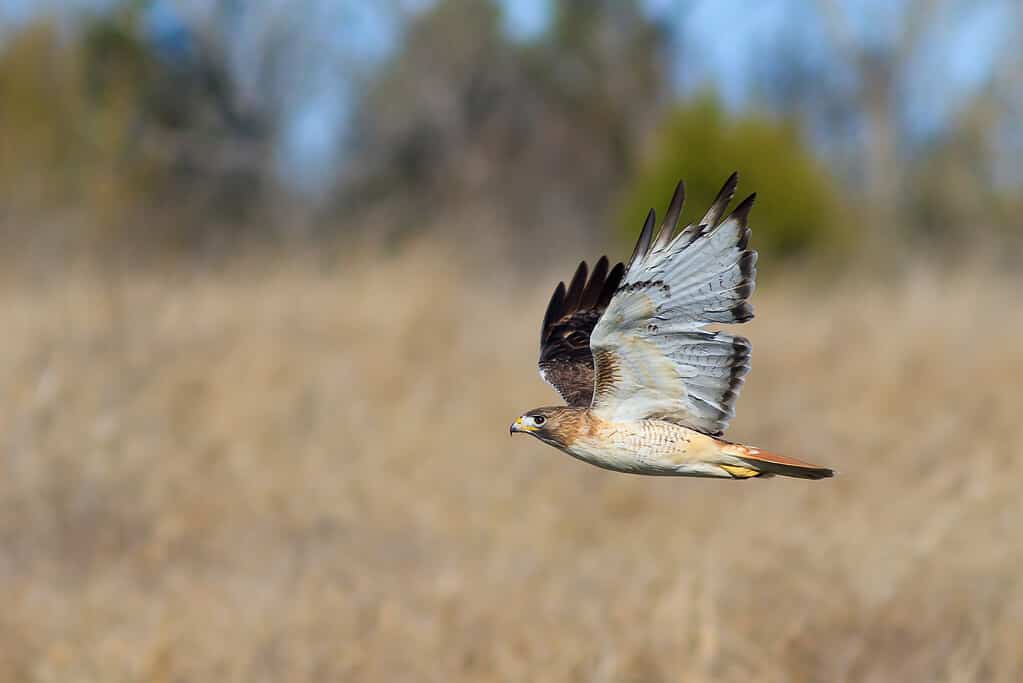
It is risky for hawks to hunt snakes because there is always a chance the snake can bite them.
©iStock.com/cmcneill17
How Do Hawks Hunt and Eat Snakes Without Getting Bitten?
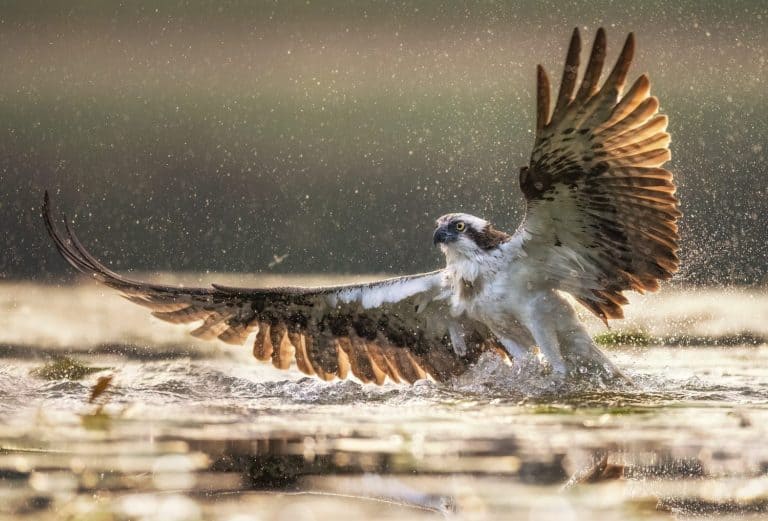
Hawks have extremely sharp vision, up to eight times better than humans. They have excellent binocular vision because of their forward-facing eyes. Therefore, they can clearly and accurately view their prey mid-flight. They can search for prey from high vantage points while flying and swoop down quickly and vigorously. They strike so quickly that the prey doesn’t realize what’s happening until it’s too late. Hawks must attack fast and use their talons to grip the snake. They may only get one chance at this, so they must be precise. A hawk’s primary hunting tools are its exceptional eyesight, sharp, curved talons, and strong, hooked beaks.
Hawks can carry large prey because their sharp talons are connected to four muscular digits. If the initial attack doesn’t kill the snake, the pressure of the hawk’s talons will suffocate it. If the snake still doesn’t die, the hawk will peck it with its beak. Because their beaks are hooked and strong, they can kill the snake by biting it at the base of the neck. They may also grab the snake’s head with their talons, breaking its neck.
Hawks have other strategies for hunting venomous snakes. For example, red-tailed hawks flash their wings in front of the snake to distract it. The snake attacks the wings, which does not harm the hawk’s wings. Then the hawk directly attacks the head and crushes it with its talons. Common black hawks patrol coastal regions, diving to the water’s surface to snatch pelagic sea snakes with their talons. Once the snake is dead, hawks will either take it to a secluded perch to eat or back to the nest for its young.
The Snakes on a Hawk’s Menu
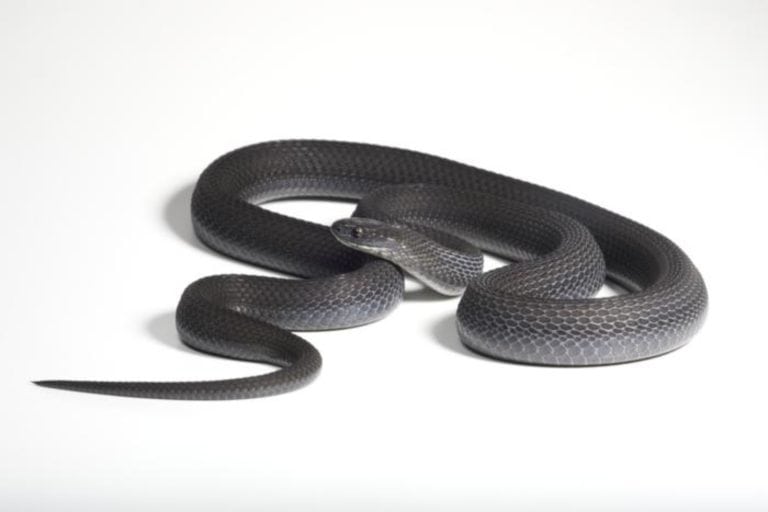
Nonvenomous snakes are generally a hawk’s preferred prey, including rat snakes, bullsnakes (gopher snakes), kingsnakes, racers, milk snakes, and garter snakes, among others. However, you may be wondering which species of venomous snakes hawks hunt. Learn more about some of these dangerous snakes on a hawk’s menu in the sections below.
Cottonmouths
Cottonmouths (Agkistrodon piscivorus) primarily inhabit the southeastern U.S. These stout, heavy-bodied snakes typically grow 2.5–4 feet long, but some may grow larger. Hawks are one of their secondary predators. Red-tailed and red-shouldered hawks regularly hunt these venomous snakes.
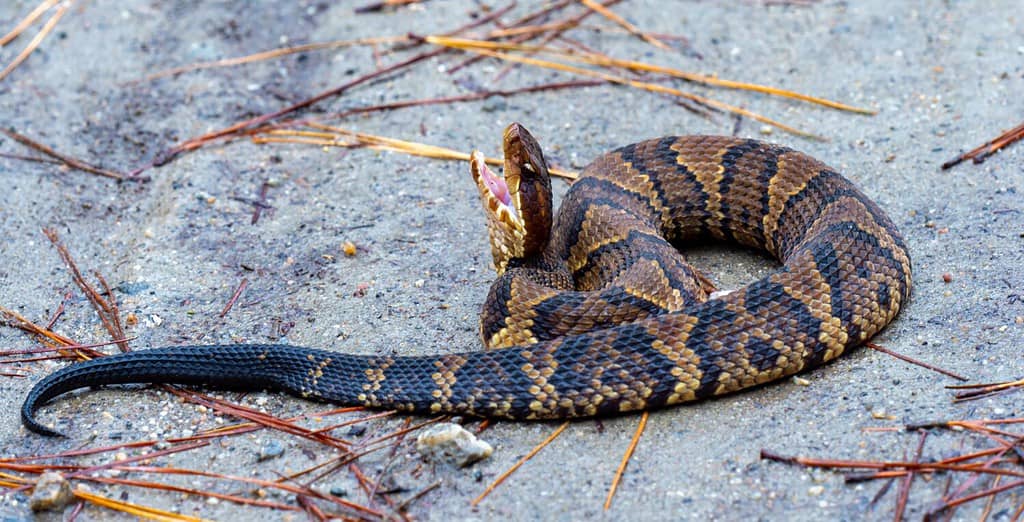
Hawks are a secondary predator of cottonmouths.
©Kyle J Little/Shutterstock.com
Pythons
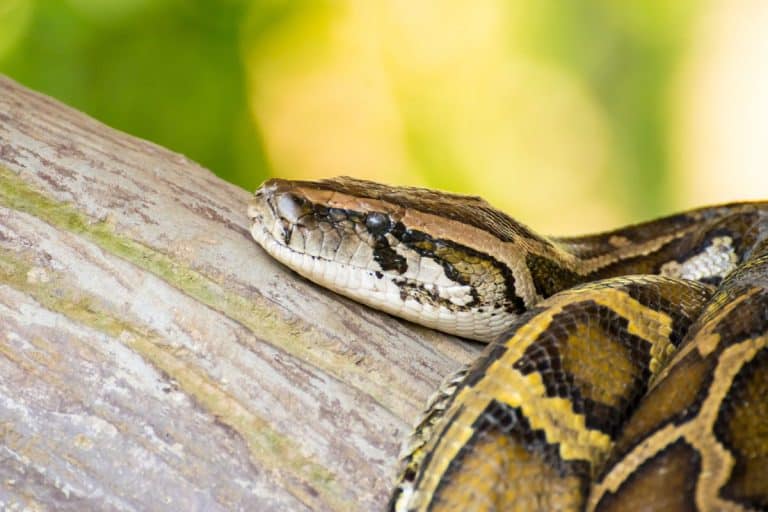
Pythons are massive, heavy-bodied snakes that inhabit the waterways of Florida. They can grow to at least 19 feet long. Although they are not venomous, these large constrictors can kill hawks by suffocation. The adult snakes are too big for most hawks, but there are records of hawks killing and consuming pythons. Red-tailed hawks and red-shouldered hawks are known to eat juvenile or small Burmese pythons in Florida.
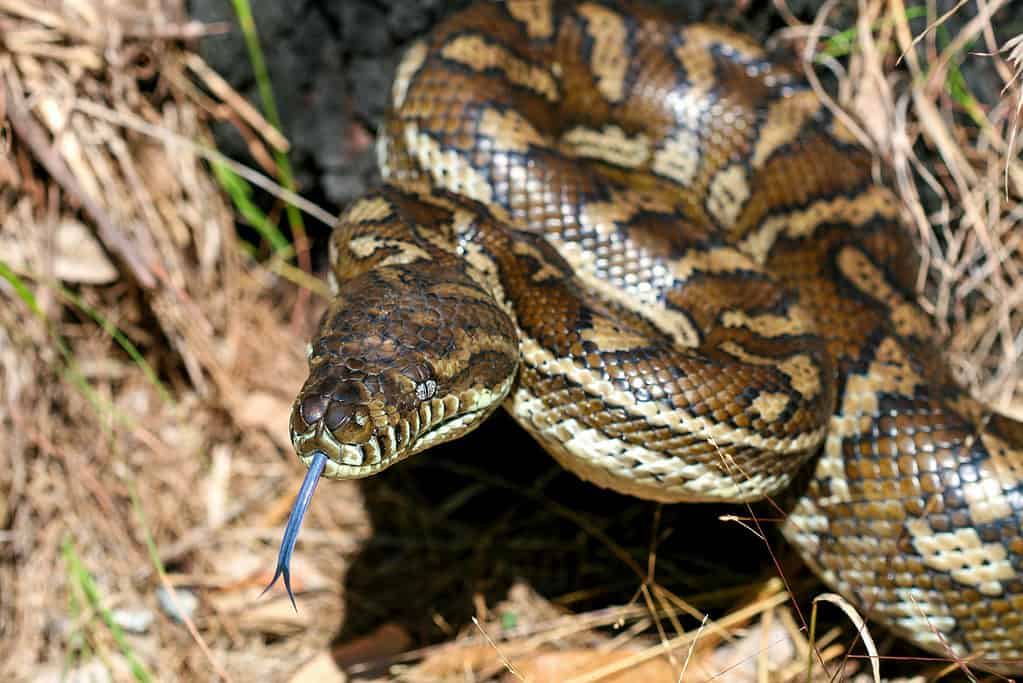
A hawk was recorded killing an 18-foot-long python in Florida.
©Michelle Marks/Shutterstock.com
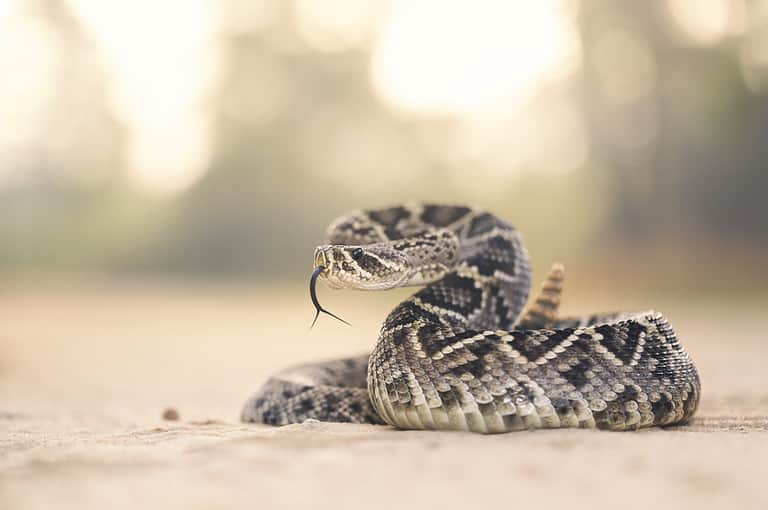
Rattlesnakes
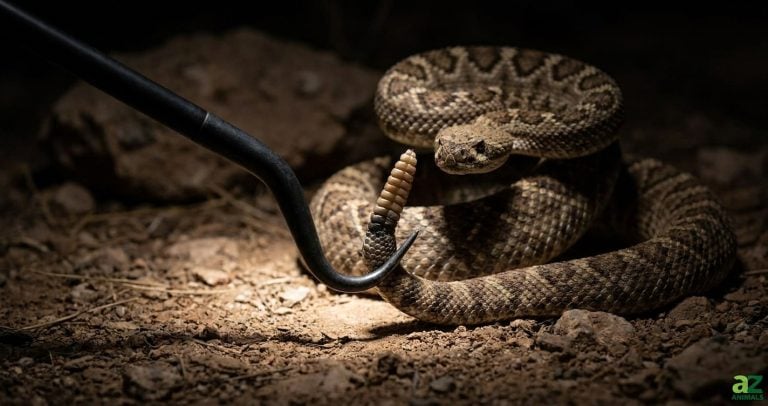
Unfortunately for rattlesnakes, when hawks are around, they are no longer at the top of the food chain. Some hawk species have mastered the art of catching rattlesnakes. There are many sightings of hawks hunting rattlesnakes, including juveniles and adults. Not all hawk species are equipped to hunt these snakes, but the red-tailed hawk and Harris’s hawk actively seek out these venomous snakes.
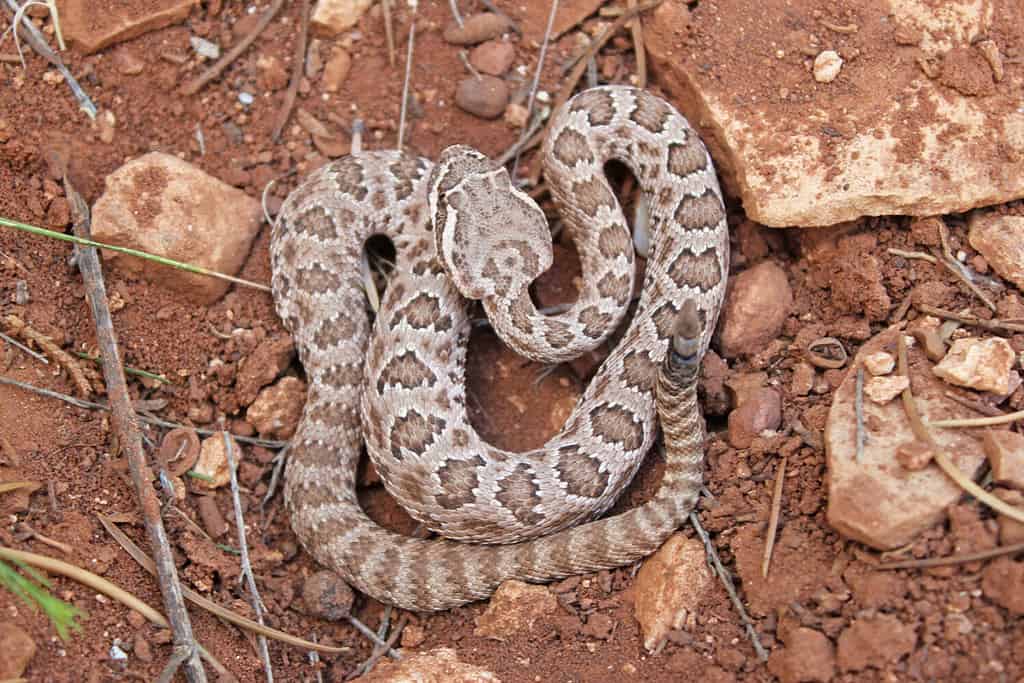
Some hawk species have mastered the art of catching rattlesnakes.
©Creeping Things/Shutterstock.com
Coral Snakes
Coral snakes are found mainly in the southeastern U.S., with a separate population in the Southwest. These slender snakes can reach about 3.5 feet long. Hawks and other diurnal predatory birds, such as kestrels and shrikes, are known to prey on these venomous snakes.
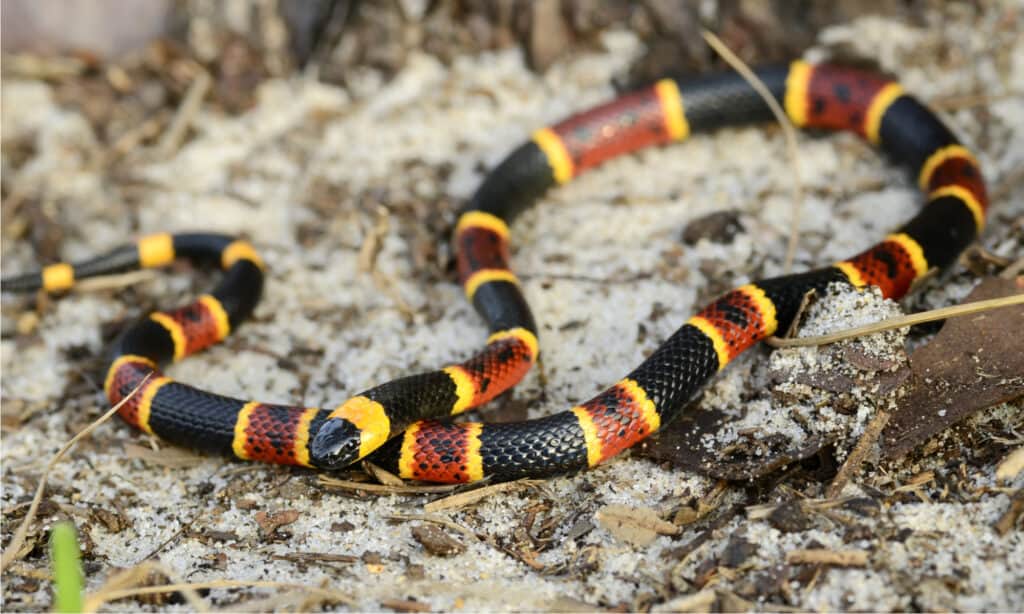
Hawks and other diurnal predatory birds prey on coral snakes.
©Patrick K. Campbell/Shutterstock.com