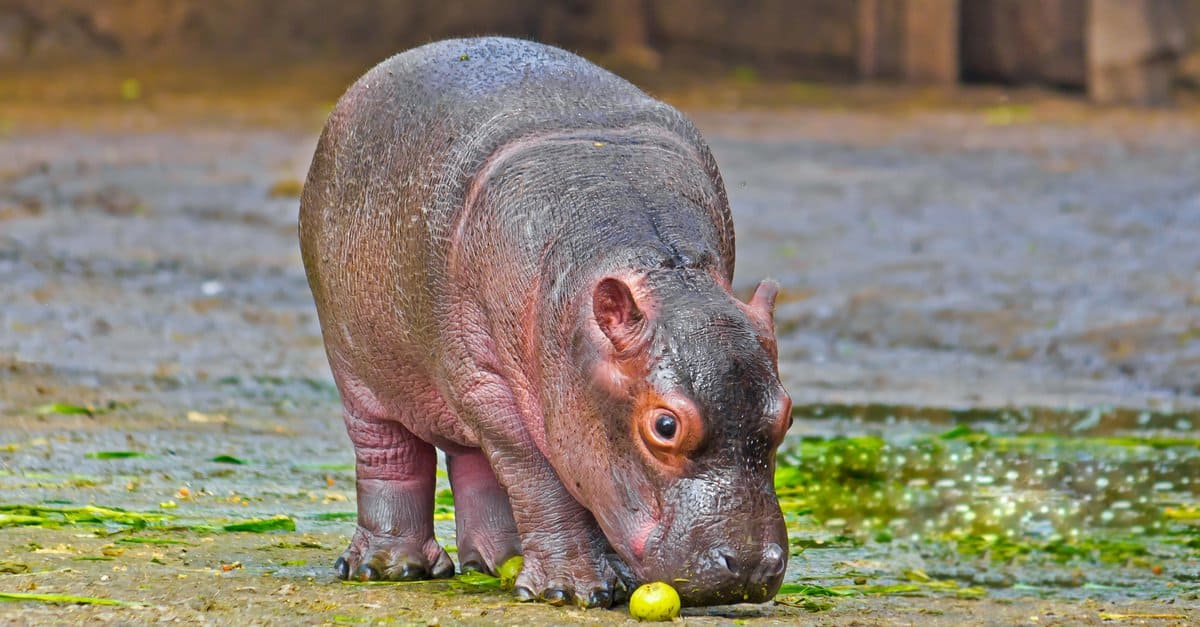

The common hippo is native to the sub-Saharan regions of Africa. Baby hippos are undoubtedly some of the cutest semiaquatic animals. However, they grow up to be some of the largest and most dangerous animals on the planet. Read on to find out five awesome baby hippo facts and to see some seriously adorable pictures.
#1: Baby Hippos Can Weigh Over 100 Pounds at Birth
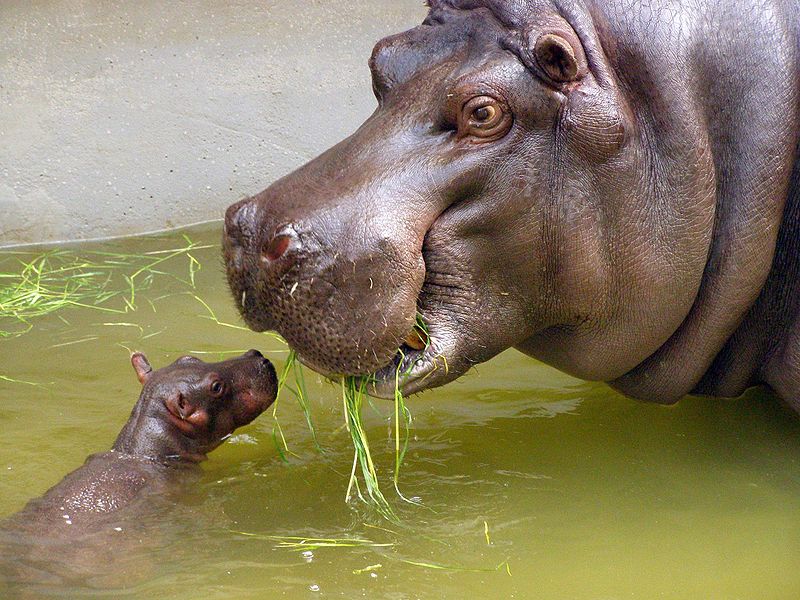
A newborn hippo calf can weigh from 55 to 121 pounds.
Since hippos are one of the largest land mammals, it comes as no surprise that they have large babies. Baby hippos weigh between 55 to 121 pounds at birth. Hippo calves will eventually grow to weigh from 3,000 to nearly 10,000 pounds as full-grown adults.
Baby hippos drink milk for at least the first 6-8 months, although some sources note that nursing could last longer when environmental conditions are poor. Baby hippos begin light grazing on grasses, shoots, and reeds at around one month, but they will not start substantial grazing until they reach around five months old.
#2: Baby Hippos Can Nurse Underwater
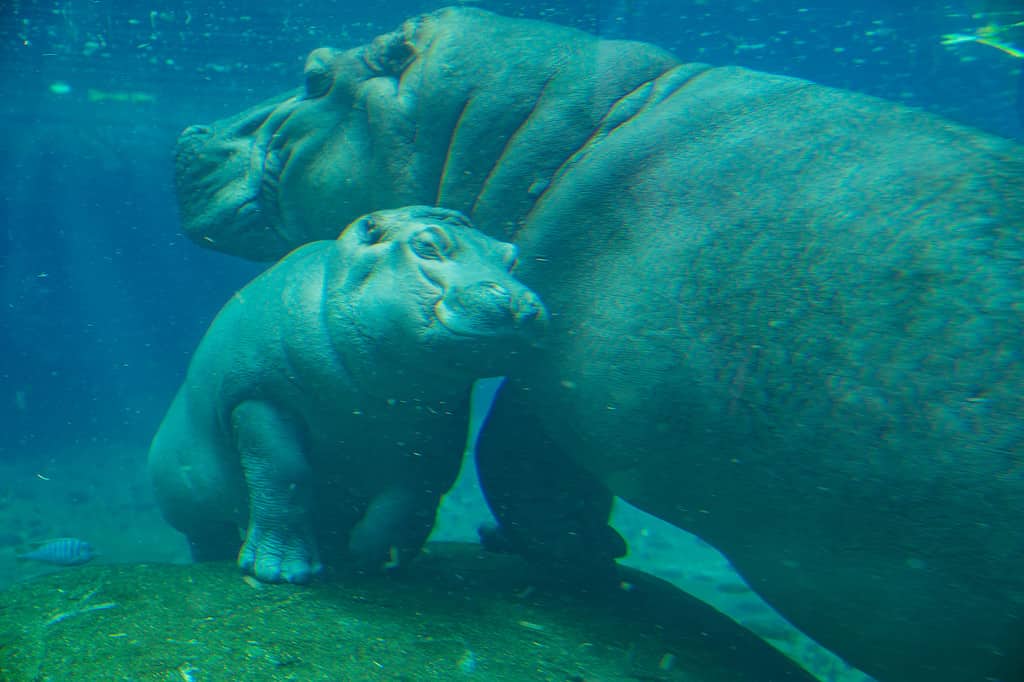
Baby hippos have adaptations that allow them to nurse underwater.
©iStock.com/Bonnie Nordling
Unlike adult hippos, who have few, if any, natural predators, baby hippos are vulnerable to crocodiles, lions, and hyenas until they reach the juvenile stage at around one year old. For the first few days, the mother remains in the water with her newborn. Then, the calf generally stays in the water while the mother leaves to forage, returning periodically to nurse. The water offers the baby hippo some protection from land predators.
Since hippos spend as much as 16 hours a day in the water, baby hippos have adaptations for underwater nursing. They grip the nipple between their tongue and the roof of their mouth. While suckling, their ears fold back and their nostrils close automatically to keep water from getting in.
#3: Hippo Calves Can’t Swim
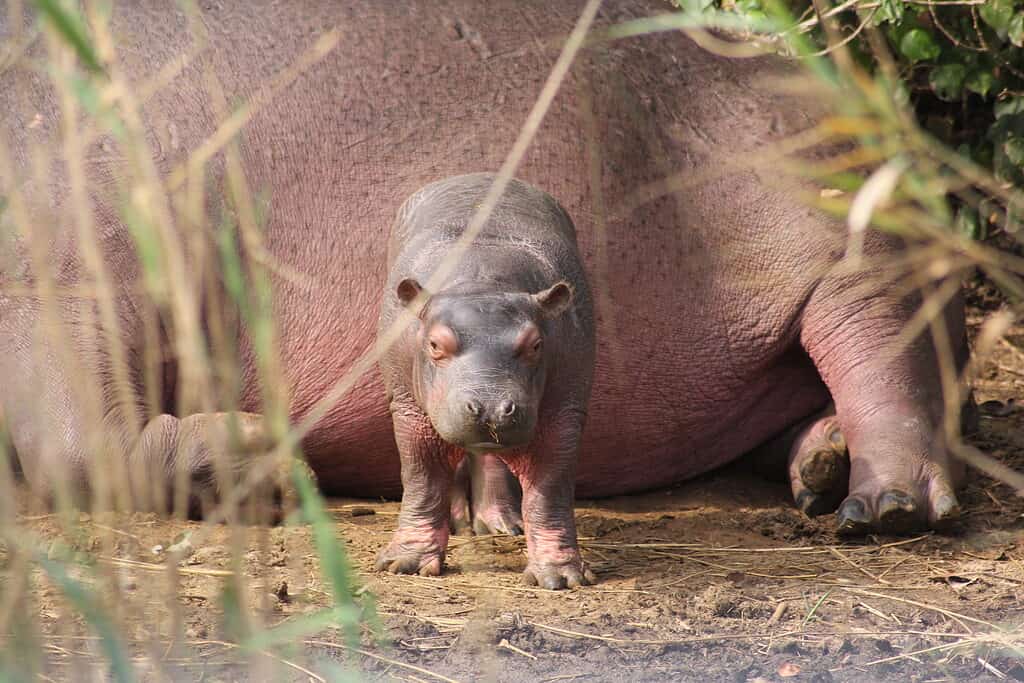
Hippos cannot swim, and even the babies are too dense to float.
©Kelly Engelbrecht/Shutterstock.com
Despite the large amounts of time they spend in the water, hippos cannot swim. Even the babies’ bodies are too dense to float. They use their short, powerful legs to push off the bottom of the riverbed, or they slowly trot along the bottom of the river with their webbed feet lightly touching the ground.
As mammals, hippos cannot breathe underwater. Newborn hippos typically need to breathe about every 30 seconds, but older babies can hold their breath underwater for up to two minutes. As they mature, that time increases to five minutes or longer. Hippos can also sleep underwater. They have a reflex that causes them to surface to take a breath, and then sink back down into the water, all without waking up.
#4: Baby Hippos Have Close Relationships with Their Mothers
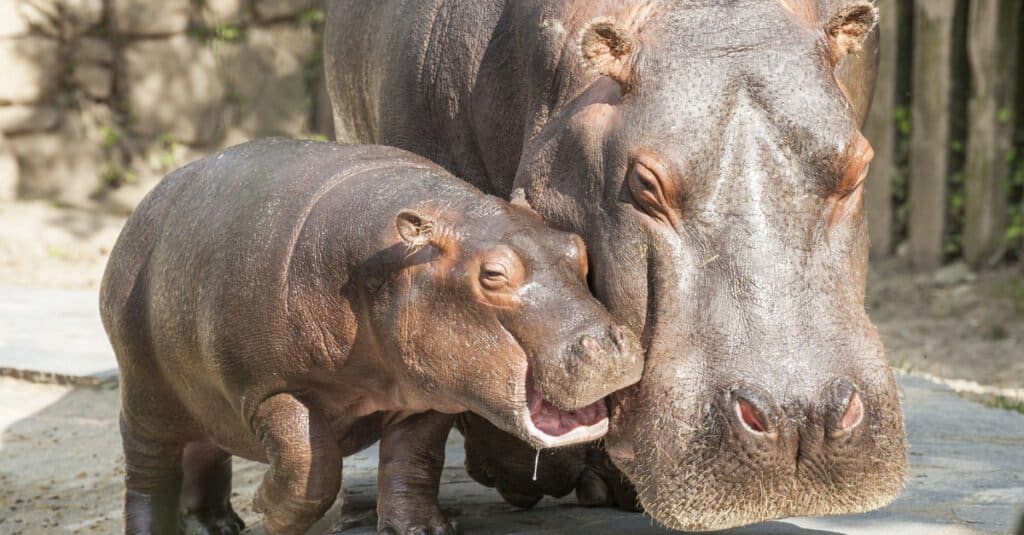
Female hippos are very protective of their calves and will aggressively defend them.
©COLOMBO NICOLA/Shutterstock.com
Mother hippos isolate themselves from their herds for around two weeks to bond with their calves. This imprinting phase is also typical in other ungulates, such as horses, cattle, zebras, and deer. Mothers and calves have often been observed grooming each other, cuddling, playing, and making mouth-to-mouth contact, which is a way for hippos to show affection. Baby hippos frequently climb on their mother’s backs to rest or sun themselves while in the water.
Hippo mothers are also very protective of their babies and will become aggressive in their defense. Researchers believe that many attacks on humans are caused by female hippos close to giving birth or defending their calves. The mother and calf bond is so strong that calves will stay with their mothers until they are between 7 and 8 years old.
#5: Hippo Calves Make Croaking Sounds Underwater
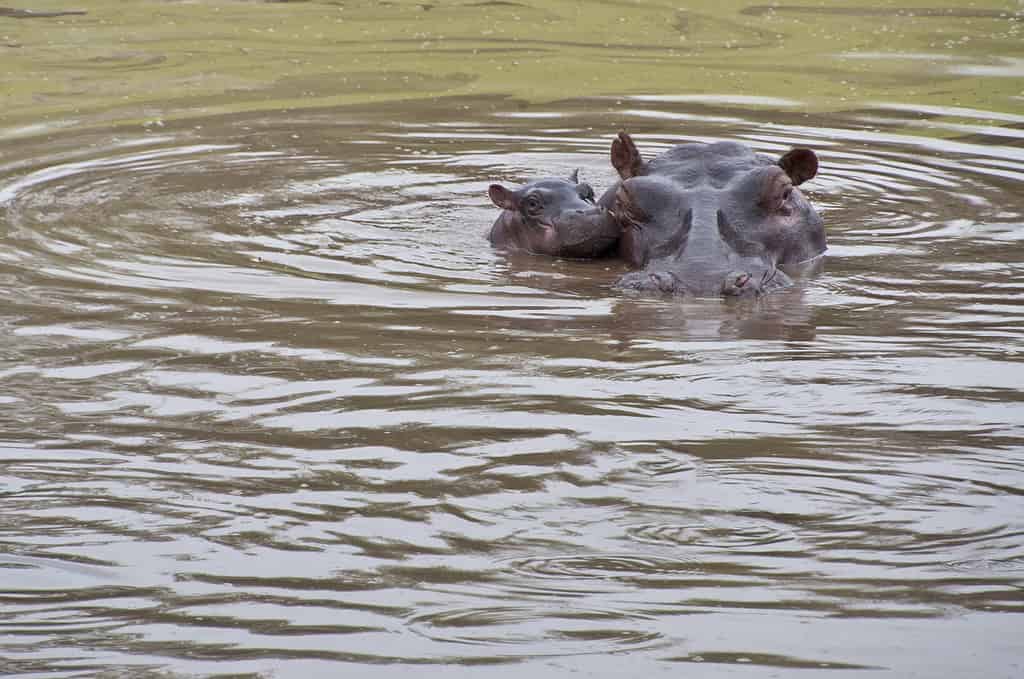
Up to 80% of a hippo’s vocalizations are made underwater.
©iStock.com/nwbob
Hippos are very vocal both on land and underwater. They are the only known mammals to make amphibious vocalizations. Researchers estimate that hippos make up to 80% of their calls underwater.
They make three different types of calls, including high-pitched whines similar to whales, clicking sounds, and a type of pulsing croak made by hippo calves and juveniles in their interactions. These sounds are not typically audible above the water’s surface, and little air is expelled while vocalizing.