
Quick Take
- Honey badgers are opportunistic omnivores with a diverse diet.
- They also eat insects, amphibians, reptiles, small mammals, berries, roots, and more.
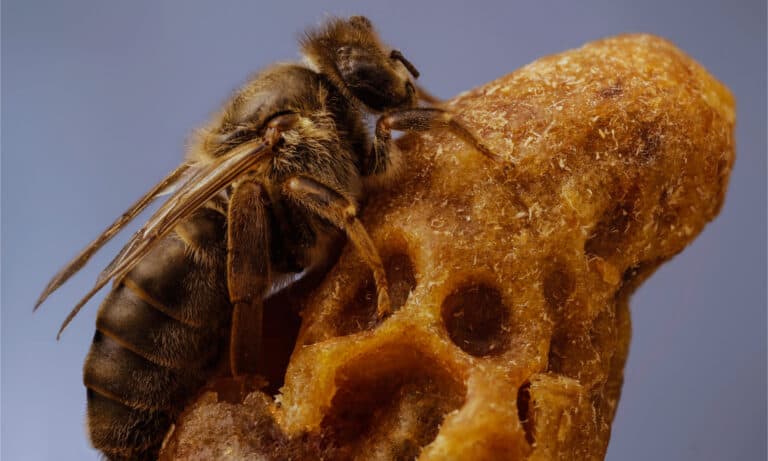
- Honey badgers eat honey, but they are primarily searching for the bee larvae.
Honey badgers (Mellivora capensis), also known as ratels, are a widely distributed member of the mustelid family, which includes otters, weasels, beavers, ferrets, and others. They are renowned for their ferocity and determination. Although their name gives us a hint as to one of the foods in their diet, honey badgers are more opportunistic than most other members of the mustelid family. Read on to learn what honey badgers eat.
The Honey Badger Diet
Since these animals are widely distributed across Africa, Asia, and India, their specific diets vary by region, but there are still some general consistencies among all honey badgers. Honey badgers get their name from two of their favorite foods: honey and bee larvae. They regularly raid beehives, but they are primarily searching for the larvae, which is full of protein.
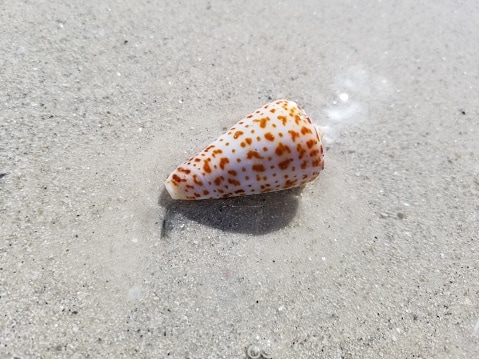
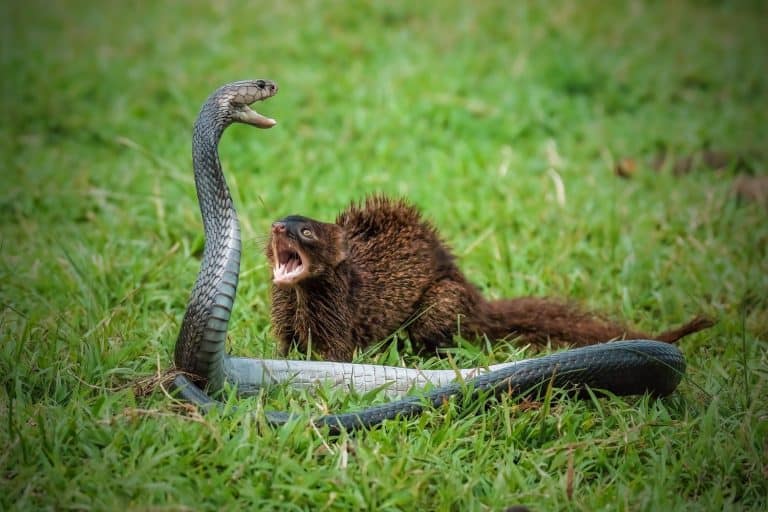
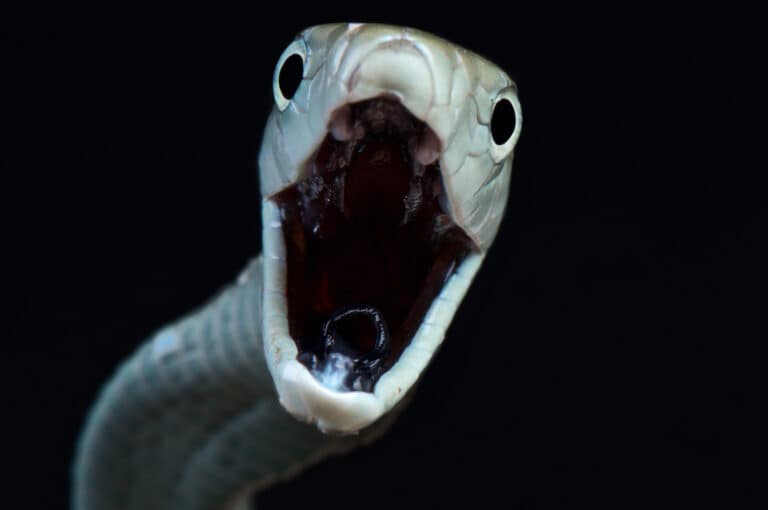
Honey badgers also eat insects, amphibians, reptiles, small mammals, berries, roots, and more. Although honey badgers are omnivores, their diet is primarily that of a carnivore. These opportunistic feeders are known for their lack of dietary specialization, feeding on whatever they can catch, scavenge, or forage. Honey badgers are also specially adapted to eat scorpions and venomous snakes. They are known to kill and eat cobras, rock pythons, and even black mambas, which are regarded as some of the most dangerous snakes in the world.
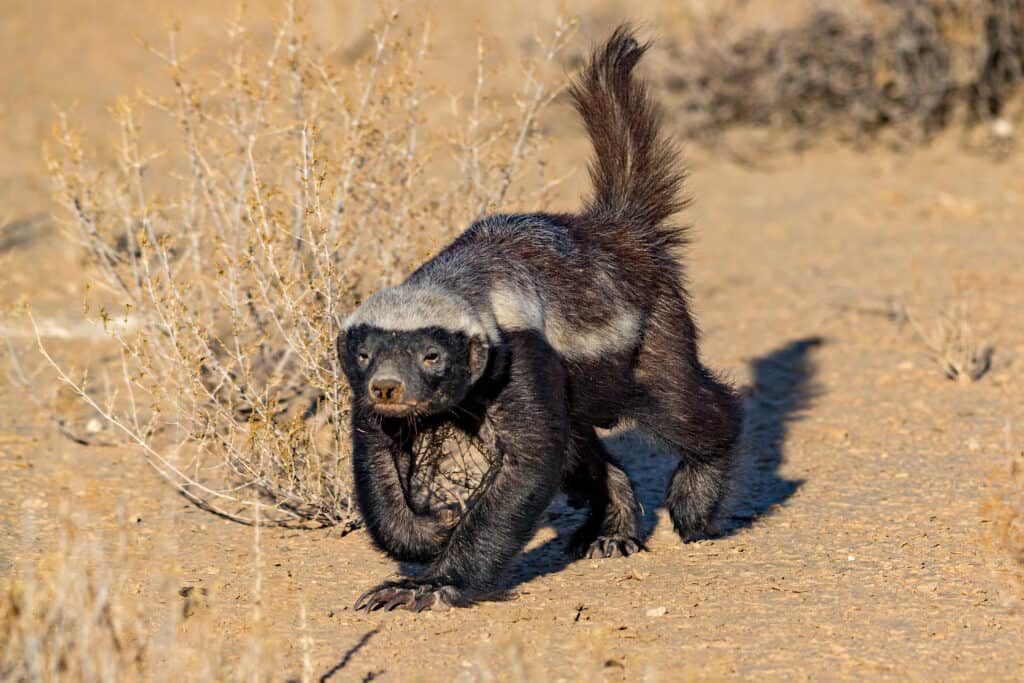
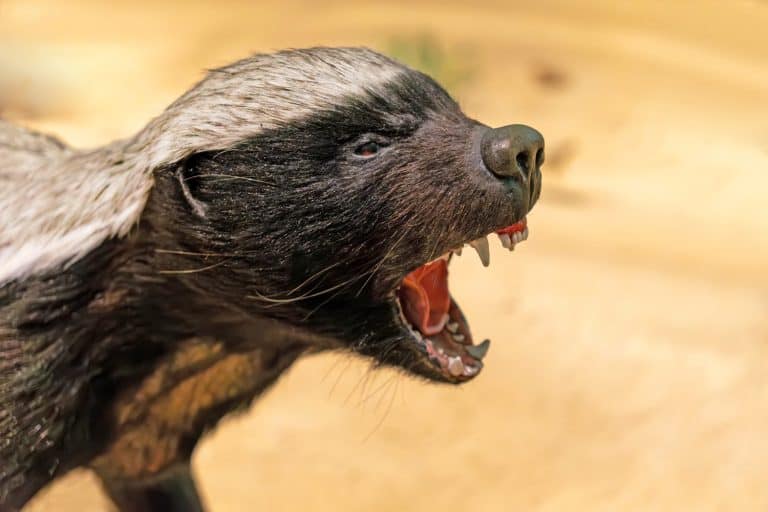
Honey badgers are widely distributed across Africa, Asia, and India.
©Braam Collins/Shutterstock.com
A honey badger’s main source of calories is small vertebrates. They are known to eat frogs, lizards, turtles, rodents, snakes, and birds regularly. Aside from animals, honey badgers also forage for plant material. Their diet includes berries, roots, bulbs, insects, and bark.
While there is some variation depending on their habitat, honey badgers generally eat the following foods:
- Mice
- Rats
- Springhares
- Gerbils
- Frogs
- Turtles
- Lizards
- Geckos
- Skinks
- Tortoises
- Snakes
- Scorpions
- Birds
- Eggs
- Honey
- Bee larvae
- Insects
- Berries
- Roots
- Bulbs
- Bark
- Sheep
- Goats
- Chickens
Honey Badger Hunting and Foraging Strategies
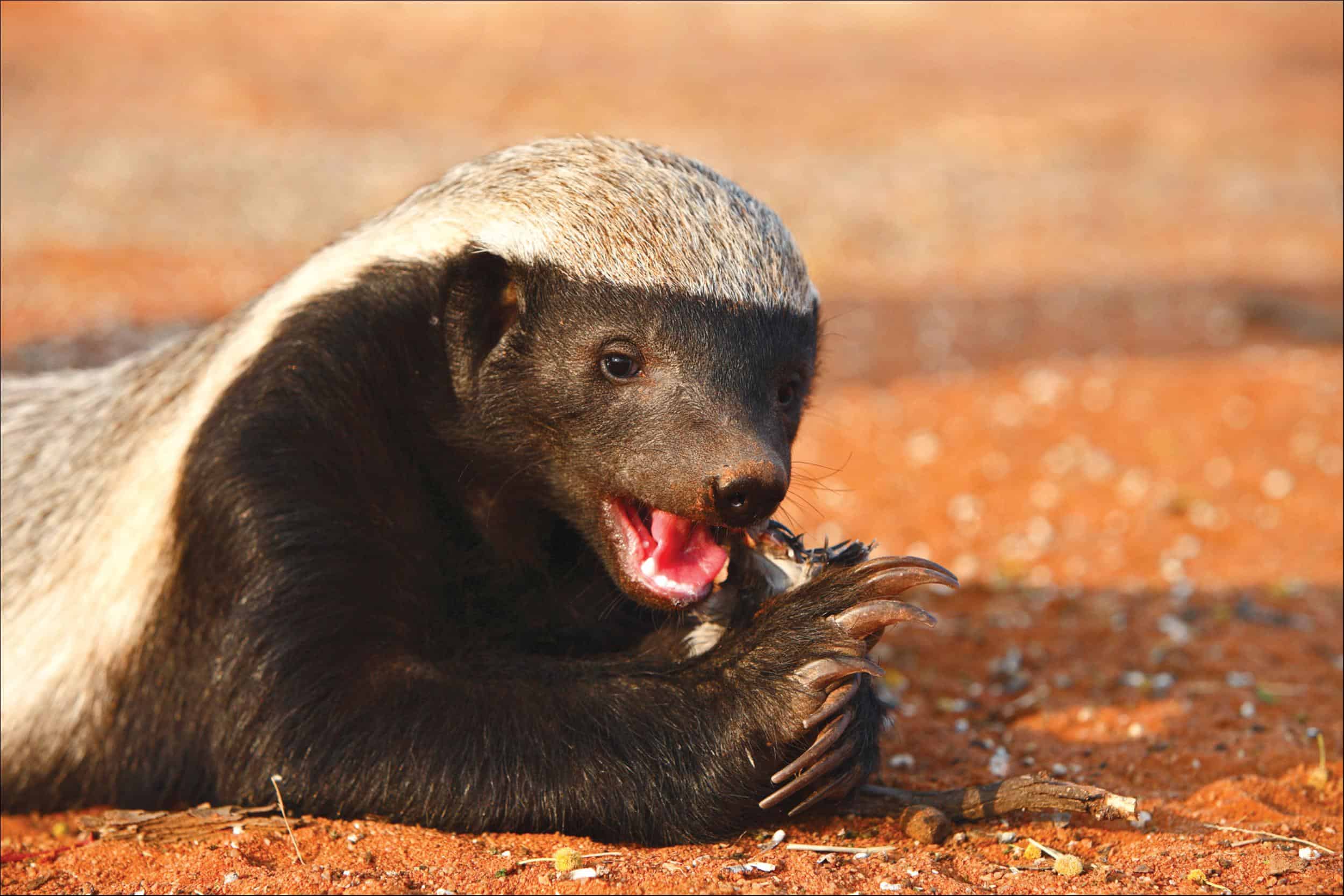
Honey badgers hunt by sight and smell. Their keen nose allows them to detect food underground, and their eyes allow them to spot prey above ground. Small rodents often burrow in the dirt, and honey badgers are adept at digging them out. With claws that are two inches long and incredibly muscular bodies, honey badgers can swiftly dig out their most common prey from holes and burrows. Their hunting method is to simply chase their above-ground food and grab it with their claws or jaws. Once they catch their prey, they will swiftly kill it with a few claw swipes or a bite to the neck. They eat their prey whole — bones, skin, fur, and all.
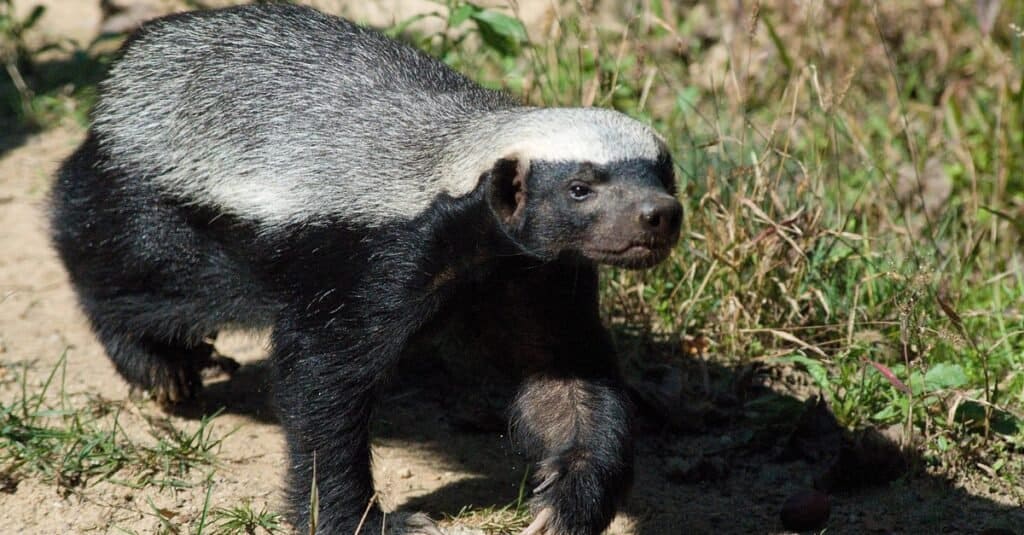
Honey badgers use their long claws to dig in the ground for burrowing animals.
©Pavel Kovaricek/Shutterstock.com
Their ability to kill snakes and scorpions comes from their unusually tough skin and natural immunity to venom. This tough skin helps them avoid injury from snake bites, but even if bitten, they have some resistance to the venom.
Honey badgers also use their keen sense of smell to locate bee larvae in tree cavities or buried nests. Honey badgers have an anal pouch that can be turned outward, releasing a strong odor. Some say the smell is so “suffocating” that it helps calm angry bees as the animal removes the larvae, as well as some of the honey, in the process.
Honey Badgers and Domestic Livestock
Honey badgers do not have good relationship with humans in the areas where they clash. They are most notorious for preying on chickens and will go to great lengths to get them. Honey badgers will rip planks of wood from shelters, dig under baseboards and stone foundations, and climb walls to reach them. To make matters worse, they often engage in “surplus killing.” Like weasels, honey badgers can go into a frenzy when panicked prey triggers their killing instinct, even if they can only eat one chicken.
Aside from chickens, goats and sheep are occasionally attacked and killed. Although sheep and goats are generally larger than a full-grown male honey badger, this doesn’t deter them. They are known to harass domestic herds, although this occurs less frequently than with chickens. Additionally, honey badgers have been reported to aggressively defend their dens against large animals such as horses, cattle, or buffalo if these animals come too close, but such attacks are defensive and not predatory.