
H
Species Profile

Horgi (Siborgi)

Canis lupus familiaris

Big Husky attitude, Corgi chassis
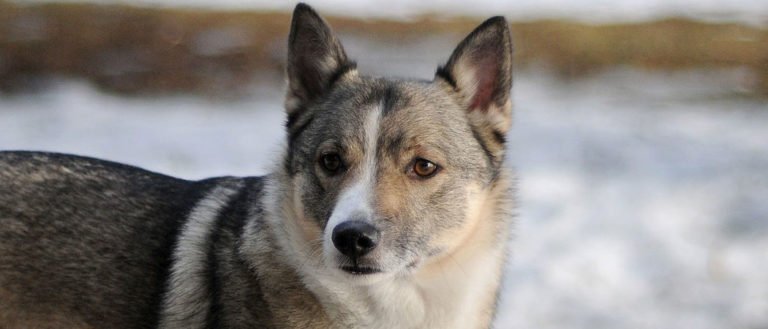
TS Eriksson / CC BY 3.0

Horgi (Siborgi) Distribution

Domesticated Species

Found Worldwide

The Horgi (Siberian Husky × Welsh Corgi; Canis lupus familiaris) is a modern designer cross, not a traditional breed. It has no native wild range. Horgis live worldwide wherever pet dogs are bred, sold, or rehomed—especially in urban and suburban homes, shelters, and rescues.

Size Comparison

Human 5'8"
Horgi (Siborgi) 1 ft 1 in

Horgi (Siborgi) stands at 19% of average human height.

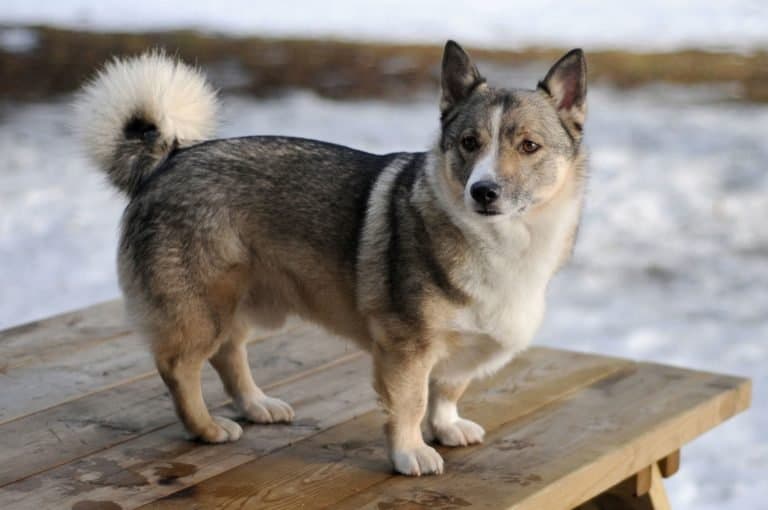
Close-up of Horgi standing on a deck

At a Glance

Domesticated
Also Known As Husky-Corgi mix, Corgi-Husky mix, Husky Corgi, Corgi Husky, Huskyorgi, Siborgi
Diet Omnivore
Activity Diurnal+
Lifespan 13 years
Weight 18 lbs
Status Not Evaluated
Did You Know?

Not a standardized "pure breed": most major kennel clubs don't register Horgis as a breed, because they're a Husky-Corgi cross.

Scientific Classification

A domestic dog cross (designer mix) combining traits of the Siberian Husky and Welsh Corgi. Typically medium-small to medium in size with a corgi-like build (often short legs) and husky-like coat/markings and facial features.

Kingdom
Animalia
Phylum
Chordata
Class
Mammalia
Order
Carnivora
Family
Canidae
Genus
Canis
Species
Canis lupus

Distinguishing Features

  • Hybrid of Husky and Corgi (designer mix, not a standardized breed)
  • Often short legs and elongated body (corgi influence)
  • Dense double coat and husky-like facial mask may be present
  • Erect or semi-erect ears are common
  • Coat colors frequently include black/white, red/white, sable, or tricolor patterns

Physical Measurements

Males and females differ in size

Height
1 ft 1 in (10 in – 1 ft 3 in)
12 in (9 in – 1 ft 2 in)
Length
2 ft 7 in (2 ft 2 in – 3 ft 1 in)
2 ft 10 in (2 ft 4 in – 3 ft 5 in)
Weight
33 lbs (24 lbs – 40 lbs)
28 lbs (20 lbs – 35 lbs)
Tail Length
11 in (8 in – 1 ft 2 in)
Top Speed
22 mph
Slower sprint speed

Appearance

Primary Colors
Secondary Colors
Skin Type Horgi skin is typical dog skin under a dense double coat — weather-proof guard hairs over a soft undercoat. They often shed heavily seasonally, skin is elastic and pigmented, sensitivity varies; regular grooming helps.
Distinctive Features
  • Domestic dog cross (Canis lupus familiaris) combining Siberian Husky and Welsh Corgi (usually Pembroke; sometimes Cardigan); not a formally standardized pure breed in many registries.
  • Often a long-backed, short-legged (chondrodysplastic) corgi-like build paired with a spitz-type husky head, erect/semi-erect ears, and a thick double coat; overall size ranges from medium-small to medium depending on parent sizes.
  • Husky-like facial mask, sharp contrast markings, and bright, almond-shaped eyes are common; eye color can vary (brown, blue, or mixed), reflecting husky influence.
  • Movement and proportions often reflect short limbs with a sturdy chest; watch for stress on joints/spine during high-impact activity (jumping off furniture, repetitive stairs).
  • Temperament and needs are variable: many are intelligent, social, and vocal, with a potential mix of husky independence and corgi herding alertness; early training and mental enrichment are commonly important.
  • Breed-specific (mix-typical) health considerations: risk can include intervertebral disc disease (IVDD)/back strain from long back + short legs, hip dysplasia, degenerative myelopathy (corgi lines), eye issues (cataracts/progressive retinal atrophy), and obesity (common in corgi types).
  • Needs frequent brushing during seasonal shedding, regular nail and ear care, and steady exercise focused on joint- and back-friendly activities (walks, swimming; avoid repeated high jumps). Watch diet to prevent weight gain.
  • Cold tolerance is often good due to double coat; heat tolerance can be reduced-provide shade, water, and avoid intense exercise in hot weather.
  • The Horgi (Husky × Corgi mix, Canis lupus familiaris) is a human-made domestic dog with short legs, varied coats and markings, and behavior shaped by people and how it is raised, not wild pressures.

Sexual Dimorphism

Typically mild-to-moderate sexual dimorphism as in many domestic dogs: males often average larger with broader head/neck and more muscle; females may be slightly smaller and finer-boned. Because this is a mixed, non-standardized designer cross, overlap is common and individual variation can be substantial.

  • Often somewhat heavier-boned with a broader skull and chest; may present a thicker neck ruff when coat is dense.
  • May be taller/longer overall within the same litter, though short-leg inheritance can minimize visible height differences.
  • Often slightly lighter frame and narrower head/shoulders; may look more "refined" in muzzle and body outline.
  • Body may appear longer relative to height when short legs are inherited; coat can be equally dense but may look less bulky due to frame size.

Did You Know?

Not a standardized "pure breed": most major kennel clubs don't register Horgis as a breed, because they're a Husky-Corgi cross.

Many inherit dwarfism-linked short legs from the Corgi side, giving a long-backed, low-to-the-ground silhouette with Husky-like markings.

Coats often resemble a "mini Husky" look-double coat, mask, and husky-style color patterns-yet the body is frequently corgi-shaped.

Temperament can swing from Husky-independent and vocal to Corgi-focused and herding-minded; littermates may differ noticeably.

Shedding is commonly heavy year-round with seasonal "blowouts," because both parent breeds are double-coated.

They can excel at dog sports that reward brains and speed-rally, obedience, scent work, agility (with jump-height safety in mind), and canicross at appropriate intensity.

Because they're a mix, predicting adult size, ear set, coat length, and energy level is less certain than with established breeds.

Unique Adaptations

  • Domestic-dog flexibility (species context): like other Canis lupus familiaris, Horgis are highly tuned to human cues, training, and life alongside people-unlike wild canids, they thrive on human-guided routines.
  • Double-coat insulation: a dense undercoat and guard hairs (common in spitz-type Huskies and many Corgis) help regulate temperature-especially in cold conditions.
  • Low center of gravity: when short legs are inherited, the stance can aid quick pivots and stability in tight turns (useful for herding-style movement), though it also raises orthopedic considerations.
  • Efficient communication: facial expressiveness and vocal range (notably Husky-like) can make them unusually communicative in a household setting.

Interesting Behaviors

  • "Talking" and commentary: many Horgis inherit Husky-style vocalizations (woos, yodels) plus alert barking from the Corgi side.
  • Herding-nip tendencies: some will circle or lightly nip ankles, reflecting Corgi herding instincts-best redirected into structured games and training.
  • Chase-and-explore drive: may show strong prey/chase behavior and curiosity; secure fencing and leash reliability are important.
  • Digging and scavenging: common canine foraging behaviors can be amplified by Husky persistence; provide legal digging outlets or enrichment.
  • Social cleverness: often learns household routines quickly and may test boundaries-benefits from consistent rules and reward-based training.
  • Cold-weather enthusiasm: many are happiest in cool climates and may seek snow, shade, or cool floors indoors.

Cultural Significance

Horgis are a designer mix of Husky and Corgi, mixing Husky looks and energy with Corgi size and companionship. Their popularity sparks talks about responsible breeding, health checks, care for heavy shedding and high activity, and social media as “mini Huskies.”

Myths & Legends

In Welsh folklore, corgis are called enchanted dogs. Stories say fairies and elves rode them or had tiny carriages pulled by them; shoulder markings were seen as 'fairy saddle' signs.

Siberian Husky heritage is closely tied to the Chukchi people of northeast Siberia, who developed sled dogs central to survival and travel-an origin often retold as a human-dog partnership story of endurance in harsh winters.

In Husky lore, the 1925 serum run to Nome, the 'Great Race of Mercy', had sled dog teams carry diphtheria antitoxin across Alaska; lead dogs like Balto and Togo remain famous symbols of northern dogs.

Modern naming lore: "Horgi" itself is a contemporary portmanteau (Husky + Corgi), reflecting a newer cultural habit of coining mix names-shared in breeder circles and online communities as part of the mix's identity.

Conservation Status

NE Not Evaluated

Has not yet been evaluated against the criteria.

Population Stable

Life Cycle

Birth 4 pups
Lifespan 13 years

Lifespan

In the Wild
12–15 years
In Captivity
10–16 years

Reproduction

Mating System Polygynandry
Social Structure Managed Domestic
Breeding Pattern Serial
Fertilization Managed Selective
Birth Type Internal_fertilization

Horgi (Husky × Corgi mix) dogs are domestic and bred by people. Mating is human-managed, with serial, temporary one male, one female matings, internal fertilization, and many males and females used across litters; no long-term pair bonds or steady help from other dogs.

Behavior & Ecology

Social Pack Group: 4
Activity Diurnal, Crepuscular
Diet Omnivore Meat-forward foods, especially oily fish like salmon (often well-tolerated and palatable for husky-leaning coats/skin needs).

Temperament

Highly social with familiar people; typically affiliative and pack-oriented (domestic dog baseline), often intensified by Husky sociability
Energetic and playful; needs consistent daily exercise plus mental work (problem-solving, scent games) to prevent nuisance behaviors
Intelligent but can be stubborn/independent (Husky-leaning) and may test boundaries; benefits from reward-based training and clear routines
Alert, watchful, and sometimes "opinionated" (Corgi-leaning); may herd/control movement (circling, blocking, heel-chasing) unless redirected
Moderate-to-high prey/chase drive possible; careful introductions with small pets and consistent recall training recommended
Often vocal: may bark for alerting (Corgi influence) and "talk/howl" (Husky influence); noise tolerance varies by individual
Breed-mix distinguishing traits vs base species: commonly shorter legs/longer back (Corgi build) combined with Husky coat/markings; this can influence activity style (bursts of speed, more jumping/impact risk management)
Care requirements: strong need for enrichment, secure fencing/leash management (escape/roam tendencies in some Husky-leaning dogs), early socialization to reduce over-arousal/herding nips
Watch for back problems (IVDD) in long-backed, short-legged dogs; hip dysplasia (Husky), degenerative myelopathy (Corgi), patellar problems, and eye issues (PRA/cataracts) — keep weight down and avoid jumping on/off furniture.

Communication

Barking Often alert/territorial signaling, Corgi-leaning
Howling or "Husky talk"/wooing Husky-leaning
Whining Attention-seeking, frustration, or appeasement
Growling Warning/guarding or play-growls; context-dependent
Body language: ear set, tail carriage (or nub/short tail variants), play bows, freezing/stiffening as escalation cues
Mouthing/nipping: can appear in play or herding-style control; redirect to toys and reinforce calm behavior
Scent marking and sniff-based information gathering; may mark more in novel environments
Pawing/leaning/jumping up for attention; teach alternative cues (sit/target) to manage
Eye contact and facial expressions; Husky-leaning dogs may use intense "stare" in play or demand behavior

Habitat

Biomes:
Temperate Forest Boreal Forest (Taiga) Tundra Alpine Temperate Grassland Mediterranean Desert Hot Desert Cold Wetland Freshwater Marine Tropical Dry Forest Tropical Rainforest +7
Terrain:
Plains Hilly Mountainous Valley Plateau Coastal Island Riverine +2
Elevation: Up to 16404 ft 3 in

Ecological Role

Domestic companion and human-associated mesopredator/scavenger (diet and survival largely supported by people rather than independent hunting).

companionship and social support to humans deterrence/alerting (watchdog function) localized rodent/pest suppression when allowed to chase participation in human-managed nutrient cycles via pet waste (requires responsible disposal)

Diet Details

Main Prey:
Small mammals Ground-nesting birds and eggs Fish Invertebrates
Other Foods:
Berries and other fruits Tender grasses Roots, tubers and other plant scraps Cultivated vegetables

Human Interaction

Domestication Status

Domesticated

Horgi (Husky × Corgi mix) (Canis lupus familiaris) is a modern crossbreed of the fully domesticated dog, descended from gray wolves. Horgis keep dogs' people-friendly, trainable nature but show mixed traits: long body and short legs, husky coat and mask, and often vocal. They are pets, family dogs, sport partners, social-media dogs, and need routine vet, grooming, and training.

Danger Level

Low
  • low but nonzero bite risk common to all dogs, increased by poor socialization, fear, pain, or rough handling
  • herding-style nipping/chasing may occur if corgi traits express, especially toward running children
  • jumping/knocking over small children if excited (varies by individual)
  • zoonotic risks typical of pet dogs if unvaccinated/untreated (e.g., rabies risk in unvaccinated dogs, intestinal parasites, fleas/ticks)
  • noise nuisance (barking/howling) can affect neighbors

As a Pet

Suitable as Pet

Legality: Horgis (Husky × Corgi mix) are usually legal where pet dogs are allowed. They must follow local license, leash, and shot rules, and may face housing or breed-specific limits depending on the area.

Care Level: Moderate

Purchase Cost: Up to $1,500
Lifetime Cost: $15,000 - $45,000

Economic Value

Uses:
Companion animal market (breeder sales/adoption) Veterinary services (preventive care, surgery, chronic disease management) Training and behavior services Grooming and shedding-management products Pet insurance and pharmaceuticals Pet boarding/daycare Pet supplies (food, crates, harnesses, enrichment toys)
Products:
  • companion/pet ownership value
  • potential breeder revenue for designer mixes (variable and unstandardized)
  • service spending on grooming (de-shedding), training, and veterinary care (notably orthopedic/back care risk)

Relationships

Ecological Equivalents 5

Animals that fill a similar ecological role in their ecosystem

Domestic dog
Domestic dog Canis lupus familiaris Example: the Horgi (Husky × Corgi, Canis lupus familiaris) is a small-to-medium companion dog with short legs, heavy seasonal shedding, and a strong Husky drive. It shares the companion/working-dog niche and associated behavioral and husbandry needs: daily exercise, training, coat care, and weight management. Predisposed health risks that affect care and ecological role include back/orthopedic problems (chondrodysplasia, IVDD), hip dysplasia, and certain nerve and eye disorders.
Siberian Husky
Siberian Husky Canis lupus familiaris Spitz ancestry gives Siberian Huskies high energy and endurance, a thick double coat, heavy seasonal shedding, and vocal, independent traits. They require more exercise and mental stimulation, regular undercoat grooming, and may be heat sensitive.
Pembroke Welsh Corgi
Pembroke Welsh Corgi Canis lupus familiaris Pembroke Welsh Corgis show herding traits: alertness, a strong drive to chase or move animals, and occasional heel‑nipping. Corgi-type chondrodysplasia produces short legs and a long back, increasing risk of intervertebral disc disease (IVDD); use low-impact exercise, provide ramps, and avoid high jumps.
Cardigan Welsh Corgi Canis lupus familiaris Similar to Pembroke Corgis in niche (compact herder/companion) and potential skeletal proportions, and may mirror Horgi risks and management priorities — for example, back/orthopedic care and weight control — as well as behavioral tendencies such as watchfulness, barking, and herding.
Shiba Inu
Shiba Inu Canis lupus familiaris Ecologically similar as a small-to-medium spitz companion: has a double coat, comparable grooming demands, high alertness, and sometimes an independent temperament. Useful comparison for owners expecting spitz-like shedding and training needs.

Quick Facts

  • Other Names: Siborgi
  • Group: Hybrid / Designer Dog
  • Parent Breeds: Siberian Husky × Welsh Corgi
  • Size: 13 – 15 inches tall
  • Weight: 20 – 50 pounds
  • Coat: Double coat, medium length, heavy shedder
  • Colors: Black, gray, cream, red, sable, tricolor
  • Temperament: Affectionate, playful, loyal, energetic
  • Lifespan: 12 – 15 years
  • Exercise Needs: High — 60 minutes daily
  • Good with Children: Yes (if socialized)
  • Apartment Friendly: Yes, with daily exercise

Crossbreed a Siberian Husky with a Welsh Corgi, and you have Horgi dogs. Another name for a Horgi dog is a Siborgi. Horgi dogs are one of a large group of hybrid dogs created in the last 25 years. These hybrids are sometimes called designer dogs because they are the result of breeding popular purebreds. Breeders wanted puppies that possessed the most desirable qualities of each of their parents. These canines belong to the hybrid group.

Horgi dogs have a social, affectionate nature, distinctive appearance, and suitability for families and apartment living. Socialized Horgis are good with children as well as other dogs.

3 Pros and Cons of Owning Horgi Dogs

ProsCons
Good with kids
Horgis that are socialized from puppyhood are good with kids.
High maintenance grooming
The thick coat of this dog needs to be brushed every day to keep it in good condition.
A loyal dog
This alert dog is going to bark and let the household know of a visitor or someone on the property. But this dog is likely to welcome whoever walks through the door!
Somewhat challenging to obedience train
This dog’s intelligence, combined with its high energy level, makes it a little challenging to train.
Apartment-friendly
The size of this dog makes it an appropriate pet for someone who lives in an apartment.
Health problems
Prone to obesity and back problems.

Origins and History

Although the Horgi dog breed may have originated naturally over time, intentional breeding of Corgis and Huskies by designer breeders began in the late 1990s, primarily in North America.

The goal of these breeders was to combine the traits of both parent breeds and create a smaller version of a Husky, essentially a miniature herding dog. As a result, Horgis gained popularity as a beloved and cherished companion pet.

Appearance

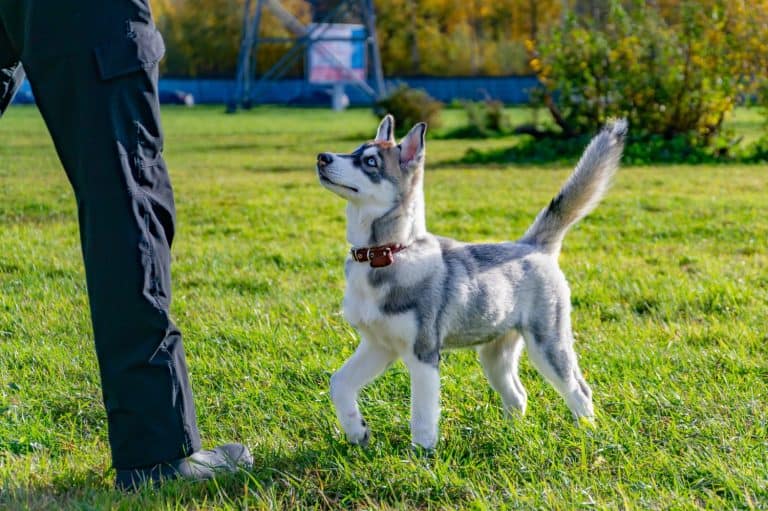
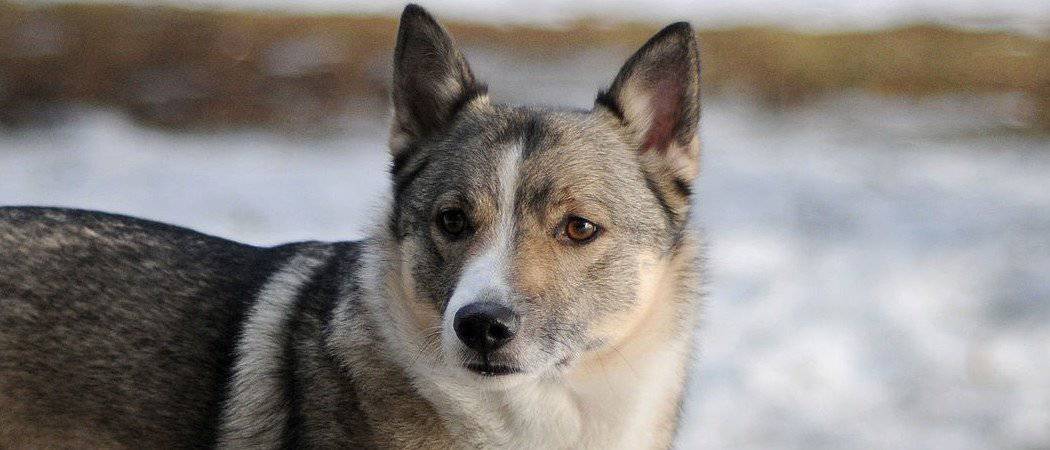
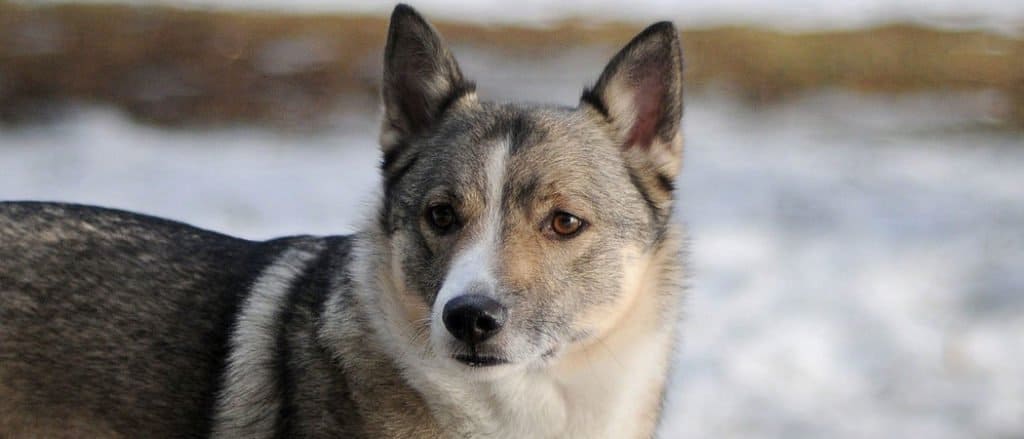
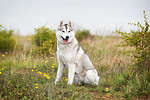
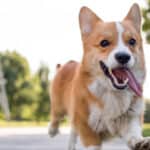
The Horgi is a medium-sized dog that sports the Husky’s face and markings on the Corgi’s long, low body.

Adult horgis grow to be as tall as 15 inches from head to paw. Furthermore, both males and females can weigh as much as 50 pounds full-grown.

This hybrid dog has a thick, double coat of fur and sheds heavily all year round. They can be any of the following colors: black and white, gray and cream, red and sable, and tricolor. Their eyes are brown, blue, or heterochromatic (one of each).
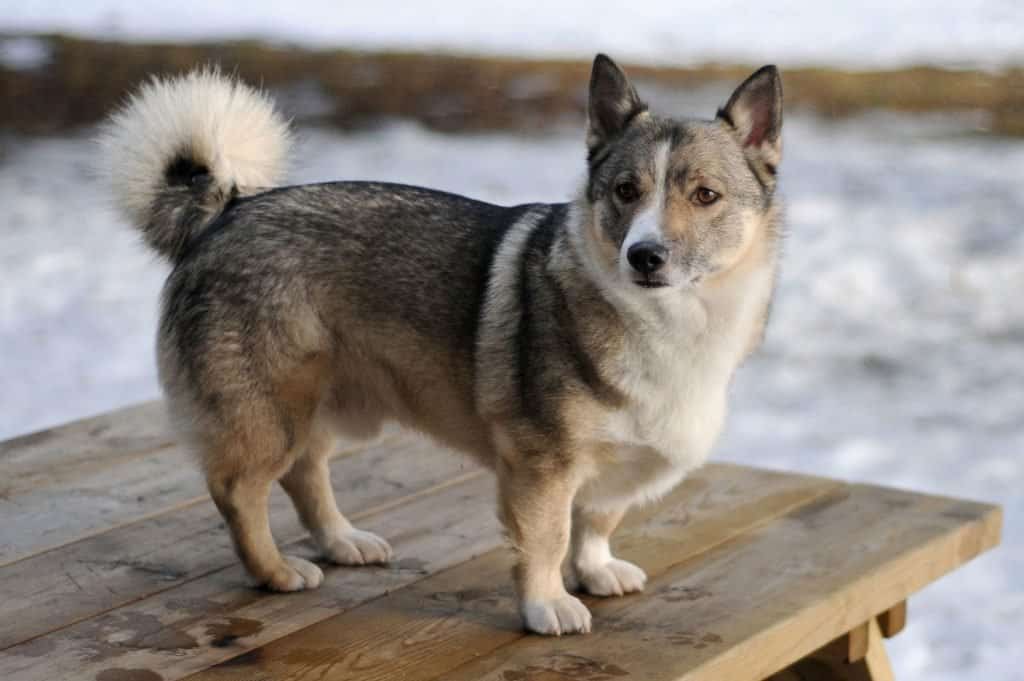
Horgi standing on a deck by the sea.

Horgi is standing on a deck by the sea.

Temperament and Personality

The horgi has a friendly, affectionate personality. They love to be around people, whether a family member is working on a project in the backyard or sitting on the sofa watching a movie. Socialized Siborgis are good with children and get along well with other dogs.

These dogs are known for their high-energy behavior. They love to run, jump, play, and explore their surroundings. Just think of all the energy of a Siberian Husky tucked into the long, short body of a Welsh Corgi! One of their most notable traits is their loyalty. They make good watchdogs, staying alert to all of the happenings in a home and on the property. However, they are very friendly dogs, so they are not likely to scare a stranger away. These hybrid dogs are not shrinking violets. Just the opposite. They love being the center of attention!

Lifespan

The lifespan of Horgis is typically 12–15 years. Their longevity depends on genetics, exercise, diet, and preventing injuries that can result from their long backs.

Common Health Issues

Horgis have some common health issues, some of which they share with their purebred parents. One common health issue is Keratoconjunctivitis, also known as dry eye. This condition occurs when the tear ducts are not producing enough fluid to keep the dog’s eyes moist. This moisture is necessary to wash dust, pollen, etc., out of a dog’s eye. Unfortunately, this condition can lead to an eye infection. A veterinarian can prescribe eye drops to help with this issue.

Another common health problem is obesity. When a relatively small dog like this crossbreed is fed too much and doesn’t get enough exercise, it can cause excess weight gain. This can lead to heart trouble, joint issues, and other problems. Feeding a Horgi the right amount of quality fat and protein, along with giving them daily exercise, can prevent this issue.

A third common health issue is Intervertebral disc disease or IVDD. Essentially, this happens when a vertebra in this dog’s long, low back slips out of place and presses on its spine. The awkward or slow movement, cries, and lack of appetite are some signs of this condition. Medication and weight loss are two possible remedies. Some people buy ramps for their home, so their pet Horgi has a way to climb up onto the sofa or bed without jumping and risking IVDD.

Care and Maintenance

Giving the best level of care to a Horgi means learning as much as possible about this pet. Whether you get a Horgi puppy or an adult dog, it’s best to do some research on this hybrid pooch before bringing one home.

Diet and Nutrition

Feeding a Horgi the right type and amount of food can sometimes head off common health issues of this crossbreed. Not surprisingly, Horgi puppies and adult dogs need a different daily diet.

Horgi puppy food: Food consisting of at least 22 percent high-quality protein contributes to healthy tissue, cartilage, and muscles. Fat in their diet provides them with the energy they need to run around and check out their environment. Omega-3 fish oil and antioxidants support the health of a puppy’s joints, skin, and coat. Vitamins A and C contribute to this puppy’s eye health and may help to prevent dry eye. Calcium in a puppy’s diet strengthens its teeth and bones.

Horgi adult dog food: Because Horgis are prone to obesity, it’s best to feed an adult dog a diet with a limited amount of fat. Protein in the form of high-quality chicken or fish supports an adult dog’s muscles, cartilage, and joints, and keeps its coat healthy. Vitamin A is important for skin health, and Vitamin E is an antioxidant.

Fiber and access to freshwater help with proper digestion.

Exercise Needs

The Siberian Husky and Welsh Corgi are both energetic dogs. So, it’s no surprise Horgis are highly energetic dogs. They need at least 60 minutes of daily exercise to stay healthy both physically and emotionally. Socialized Horgis like to take trips to the dog park. A walk in the woods, a game of fetch in the backyard, or a walk on the leash around the neighborhood are all excellent ways to give this canine exercise.

Horgis are small dogs, so they are appropriate for people who live in apartments. Of course, they still have to get the exercise they need each day.

Training

Horgis are intelligent dogs, but tend to get distracted during obedience training. It’s best to conduct short training sessions and use a lot of positive words when lessons are learned. Patience is definitely an important element in training this clever dog. Early socialization will build confidence and ensure good behavior.

Grooming

These crossbreed dogs are moderate to high shedders. Plus, their shedding increases with the change of seasons. However, a good grooming routine can help an owner keep a lot of loose hair off the furniture.

Daily brushing is required for the double coat of this hybrid dog. A slicker brush helps remove loose hair from its coat. Pair a slicker brush with a wide-toothed comb to make sure you get the bulk of the dog’s loose hair removed. A bristle brush can be used to smooth down a Horgi’s hair and stir up natural oils, leaving behind a shiny coat. A grooming glove is useful in removing dried, caked mud from a Horgi’s tail. Brushing your Horgi outdoors can help an owner avoid cleaning up after a grooming session.

It is also important to clean the dog’s ears regularly and trim its nails at least monthly. Something that is often overlooked is good dental care. Brushing your dog’s teeth at least twice a week with a good toothpaste will do wonders for its overall health.

Horgi Puppies

Seven-week-old Horgi puppies weigh around 8 pounds. These dogs are considered full-grown at 15 to 18 months old.

Like Horgi adult dogs, Horgi puppies tend to wander. This makes it all the more important to allow puppies to exercise in a safe area such as a fenced-in yard or other enclosure.

Breeders who socialize their Horgi puppies are handling them and getting them used to being around kids and adults alike. This builds trust between puppies and the people responsible for their care.

Horgi and Families

When a Horgi is socialized right from the beginning, it is likely to be good with children as well as other dogs. A socialized Horgi puppy grows up to be an adult dog that’s happy to be around all types of people.

Horgis thrive on attention and activity, and are best suited for homes where someone is around and will engage with them regularly.

Cost and Adoption

Horgis can be bought from breeders for around $700 to $2,000. The amount will depend on the lineage of the dog and the location. It is a good idea to choose a breeder who screen for IVDD and eye issues.

Horgis occasionally appear in shelters or Husky/Corgi rescues. Usually, only a nominal fee will have to be paid to the shelter.

Dogs Similar to Horgis

Some dogs similar to the Horgi include the Swedish Vallhund, the Samoyed, and the Pomeranian.

  • Swedish Vallund: The Swedish Vallhund and the Horgi are similar in that they are about the same height, and both have a playful nature. However, the Swedish Vallhund and Horgi have overlapping weight ranges, though some Horgis may be heavier depending on their parentage.
  • Samoyed: While both Samoyeds and Horgis have double coats and can be friendly with children, Samoyeds are much larger and were bred for sledding, whereas Horgis are smaller companion dogs with herding ancestry.
  • Pomeranian: Pomeranians love to be the center of attention just as Horgis do. They both have a thick double coat and pointy ears. But, in terms of size, Pomeranians are much smaller than Horgis.

View all 288 animals that start with H

Sources

  1. American Kennel Club / Accessed May 31, 2021
  2. Wikipedia / Accessed May 31, 2021
  3. Waggish Dogs / Accessed May 31, 2021
  4. My Pet Needs That / Accessed May 31, 2021
Rebecca Bales

About the Author

Rebecca Bales

Rebecca is an experienced Professional Freelancer with nearly a decade of expertise in writing SEO Content, Digital Illustrations, and Graphic Design. When not engrossed in her creative endeavors, Rebecca dedicates her time to cycling and filming her nature adventures. When not focused on her passion for creating and crafting optimized materials, she harbors a deep fascination and love for cats, jumping spiders, and pet rats.
Connect:

Thank you for reading! Have some feedback for us?


Horgi (Siborgi) FAQs (Frequently Asked Questions)

Breeders charge a price of around $700 – $2000 for a Horgi. There are also rescue organizations that help people to adopt Horgis. The adoption fee charged by a rescue is much less than the price charged by breeders.

The yearly veterinary costs for a Horgi range from $400 to $600.

The cost of food per month for this hybrid dog is $40 to $50.