
Quick Take
- Some hummingbirds are quietly rewriting their migration routes, and climate change is only part of the story. See shifting winter ranges →
- The Rufous hummingbird travels a distance that would surprise most people, though it is not the long-distance champion you might expect. Explore the rufous migration →
- One North American hummingbird is so small it barely registers on a scale, and yet it pulls off one of the most grueling migrations on the continent. Meet the smallest migrant →
- Keeping a backyard feeder in winter sounds simple, but one common mistake could do more harm than good. Avoid feeder mistakes →
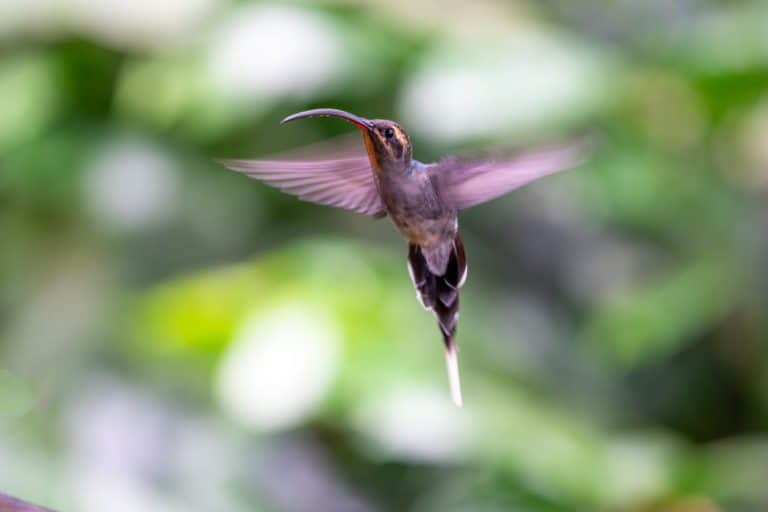
Hummingbirds (family Trochilidae) are tiny, brightly colored birds native to North and South America. There are approximately 375 hummingbird species, with 24 species found in the United States. They inhabit temperate woodlands, mountain meadows, and tropical rainforests. These fast-hovering birds are long-distance migrants that fly south in late summer and fall. Discover why hummingbirds migrate, where they go in the winter, and how you can help them in the colder months.
Why Do Hummingbirds Migrate?
Hummingbirds migrate in response to shorter days and declining availability of food sources like flowers, nectar, and insects. During the fall, hummingbirds migrate south from their breeding grounds in the United States and Canada to their wintering grounds in Mexico and Central America, where they find warmer climates and reliable food sources. In the spring, they migrate back north from Central America and Mexico to the United States and Canada, returning to their breeding grounds as food sources replenish.
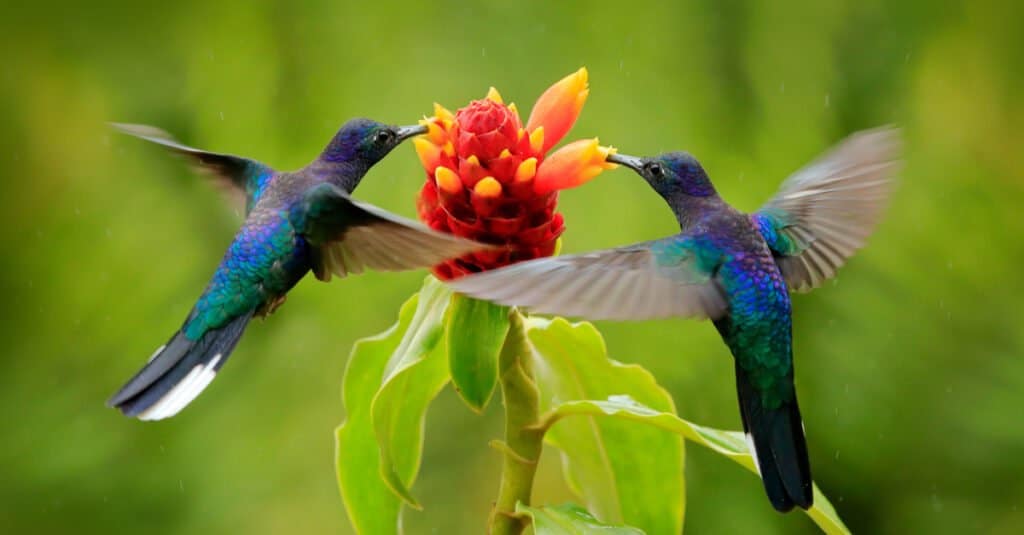
It takes hummingbirds several weeks to complete their full migration.
©Ondrej Prosicky/Shutterstock.com
Where Do Hummingbirds Migrate in the Winter?
Most North American hummingbirds fly south in late summer or early fall to their wintering grounds in Mexico and Central America. A hummingbird’s winter destination depends entirely on its species, although global warming is actively shifting their traditional migration habits by making more northern areas tolerable during the colder months.
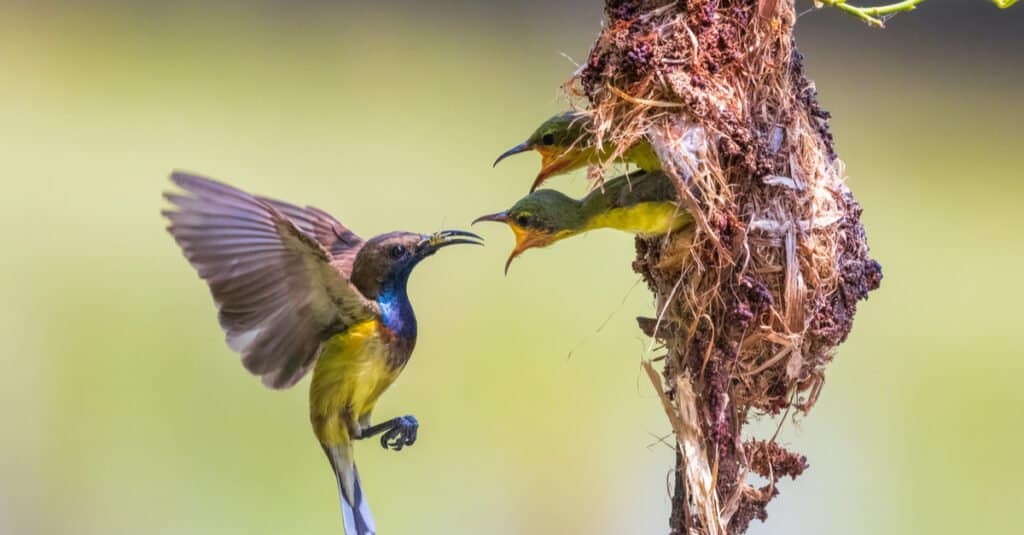
Hummingbirds can live in relatively cold weather, slowing their heart rate down when resting.
©ukrit.wa/Shutterstock.com
Historically, most North American hummingbirds embarked on long-distance flights to Central America or Mexico. However, warmer winters have allowed an increasing number of birds, such as the Ruby-throated, Rufous, and Black-chinned hummingbirds, to shorten their journeys and safely overwinter in the Southeastern and Gulf Coast regions of the United States.
Highly adaptable species like Anna’s hummingbird have taken advantage of the shifting climate to establish year-round, non-migratory habitats stretching up the Pacific Coast from Baja California into British Columbia.
Ruby-throated Hummingbird
The ruby-throated hummingbird is emerald green with a bright iridescent throat and lives in open woodlands and meadows. This bird breeds throughout most of the Eastern United States and in south-central and southeastern Canada. Most migrate by flying over the Gulf of Mexico and spend their winters in Central America. Some northern populations overwinter in southern Florida.
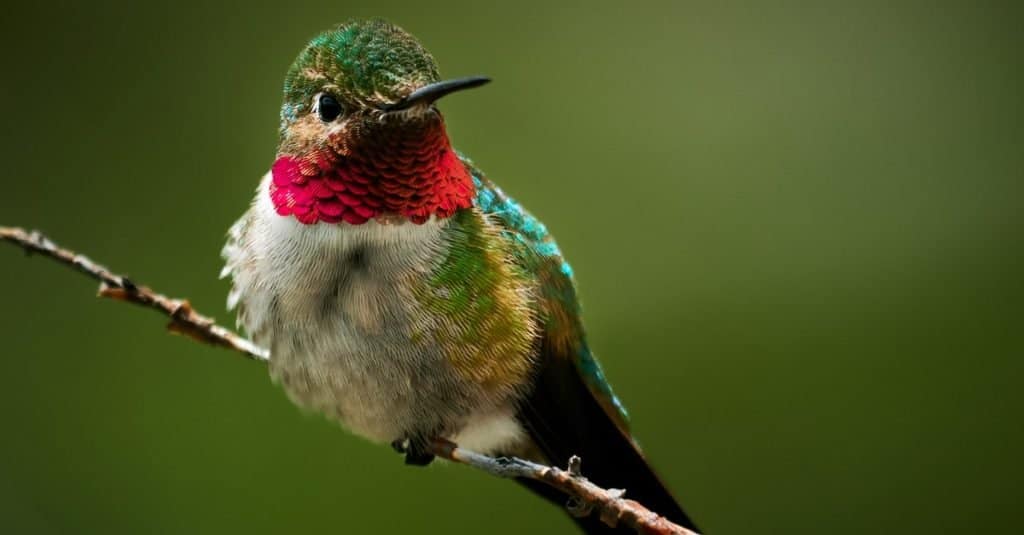
Rocky Mountain Ruby-Throated Hummingbirds spend their winters in warm Mexico.
©CounselorB/Shutterstock.com
Rufous Hummingbird
This feisty bird is reddish-brown with an orangish iridescent throat and spends its days aggressively visiting flowers. They live in backyards and forests and travel 4,000 miles during migration. They breed along the western coast of Canada, the southeastern tip of Alaska, and the Pacific Northwest in the US.
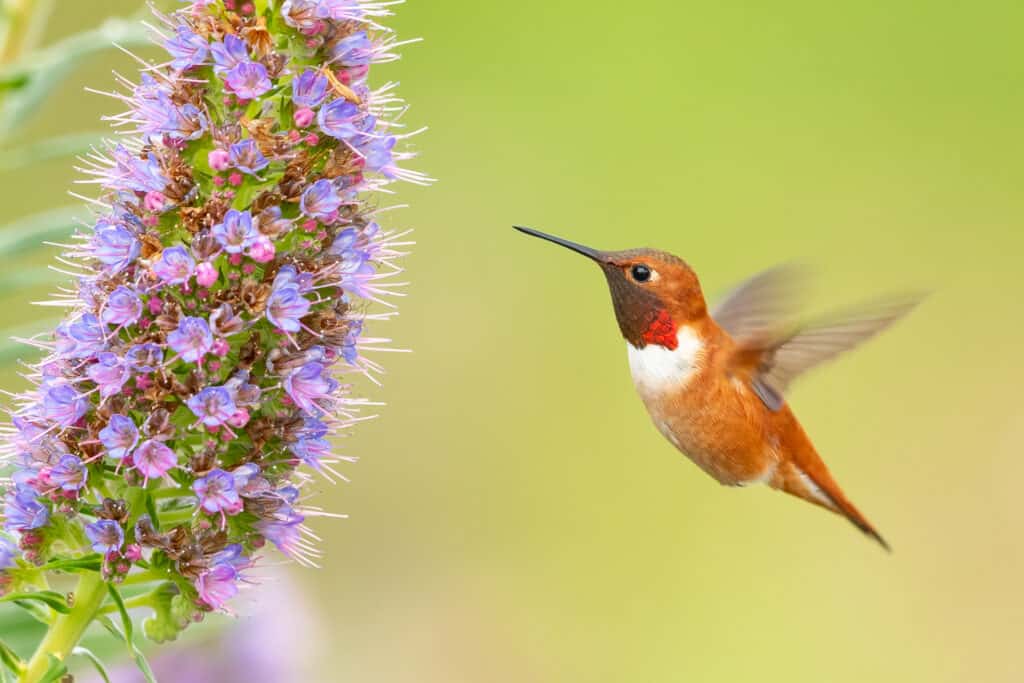
Male Rufous Hummingbirds are brightly colored, with a reddish-orange face.
©Keneva Photography/Shutterstock.com
They migrate through the western half of the United States and spend their winters in Mexico, while recently extending their winter range to include the U.S. Gulf Coast. This shift has been documented by researchers and bird-banders who track their wintering populations.
Anna’s Hummingbird
Anna’s hummingbird is a common West Coast hummingbird that is green and grey with reddish-pink feathers around its head and throat. They inhabit backyards, parks, and coastal scrub habitats and are permanent residents throughout most of their range.
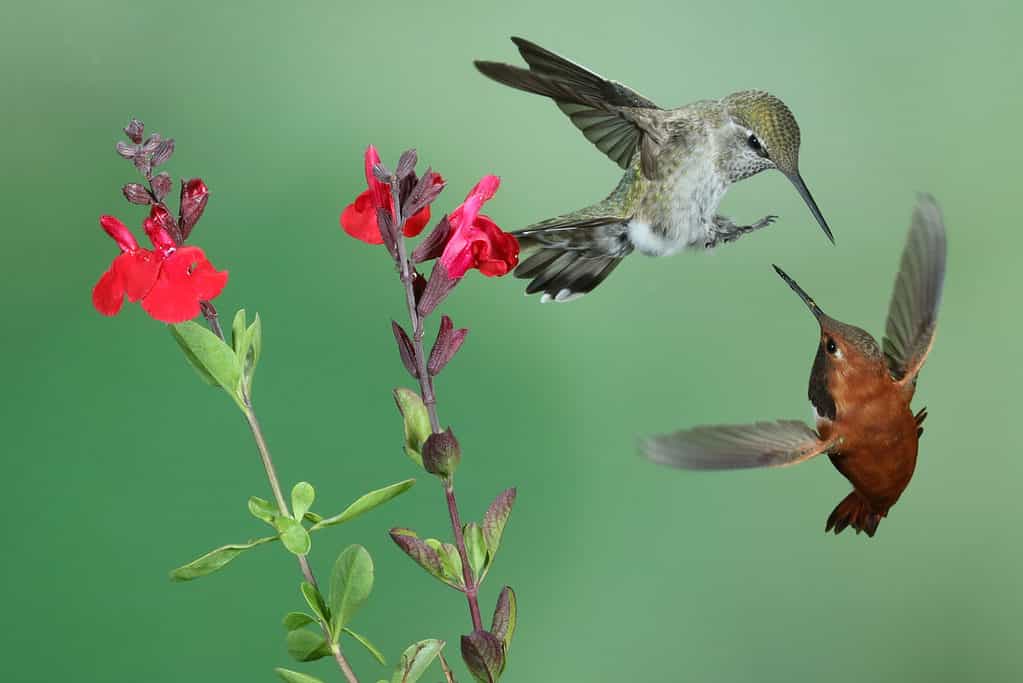
This common west coast hummingbird is green and grey with reddish-pink feathers around its head and throat.
©iStock.com/Jedlovec
They live year-round along the United States West Coast. Some populations breed in Oregon and California and migrate a short distance to winter in Northern Mexico and the Southwestern United States (Arizona, Nevada, and New Mexico).
Broad-tailed Hummingbird
The broad-tailed hummingbird is iridescent green with a white chest and magenta throat patch. They inhabit elevations from roughly 5,000 to 11,000 feet and live in mountain meadows and evergreen forests.
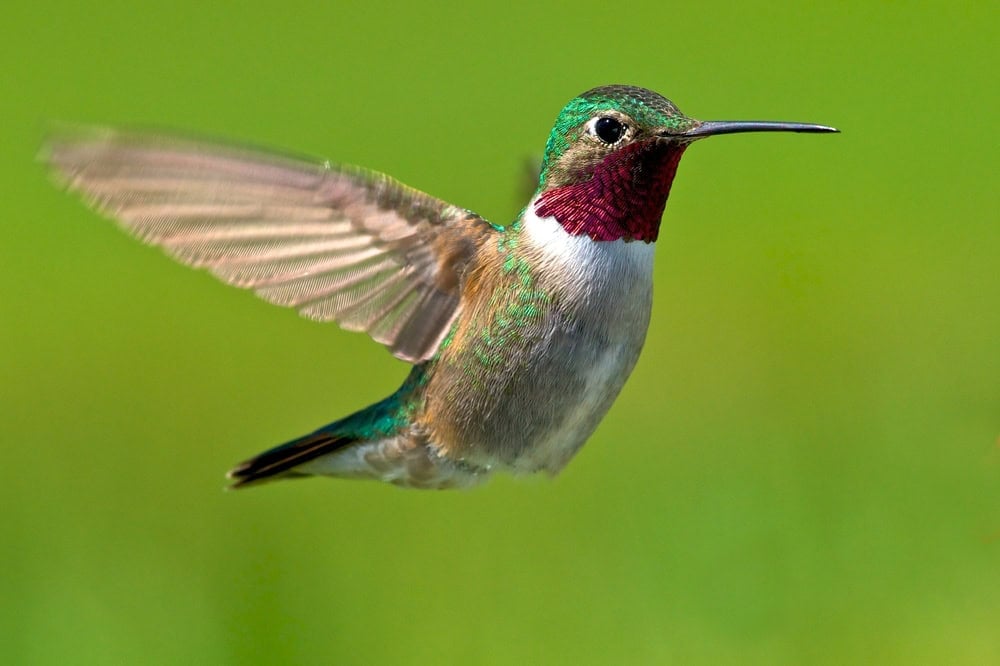
You will almost always hear a broad-tailed hummingbird before you see them. Adult males have specially modified, tapered wingtip feathers that create a loud, cricket-like trill when they fly, which they use to signal their presence and defend their territory.
©Dec Hogan/Shutterstock.com
Some populations live year-round in the mountains of Mexico, while others breed in the western half of the United States and migrate a short distance to Mexico in the winter.
Calliope Hummingbird
The Calliope is the smallest bird in North America, measuring three inches long and weighing 0.1 ounces. This green and grey bird has iridescent magenta stripes on its throat. These long-distance migrants breed in Southwestern Canada and the Northwestern United States. They migrate south along the Rocky Mountains before reaching Mexico, as far south as Oaxaca.
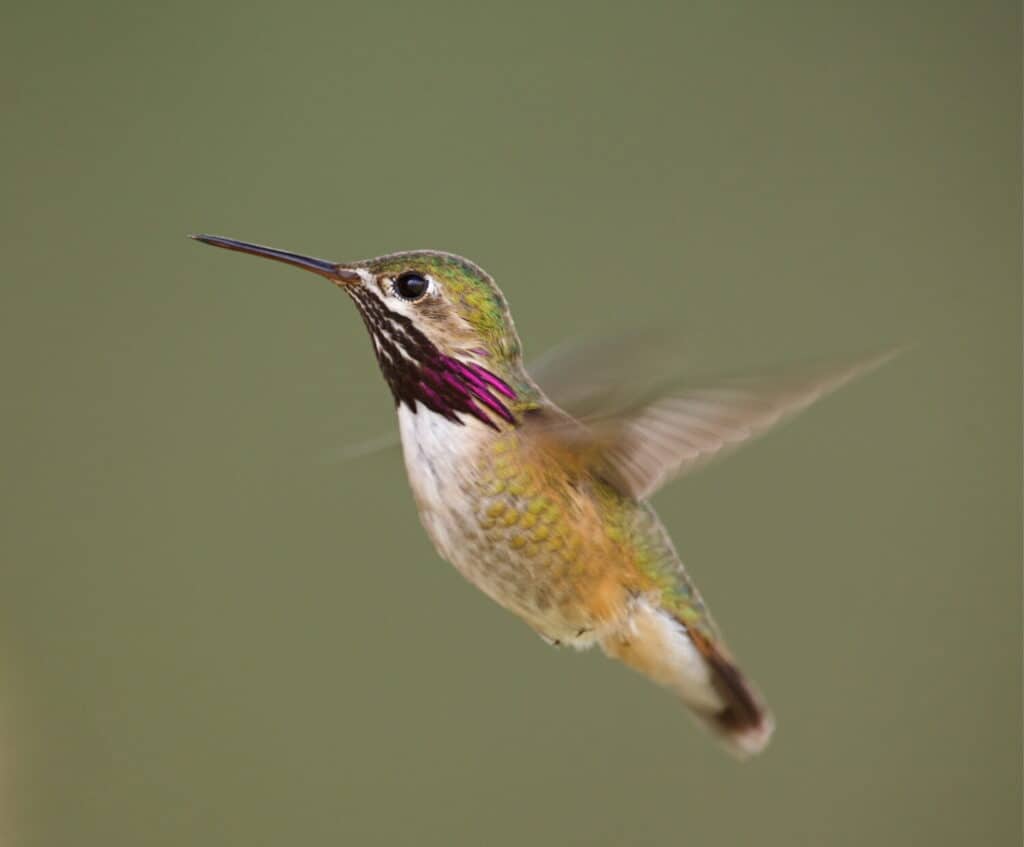
The Calliope hummingbird is the smallest bird in North America
©Tom Reichner/Shutterstock.com
Do Hummingbirds Come Back to the Same Place Every Year?
Hummingbirds rely on an incredibly powerful spatial memory to return to the same breeding grounds year after year. Some return so reliably that they arrive on the same day each year. During the breeding season, females will return to the same nest, and hummingbirds will also return to specific backyard feeders, remembering precisely where they are located. Field studies indicate these birds can remember the location of rewarding patches of flowers.
How Can We Help Hummingbirds in the Winter?
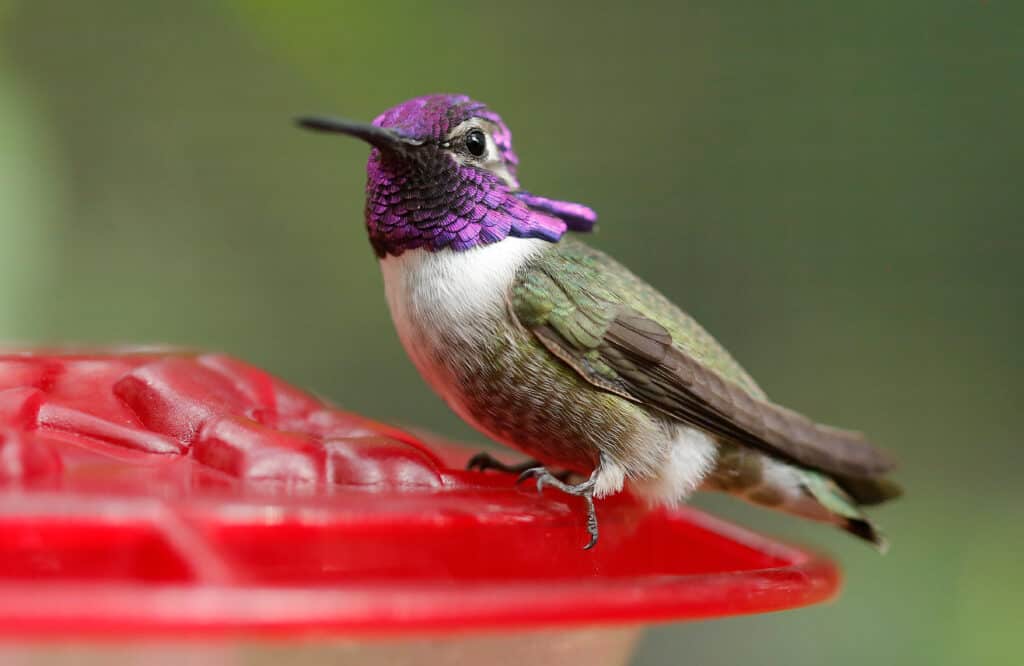
A hummingbird feeder with sugar water will attract hummingbirds and supplement the nectar they gather.
©Rick Scuteri/Shutterstock.com
Hummingbirds can live in relatively cold weather by slowing their heart rate when resting.
The best way to help these birds through the winter is to keep them fed. Keep your feeder clean, full, and thawed, putting it out in the early morning and late afternoon. As long as these birds have full bellies, they can survive the cold.