
There are over 360 hummingbird species in the family Trochilidae. Beating their wings up to 80 times a second, these amazing birds can complete deft aerial maneuvers and even fly backward without a hitch. In order to execute these physically demanding flights of fancy, however, their heart rate can easily reach more than a thousand beats per minute. Therefore, they need a diet to support their active lifestyles. People often have hummingbird feeders in their yards to attract these colorful creatures. Yet, what do hummingbirds actually eat?
The Hummingbird Metabolism
The hummingbird is best described as an omnivore. It requires a steady supply of flower nectar, supplemented with plenty of insects, to sustain its rapid wing beats. Researchers estimate that hummingbirds need the human equivalent of at least 150,000 calories a day.
So it should come as no surprise that, when in flight, the hummingbird has the highest metabolic rate of any known vertebrate. When they’re not hovering or perching, which is only about 20% of the time, the hummingbird enters a state of sleep in which its heart rate and breathing slow to conserve energy and digest food.
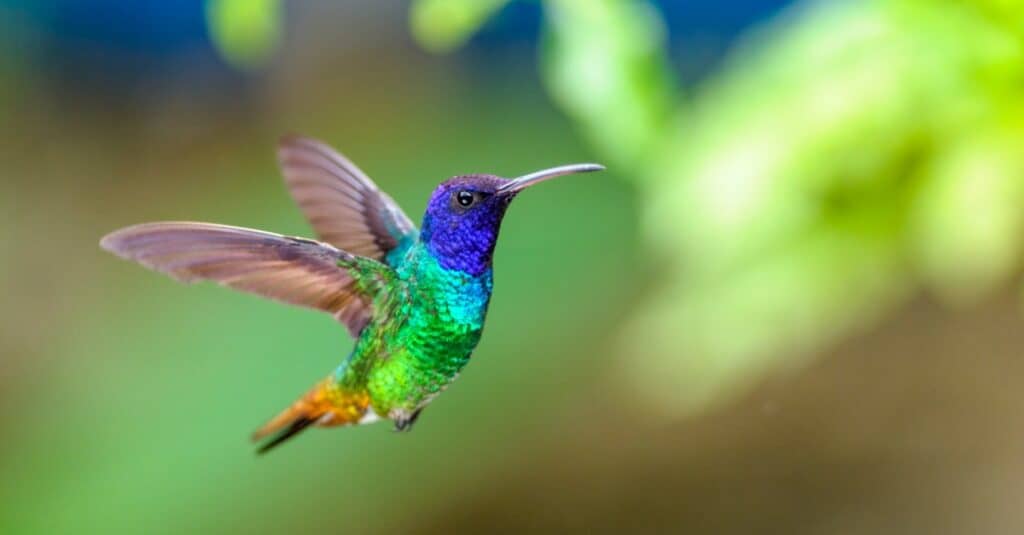
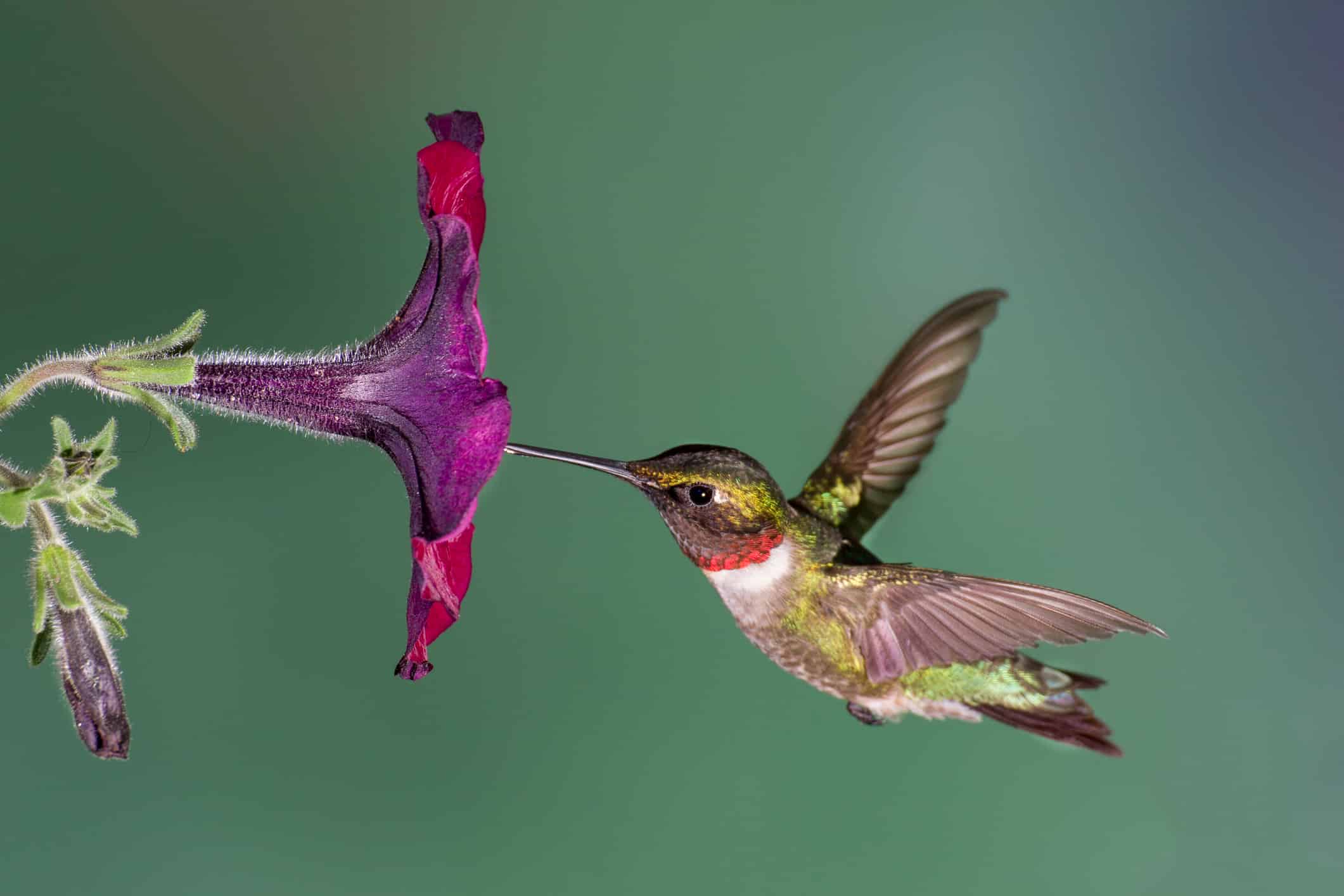
Hummingbirds beat their wings up to 80 times per second.
©iStock.com/photofxs68
What Does a Hummingbird Eat?
The ratio of nectar to insects varies depending on the season and the habitat in which the hummingbird resides. Most hummingbirds drink up to two times their body weight each day. However, some hummingbirds may be more dependent on insects and other invertebrates than once believed. Insects are an important source of protein, and in some species, they may be the hummingbird’s main source of food.
Hummingbirds do not eat the leaves or buds of trees. However, sometimes, they will take advantage of a situation created by the sapsucker, a type of woodpecker that drills rows of holes in trees, to feed on the sap inside. The tree sap is similar to the sugar content found in nectar and therefore provides a good alternative food source. Some hummingbirds will even follow the sapsucker from tree to tree to eat from the holes the sapsuckers make.
Although the list can vary by species and habitat, hummingbirds typically eat the following foods:
- Nectar
- Sap
- Spiders
- Aphids
- Weevils
- Mosquitoes
- Beetles
- Fruit flies
- Ants
- Gnats
How Do Hummingbirds Eat?
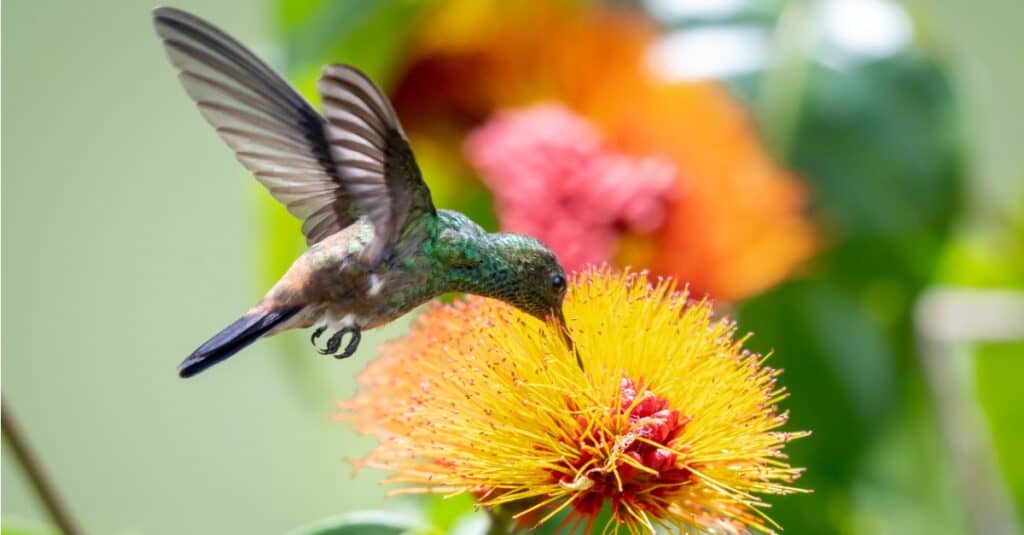
Hummingbirds tend to eat nectar from flowers in shades of red, orange, and pink.
©iStock.com/Chelsea Sampson
Hummingbirds have evolved a highly dependent relationship with the local flowers in their ecosystem. Their long, narrow bills and tubular tongues are specially shaped to allow them to slurp nectar directly from the base of flowers. When they drink, the hummingbird will open its bill slightly and lap up the liquid with its tongue. In return for this nectar, hummingbirds carry pollen as they move from one food source to the next.
Researchers have found that flower color can indicate the availability of resources to pollinators. Most of the flowers hummingbirds frequent are red, orange, and pink. Previously, it was believed that hummingbirds were particularly drawn to these colors. However, more recent research has suggested that, as bees tend to avoid these colors, hummingbirds are actually visiting flowers that have not been visited by bees. Hummingbirds are very good at assessing the sugar content of nectar by taste and will reject any flower that does not meet their high standards.
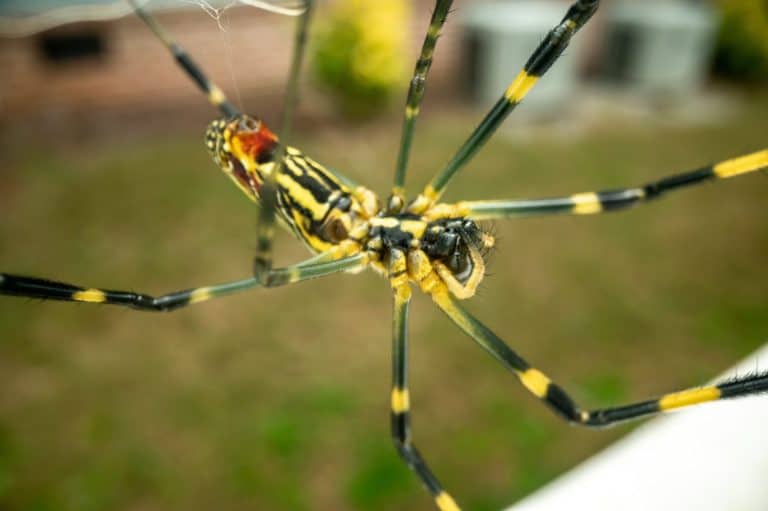
It may be somewhat surprising, then, that these highly specialized nectar feeders are also very adept at hunting insects. They employ multiple hunting strategies. One strategy is called hover-gleaning. This occurs when the bird hovers a few inches from a food source, such as a spider web or plant, and captures the prey with its beak and tongue. Another method is called hover-hawking. This occurs when the hummingbird zigzags through a swarm of insects and picks them off one at a time. Hummingbirds will also wait patiently on a perch before swooping down to snatch their prey.
What Can I Feed Backyard Hummingbirds Besides Sugar Water?
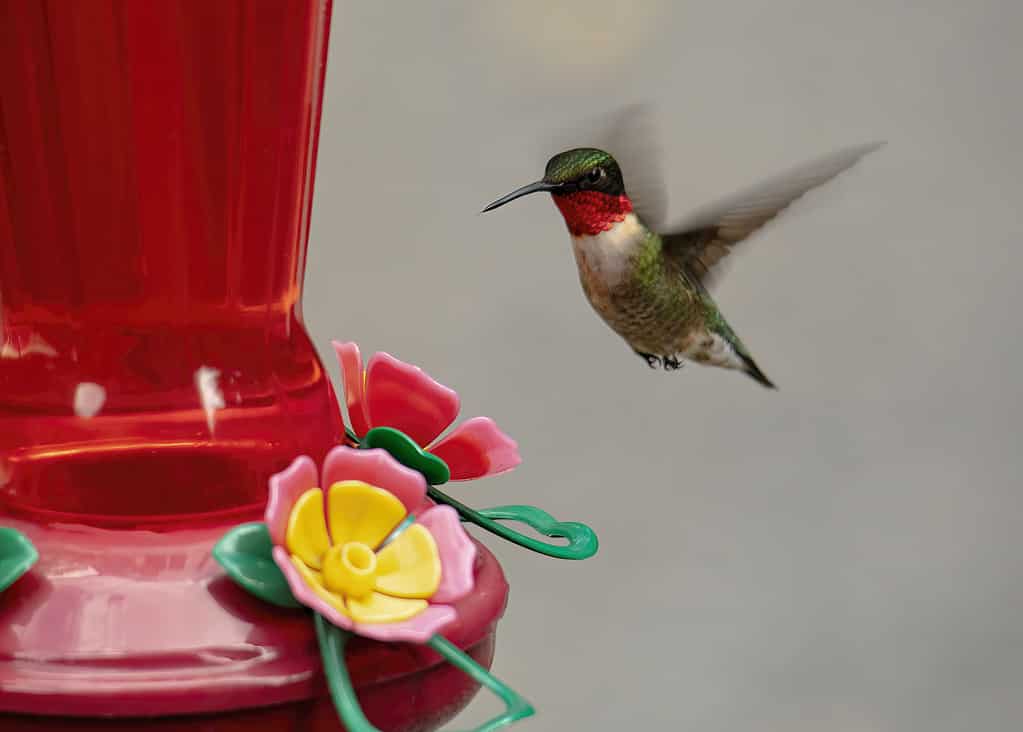
Feeders filled with a mixture of refined sugar and water provide a suitable meal for your backyard hummingbirds.
©CharlieFloyd/iStock via Getty Images
A mixture of refined sugar and water is the safest and most effective food to offer hummingbirds in feeders, according to expert recommendations. Artificial sweeteners should be avoided, as they lack nutritional value and may contain ingredients that could prove harmful to the birds. Adding red food coloring is unnecessary, and petroleum-based dyes like Red Dye #40 can be detrimental to hummingbirds.
Hummingbird feeders filled with sugar water should provide your backyard hummingbirds a suitable meal. However, as noted above, they also eat small insects and spiders. Consider using natural pest control methods in your garden so you do not kill the insects that hummingbirds feed on. A birdbath or another source of water may also prove beneficial.