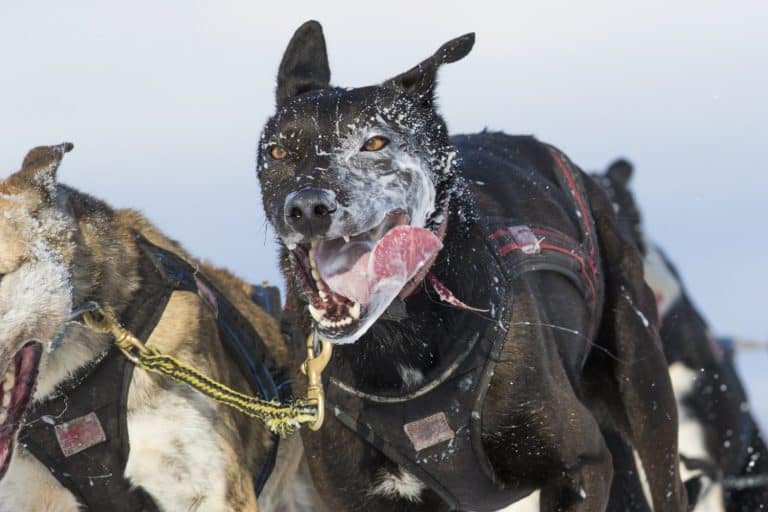

The husky is a type of northern sled dog that’s well-adapted for the cold Arctic terrain from which it originated. These breeds share many traits, including muscular and athletic bodies, deep chests, thick double coats, webbed paws (for traveling over snow), intelligent minds, and an effortless gait. In the distant past, it’s believed that they were mixed in with wild wolves. This heritage has given them a remarkably wolf-like appearance. But despite some misconceptions, they’re not wolf-dog hybrids.
1. Siberian Husky
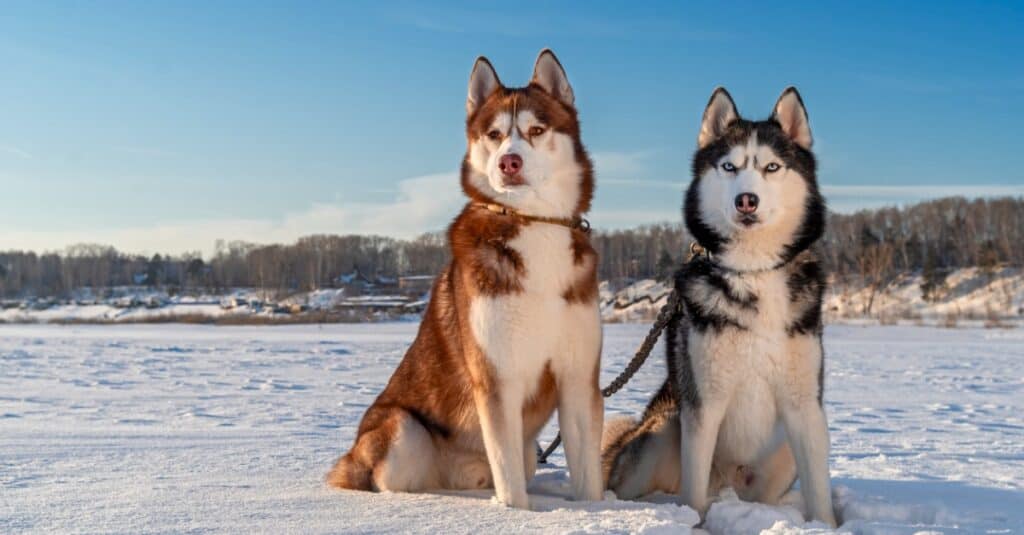
The most well-known type of husky, the Siberian Husky, is built for the cold.
©iStock.com/Автор
The Siberian Husky is the most well-known of all husky dogs. The Siberian Husky remains one of the more popular dog breeds in the United States. Originating from the Chukchi people of Northern Siberia, the ancestor of the modern Siberian Husky was bred for hauling light loads over long distances in sub-zero temperatures. The modern breed came to international prominence in 1925 when legendary musher Leonhard Seppala completed a 658-mile trip over five and a half days to Nome, Alaska, with his team of Siberian Huskies.
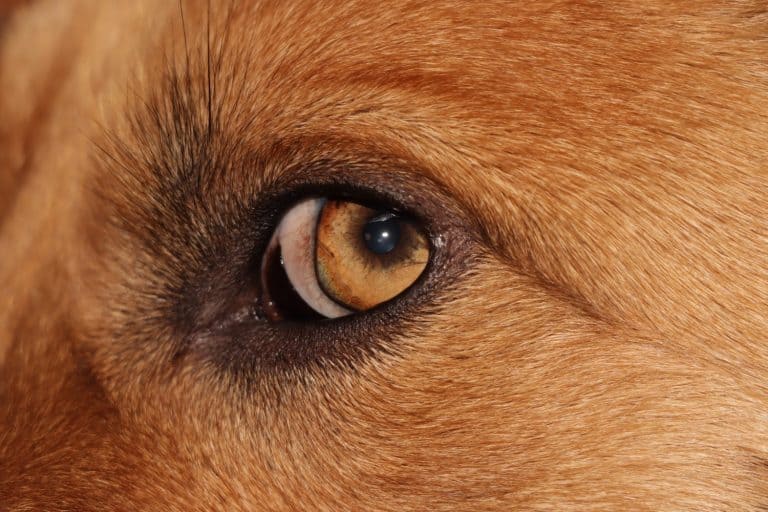
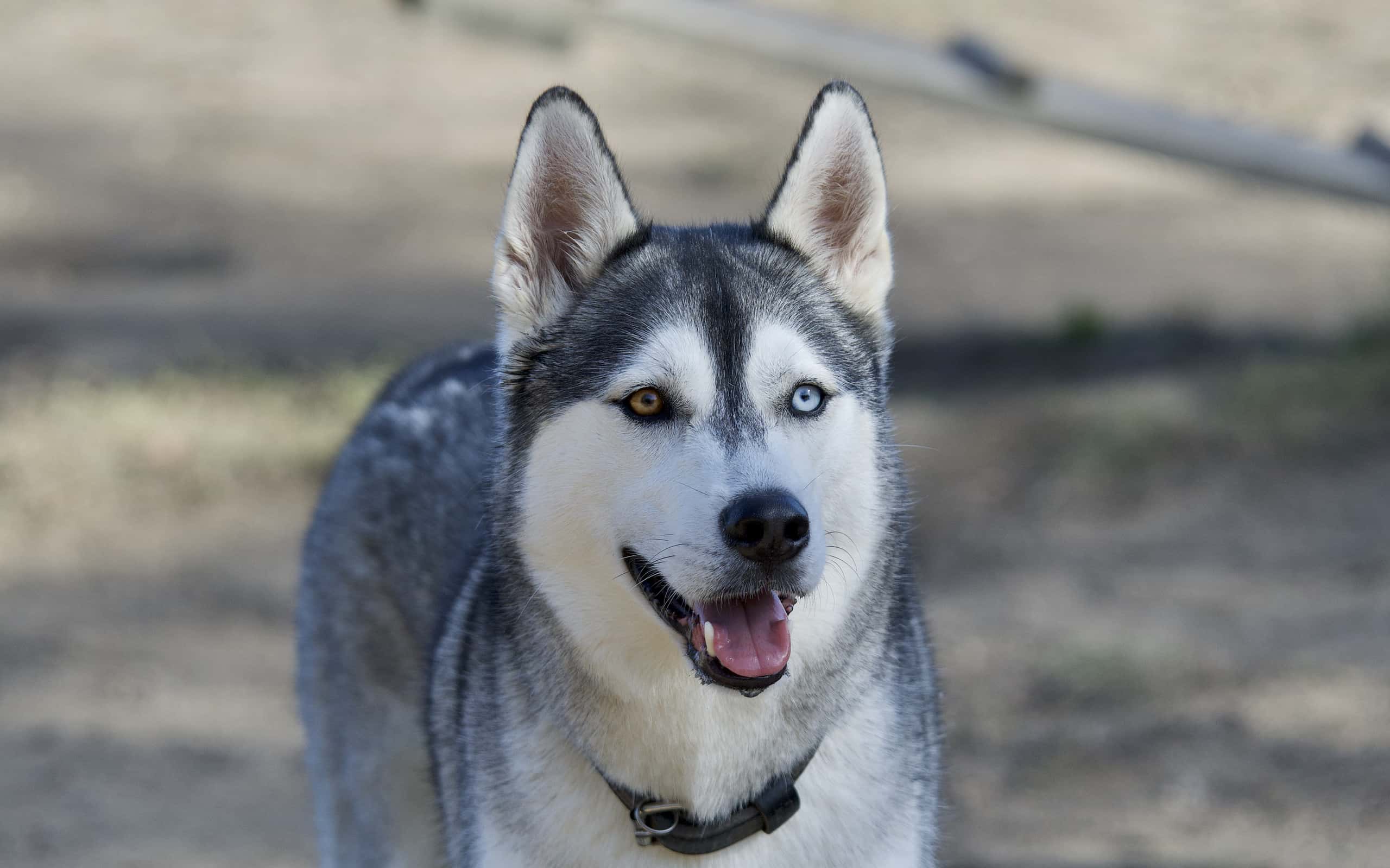
This breed is medium-sized, typically weighing 35 to 60 pounds, depending on sex and individual size. It has a thick double coat of black, white, grey, sable, and red fur with saddleback markings and a facial mask. Heterochromia, the phenomenon of two different colored irises, is a common trait in this breed. This trait does not negatively affect the dogs’ vision. While they do suffer from hip and eye problems, this breed has a long life expectancy of around 12 to 14 years. It is an extremely affectionate, loyal, outgoing, playful, and mischievous breed.
2. Miniature Siberian Husky
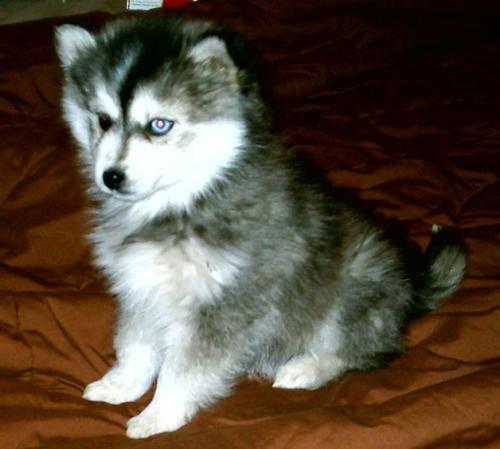
They are like Siberian Huskies, only smaller.
©courtesy of Minihuskies at English Wikipedia, Public domain, via Wikimedia Commons – Original
For owners who don’t want to deal with such a large dog, some breeders have developed a small version called the Miniature Siberian Husky. Its defining trait is the comparatively small, almost puppy-like size. This dog stands up to 16 inches at the shoulders and weighs no more than 35 pounds as an adult. The temperament and behavior are the same as those of the Siberian Husky; however, its small size doesn’t conform exactly to breed standards, and it is disqualified from purebred status.
3. Alaskan Husky
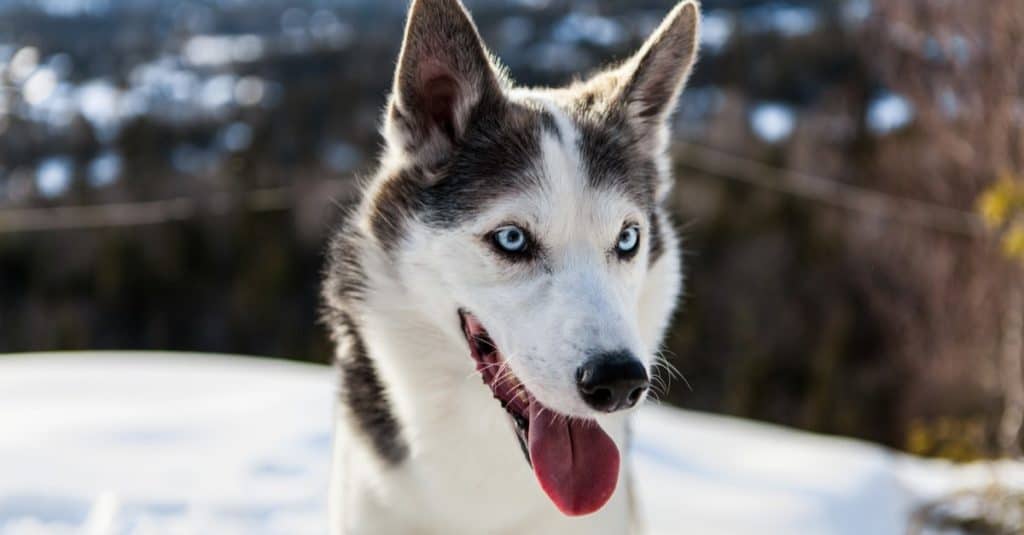
An Alaskan husky dog enjoying the winter on the top of a mountain.
©Valmedia/Shutterstock.com
The Alaskan Husky was bred with one thing in mind: pulling sleds. All other characteristics, including its appearance, are secondary to its performance. These dogs were created over many years from crosses with different breeds, including German Shepherds and Greyhounds. Therefore, many dog clubs and organizations won’t recognize them as legitimate breeds.
The Alaskan Husky is perhaps the most common sled dog in the world today. It’s not quite as well-suited to being a family companion unless it’s given a lot of work and exercise. The Alaskan Husky is a medium-sized dog, normally weighing around 38 to 50 pounds. It is characterized by a short to medium-length coat with any color or pattern accepted.
4. Alaskan Malamute
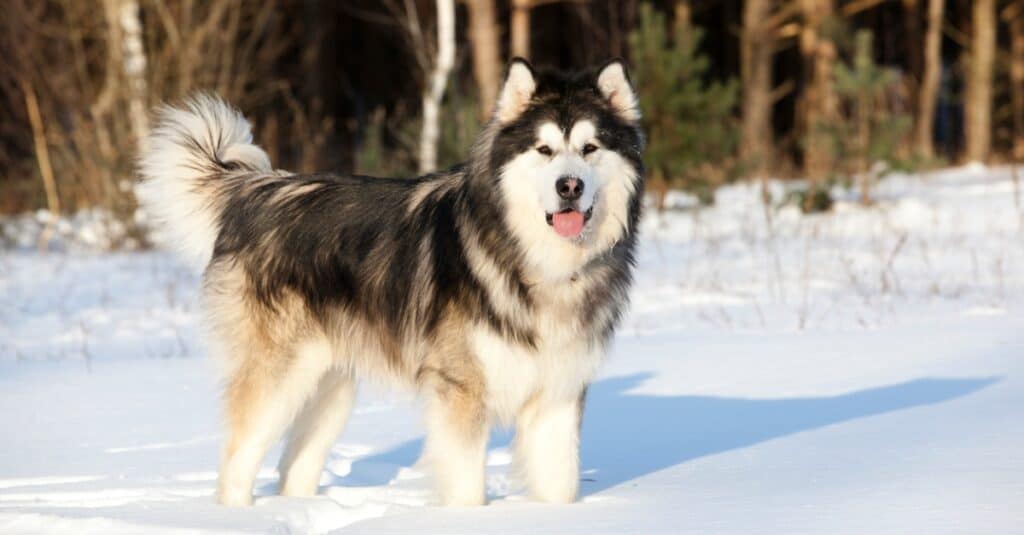
An Alaskan Malamute out in the snow.
©iStock.com/Liliya Kulianionak
An immensely strong and heavy dog weighing up to 85 pounds, the Alaskan Malamute descended directly from the first dogs to arrive in the Americas. It is highly affectionate, loyal, and playful, but it also has a rather dignified bearing with the way it carries itself. This breed is characterized by white fur with black, blue, gray, red, sable, or silver colors mixed in. The typical life expectancy is about 12 to 13 years.
5. Samoyed
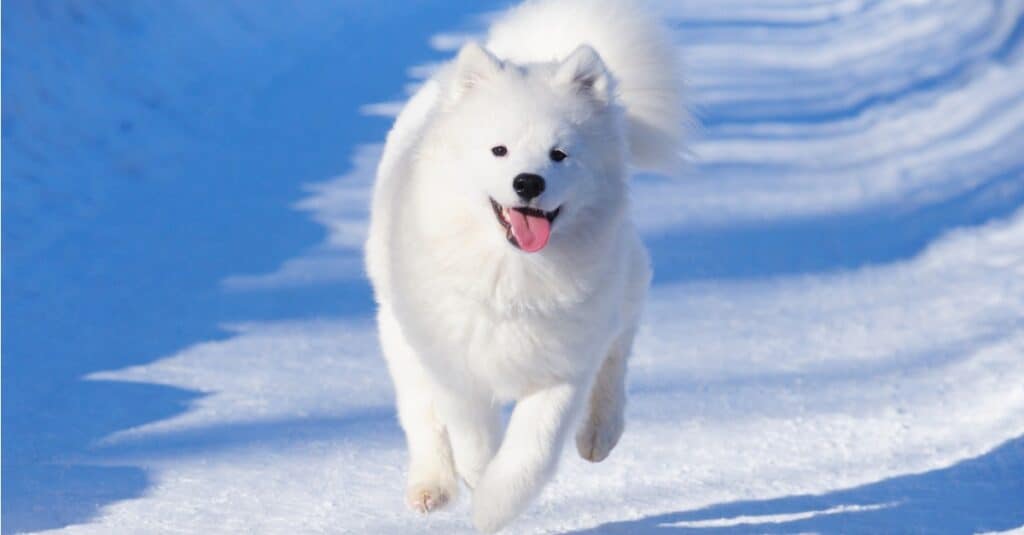
A Samoyed running in the snow.
©iStock.com/Abramova_Kseniya
There is some debate about whether the Samoyed should be considered one of the many types of husky dogs. This breed was developed by the Samoyedic people of Siberia as an all-purpose working dog to herd reindeer and hunt prey. Nevertheless, it is also a talented sled dog with a muscular, medium-sized body and boundless energy. Sporting a luxurious all-white coat of fur, the Samoyed is known for its incredibly infectious smile and upbeat personality. It has a life expectancy of 12 to 14 years.
6. Greenland Dog
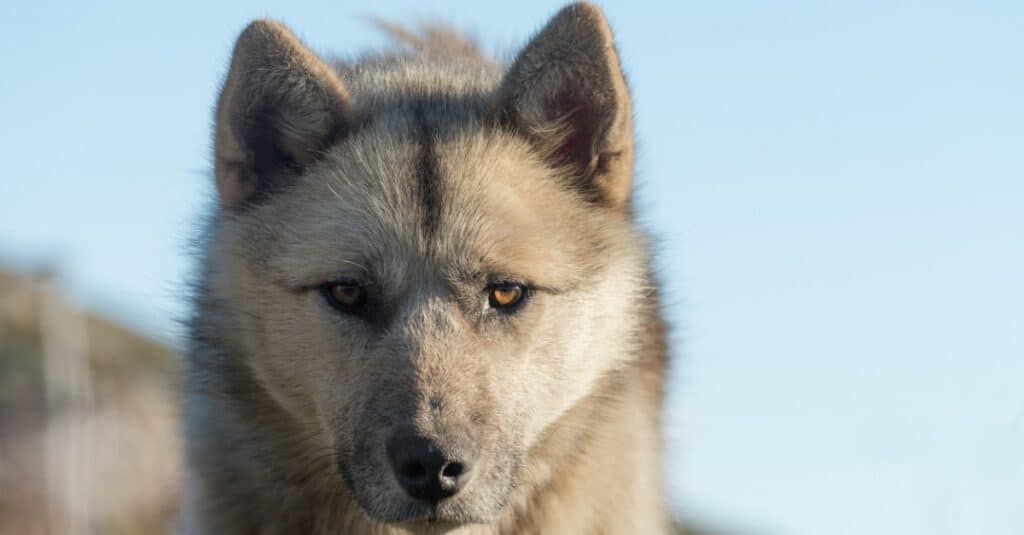
A Greenland dog staring directly into the camera at the viewer.
©LouieLea/Shutterstock.com
Originally brought to the island of Greenland by the Thule people around 1000 AD, the Greenland Dog is an iconic breed of its native homeland. It was historically used to pull sleds and hunt bears and seals. It has a typical husky-like temperament: affectionate, rowdy, independent, and very playful. As a result, training this breed can be quite a challenge; raising a puppy is not for the faint of heart. The dog has a thick double coat of black, white, fawn, brown, and many other possible color combinations.
7. Canadian Eskimo Dog
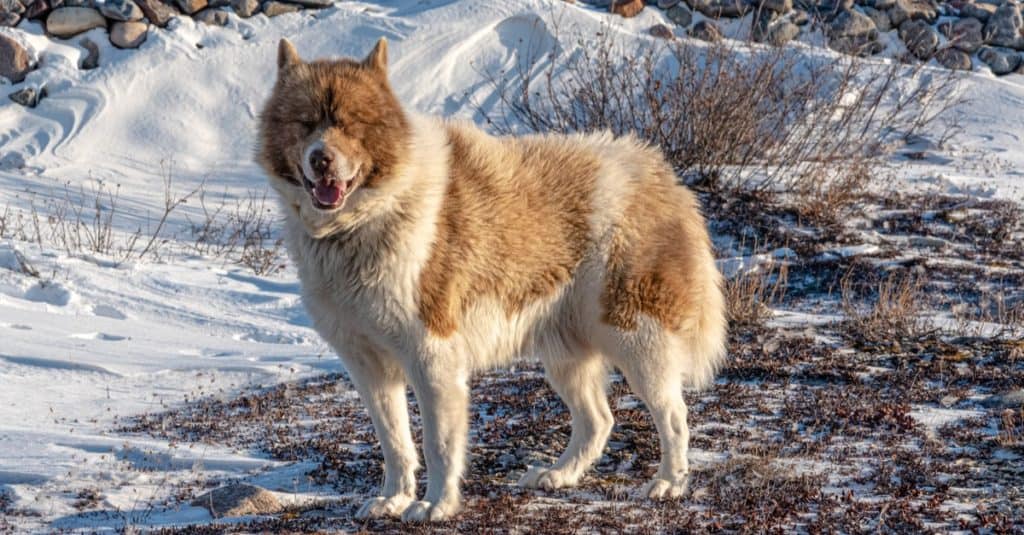
A rare Canadian Eskimo dog on the shores of icy Hudson Bay in Northern Manitoba, Canada.
©Scalia Media/Shutterstock.com
Some people consider the Canadian Eskimo Dog to be the same breed as the Greenland Dog, as both have a very similar temperament and appearance. Their nearly identical genetic profiles also attest to their similar origins. But the Canadian Eskimo is considered to be slightly heavier than the Greenland Dog, with a thick mane of fur around the entire neck. Just about any color combination and markings is accepted for this breed.
8. Labrador Husky
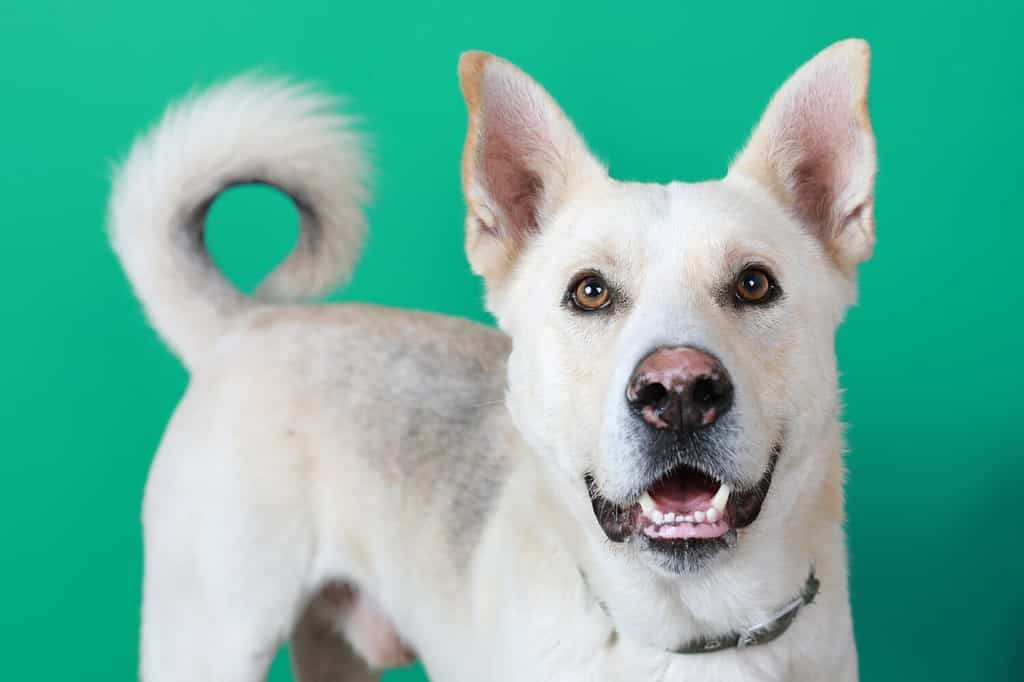
Labrador huskies excel in search and rescue and drug detection.
©Bernard Khalil/Shutterstock.com
This exceptionally rare breed is not, as some people may assume, a cross between a Labrador Retriever and a Siberian Husky. Instead, this is an entirely separate breed with its own unique identity and history. It was brought to the Labrador region of Canada by the Inuit people around 1300 AD. While distantly related to the Siberian Husky, it nevertheless has a very similar appearance, affectionate temperament, and hard-working behavior. This large breed weighs up to 90 pounds and stands around 26 inches at the shoulders. The dense, wavy coat comes in black, brown, red, gray, white, and even pied colors.
9. Mackenzie River Husky
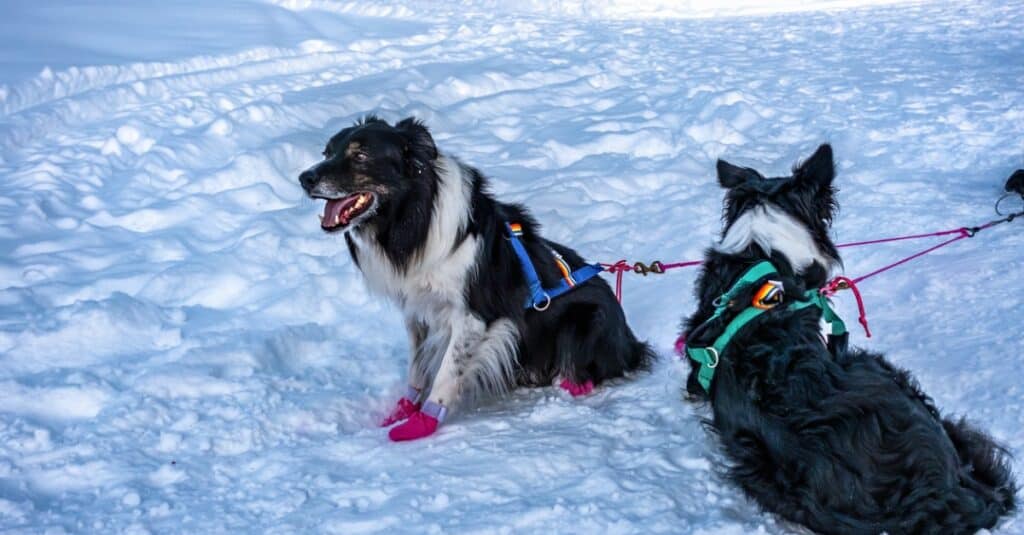
A Mackenzie River Husky wearing mittens out in the snow.
©iStock.com/Alexandre Patchine
The Mackenzie River Husky isn’t a well-defined breed. Instead, it’s a general catch-all term for several different overlapping types of dogs from northwestern Canada. It refers to sled dogs from the Yukon Territory region that were crossed with European breeds such as St. Bernard or Newfoundland to create powerful hauling dogs. These dogs are quite rare and not well-known outside of their homeland.
10. Sakhalin Husky
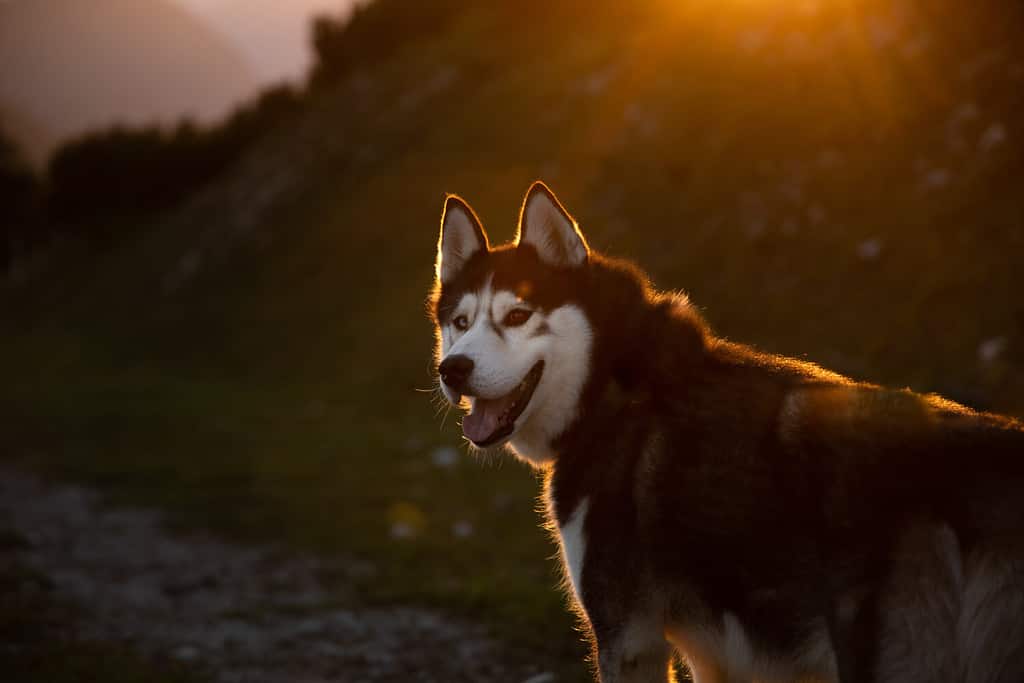
A lone Sakhalin husky walking in the mountains at sunset in Austria, Tauplitz.
©Wirestock Creators/Shutterstock.com
The Sakhalin Husky is another rare breed. As the name suggests, it originated from the island of Sakhalin, north of Japan, now part of Russia. Originally known as Karafuto-ken, they were bred by the Nivkh people of Eastern Siberia (also known as the Gilyak). These canines are incredibly hardy and athletic, capable of covering vast distances in a day and contributing to sled teams that can collectively haul heavy loads over long distances.
This relatively large-sized dog, weighing between 66 to 88 pounds, is characterized by black, russet, and cream markings. It is alert, loyal, intelligent, and active. Unfortunately, they are critically endangered.