
Quick Take
- One of these insects can turn a tree leaf into a sound amplifier, and it is not the one you would expect. See the leaf megaphone trick →
- A tiny water-dwelling bug produces nearly 100 decibels of sound using a body part you'd never guess, making it louder than most concert halls. Discover the tiny loud bug →
- Male cicadas have a built-in self-defense trick that protects them while singing, and it involves temporarily disabling one of their own senses. Explore cicadas' hearing trick →
- The name 'katydid' isn't random, as it actually hides an auditory clue that reveals exactly how these insects communicate at night. Uncover the name's hidden clue →
If you’re going camping, you’re certainly expecting to hear various bug sounds throughout the night. You’ll probably even enjoy listening to them. However, if you’re at home preparing for a day at work, the nocturnal singing outside your house might cause you to lose sleep. Even though identifying which insects are making the sounds you’re hearing won’t solve the problem, at least you’ll know exactly what bug(s) is keeping you awake.
Katydid
| Category | Katydid |
|---|---|
| Scientific classification | Tettigoniidae (family) |
| Distribution | Worldwide, except in Antarctica. Most katydids live in the world’s tropical regions; they are abundant in the Amazon basin rainforest. |
| Unique feature | Leaf-like appearance |
| Sounds | They are capable of producing very loud sounds through stridulation. |
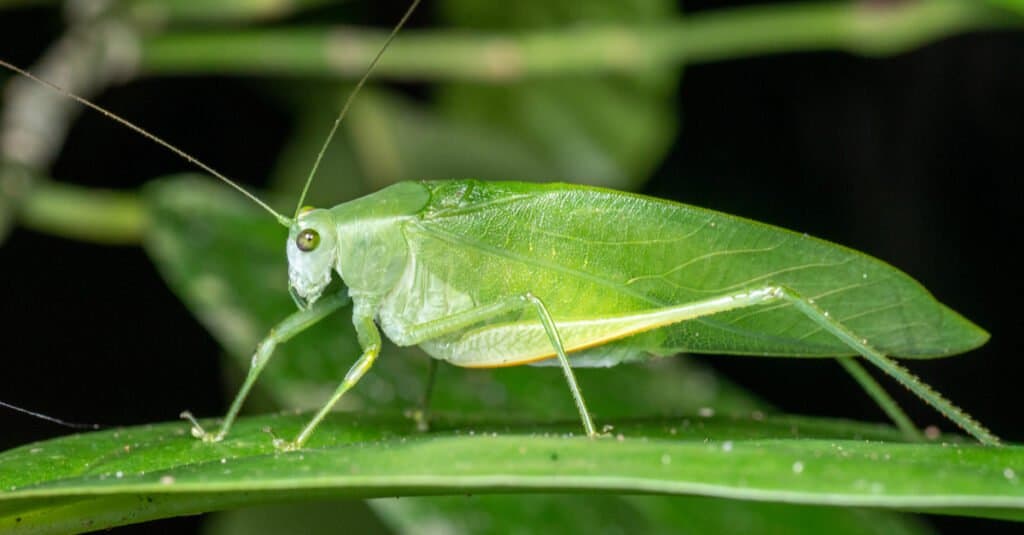
There are 8000 species of katydids around the world, of which approximately 255 are found in North America.
©Peter Yeeles/Shutterstock.com
Katydids are part of the Tettigoniidae family of insects. Both their common name and scientific name are onomatopoeic, reflecting the sounds they make. The name katydid is reminiscent of the insects’ three-pulsed song, ka-ty-did. Katydids produce sounds by stridulation, by rubbing two body parts together. Some katydids can sing so loudly that listening to them at close range can become unbearable.
These insects can vary in size from approximately 0.2 inches to 5 inches long. However, small species are considered more agile and faster than larger ones. Katydids live in trees. Being nocturnal, they are responsible for many of the sounds you hear at night.
Tettigoniids are famous for their leaf-like appearance, and their bodies even mimic the veins of leaves! However, not all 8,000 katydid species are green, and not all feature leaf-like appearances.
Tree Cricket
| Category | Tree Cricket |
|---|---|
| Scientific classification | Oecanthinae (subfamily) |
| Distribution | Worldwide, except in Antarctica |
| Unique feature | Can create a megaphone by using tree leaves to amplify their calls |
| Sounds | Emit long chirping (trilling) sounds |
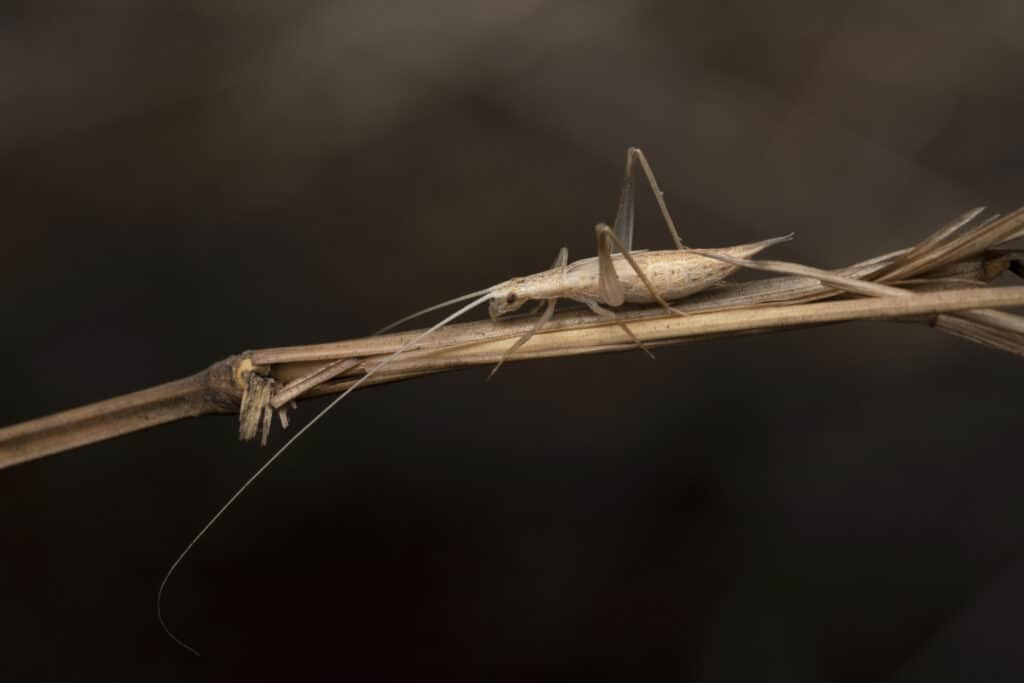
Tree crickets live in shrubs and trees.
©iStock.com/ePhotocorp
Tree crickets are small insects with two pairs of wings. They have long, skinny bodies whose color adapts to their habitat, making them excellent at camouflage. Tree crickets are also excellent jumpers, thanks to their large, powerful legs. They are also sensitive to touch and odor due to the antennae on their heads.
Tree crickets live in shrubs and trees. They’re nocturnal insects and feed on plant matter. Male tree crickets communicate by rubbing the ridges of their wings together. They emit long chirping sounds and sometimes continue chirping for extended periods. Female crickets cannot produce calling sounds.
Beyond disturbing you at night, tree cricket sounds play an essential role in mating. Males have a special mating call produced at specific frequencies. If the male tree cricket cannot produce loud sounds, it uses tree leaves to create a megaphone structure, thus amplifying their mating calls.
The females have hearing organs that help them pick up a wide range of frequencies. In fact, they are among the only insects that can receive such a wide range of frequencies. Females are believed to prefer larger males, and under some conditions may favor the lower-frequency calls that larger males produce, though this preference is not consistent across all species or circumstances.
Field Cricket
| Category | Field Cricket |
|---|---|
| Scientific classification | Gryllus (genus) |
| Distribution | Worldwide. They inhabit meadows, fields, and pastures |
| Unique feature | They have large hind legs that they use for jumping |
| Sounds | Pulsed chirping sounds emitted at intervals of around one second. |
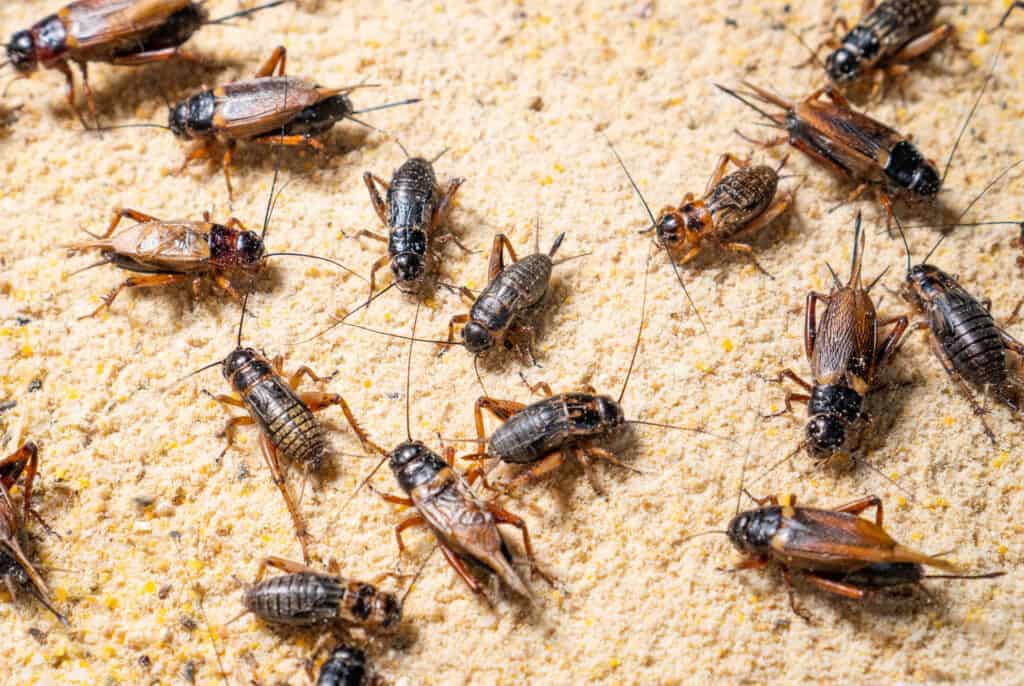
Field crickets are 0.59 – 1.22 inches long and have dark bodies.
©iStock.com/amnat jomjun
Field crickets form the genus Gryllus. They’re 0.59 – 1.02 inches long and have dark bodies. With long antennae and multiple legs, Field crickets are quite unpleasant-looking insects. Besides this, they’re loud singers and can easily disturb your sleep at night.
While it highly depends on the species, field crickets generally prefer dry, sunny locations, where they live in meadows, fields, and pastures. Some field crickets can fly, while others are flightless despite possessing wings. A study (Walker & Sivinski, 1986) on field cricket wing dimorphism shows that it depends on wing length. Field crickets with long wings can fly, while those with short wings are flightless.
Most species emit a short, pulsed chirp produced at intervals of approximately one second. However, to the untrained ear, their calls will sound continuous. Like other insects, field crickets use a calling song to attract females. They also produce courtship songs and rivalry songs.
Cicada
| Category | Cicada |
|---|---|
| Scientific classification | Cicadoidea (superfamily) |
| Distribution | 3,000 species distributed worldwide, living primarily in tropical areas with deciduous trees |
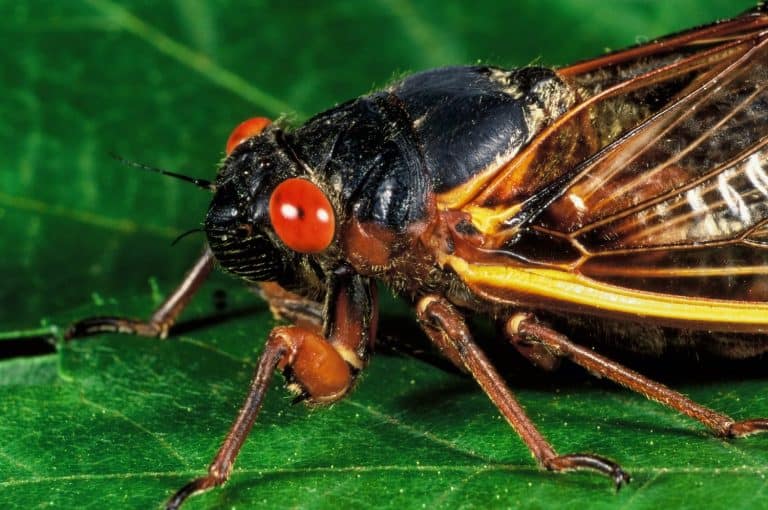
| Unique features | Unique wings that repel water and kill bacteria; prominent eyes; males can deactivate their “ears” while singing. |
| Sounds | Buzzing sounds, high-pitched whines, and rhythmic ticks |
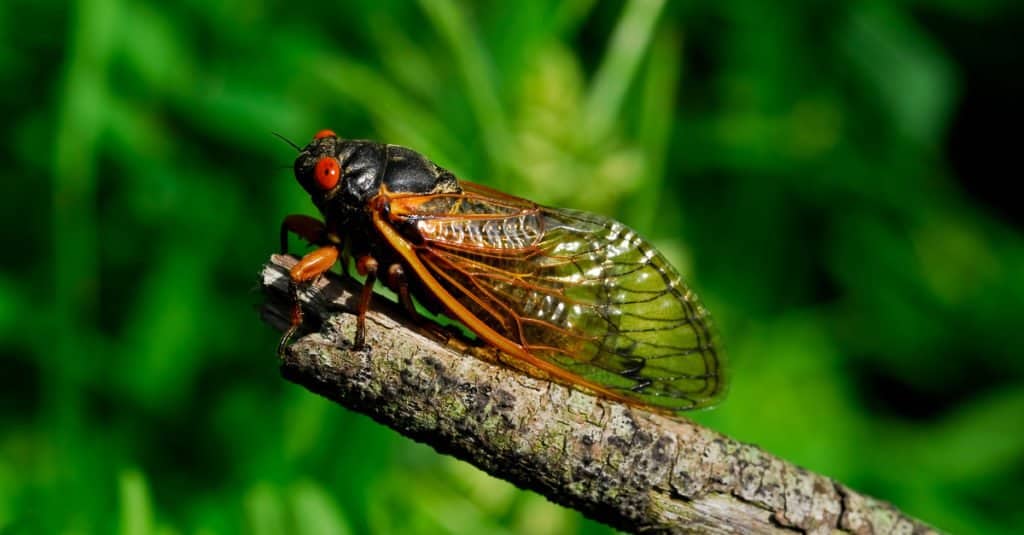
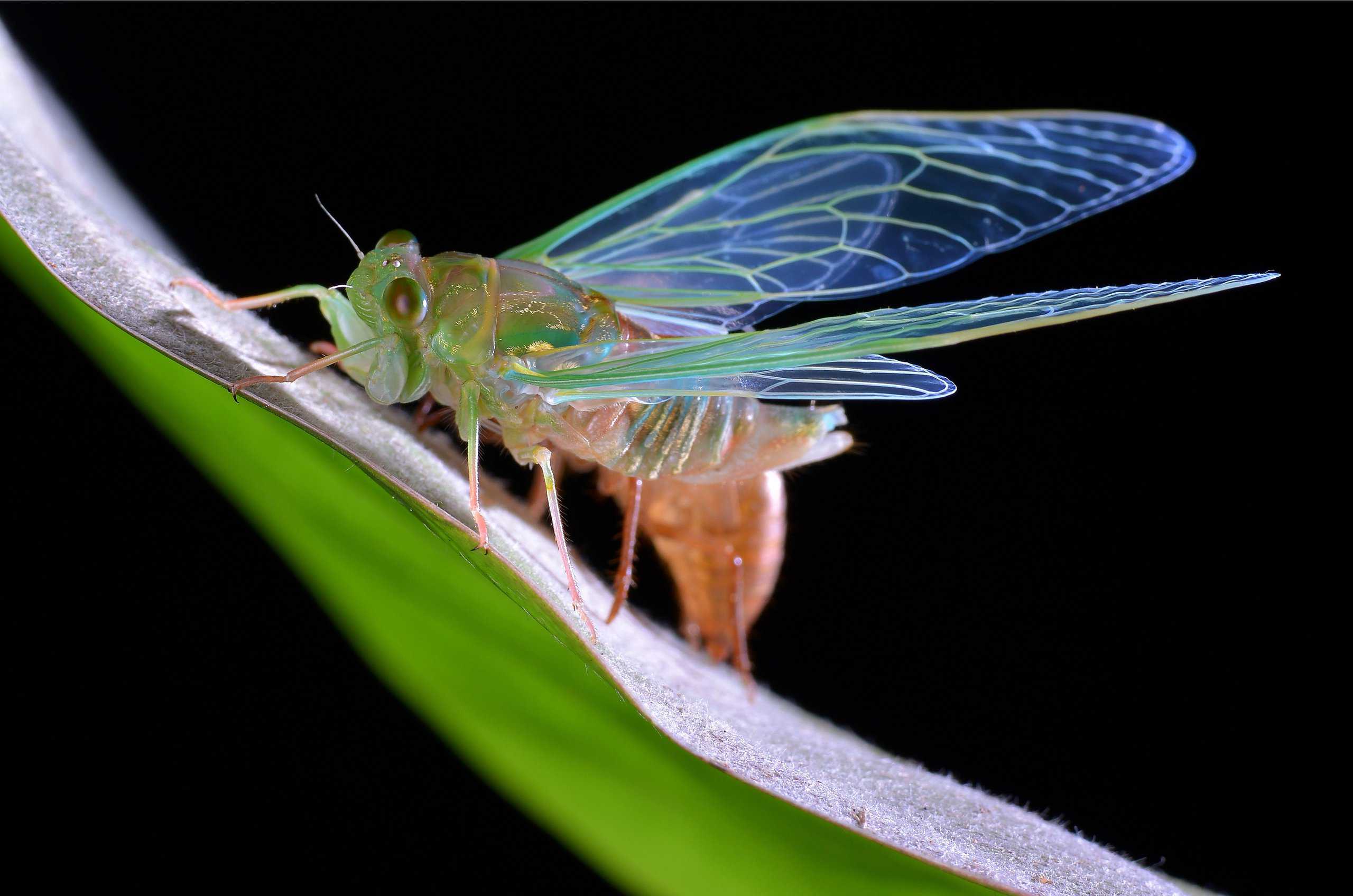
Cicadas form the Cicadoidea superfamily of insects.
©Georgi Baird/Shutterstock.com
Cicadas form the Cicadoidea superfamily of insects. They can be distinguished by their large, prominent eyes, short antennae, unique membranous front wings, and three small ocelli on top of their heads. Their beautiful wings can be hyaline (having a glassy appearance), pigmented, or cloudy. The forewings have a superhydrophobic coating, meaning they can repel water. Their wings are among the only known biomaterials that kill bacteria; nanoscale spikes on the wings physically tear bacteria apart.
Another unique cicada ability is thermoregulation. Desert cicadas are among the few insects worldwide that can use evaporative cooling to regulate their body temperature.
In addition to these unique characteristics, cicadas produce distinctive songs. They can produce buzzing sounds, rhythmic ticks, and high-pitched whines. Most species produce sounds using the tymbal, a corrugated exoskeletal structure located on the abdomen.
Except in rare cases, only males can produce sounds. However, both sexes have tympana that help them detect the songs. When males emit sounds, they deactivate their tympana to avoid damaging their own hearing organs.